Best Fiberglass Acoustic Panels: Top 6 Picks for Professional Sound Absorption [2025]
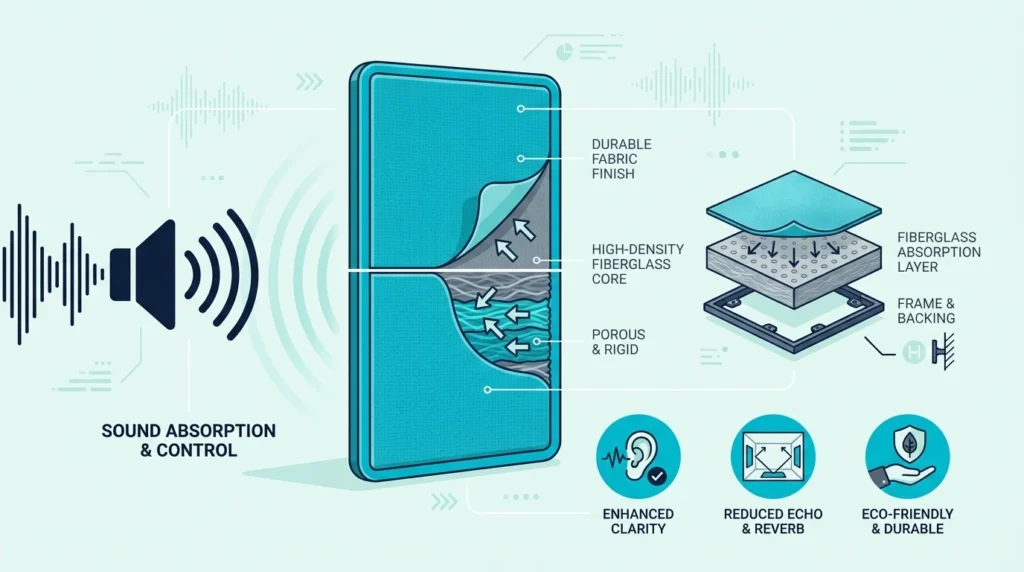
Best fiberglass acoustic panels deliver professional-grade sound absorption that foam alternatives simply cannot match. But most buyers still grab cheap foam packs off Amazon and wonder why their room sounds the same.
The rigid fiberglass core absorbs sound across a broader frequency range, making these panels the go-to choice for recording studios, home theaters, and any space where acoustic quality matters.
If you’ve researched acoustic treatment, you’ve likely encountered endless foam options that promise studio-quality results. The reality is different.
Fiberglass panels absorb 2-3x more sound energy than similarly-sized foam panels, particularly in the critical mid-to-low frequency range where voice clarity and music reproduction live.
Below you’ll find the best fiberglass acoustic panels available today. You’ll see how each panel performs on absorption, build quality, and real-world value — so you can find the right fit for your space.
Why Fiberglass Panels Outperform Other Materials
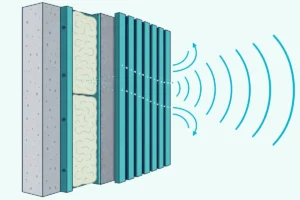
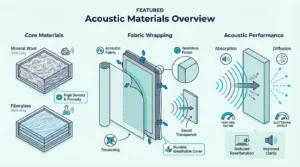
The physics behind fiberglass absorption explains why professionals prefer it. Sound waves penetrate the fibrous structure and convert acoustic energy into heat through friction — a process that happens more efficiently in rigid fiberglass than in foam.
Fiberglass panels typically achieve NRC ratings of 0.85-1.0, meaning they absorb 85-100% of sound energy hitting them. Comparable foam panels usually rate between 0.4-0.7 NRC.
That difference becomes audible immediately in treated rooms. The best acoustic panels roundup covers the full range of materials — and three properties drive the gap between fiberglass and everything else: density, thickness, and material stability.
Density Makes the Difference
The density of fiberglass panels directly affects which frequencies they absorb best. Standard 3-pound density fiberglass handles mid and high frequencies excellently.
Higher 6-pound density extends absorption into lower frequencies where bass accumulates. Most pre-made fiberglass panels use 3-4 pound density cores — a solid balance between broadband absorption and cost-effectiveness.
Thickness Matters for Bass
Panel thickness determines the lowest frequency a panel can effectively absorb. A 2-inch fiberglass panel starts absorbing meaningfully around 250Hz.
A 4-inch panel pushes that down to approximately 125Hz. For voice recording and general room treatment, 2-inch panels handle the job well.
Music production and home theater applications benefit from thicker panels, particularly at first reflection points. Wood acoustic panels offer an aesthetic alternative that combines absorption with modern design.
The relationship between thickness and absorption follows predictable physics. Sound wavelengths at 250Hz measure approximately 4.5 feet long, and a panel needs to be roughly 1/4 wavelength thick to absorb that frequency.
That explains why 2-inch panels handle most voice frequencies but struggle with bass. Thicker panels or air-gap mounting extends absorption lower without requiring massive panel depth.
Why Professionals Choose Fiberglass
Recording studios, broadcast facilities, and professional listening rooms almost universally use fiberglass-based treatment. The predictable absorption characteristics allow acoustic designers to calculate room response accurately.
Foam’s inconsistent absorption makes precise acoustic design difficult. The material degrades over time, changing room acoustics years after installation.
Fiberglass maintains its acoustic properties indefinitely — and cost-per-unit-of-absorption favors it too. Individual panels may cost more than foam, but you need fewer fiberglass panels for equivalent acoustic control.
The total project cost often comes out similar, with better results. The best low-price acoustic panels roundup covers affordable fiberglass options that stay within tight budgets.
Quick Takeaway
Fiberglass acoustic panels absorb 2-3x more sound than foam and maintain performance indefinitely. Look for panels with 3+ pound density cores and NRC ratings above 0.85 for effective broadband treatment. Start with 2-inch panels at first reflection points — add thicker panels or air gaps for bass control.
| Product | Size | Link |
|---|---|---|
Best Overall 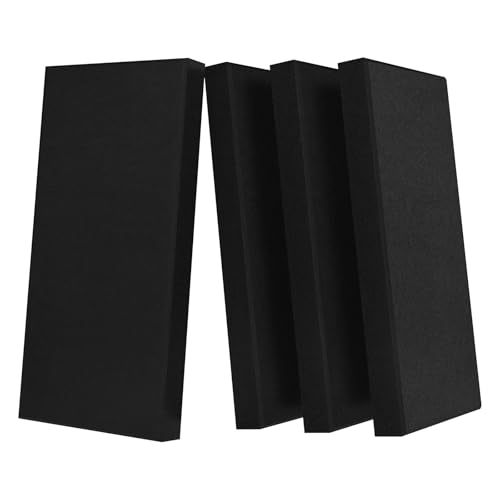 | 12 inch | See ratings |
Best Premium 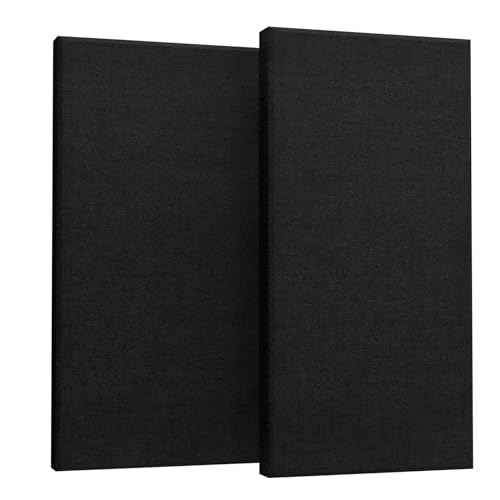 | 23.6 inch | See ratings |
Best Value  | 11.8 inch | See ratings |
Best for Studios 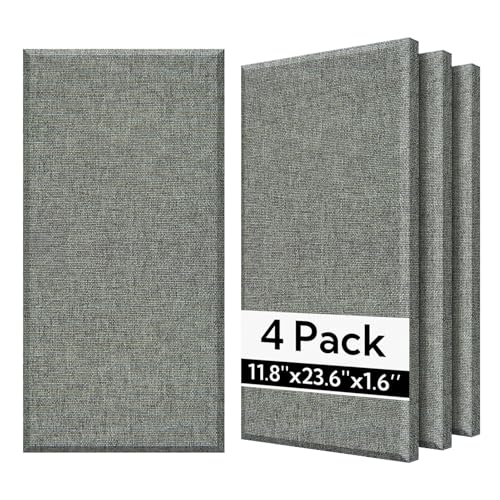 | 23.6 inch | See ratings |
Best Color Match 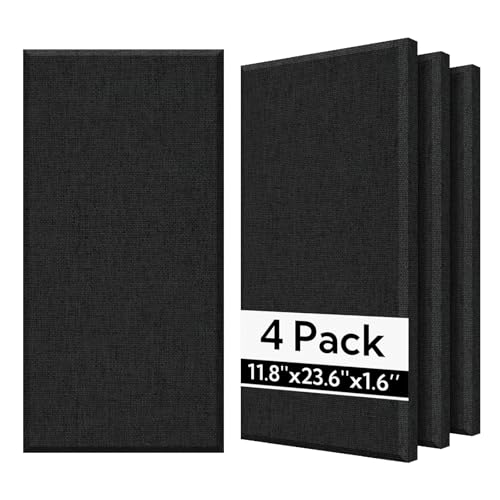 | 23.6 inch | See ratings |
Which Fiberglass Acoustic Panels Perform Best?
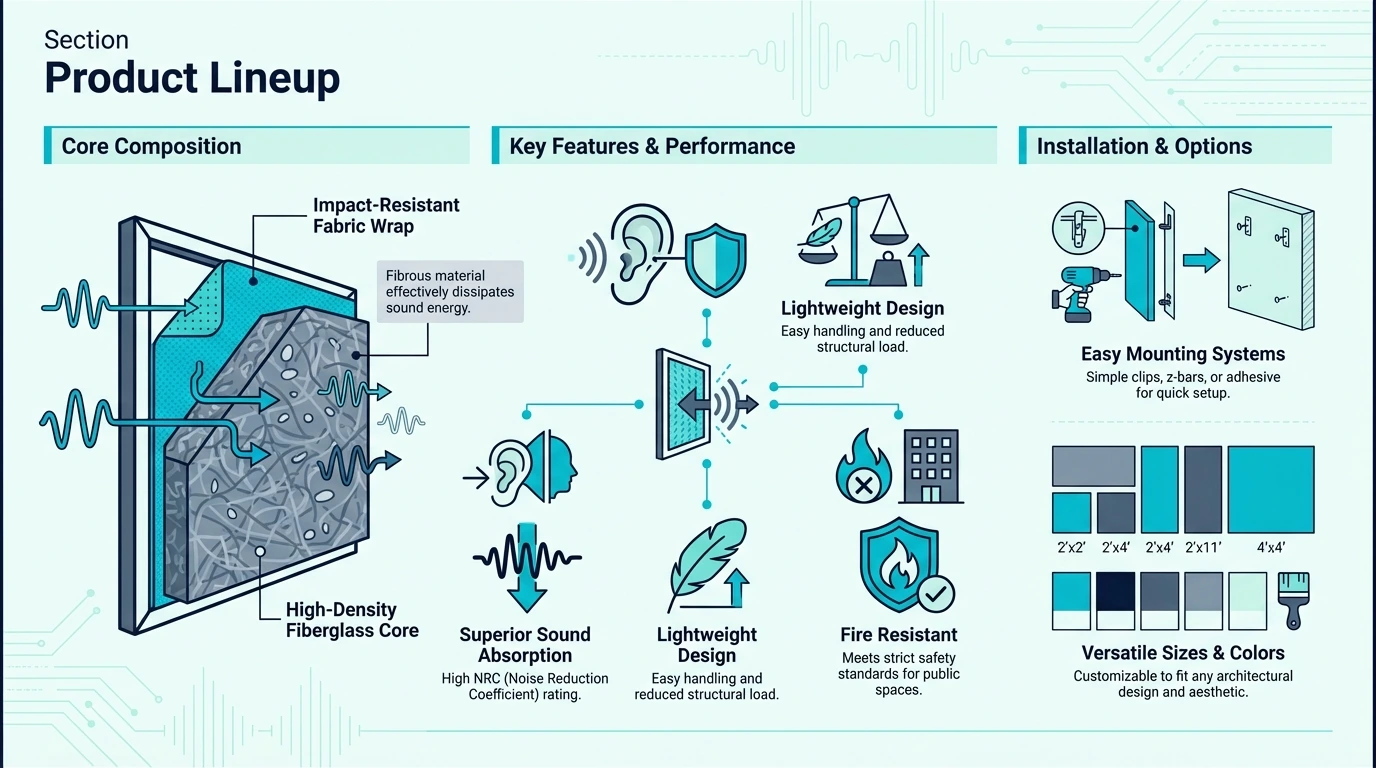
The panels below were evaluated on absorption performance, build quality, mounting options, and value. These six earned top marks across every category.
Best Overall: UMIACOUSTICS 4 Pack with Hanging Brackets
The UMIACOUSTICS 4 PCS Acoustic Panels with Hanging Bracket delivers what most buyers need: solid fiberglass absorption with mounting hardware included. The 2-inch thick fiberglass core provides broadband absorption across the vocal and music frequency ranges.
UMIACOUSTICS 4 PCS Acoustic Panels with Hanging Bracket
What sets these panels apart is the complete mounting system — many competitors sell panels without hardware, forcing separate purchases. The included hanging brackets work on drywall, concrete, and most wall surfaces.
The fabric wrapping looks professional without the institutional feel of raw acoustic treatment. Four color options let you match room décor while maintaining acoustic performance.
For home studios under 200 square feet, two packs (8 panels) typically provide adequate first-reflection treatment. Larger spaces or full-room coverage may require three packs.
Best Premium: UMIACOUSTICS Large Format Panels
When maximum coverage per panel matters, the UMIACOUSTICS 2 PCS Acoustic Panel 47.2” x 23.6” offers nearly 8 square feet of absorption per panel. That’s roughly double the coverage of standard-sized alternatives.
UMIACOUSTICS 2 PCS Acoustic Panel 47.2” x 23.6”
Fewer panels means fewer mounting points and cleaner visual appearance. Recording studios and home theaters often prefer this larger format for exactly that reason.
The same fiberglass core construction delivers consistent absorption across the frequency spectrum. If the premium investment is stretching your budget, you can start with two panels at primary reflection points and add more later.
Best Value: TONOR 4-Pack Fiberglass Panels
The TONOR 4 PCS Large Acoustic Panel proves you don’t need to spend premium prices for genuine fiberglass absorption. The slightly thicker 2.36-inch core actually extends absorption slightly lower than standard 2-inch panels.
TONOR 4 PCS Large Acoustic Panel
First-time buyers treating home offices or small recording spaces find excellent value here. The four-pack covers approximately 8 square feet of wall surface — enough for a basic first-reflection setup in smaller rooms.
The fabric covering resists dust accumulation and cleans easily with a soft brush attachment.
Best for Professional Spaces: Olanglab Fiberglass Panels
The Olanglab Fiberglass Acoustic Wall Panels 4 Pack targets professional installations where appearance matters as much as performance. The clean fabric wrap and precise construction create a polished look suitable for client-facing spaces.
Olanglab Fiberglass Acoustic Wall Panels 4 Pack
Recording studios, podcast rooms, and corporate meeting spaces often choose these panels for their balance of performance and aesthetics. The fiberglass core delivers the absorption professionals expect without the visual compromise of industrial-looking treatment.
Best for DIY Installations: TONOR Self-Adhesive Panels
For renters or anyone avoiding wall damage, the TONOR 4-pack from the Best Value pick has a full self-adhesive back, so it needs no tools or wall hardware.
The fiberglass core still does real absorbing work despite the convenient mounting method. Peel the backing, position carefully, and press firmly — that’s the entire installation process.
Test the adhesive on a hidden spot first, since it can lift paint when you take the panels down.
Alternative Pick: Olanglab Color Variant
The Olanglab Fiberglass Acoustic Wall Panels offers the same fiberglass construction in different color options. If your space requires specific color matching, this variant provides identical acoustic performance with expanded aesthetic choices.
Olanglab Fiberglass Acoustic Wall Panels
Get Studio Tips Weekly
Join 5,000+ creators getting acoustic treatment advice every week.
No spam. Unsubscribe anytime.How to Choose the Right Fiberglass Panels
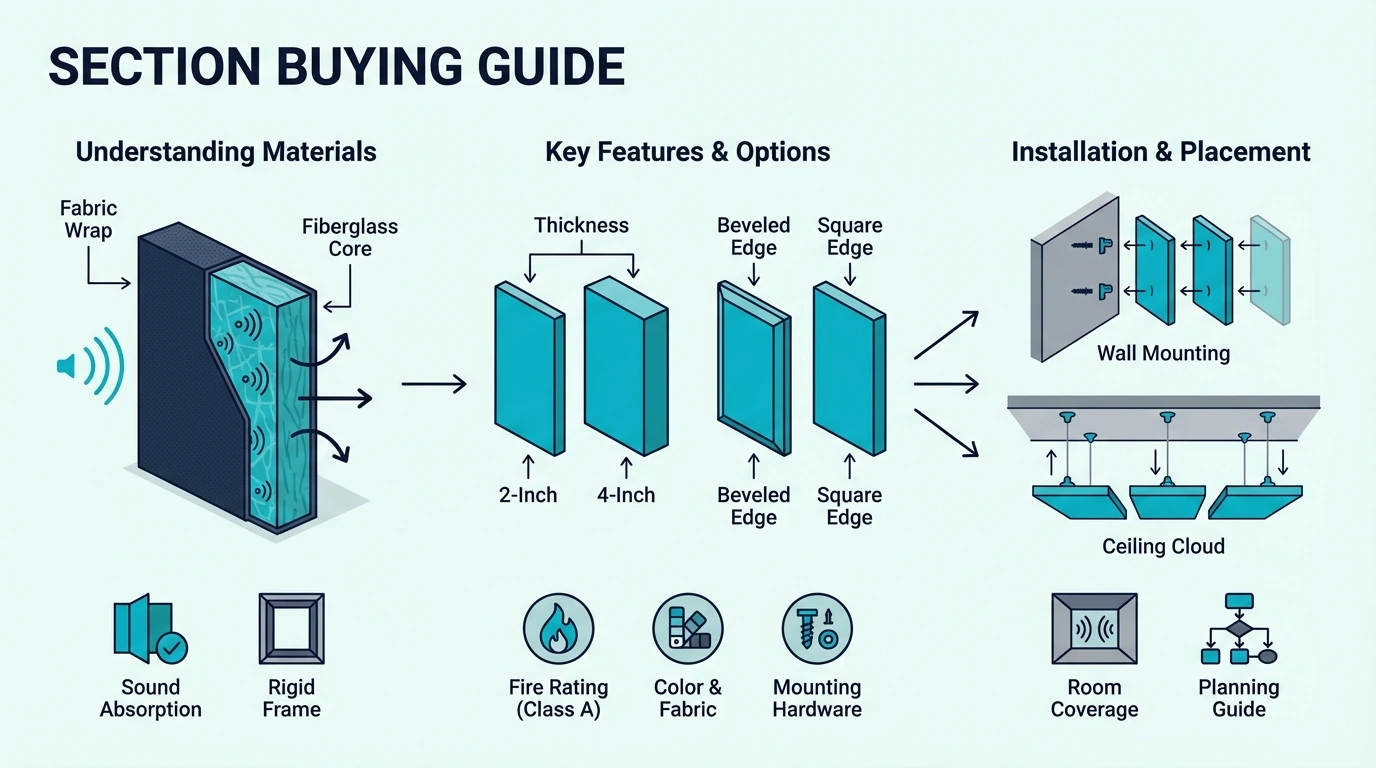
Panel specs mean nothing until you match them to your room. The raw dimensions of your space dictate your baseline needs before you even look at products.
Room Size Determines Quantity
You have to cover roughly 20-30% of your total wall surface area to hear a meaningful reduction in echo. For critical listening spaces like mixing rooms, that target pushes closer to 40%.
To find your baseline, calculate the total square footage of all four walls. For a standard 10×12 foot room with 8-foot ceilings, you have about 350 square feet of wall, meaning a 20% coverage target requires 70 square feet of panels (roughly 18 standard 24×12 panels). The best recording studio panels guide breaks down these room-by-room quantities in deeper detail.
Ceiling Height Affects Placement
While the room’s footprint sets your baseline, the ceiling height determines exactly where those panels go. Standard 8-foot ceilings keep the acoustic math simple: you mount your primary panels at seated ear level to catch the direct bounce between the speakers and your listening chair.
When you introduce 10 or 12-foot ceilings, that single horizontal band isn’t enough. You have to stagger additional panels higher on the walls to break up the secondary reflection paths that bounce off the upper drywall.
Primary vs. Secondary Reflection Points
Regardless of ceiling height, your very first panels must go to the primary reflection points. These are the spots on the side walls where sound bounces directly from the speaker cone to your ears, creating the comb filtering that destroys stereo imaging.
Because bass energy builds up aggressively at these boundaries, thicker 4-inch panel packages deliver massive returns when placed at these first reflection points. Only after those primary spots are covered should you spend remaining budget on secondary reflections and general room coverage.
How Do You Install Fiberglass Panels for Maximum Effect?
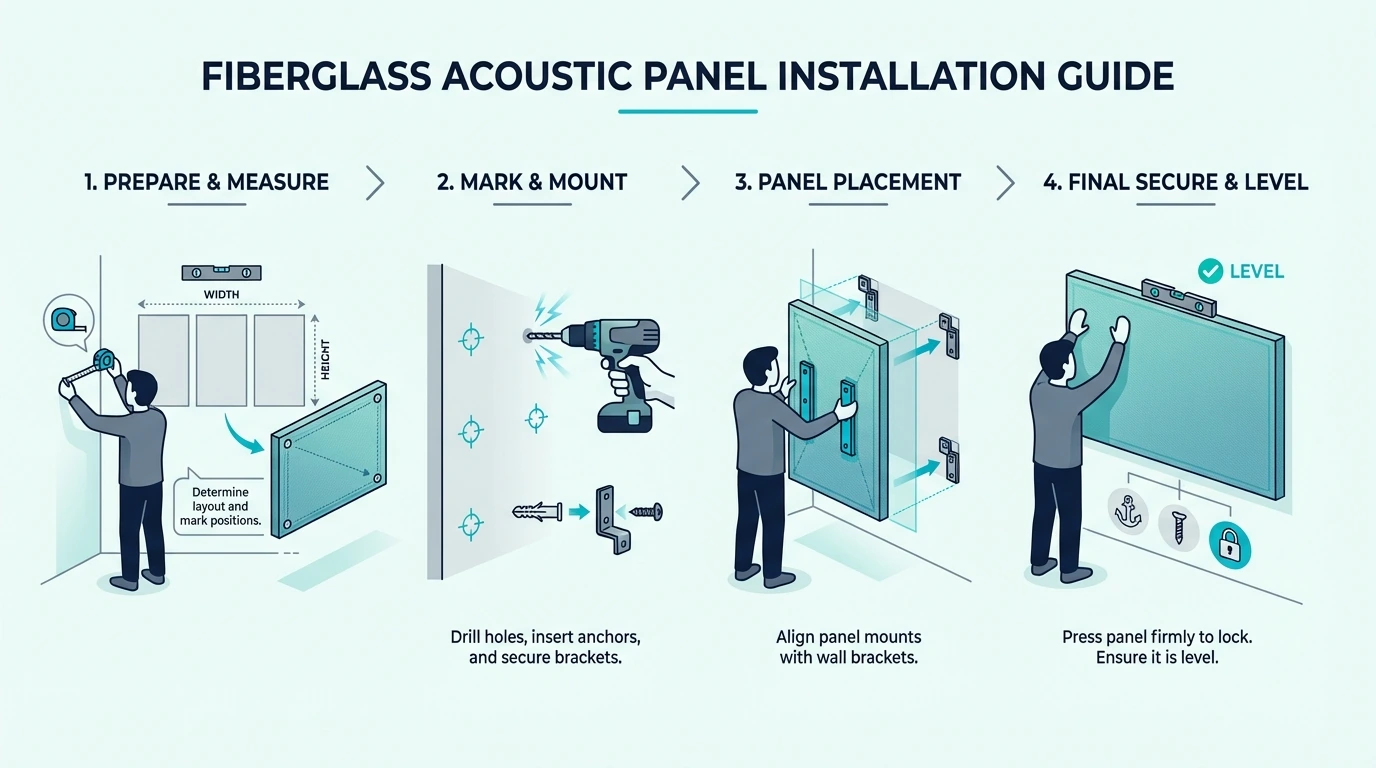
Where you mount fiberglass panels matters just as much as what you buy. You can manipulate the physics of the panels simply by changing how they sit against the drywall.
Air Gaps Push Absorption Into Bass Frequencies
The most powerful acoustic trick is leaving a 2-to-4 inch air gap behind your panels rather than flushing them tight to the wall. This dead air space forces the sound waves to pass through the fiberglass twice, artificially extending the panel’s reach into lower bass frequencies it couldn’t normally absorb.
The best low-frequency panels use this exact physics principle, turning standard 2-inch fiberglass boards into legitimate bass traps for problem rooms.
Height Optimization for Seated Listening
That enhanced absorption only matters if it catches the right frequencies. For mixing rooms, home theaters, and podcast setups, you must center the panels exactly at seated ear height (typically 36 to 42 inches from the floor) to catch the direct monitor reflections.
Vocal booths require a completely different approach. Because the singer is standing, the acoustic center shifts up to 55-65 inches, meaning the panels must be mounted much higher to catch the mouth-to-mic reflections.
Symmetrical Placement Matters
Whatever height you choose, the left and right walls must match exactly. If you hang a panel two feet from the corner on the left wall, the right wall needs an identical panel two feet from the right corner.
Asymmetrical treatment destroys your stereo image. The untreated side will reflect high frequencies faster than the treated side, tricking your brain into hearing a lopsided mix. The acoustic panels hub covers exact measurement strategies to ensure perfect symmetry.
Corner Placement for Bass Control
If you run out of flat wall space, the corners offer a unique opportunity. Placing a rigid fiberglass panel diagonally across a 90-degree corner creates a massive, triangular air gap behind it.
That massive gap allows a standard 2-inch panel to act like a makeshift bass trap, absorbing frequencies one to two octaves lower than it would if mounted flat on a wall. It is a very cost-effective way to fight bass buildup without buying dedicated corner wedges.
Avoid Common Placement Mistakes
The single fastest way to ruin all of this careful planning is to ignore the ceiling. Treating four walls while ignoring the parallel floor-to-ceiling bounce leaves a massive flutter echo directly above your mix position.
Suspending a cloud of ceiling acoustic panels above the desk eliminates that vertical reflection, tightening the entire stereo image and completing the acoustic shell around the listener.
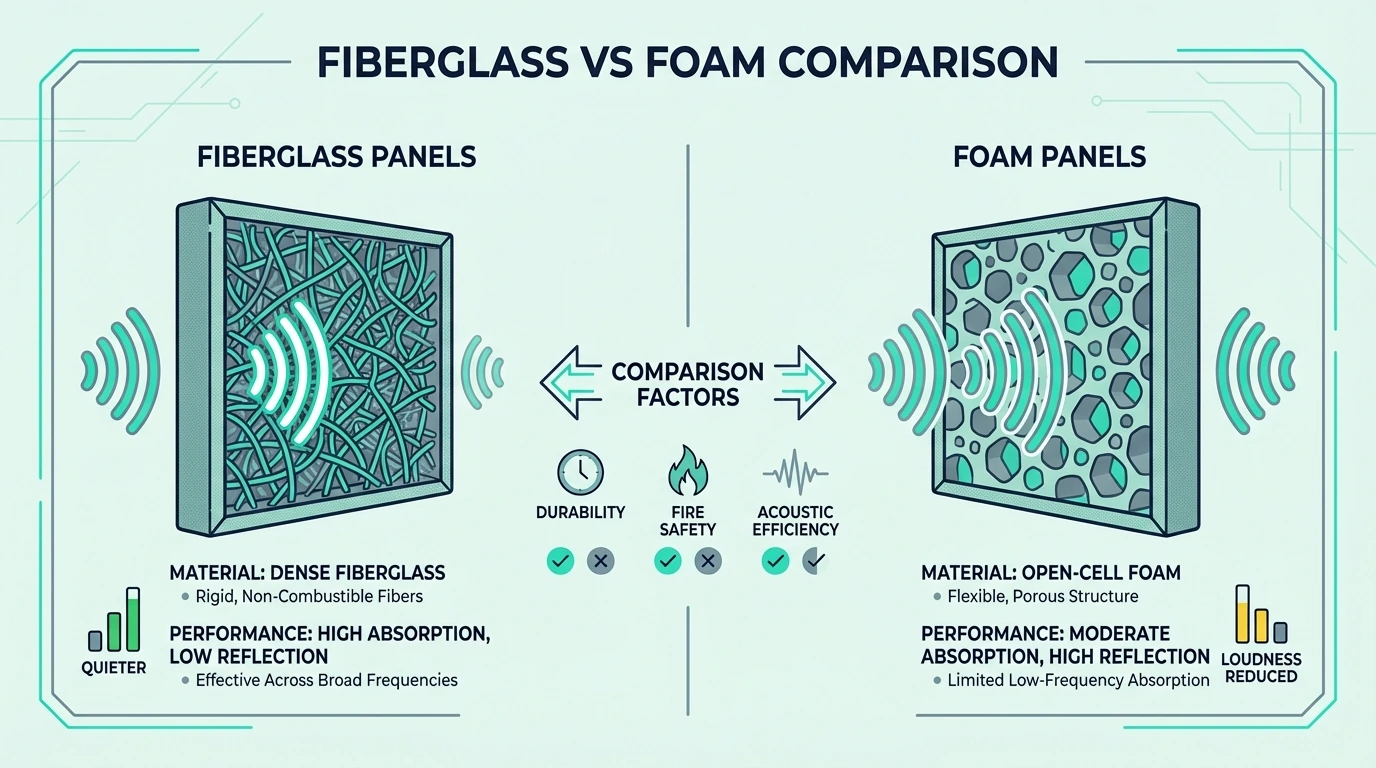
Why Does Fiberglass Outperform Foam?
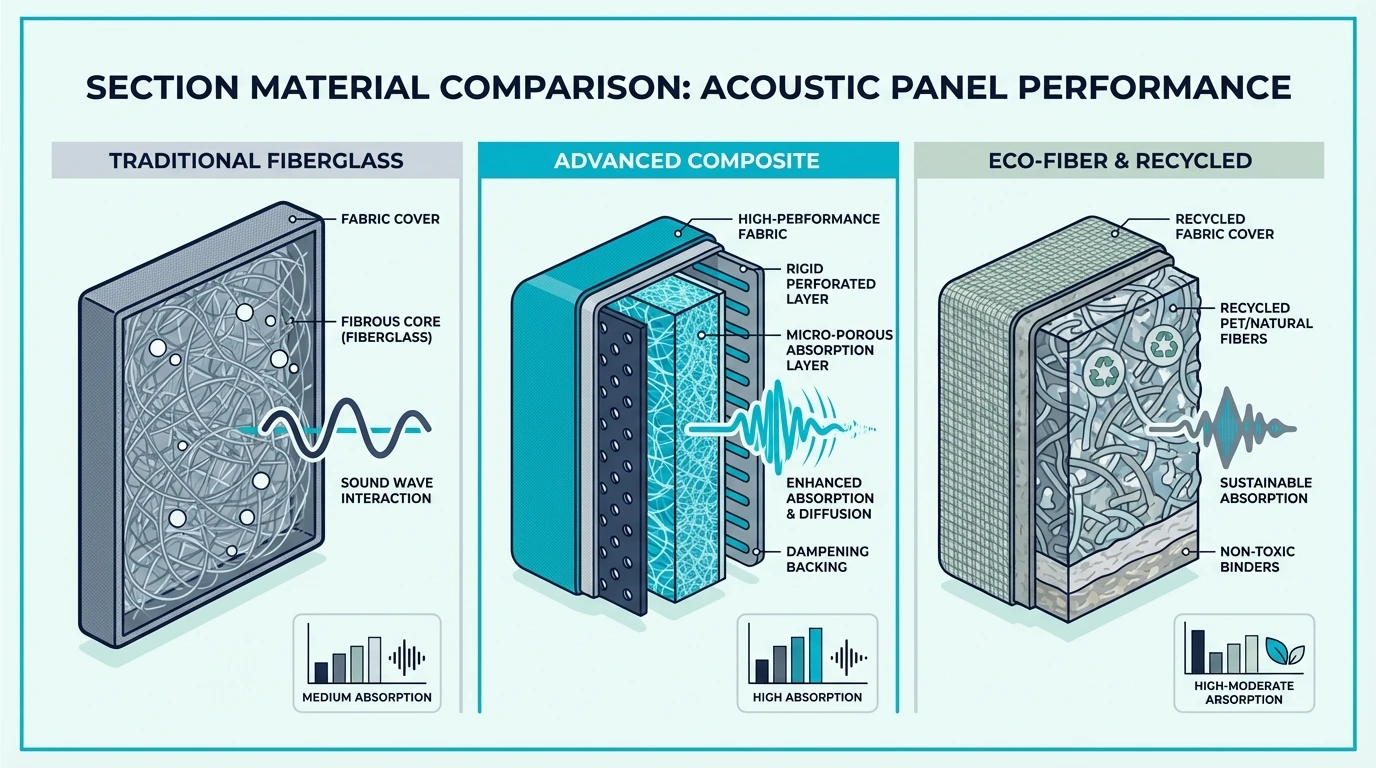
The performance gap between fiberglass and foam dictates whether your room sounds like a professional studio or a padded closet.
Absorption Coefficient Comparison
The raw math proves the point: fiberglass panels consistently hit NRC ratings of 0.85 to 1.0, absorbing nearly 100% of the sound energy that hits them. Budget foam rarely breaks NRC 0.60, meaning it bounces 40% of the energy right back at your ears.
That missing 40% is entirely concentrated in the lower midrange.
Frequency Range Differences
Foam is physically incapable of stopping long wavelengths, meaning it only absorbs the brittle high frequencies above 1000Hz. This uneven absorption creates the dreaded “boxy” room sound — the highs are deadened, but the muddy low-mids remain untouched and overwhelming.
Because fiberglass is denser and more rigid, it pulls absorption down into the critical 250Hz–1000Hz range. This broadband control is why the best home theater acoustic panels always use fiberglass cores to keep dialogue crisp.
Longevity and Durability
That rigid core also guarantees the panel will outlive the room. Fiberglass does not compress, sag, or lose its structural integrity over decades of use.
Foam, by contrast, is highly reactive to UV light and humidity. Within five years, most budget foam begins to yellow, harden, and literally crumble off the wall in fine dust particles, requiring a complete replacement.
Environmental Considerations
The manufacturing processes present an equally stark contrast. Modern acoustic fiberglass is bound without formaldehyde and produces zero volatile organic compounds (VOCs) once wrapped in its protective fabric shell.
Acoustic foam is a petroleum-based polyurethane that frequently off-gasses chemical odors for weeks after installation, causing headaches in poorly ventilated basement studios.
Fire Safety Differences
The most critical difference for commercial spaces is what happens when exposed to heat. Fiberglass is inherently non-combustible; it will melt under extreme heat but cannot ignite or sustain a flame, meaning it passes commercial fire codes by default.
Polyurethane foam is highly flammable and requires heavy chemical retardant sprays to pass safety inspections. Even treated foam can present a severe hazard as those chemical retardants break down over the years.
What Do NRC Ratings Mean for Fiberglass Panels?
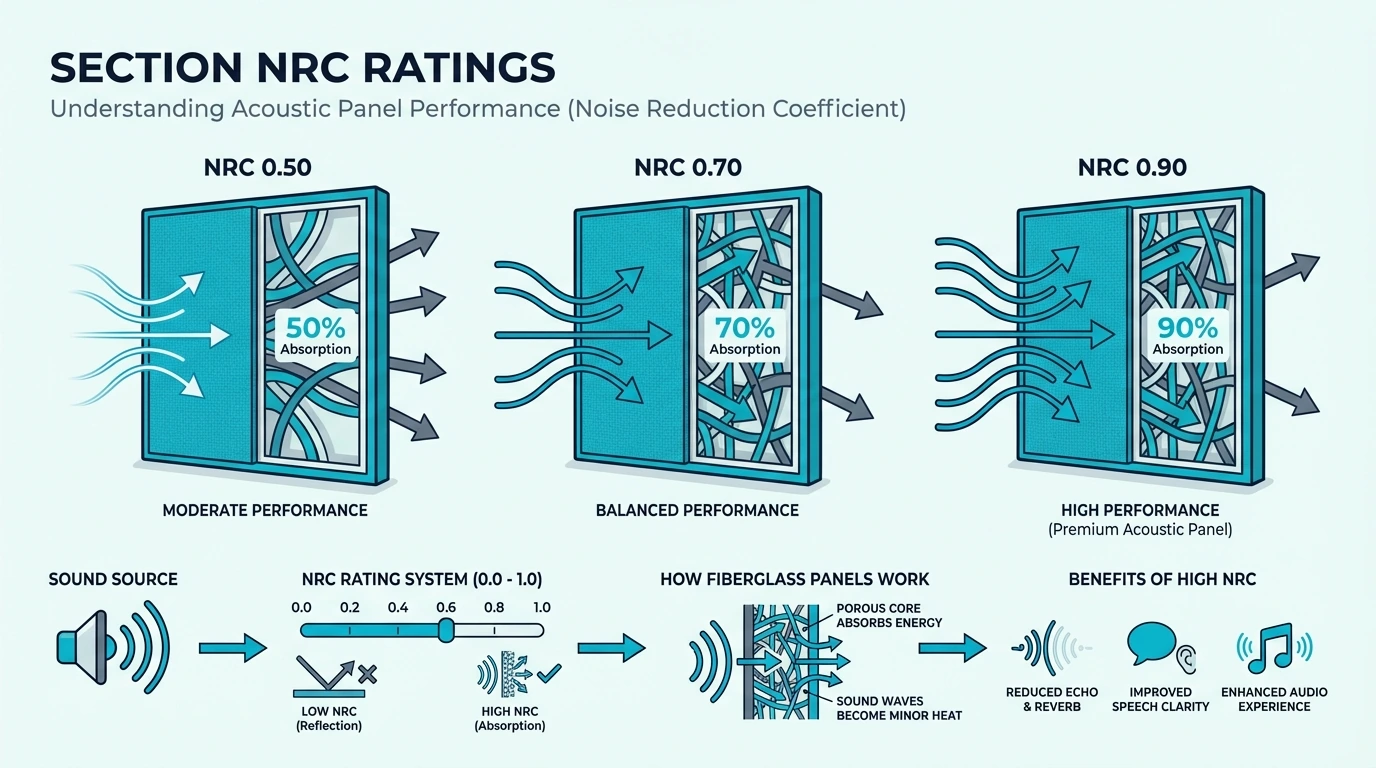
The Noise Reduction Coefficient appears on most panel specs — but the number alone can mislead. What NRC actually measures, how to spot inflated claims, and the ranges each material type produces.
What NRC Actually Measures
NRC represents the average absorption across four test frequencies: 250Hz, 500Hz, 1000Hz, and 2000Hz. A panel with NRC 0.85 absorbs 85% of sound energy at these frequencies on average.
The rating doesn’t tell the whole story. A panel might absorb 95% at 1000Hz but only 60% at 250Hz, yet still show a respectable average.
Full absorption coefficient charts reveal the complete picture — always request those before trusting a single NRC number.
Interpreting Manufacturer Claims
Some manufacturers list NRC values exceeding 1.0 — which seems impossible. The answer involves edge diffraction effects during testing that inflate the measured average.
Real-world performance rarely matches laboratory conditions. Treat NRC ratings above 1.0 skeptically, and compare products using multiple data points rather than single numbers.
NRC Ranges by Material Type
Each acoustic material falls within a predictable NRC band. Professional fiberglass panels land between 0.80-1.05, mid-grade fiberglass at 0.70-0.85, quality foam at 0.50-0.70, and budget foam at 0.30-0.50.
Any product claiming fiberglass performance at foam pricing usually delivers foam-level results. The NRC number doesn’t lie — if it’s below 0.80, the core material probably isn’t true fiberglass.
The Bottom Line
The best fiberglass acoustic panels transform problematic rooms into controlled acoustic environments. The UMIACOUSTICS 4 PCS Acoustic Panels with Hanging Bracket takes the top spot for its combination of genuine fiberglass absorption, included mounting hardware, and reasonable price point.
For budget-conscious buyers, the TONOR 4-Pack delivers fiberglass performance at foam prices. Premium installations benefit from the UMIACOUSTICS Large Format Panels that maximize coverage per panel.
Whatever you choose, fiberglass construction ensures you’re getting professional-grade absorption that foam alternatives cannot match. The investment pays dividends in recording quality, listening enjoyment, and room comfort.
The best looking acoustic panels roundup covers options that deliver the same fiberglass performance with a design-forward aesthetic.
Frequently Asked Questions
How many fiberglass panels do I need for a home studio?
A typical home studio (100-150 square feet) needs 8-12 panels for effective treatment. Start with 4 panels at first reflection points and add more based on results.
Rooms with parallel walls, hard floors, or high ceilings may require additional panels. The best acoustic panels for music rooms guide covers studio-specific quantities and placement.
Are fiberglass panels safe to use indoors?
Yes — modern fiberglass acoustic panels enclose the material in fabric wrapping that prevents fiber release. Avoid cutting or damaging the covering, since exposed raw fiberglass can release irritating particles.
Can I mount fiberglass panels on ceilings?
Most fiberglass panels support ceiling mounting with appropriate hardware — the panels reviewed here weigh 2-5 pounds each. Use toggle bolts for drywall ceilings and expansion anchors for concrete.
What’s the difference between 2-inch and 4-inch fiberglass panels?
Thickness determines low-frequency absorption — 2-inch panels absorb effectively above 250Hz, while 4-inch panels extend down to approximately 125Hz. For bass-heavy music or home theater, thicker panels perform better at first reflection points.
Do fiberglass panels block sound from leaving the room?
No — acoustic panels absorb sound within the space but don’t block sound from passing through walls. Soundproofing requires mass, decoupling, and sealing — a completely different approach from acoustic treatment.