What Is Acoustic Foam Made Of? Materials, Chemistry & Manufacturing
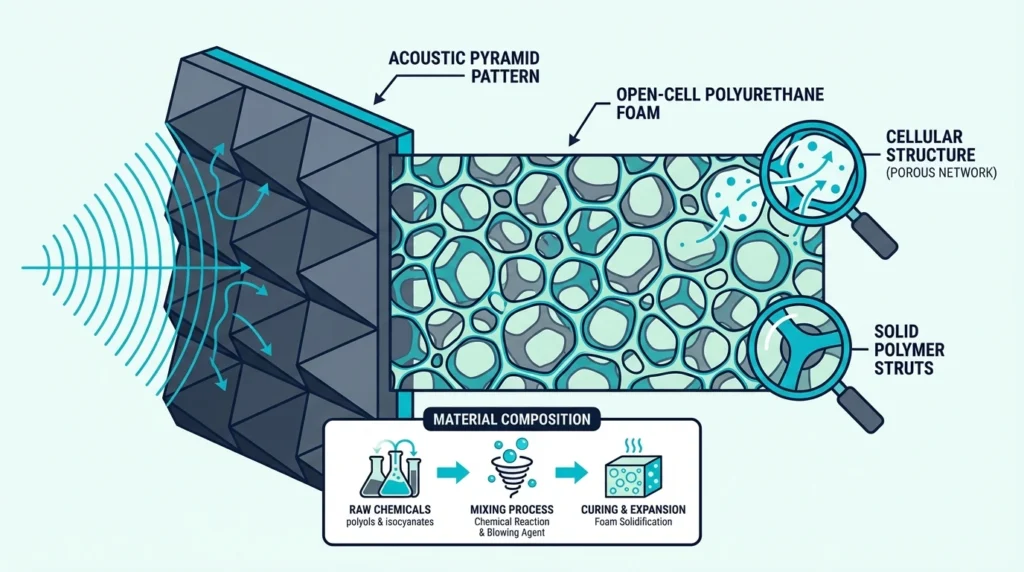
Acoustic foam looks simple, but its effectiveness depends on specific materials and how they’re manufactured—because the open-cell structure that absorbs reflections in a room is the direct result of chemistry, not just shape.
That’s usually the cause of confusion when comparing products: two panels can look identical yet perform very differently based on density, cell structure, and fire treatment.
You’ll find the materials, chemistry, and manufacturing behind acoustic foam below. Start with polyurethane (the most common base), then see how melamine and polyester compare.
Primary materials: – Polyurethane foam (most common) – Polymer created from polyols and diisocyanates – Melamine foam (premium) – Melamine-formaldehyde resin – Polyester fiber (alternative) – PET plastic fibers, often recycled
Key properties that make foam “acoustic”: – Open-cell structure (allows sound penetration) – Specific density (1.5-2.5 lb/ft³) – Fire retardant treatment – Consistent cell size and distribution
What Is Polyurethane Foam and Why Is It the Standard?
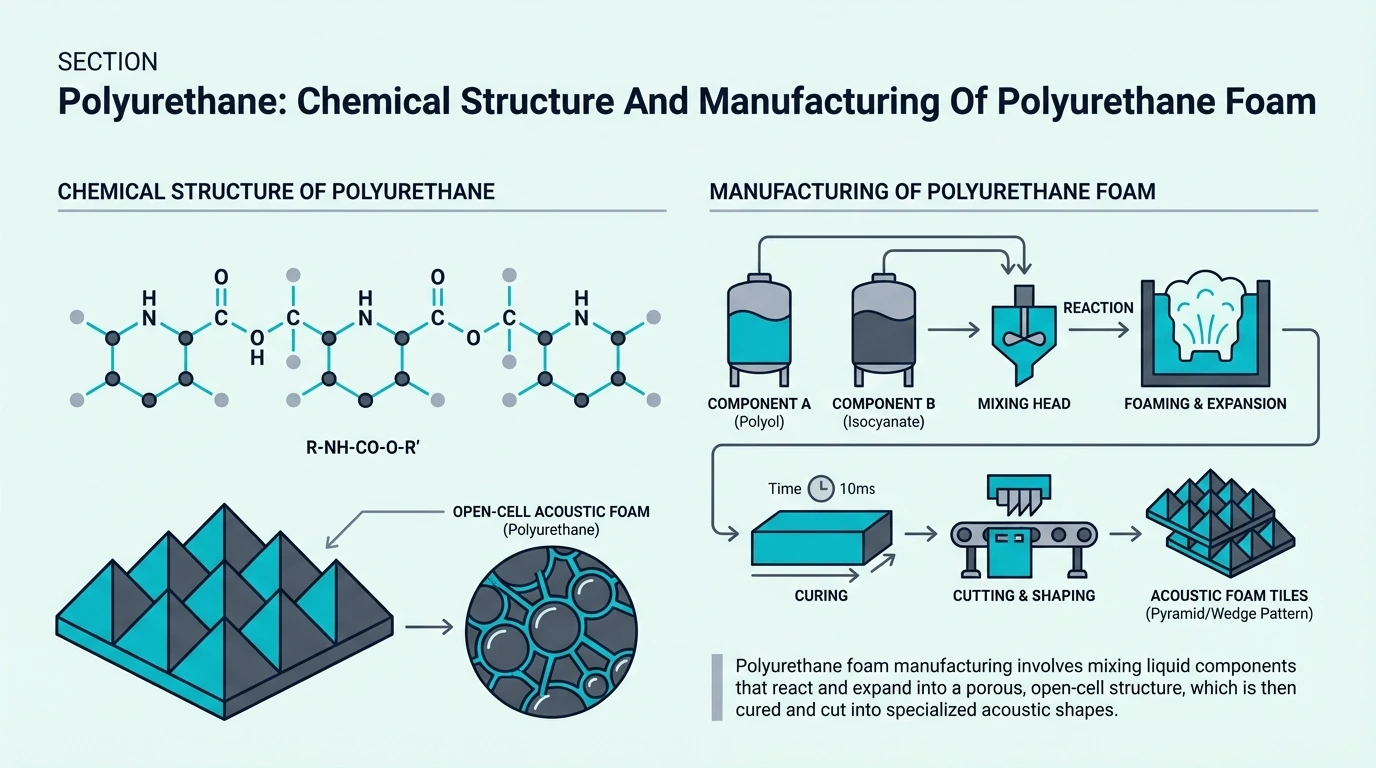
Most acoustic foam is polyurethane-based.
Chemical Composition
Polyurethane foam is created through a chemical reaction: – Polyols (alcohols with multiple hydroxyl groups) – Diisocyanates (reactive compounds) – Catalysts (control reaction speed) – Surfactants (control cell formation) – Blowing agents (create cellular structure)
When mixed, these components react exothermically, creating a polymer matrix with gas bubbles trapped inside—the cellular structure that defines foam.
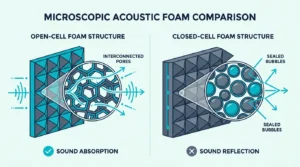
Creating Open-Cell Structure
For acoustic foam, the manufacturing process is controlled to create open cells: – Cell walls partially rupture during foaming – Cells interconnect, allowing air passage – Controlled reaction speed affects cell size – Surfactants influence cell wall thickness
This open-cell structure is what allows sound to penetrate and be absorbed.
For more on cell structure importance, see acoustic foam open cell vs closed cell.
Density Control
Foam density is controlled by: – Ratio of components – Amount of blowing agent – Reaction conditions – Post-processing
Acoustic foam targets 1.5-2.5 lb/ft³—dense enough for effective absorption, light enough for practical use.
Fire Retardant Addition
Polyurethane is inherently flammable. Fire retardants are added: – During manufacturing (mixed into formula) – After manufacturing (surface treatment) – Common retardants: phosphorus compounds, halogenated compounds, mineral fillers
Quality acoustic foam achieves Class A or B fire rating through these treatments.
For safety information, see whether acoustic foam is dangerous.
What Is Melamine Foam and Why Is It Premium?
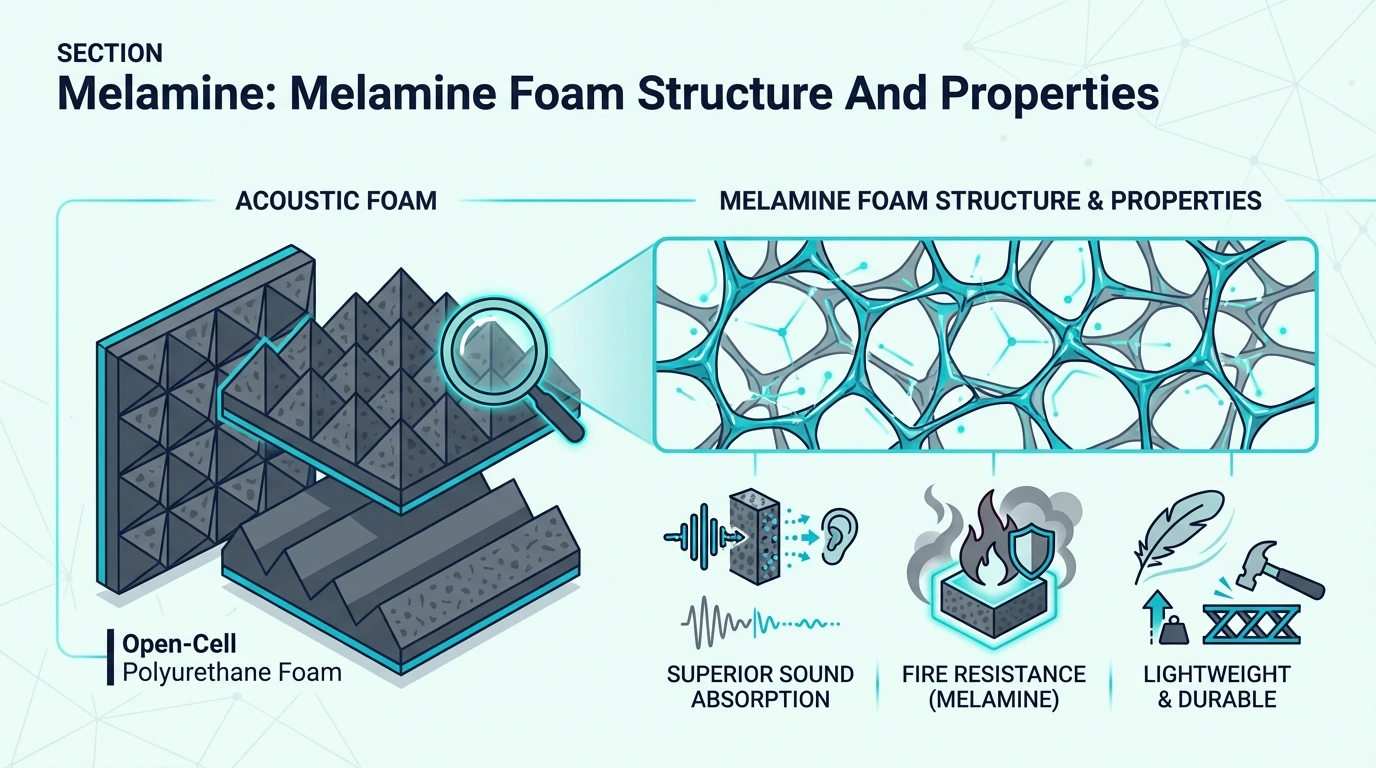
Melamine foam offers superior performance.
What Is Melamine?
Melamine foam is made from melamine-formaldehyde resin: – Melamine: organic compound (C₃H₆N₆) – Formaldehyde: reactive aldehyde – Combined to form thermoset polymer
The resulting foam has extremely fine, open cells—finer than polyurethane.
Manufacturing Process
Melamine foam production: 1. Melamine and formaldehyde react to form resin 2. Resin is foamed using gas injection 3. Foam is cured at high temperature 4. Result: rigid, fine-celled foam structure
Why Melamine Performs Better
Melamine’s advantages come from its structure: – Finer cells: More surface area for absorption – Inherent fire resistance: No chemical treatment needed – Rigidity: Maintains shape better than polyurethane – Durability: Longer lifespan
Trade-offs
Melamine costs more due to: – More expensive raw materials – More complex manufacturing – Lower production volumes – Premium market positioning
Get Studio Tips Weekly
Join 5,000+ creators getting acoustic treatment advice every week.
No spam. Unsubscribe anytime.Can Polyester Be Used as Acoustic Material?
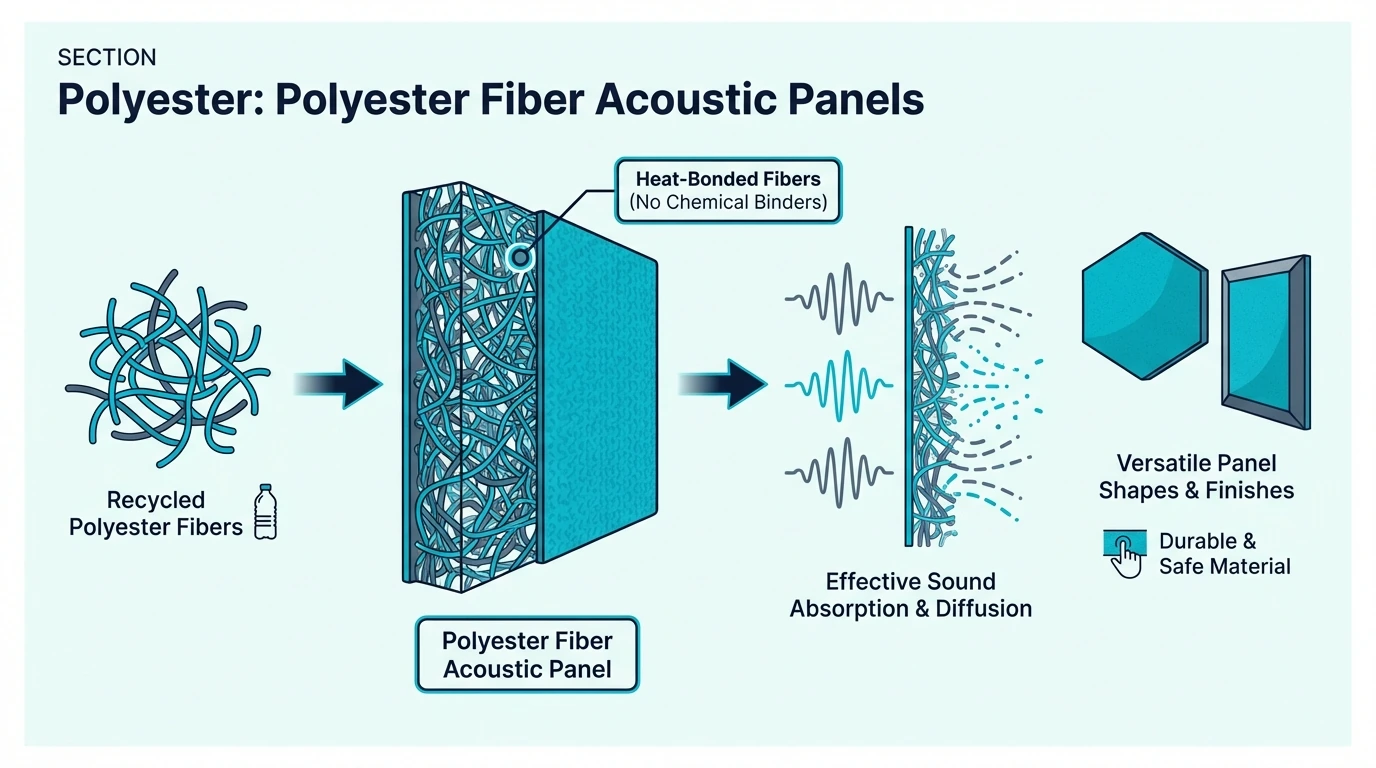
Polyester panels are an alternative to foam.
Material Composition
Polyester acoustic panels use PET fibers: – PET: Polyethylene terephthalate – Often from recycled bottles – Fibers compressed into boards or felt
How It Differs from Foam
Polyester isn’t foam—it’s compressed fibers: – No cellular structure – Sound absorbed through fiber friction – Different manufacturing process – Different properties and appearance
Environmental Advantage
Polyester panels often use recycled content: – Diverts plastic from landfills – Lower environmental impact – Recyclable at end of life – Appeals to eco-conscious buyers
For comparison, see polyester vs foam acoustic panels. If you’re weighing foam against other materials entirely, a JBER 12-pack is a low-cost way to test polyurethane foam before committing to a full treatment.
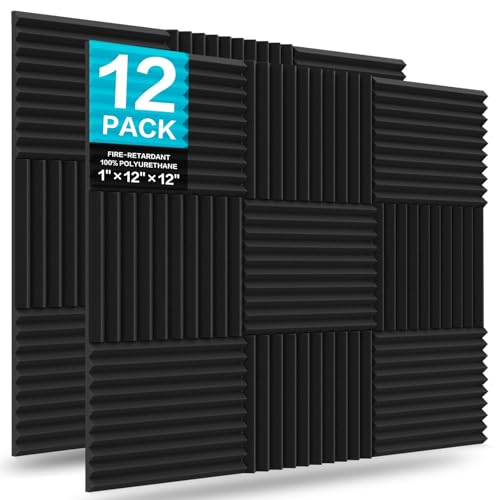
JBER 12-pack
What Additives and Treatments Go Into Acoustic Foam?
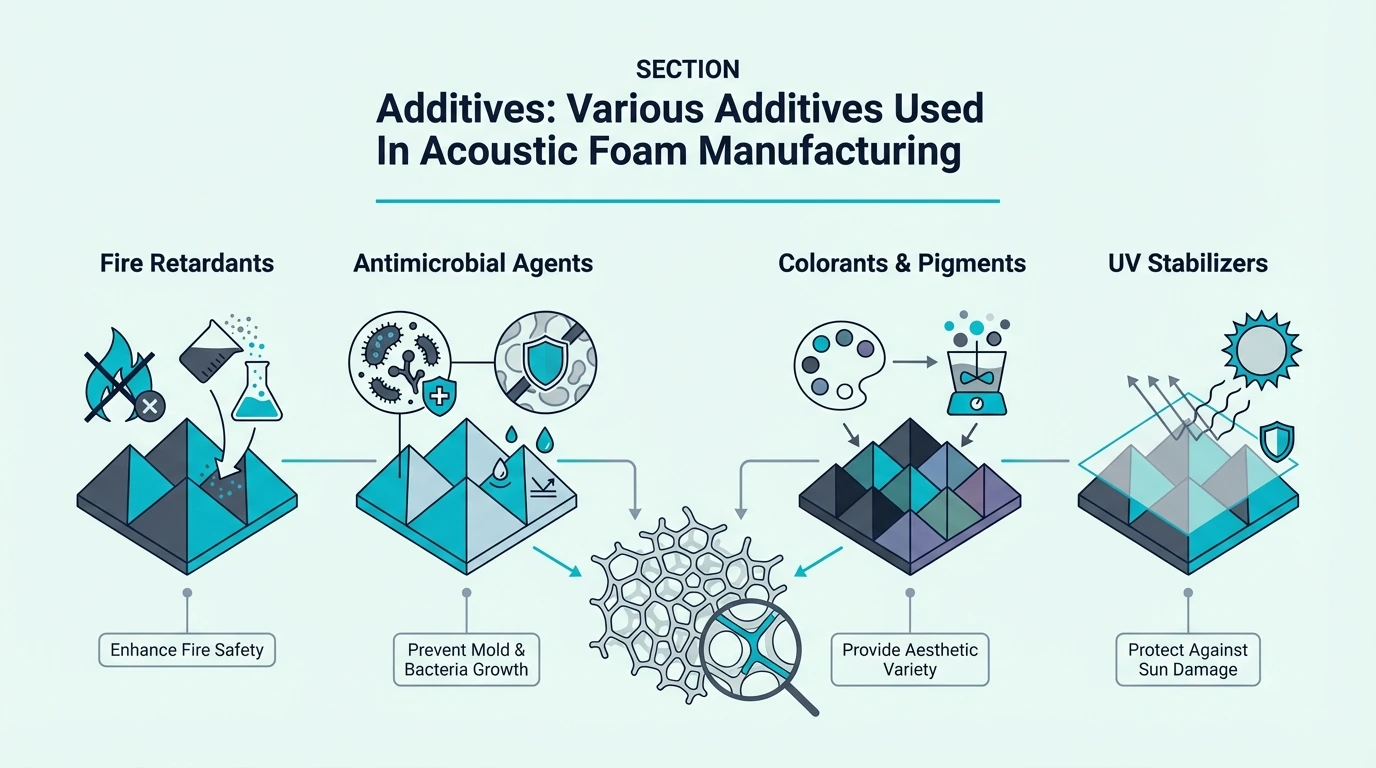
Beyond base materials, additives affect foam properties.
Fire Retardants
Common fire retardant types: – Phosphorus-based: Effective, lower toxicity concerns – Halogenated: Very effective, some environmental concerns – Mineral fillers: Aluminum hydroxide, magnesium hydroxide – Intumescent: Expand when heated, creating protective char
Colorants
Foam color comes from: – Pigments added during manufacturing – Dyes applied after foaming – Most acoustic foam is charcoal/gray (carbon black pigment) – Colors available but may cost more
UV Stabilizers
To reduce sun damage: – UV absorbers added to formula – Extend lifespan in sunny environments – Not all foam includes UV protection – Important for window-adjacent installations
Antimicrobial Treatments
Some foam includes: – Antimicrobial agents to resist mold/mildew – Particularly useful in humid environments – Not standard in all products – May add cost
How Is Acoustic Foam Manufactured?
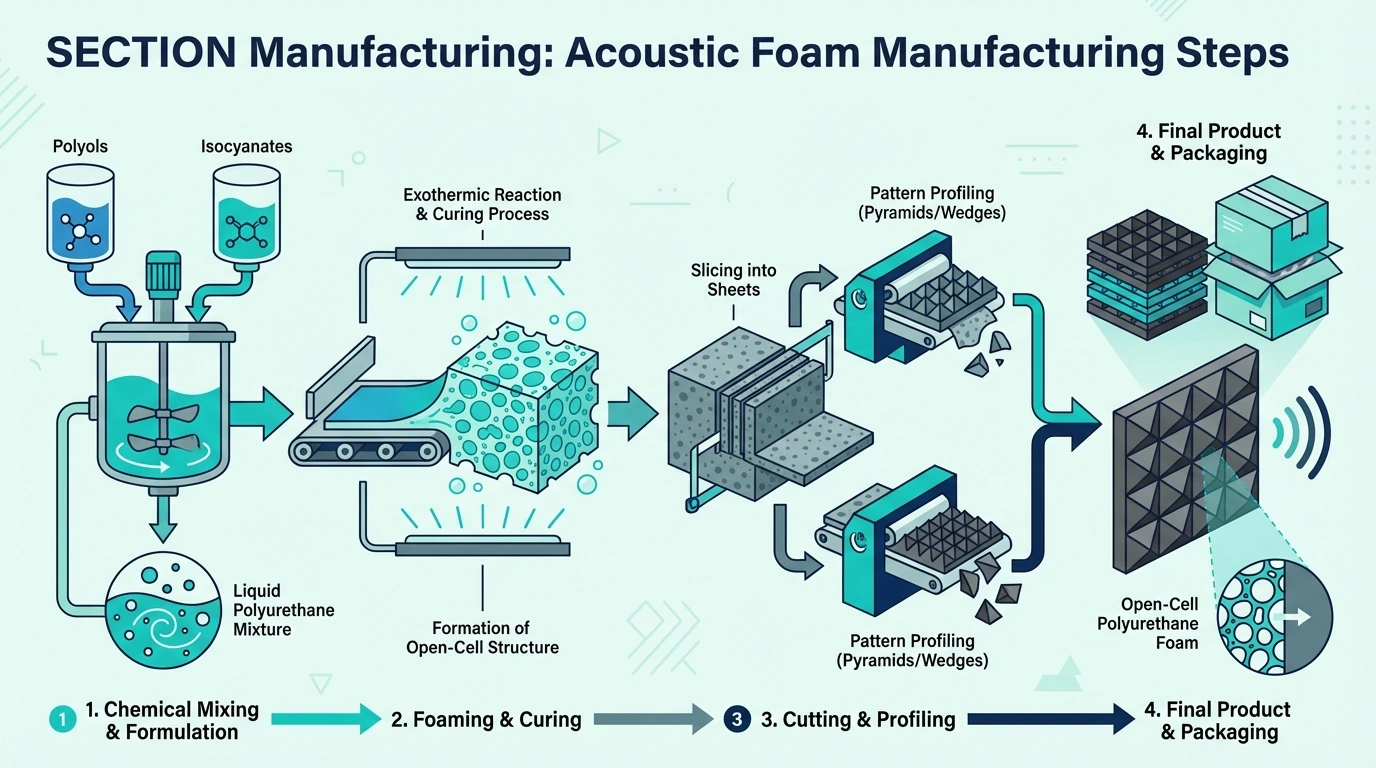
How acoustic foam goes from chemicals to panels.
Polyurethane Foam Production
- Mixing: Components combined in precise ratios
- Pouring: Mixture poured onto conveyor or into molds
- Rising: Chemical reaction causes foam to expand
- Curing: Foam solidifies as reaction completes
- Cutting: Large foam blocks cut to panel sizes
- Shaping: Convoluted (egg crate), wedge, or pyramid patterns cut
- Treatment: Fire retardant applied if not in formula
- Quality control: Density, cell structure, fire rating verified
- Packaging: Panels compressed for shipping
Quality Variations
Manufacturing quality affects performance: – Consistent mixing: Uniform cell structure – Controlled conditions: Predictable density – Proper curing: Complete reaction, stable foam – Accurate cutting: Consistent panel dimensions
Budget foam may have: – Inconsistent density – Variable cell structure – Incomplete fire treatment – Dimensional variations
How Do You Identify Quality Acoustic Foam?
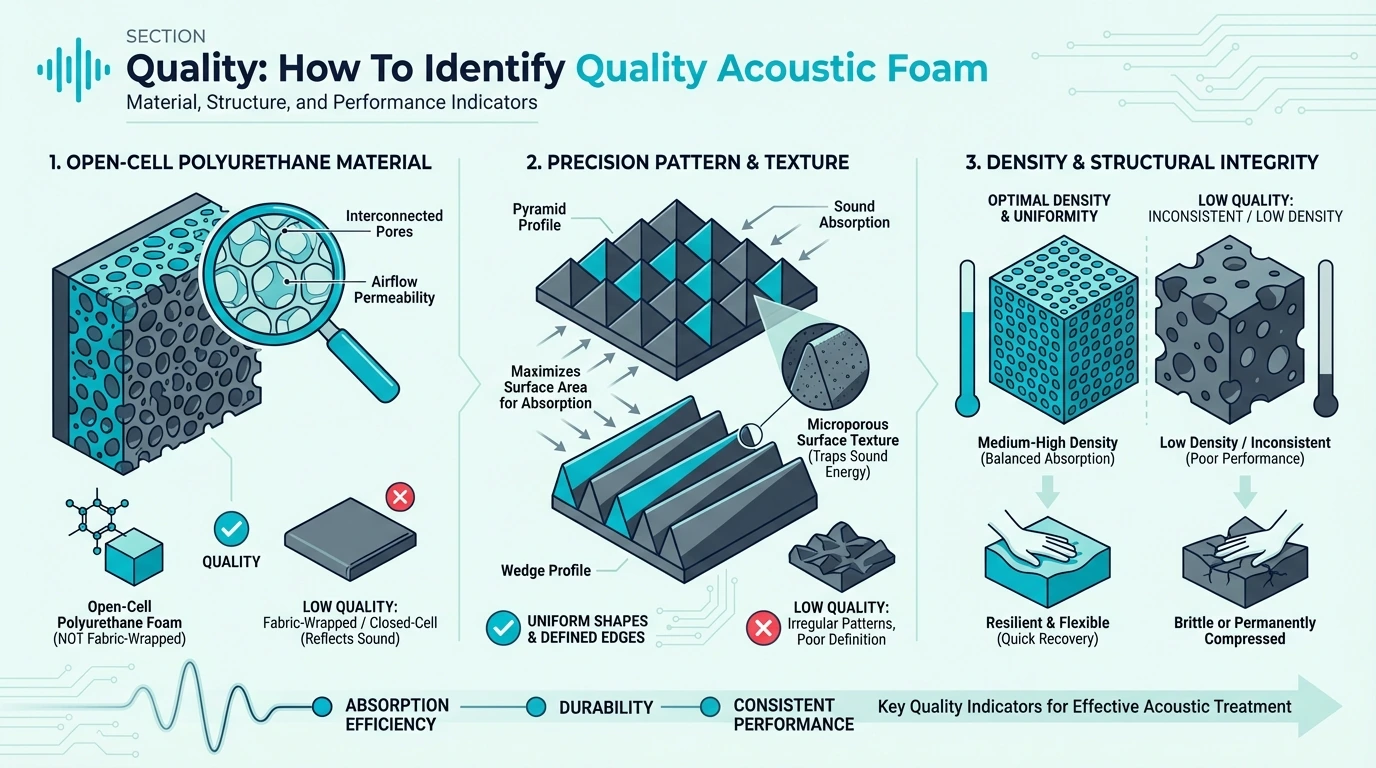
How to evaluate foam material quality.
Physical Indicators
Good quality foam: – Consistent color throughout – Uniform cell structure visible – Springs back when compressed – Feels substantial, not flimsy – No chemical odor after airing
Poor quality foam: – Color variations or streaks – Visible density variations – Slow recovery from compression – Very lightweight feel – Strong persistent odor
Specifications to Check
Look for: – Density: 1.5-2.5 lb/ft³ – NRC rating: 0.5+ (higher is better) – Fire rating: Class A or B – Cell type: Open-cell (must be specified)
For selection guidance, see how to choose acoustic foam.
Brand Reputation
Established brands (Auralex, Primacoustic) maintain quality control, while unknown brands may have inconsistent quality. Price often (but not always) correlates with material quality.
A reliable mid-range option is a 24-pack of 2-inch pyramid panels—consistent cell structure and fire-rated at a reasonable price.
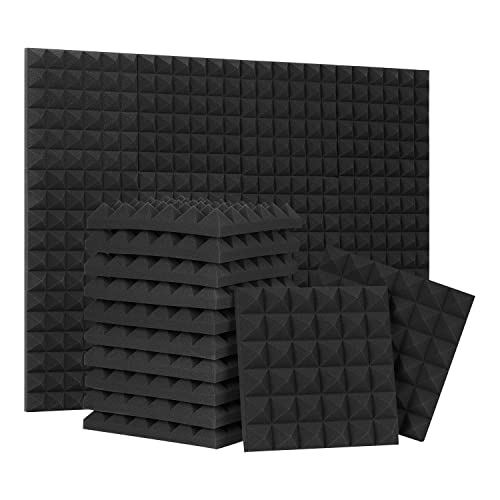
24-pack of 2-inch pyramid panels
Are There Environmental or Health Concerns With Acoustic Foam?
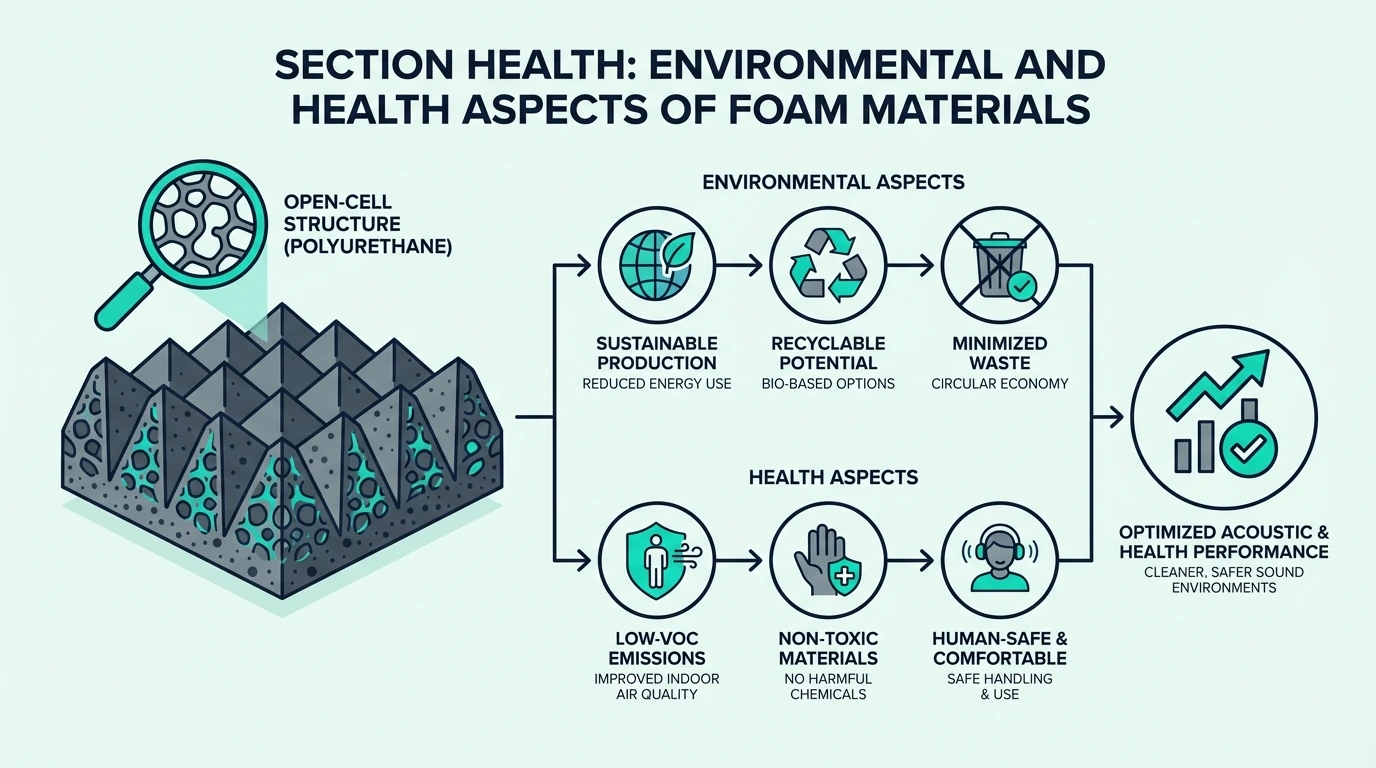
Material composition affects health and environmental impact.
Off-Gassing
New polyurethane foam may release VOCs: – Strongest when new – Dissipates over days to weeks – Ventilate during initial period – Quality foam has less off-gassing
Fire Retardant Concerns
Some fire retardants raise health questions: – Halogenated compounds most controversial – Newer formulations address concerns – Melamine avoids chemical retardants entirely – Check manufacturer information if concerned
End-of-Life Disposal
Foam disposal considerations: – Polyurethane: Not easily recyclable – Melamine: Not easily recyclable – Polyester: Recyclable in some programs – Landfill is common disposal method
Sustainable Alternatives
For environmental priority: – Recycled polyester panels – Natural fiber panels (wool, cotton) – Recycled content foam (limited availability)
For alternatives, see what to use instead of acoustic foam.
For understanding how material affects absorption, see what frequencies acoustic foam absorbs. If you want to know whether foam is worth your investment overall, see whether acoustic foam is worth it.
The Bottom Line
Acoustic foam is primarily made from polyurethane—a polymer created from polyols and diisocyanates, manufactured to create an open-cell structure that absorbs sound. Melamine foam offers premium performance through finer cell structure and inherent fire resistance.
Polyester panels provide an eco-friendly alternative using recycled PET fibers.
The key to acoustic effectiveness isn’t just the base material but how it’s manufactured: open-cell structure allows sound penetration, appropriate density (1.5-2.5 lb/ft³) provides absorption capacity, and fire retardant treatment ensures safety.
Quality varies widely between manufacturers—look for specified density, NRC ratings, and fire ratings. The material composition directly affects performance, durability, safety, and environmental impact.
For more guides on foam types, placement, and mounting, start at the acoustic foam hub.
Frequently Asked Questions
Is acoustic foam toxic?
Quality acoustic foam from reputable manufacturers is safe for normal use. New foam may off-gas VOCs initially—ventilate the area for a few days after installation.
Melamine foam avoids chemical retardants entirely. Once aired out, properly manufactured acoustic foam poses no notable health risk.
What’s the difference between acoustic foam and regular foam?
Acoustic foam is specifically manufactured with open-cell structure and appropriate density for sound absorption. Regular foam (mattress foam, packing foam) may have closed cells, wrong density, or other properties that make it ineffective for acoustics.
The base chemistry may be similar, but manufacturing differences create very different performance. For a deeper comparison, see acoustic foam vs normal foam.
Is melamine foam the same as Magic Eraser?
They’re related—both are melamine foam. However, acoustic-grade melamine is formulated and manufactured differently than cleaning products.
Acoustic melamine is optimized for sound absorption with specific density and cell structure—don’t use cleaning erasers as acoustic treatment.
Why is some acoustic foam more expensive?
Price differences reflect material quality (density, consistency), fire retardant quality, manufacturing precision, and brand reputation. Premium foam (melamine, high-density polyurethane) costs more due to materials and processing.
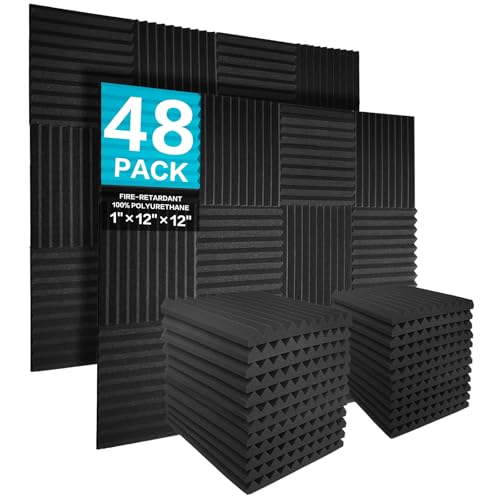
Budget foam cuts costs through lower density, less consistent manufacturing, or inferior fire treatment. If budget is a concern, a JBER 48-pack offers fire-tested polyurethane at an entry-level price.
Can I tell what foam is made of by looking at it?
Not definitively—polyurethane and melamine look similar, though you can feel differences (melamine is typically lighter and more rigid). Polyester panels look distinctly different: fibrous rather than cellular.
For certainty, check manufacturer specifications or product documentation.
Is recycled foam as effective as new foam?
Recycled content foam can perform equally well if properly manufactured—the recycling process doesn’t inherently reduce acoustic performance. However, quality control matters.
Ensure recycled foam meets the same specifications (density, NRC, fire rating) as virgin material. Recycled polyester panels are well-established and perform excellently.