Is Acoustic Foam Dangerous? The Real Risks (and How to Use It Safely)
Is acoustic foam dangerous?
The short answer is no — but that “no” comes with two caveats you should understand before you buy.
If you’ve ever opened a pack of foam and got hit with a chemical smell, you’re not imagining it.
And if foam sits too close to a space heater or hot light, that can become a fire problem fast.
That’s because most acoustic foam is polyurethane, and untreated polyurethane is combustible.
The safety story is mostly about ratings, clearance, and ventilation, not “foam is toxic.”
Below, I’ll show you what labels to look for, how to air out new foam, and the placement rules that keep you out of trouble.
Start with the quick takeaway, then follow the checklists before you mount anything.
Is acoustic foam dangerous? Generally no — standard polyurethane foam is flammable but completely manageable with fire-retardant options. Buy treated foam from reputable brands, keep panels at least three feet from heat sources, and ventilate well during the first week to handle off-gassing.
Is Acoustic Foam Actually Dangerous?
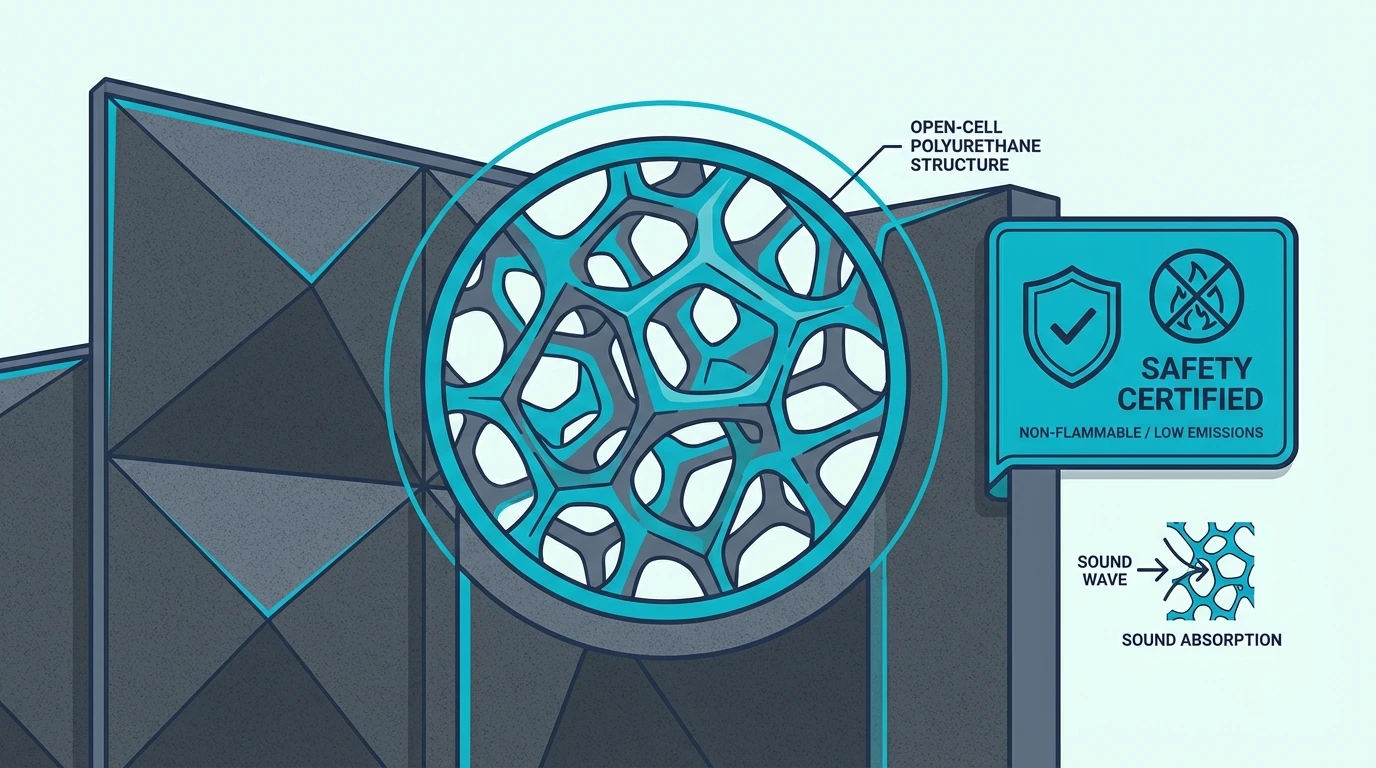
Here’s the uncomfortable truth most manufacturers won’t tell you upfront: standard acoustic foam is made from polyurethane, and polyurethane burns. That single fact drives every safety consideration we’ll cover in this guide.
But context matters here. The same polyurethane shows up in couch cushions, car seats, and mattresses — stuff you live with daily without a second thought.
Acoustic foam isn’t uniquely dangerous; it’s another polyurethane product that deserves basic fire awareness.
The Short Answer: Generally Safe With Some Precautions
Millions of acoustic foam panels get installed in homes and studios every year without incident. The material itself isn’t toxic when cured, doesn’t off-gas harmful chemicals in meaningful quantities after the initial period, and won’t spontaneously combust sitting on your wall.
The safety concerns are real, but they’re manageable. Fire-retardant foam exists specifically to address flammability.
Proper ventilation handles the initial off-gassing. Smart placement keeps panels away from heat sources that could cause problems.
I’ve seen hundreds of home studios with foam treatment — the ones that follow basic precautions never have issues. The problems happen when people ignore obvious safety practices like mounting foam directly above space heaters or covering electrical outlets.
For proper installation guidance, see our guide on how to put acoustic foam on walls.
If you’re still deciding whether foam is even the right tool, start with does acoustic foam work?. It helps you separate “treating reflections” from “soundproofing,” which matters for safety expectations too.
What Are the Two Main Concerns You Should Actually Know About?
Fire risk is the primary consideration, and it’s the one that matters most.
Untreated polyurethane foam can ignite at relatively low temperatures compared to other building materials. Once it catches fire, it spreads fast and releases toxic smoke.
The 2003 Station nightclub fire in Rhode Island demonstrated this tragically — pyrotechnics ignited untreated foam on the walls, and within 90 seconds the entire venue was engulfed. That incident changed fire codes for commercial venues and highlighted why fire-retardant treatment matters.
Off-gassing is the secondary concern that bothers most people initially. New foam releases volatile organic compounds (VOCs) that create a distinctive chemical smell.
The good news is it’s usually temporary. For most healthy adults, it’s more unpleasant than harmful.
That smell you notice when unboxing new panels peaks in the first 24-48 hours and fades significantly within a week. After a month, off-gassing is essentially complete.
Fire risk, however, requires ongoing awareness for as long as the foam remains installed.
For understanding foam materials and composition, see our guide on what acoustic foam is made of.
Is Acoustic Foam a Fire Hazard?
This is where things get serious, and I need to be direct with you. Fire risk is the primary safety consideration with acoustic foam, and understanding it properly could save your life or your property.
The Station nightclub fire I mentioned earlier killed 100 people in under two minutes. Pyrotechnics ignited polyurethane foam on the walls, and the fire spread so fast that people couldn’t escape.
That’s an extreme example involving untreated foam and open flames in a crowded commercial space. But it illustrates why this topic deserves your attention.
Yes, Standard Polyurethane Foam Is Flammable — Here’s What That Means
Untreated polyurethane ignites at around 315°C (600°F). That sounds high until you put it in context: a candle flame reaches 1,000°C, a space heater element can hit 400°C, and even halogen work lights generate significant heat at close range.
But ignition temperature isn’t the real danger — it’s what happens after ignition that makes foam fires so dangerous. Standard polyurethane foam acts like solid fuel once it catches, burning rapidly and releasing thick black smoke containing toxic gases including hydrogen cyanide and carbon monoxide.
The smoke is often more deadly than the flames. In the Station nightclub fire, most victims died from smoke inhalation, not burns.
This is why fire-retardant treatment matters so much. It’s not just about preventing fires, it’s about buying escape time if something goes wrong.
What’s the Real Difference Between Fire-Retardant and Untreated Foam?
Fire-retardant foam isn’t fireproof — this distinction matters enormously and I see it misunderstood constantly. Fire-retardant treatment means the foam is chemically treated to self-extinguish when you remove the ignition source.
It will still burn if you hold a flame to it, but it won’t continue burning and spreading on its own.
Untreated foam does the opposite. Remove the ignition source and it keeps burning, spreading to adjacent panels and anything else nearby.
A small incident that would self-extinguish with treated foam can become a room fire with untreated foam.
The fire-retardant chemicals work by releasing compounds when heated that interfere with the combustion reaction. They don’t make foam incombustible — they make it self-extinguishing.
That difference buys you critical minutes to notice the problem, evacuate, and call emergency services.
Look for these certifications when shopping: ASTM E84 Class A or B ratings, UL 94 flammability classifications, or California Technical Bulletin 117 compliance. If the product listing doesn’t mention fire ratings at all, assume it’s untreated and keep looking.
How Can You Actually Minimize Fire Risk in Your Space?
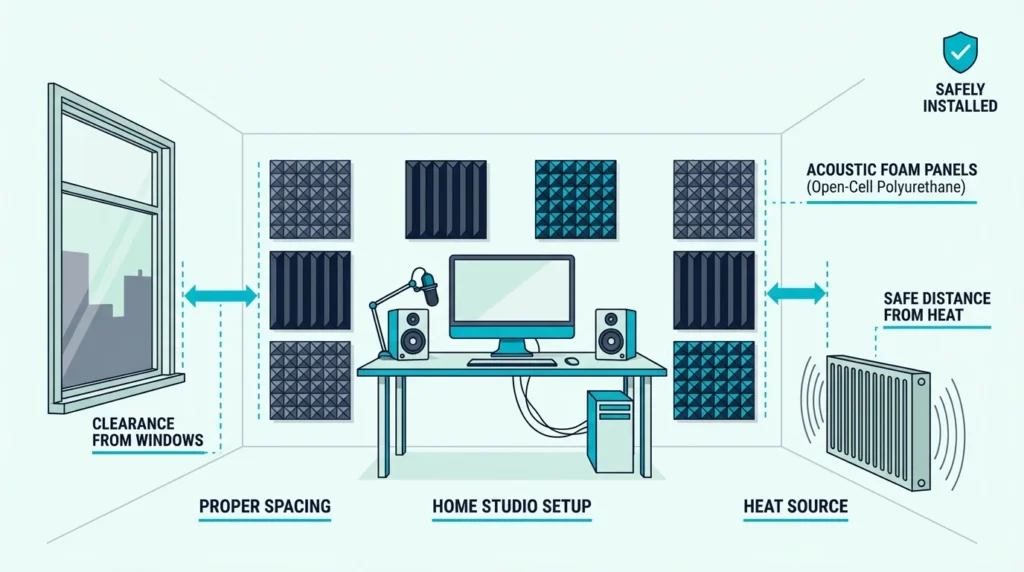
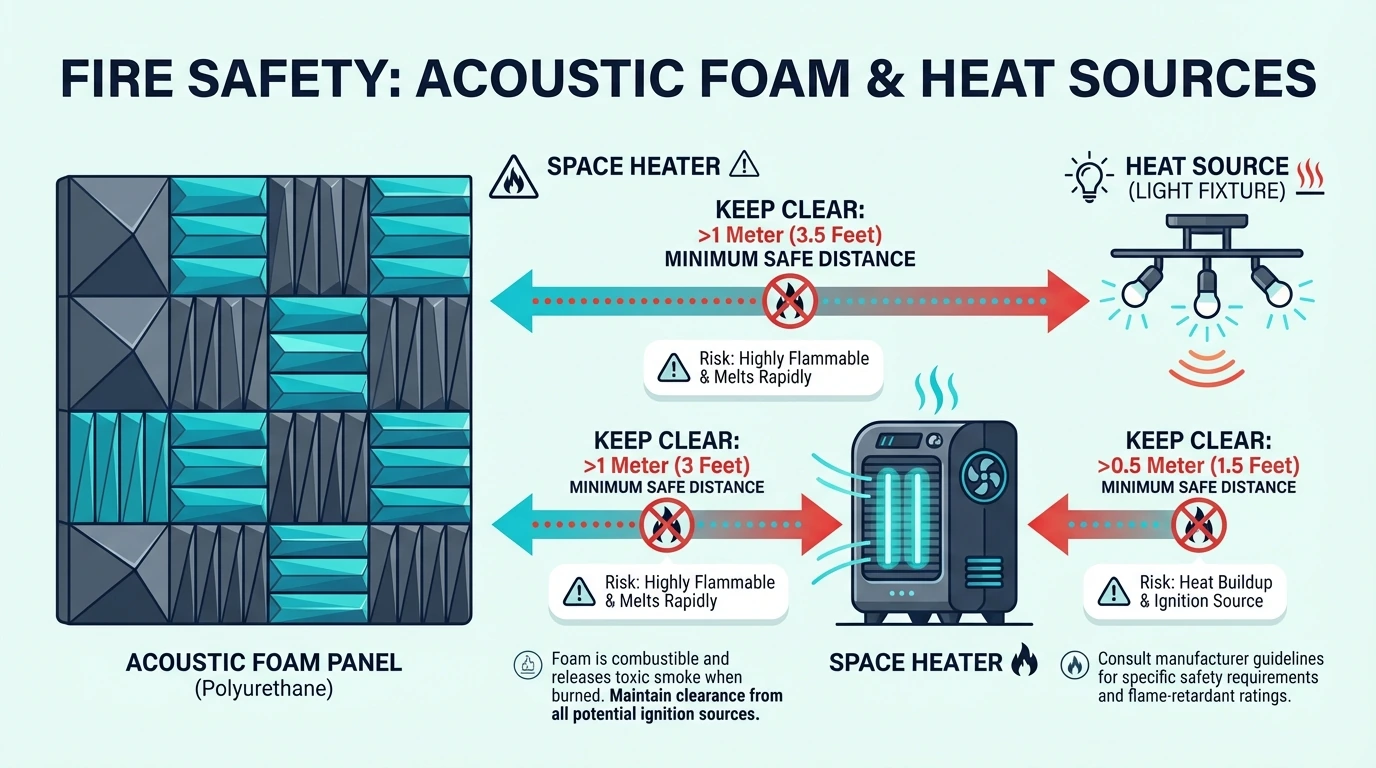
Keep foam at least three feet from any heat source. That includes the obvious ones like space heaters, radiators, and fireplaces — but also the sneaky dangers like halogen work lights, high-wattage incandescent bulbs, and ceiling fixtures that run hot.
Never cover electrical outlets with foam panels. Electrical faults cause fires, and foam directly over an outlet creates the perfect fuel source for what could otherwise be a minor incident.
This risk makes proper material selection the first line of defense.
Leave at least 6 inches clearance around every outlet, switch, and electrical box.
Install working smoke detectors in every room with acoustic treatment. This isn’t optional safety theater — it’s basic fire protection that could save your life.
If you don’t have smoke detectors in your treated space, stop reading this article and go install them now.
Check our complete acoustic foam guide for detailed placement diagrams that show safe distances from common heat sources. The general rule: if you can feel heat radiating from something, keep foam at least three feet away from it.
Get Studio Tips Weekly
Join 5,000+ creators getting acoustic treatment advice every week.
No spam. Unsubscribe anytime.Is Acoustic Foam Toxic?
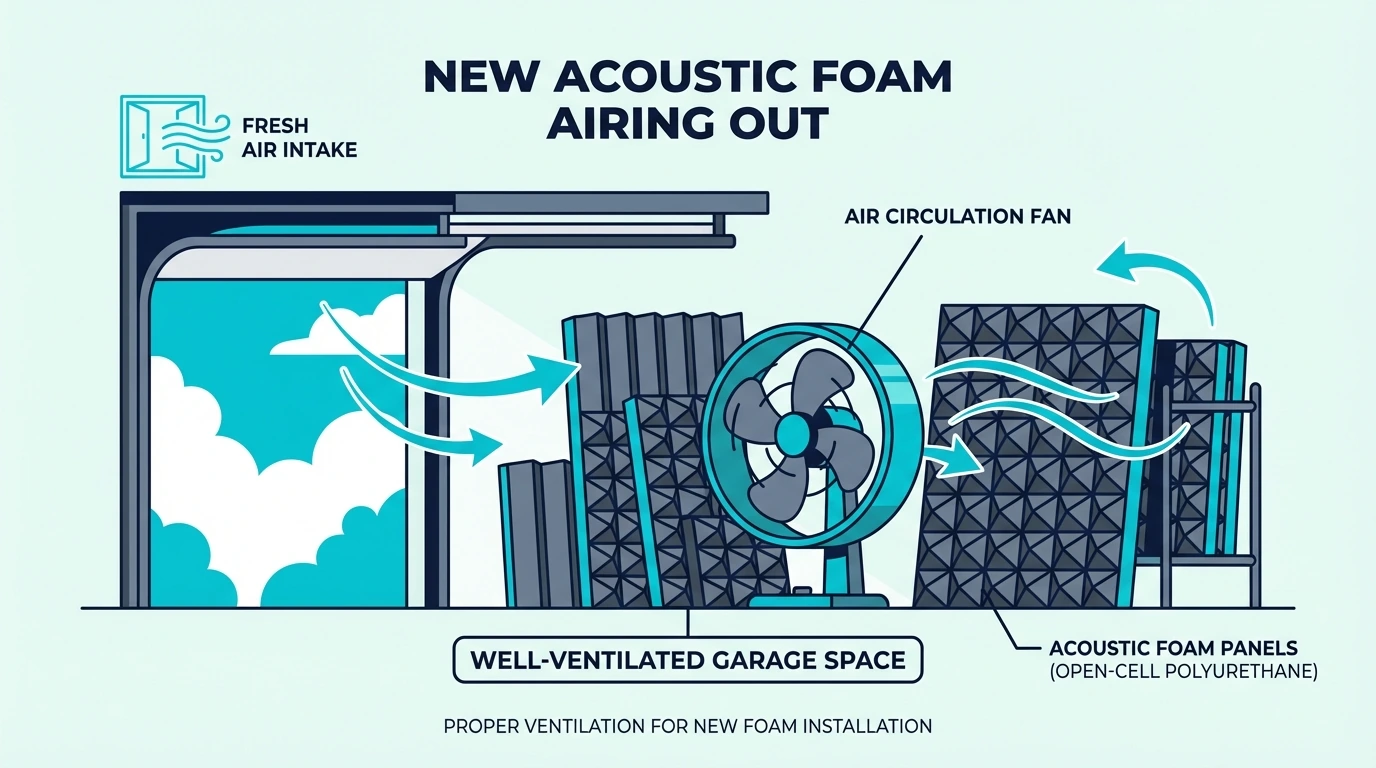
That distinctive chemical smell when you unbox new foam panels? That’s off-gassing — volatile organic compounds releasing from the manufacturing process.
The smell can be strong enough to trigger headaches in sensitive individuals. It also raises understandable questions about safety.
Now that we’ve covered the fire considerations, let’s address the chemical safety concerns that worry most people when they first encounter new foam.
What Is Off-Gassing and Why Does New Foam Smell So Strong?
Every piece of polyurethane foam off-gasses to some degree during the first few weeks after manufacturing. The primary compounds involved are toluene diisocyanate residues and various solvents — chemicals used in the foam production process that remain trapped in the cellular structure until the foam is unpackaged.
When you open that vacuum-sealed bag, these trapped compounds start escaping into your air. The concentration peaks during the first 24-48 hours when the most volatile compounds release fastest, then gradually decreases over the following weeks.
Think of it like new car smell or fresh paint. The odor is real chemicals entering your air, but the concentration in a normal residential setting typically falls well below harmful levels.
Your nose is incredibly sensitive to these compounds. You can smell them at concentrations far below what would cause health effects.
That said, “typically harmless” isn’t the same as “zero concern.” The next sections cover who should take extra precautions and how to minimize exposure.
How Long Does Off-Gassing Actually Last?
The first three days are the worst. You’ll notice strong chemical odors that can fill a small room within an hour of unboxing.
This is peak off-gassing, and it’s the period where you most want good ventilation.
By the end of week one, the smell becomes moderate — noticeable if you’re actively looking for it, but not overwhelming. Most people stop noticing it entirely unless they leave the room and come back with a fresh nose.
By weeks two through four, off-gassing drops to minimal levels. You might catch a faint whiff occasionally, but it’s barely perceptible.
After month two, the foam is essentially fully cured and chemically stable. There’s no more off-gassing to speak of.
Pro tip that makes a huge difference: unbox your foam outdoors or in a garage for 48-72 hours before bringing it into your living space. This eliminates the worst of the smell before the panels ever enter your room, and it costs you nothing but a bit of patience.
Are the Chemicals Actually Harmful to Your Health?
For most healthy adults, the answer is no — not at the concentrations present during normal residential off-gassing. The VOC levels from acoustic foam are comparable to what you’d experience from new furniture, fresh carpet, or recently painted walls.
The exposure is also temporary, which matters for risk assessment, though some materials are naturally cleaner than others. You’re not breathing these compounds continuously for years — you’re exposed to elevated levels for a few days, moderate levels for a few weeks, then nothing.
Your body can handle temporary exposures that would be problematic if they were permanent.
That said, I’m not going to pretend there’s zero concern. Some people are more sensitive to VOCs than others, and certain groups should take extra precautions that I’ll cover next.
Who Should Take Extra Precautions With New Foam?
People with chemical sensitivities may experience headaches, nausea, or respiratory irritation even at low VOC concentrations. If you know you’re sensitive to “new car smell” or fresh paint, expect similar reactions to new foam and plan accordingly with extended outdoor off-gassing.
Asthmatics can have symptoms triggered by VOCs in enclosed spaces. The compounds themselves may not directly trigger attacks, but the airway irritation can make you more susceptible to other triggers.
Extra ventilation during the first month is smart insurance.
Infants and young children have developing respiratory systems that are potentially more vulnerable to chemical exposure. Their lungs are smaller and they breathe faster relative to body weight, which means higher exposure per pound of body mass.
If you’re treating a nursery or child’s room, do the full off-gassing outdoors and wait a full month before bringing panels inside.
Pregnant women should err on the side of caution, especially during the first trimester when fetal development is most sensitive to environmental factors. Extended off-gassing periods and excellent ventilation are reasonable precautions even though the risk is probably low.
What Makes Some Acoustic Foam Safer Than Others?
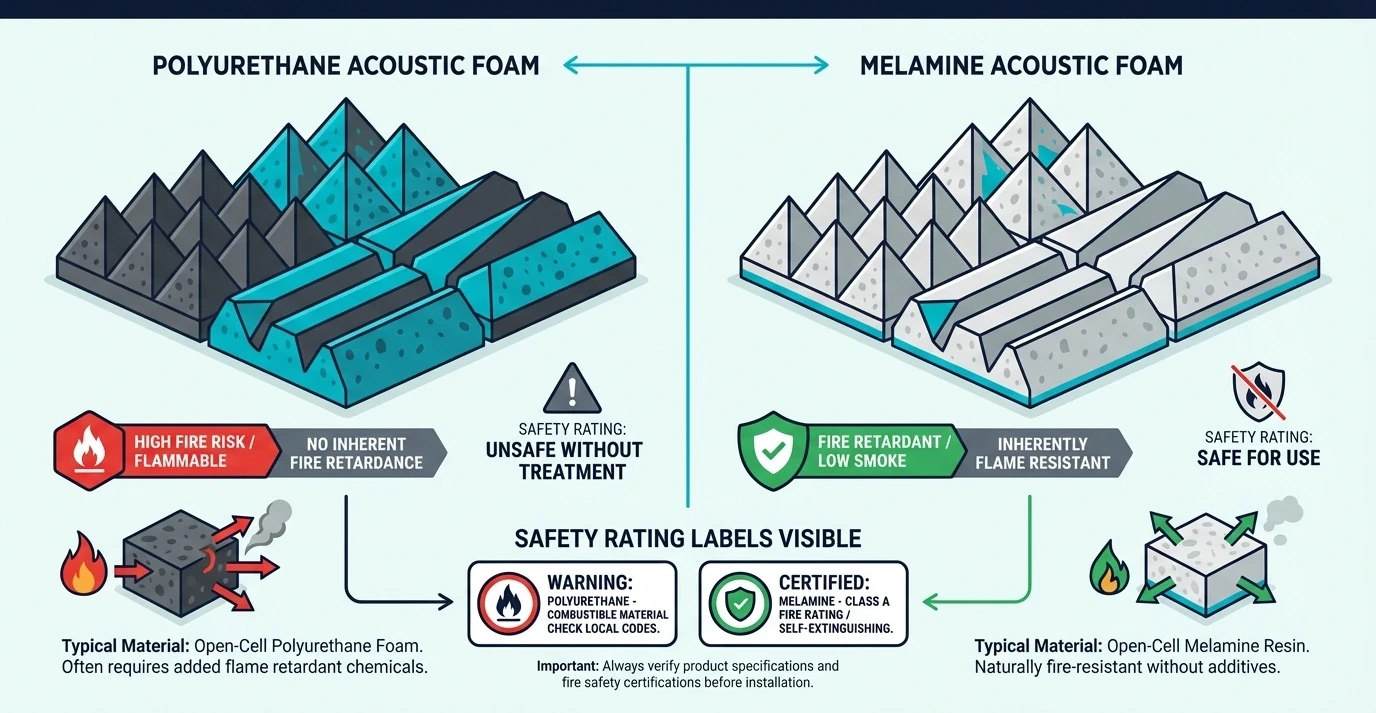
Now that you understand both the fire and chemical considerations, let’s look at what actually separates safe foam from questionable foam. The material composition and manufacturing quality make more difference than most people realize.
Understanding these factors helps you make smarter purchasing decisions — and explains why the cheapest option isn’t always the best value when safety is part of the equation.
How Does Material Composition Affect Safety?
Standard acoustic foam is polyurethane-based — the same family of materials used in furniture cushions and car seats. It’s affordable, widely available, and effective at absorbing mid-to-high frequency sound.
The tradeoff is that untreated polyurethane is inherently flammable.
Melamine foam represents a safer alternative that’s gaining popularity. It’s the same material as Magic Eraser cleaning pads — naturally fire-resistant without requiring chemical treatment.
Melamine foam won’t sustain a flame, produces less off-gassing during the initial period, and generally has better high-frequency absorption.
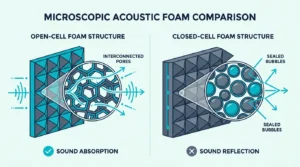
For understanding foam types and materials, see open-cell vs closed-cell foam.
The catch is cost: melamine foam is often double or triple the price of equivalent polyurethane panels. For most home studios operating on a budget, fire-retardant polyurethane offers the best balance of safety, performance, and affordability.
There’s also recycled-content foam made from repurposed polyurethane, which can have different off-gassing characteristics depending on the source material and manufacturing process. Quality varies more with recycled products, so stick to established brands if you go that route.
What Do Fire Ratings and Certifications Actually Mean?
Class A (also called Class 1) is the highest fire rating for surface materials, with a flame spread index of 0-25 and a smoke development index under 450. Commercial venues typically require Class A materials for any wall or ceiling treatment — it’s the standard for professional installations.
Class B (Class 2) offers good protection with a flame spread index of 26-75. This is the sweet spot for residential applications — sufficient safety margin for home studios, bedrooms, and podcasting spaces without the premium price of Class A materials.
Class C (Class 3) provides moderate protection with a flame spread index of 76-200. It’s acceptable for some applications but represents the minimum I’d recommend for any permanent installation.
Below Class C, you’re essentially looking at untreated foam.
If the product listing doesn’t mention fire ratings at all, assume it’s untreated Class D material with no flame spread limits. Reputable manufacturers always advertise their fire certifications because it’s a competitive advantage — silence on safety usually means there’s nothing positive to say.
Is There Really a Meaningful Difference Between Quality and Budget Foam?
Budget foam at the lowest price points — the cheapest options available — often lacks fire-retardant treatment entirely. The manufacturing standards are unknown, quality control is minimal, and the companies selling it often can’t provide documentation of any safety testing.
The material itself might be fine, but you have no way to verify what you’re actually getting. I’ve seen budget foam that performs well and budget foam that falls apart within months.
Without consistent quality control, you’re gambling every time you order.
Quality foam from established brands costs more and includes documented fire-retardant treatment, uses formulations designed for lower VOC emissions, and maintains consistent density across production batches. You’re paying for both the safety features and the quality control that ensures you actually get them.
If you want a denser example from a mainstream listing, the TroyStudio Thick Acoustic Foam Panels (36-Pack) are the kind of thicker foam pack where the extra cost buys you a more serious product to evaluate instead of a mystery bundle.
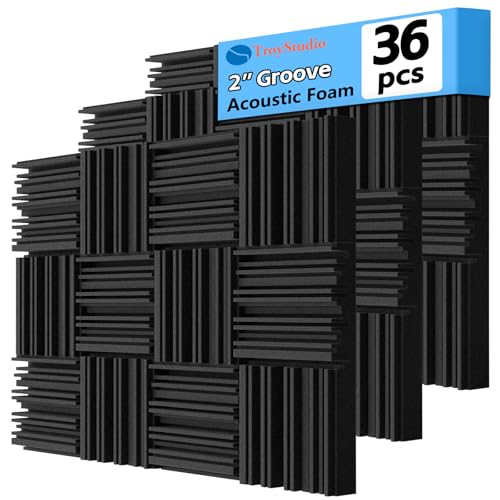
TroyStudio Thick Acoustic Foam Panels (36-Pack)
A broader starter order like the 50 Pack Acoustic Foam Panels can also be reasonable value, but only if the listing clearly states the treatment and test standard instead of hiding behind generic marketing language.
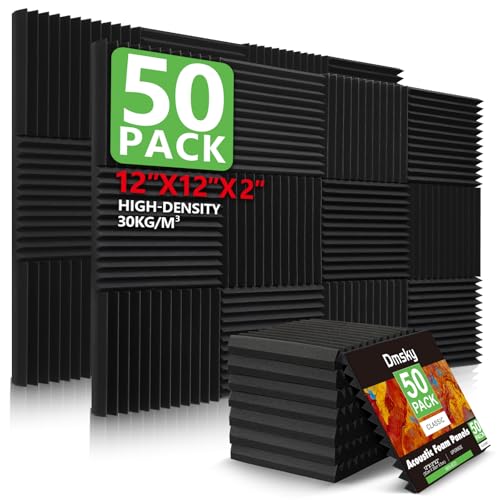
50 Pack Acoustic Foam Panels
The price difference on a typical 24-panel order is often modest. That’s a trivial investment when you’re talking about fire safety and air quality in your living space.
The budget option only looks cheaper until you factor in the risks you’re accepting.
How Do You Choose Safe Acoustic Foam?
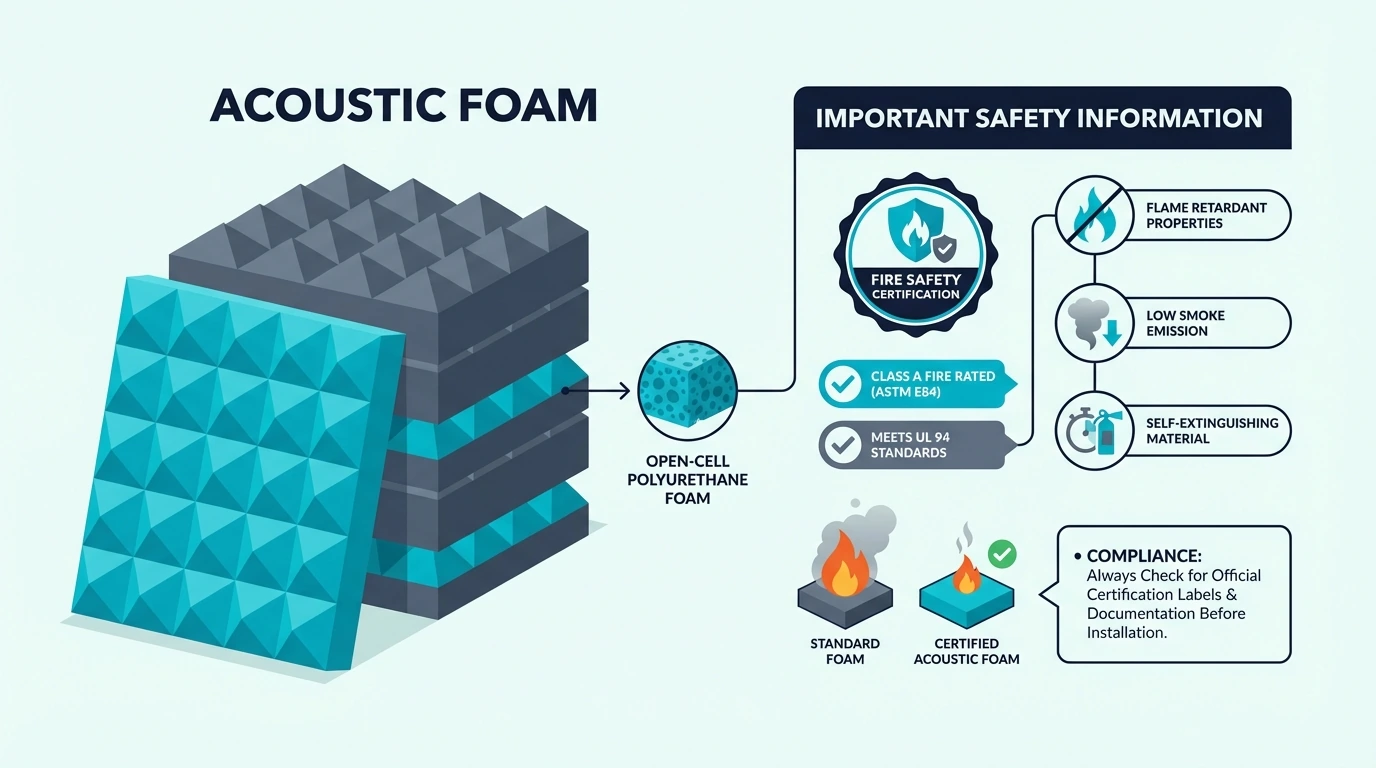
With the underlying science understood, here’s how to make smart purchasing decisions. These guidelines will help you find foam that performs well acoustically without creating safety hazards in your space.
The earlier sections explained why these factors matter — this section tells you exactly what to look for when shopping.
Why Is Fire-Retardant Treatment Absolutely Non-Negotiable?
Every foam panel you buy should explicitly state fire-retardant treatment or Class A/B fire ratings in the product description. This is non-negotiable — not a nice-to-have, not a premium feature, but a baseline requirement for any foam you put on your walls.
If the listing doesn’t mention fire safety at all, keep looking. Manufacturers who invest in fire-retardant treatment always mention it because it’s a selling point.
Silence on safety almost always means the manufacturer skipped treatment to cut costs and keep prices competitive.
The fire-retardant treatment adds pennies per panel during manufacturing — a trivial amount per square foot of additional cost. Any company that skips it is cutting the cheapest possible corner, and that attitude toward cost-cutting usually extends to other aspects of quality control too.
What Certifications Should You Actually Look For?
ASTM E84 is the gold standard test for surface burning characteristics in the United States. It measures both flame spread and smoke development, giving you a comprehensive picture of fire behavior.
Look for Class A or Class B ratings — anything lower than Class B represents minimal protection.
UL 94 is another reliable certification that measures flammability for plastic materials specifically. It’s commonly used for foam products and gives you confidence the material has been independently tested by a recognized laboratory.
California Technical Bulletin 117 is a furniture flammability standard that many acoustic foam products also meet. It’s not as rigorous as ASTM E84 but indicates the manufacturer takes fire safety seriously enough to pursue certification.
GREENGUARD certification addresses the off-gassing concern specifically. It indicates the product has been tested for low chemical emissions and meets standards for indoor air quality.
If you’re particularly sensitive to VOCs or treating a space where air quality matters extra (nursery, bedroom, office), GREENGUARD certification provides additional peace of mind.
For bedroom-specific considerations, see our guide on whether to put acoustic foam in bedrooms.
Which Brands Can You Actually Trust for Safety?
JBER 12 Pack Acoustic Foam Panels are a more useful starter reference because they have a long sales history and give you a baseline size and thickness to compare against. Just make sure the listing actually states a fire rating, and still follow the clearance and ventilation rules in this guide.
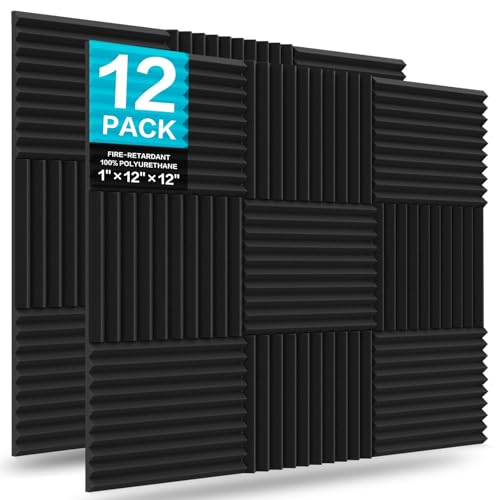
JBER 12 Pack Acoustic Foam Panels
JBER corner blocks work well for treating room corners where bass buildup concentrates. It’s the same trusted brand, purpose-built for the specific acoustic challenges that corners present.
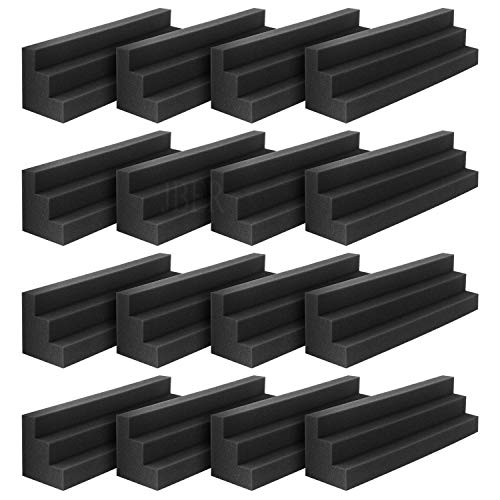
JBER Column Acoustic Wedge Corner Block
The column design looks more intentional than cramming flat panels into corners.
For larger wall coverage, a pack like the 52 Pack Acoustic Panels 1” × 12” × 12” make sense only if the listing gives you the same safety documentation you would demand from a smaller starter set.
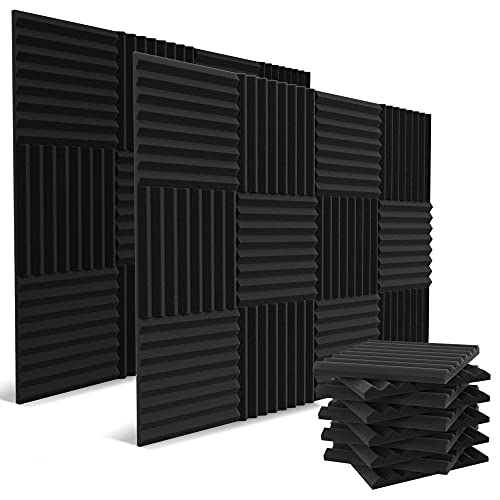
52 Pack Acoustic Panels 1” × 12” × 12”
Avoid no-name brands with prices that seem too good to be true. When a 24-pack costs significantly less than comparable products, that savings came from somewhere — and fire-retardant treatment is often what got cut.
What Should You Actually Do Before Installing New Foam?
First, let the foam off-gas for at least 48-72 hours in a well-ventilated area. A garage with the door cracked open is ideal, and outdoors works if weather permits.
This simple step knocks down most of the initial chemical smell before panels ever enter your living space.
Second, map your placement before you start mounting. Identify every heat source in the room (heaters, lights, electrical outlets, anything that generates warmth).
Mark three-foot clearance zones around each one. Plan your panel layout to stay outside those zones.
If you’re laying out a full-room treatment order, spread something like the Knightsacoustic 96 Pack Sound Proof Foam Panels across the floor first so you can verify coverage and keep every panel away from outlets, switches, and hot fixtures before any adhesive touches the wall.
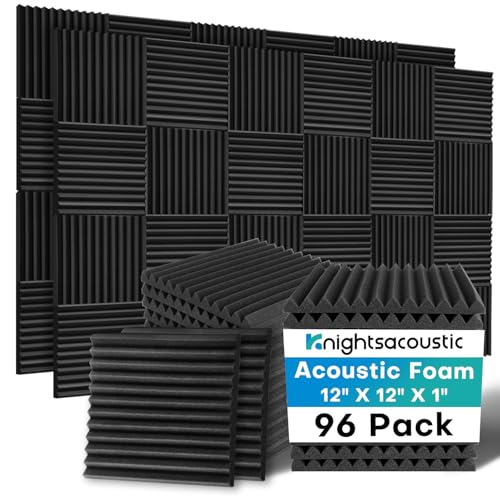
Knightsacoustic 96 Pack Sound Proof Foam Panels
For optimal placement strategies, see our guide on how to arrange acoustic foam.
Third, verify you have working smoke detectors in the room. If the room doesn’t have smoke detection, install detectors before you install foam.
This isn’t negotiable — it’s basic fire safety that should already be in place.
Fourth, plan for adequate ventilation during the first week after installation. Keep windows cracked if weather permits, run fans to circulate air, and avoid spending extended time in the room during peak off-gassing hours.
Check out our guide to the best acoustic foam panels for specific product recommendations that meet all these safety requirements.
The Bottom Line: Safe With Basic Precautions
Acoustic foam isn’t inherently dangerous — but it does require informed use. The fire risk we covered earlier is completely manageable with the right products and practices, and the off-gassing concerns resolve themselves within a few weeks of installation.
Buy fire-retardant foam from reputable brands with documented certifications. Keep panels at least three feet from any heat source, and never cover electrical outlets or switches.
These aren’t complicated requirements — they’re common-sense practices that take seconds to implement.
Ventilate your space well during the first week after installation to handle off-gassing. That chemical smell fades quickly with fresh air circulation.
The fire safety considerations stay relevant for as long as the foam remains installed.
For most home studios, bedrooms, and podcasting setups, acoustic foam is a safe and effective way to improve room acoustics. The millions of successful installations every year prove that.
Problems only happen when people ignore obvious safety practices. Make smart choices upfront and you’ll have nothing to worry about.
Frequently Asked Questions
Can Acoustic Foam Catch Fire?
Yes, standard polyurethane foam is flammable and will burn if exposed to open flame or sustained high heat. This is why fire-retardant treatment matters so much — treated foam self-extinguishes when you remove the ignition source, while untreated foam continues burning and spreading.
Fire-retardant foam isn’t fireproof, but it dramatically reduces fire risk by preventing small incidents from becoming room fires. Keep all acoustic foam away from heat sources, open flames, and electrical hazards regardless of fire rating.
Is Acoustic Foam Safe for Bedrooms?
Yes, with appropriate precautions in place. Choose fire-retardant foam with documented Class A or B ratings, ventilate the room thoroughly during the first week after installation, and keep panels away from any heating sources including bedside lamps and electric blankets.
Many people safely use acoustic foam in bedrooms for better sleep acoustics or to reduce sound reflection from outside noise. The key is proper product selection, smart placement away from heat sources, and patience during the initial off-gassing period.
Is the Smell From New Foam Harmful?
For healthy adults, the off-gassing smell is unpleasant but not dangerous at normal residential exposure levels. The VOC concentrations are similar to what you experience with new furniture or fresh paint — noticeable to your nose but well below harmful thresholds.
People with chemical sensitivities, asthma, or respiratory conditions should take extra precautions: extended off-gassing periods outdoors, excellent ventilation during the first month, and possibly choosing melamine foam which off-gasses less than polyurethane.
Should I Worry About Acoustic Foam in My Studio?
Not if you buy quality, fire-retardant foam from reputable brands and follow the basic safety practices covered in this guide. Millions of home studios worldwide use acoustic foam without any incidents — the material is safe when used properly.
The risks we discussed are real but entirely manageable. Informed purchasing decisions and common-sense installation practices eliminate virtually all safety concerns.
You now have the information to use foam safely. The rest is just following through on what you’ve learned.