Does Acoustic Treatment Make A Difference (Yes — Here Is Exactly What Changes)
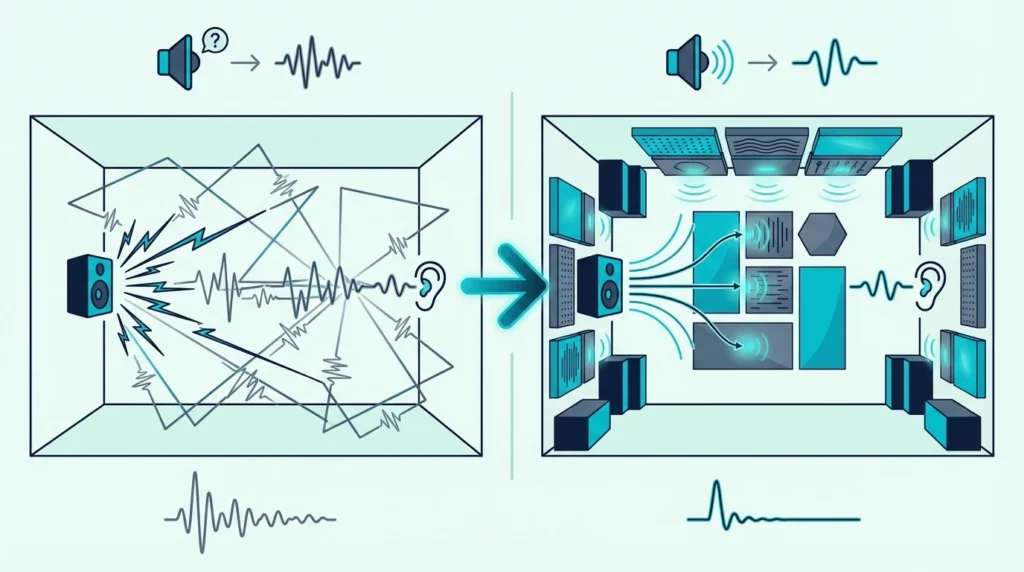
Does acoustic treatment make a difference — yes, but the size of that difference depends entirely on what materials you use and where you put them. Foam wedges on random walls barely move the needle, while fiberglass panels at first reflection points transform the room.
The skepticism comes from people who tried the foam approach and heard the room get quieter but not more accurate. Their mixes still did not translate because the bass buildup and comb filtering — the real problems — stayed untreated.
The right panels at the right positions fix those specific problems, giving you recordings with less room coloration and mixes that sound consistent across playback systems.
Below, this guide breaks down what treatment actually does to sound, what it cannot fix, and why strategic placement makes the biggest audible difference in any listening environment.
Acoustic treatment makes a measurable and audible difference. It reduces flutter echo, tames bass modes, eliminates comb filtering at first reflection points, and improves stereo imaging accuracy. The result is cleaner recordings, mixes that translate to other playback systems, and reduced listener fatigue. Treatment does not block outside noise (that is soundproofing) and cheap acoustic foam only addresses mid-high frequencies while ignoring bass problems. Fiberglass or mineral wool panels at 2-4 inches thick deliver the broadband absorption that actually matters.
Does Acoustic Treatment Make A Difference — And How Big Is That Difference?
The difference is large enough that professional studios consider treatment non-negotiable. No serious recording or mixing facility operates in an untreated room, and the reason is not aesthetics.
An untreated room adds its own signature to everything you hear. Sound waves bounce off walls, ceiling, and floor, creating reflections that arrive at your ears milliseconds after the direct sound.
Those reflections cause comb filtering — specific frequencies cancel or reinforce depending on the path length, making your monitoring inaccurate.
Bass modes compound the problem. In a typical bedroom-sized room, standing waves create spots where bass is 10-15 dB louder than it should be and other spots where it nearly disappears.
You cannot mix bass accurately when the room adds or subtracts that much energy at specific frequencies.
Treatment removes those distortions. After placing panels at first reflection points and bass traps in the corners, the room tells the truth about what your speakers are actually producing.
Mixes translate better because you made decisions based on the music, not on room artifacts.
What Does Acoustic Treatment Actually Do To Sound?
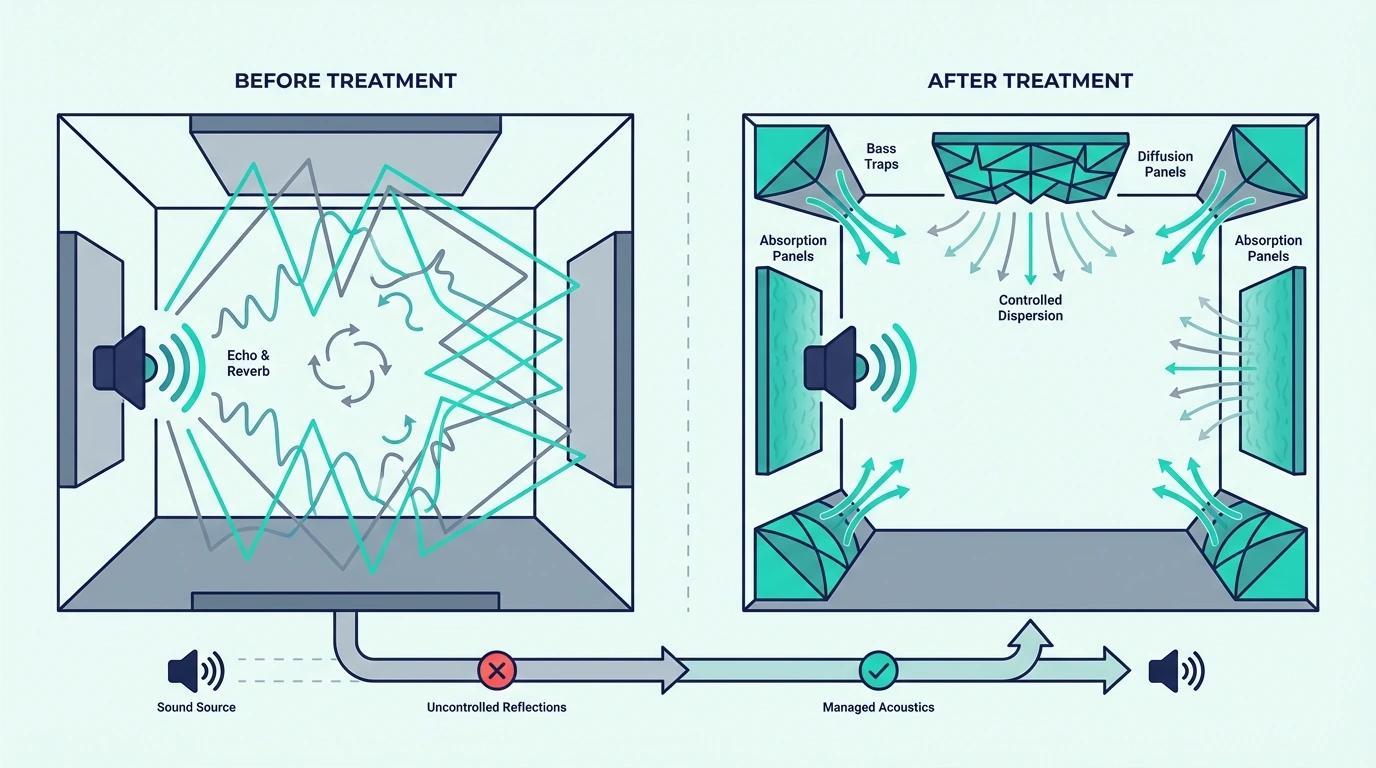
Acoustic treatment changes the behavior of sound inside your room by absorbing, diffusing, or trapping the energy that bounces off surfaces. Each type of treatment addresses a different problem.
Before And After — What You Hear
The simplest test is the clap test. Clap your hands in an untreated room and you hear a metallic ringing that sustains for a noticeable duration — that is flutter echo bouncing between parallel walls.
After placing even two panels on opposite walls, that ringing disappears. The sound of the clap dies quickly and cleanly because the reflection path is broken.
Vocal recordings show the difference even more clearly. Record a vocal in an untreated room, then record the same performance after adding panels at the first reflection points behind and beside the microphone.
The treated recording sounds tighter, more present, and more detailed because the room reflections that were smearing the vocal are gone.
The UMIACOUSTICS 4-Pack Acoustic Panels are a practical starting point for hearing that before-and-after difference in a home studio.
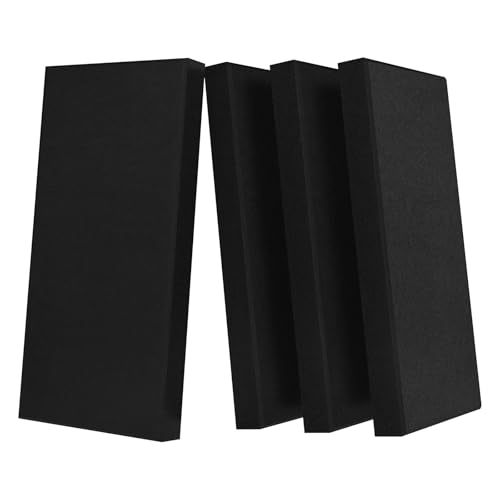
UMIACOUSTICS 4-Pack Acoustic Panels
What Treatment Cannot Fix
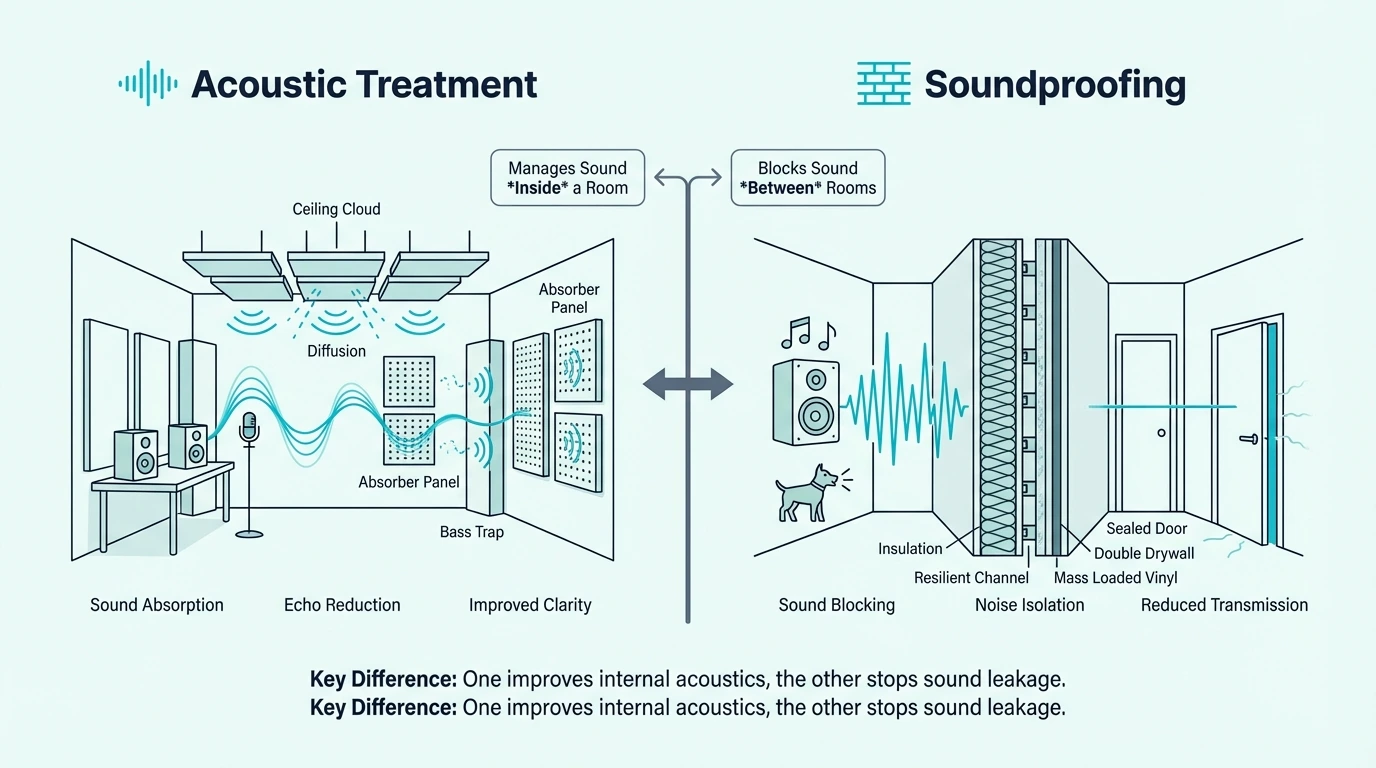
Treatment does not block outside noise. If traffic, neighbors, or HVAC noise is entering your room, that is a soundproofing problem that requires mass, decoupling, and sealed construction — not absorption panels.
Treatment also cannot fix bad room dimensions. A perfectly square room creates overlapping modes at the same frequencies, and while bass traps reduce the severity, the fundamental geometry still works against you.
Choosing a rectangular room with non-integer dimension ratios gives treatment a better starting point.
Equipment problems — noisy preamps, bad cables, cheap microphones — remain after treatment. Treatment improves the room, not the signal chain.
Get Studio Tips Weekly
Join 5,000+ creators getting acoustic treatment advice every week.
No spam. Unsubscribe anytime.What Are The Disadvantages Of Acoustic Foam?
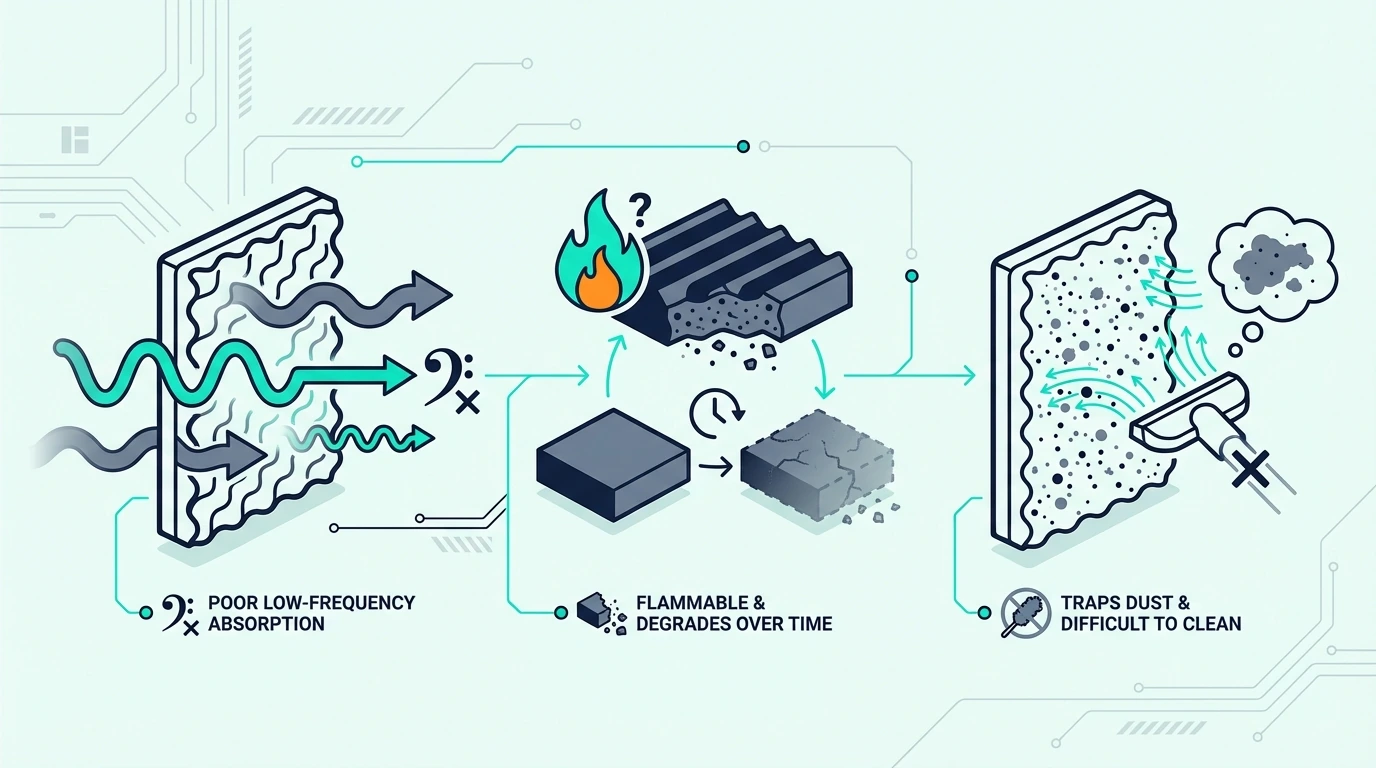
Acoustic foam is the most common treatment material people buy first, and it is also the least effective option for serious acoustic work.
Foam only absorbs mid and high frequencies. Standard 2-inch polyurethane foam wedges have almost no absorption below 500 Hz.
Since bass buildup is the biggest acoustic problem in small rooms, foam leaves the worst issues untreated.
Cheap foam degrades over time. Low-quality polyurethane yellows, crumbles, and loses its absorptive properties within a few years.
Some budget foams also pose fire risks because they lack proper flame-retardant treatment.
Foam NRC ratings are lower than rigid panel alternatives. A typical 2-inch foam wedge has an NRC around 0.65, while a 2-inch fiberglass panel achieves 0.85 or higher.
That difference means you need significantly more foam to achieve the same absorption as fewer fiberglass panels.
The 8-Pack Art Acoustic Panels offer a middle ground — decorative panels with better absorption than basic foam at a budget-friendly price point.
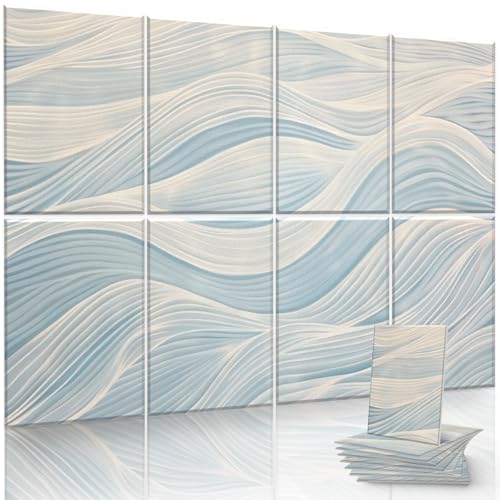
8-Pack Art Acoustic Panels
Will Acoustic Treatment Give My Vocals More Clarity?
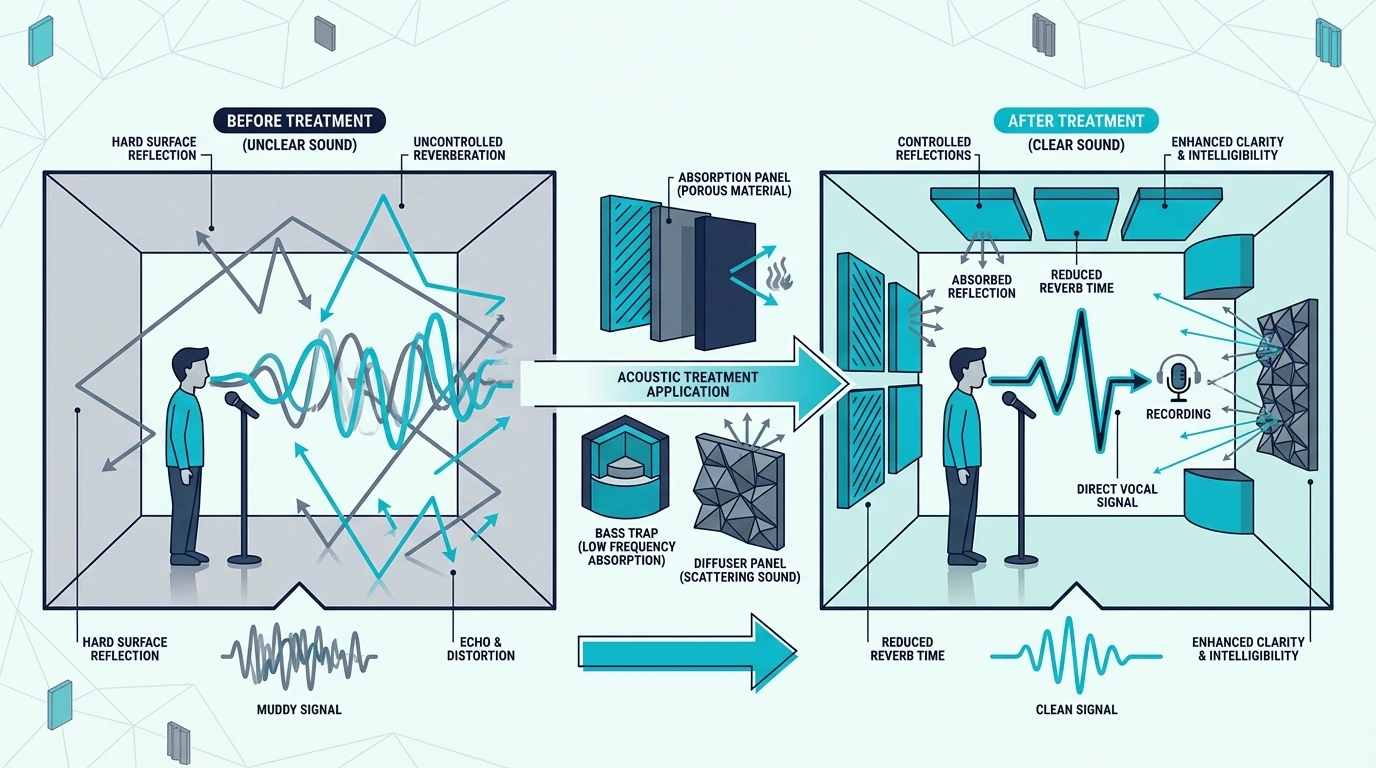
Yes — and vocal clarity is one of the most immediately audible improvements from treatment. The reason is straightforward.
When you record a vocal, the microphone picks up the direct sound from the singer and the reflected sound bouncing off nearby walls. Those reflections arrive milliseconds later, creating comb filtering that makes the vocal sound hollow, boxy, or distant.
Panels at the first reflection points behind, beside, and above the microphone absorb those early reflections before they reach the mic. The result is a vocal that sounds closer, more present, and more detailed — because you are hearing the singer, not the room.
The improvement is most dramatic in untreated bedrooms and home studios where bare drywall creates strong, focused reflections within a few feet of the microphone position.
Even podcasters and voice-over artists notice the difference. Speech intelligibility improves because the consonants and transients that carry meaning are no longer smeared by room reflections.
What Are The Benefits Of Acoustic Treatment?
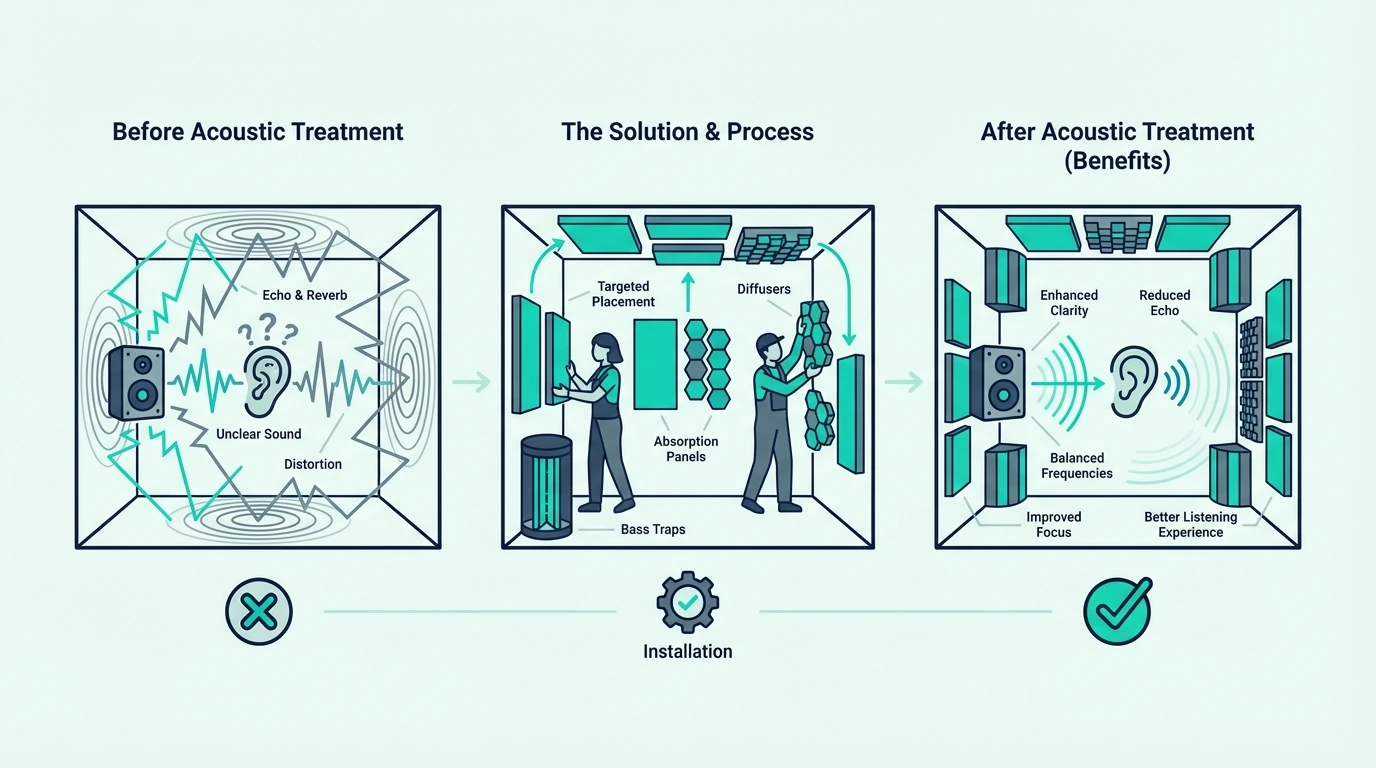
The benefits extend beyond recording quality. Every listening activity improves when the room stops adding its own coloration to the sound.
Cleaner recordings are the most obvious benefit. Removing room reflections from microphone pickup gives you a drier, more controllable signal that responds better to processing and mixing.
More accurate mixing follows directly. When your monitoring position tells the truth about frequency balance, stereo imaging, and depth, your mix decisions translate to other playback systems — car speakers, earbuds, phone speakers — instead of only sounding right in your room.
Reduced listener fatigue is a benefit most people do not expect. Untreated rooms force your brain to work harder to separate direct sound from reflections.
After treatment, listening for extended periods feels less tiring because your brain processes a cleaner signal.
The UMIACOUSTICS 4-Pack Panels with Hardware deliver these benefits with a straightforward install at key room positions.
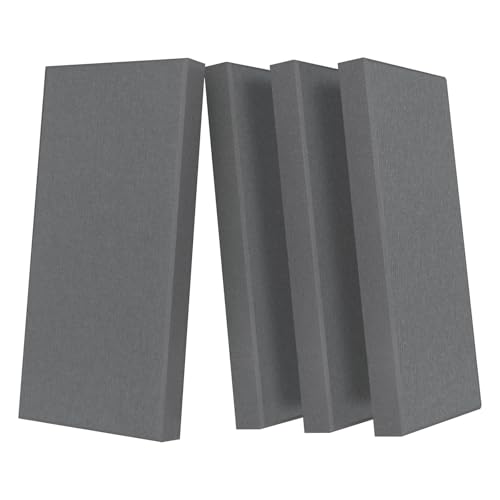
UMIACOUSTICS 4-Pack Panels with Hardware
Better speech intelligibility matters for home theaters, conference rooms, and podcast spaces. Treatment reduces the reflections that smear dialogue, making speech easier to understand at lower volumes.
Improved music enjoyment applies even if you do not record or mix. Listening to music in a treated room reveals details — spatial cues, quiet reverb tails, subtle instrument textures — that reflections mask in an untreated space.
The Bottom Line
Acoustic treatment makes a real, measurable difference in any room used for recording, mixing, or critical listening. The improvement is not placebo — it is physics.
Start with panels at first reflection points and bass traps in corners. Those positions deliver the biggest audible improvement per panel.
Avoid cheap foam as your primary treatment — fiberglass or mineral wool panels absorb across a wider frequency range and last significantly longer.
Frequently Asked Questions
How Much Does Acoustic Treatment Cost?
DIY panels using rigid fiberglass and fabric cost roughly $30-50 each in materials. Commercial pre-built panels range from $50-200 per panel depending on size and quality.
A basic home studio treatment setup — four to six wall panels plus four corner bass traps — typically costs $300-800 total.
What Is The Cheapest Way To Reduce Noise Through Walls?
That is a soundproofing question, not an acoustic treatment question. The cheapest approaches are sealing air gaps around doors and outlets with acoustic caulk, adding heavy curtains over windows, and applying mass-loaded vinyl to walls.
None of these are acoustic treatment — they block sound transmission rather than controlling sound quality inside the room.
Is Acoustic Treatment Worth It For A Bedroom Studio?
A bedroom studio benefits more from treatment than a large room because small rooms have worse acoustic problems — stronger bass modes, more flutter echo, and closer reflection points. Even four panels at first reflection points and two corner bass traps transform a bedroom from an unreliable listening environment into one where your mix decisions actually translate.