How To Soundproof Drain Pipes (What Works And What Doesn’t) [2026]

How to soundproof drain pipes sounds like a simple wrap job, but the right fix depends on whether the noise is coming off the pipe wall, jumping into the framing, or both.
If every flush, shower drain, or sink discharge seems to run through the wall beside your bed, the problem gets so disruptive because a lightweight drain stack can radiate water noise and send vibration straight into the framing at the same time.
The good news is that you can often make the noise much less intrusive if you treat the loudest accessible section first instead of chasing the whole plumbing system at once.
This guide shows how to tell whether wrap, isolation, open-wall cavity treatment, or a boxed chase is the smarter first move.
How to soundproof drain pipes depends first on access and second on noise type. If the pipe is exposed, start with a waterproof self-adhesive butyl damping mat and vibration isolation at the mounts; if the wall is already open, add insulation around the treated pipe; if the pipe is buried in a finished wall, expect wall work or more modest gains.
Drain-Pipe Noise Starts With The Real Leak Path
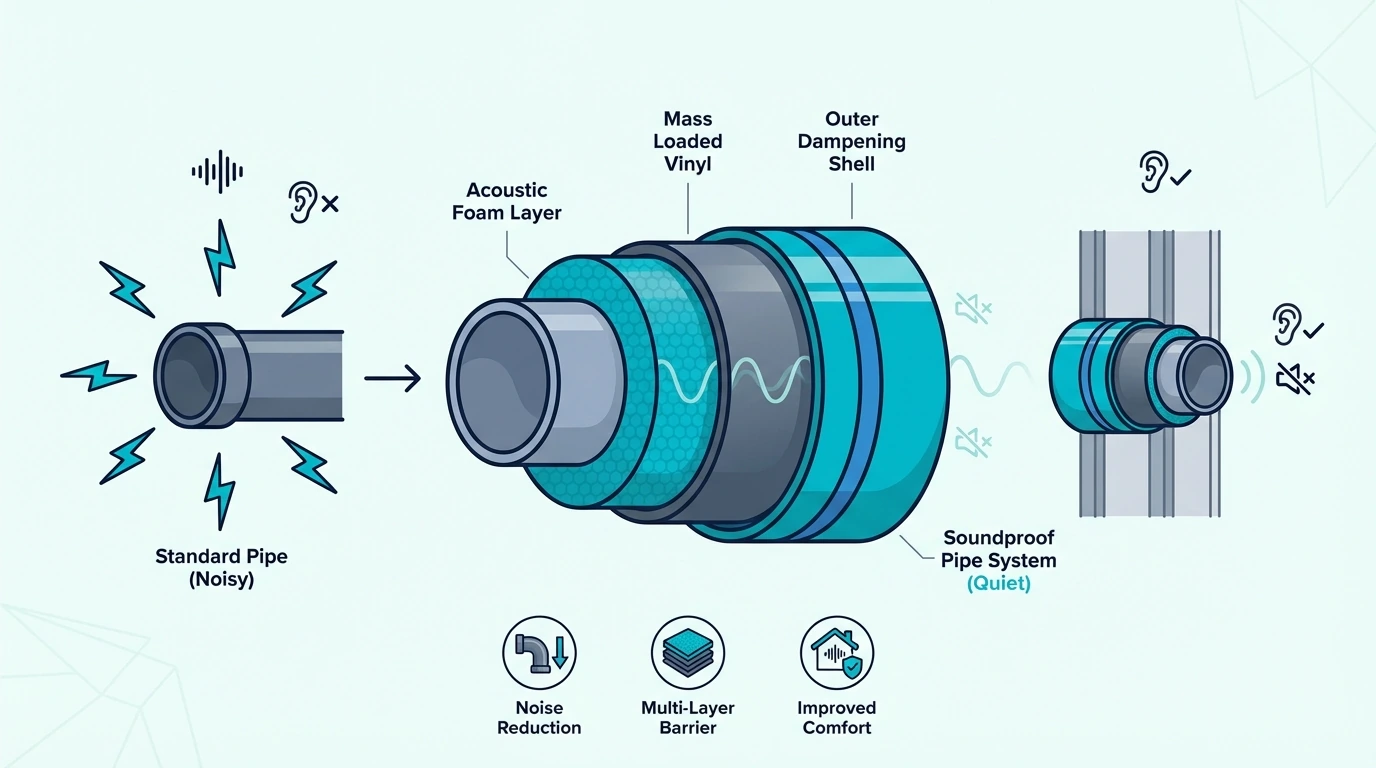
Drain-pipe noise feels random until you separate pipe-wall noise from framing vibration.
That first distinction tells you whether the fix should start on the pipe itself, at the mounts, or inside the wall cavity.
Falling Water Creates Turbulence, Impact, And Vibration
Drain pipes are noisy because falling water creates turbulence, impact, and vibration inside the pipe. Every time water hits a bend, a branch connection, or the bottom of a stack, it generates energy that the pipe wall radiates into the room.
The problem gets worse when the pipe is rigidly mounted to framing. Hard contact at studs, joists, blocking, or hangers can turn the wall or ceiling into a speaker for the pipe noise, which is why the sound often feels farther from the bathroom than it really is.
PVC Radiates More Noise Than Heavier Pipe Materials
PVC is lighter and thinner than cast iron, so it vibrates more easily under the same water flow. A cast-iron stack damps sound with its own mass, while a PVC stack tends to ring, flex, and radiate more of that energy outward.
Many older homes with cast-iron stacks are quieter than newer homes with PVC even when the newer house is better insulated elsewhere. Pipe material is one of the biggest contributors to drain noise, and it is one of the hardest parts of the system to change after the house is finished.
Access Sets The Ceiling On Improvement
Wrapping and isolating drain pipes can make a noticeable difference, often enough to take a flush from “clearly audible through the wall” to “barely noticeable during normal activity.” That is not total silence, but it is a real quality-of-life improvement in bedrooms, offices, and media rooms near a waste stack.
The improvement depends heavily on access. Exposed pipes in basements, crawl spaces, and open chases are straightforward to treat, but pipes buried in finished walls usually force you into some level of wall work, which is why soundproofing an existing wall often becomes part of the same project.
Quieting A Drain Pipe Takes More Than Wrap Alone
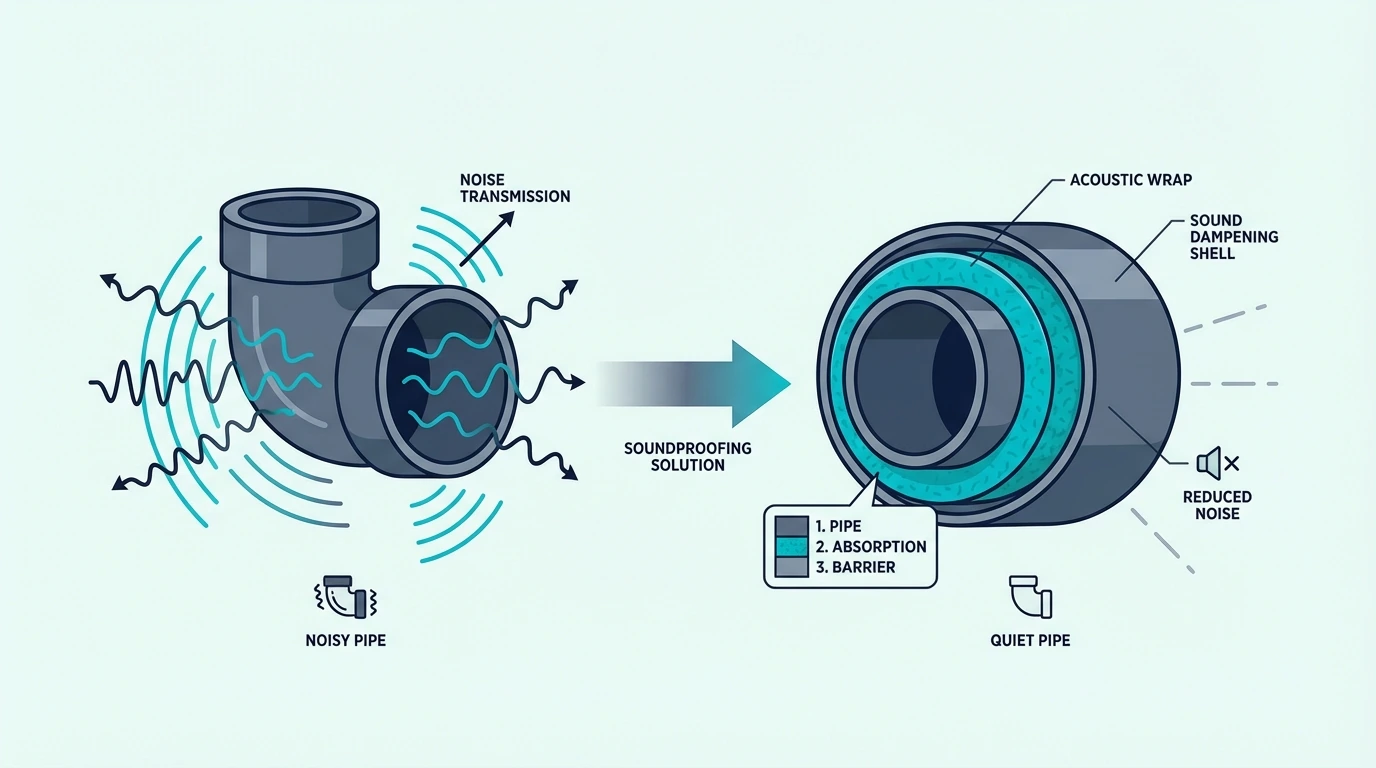
Once you know where the noise is escaping, the treatment order becomes much easier to prioritize.
Most successful drain-pipe projects combine source treatment on the pipe with separation from the surrounding structure, then add an enclosure only when access and layout justify it.
Direct Damping Helps When The Pipe Wall Is The Loud Part
Wrapping helps most when the noise is a clear rushing, splashing, or flushing sound coming off the pipe itself. On exposed PVC, a waterproof self-adhesive butyl damping mat is often the most practical first layer because it adds mass, damps vibration, and tolerates humid utility-room conditions better than loose or fibrous materials.
A product like KILMAT 80 mil 36 sqft Car Sound Deadening Mat works well because the butyl layer sticks directly to the pipe and damps the shell itself. Treat the noisiest accessible section first, especially bends, branch connections, and the vertical stack section closest to the room you care about.

KILMAT 80 mil 36 sqft Car Sound Deadening Mat
Direct-on-pipe damping is not a complete solution if the pipe is still hard-strapped to framing and rattling through the structure. It works best as one layer in a larger fix rather than as a magic one-step cure.
Isolation Matters More When Framing Starts Carrying The Noise
Isolation matters more when the noise you hear is a low rumble, vibration, or resonance rather than a sharp splash. That kind of noise is structure-borne, which means the framing is carrying and amplifying the vibration after the pipe creates it.
The fix is to break rigid contact at the mounts using rubber-lined clamps, resilient hangers, or isolation pads instead of bare metal straps driven tight against wood. Every contact point is a possible transmission bridge, so even replacing a few bad supports near the noisiest section can help more than adding more wrap farther away.
This is the same decoupling principle behind soundproofing a ceiling and soundproofing between floors. The goal is always to break the rigid connection so vibration cannot move from the source into the room shell.
A Boxed Chase Works Best As The Final Layer
Boxing in the pipe makes sense when the stack is exposed in a basement, utility room, garage, or service chase and you want one more barrier between the pipe and the room. It is most useful after wrapping and isolating the pipe, not before.
The enclosure works by adding mass and preserving an air gap around the treated pipe.
If you are lining the inside faces of that chase rather than just wrapping the pipe, a flexible barrier like Soundsulate Next Generation 1 lb. Mass Loaded Vinyl makes more sense than thin decorative layers because it adds real limp mass to the enclosure.
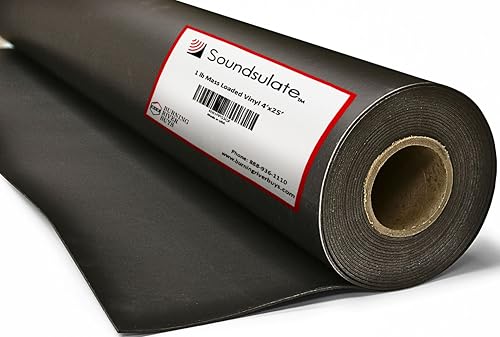
Soundsulate Next Generation 1 lb. Mass Loaded Vinyl
Before you close the chase, even the same KILMAT 80 mil 36 sqft Car Sound Deadening Mat can help by damping the pipe first and stopping thin access panels from becoming resonant. The drywall or plywood chase then becomes a secondary barrier rather than the first line of defense.
The tradeoff is access and serviceability. If you box in a stack, plan an access panel anywhere future plumbing work is likely.
Get Studio Tips Weekly
Join 5,000+ creators getting acoustic treatment advice every week.
No spam. Unsubscribe anytime.PVC Stacks Need A More Targeted Upgrade Order
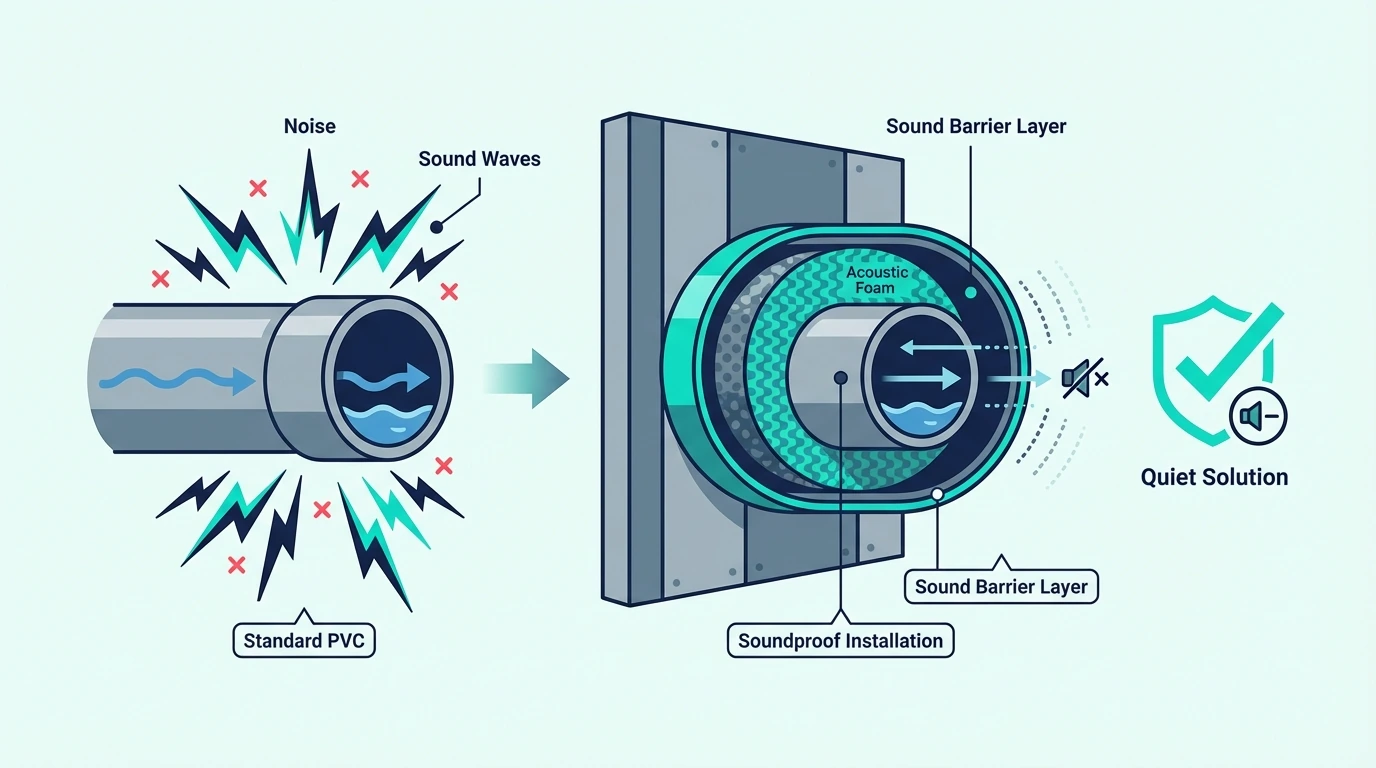
PVC gets most of the complaints because it starts with less mass and less built-in damping than cast iron.
That means the same categories still apply, but the order matters more because you are trying to control a lighter, more resonant pipe from the start.
PVC Amplifies Water Noise Because It Rings Easily
PVC amplifies noise because it is lightweight, rigid, and resonant. Its thin walls vibrate easily when water hits them, and the system tends to ring more than a heavier cast-iron stack.
That combination makes PVC the worst common drain material for noise even though it is cheap and easy to install. In most newer homes, the goal is not changing all the pipe material but treating the loudest sections intelligently.
The Best PVC Fixes Start At The Loudest Accessible Section
The strongest PVC strategy is to treat the noisiest accessible stack section first, then address the supports, then address the cavity if it is open. That order usually gives you more real improvement than spreading effort thinly across the whole plumbing run.
On exposed PVC, a butyl product like KILMAT 80 mil 36 sqft Car Sound Deadening Mat makes more sense than a loose wrap when the pipe may see humidity or condensation. If the wall or ceiling is already open, then add batt insulation around the treated pipe before you close it back up so the cavity is not left empty.
For temporary testing around an exposed stack or an unfinished utility room, a heavy movable barrier like the VEVOR Sound Dampening Blanket can tell you quickly whether adding another barrier around that section is worth the effort.

VEVOR Sound Dampening Blanket
If the wall is closed, focus on the exposed portions you can actually reach instead of assuming cavity insulation alone will fix the problem. PVC complaints are usually won or lost at the waste stack, the bends, and the hard contact points nearest the room.
Lightweight Add-Ons Barely Change The Outcome
Thin foam pipe insulation sold for freeze protection does almost nothing for sound because it is too light to add meaningful mass. It can help with condensation and maybe a tiny amount of damping, but it will not make a drain stack noticeably quiet.
Acoustic caulk around penetrations helps with air sealing, but it does not solve the pipe noise by itself. Spray foam packed tightly around the pipe is also not a substitute for proper wrap, isolation, or cavity treatment.
Toilet And Waste-Stack Noise Tells You Where To Start
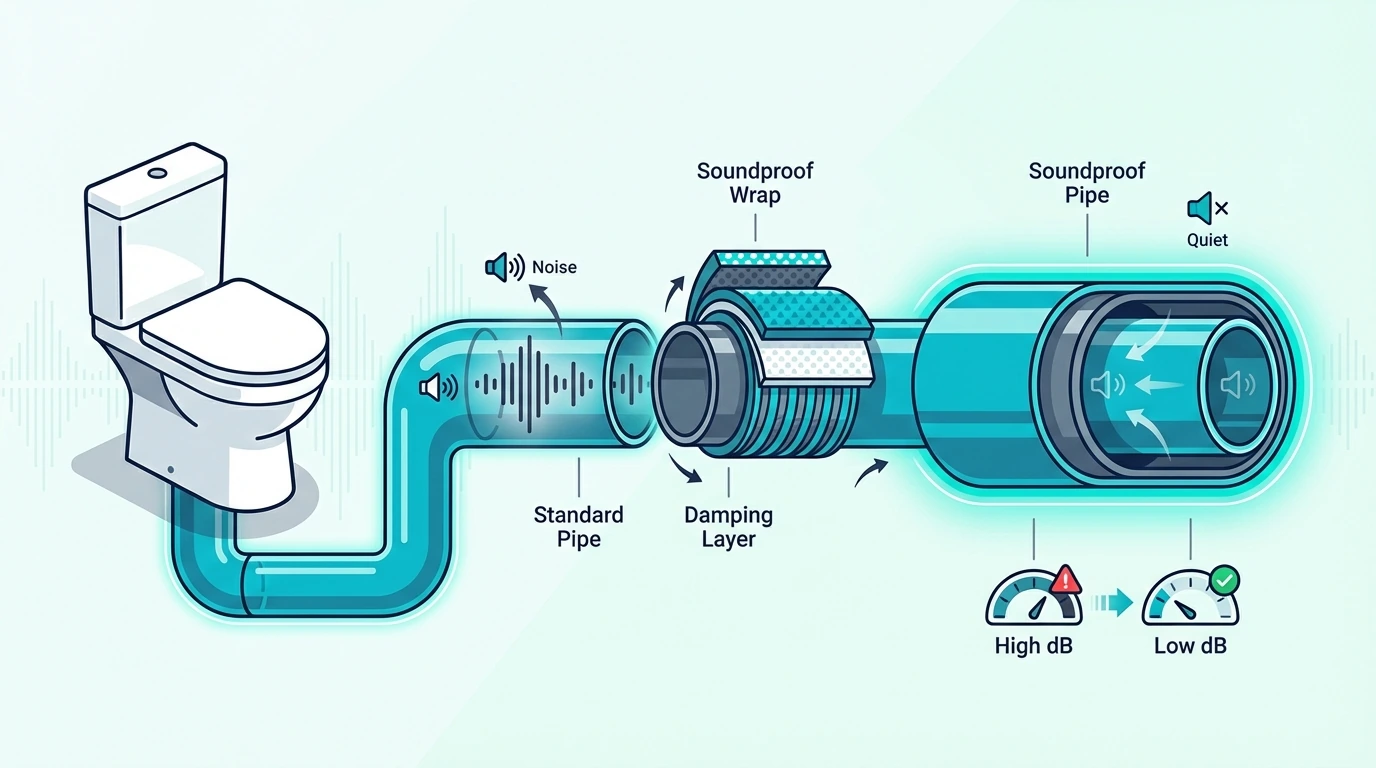
Toilet and waste-stack noise is where the problem becomes impossible to ignore because the event is sudden, loud, and often happens at night.
It also gives you the clearest clue about priority, because the loudest flush usually points straight to the section of stack that deserves attention first.
Toilet Flushes Create A Concentrated Burst Of Pipe And Framing Noise
Toilet flush noise is so noticeable because the event is abrupt and high energy. Water drops through the waste stack quickly, hits bends and fittings hard, and creates both pipe-wall noise and structural vibration in one burst.
If that stack shares a wall cavity with a bedroom, the sound can seem like it is happening inside the room. The pipe, framing, and drywall are all mechanically connected, so the flush energy travels through all three.
Nighttime Complaints Usually Point To The Bedroom-Side Stack
Nighttime pipe noise feels worse because the background sound level drops and the flush stands out more. The highest-value fix is usually the vertical waste stack section nearest the bedroom, because that is where the water falls farthest and creates the most noticeable combination of rush and impact noise.
If you can only treat one section, prioritize that stack where it passes through or beside the quiet room. Damping and isolating that one area usually produces more improvement than treating a less critical section farther away.
Pros Make Sense When Access Or Scope Stops Being Simple
Call a professional when the noisy section is buried in a finished wall you do not want to open, when multiple fixtures feed the same stack, or when the bad mounts are inaccessible. A plumber can also tell you whether replacing a short section with cast iron is realistic, though that usually makes sense only during a larger renovation.
You should also call a contractor if you want a proper boxed chase around the stack, because that can involve framing, drywall, access panels, and fire-stopping details. For broader room-noise issues beyond just the plumbing, compare this page with soundproofing a wall, soundproofing a bathroom, soundproofing an apartment, and the broader soundproofing hub so the pipe fix stays in proportion to the rest of the room.
The Bottom Line
How to soundproof drain pipes gets simpler once you treat it like an access and leak-path problem instead of a generic wrap job.
If the pipe wall is the loud part, damp the loudest accessible section first.
If the framing is carrying the rumble, fix the rigid mounts next.
If the wall is already open, add insulation before you close it.
If the pipe is buried in a finished wall, expect the ceiling on improvement to be lower unless you are willing to open the wall or build a better chase.
For most homes, the best first target is the waste stack nearest the bedroom or other quiet room, because that is where a single fix usually produces the clearest relief. Use that same access-first logic when you compare the problem against the broader soundproofing hub, because the right upgrade is always the one that matches the real path and the real access you have.
Frequently Asked Questions
How to reduce drain noise?
Reduce drain noise by treating the noisiest accessible section first with a waterproof self-adhesive butyl damping mat, then breaking rigid contact at the mounts, then adding cavity insulation if the wall is open. That combination addresses the pipe wall, the framing path, and the wall cavity together.
How to make PVC pipe quieter?
Make PVC pipe quieter by damping the pipe with a self-adhesive butyl mat, replacing rigid supports with isolated hangers or clamps, and insulating the surrounding cavity if you already have access. PVC is noisy because it is light and resonant, so the most effective fixes are the ones that add damping, mass, and less rigid contact.
How to cheaply sound proof?
The cheapest meaningful improvement is usually treating one accessible problem section instead of the whole system. Dampen the loudest exposed stack section and improve the worst rigid mounts first, because that often gives better value than spreading small fixes everywhere.
How to block out 100% of noise?
Blocking 100% of drain-pipe noise is not realistic because the plumbing is integrated into the structure and usually hidden inside walls or floors. The practical goal is to reduce the noise enough that it no longer disrupts sleep, work, or conversation, which is achievable in many homes with the right access and treatment order.