How Do You Soundproof A Basement (What Works And What To Skip)
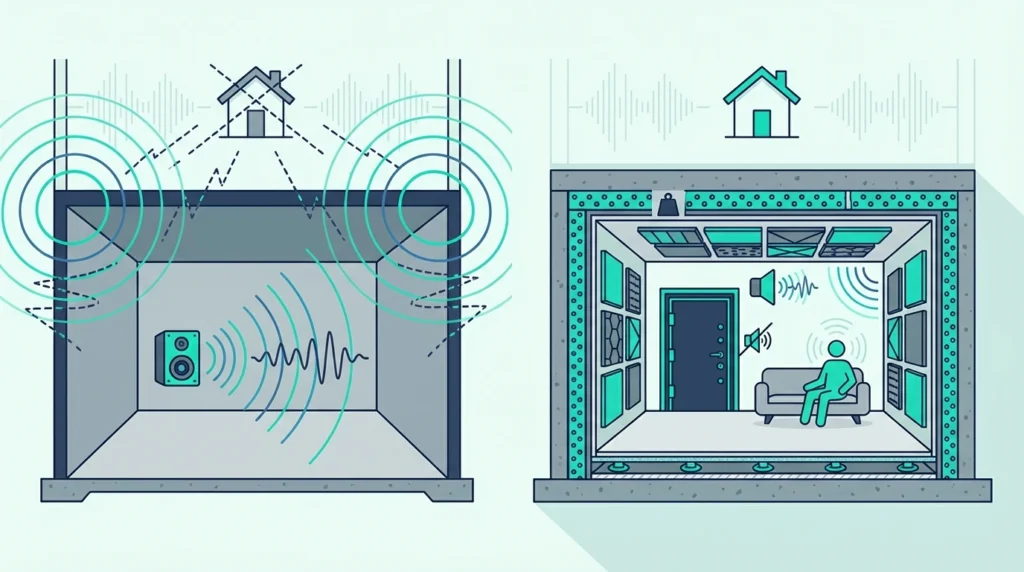
How do you soundproof a basement works, but only when you stop treating the ceiling like the whole answer.
That ceiling-first mistake is why people insulate one surface, then still hear footsteps from above, sound spilling through the stairwell, and noise moving through the ducts.
Once you diagnose the loudest path first, the basement gets meaningfully calmer and the next dollar stops going into the wrong assembly.
The first move is matching the room use to the weakest leak, then deciding whether the real fix belongs on the ceiling, the door, the ducts, the walls, or the full envelope.
How do you soundproof a basement depends on whether you are trying to keep upstairs noise out, keep basement noise in, or make a finished basement feel calmer overall. The strongest results come from matching the use case to the weakest path first, then deciding whether the project really needs a ceiling build, a better stairwell door, duct sealing, wall work, or a fuller basement envelope upgrade.
Matching The Fix To The Basement
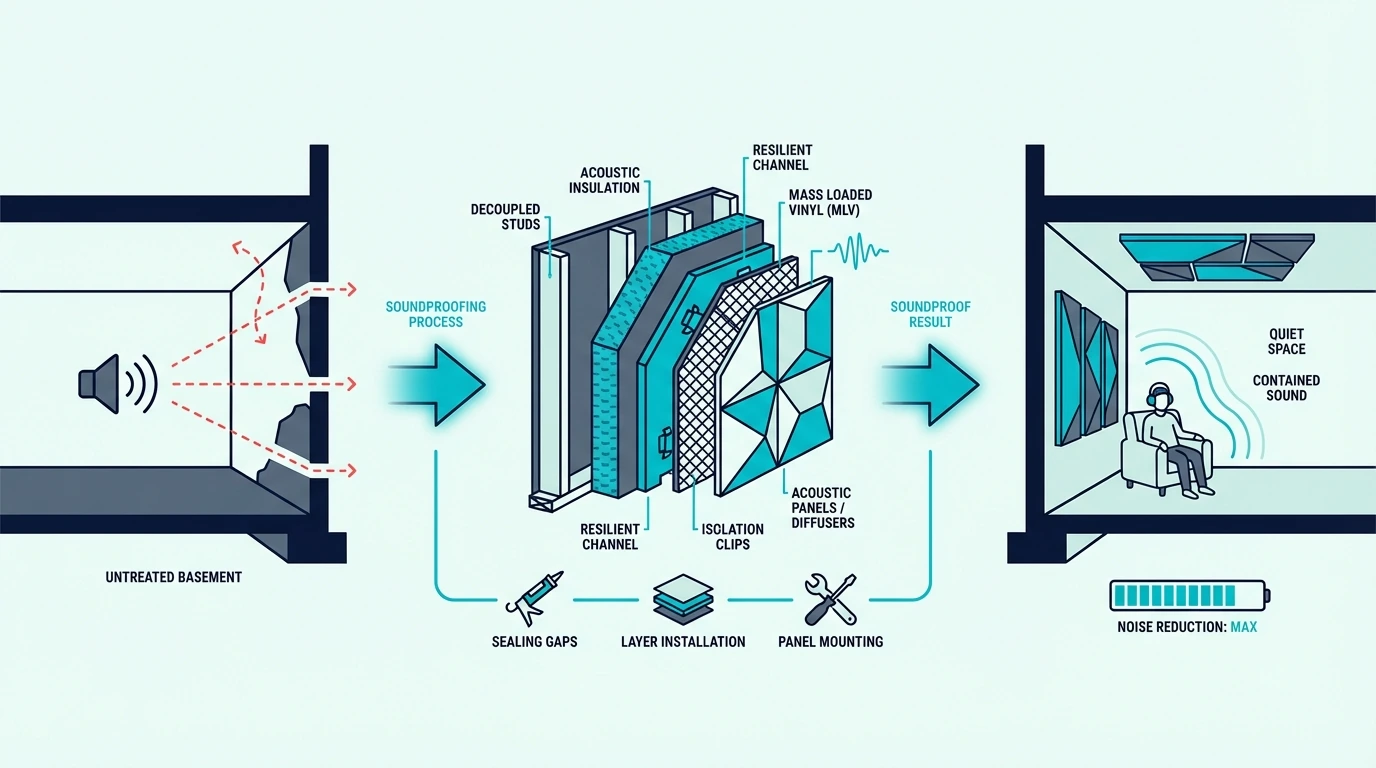
The first decision is not material choice.
It is deciding what the basement needs to do and which path is breaking that goal.
| Basement situation | First priority | What usually matters next | Typical scope |
|---|---|---|---|
| Basement office or bedroom under a noisy floor above | Ceiling and floor-above path | Stairwell door and ducts | Moderate |
| Home theater or drum room in the basement | Ceiling plus full basement envelope | Door, walls, ducts, and flanking paths | High |
| Finished basement family room with general noise bleed | Weakest leak first | Ceiling or door depending on diagnosis | Moderate |
| Unfinished basement before finishing | Whole-plan design | Ceiling, walls, door, and utilities together | Best long-term ROI |
Start With Room Use
Room use changes the whole project because it changes the direction of the problem.
A home theater or music room needs to keep loud sound inside the basement so it does not disturb the rest of the house.
A basement office or bedroom needs to keep noise from upstairs out so you can work or sleep in peace.
Those are opposite goals, and they usually change which part of the basement deserves the first dollar.
Trace The Weakest Leak Paths
Once the use case is clear, the next job is tracing where sound actually escapes.
The ceiling is often the main transfer path because the joists connect the basement directly to the floor above. The stairwell door, HVAC ductwork, and any openings for pipes, wires, or vents can be just as important because sound follows the path of least resistance.
An unfinished basement with open joists, exposed ductwork, and a hollow stairwell door will leak sound through every one of those paths regardless of how well you treat the ceiling.
That full-envelope view is what keeps basements from turning into ceiling-only money pits.
Unfinished Basements Give You Better Leverage
Those leak paths are much easier to fix while they are still exposed.
An unfinished basement gives you direct access to joist bays, wall cavities, and mechanical runs, which makes it easier to add insulation, mass, and isolation in the right order before the finish layer closes everything up.
A finished basement is harder because the drywall is already up and the hidden details are already locked in.
Improving a finished basement usually means selective retrofits, added layers, or opening sections back up, which raises cost and disruption fast.
The Best Approach By Scenario
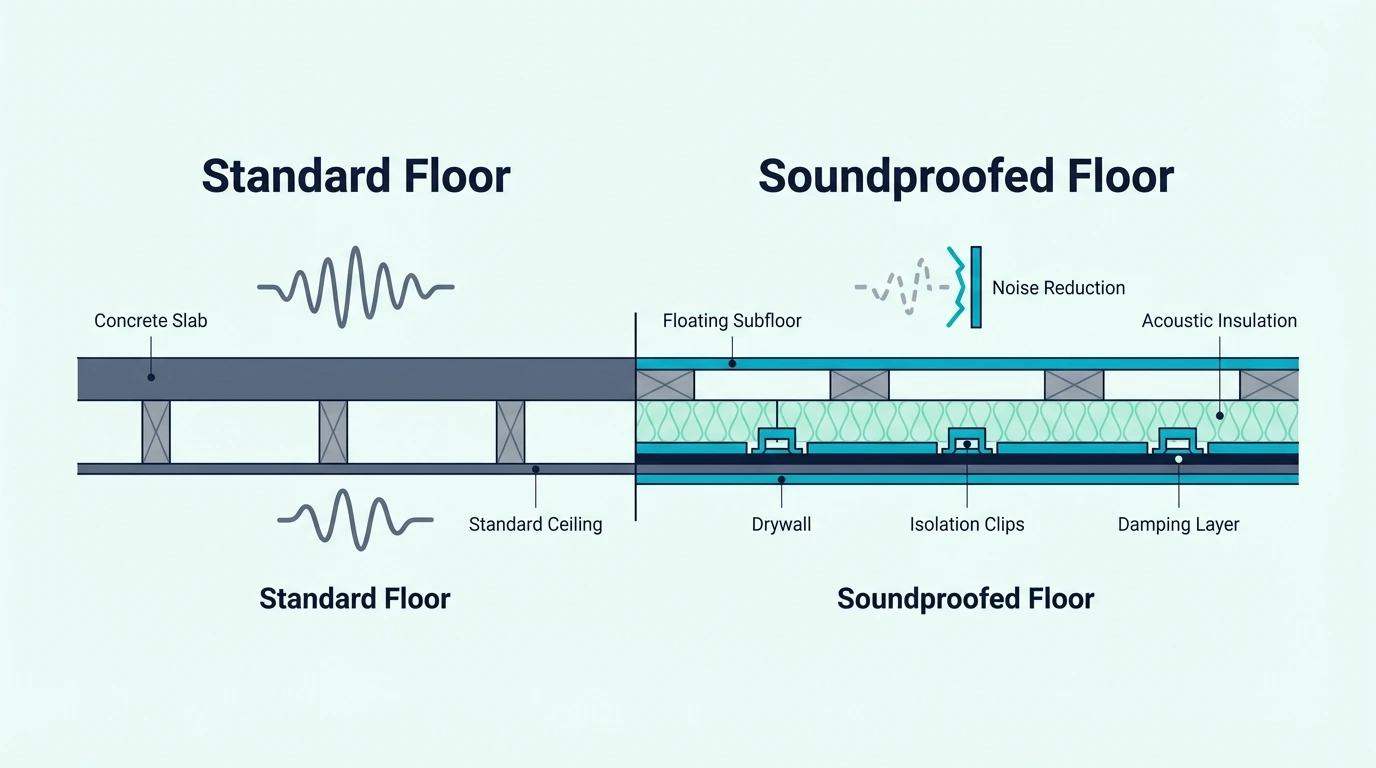
Once the weak paths are visible, the plan changes with the job the room is doing.
An office, a theater, and a finished family room may share the same structure, but they do not justify the same build.
Office And Bedroom Builds
A basement office or bedroom usually needs the best control of upstairs footfall, voices, and general household spill.
That usually means the ceiling and the floor-above path come first, then the stairwell door and any duct runs that are acting like sound tunnels.
If the room is finished and the problem is moderate, a selective retrofit can still help.
If the room is unfinished, joist-bay insulation and a better ceiling assembly give you the cleanest upgrade path.
Theater, Drum Room, And Loud-Use Builds
An office or bedroom tries to keep outside noise out, but a theater, drum room, or loud rehearsal space flips the problem.
These uses usually justify treating the ceiling, stairwell door, ducts, and often the walls together because the goal is keeping louder sound inside the basement instead of just softening the room.
At that point basement projects start looking more like a real room-isolation build.
If the basement is carrying bass or repeated impact, lighter accessories stop being honest answers very quickly.
Finished Living Space Needs Tighter Diagnosis
Loud-use builds justify broad treatment, but a finished family room or basement apartment needs the most disciplined diagnosis because reopening everything is expensive.
In that situation, it often makes more sense to target the loudest leak first, whether that is the stairwell door, the ceiling line, the duct path, or one exterior-facing wall.
The same decision-making overlaps with apartment-style soundproofing logic.
If the basement is serving as living space, “good enough for daily comfort” is often the smarter target than chasing studio isolation.
Get Studio Tips Weekly
Join 5,000+ creators getting acoustic treatment advice every week.
No spam. Unsubscribe anytime.Budget Basement Soundproofing
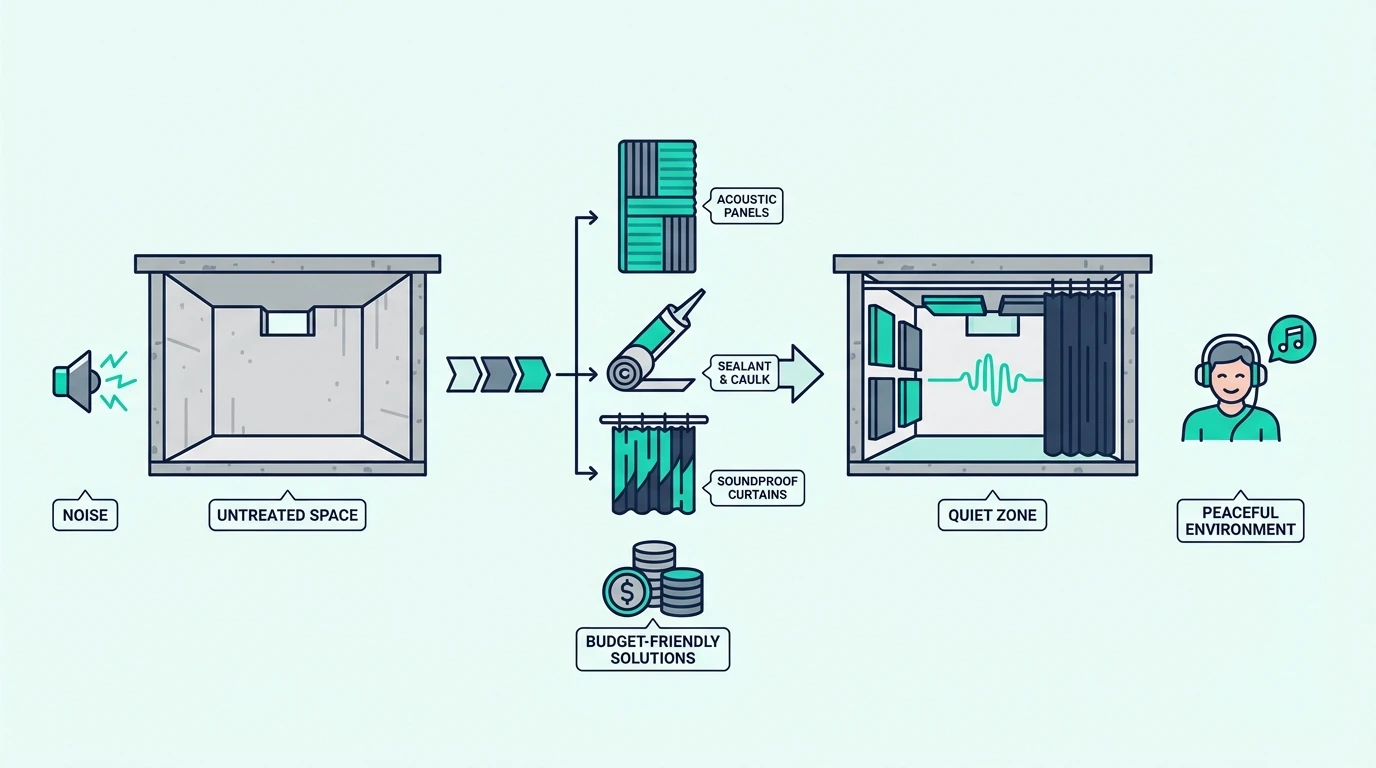
That scenario view keeps the budget conversation honest.
Cheap fixes help when they remove a real leak or prove where the bigger leak is, not when they pretend to replace a full assembly.
Start With Air Leaks And Open Cavities
Sealing air gaps around the stairwell door, duct penetrations, pipe holes, and electrical boxes is the cheapest fix that consistently works.
Sound follows air paths, so closing visible leaks is still the highest-value basement starting point.
Once the obvious leaks are tighter, open joist bays are the next honest budget move in an unfinished basement.
A practical cavity-fill product like AFB Acoustical Fire Batts, Mineral Wool Insulation reduces cavity resonance and gives you a better baseline before heavier work.

AFB Acoustical Fire Batts, Mineral Wool Insulation
For a quick temporary test, a blanket like VEVOR Sound Dampening Blanket hung at the stairwell can show you whether the door path matters more than the ceiling path.

VEVOR Sound Dampening Blanket, 96 x 80, Extra Large Studio Grommeted Blanket
Cheap Fixes That Mostly Waste Money
Those budget steps work because they target real leaks, which is exactly why the usual gimmicks fall flat.
Egg cartons, thin foam tiles, and carpet remnants stapled to the ceiling are common basement suggestions because they look busy and feel cheap. They add almost no mass, create no meaningful barrier, and mostly just change the look without changing the noise.
Drop ceiling tiles marketed as “acoustic” can help with echo inside the basement but do not block significant noise transfer between floors.
They absorb reflections, not transmission, and that distinction matters because most basement soundproofing complaints are about transfer, not echo.
When The Budget Version Is Enough
With the hype out of the way, a budget fix is good enough when the basement is used for light activity like office work, a guest room, or casual TV watching.
Sealing gaps and adding joist-bay insulation can bring transfer down enough for those uses without forcing a full ceiling rebuild.
When The Ceiling Is Worth Treating
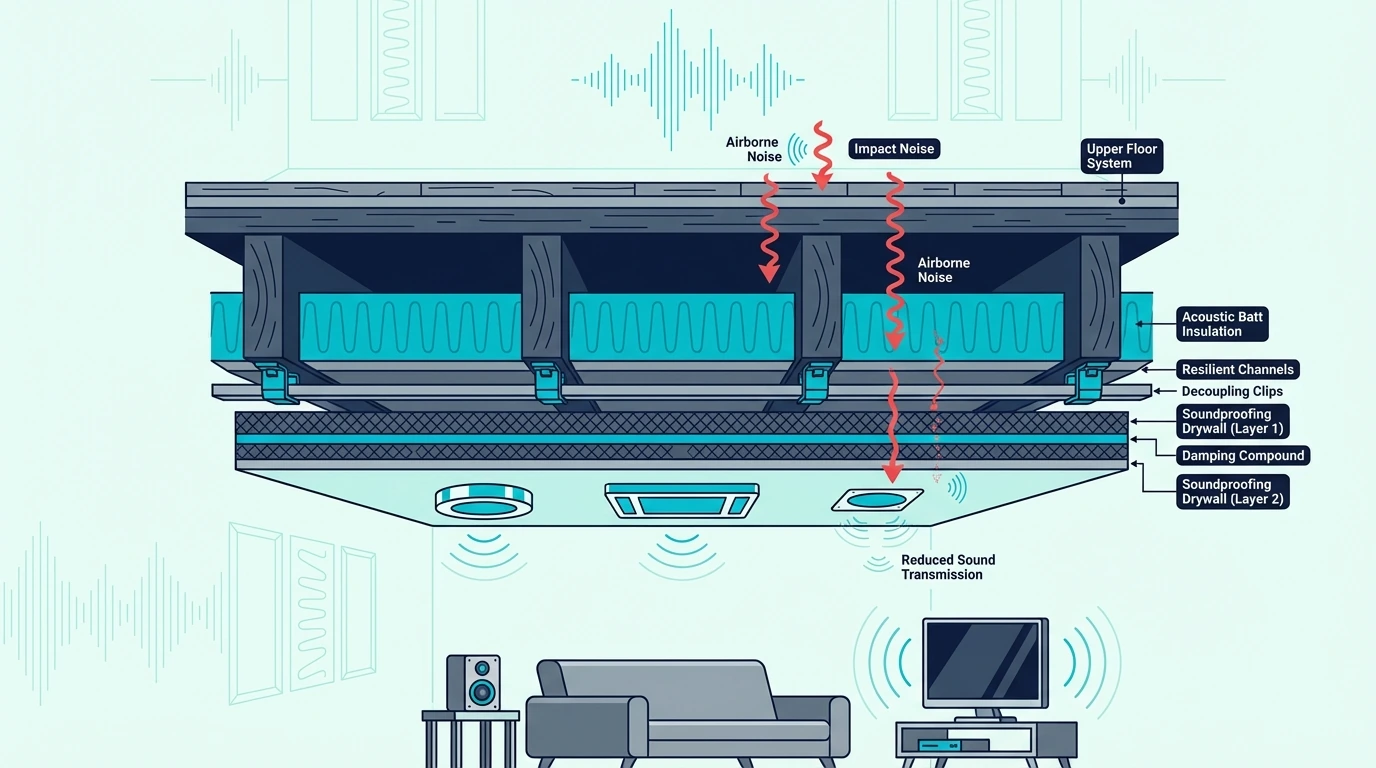
Budget work often reveals whether the ceiling is truly the bottleneck.
When it is, the ceiling deserves serious money; when it is not, the door, ducts, or walls may still be louder.
Ceiling First Makes Sense In Direct Floor Transfer
The ceiling becomes the main priority when the dominant complaint is noise moving directly between the basement and the floor above.
Footsteps, voices, TV spill, and general household activity usually point you there first.
If the basement use is louder than normal living, the ceiling matters even more because it is the biggest direct connection to the rest of the house.
That is where basement ceiling soundproofing becomes a subproject in its own right rather than a side note.
Open Ceilings Still Give You A Mid-Tier Upgrade
When the ceiling is the priority but a full drywall build is not in scope, an unfinished basement still gives you room to improve the assembly.
Filling the joist bays, sealing penetrations, and adding a continuous mass layer like Soundsulate Next Generation, 1 lb. Mass Loaded Vinyl can still make a real difference.
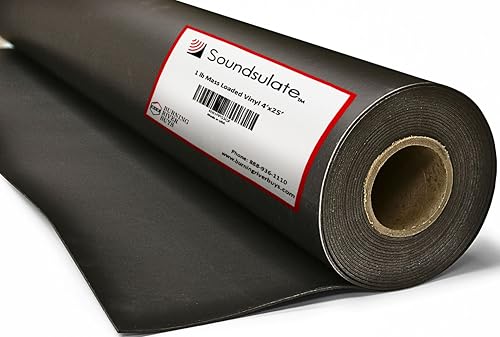
Soundsulate Next Generation, 1 lb. Mass Loaded Vinyl (MLV)
The limit is still performance.
Without a finished mass layer and, in louder projects, decoupling, the ceiling usually tops out sooner than people hope.
Side Paths Can Still Beat The Ceiling
A no-drywall ceiling upgrade has limits, and those limits often expose the next bottleneck.
If the stairwell, vents, or wall line are just as loud, a hollow stairwell door, unsealed ducts, or bare walls may deliver more improvement per dollar than another ceiling layer.
The stairwell door is often the most underpriced win in the whole basement.
Tightening that path with 33 Ft Gray Self-Adhesive Soundproofing Weather Stripping for Doors and Windows, plus better door mass, can beat a lot of misplaced ceiling spending.

33 Ft Gray Self-Adhesive Soundproofing Weather Stripping for Doors and Windows
For those side paths, compare this page with soundproofing a door, soundproofing a vent, and soundproofing a wall. If impact transfer through the structure is still the bigger complaint, soundproofing between floors is the next system-level comparison to read.
Cost Breakdown
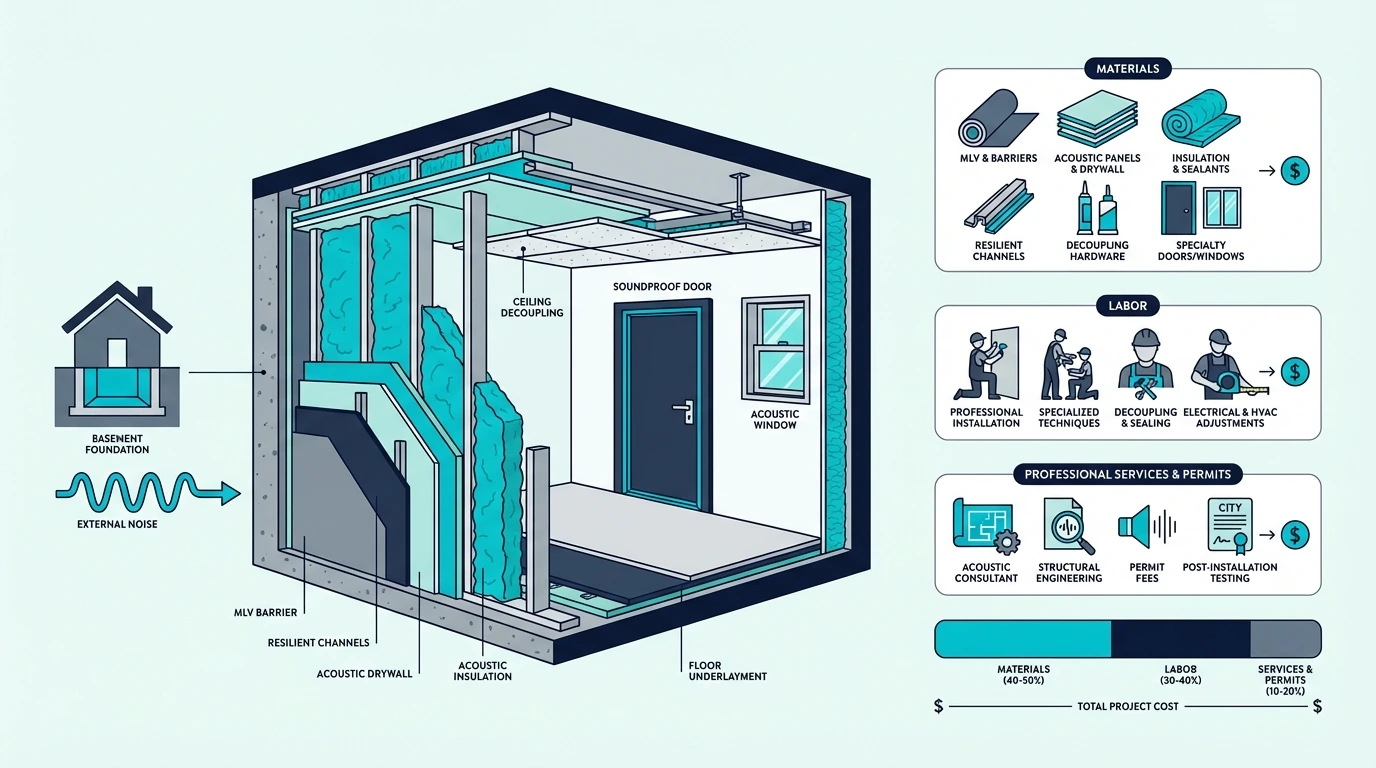
Once the scope is honest, basement cost makes more sense by scenario than by one giant range.
The budget swings because each use case changes how much of the envelope you are really rebuilding.
| Basement project | What is usually included | Practical range |
|---|---|---|
| Light-use unfinished basement | Gap sealing, joist-bay insulation, door sealing, small fixes | About $500 to $2,000 |
| Finished basement retrofit | Door and duct fixes, selective ceiling or wall upgrades, added layers | About $1,500 to $5,000+ |
| Loud-use basement build | Ceiling assembly, better door, duct sealing, wall work, higher isolation target | About $3,000 to $10,000+ |
Light-Use Basement Costs
The light-use tier usually means gap sealing, joist-bay insulation, and a better stairwell door or tighter door sealing.
This is the tier that makes the most sense for guest rooms, offices, and calmer finished basements that do not need studio-level isolation.
If you want a broader room-side cost benchmark, compare the basement scope against soundproof room cost.
That helps keep a basement plan in proportion instead of turning one weak path into an oversized renovation.
High-Performance Basement Costs
Once the use case gets louder, the budget stops being about patches and starts being about assemblies.
A higher-performance build usually means real ceiling work, more mass, better sealing, and more attention to side paths. A product like Rockwool Roxul Mineral Wool 8 lb Density Soundproofing Fire Resistant Insulation Batts 2 Inch starts making more sense only when the basement use is loud enough to justify the heavier assembly.

Rockwool Roxul Mineral Wool 8 lb Density Soundproofing Fire Resistant Insulation Batts 2 Inch (7-Pack)
A higher-performance basement build is what you price for drums, louder theater use, repeated upstairs-downstairs transfer, or any situation where lighter fixes have already hit their limit.
This is also where the ceiling article, door article, and floor-to-floor transfer article start overlapping as one system plan.
When A Contractor Pays Off
Those bigger builds also create more ways to guess wrong.
Bring in a contractor when the use case is loud, the basement is already finished, or the noise seems to be moving through several paths at once. Professionals matter most when you need a full-envelope plan instead of one more guess at the ceiling.
For broader context on materials and methods, compare this page with best insulation for soundproofing, soundproofing between floors, and the broader soundproofing hub so the basement plan stays in proportion to the rest of the house.
The Bottom Line
Most basement soundproofing failures do not come from using the wrong material first.
They come from treating one surface while the rest of the basement is still acoustically open.
The smarter rule is to ask which path is loudest right now, then spend the next dollar there.
For most homeowners, that means sealing the air leaks, insulating accessible joist bays, and figuring out whether the stairwell door or ceiling is the bigger bottleneck before committing to a larger build.
Once that answer is clear, it gets much easier to decide whether the basement only needs a comfort upgrade or a real high-performance isolation plan.
Frequently Asked Questions
Is it possible to soundproof a basement?
Yes, but the result depends on how many basement paths you treat and how loud the use case really is. A guest room or office is much easier to quiet than a basement drum room or theater, especially once low-frequency transfer starts pushing you toward full ceiling isolation work.
What is the cheapest soundproofing option?
The cheapest useful option is usually sealing the obvious air leaks and tightening the stairwell door path. In an unfinished basement, joist-bay insulation is the next honest low-cost step.
How to block out 100% of noise?
Blocking 100% of noise from a basement requires a room-within-a-room construction with mass, decoupling, and sealing on every surface, which is impractical for most residential basements. The realistic goal is reducing noise enough that it no longer disrupts activity on either floor, and that is achievable with proper insulation, mass, and sealing.
Can you soundproof a finished basement?
Yes, but finished basements are usually more expensive to improve because the drywall and hidden details are already in place. Finished-basement projects work best when you diagnose the loudest leak first instead of opening everything blindly.