Best Weighted MIDI Keyboard — Controllers That Feel Like a Real Piano
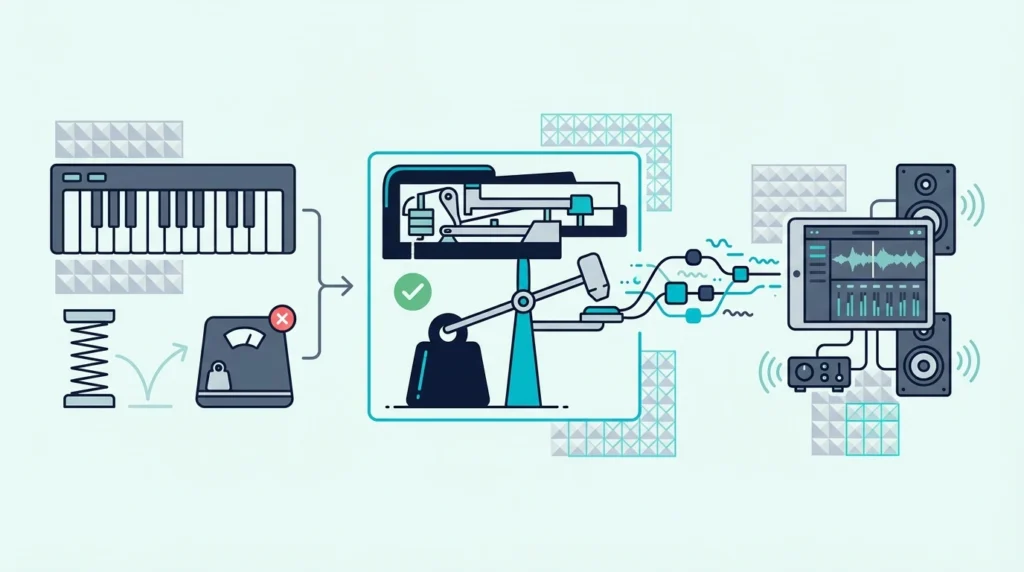
Best weighted MIDI keyboard is what every pianist searches for when they want their MIDI controller to feel like the acoustic instrument they trained on, but most products labeled “weighted” actually deliver semi-weighted action that won’t satisfy a classically trained player.
The problem is caused by manufacturers using “weighted” as a marketing catch-all for any key action heavier than standard synth keys. True weighted hammer action and semi-weighted spring action feel dramatically different under your fingers, and confusing the two leads to expensive disappointment.
We sorted the weighted and semi-weighted MIDI keyboards by actual key mechanism type — not marketing labels — so you can match the action to your playing background. Every pick below specifies exactly what type of weighting it uses and who it serves best.
Below you will find our top picks sorted by key action type, followed by a guide on understanding the real differences between synth-action, semi-weighted, and fully weighted hammer action.
The best weighted MIDI keyboard is the Yamaha P71 for true hammer action that mimics an acoustic piano. For semi-weighted keys, the M-AUDIO Keystation 88 MK3 delivers 88 keys with transport controls. Producers who want semi-weighted keys with pads and faders should consider the Novation Launchkey 61 MK4.
What Are the Different MIDI Key Action Types
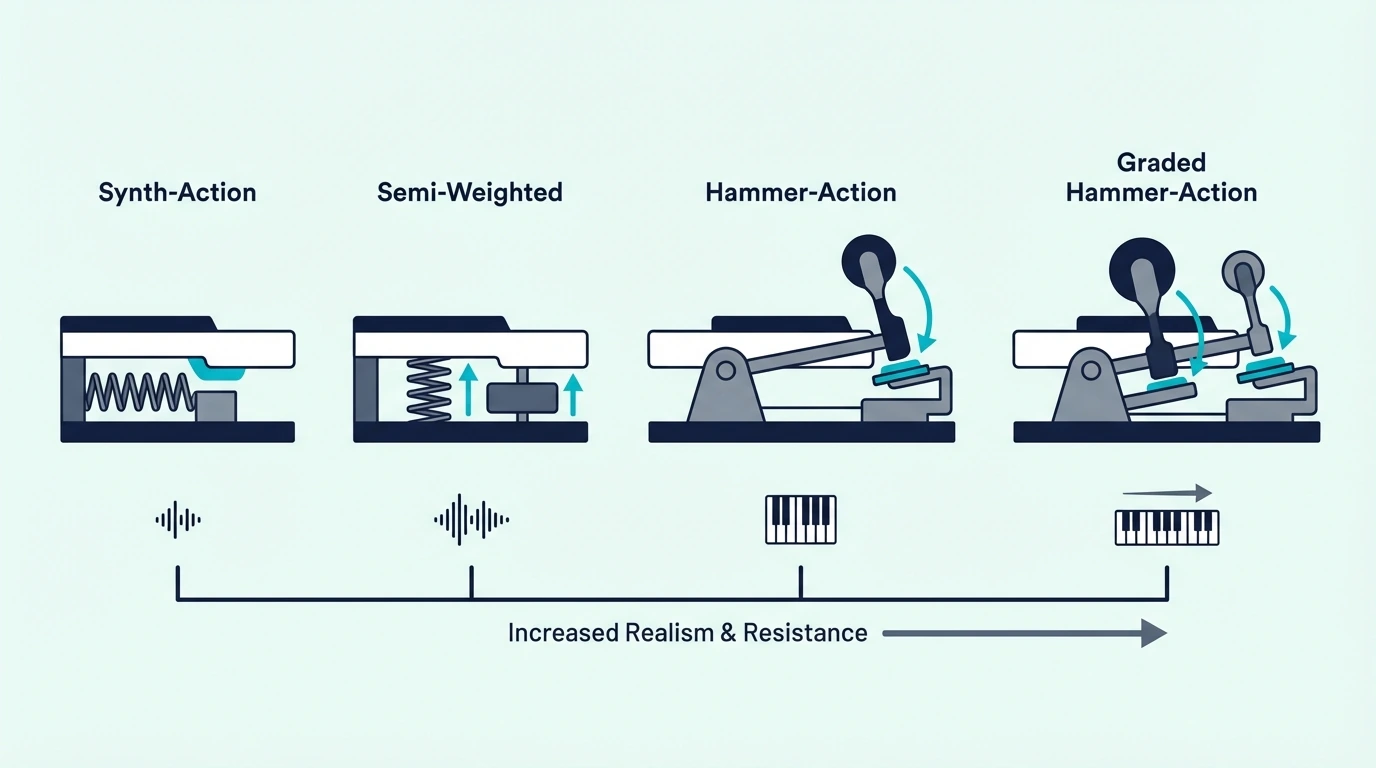
The weight of a MIDI keyboard’s keys determines how it feels to play and who it serves best. Three distinct action types exist, and each targets a different musician.
Synth Action (Unweighted)
Synth-action keys use a simple spring mechanism with minimal resistance. The keys feel light and bouncy, returning to rest position almost instantly after release. This action favors speed — fast synth leads, rapid repeated notes, and organ-style playing all benefit from lightweight keys.
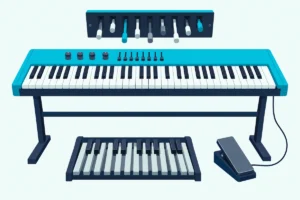
Organ players add their own checklist on top of the action, and Burton Acoustix’s organ controller guide covers waterfall keys, drawbar faders and swell pedals.
Controllers like the M-AUDIO Keystation 49 MK3 and Nektar SE49 use synth action. The feel is nothing like an acoustic piano, which is by design — these controllers are production tools, not practice instruments.
Semi-Weighted Action
Semi-weighted keys add spring resistance that creates a more substantial feel than synth action without simulating real piano hammer weight. The keys push back enough to feel musical but remain light enough for extended production sessions without finger fatigue.
The M-AUDIO Keystation 88 MK3 represents the semi-weighted category well — 88 keys with enough resistance to feel intentional but not enough to simulate a grand piano. Producers, composers, and multi-genre musicians who need a middle ground between speed and substance prefer this action type.
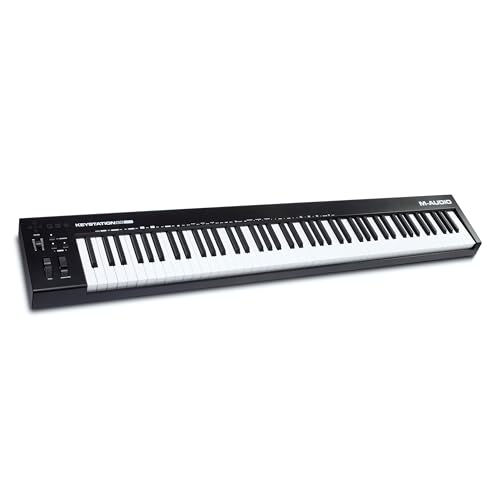
M-AUDIO Keystation 88 MK3
Fully Weighted (Hammer Action)
Fully weighted keys use a mechanical hammer mechanism that physically simulates how an acoustic piano responds. The bass keys feel heavier than the treble keys, matching the graded weight distribution of a real grand piano.
The Yamaha P71 uses Graded Hammer Standard (GHS) action — the same mechanism found in Yamaha’s entry-level acoustic pianos. Pianists who practice classical repertoire, teach lessons, or prepare for performances need this level of key authenticity because anything lighter builds muscle memory that does not transfer to a real piano.
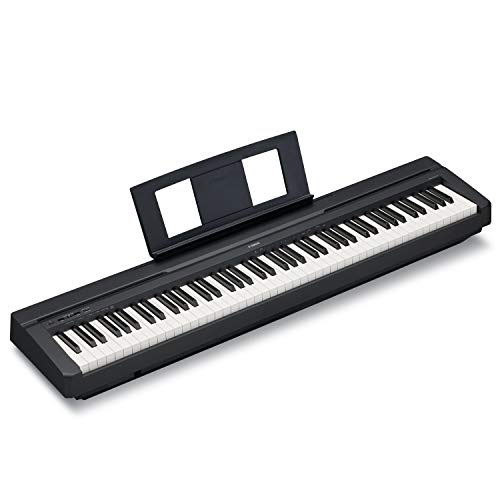
Yamaha P71
| Product | Link |
|---|---|
Best Semi-Weighted | See ratings |
Best Overall | See ratings |
Best With Extras 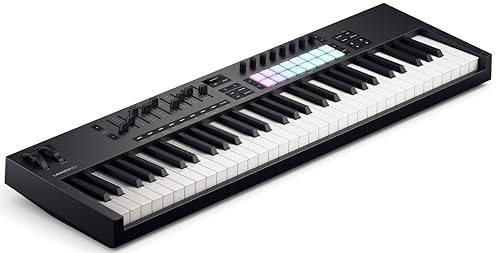 | See ratings |
Best Synth-Action 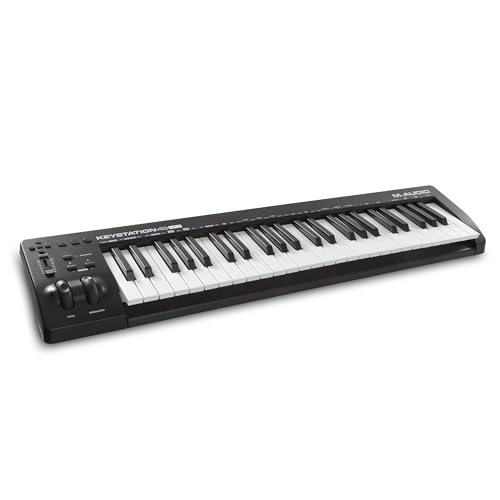 | See ratings |
Best Budget Full-Size 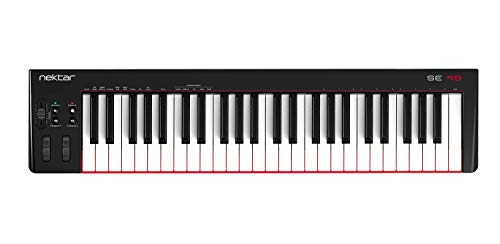 | See ratings |
Best Production Companion 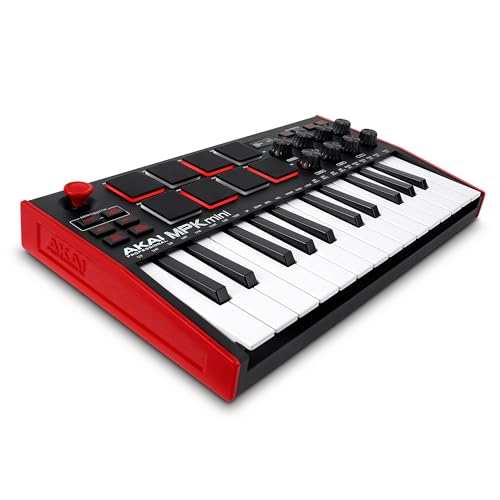 | See ratings |
What Are the Best Weighted MIDI Keyboards
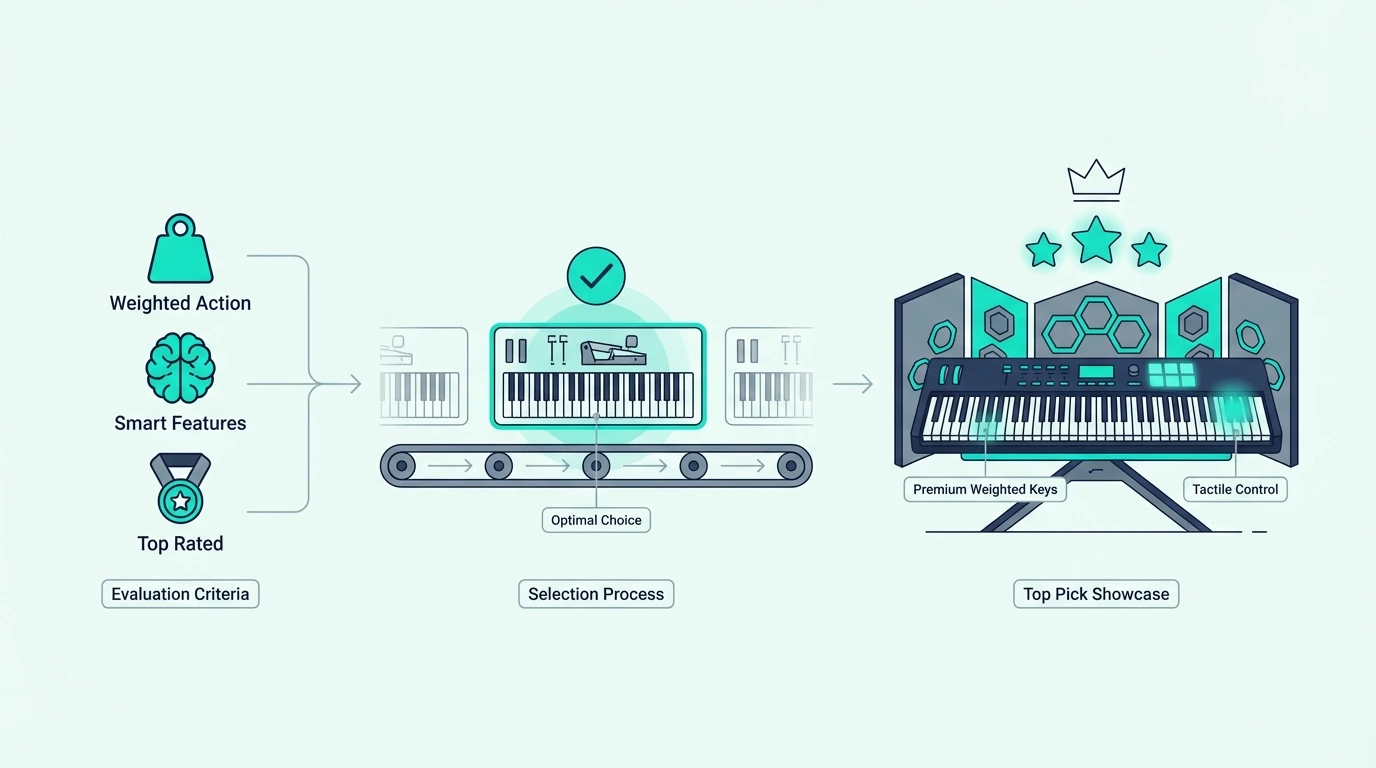
Here are 6 controllers sorted by key action type, from the heaviest weighted feel to the lightest alternative.
The Yamaha P71 88-Key Weighted Digital Piano wins Best Overall because the GHS hammer action is the closest thing to an acoustic piano feel in this price range. The 88 weighted keys span the full piano range with graded resistance — heavier in the bass, lighter in the treble. Ten built-in sounds let you practice without a computer, and the USB MIDI output sends your performance to any DAW.
The M-AUDIO Keystation 88 MK3 takes Best Semi-Weighted for producers who want the full 88-key range without the weight and cost of hammer action. The semi-weighted keys feel more substantial than synth action while remaining responsive enough for electronic music production.
The Novation Launchkey 61 MK4 earns Best With Extras because its 61 semi-weighted keys come alongside 16 RGB pads with polyphonic aftertouch and 9 faders. Novation lists no aftertouch on the keys themselves, so the extra expression lives in the pads.
Novation Launchkey 61 MK4
The M-AUDIO Keystation 49 MK3 represents the Best Synth-Action alternative for producers who decided weighted keys are not necessary for their workflow. Full-size keys with transport controls — the benchmark for unweighted production keyboards.
M-AUDIO Keystation 49 MK3
The Nektar SE49 delivers the Best Budget Full-Size option — 49 full-size synth-action keys. No weighted action exists in the budget tier, but the full-size key spacing matches standard piano dimensions.
Nektar SE49
And the Akai Professional MPK Mini MK3 serves as the Best Production Companion for pianists who own a weighted keyboard for playing and need a compact controller with pads and knobs for production work. The two-controller approach (weighted piano + mini production controller) often costs less than a single premium weighted MIDI controller with all the extras.
Akai Professional MPK Mini MK3
Get Studio Tips Weekly
Join 5,000+ creators getting acoustic treatment advice every week.
No spam. Unsubscribe anytime.Who Actually Needs Weighted Keys
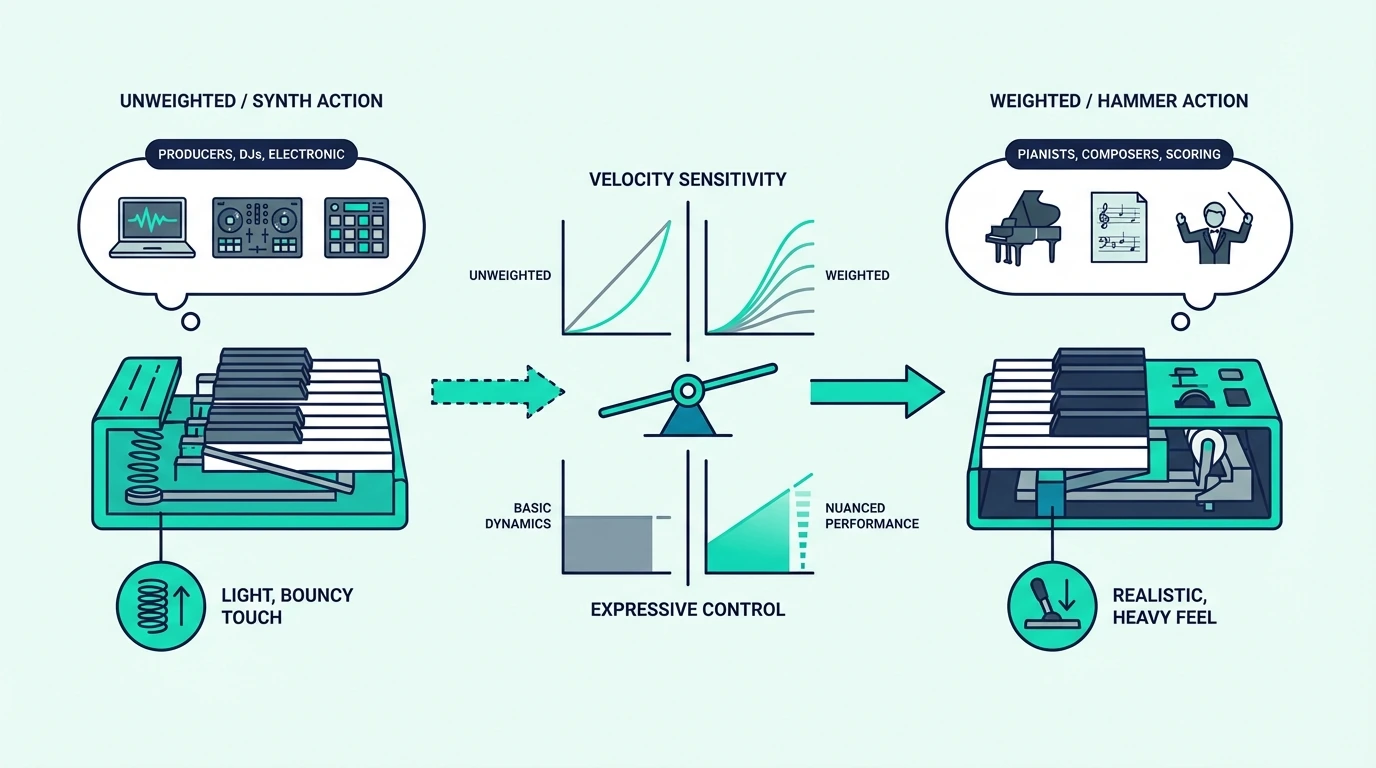
Weighted keys add cost, weight, and desk footprint to any MIDI controller. Understanding whether your workflow genuinely benefits from that investment prevents you from overspending on a feature you may never appreciate.
Pianists Who Practice And Perform
If you practice piano scales, learn classical pieces, prepare for recitals, or teach piano lessons, weighted hammer action is non-negotiable. The muscle memory you develop on weighted keys transfers directly to an acoustic piano. Practicing on unweighted keys builds technique that falls apart the moment you sit at a real instrument.
Beginners who aren’t sure they need hammer action yet can read how much key action a first piano keyboard needs for the semi-weighted middle ground.
The Yamaha P71’s GHS action is the minimum standard for serious piano practice. Cheaper weighted alternatives exist, but they often use inconsistent weighting that creates dead spots across the keyboard — certain keys feel heavier or lighter than their neighbors, disrupting the natural graded response.
Producers Who Also Play Piano
If you record piano parts in your DAW and want them to sound natural, weighted keys capture the velocity dynamics that make a piano performance expressive. Soft notes come through as whispers. Hard notes come through as powerful strikes. That dynamic range exists in semi-weighted and unweighted controllers too, but the physical feedback of weighted keys helps you instinctively control those dynamics.
Producers who play piano-style parts occasionally but primarily work with synths and beats should consider semi-weighted action instead of fully weighted. The semi-weighted resistance adds feel without the weight penalty, and the lighter action handles non-piano patches more comfortably.
Who Should Skip Weighted Keys
Beat makers, electronic producers who primarily use 25-key controllers with pads, and anyone who programs notes more than performs them should skip weighted keys entirely. The added cost, weight, and desk space provide zero benefit for workflows centered on pad triggering, knob tweaking, and mouse-based MIDI editing.
The Akai MPK Mini MK3 or M-AUDIO Keystation 49 MK3 covers these workflows with a fraction of the desk footprint.
The Weight And Space Reality Check
A fully weighted 88-key controller like the Yamaha P71 weighs 25 pounds and stretches over four feet wide. That footprint demands a dedicated keyboard stand or a very large desk.
Semi-weighted controllers are lighter but still substantially heavier than synth-action equivalents. The M-AUDIO Keystation 88 MK3 weighs roughly 15 pounds — manageable for desk use but not something you toss in a backpack.
If portability matters at all, weighted keys and travel do not mix. Keep the weighted board at home for practice and carry a compact mini controller for mobile production.
If you’d rather save desk space than chase a heavier action, 37-key boards with synth-style keys fit three octaves into about 18 to 23 inches.
The Bottom Line
The Yamaha P71 is the best weighted MIDI keyboard for pianists who need authentic hammer action that transfers to acoustic piano playing. For producers who want weighted feel without the full piano commitment, the M-AUDIO Keystation 88 MK3 delivers semi-weighted 88 keys.
If weighted keys are not essential for your workflow, skip the premium and invest in a quality unweighted controller that matches how you actually produce.
Frequently Asked Questions
What is the difference between weighted and semi-weighted MIDI keyboards?
Weighted (hammer action) keys use a mechanical hammer that simulates acoustic piano feel — heavier in the bass, lighter in the treble. Semi-weighted keys use springs for resistance without simulating hammer mechanics. Weighted feels like a real piano. Semi-weighted feels more substantial than unweighted but lighter than a real piano.
Do I need weighted keys for music production?
Only if you record piano parts that require natural velocity dynamics and you want the physical feedback of piano-like resistance. For synths, beats, and electronic production, semi-weighted or synth-action keys work equally well and cost significantly less.
Are weighted MIDI keyboards heavier?
Yes — fully weighted 88-key controllers weigh 20-30 pounds compared to 5-10 pounds for semi-weighted or synth-action equivalents. The hammer mechanism adds significant physical weight. Factor in desk support and portability when choosing.
Can I practice piano on a semi-weighted MIDI keyboard?
You can learn notes and basic technique, but the muscle memory will not transfer accurately to an acoustic piano. Semi-weighted keys respond differently than hammer-action keys, and the techniques you develop (finger strength, touch control) will feel different on a real instrument. Serious piano students should invest in fully weighted hammer action.