Difference Between A 3.1 And 3.1.2 Soundbar Wired — What The Extra .2 Actually Changes
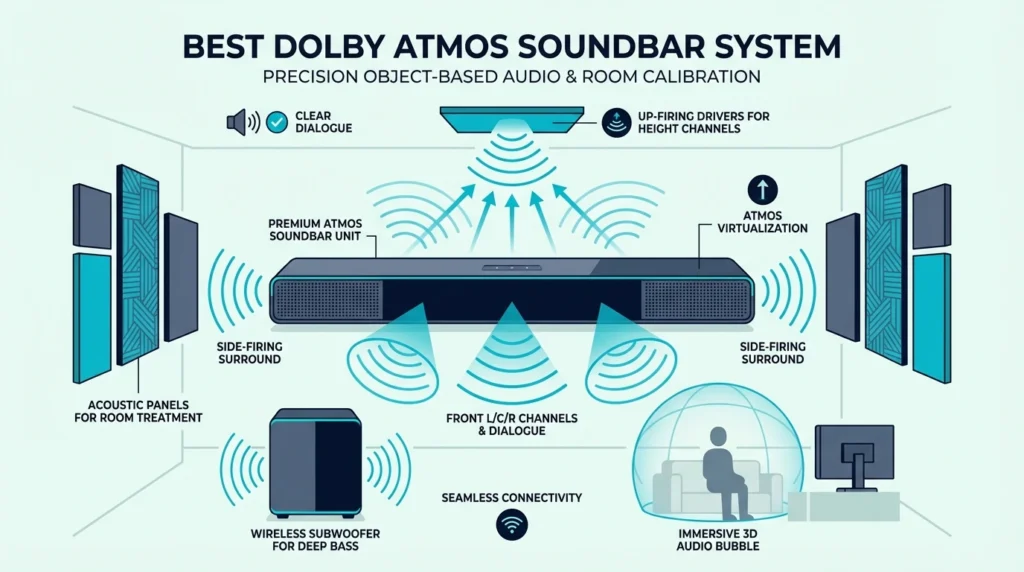
Difference between a 3.1 and 3.1 2 soundbar wired confuses a lot of buyers, but the numbers are describing speaker layout more than the cable itself.
The problem is that many buyers make the wrong comparison and assume the .2 must mean a better wired connection, extra bass, or a louder version of the same bar.
Once you separate the channel count from the TV connection method, you can avoid paying for height hardware you will not use or missing the one upgrade that actually gives Atmos movies more dimension.
So start by reading the numbers correctly, then decide whether the extra .2 fits your room, your content, and your budget instead of assuming it is always the automatic upgrade.
Below, I break down the difference between a 3.1 and 3.1.2 soundbar wired in plain English.
To choose between them, remember that a 3.1 soundbar gives you left, center, and right channels plus one subwoofer channel, while a 3.1.2 soundbar keeps that same base and adds two dedicated height channels for Dolby Atmos-style overhead effects. The word wired usually refers to how the bar connects to the TV, not to the difference between the layouts themselves. If you mainly want clearer dialogue and fuller everyday TV sound, a good 3.1 bar is often enough. If you want audible height cues from Atmos content and your room can support up-firing drivers, 3.1.2 is the more meaningful step up.
What Is The Difference Between A 3.1 And 3.1.2 Soundbar Wired — And Why Does It Matter?
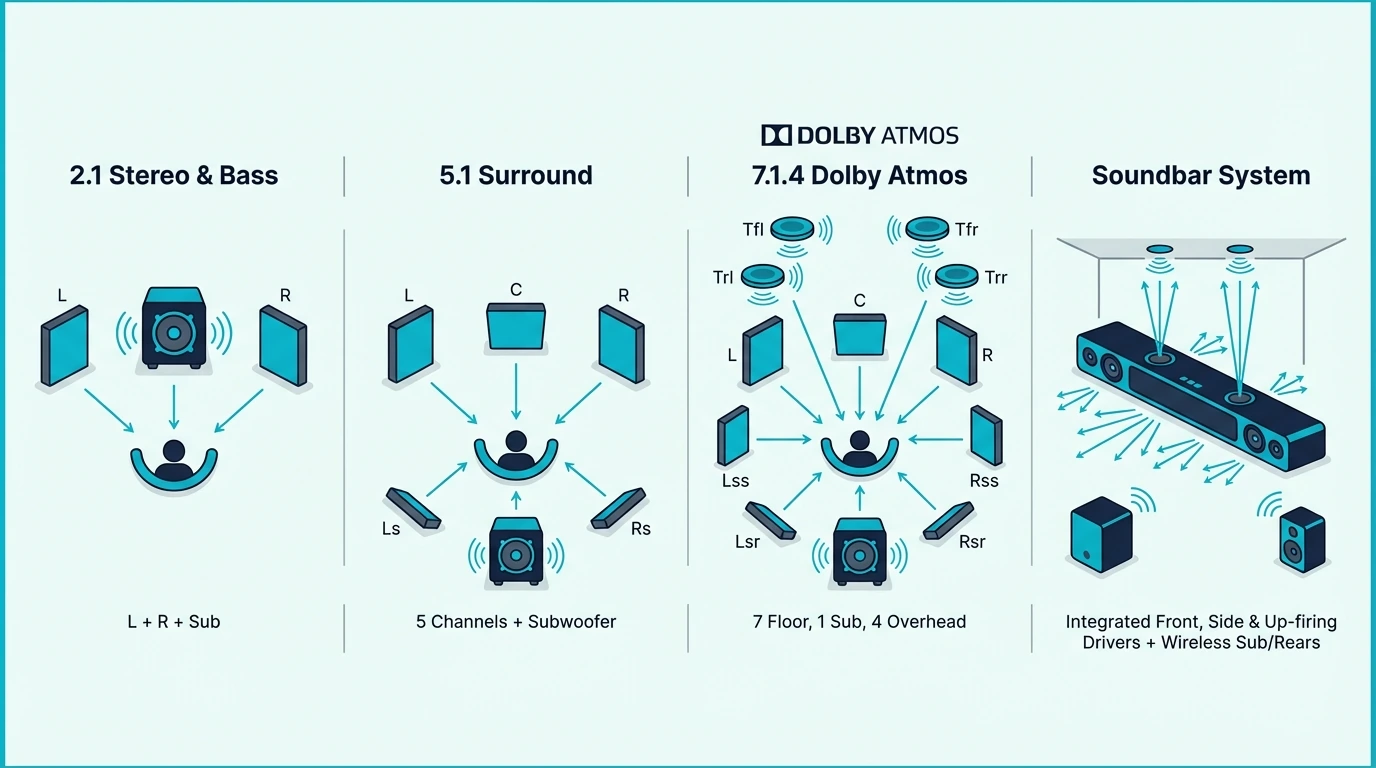
The fastest way to understand this comparison is to decode the channel notation first.
A 3.1 soundbar has three main front channels and one subwoofer channel.
In practical terms, that means left, center, and right speakers across the front of the room.
Bass comes from a separate or built-in subwoofer.
The biggest upgrade over cheaper 2.0 or 2.1 bars is usually the dedicated center channel, because it gives speech its own lane instead of forcing dialogue to compete with everything else in the left and right drivers.
A 3.1.2 soundbar keeps that same basic layout.
It then adds two height channels.
On most soundbars, those height channels are up-firing drivers built into the bar.
They bounce sound off the ceiling so effects feel taller and more overhead.
That is the entire point of the extra .2. It is not a second subwoofer, and it is not just another way to say the bar is premium.
That matters because the core 3.1 versus 3.1.2 decision is really about front-stage clarity versus added height immersion. Both layouts can sound far better than a TV.
Both can include a wireless subwoofer. Both can be connected to the TV with HDMI ARC or eARC.
But only the 3.1.2 layout is built to create dedicated height effects from Atmos-style content.
This is also where the keyword’s wired wording causes unnecessary confusion. The wired part is usually about the TV connection path, not the channel layout.
A 3.1 bar and a 3.1.2 bar can both be wired to the TV with HDMI. They can both sometimes fall back to optical.
They can both still use a wireless subwoofer even when the main bar is wired to the television.
So if you are really trying to decide between the layouts, do not let the cable question distract you from what the speaker layout itself is doing.
When the TV connection path is the real bottleneck, the how to connect soundbar to TV guide covers the HDMI ARC and optical side of the setup more directly.
This article is about what the channel count means once the bar is part of the system.
The next important distinction is what each layout is best at.
A 3.1 bar is usually the smart buyer move when the main complaint is weak speech, thin TV audio, and not enough low-end weight for regular movies and streaming.
Buyers who care mostly about voices usually get more value from the best soundbar for dialogue guide than from chasing extra channels they may never fully use.
A 3.1.2 bar makes more sense when the buyer wants to keep the same basic front-stage simplicity but add Atmos-capable height effects.
This is the level where the best Dolby Atmos soundbar roundup becomes relevant.
At that point, the quality of the up-firing height drivers and the room itself start to matter.
The room matters because 3.1.2 relies on reflected sound. A normal flat ceiling at a reasonable height often works well enough, while vaulted ceilings or awkward open plans can shrink the value of the height channels.
In broader system shopping, the best soundbar guide is where simpler bars and larger packages separate more clearly.
So the simplest way to frame the difference is this.
A 3.1 soundbar is about cleaner, fuller front audio with a dedicated center and subwoofer.
A 3.1.2 soundbar is that same foundation plus two height channels for more immersive Atmos presentation.
Should You Buy A 3.1 Or 3.1.2 Soundbar?
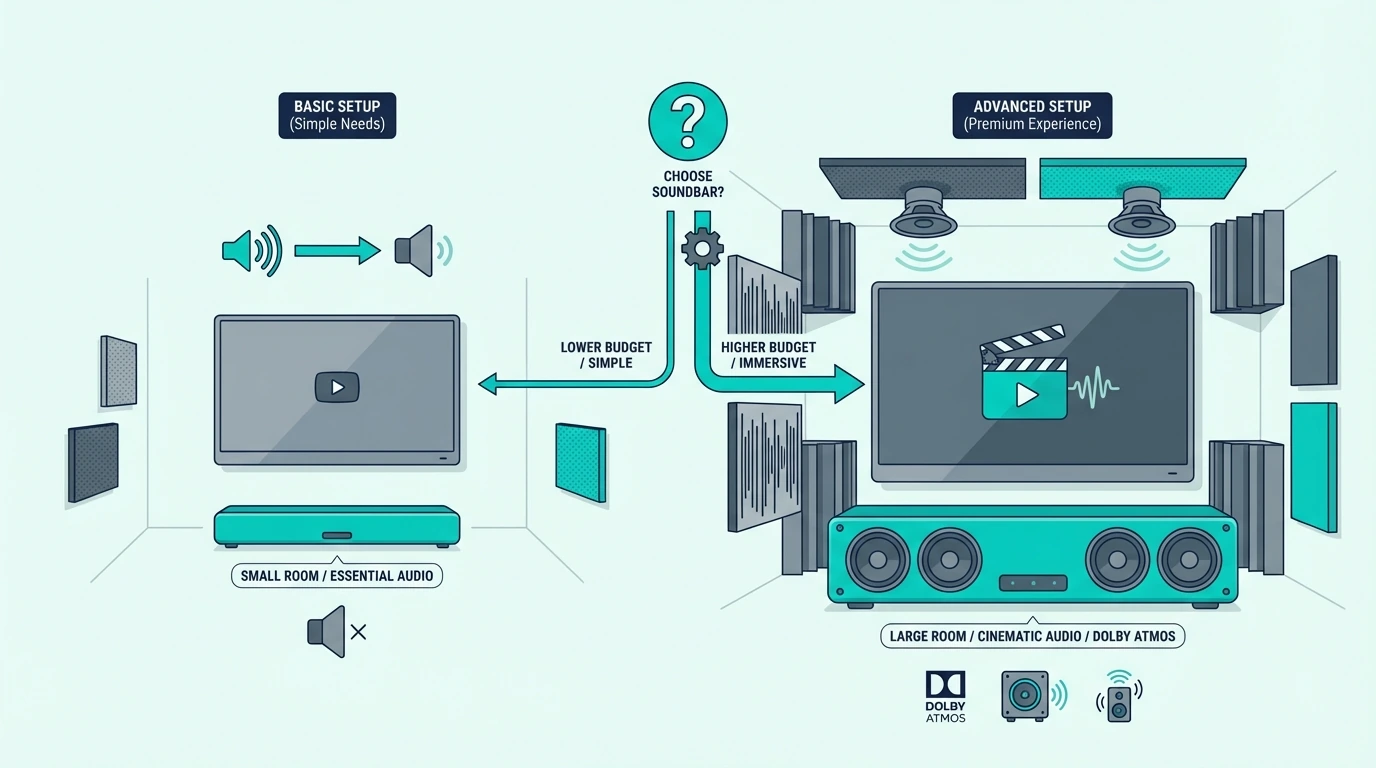
The real buying split is simple.
Choose 3.1 when better dialogue and fuller front sound are the goal.
Choose 3.1.2 only when you genuinely want height effects from Atmos content.
That is why your viewing habits, ceiling shape, and connection path matter more than the extra .2 printed on the box.
Buy a 3.1 soundbar if your main goal is clearer everyday TV audio
For a lot of buyers, 3.1 is the sweet spot. You get the most important practical upgrade over cheap TV speakers and budget 2.0 or 2.1 bars: a dedicated center channel for dialogue.
That alone solves more day-to-day frustration than most people expect.
If your viewing is mostly regular TV and casual movie nights, a strong 3.1 system often gives you nearly all the improvement you are actually looking for.
It keeps voices anchored to the screen.
It adds subwoofer weight for music and movies.
It does not ask you to optimize the ceiling just to justify the purchase.
That is why a practical 3.1 example like the Samsung HW-B630F 3.1ch Soundbar with Subwoofer makes sense for buyers who want a clean step up from TV audio without turning the room into an Atmos project.
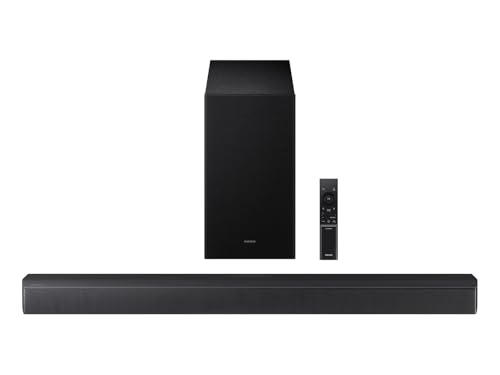
Samsung HW-B630F 3.1ch Soundbar with Subwoofer
Another good 3.1 reference point is the LG S60T 3.1 ch. Soundbar with Wireless Subwoofer, especially for buyers who want better dialogue and fuller sound in a normal living room without spending midrange Atmos money.
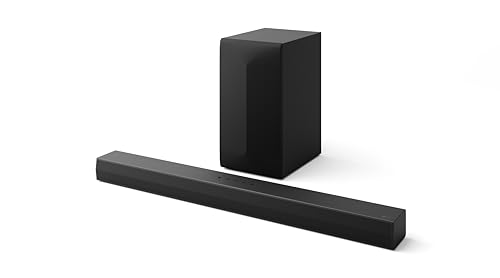
LG S60T 3.1 ch. Soundbar with Wireless Subwoofer
This is especially true in smaller rooms, bedrooms, and apartments.
In those spaces, the jump from TV speakers to a proper 3.1 front stage already feels huge.
The best soundbars for small rooms roundup often matters more there than chasing extra channels the room may not reveal clearly anyway.
Buy a 3.1.2 soundbar if you actually want height effects from Atmos content
A 3.1.2 bar is the smarter choice when the thing you want is not just clearer dialogue and stronger bass, but a taller, more immersive presentation on Atmos movies, games, and compatible streaming content.
This is where the extra .2 starts earning its keep.
The base experience is still familiar.
You still get the left, center, and right channels plus the subwoofer.
But now the soundbar also has two height channels meant to throw part of the mix upward and outward so overhead effects feel distinct from the front-stage audio.
A strong 3.1.2 example like the Polk Audio Signa S4 3.1.2ch Soundbar with Subwoofer is the kind of upgrade that makes sense when you already know you care about Atmos and want a realistic entry point into height effects without moving to a larger 5.1.2 or 7.1 system.
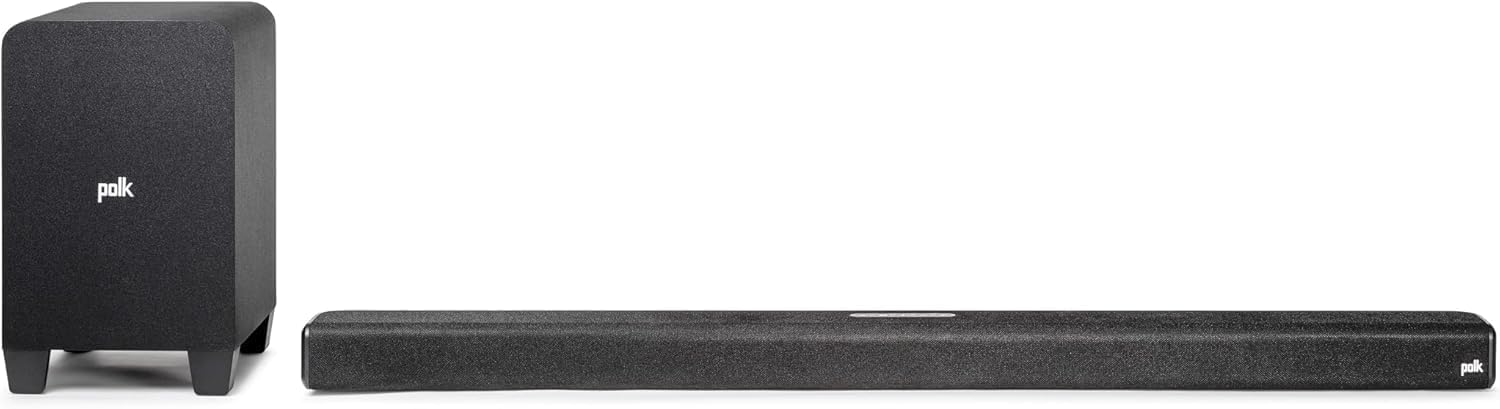
Polk Audio Signa S4 3.1.2ch Soundbar with Subwoofer
A more premium 3.1.2 example like the Klipsch Flexus CORE 210 Dolby Atmos 44″ SoundBar + 10″ Subwoofer, 3.1.2-Channel makes the same point more strongly.
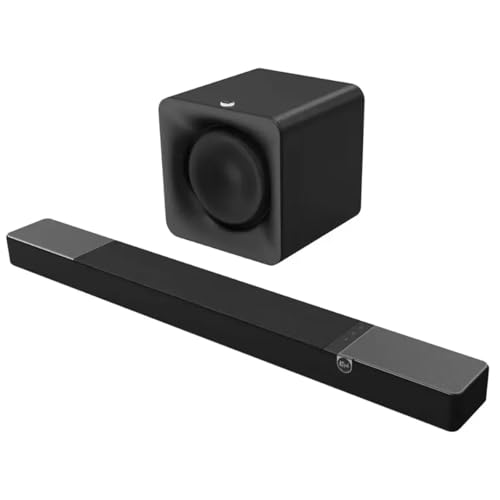
Klipsch Flexus CORE 210 Dolby Atmos 44″ SoundBar + 10″ Subwoofer, 3.1.2-Channel
The extra value in 3.1.2 is not the subwoofer.
It is not the HDMI cable.
It is not the marketing badge.
It is the added height presentation when the room and source material cooperate.
That means 3.1.2 pays off best for buyers who actually watch Atmos-heavy movies, use a flat reflective ceiling, and are willing to connect the bar correctly so the audio format is not bottlenecked before it even reaches the speakers.
The wired connection does matter — but not in the way the keyword implies
This is the most important clarification for the wired part of the query.
A wired TV connection does not turn a 3.1 bar into a 3.1.2 bar.
It does not explain the extra .2.
What it does change is whether the bar can receive the format you want it to play.
For a standard 3.1 bar, the connection path is usually easier. HDMI ARC is fine in many cases.
Optical is often fine too if all you need is stable TV audio with strong dialogue and bass.
That is one reason 3.1 bars feel so practical.
They deliver most of their value without demanding the cleanest possible Atmos-ready signal chain.
For a 3.1.2 bar, the wired path matters more because the whole point of the extra height channels is tied to Atmos-capable playback.
In many setups, that means HDMI ARC at minimum and eARC ideally.
That is especially true if you care about the best possible audio format support.
If the bar is fed only a limited signal path, the height hardware becomes much easier to underuse.
So if you are comparing these two layouts and planning to use optical because it is convenient, that alone may tilt the decision back toward a 3.1 bar.
That is true unless you are certain your content and connection path will still justify 3.1.2.
That is also why troubleshooting pages like the how to fix no sound from soundbar using HDMI ARC guide matter more once you move into Atmos-capable gear.
TV brand integration can matter here too.
Readers using LG or Samsung sets often care whether ARC, eARC, and everyday control syncing feel smooth enough to make the higher-spec bar worthwhile.
That is why the best soundbars for LG TV guide can still be useful if that is your setup.
What the extra .2 does not fix
The extra .2 does not automatically create true surround sound behind you.
It does not replace rear speakers.
It does not rescue a bad room.
If you mostly watch news, sports, and regular streaming, you may hear more value from a strong center channel than from occasional height cues.
That is why a strong 3.1 bar is often the better buy than a mediocre 3.1.2 bar chosen only because the number is bigger.
So if your priority list starts with speech clarity, simple setup, lower price, and dependable everyday TV performance, 3.1 stays the smarter answer more often than marketing pages want to admit.
If your priority list starts with Atmos movies, taller sound, and stronger home-theater immersion from a single front bar, then 3.1.2 is the better fit.
Get Studio Tips Weekly
Join 5,000+ creators getting acoustic treatment advice every week.
No spam. Unsubscribe anytime.The Bottom Line
Difference between a 3.1 and 3.1 2 soundbar wired comes down to one core point.
A 3.1.2 bar keeps the same front-stage foundation as a 3.1 bar.
Then it adds two height channels for Atmos-style overhead effects.
The wired part of the question is mostly about the connection path to the TV, not the speaker layout itself.
Both layouts can be wired to the TV.
The bigger issue is that 3.1.2 has more to gain from a better HDMI ARC or eARC path, while 3.1 is easier to justify even in simpler setups.
If you mostly want better speech and stronger everyday movie sound, buy a good 3.1 bar.
It is usually the cleaner value play.
If you want real height hardware and you actually watch content that can use it, pay for 3.1.2.
Then make sure the room and connection path let it do its job.
For broader shopping beyond this exact comparison, the soundbar hub, the best Dolby Atmos soundbar guide, and the best soundbar roundup help place these two layouts in the wider category.
Frequently Asked Questions
What does 3.1.2 mean on a sound bar?
It means the soundbar has three front channels and one subwoofer channel, plus two dedicated height channels.
On most soundbars, those two height channels are up-firing drivers used for Atmos-style overhead effects.
Is a 3.1.2 soundbar better than a 3.1 soundbar?
Only if you actually benefit from the height channels. For Atmos movies in a room with a good ceiling for reflection, yes, 3.1.2 can sound more immersive.
For regular TV, dialogue-heavy viewing, and tighter budgets, a strong 3.1 bar may be the smarter buy.
Can a 3.1 soundbar still sound better than a cheap 3.1.2 soundbar?
Yes.
A better-tuned 3.1 bar with a strong center channel and cleaner overall performance can be the better everyday product.
That is especially true if the 3.1.2 bar has weak drivers or the room does not let the height channels work well.
Which is better, a 3.1 or 5.1 soundbar?
A 3.1 soundbar is usually better for buyers who want simple setup and stronger front-stage clarity.
A 5.1 soundbar makes more sense when you also want a stronger surround effect from side or rear channels.
That is a different goal from simply wanting better dialogue and bass.