5.1 vs 4.1 Soundbar: What Does the Fifth Channel Change?

The 5.1 vs 4.1 soundbar comparison looks like a tiny spec-sheet change, but the fifth channel often changes more than buyers expect.
In many systems, it is the difference between settling for a cheaper surround package and getting the standard layout that handles movies and dialogue the way most people think surround sound should work.
That is where many buyers get it wrong.
They expect 4.1 to feel basically the same as 5.1 for less money.
Then they discover the bigger issue was dialogue that never locks cleanly to the screen or a movie mix that keeps exposing the missing center channel.
Once you understand what the fifth channel actually does, the decision gets much easier.
You can judge whether 4.1 is a smart budget shortcut for your room or whether 5.1 is the version that will sound more correct from the first night you use it.
The first move is to stop treating this as “just one more speaker.”
Compare how each layout handles dialogue, surround placement, and day-to-day value.
That tells you when 4.1 is enough and when 5.1 is worth paying for.
Choose a 4.1 soundbar if you are buying for a small room, a lower budget, and can live without a dedicated center channel. It can still add real rear-speaker immersion and a subwoofer, but dialogue usually is not as locked to the screen as it is on a proper 5.1 system.
Choose a 5.1 soundbar if you want the standard surround format for movies and gaming. The center channel handles speech more cleanly, and the separate surround channels make movement around the room sound more believable.
What Is the Real Difference Between a 5.1 and 4.1 Soundbar?
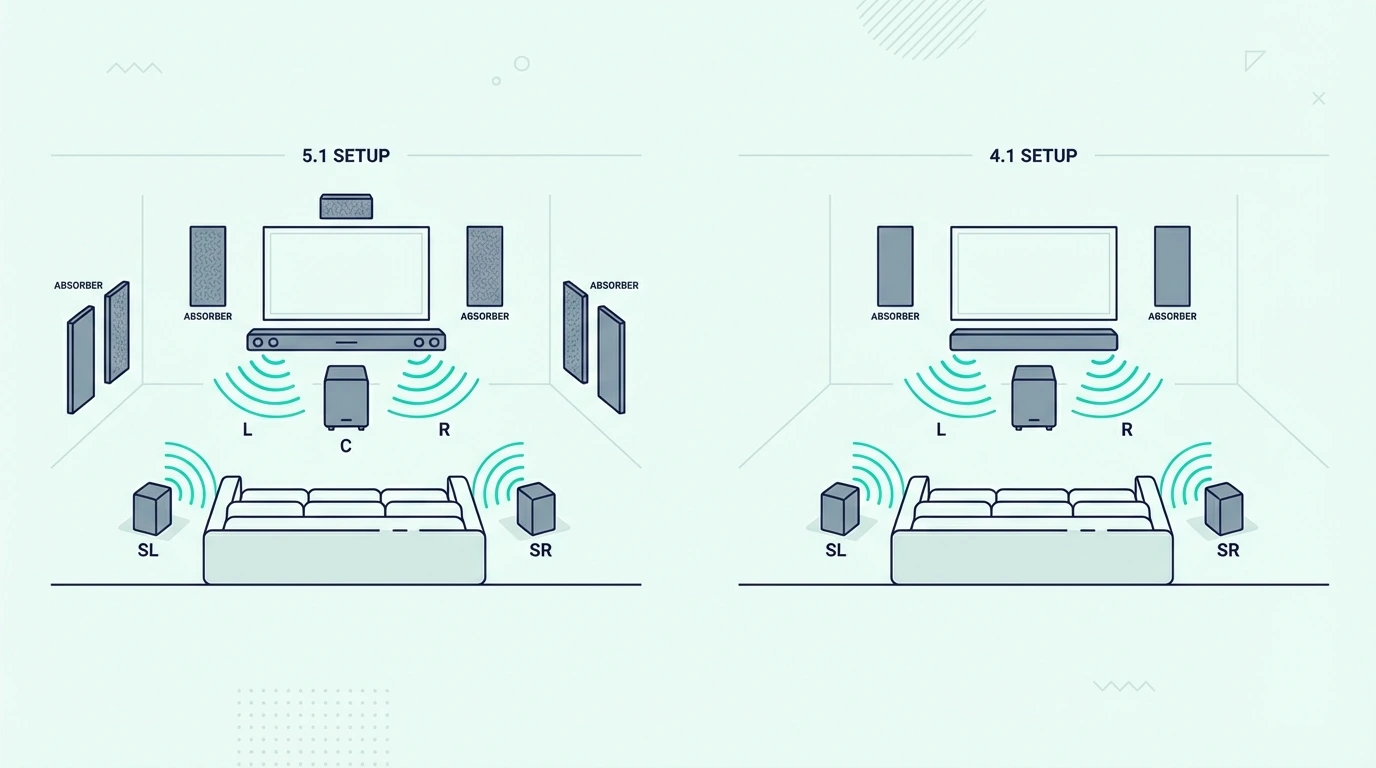
The spec difference is not just “one more effect channel.”
It usually changes how dialogue is handled at the front of the room.
It also changes how faithfully the soundbar matches the standard 5.1 mixes used by movies and games.
4.1 Soundbars: Rear Immersion Without a Discrete Center
A 4.1 soundbar gives you four main channels and a subwoofer.
On many soundbar packages, that means front left and right, two rear or surround channels, and no dedicated center speaker.
That missing center is the part many shoppers overlook. Voices can still sound clear, but they are usually being steered across the front speakers instead of coming from their own dedicated channel.
The LG S40TR 4.1ch Soundbar with Rear Surround Speakers is a good example of where 4.1 makes sense.
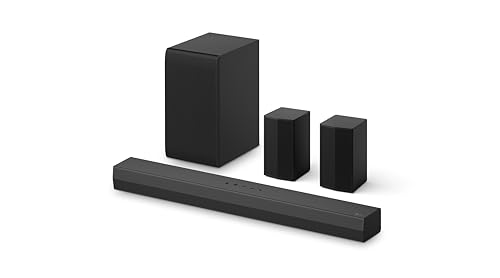
LG S40TR 4.1ch Soundbar with Rear Surround Speakers
It gives you genuine rear-speaker presence and bass in a smaller room without forcing you into a more expensive full 5.1 package.
That does not make 4.1 the better format in general. It just means there are rooms and budgets where rear-speaker ambience matters more to the buyer than getting the cleanest possible dialogue channel.
If you want the broader primer on channel numbers, the soundbar fundamentals hub is the clean starting point. Buyers who already know they want a bass-included package can compare current bundles in the best soundbar with subwoofer guide.
5.1 Soundbars: The Standard Surround Layout
A 5.1 soundbar adds the missing piece: a discrete center channel alongside left, right, surround left, surround right, and the subwoofer.
That is why 5.1 is still the baseline surround format for movie tracks, streaming apps, and most games.
The center channel matters because it keeps speech anchored to the screen while the side or rear effects move around you.
The surround pair matters because left-rear and right-rear effects can stay separated instead of collapsing into a more generic wash of sound.
The Amazon Fire TV Soundbar Plus with Subwoofer and Surround Sound Speakers is a mainstream example of what the standard layout buys you.
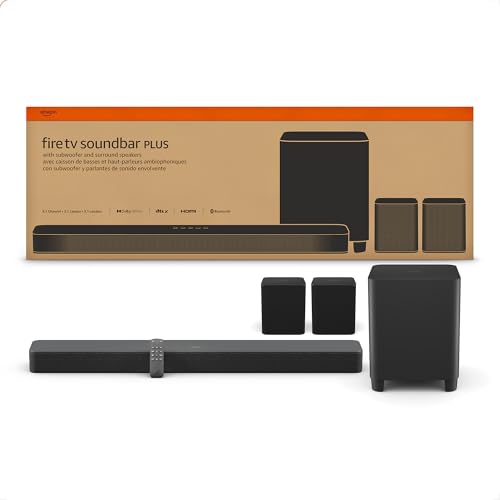
Amazon Fire TV Soundbar Plus with Subwoofer and Surround Sound Speakers
If you want a cleaner step into real surround without jumping straight into premium pricing, it is a much better comparison point than pretending a 4.1 package is almost the same thing.
It is also easier to recommend because the tradeoff is clearer.
You are buying into the surround format most content already expects instead of relying on a more unusual 4.1 layout that varies a bit from brand to brand.
If you are already comparison-shopping specific buying options, the best Samsung soundbar roundup and the best budget soundbar guide are better next clicks than another high-level explainer.
Is 4.1 Good Enough, or Is 5.1 Worth It?
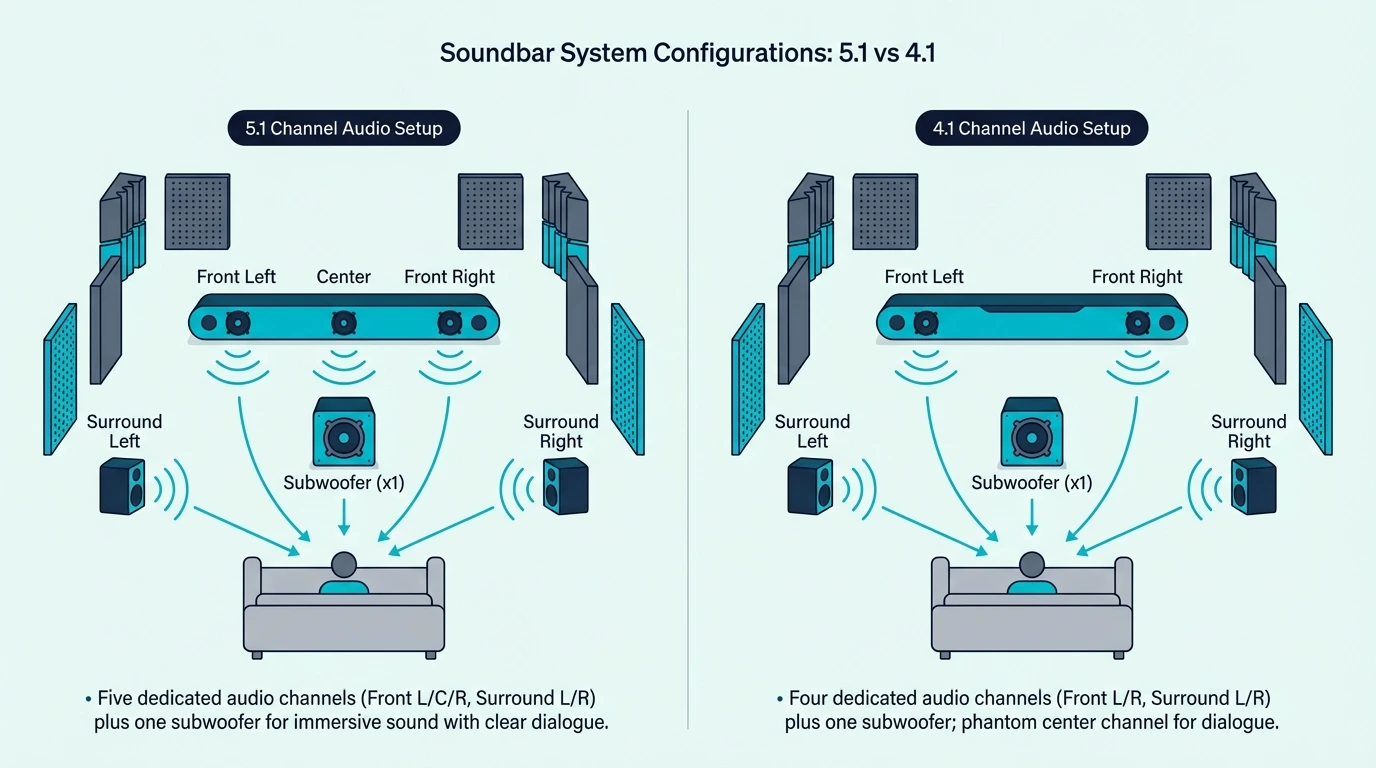
The practical answer depends on your room, your viewing habits, and how much you care about dialogue precision.
The smaller the room and the lighter the movie use, the easier it is to live with 4.1.
Small Rooms and Casual Viewing
In a small bedroom or apartment setup, 4.1 can still be a meaningful step up from TV speakers. You get a subwoofer and real rear-speaker presence without paying for the full 5.1 layout.
The catch is that you are usually saving money by giving up the center channel, not by shaving off some invisible extra surround magic.
If most of your watching is casual streaming, sports, or background TV, that compromise can be perfectly reasonable.
Apartment buyers often notice the added bass and rear ambience before they notice the missing center.
If you rarely sit down for serious movie nights, 4.1 can still feel like a meaningful upgrade over a plain stereo or 2.1 bar.
That is where a 4.1 package like the LG S40TR fits best.
Before buying for a tricky room, the soundbar setup guide helps you think through rear-speaker placement.
The soundbar to TV connection guide covers the HDMI ARC side that can bottleneck surround formats.
Medium-Large Rooms, Movies, and Gaming
Once you move into a larger living room or start watching action movies and playing games regularly, 5.1 becomes much easier to justify.
The center channel improves speech intelligibility.
The two surround channels make pans, flyovers, and positional effects sound far more believable.
The center channel matters even more when the TV is farther away or the room already has some background noise. It keeps voices anchored and intelligible without forcing you to raise the whole mix just to hear dialogue.
A bundled 5.1 package like the Amazon Fire TV Soundbar Plus shows why 5.1 is still the standard when immersion matters more than shaving a little cost.
Why 4.1 Can Be Harder to Shop
Another practical issue is that 4.1 soundbars are relatively uncommon.
Because 5.1 is the standard surround format, brands often skip straight from simpler bars into 5.1 packages.
That can make the price gap smaller than you expect.
That also means most setup guides, buyer comparisons, and content mixes are built around 5.1 assumptions.
When a 4.1 package is only a little cheaper, the market itself is usually telling you where the mainstream value sits.
That is why a value-oriented 5.1 model like the Samsung HW-B750D/ZA 5.1ch Soundbar can be the smarter buy even for price-conscious shoppers.
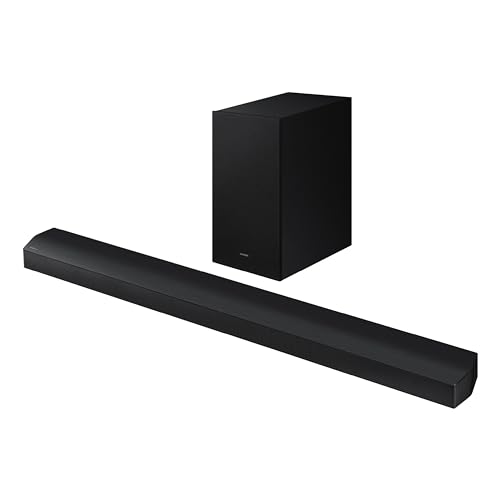
Samsung HW-B750D/ZA 5.1ch Soundbar
If you are comparing deals more than specs, the best budget soundbar guide and the best soundbar with subwoofer guide are more useful than treating 4.1 as an automatic bargain.
Get Studio Tips Weekly
Join 5,000+ creators getting acoustic treatment advice every week.
No spam. Unsubscribe anytime.The Bottom Line
Choose a 4.1 soundbar only if you are comfortable with the tradeoff that usually comes with it.
You get real surround presence, but no dedicated center channel.
In smaller rooms and lighter-use setups, that can still be a sensible way to get rear speakers and bass for less money.
Choose a 5.1 soundbar if you want the standard surround layout that movies and games are actually mixed for.
The center channel is the biggest quality-of-life improvement.
The balanced surround pair makes the whole presentation feel more complete.
If you want the category overview before buying, the soundbar hub is the clean entry point.
If you already know you want a bass-included package, the best soundbar with subwoofer guide is the more direct buying path.
Frequently Asked Questions
Is 4.1 good for home theater?
A 4.1 soundbar can still work for home theater, especially in a small room where you mainly want rear-speaker presence and deeper bass.
The catch is that many 4.1 packages do not include a discrete center channel, so dialogue is usually the compromise.
If movies are your priority and you care about cleaner speech plus more standard surround playback, 5.1 is the better fit.
Is 4.1 good for small rooms?
Yes, 4.1 can make sense in a small room because the shorter listening distance reduces how dramatic the gap feels between 4.1 and 5.1.
It is still worth remembering that the missing center channel may matter more than the room size if dialogue clarity is a constant complaint.
Is 4.1 usually missing the center channel?
In many soundbar packages, yes.
A 4.1 layout often means four main channels plus the subwoofer.
That usually translates to front left and right plus rear left and right, rather than a full front left, center, and right stage.
That is why the tradeoff feels bigger than just losing “one channel.” The missing center is usually what makes 4.1 less ideal for dialogue-heavy movie watching.
Is it worth getting a 5.1 soundbar?
Yes, if you watch movies regularly, stream surround-mixed content, or play games where positional audio matters.
5.1 is still the standard surround format.
The dedicated center channel plus separate surround pair make the upgrade easier to hear day to day.
It also helps that 5.1 models are usually easier to shop because the category has more choices than 4.1.
Can a good 4.1 soundbar beat a bad 5.1 soundbar?
Yes, especially if the 5.1 model cuts too many corners on tuning, build quality, or rear-speaker implementation.
A well-set-up 4.1 package can sound more satisfying than a sloppy 5.1 system that never places dialogue or surrounds convincingly.
That said, when the overall quality is similar, 5.1 still has the better ceiling. The dedicated center channel and standard surround layout give it more room to sound correct with real movie and game mixes.
Does Netflix support 5.1?
Yes, Netflix supports 5.1 on many titles when your TV, streaming device, and soundbar are connected in a way that preserves surround audio, usually through HDMI ARC or eARC.
Some titles also offer Dolby Atmos on compatible hardware.
But 5.1 support itself is common enough to make a true 5.1 soundbar more useful than a niche 4.1 package for regular streaming.