How to Soundproof a Nursery Without Breaking Safe-Sleep Rules
Working out how to soundproof a nursery starts with an odd rule: the crib is the one spot in the room where nothing gets added.
Hallway voices, a TV behind a hollow door and street noise at nap time can all wake a light sleeper, yet the soft fixes people reach for first, like bumpers, blankets and foam, are exactly what pediatricians want out of the sleep space.
Fix the paths sound actually travels, the door, the window and the shared wall, and the room gets quieter without one new object near the baby.
This guide starts at the door, then covers windows, walls and white noise machines, and flags the cord, furniture and airflow traps that come with each fix.
First comes a quick map of which fix suits which noise, and whether the nursery is even the room to quiet yet.
What’s the Best Way to Reduce Noise in a Nursery?
That map starts with where the noise comes from, since each source uses a different way in. The best way to reduce noise in a nursery is to seal the opening the noise uses, usually the door first, then the window, then any shared wall, and to leave the crib itself bare.
| Noise you hear | Where it gets in | Fix it first with | Safety check |
|---|---|---|---|
| Voices, TV, dishwasher | Gaps around the door, a hollow-core slab | A frame seal and a door-bottom seal | Keep a path for the room’s air |
| Traffic, sirens, barking | The window’s frame and glass | Sealing the sash, then an insert | Cordless coverings only |
| Talk from the next room | The shared wall and its outlets | Caulk, then mass and decoupling | Anchor anything heavy |
| A crying baby heard elsewhere | The same paths in reverse | The door first | A monitor with its cord kept away |
Every row puts the work on the room’s shell, where it belongs. The crib gets a firm mattress and a fitted sheet, and the sections below explain why nothing else goes in.
Should You Soundproof the Nursery or Your Own Bedroom First?
That door-first order applies to whichever room the baby actually sleeps in, and for a newborn that’s usually yours. The American Academy of Pediatrics recommends sharing a room with your baby, but not a bed, for at least the first 6 months, with the crib or bassinet close to your bed (AAP).
The AAP says room sharing can cut the risk of SIDS by as much as 50%, so for a young baby the quieting project is the room you sleep in. Our guide to soundproofing the bedroom you share covers that room, and the same door and window steps apply.
The nursery takes over later, which leaves time for the dusty, noisy work before anyone sleeps there. If the worry runs the other way, a crying baby waking siblings or the people next door, the same openings carry the sound out.
Get Studio Tips Weekly
Join 5,000+ creators getting acoustic treatment advice every week.
No spam. Unsubscribe anytime.Where Does Noise Get Into a Baby’s Room?
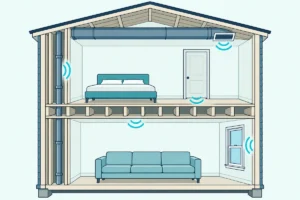
Whichever room it ends up being, noise uses the same few openings. Noise gets into a baby’s room through air gaps around the door, the window frame and the outlets, and through light surfaces such as a hollow-core door or a thin interior wall.
Gaps matter more than most people expect. HUD’s Noise Guidebook says a one-inch square hole or a 1/16-inch crack 16 inches long will cut a wall rated STC 50 down to STC 40 (HUD).
That 10-point drop matters because STC is built from decibel measurements, and Canada’s National Research Council notes that a 10 dB change sounds roughly twice or half as loud. Interior walls start low too: the NRC puts the usual home partition, drywall attached directly to both sides of wood studs, at about STC 33.
Try this at night: switch on the hallway light, close the nursery door and turn off the room’s light. Any glow along the edges or under the door marks a path for sound, and the same test at the window frame shows leaks you can feel as drafts.
How Do You Soundproof a Nursery Door?
Those light leaks often start at the door, and a hollow door is usually weaker than the wall around it too. To soundproof a nursery door, seal all three sides of the frame with a continuous strip that squeezes shut, close the gap at the bottom, and swap a hollow-core slab for a solid-core one if voices still come through.
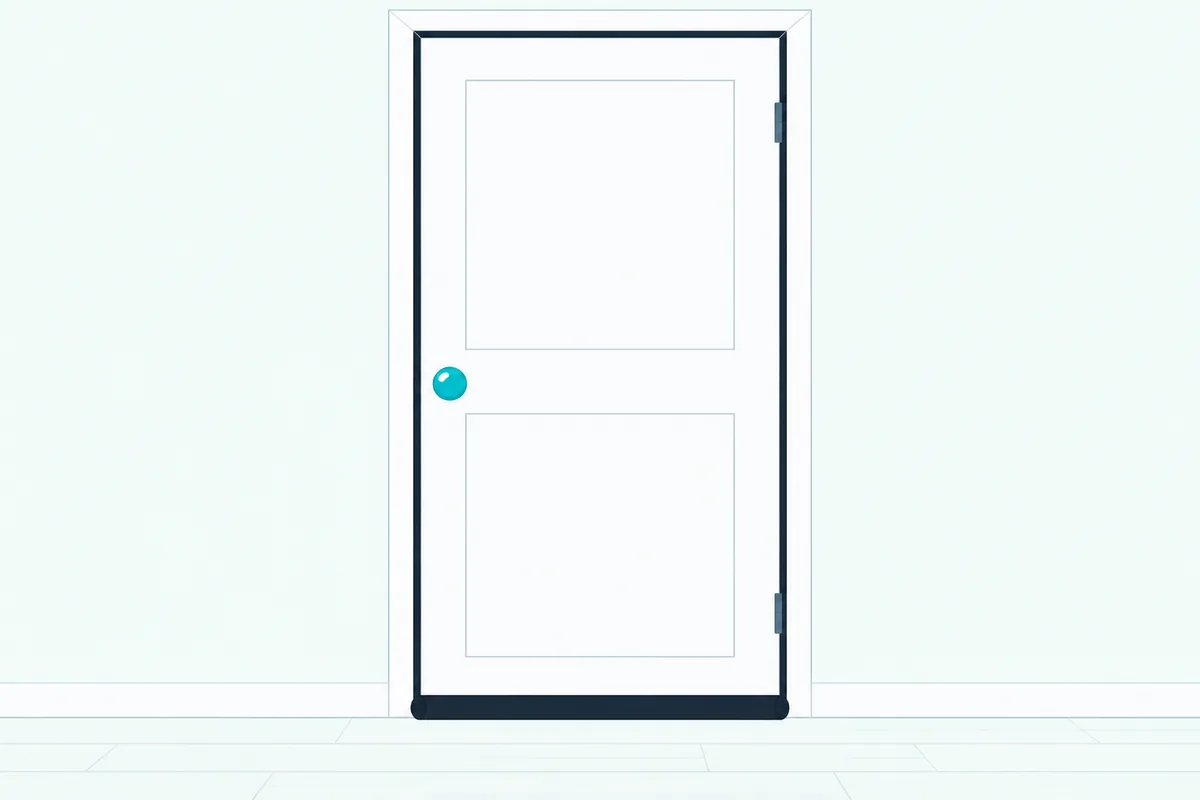
The federal General Services Administration’s acoustics guide rates solid or insulated-core doors as potentially very good and hollow-core doors as only good to poor. It asks for a continuous closed-cell foam seal on three sides of the frame and a sweep or drop seal over the undercut.
JELD-WEN’s own ratings show the difference between the two slabs: its flush hollow-core door is listed at STC 24, below even the plain STC 33 wall from earlier, and its flush solid-core door at STC 30. Our walkthrough on soundproofing a door step by step covers the slab swap and the hardware in more depth.
For the frame, the Fingwerk D-shape rubber seal sticks to the door stop so the door closes against it and squeezes it flat.
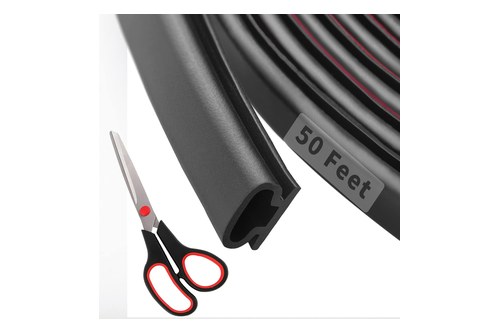
the Fingwerk D-shape rubber seal
For the bottom, the HomeProtect door draft stopper moves with the door and closes the undercut with a tool-free installation.
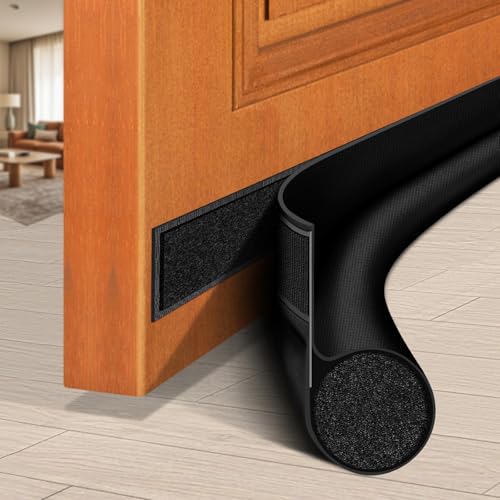
the HomeProtect door draft stopper
Check the room’s air before you close that bottom gap for good. Building Science Corporation points out that bedrooms often have a supply vent but no return, so air gets back to the system through the gap under the door.
Its fix is a through-wall transfer grille or a jump duct, which an HVAC contractor can add. That matters in a nursery, because the AAP lists overheating as a SIDS risk.
What Works on a Nursery Window?
Once the door is sealed, the window is usually the next weak spot, especially on a street-facing wall. On a nursery window, seal the sash and frame first, then add an interior insert or a second layer of glazing if traffic still comes through.
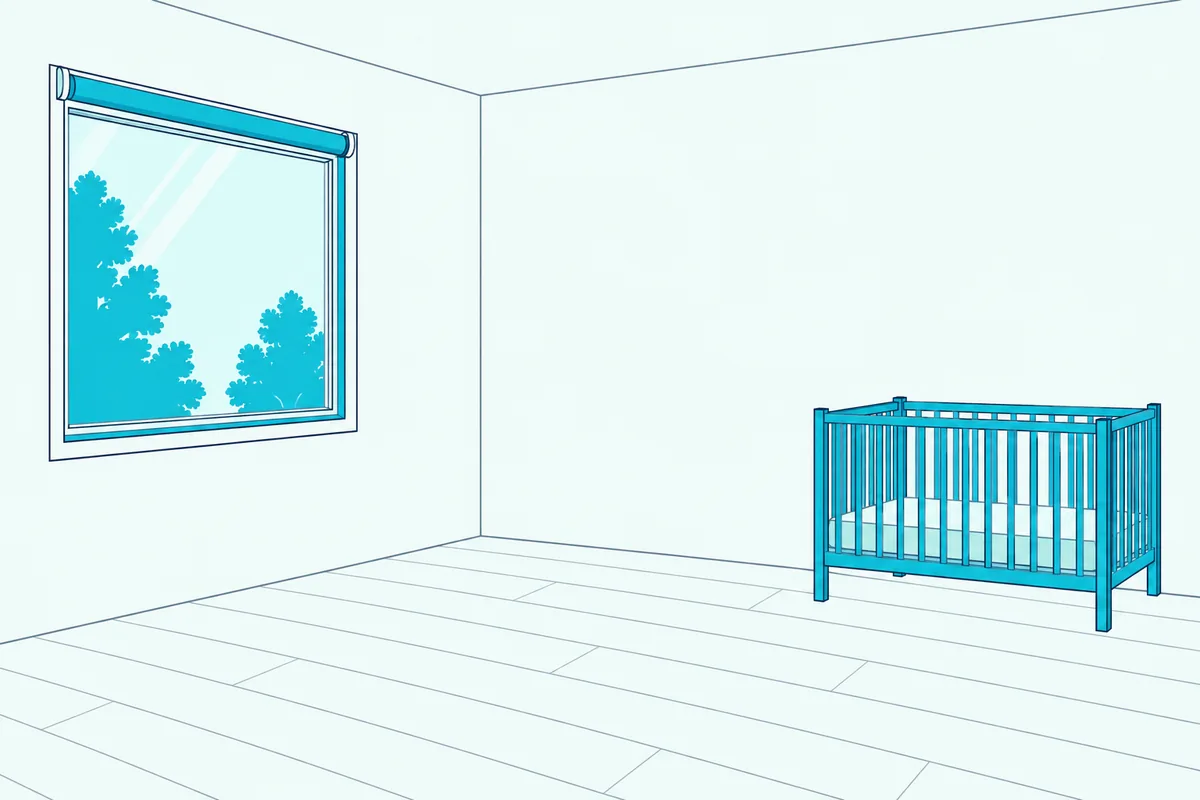
The NRC’s window digest explains why sealing comes first: a window that opens, even with good weatherstripping, usually rates 3 to 5 STC points below the same window sealed shut. It also found that triple glazing performs about the same as double glazing unless the gaps between the panes are very large.
HUD’s guidebook shows what a weak window costs the wall around it: an STC 45 wall with an STC 26 window covering 30% of its area performs at about STC 35.
An interior insert adds that second layer without replacing the window. Indow says its Acoustic Grade insert cuts noise by 18.9 dBA over a single-pane window and by 10.2 dBA over a double-pane one, and these window inserts compared side by side show the options.
Whatever covers the glass should be cordless, or at least have no cord a child can reach. The CPSC counted 209 fatal and near-miss strangulations on window covering cords among children 8 and younger from 2009 through 2021, 100 of them fatal, and found these deaths happen quickly and silently (CPSC rule, Federal Register).
Heavy curtains are soft absorbers, so they mostly soften echo and block light rather than noise. Nemours’ KidsHealth checklist says any blind or curtain cords should be kept well out of reach and away from cribs, and a heavy curtain needs its rod fixed into solid framing.
Can You Soundproof a Shared Nursery Wall?
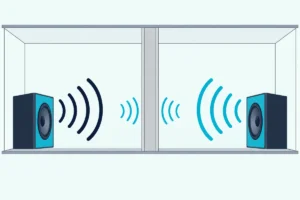
Doors and windows are openings, but the wall around them matters most when a bedroom or a TV room sits on the other side. A shared nursery wall can be soundproofed, and the gains come from sealing gaps, adding mass and breaking the stud connection rather than from anything hung on its surface.
That STC 33 wall from earlier explains the problem: the NRC found that filling it with insulation adds only about 3 points, because sound runs straight through the studs. Mount one side on resilient channels and fill the cavity, and the same single layers reach about STC 48, or 56 with two layers on each side (NRC digest, MIT’s copy).
Start with the lowest-cost part, which is sealing. HUD’s crack figure applies to every outlet box and trim joint, and this acoustical caulk fills those joints in the wall itself.
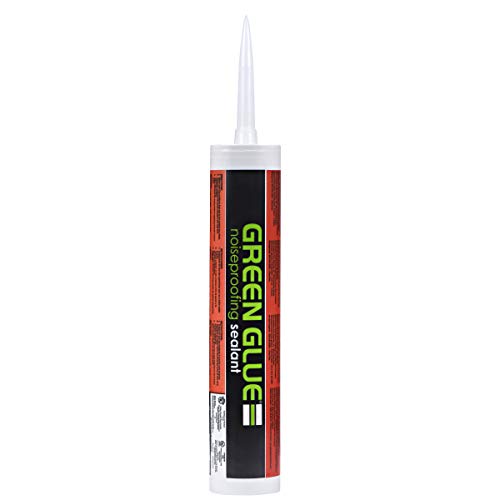
this acoustical caulk
Some parents push a loaded bookcase or dresser against the shared wall for its mass, and either one has to be anchored. The CPSC counted 199 child deaths from tipping dressers, chests and other clothing storage units between 2000 and April 2022, 98% of them involving a chest, bureau or dresser, and KidsHealth’s checklist asks that dressers be secured to the wall or floor.
Acoustic panels are a different tool. The NRC notes that a sound-absorbing material lets sound pass through it fairly easily, so a panel absorbs echo inside the room but blocks little, and Burton Acoustix’s acoustic panel safety guide covers mounting them in a child’s room.
What Should Never Go In or Around the Crib?
All of that work happens on the walls, the door and the window, and that’s deliberate. Nothing soft goes in or on the crib: the AAP’s list covers pillows and pillow-like toys, quilts, comforters, mattress toppers, non-fitted sheets, blankets, toys and bumper pads or anything that attaches to the slats.
The AAP adds that a fitted sheet is the only thing that belongs in the crib with your baby. Padded crib bumpers are now a banned product under the Safe Sleep for Babies Act, and the CPSC’s ban covers vinyl bumper guards and vertical slat covers too, whatever the date of manufacture.
Searches for a soundproof baby crib or a soundproof baby box run into the same wall: the AAP says baby boxes, baby tents, nests and pods are safe only if they meet the federal standards for infant sleep products.
Cords count as part of the sleep space as well. KidsHealth asks that electric cords, including baby monitor cords, sit at least 3 feet from the crib, and if blocking noise at the baby’s ears crosses your mind, the AAP warns that earplugs can be a choking hazard for young children.
Is a White Noise Machine Safe in a Nursery?
With the room sealed and the crib bare, some parents add steady sound on top, and that’s where volume becomes the safety question. A white noise machine can be used safely in a nursery when it sits across the room, plays quietly and switches itself off, the three conditions researchers set after measuring sleep machines well past infant noise limits.
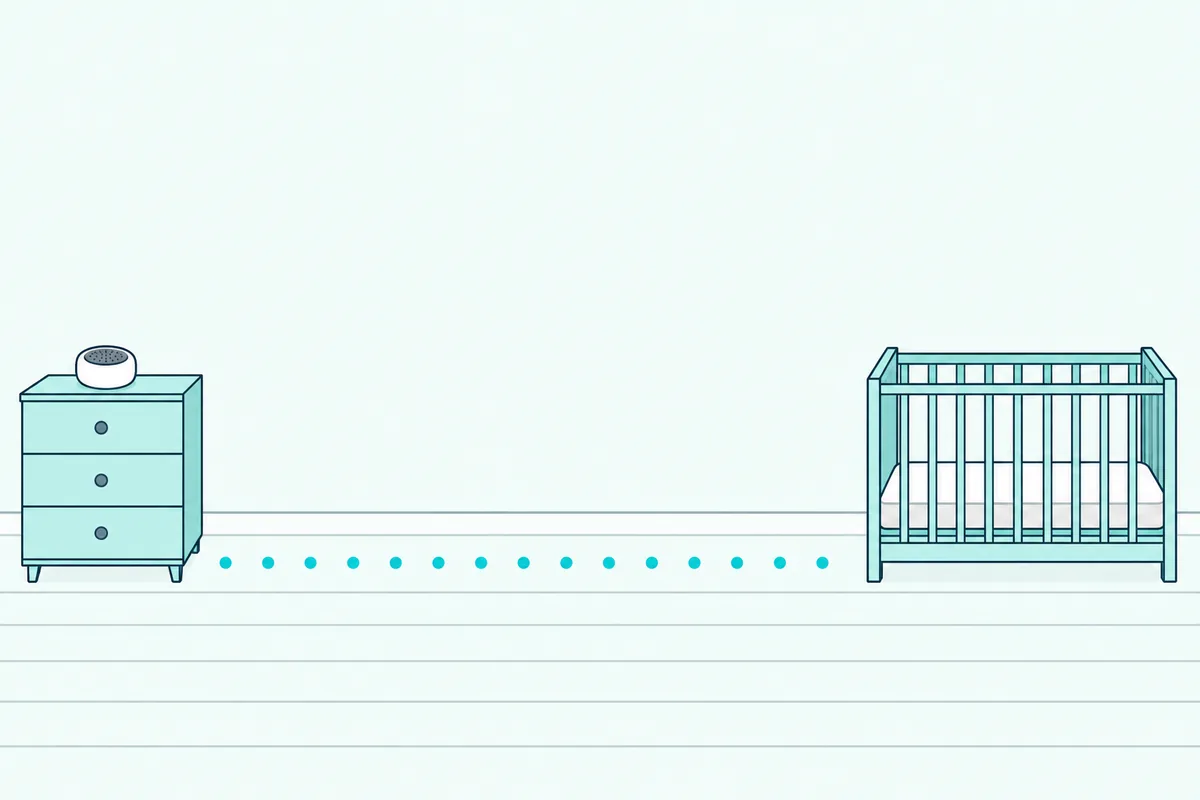
The AAP’s 2023 noise policy notes that some studies show benefits from infant sleep machines while one raised concern about their sound levels. A 2014 study in Pediatrics, led by The Hospital for Sick Children in Toronto, played 14 machines at full volume at 30 cm, 100 cm and 200 cm from the infant’s position (SickKids’ release, Internet Archive copy).
All 14 exceeded the 50-decibel level recommended for infants in hospital nurseries, three topped 85 dBA, and 93% still exceeded the limit from 200 cm across the room. The researchers’ advice was to place the machine as far from the infant as possible, keep it at a low volume and run it for a short time.
A timer makes the short-time part automatic. The Homedics SoundSleep has 15, 30 and 60-minute settings, and from across the room any cord it uses stays well clear of the crib.
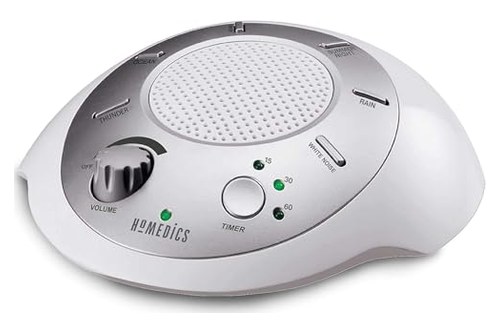
The Homedics SoundSleep
Because that volume dial isn’t numbered, measure instead of guessing. The TopTes TS-501B meter reads A-weighted decibels, the same scale as that 50 dBA limit.
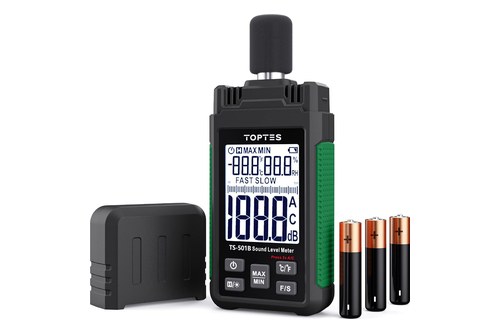
The TopTes TS-501B meter
Hold it where the baby’s head will be, start the machine at your usual setting, and turn it down until the reading stays at or under 50 dBA. The AAP’s simpler test still applies: if a room sounds too loud for an adult, it’s probably too loud for a child.
How to Soundproof a Nursery Step by Step
Those pieces fit into four steps, done in this order:
- Listen from the crib spot at night and run the hallway-light test on the door and window.
- Seal the door frame and bottom, and ask about a transfer grille if the room has no return vent.
- Seal the window, add an insert if traffic still gets in, and keep only cordless coverings.
- Finish any wall work before the baby moves in, anchor heavy furniture and keep the crib bare.
A sound machine, if you use one, comes last and stays across the room.
The Bottom Line
Quieting a nursery is shell work: a sealed door, a tight window and a better wall, done before the baby sleeps there. The crib stays bare, cords and furniture stay secured, and any white noise stays low, timed and across the room.
For the first 6 months, the AAP’s room-sharing advice means your own bedroom gets those fixes first.
Frequently Asked Questions
Can you soundproof a crib?
No, and you shouldn’t try. The AAP says a fitted sheet is the only thing that belongs in the crib, padded crib bumpers are banned in the US, and products such as baby boxes or baby tents are safe only if they meet the federal standards for infant sleep products. Treat the room instead: seal the door, the window and the shared wall, and keep the crib away from window cords.
Do soundproof curtains work in a baby’s room?
Only a little for blocking noise. Heavy curtains soften echo and block light, but traffic noise comes through the glass and the gaps around the sash, which is why sealing and an insert do more. If you hang curtains, choose a style without cords, fix the rod into solid framing, and keep the crib away from the window, as KidsHealth’s checklist advises for cords.
Can you block out 100% of noise in a nursery?
Not in a normal house. Even a wall rated STC 50 loses 10 points to a crack 1/16 inch wide and 16 inches long, according to HUD, and doors and windows rate lower still. The realistic goal is to drop the levels of noise that wake the baby, especially voices and TV through the door, and to keep the room’s background quiet and steady throughout the night.
How do you keep a crying baby from bothering the neighbors?
Use the same fixes in reverse. Sound leaves through the door gaps, the window and any shared wall, so a sealed door, a tight window and a caulked, solid shared wall help both directions. In an apartment, the shared wall and the window toward the neighbor’s side matter most, and a crib placed away from the shared wall keeps the loudest moments farther from it. If you rent, start with the door and window fixes and ask the landlord before any wall work.