Best Soundproofing Material for Autos, Layer by Layer
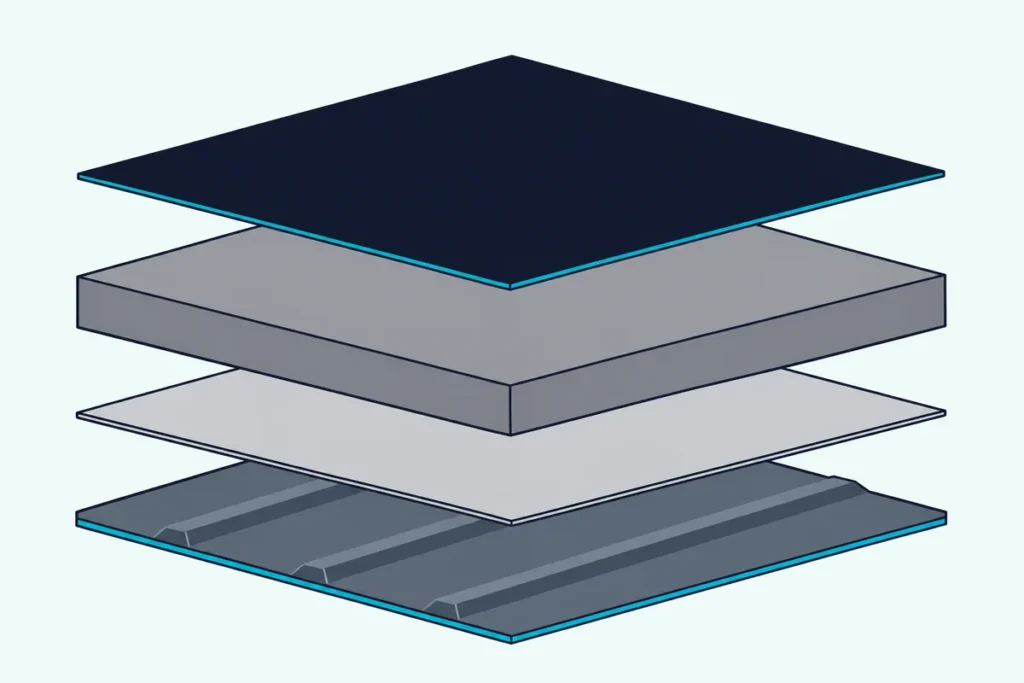
To find the best soundproofing material for autos, stop looking for one product, because a car needs a butyl mat on the metal first, then foam, fiber or a heavy barrier.
Buy the wrong layer and the result is familiar: the doors stop ringing, yet tire roar still fills the cabin at highway speed.
Match each layer to its job and every square foot goes where it can help, from a door that buzzes with the bass to a floor that lets in the road.
The first move is a foil-backed mat on the large flat panels, and the picks run from Dynamat Xtreme to Second Skin’s vinyl barrier, each described from its maker’s sheets or listing.
A quick answer and a comparison table come first, then each pick by its layer, then where it all goes and how much your car will take.
What Is the Best Soundproofing Material for Autos?
That layered answer starts with one kind of sheet, and among plain butyl mats one brand prints the most about what it does. The best soundproofing material for autos to buy first is a foil-backed butyl mat such as Dynamat Xtreme, which Dynamat lists at 0.067 inch thick and 0.45 pound per square foot, because it calms the sheet metal before anything else goes on.
ResoNix’s sound deadening reference guide, from a company that sells all of these materials, splits car sound treatment into four jobs: dampers for panel vibration, decouplers between parts, absorbers for airborne noise and barriers against outside noise. It also says no one product handles everything, so the table sorts the picks by job.
| Pick | Layer | Thickness | Coverage | Where its maker puts it | Best for |
|---|---|---|---|---|---|
| Dynamat Xtreme Mega Pak | Butyl damper | 0.067 in | 72 sq ft | Doors, trunk, floor, roof | Most published data |
| Kilmat 80 mil | Butyl damper | 80 mil | 36 sq ft | Car panels, none named | Small sheets for tight panels |
| Siless 80 mil | Butyl damper | 80 mil | 36 sq ft | Doors, floor, firewall, roof, hood, trunk, wheel wells | A panel-by-panel plan |
| Noico Pro 80 mil | Butyl damper | 80 mil | 10 sq ft | Firewall, floor, doors, roof, trunk | Trying one panel first |
| HushMat 10201 Door Kit | Foil-faced damper | Not listed | 10 sq ft | Firewall, floor, doors, roof, wheel wells, trunk | Precut 12-inch squares |
| SoundSkins Pro | Butyl, foil and foam | 0.177 in | 11 sq ft | Car, truck and van panels | Damping and foam in one sheet |
| Siless Hybrid 3in1 | Butyl, foam and membrane | 200 mil | 25 sq ft | Second layer on floor, trunk, firewall | Three layers in one sheet |
| Dynamat Dynaliner 1/4 inch | Foam | 0.25 in | Not in its title | Roof and quarter panels | Foam sized by panel |
| Siless Liner 157 mil | Closed-cell foam | 157 mil | 36 sq ft | Over the mat on floor, trunk, firewall, roof | Plain foam in a large roll |
| Second Skin Luxury Liner Pro | Vinyl barrier on foam | 3/8 in | 36 sq ft | Firewall, floor, doors, trunk | Blocking airborne noise |
The descriptions come from the makers’ data sheets, spec pages and listings. Every pick met Burton Acoustix’s rating, review and stock checks on 5 November 2026.
If the words themselves are the sticking point, this breakdown of what separates sound deadening from soundproofing covers rooms as well as cars.
Not sure which row you need? Ride at highway speed with the stereo off and listen: a drumming panel points to butyl, a buzz from loose trim points to foam, and a steady roar from below points to a barrier.
| Product | Size | Link |
|---|---|---|
Most Published Data 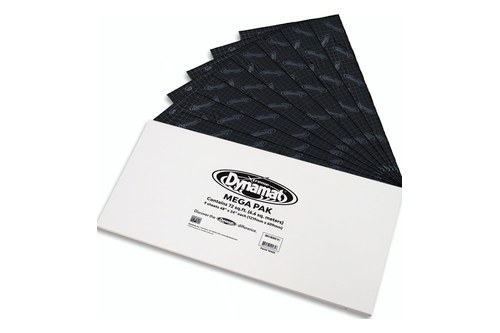 | 0.067 in | See ratings |
Small Sheets for Tight Panels 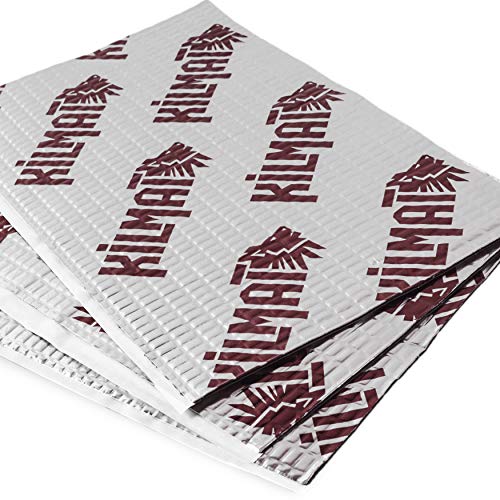 | 80 mil | See ratings |
A Panel-by-Panel Plan 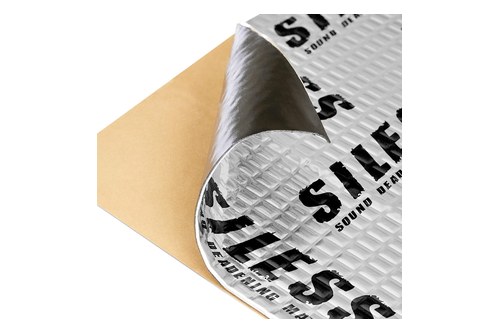 | 80 mil (2 mm) | See ratings |
Trying One Panel First 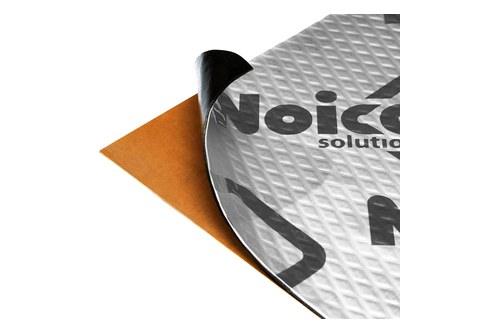 | 80 mil | See ratings |
Precut 12-Inch Squares 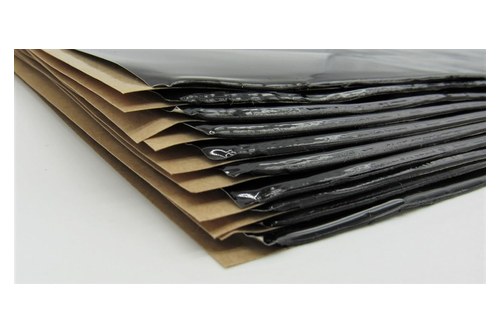 | Not listed | See ratings |
Damping and Foam in One Sheet 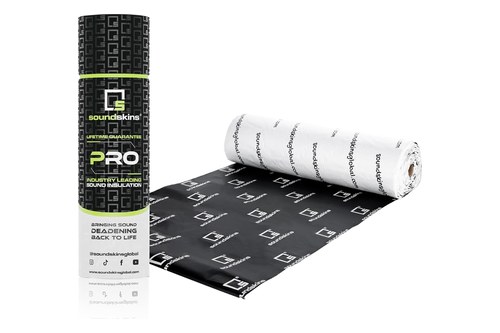 | 0.177 in | See ratings |
Three Layers in One Sheet 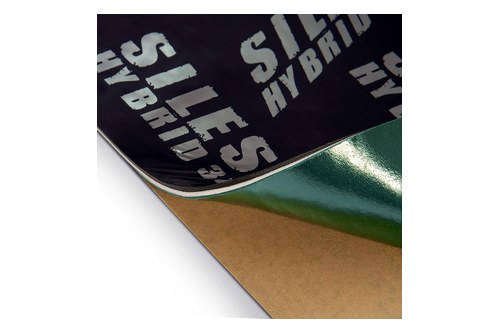 | 200 mil (5 mm) | See ratings |
Foam Sized by Panel 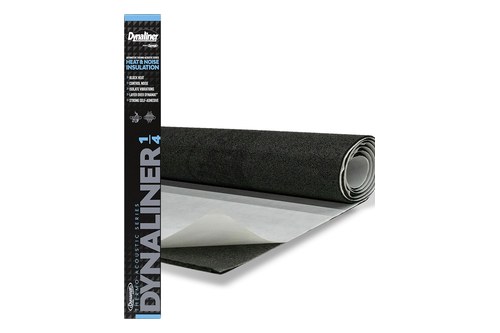 | 0.25 in | See ratings |
Which Butyl Mat Should Go on the Metal First?
The butyl rows in that table all do one job, and it’s the job that goes on first. The butyl mat to put on the metal first is the one whose thickness, coverage and sheet size suit your panels, with Dynamat Xtreme at 67 mil and the Kilmat, Siless and Noico mats at 80 mil.
ResoNix describes how they work: a visco-elastic butyl layer bonded to an aluminum layer stretches as the panel flexes, turning that motion into a tiny amount of heat. Stinger compares untreated sheet metal to a drumhead, and ResoNix’s goal is a panel that goes from a hollow drum when you knock on it to something like a wooden tabletop.
That knock is a test you can run yourself. Rap the door skin with a knuckle before and after a piece goes on, and listen for what Hagerty describes as a dull thud rather than a tinny sound.
Thicker doesn’t settle it, either. Kilmat’s description says the thicker the material the more performance you get, while 12 Volt Outlet says no, because material properties, construction and placement decide.
ResoNix adds that a true constrained-layer damper only really benefits from one layer. So buy for coverage, rather than planning a second sheet on top of the first.
Dynamat Xtreme Mega Pak
For the most published data, Dynamat’s Xtreme Mega Pak is the pick.
Dynamat’s Xtreme Mega Pak
The Dynamat Xtreme sell sheet describes a butyl and aluminum constrained-layer damper with a 4-mil aluminum top layer. It lists third-party SAE J1637 composite loss factors, a measure of vibration damping, from 0.316 at 200 Hz to 0.384 at 400 Hz.
Dynamat also prints optimal performance from 14°F to 140°F, resistance from -65°F to 300°F, a peel strength of 42.6 pounds per inch on cold steel and a pass on FMVSS 302. Its listing adds a chart showing an average noise decrease of 5.37 dB at 70 mph, with no vehicle named.
The box in the listing’s photo says 72 square feet in nine 48-by-24-inch sheets, while the listing’s title says 12 sheets. Go by the 72, since nine of those sheets add up to it.
Kilmat 80 Mil
For a box of small sheets, the Kilmat 80-mil mat is the pick.
the Kilmat 80-mil mat
Kilmat’s description gives a nominal 80 mil thickness, 36 square feet from 34 sheets of 9.8 by 15.7 inches, and a total weight of 0.5 pound per square foot. That’s a little heavier than Dynamat’s figure, on a sheet small enough to slip between door braces with little cutting.
It comes with a built-in check: Kilmat says to roll the embossing on the foil until it’s plain smooth. It also says to wear gloves, and the roller isn’t included.
ResoNix disagrees about patterns, calling embossing a marketing point that lets the product flex with the panel more freely. ResoNix sells flat squares, so weigh that as one maker’s view of another’s design.
Siless 80 Mil
If you want a plan as much as a mat, Siless’s 80-mil mat is the one to look at.
Siless’s 80-mil mat
Its listing shows aluminum foil over what Siless calls B-Mastic, a butyl-based compound, on release paper printed with a grid for cutting. The gallery maps the job in four stages, starting with the mat alone on the doors, wheel arches, floor, trunk, firewall and roof.
The later stages add second layers of foam or hybrid sheet, which is where the sections below come in. Siless’s calculator puts a mid-size car at 112 square feet, a little over three of these 36-square-foot boxes.
Noico Pro 80 Mil
To try one door or trunk lid first, the Noico Pro 80-mil pack is the small size to start with.
the Noico Pro 80-mil pack
Noico’s listing shows a 4-mil aluminum constraining layer, a butyl mastic core and a craft paper liner. Its quantity chart puts four doors at 26 to 34 square feet depending on the vehicle, so by that chart this 10-square-foot pack covers about a door and a half on a subcompact.
HushMat 10201 Door Kit
For a kit already cut into 12-inch squares, HushMat’s 10201 Door Kit saves the first round of cutting.
HushMat’s 10201 Door Kit
The listing calls HushMat Ultra a pressure-sensitive constrained-layer damper, with aluminum foil over a visco-elastic polymer, for firewalls, floor pans, tunnels, doors, roof, rear wheel wells, trunk and quarter panels. It also says no surface prep is needed, which doesn’t match Dynamat’s sheet or Stinger’s guide, so wipe the metal anyway.
Can One Sheet Do the Damping and the Foam?
Those mats do the damping alone, so a foam layer usually means a second trip around every panel. One sheet can do both if it’s a laminate: SoundSkins Pro bonds 0.118 inch of acoustic foam to 0.059 inch of butyl and foil, and Siless’s Hybrid 3in1 adds a 50-mil mass-loaded membrane.
The catch is what each layer can still do at that thickness. 12 Volt Outlet says a two-in-one’s layers each still have physical requirements, and that multilayer products can trap moisture or become too thick for clips.
SoundSkins Pro
For damping and foam in a single pass, SoundSkins Pro is the pick.
SoundSkins Pro
The SoundSkins Pro spec sheet lists 0.177 inch in all, and SoundSkins says the foam also absorbs some airborne sound and acts as a decoupler. Its SAE J1637 table shows a loss factor of 0.259 at 600 Hz and 0.360 at 800 Hz at 77°F, falling to 0.079 and 0.083 at 131°F.
SoundSkins calls anything over 0.1 good and says car metal can pass 160°F in the sun, so read that hot row too. The sheet gives a rated range of -4°F to 356°F on one page and -40°F to 356°F on another, so treat the low end with care.
Siless Hybrid 3in1
For a thin barrier layer bonded in as well, the Siless Hybrid 3in1 stacks three materials in one sheet.
the Siless Hybrid 3in1
Siless’s listing names a 50-mil mass-loaded membrane, 100 mil of acoustic PE foam and a 50-mil butyl-based mastic, with 25 square feet in the box. Its own plan uses the Hybrid as a second layer over its 80-mil mat on the floor, trunk, firewall and outer door shell, not as a replacement for it.
Which Mats Publish Test Numbers?
Those sheets differ most in what their makers will put in writing. The mats that publish test numbers are Dynamat Xtreme and SoundSkins Pro, whose sheets print SAE J1637 damping figures, a temperature range and a pass on FMVSS 302, while the other listings stick mostly to thickness and coverage.
| Mat | Thickness | Weight (lb/sq ft) | Temperature range | Damping figure | FMVSS 302 |
|---|---|---|---|---|---|
| Dynamat Xtreme | 0.067 in | 0.45 | -65°F to 300°F | 0.316 to 0.384 | Meets |
| SoundSkins Pro | 0.177 in | Not shown | -4°F or -40°F to 356°F | 0.079 to 0.360 | Meets |
| Kilmat 80 mil | 80 mil | 0.5 | Not shown | Not shown | Not shown |
| Siless 80 mil | 80 mil | Not shown | Not shown | Not shown | Not shown |
| Noico Pro 80 mil | 80 mil | Not shown | Not shown | Not shown | Not shown |
| HushMat 10201 | Not shown | Not shown | “Wide,” no figures | Not shown | Not shown |
“Not shown” means only that the sheet or listing described above doesn’t give that figure, so ask the seller before you assume anything. The damping figures aren’t a clean head-to-head either, because Dynamat’s cover 200 to 800 Hz at 21°C and SoundSkins’ cover 600 and 800 Hz across six temperatures.
Temperature changes the figures. Dynamat’s older 2001 Xtreme sheet shows a loss factor of 0.417 at 68°F falling to 0.094 at 140°F and 0.081 at 14°F, and SoundSkins’ table drops the same way on a hot panel.
So a mat’s headline figure comes from one temperature, and a parked car in July is a different test. ResoNix goes further, saying a damper stops working well long before it sags or drips, which is why a printed heat range belongs on your shopping list.
What Does Closed-Cell Foam Do in a Car?
That foam layer is where makers start to disagree. Closed-cell foam in a car cushions parts that touch and holds a heavy barrier off the metal, which is how ResoNix defines a decoupler, and ResoNix says it doesn’t block or absorb noise in any meaningful way.
Other makers sell theirs for more. SoundSkins says its foam and foil reject airborne and structure-borne noise, and Dynamat’s Dynaliner box says block heat, control noise and isolate vibrations.
ResoNix sells closed-cell foam too, and it’s the one telling you what foam can’t do. So buy it for rattles, heat and spacing, and treat a noise claim as a claim until a sheet prints a figure for that foam alone.
This isn’t the open-cell foam from a studio wall. ResoNix warns that ordinary acoustic foam holds moisture and can grow mold in a car, one more reason to keep sound deadening material and acoustic foam apart.
Here’s a quick way to see whether you need foam at all. Press on the trim panel while it buzzes, and if the buzz stops, two parts are touching.
Dynamat Dynaliner 1/4 Inch
For foam sized by panel, Dynamat’s 1/4-inch Dynaliner is the pick.
Dynamat’s 1/4-inch Dynaliner
Dynamat’s listing matches thickness to place: 1/8 inch for doors and tight spaces, 1/4 inch for the roof and quarters, and 1/2 inch for the firewall and floor. Those weigh 0.04, 0.08 and 0.16 pound per square foot, with a self-adhesive backing that’s meant to layer over Dynamat.
The Xtreme sell sheet adds the reason to bother: a thermo-acoustic product such as Dynaliner is there to fight heat and low-frequency hums from big engines and exhaust systems. Think of the mat as the fix for the panel and the foam as the fix for what the panel touches.
Siless Liner 157 Mil
For plain closed-cell foam in a large roll, Siless Liner 157 is the simple choice.
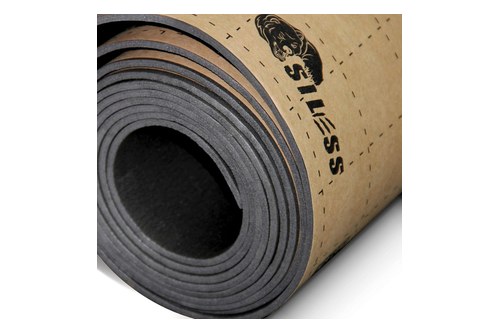
Siless Liner 157
Siless lists 157 mil of closed-cell PE foam with an adhesive backing under release paper, and calls it waterproof and resistant to heat and cold. Its stage plan puts the Liner over the 80-mil mat on the floor, trunk, firewall, roof and inner wheel arches.
Which Material Blocks Road Noise?
That foam won’t do it by ResoNix’s account, and neither will butyl on its own. The material that blocks road noise is a heavy barrier such as mass-loaded vinyl, laid over the butyl on a foam layer with no gaps, and ResoNix says its weight and inertness do the work.
Butyl makers do claim road-noise drops, with Stinger’s guide citing 6-10 dB at 60% coverage and Dynamat’s chart 5.37 dB at 70 mph. ResoNix’s line is that a mat lowers the noise the panels make themselves, but won’t block outside noise from entering the vehicle.
Gaps decide how much of a barrier’s rating you keep. ResoNix compares partial coverage to a bedroom window left partly open, where a neighbor’s mower sounds about the same until you shut it completely.
If full coverage isn’t realistic, ResoNix suggests covering the whole floor at least, since that’s where sound comes up from under the vehicle. Check the door and window seals as well, because Hagerty calls weatherstripping a huge part of noise control.
Tires belong on the list too. Hagerty’s example is a lifted Jeep on mud-terrain tires, a lot of noise and worse as the tread wears, and no layer in this guide changes what the tread does.
Second Skin Luxury Liner Pro
For a barrier with its foam already attached, Second Skin’s Luxury Liner Pro is the pick.
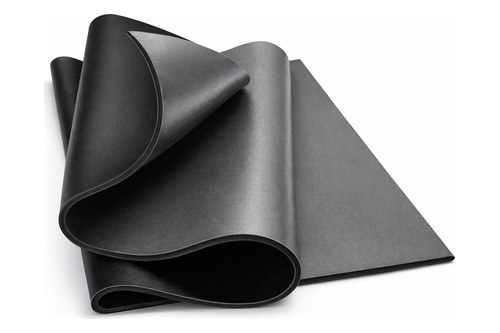
Second Skin’s Luxury Liner Pro
Second Skin’s listing bonds 1-pound vinyl to closed-cell foam in a 3/8-inch sheet of 24 by 54 inches, weighing 1.25 pounds per square foot, and rates it STC 28 with a 180°F maximum temperature. It’s designed to go over a constrained-layer damper on the cabin side of the firewall and floor, the doors and the trunk, and the listing says performance depends on 100% coverage.
Four sheets cover 36 square feet, the same figure Dynamat’s chart gives a sedan’s floor and firewall. That’s about 45 pounds of added weight, so plan the job around what you can reach and cover fully.
STC is a building rating, and ASTM E413 says the method isn’t appropriate for transportation noise such as motor vehicles. Use it to compare barriers, not to predict your cabin, and for scale, Johns Manville’s plain 1-pound vinyl lists 0.100 inch and STC 26.
Does 3M Thinsulate Work as Car Sound Insulation?
That barrier stops sound coming in, while a fiber mat soaks up what’s already inside a cavity. 3M Thinsulate works as a sound absorber rather than a barrier, and 3M’s TAI and SM Series data sheet recommends it for vehicle door panels, headliners, wheel wells, pillars and instrument panels.
That 2012 sheet lists SM400L at 26 mm (1.02 inches), 442 g/m² and R-3.8, and SM600L at 42 mm (1.65 inches), 642 g/m² and R-5.2. A later SM600L sheet, effective February 2025, gives 672 g/m², 65% polypropylene and 35% polyester, self-extinguishing behavior and temperature resistance of 120°C for 2,000 hours.
By those figures both grades weigh under 0.15 pound per square foot, against 0.45 for Dynamat Xtreme. So fiber adds little weight, which is why it suits a door panel or a headliner.
ResoNix’s rules for any absorber apply: don’t compress it, keep it clear of moving parts such as window mechanisms, and choose a material that resists moisture. Unlike a barrier, ResoNix says, an absorber doesn’t need perfect coverage, and any amount helps.
Amazon listings sell both grades in several roll sizes. Compare the grade and thickness on a listing with 3M’s numbers before you order.
Does Sound Deadening Also Block Heat?
Those R-values point to the other reason people buy these layers. Sound deadening blocks some heat, mostly through its foam and fiber layers: 3M prints R-3.8 for SM400L and R-5.2 for SM600L, SoundSkins 3.12 per inch and Second Skin 4.45 per inch.
Butyl mats make a thinner claim. Stinger says the aluminum foil can reflect radiant heat, and Dynamat’s sell sheet lists heat dissipation beside noise and vibration, while its Dynaliner listing says that foam nearly doubles your thermal resistance.
ResoNix is the skeptic again, warning that the closed-cell foams used for decoupling are generally not great thermal insulators. Ask which foam you’re buying, and whether its sheet prints an R-value.
Ratings matter near the heat itself. SoundSkins says car metal can pass 160°F in the sun, Second Skin caps its vinyl at 180°F, and 12 Volt Outlet says not to place foam against exhaust tunnels or heat-producing electronics without appropriate ratings.
Where Should Sound Deadening Go in a Car?
Once the materials are sorted, panel order decides how far a pack goes. Sound deadening goes on the doors, floor and wheel wells for road noise, on the firewall and hood for engine noise, and on the trunk and roof after that, according to Stinger’s car sound damping guide.
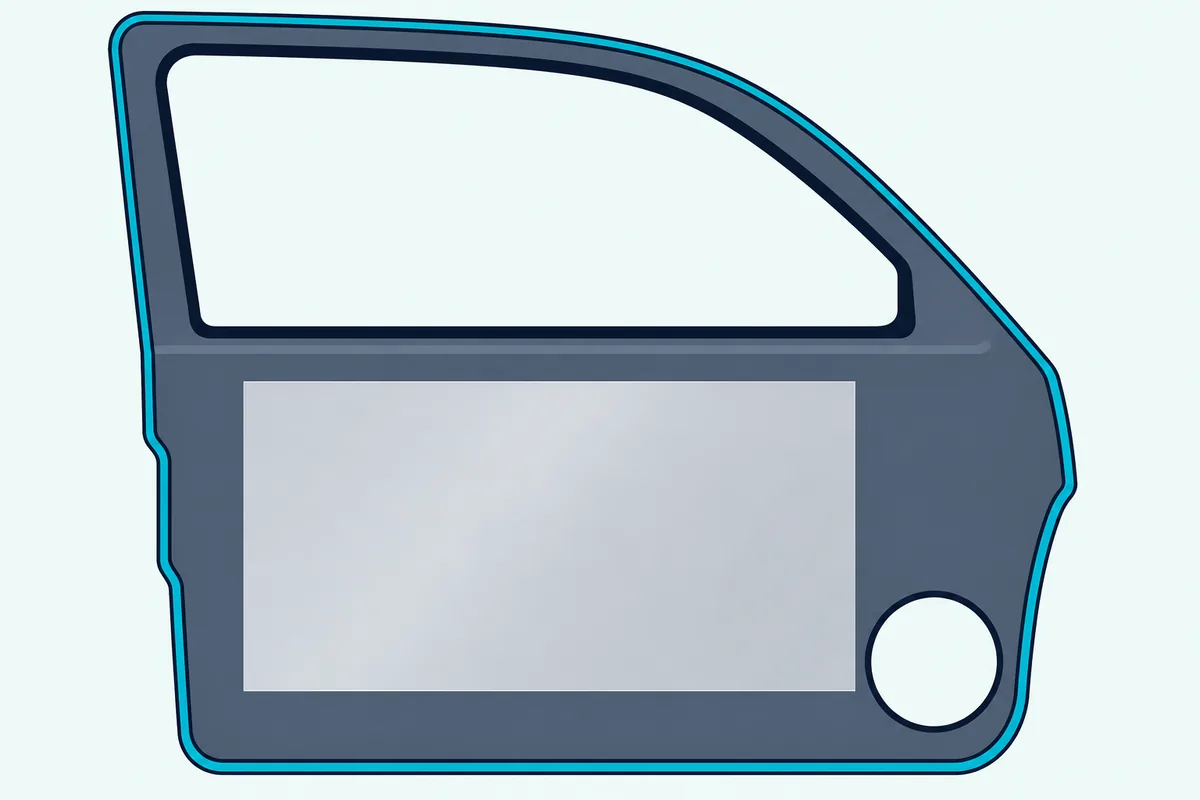
| What you hear | Panels Stinger names | Layer to start with |
|---|---|---|
| Road noise | Doors, floorboards, wheel wells | Butyl mat, then a barrier where it can run unbroken |
| Engine noise | Firewall, underside of the hood | Butyl mat, then Dynaliner at the firewall |
| A subwoofer in the trunk | Trunk lid and floor | Butyl mat |
| Wind and road noise from above | Roof | Butyl mat, then fiber or foam |
The table’s last column is Burton Acoustix’s reading of the makers’ notes above, not Stinger’s. SoundSkins ranks the panels for a first project: doors every time, then the floor pans, then the trunk if there’s a subwoofer, and the roof last unless rain noise or a big sunroof bothers you.
What’s the Best Sound Deadening for Car Doors?
Car door sound deadening starts with butyl on the metal, then a decoupler if the door card buzzes against it. Stinger points road-noise work at the inner metal skin of the door, while ResoNix says that for car audio the outer door skin matters more than the inner one.
SoundSkins allows about two hours for your first door and well under an hour for each one after that. It also suggests card stock or the old vapor barrier as a fast template.
Keep the door working, too. 12 Volt Outlet says to keep material clear of window tracks, drain holes and hot components, and to preserve airbags, drains, ventilation and service access.
Searching about a door in your house instead? That’s a different job, and Burton Acoustix’s guide to quieter house doors covers it.
How Much Sound Deadening Does a Car Need?
Those panels add up quickly. A mid-size sedan takes about 96 to 112 square feet on the makers’ own charts, which works out to about three boxes of a 36-square-foot mat.
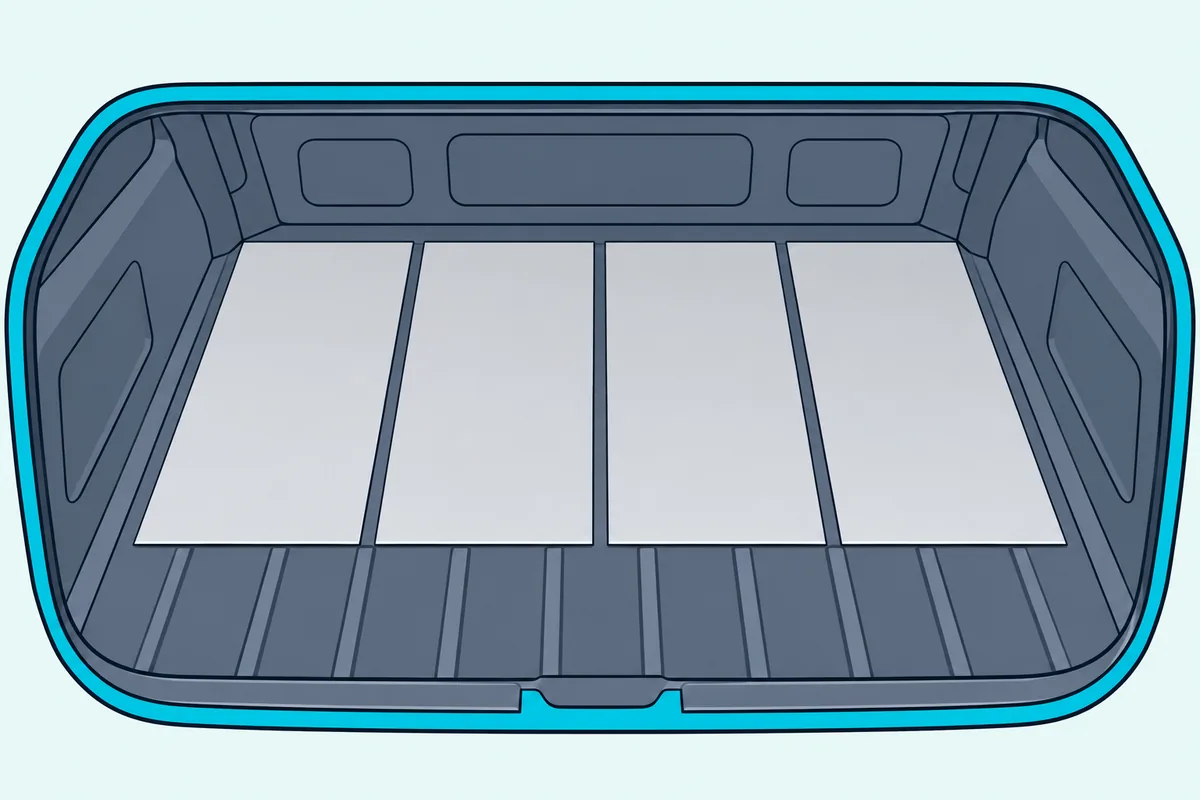
| Area (square feet) | Dynamat, 4-door sedan | Noico, mid-size | Siless, mid-size |
|---|---|---|---|
| Floor and firewall | 36 | 30 | 30 |
| Doors | 24 | 30 | 30 |
| Trunk | 24, with the lid | 28 | 28 |
| Roof | 8 | 16 | 16 |
| Hood | 4 | Not listed | 8 |
| Total | 96 | 104 | 112 |
Dynamat labels its numbers approximate full coverage, and at its 0.45 pound per square foot, that sedan adds about 43 pounds. Trucks vary far more, with Dynamat’s chart giving a crew-cab pickup 228 square feet and Noico’s giving it 77, so measure your own floor and doors before you order.
Full coverage isn’t the only plan. Stinger recommends at least 60% of the vehicle for a 6-10 dB reduction, calls 25% the minimum for a noticeable result at 3-5 dB, and says 100% can reach up to 15 dB.
Hagerty reports the same pattern from makers, about 30% for a noticeable effect and diminishing returns past 60%. ResoNix rejects any fixed number, because a damper only supports the metal it touches, and it prefers larger continuous pieces to many small ones.
Those views fit together on the car. Start with the biggest flat areas, knock on what’s left, and add more wherever it still rings.
SoundSkins sizes its kits by job: 11 square feet for two sedan doors, 44 for four doors and a trunk floor, and 60 and up for a full vehicle with floor pans and firewall.
Do Trucks, SUVs and Vans Need Something Different?
Those sedan figures don’t carry over to a bigger body. Trucks, SUVs and vans take the same layers on far more square feet, with Dynamat’s chart giving a full-size SUV 204, a cargo van 188 and a crew-cab pickup 228, much of it in the floor and roof.
Big roofs are the reason a percentage can mislead. ResoNix’s example is a 100-square-foot SUV roof at 25% coverage, which still leaves 75 square feet of unsupported panel, while the same 25% on a 10-square-foot door skin leaves 7.5.
Hagerty’s writer tells the same story from two vehicles: mat on the panels knocked down the tin-can noises in a big van, and a full layer of Hushmat brought down the noise in a 1965 Chevrolet Corvair. A spouse still found the Corvair too harsh, so expectations count as much as square feet.
The car itself sets the ceiling as well. ResoNix finds economy cars benefit more from dampers than rugged premium and luxury cars, because the higher-end vehicles have sturdier parts to begin with.
How Thick Does the Stack Get?
That layering also sets how much room you need behind the trim. A full stack of Dynamat Xtreme under Luxury Liner Pro runs about 0.44 inch, and swapping the barrier for 1/4-inch Dynaliner brings it to about 0.32 inch.
| Layer | Thickness | Weight (lb/sq ft) |
|---|---|---|
| Dynamat Xtreme | 0.067 in | 0.45 |
| Kilmat 80 mil | 0.08 in | 0.5 |
| SoundSkins Pro | 0.177 in | Not shown |
| Dynaliner 1/8, 1/4, 1/2 inch | 0.125, 0.25, 0.5 in | 0.04, 0.08, 0.16 |
| Siless Liner 157 | 0.157 in | Not shown |
| Luxury Liner Pro | 0.375 in | 1.25 |
| 3M SM400L, by 3M’s 2012 sheet | 1.02 in | About 0.09 |
| 3M SM600L, by its 2025 sheet | 1.65 in | About 0.14 |
Fit is where these numbers bite. 12 Volt Outlet says too much compression can stop panels and clips from seating, SoundSkins warns that extra layers start to eat into window mechanism clearance, and ResoNix says vinyl plus decoupling is hard to fit behind the panels of most newer vehicles.
So dry-fit the trim over one sample piece before you stick down a whole pack. If a clip won’t seat, take a thinner layer at that spot, because 3M’s fiber also compresses but ResoNix says it absorbs worse when squashed.
How Do You Install a Car Sound Deadening Mat?
Those layers only count if they stay stuck. You install a car sound deadening mat by stripping the panel to bare metal, cleaning it, cutting the sheet before you peel it, and pressing it down hard with a roller.
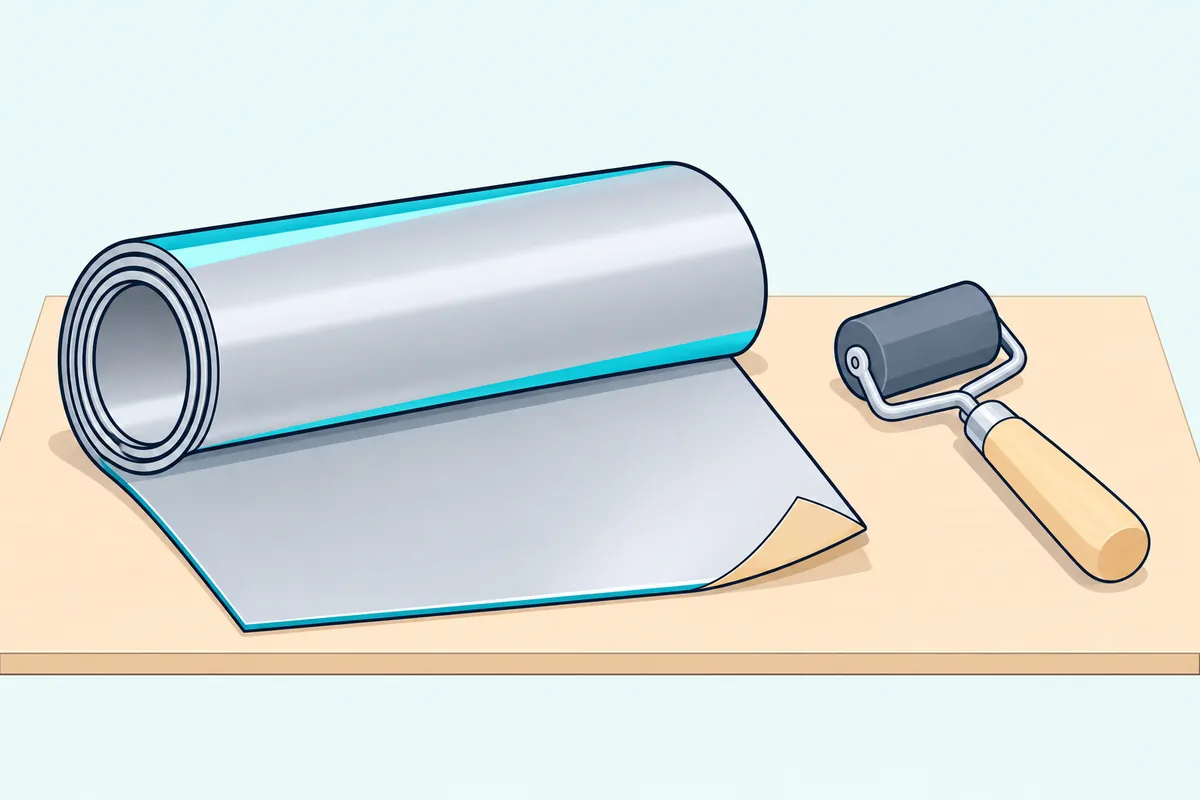
- Strip it. Remove the trim, and on the floor the carpet and insulation, as Stinger describes, down to bare metal.
- Clean it. Dynamat says to remove dust, grease and moisture, Stinger recommends denatured alcohol and ResoNix prefers isopropyl alcohol.
- Cut it. Size the sheet before removing the liner, and wear gloves, because Stinger warns about sharp edges.
- Stick and roll it. Attach it along its shortest edge, press it firmly and roll it, which Dynamat says reduces the air pockets that lower damping.
A roller isn’t in Kilmat’s box, so check yours before you start, and LUMITECO’s wheel roller is the one to add to the order. Its listing shows a 2-inch roller on two bearings with a wooden handle.
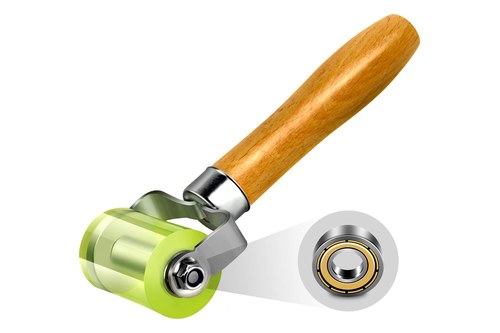
LUMITECO’s wheel roller
Temperature is where the sheets split. Dynamat says the mat and surface shouldn’t be below room temperature and heating isn’t necessary, ResoNix says don’t heat butyl at all, Stinger suggests a heat gun on low below 60°F, and SoundSkins lists an application range of 50°F to 77°F.
Work in a warm garage and you won’t have to pick a side. Then stack in order: butyl on the metal, foam over it and the barrier last, as Second Skin’s layer drawing shows.
What Should Stay Out of a Car?
That warm garage won’t rescue the wrong material. Keep asphalt roofing products, household acoustic foam, shredded denim, jute and gym mats out of a car, because each one fails a job the car demands of it.
Hagerty warns against asphalt tiles from the home center, which can smell on a warm day and slide down a vertical panel. ResoNix adds that roofing products lack a visco-elastic layer, that open-cell foam, denim and jute hold moisture, and that gym mats are too stiff to decouple.
The fire side matters as much. FMVSS 302, the federal burn-resistance standard for vehicle interiors (49 CFR 571.302), says the materials it covers in the occupant compartment can’t burn faster than 102 mm per minute.
Dynamat, SoundSkins and 3M all state on their sheets that their products meet or pass it. Look for that line on any other sheet before a material goes behind your trim.
The Bottom Line
So start with a butyl mat on the biggest panels: Dynamat Xtreme for the most published data, or an 80-mil mat from Kilmat or Siless for more thickness. Add foam where parts touch, fiber in the cavities, and a barrier only where you can cover the area completely.
Then knock, drive and listen before you buy more. Your car’s noise will tell you which layer comes next.
Frequently Asked Questions
What is the most effective way to soundproof a car?
Treat it in layers, in order. ResoNix’s order is a damper on the panels, decouplers where parts touch, absorbers in the cavities and a barrier where you can cover everything, and it says no single product handles it all. Second Skin draws the same stack for a floor: damper on the metal, closed-cell foam over it and vinyl on top. Start with the panels you can reach, usually the doors and floor, and stop when the noise that bothers you is gone.
What is the most effective sound deadening material?
Nothing in these makers’ sheets ranks them for you, though Dynamat and SoundSkins both print SAE J1637 figures. ResoNix publishes an enthusiast’s rig test of 27 products by Chris Purdue, which puts ResoNix’s own Mega CLD first with a 19.75 dB drop at the test panel’s resonance. That’s one rig and one panel, on a seller’s page, so it describes panel resonance rather than a quieter cabin.
Can you block 100% of road noise in a car?
Nothing in these makers’ sheets claims that. Second Skin says its barrier requires 100% coverage, and its figure is STC 28, a building rating. Hagerty points out that a Rolls-Royce Phantom carries hundreds of pounds of insulation material and engineering to separate its occupants from the road, which gives a sense of the scale involved.
Is rockwool or fiberglass better for a car?
Neither is what these car makers sell. 12 Volt Outlet says hydrophobic automotive fiber is safer inside doors than household material that retains water, and 3M’s Thinsulate sheets describe polypropylene and polyester fibers rather than wall batts. Rockwool and fiberglass batts are sold for buildings, and that’s where how fiberglass and Rockwool compare wall by wall can help.
Does spray-on sound deadener work in a car?
It has a narrower job. The Drive’s buying guide says to use spray-on deadener where other materials can’t reach, not in place of foam or butyl, and Design Engineering sells a sprayed thermal acoustic coating alongside its Boom Mat sheets. Burton Acoustix’s look at whether sound-deadening paint works explains why a car coating’s numbers don’t carry over to a wall.
Is sound deadening the same as soundproofing?
No, though car products use both words. Sound deadening calms a panel so it adds less noise of its own, which is the butyl mat’s job, and soundproofing means blocking sound from passing through, which is the barrier’s job. A car usually needs some of each, and that’s why a search for one material turns up several kinds of product.
Can sound deadening trap moisture in a door?
It can, if the wrong material goes in the wrong place. 12 Volt Outlet says multilayer products can trap moisture, and that closed-cell foam resists water better than open-cell foam. Dynamat calls Xtreme resistant to water and mineral oils, and SoundSkins calls its sheet waterproof. Hagerty warns that asphalt could seal off the drains in door panels, so keep every drain hole clear whatever you use.
Does sound deadening make car speakers sound better?
Makers say it helps by removing what fights the speaker. ResoNix says a damper prevents rattling and resonance from powerful speakers, which reduces distortion, and Stinger says sound damping lets you hear your audio system more clearly. SoundSkins says most people report the biggest change in midbass definition, so if the stereo is your reason, treat the doors first.