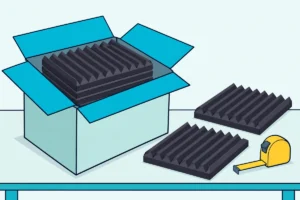
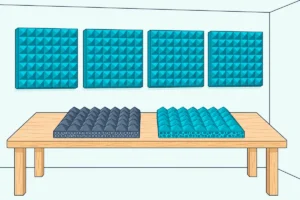
Sound deadening material blocks sound transmission between spaces using mass (MLV, extra drywall), while automotive deadener is a different tool: Dynamat and SoundSkins describe their mats as constrained-layer dampers for vibrating panels.
Choosing sound deadening material vs acoustic foam comes down to which problem you have: noise coming through a wall, or echo inside the room. Pick the wrong one and the noise stays exactly the same.
Sound deadening blocks transmission through walls and barriers. Acoustic foam absorbs reflections bouncing around inside a room.

Mixing them up leaves the problem in place.
The sections below cover what each material does, when to use each, and how to tell which problem you’re dealing with.
Acoustic foam absorbs reflections within a room using porous structure (wedge foam, pyramid foam, studio panels). If sound is coming through walls, you need deadening. If sound is bouncing inside your room, you need foam.
The descriptions come from the makers’ manuals and spec pages.
Every pick met Burton Acoustix’s rating, review and stock checks on 8 November 2026.
What’s the Difference Between Sound Deadening and Acoustic Foam?

This core distinction decides which material helps.
Sound Deadening: Blocking Transmission
Sound deadening materials stop sound from traveling through barriers—walls, floors, ceilings. They work through mass: heavy, dense materials that sound waves can’t easily pass through.
The physics: Sound waves carry energy. When they hit a massive barrier, most energy reflects back rather than passing through. The heavier and denser the barrier, the more sound it blocks.
Common applications: – Reducing noise between rooms – Soundproofing home theaters – Quieting vehicle interiors – Blocking external noise (traffic, neighbors)
Acoustic Foam: Absorbing Reflections
Acoustic foam absorbs sound waves within a room. It doesn’t stop sound from passing through walls—it reduces the sound bouncing around inside.
The physics: Sound waves enter the foam’s porous structure. Friction between air molecules and cell walls converts acoustic energy to heat. The sound dissipates rather than reflecting.
Common applications: – Recording studios – Podcast rooms – Home theaters (for clarity, not soundproofing) – Reducing echo in any space
For more on how foam works, see what frequencies acoustic foam absorbs.
Types of Sound Deadening Material
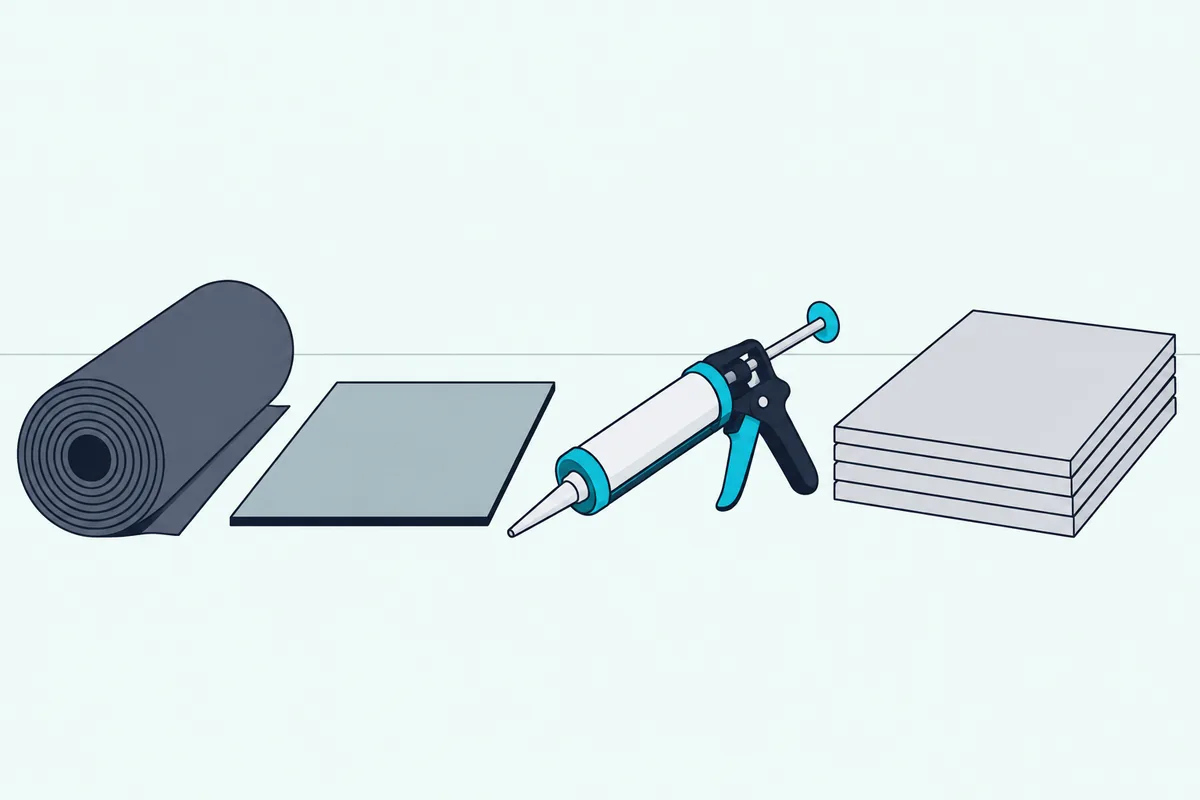
Several materials serve sound deadening purposes. Each has specific properties measured by Sound Transmission Class (STC) ratings—higher numbers mean better sound blocking.
Mass Loaded Vinyl (MLV)
MLV is a thin, heavy, flexible material specifically designed for soundproofing. It adds mass to walls, floors, and ceilings without adding much thickness.
Properties: – Heavy for its thickness: JM makes it at 1, 1.5 and 2 lb per square foot – Flexible, can conform to surfaces – JM rates its own vinyl, tested alone, at STC 26 at 1 lb per square foot and 31 at 2 lb – JM lists its 1 lb per square foot vinyl at 0.100 inch thick – Installs behind drywall or under flooring
Best for: Adding mass to existing walls, wrapping pipes and ducts, soundproofing without major construction. JM’s sheet lists a transmission loss of 22 dB at 500 Hz and 27 dB at 1,000 Hz for its 1 lb per square foot vinyl.
Automotive Sound Deadener
Automotive deadeners are made for vehicle applications: self-adhesive mats that add mass and damping to metal panels, and Burton Acoustix’s guide to car sound deadening layers compares them maker by maker.
Properties: – Adhesive backing for easy application – Combines mass with vibration damping
Best for: Car audio installations, reducing road noise, quieting vehicle interiors.
Additional Drywall
Simply adding more drywall layers increases wall mass, improving sound blocking.
Properties: – A second layer on each side of a 2×4 wall added 3 to 5 STC points in the makers’ tests: National Gypsum’s insulated wall went from STC 36 to 41 and PABCO’s from 35 to 38 – PABCO’s wall weight rose from 5.5 to 9.9 lb per square foot with the second layers – Requires finishing work (tape, mud, paint)
Best for: New construction, renovations where walls are accessible.
Green Glue and Damping Compounds
These viscoelastic compounds apply between drywall layers, converting sound energy to heat through damping.
Properties: – Easy to apply with standard caulk gun – Requires sandwich construction (drywall-glue-drywall)
Best for: Maximizing performance of multi-layer drywall assemblies.
Types of Acoustic Foam
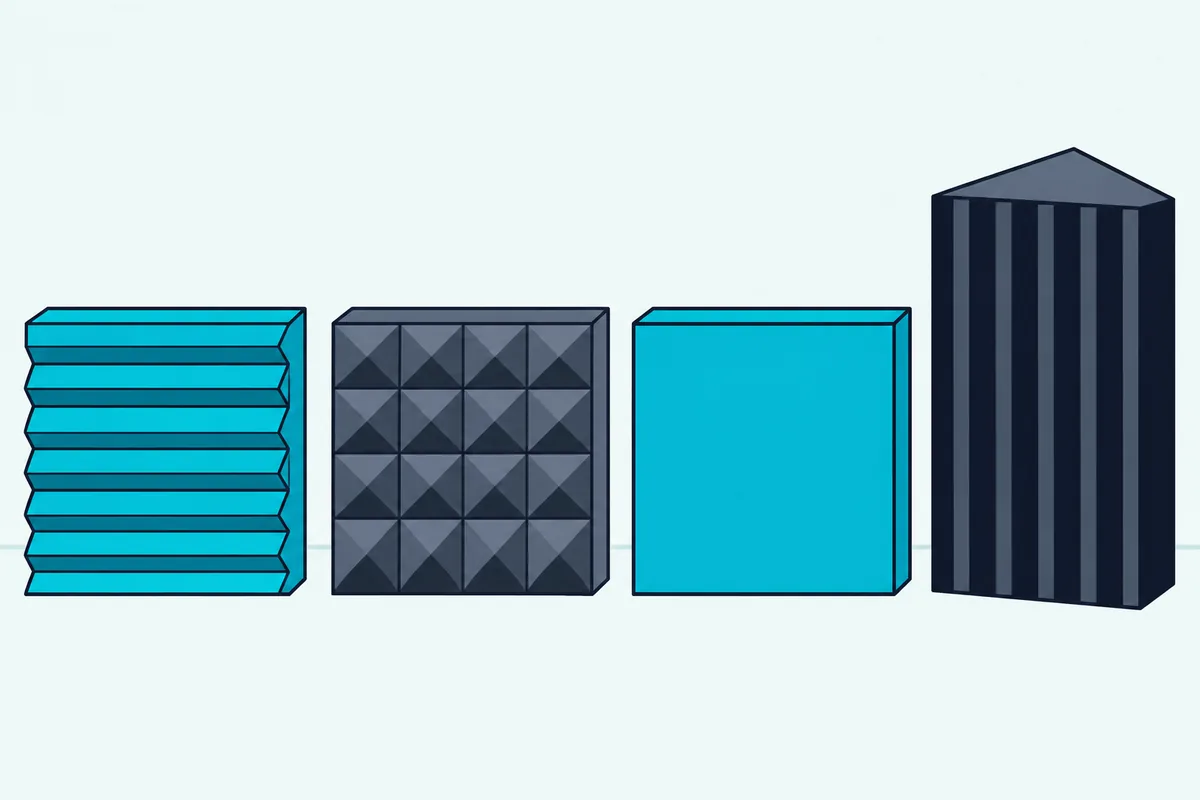
Acoustic foam comes in various forms for different applications.
Standard Panels (Wedge, Pyramid)
The most common acoustic foam. Wedge and pyramid are surface patterns; Auralex ties absorption to thickness, saying thicker acoustic foam is better at absorbing low frequency sounds.
Properties: – Absorbs mid and high frequencies – Easy to mount on walls – Various colors available
Best for: General room treatment, recording spaces, reducing echo. A pack like the Burdurry 50 Pack Acoustic Panels is one way to test placement before committing to full coverage.
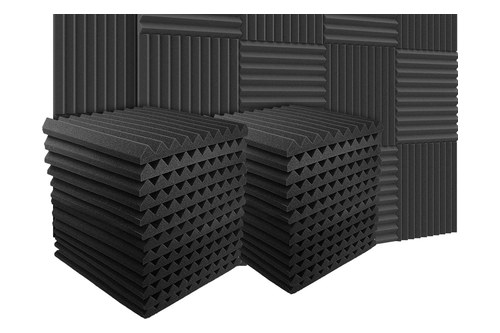
Burdurry 50 Pack Acoustic Panels
For help with panel selection, see how to choose acoustic foam. For product recommendations, see best acoustic foam for recording.
Bass Traps
Thicker foam or specialized shapes designed for corner placement and low-frequency absorption.
Properties: – Thicker than standard panels – Designed for corner mounting – Auralex: thicker acoustic foam is better at absorbing low frequency sounds
Best for: Corner treatment, addressing mid-bass issues.
For more on bass treatment, see bass traps vs acoustic foam.
Flat Panels
Smooth-surface foam without wedge or pyramid patterns.
Properties: – Flat face without wedges or pyramids – Thickness sets the absorption, as with patterned foam – Suits video backgrounds – Easier to clean
Best for: Visible installations, video recording spaces.
When You Need Sound Deadening

Identify these situations to know if sound deadening is your solution.
Noise From Outside
If external sounds disturb you—traffic, neighbors, aircraft—you need to block sound transmission. Acoustic foam won’t help because the sound is coming through your walls, not bouncing inside your room.
Solutions: – Add mass to walls (MLV, extra drywall) – Seal air gaps (acoustic caulk) – Upgrade windows – Address the weakest points first
Noise Escaping Your Space
If your sound disturbs others—home theater bass, music practice, recording—you need to contain it. Again, this is a transmission problem, not a reflection problem.
Solutions: – Same as above: mass, sealing, isolation – Focus on shared walls/floors/ceilings – Address bass frequencies specifically (they transmit most easily)
Vehicle Applications
Reducing road noise, improving car audio, or quieting engine sound requires sound deadening. Vehicles have thin metal panels that transmit sound easily.
Solutions: – Automotive deadening mats on doors, floor, trunk – MLV for additional mass – Combine with absorption for best results
When You Need Acoustic Foam

These situations call for absorption, not blocking.
Recording and Podcasting
If your recordings sound echoey, roomy, or harsh, you need to absorb reflections. The sound quality problem is inside your room, not coming through walls.
Solutions: – Foam panels at reflection points – Treatment behind microphone – Ceiling treatment – Corner treatment for bass
For effective panel placement, see how to arrange acoustic foam.
For recording improvement, see whether acoustic foam improves recording.
Echo and Reverb Reduction
If your room sounds echoey during calls, conversations, or playback, reflections are the problem. Hard surfaces bounce sound around, creating that hollow, reverberant quality.
Solutions: – Foam panels on walls – Soft furnishings (rugs, curtains) – Strategic placement at first reflection points
Home Theater Clarity
If dialogue is hard to understand or sound seems muddy, room reflections may be interfering. Note: this is different from soundproofing the theater to contain bass.
Solutions: – Absorption at first reflection points – Rear wall treatment – Combination with diffusion for natural sound
Which Mistakes Should You Avoid with These Materials?
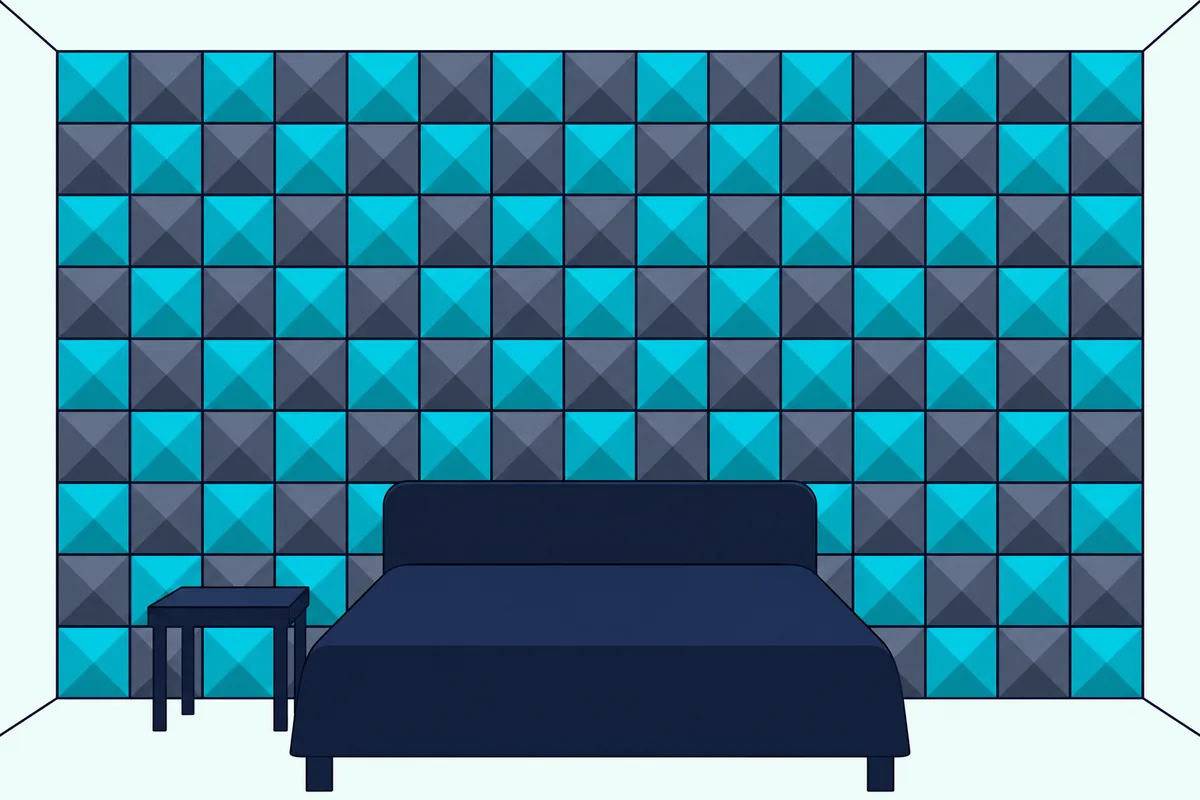
These errors leave problems unsolved.
Using Foam for Soundproofing
This is foam put up to block sound from neighbors or to contain your music.
Auralex says Studiofoam and other acoustical wall-mounted panels are designed to treat the interior of a room, not to block sound.
Foam is lightweight and porous—the opposite of what blocks sound. Sound passes right through it.
The fix: If you need soundproofing, use mass (MLV, drywall) and sealing. Foam is for absorption only.
Using Sound Deadening for Echo
Adding MLV or automotive deadener to walls won’t reduce echo: these materials reflect sound rather than absorbing it.
The fix: If you need absorption, use acoustic foam or fabric-wrapped panels. Sound deadening materials don’t absorb.
For alternatives to foam that do absorb see what to use instead of acoustic foam.
Expecting Either to Solve Everything
Neither material solves all acoustic problems. A room might need both: sound deadening to block external noise AND acoustic foam to control internal reflections.
The fix: Identify your specific problems and address each appropriately.
Using Both Together

Many situations benefit from combining approaches.
Home Studio Example
Sound deadening needs: – Block noise from outside (traffic, HVAC) – Contain sound to avoid disturbing others
Acoustic foam needs: – Reduce reflections for clean recordings – Control room sound for accurate monitoring
Combined approach: – MLV or extra drywall in walls for isolation – Seal all gaps with acoustic caulk – Acoustic foam on interior surfaces for absorption – Bass traps in corners
Home Theater Example
Sound deadening needs: – Contain bass to avoid disturbing neighbors – Block external noise for immersive experience
Acoustic foam needs: – Control reflections for clear dialogue – Reduce flutter echo
Combined approach: – Soundproofing on shared walls (mass + damping) – Absorption at first reflection points – Bass traps for low-frequency control – Diffusion on rear wall (optional)
What Does Each Material Take to Install?

That combined approach means two different kinds of work.
What Sound Deadening Involves
Sound deadening often involves construction:
MLV: installed behind drywall or under flooring Extra drywall + Green Glue: new layers hung, taped and finished Professional soundproofing: full-room construction
Effective soundproofing often requires treating entire walls, floors, or ceilings.
What Acoustic Foam Involves
Acoustic foam is a surface job:
Foam panels: mounted on wall and ceiling surfaces, with no construction
Foam only needs to cover a portion of surfaces, reducing total material needs. Be careful not to over-treat—see whether you can put too much acoustic foam.
Matching the Material to the Problem
Choose by the problem rather than by the size of the job: a material that doesn’t match the problem won’t solve it.
Identify your actual need first, then plan the work.
How Do You Decide Which Material You Need?
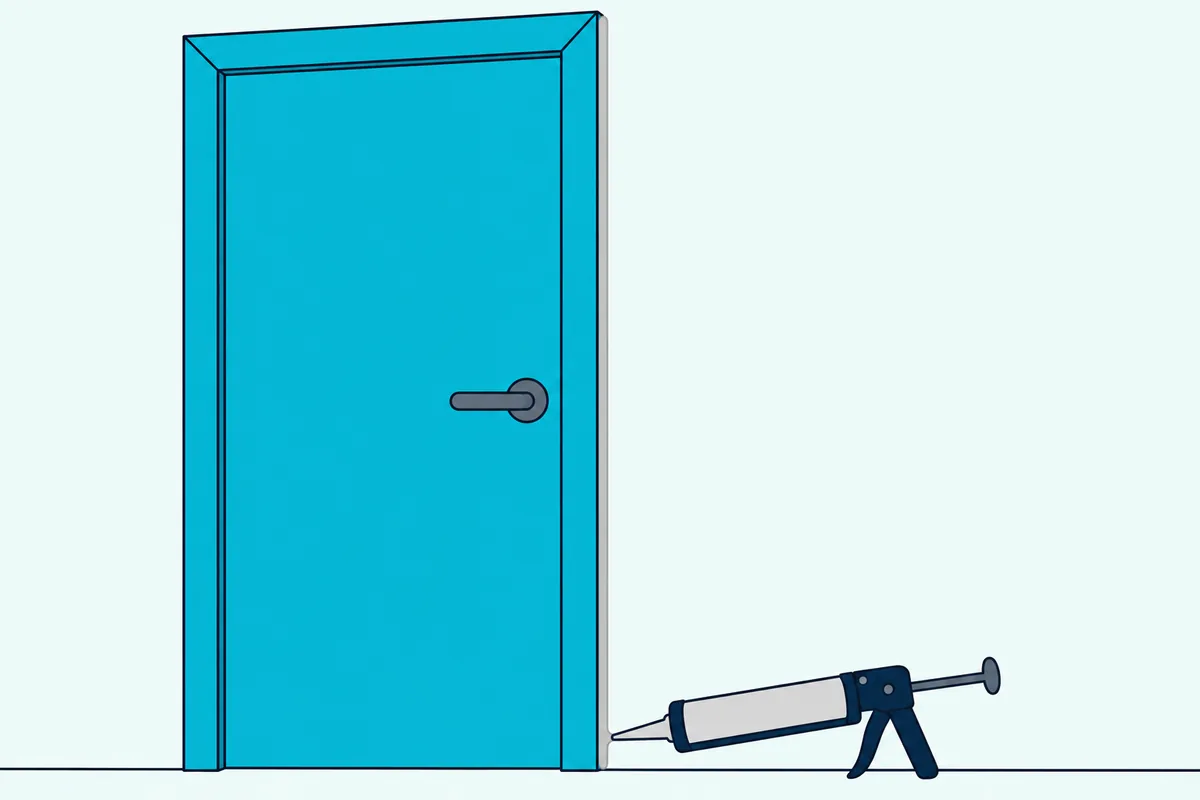
Answer these questions to identify your solution.
What’s Your Problem?
“I hear my neighbors / traffic / outside noise” → Sound deadening (blocking transmission)
“My neighbors hear me / I disturb others” → Sound deadening (containing transmission)
“My room sounds echoey / reverberant” → Acoustic foam (absorbing reflections)
“My recordings sound roomy / harsh” → Acoustic foam (absorbing reflections)
“Both external noise AND room echo” → Both solutions needed
Where Is the Sound?
Coming through walls/ceiling/floor: → Sound deadening
Bouncing around inside the room: → Acoustic foam
How Much Construction Can You Take On?
No construction, need absorption: → Acoustic foam on the wall surfaces
Little construction, need soundproofing: → Focus on sealing gaps first, then add mass strategically
Full construction possible: → Add mass and damping where the sound comes through
The Bottom Line
Sound deadening material and acoustic foam solve different problems. Sound deadening blocks transmission—stopping sound from passing through walls, floors, and ceilings.
Acoustic foam absorbs reflections—improving how sound behaves inside a room.
Using foam for soundproofing doesn’t work; it’s too light and porous to block sound. Using sound deadening for echo reduction doesn’t work; dense materials reflect rather than absorb.
Identify your actual problem first. If sound is coming through barriers, you need mass and sealing.
If sound is bouncing inside your room, you need absorption. Many situations require both approaches working together.
The right solution depends entirely on what you’re trying to achieve. Match the material to the problem, and you’ll get results.
Mismatch them, and the problem persists.
For more guides on foam types, placement, and mounting, start at the acoustic foam hub.
Frequently Asked Questions
Will acoustic foam soundproof my room?
No. Acoustic foam absorbs sound reflections inside your room but doesn’t block sound transmission through walls. Foam is lightweight and porous—sound passes through it easily.
For soundproofing, you need mass (heavy materials like MLV or extra drywall) and sealing (no air gaps).
Can I use automotive sound deadener for room acoustics?
Not as a room treatment. Automotive deadener is made for vehicle panels: Dynamat describes its Xtreme as a constrained-layer vibrational damper for sheet metal, and ResoNix says CLD does not block external noise but reduces the resonance of the panels it covers.
If you want to soundproof a room, you need mass and sealing, such as MLV or extra drywall with no air gaps. If you want to reduce echo, you need acoustic foam or similar absorptive material.
What’s more important—sound deadening or acoustic foam?
Depends entirely on your problem. If external noise bothers you or your sound bothers others, sound deadening is the priority.
If your room sounds echoey or your recordings sound roomy, acoustic foam is what you need. Neither is universally “more important”—they solve different problems.
Do I need both sound deadening and acoustic foam?
Many situations benefit from both. A recording studio might need sound deadening to block external noise AND acoustic foam to control internal reflections.
A home theater might need soundproofing to contain bass AND absorption for dialogue clarity. Assess your specific needs—you may need one, the other, or both.
Why doesn’t acoustic foam block sound?
Sound blocking requires mass—heavy, dense materials that sound waves can’t easily penetrate. Acoustic foam is lightweight and porous by design, allowing sound waves to enter and be absorbed.
The same properties that make foam good at absorption (porosity, low density) make it ineffective at blocking.
What’s the cheapest way to reduce noise from neighbors?
Seal the air gaps first—sound travels easily through gaps around doors, windows, outlets, and pipes. Use acoustic caulk and weatherstripping.
After sealing, add mass, such as an extra drywall layer. Acoustic foam alone won’t solve neighbor noise—that’s a transmission problem requiring mass and sealing.