Does Acoustic Foam Work? (Echo vs Soundproofing Explained)
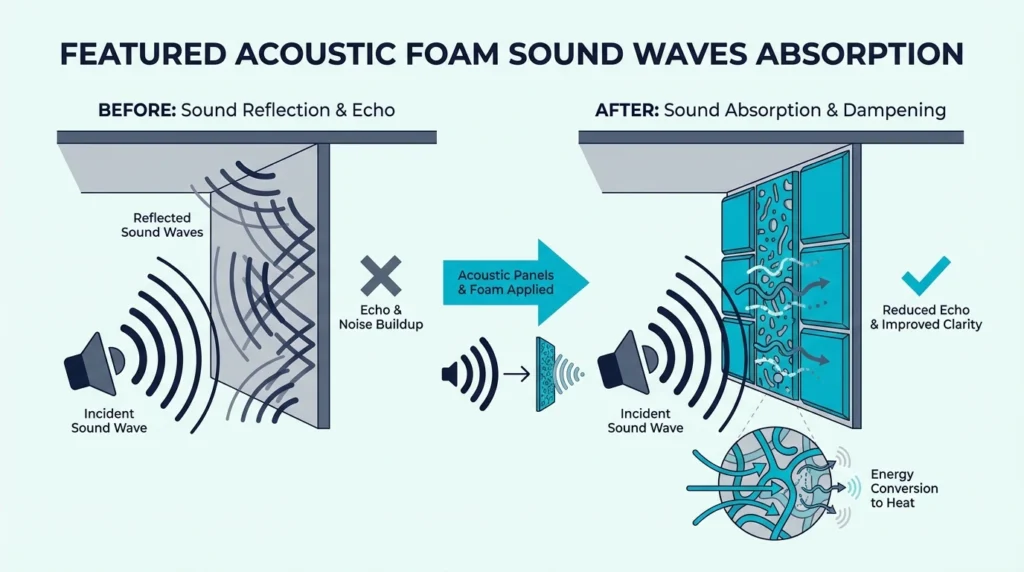
Does acoustic foam work? Yes for echo control inside the room, but no for soundproofing neighbor noise through walls.
The boxy sound in recordings and the “roomy” tail on calls usually come from early reflections bouncing off bare walls. Foam only helps when it is placed where the mic actually hears the bounce.
Do it right and you get cleaner, more direct speech and vocals with less EQ and less de-reverb.
Start with one surface — the wall that reflects back into the mic — then expand only if you can hear the difference. The rest of this guide shows where foam works best, where it will not move the needle, and what to do when “soundproof” is your real goal.
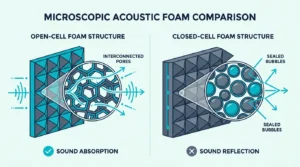
Acoustic foam works for absorption (echo and reverb inside the room). It does not work for soundproofing (blocking sound through walls), so it will not fix neighbor noise.
Does Acoustic Foam Work (and What Does “Work” Even Mean)?
People say “foam doesn’t work” when they are really saying “foam didn’t do the job I hired it for.” The problem is that the job is often misnamed.
Here is the simple split: do you want to change how the room sounds to you, or do you want to change what people outside the room hear? Foam only changes the first one.
What acoustic foam is designed to do
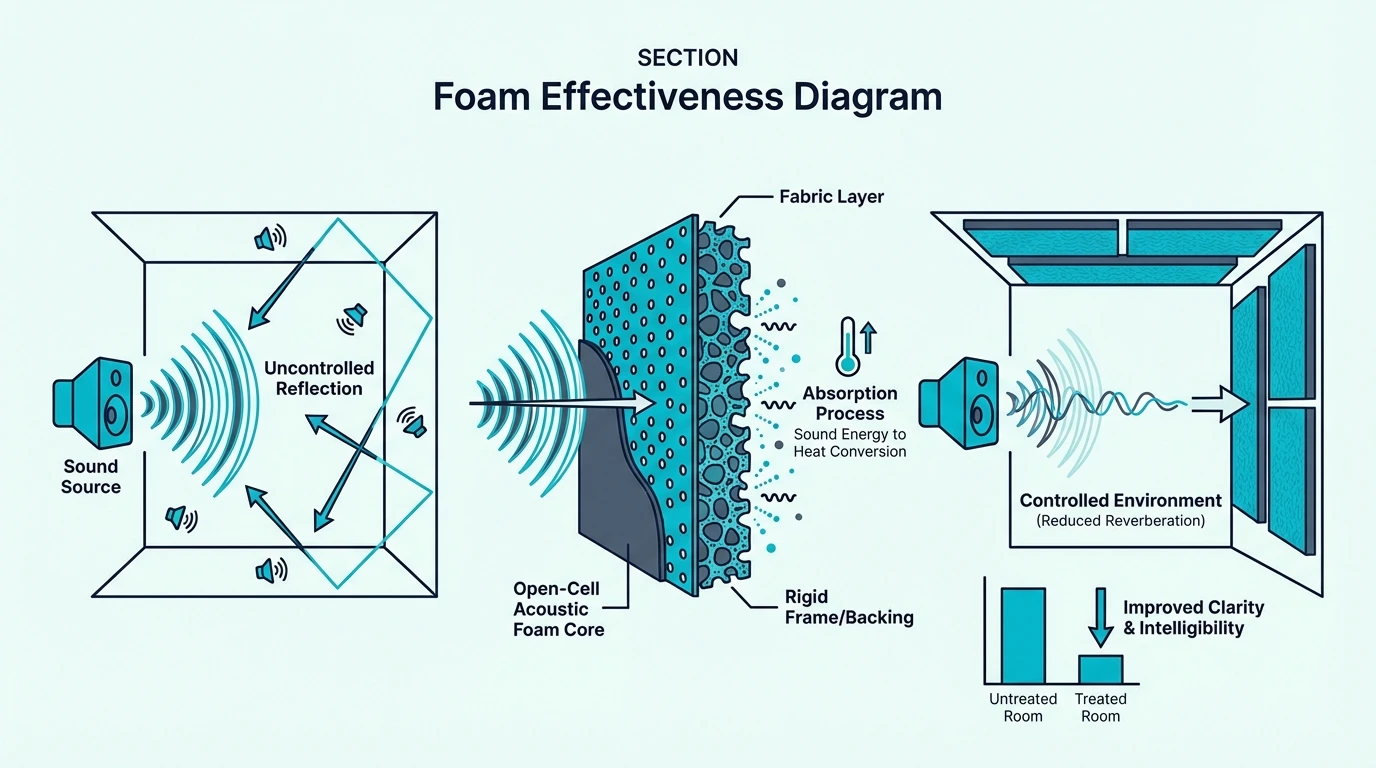
Foam is acoustic treatment. It reduces reflections off hard surfaces so the room sounds tighter and microphones capture more direct sound.
That is why foam shows up in podcast corners, streaming setups, and basic bedroom studios. In those situations, reflections are the thing ruining the sound, not the wall assembly.
What acoustic foam is not designed to do
Foam is not soundproofing. It does not add meaningful mass, and it does not decouple walls, which are the levers that matter for sound transmission.
So if your goal is “keep sound in” or “keep sound out,” you are shopping in the wrong aisle. Foam can still make the room sound nicer, but it will not fix the leak.
Does Acoustic Foam Soundproof a Room?
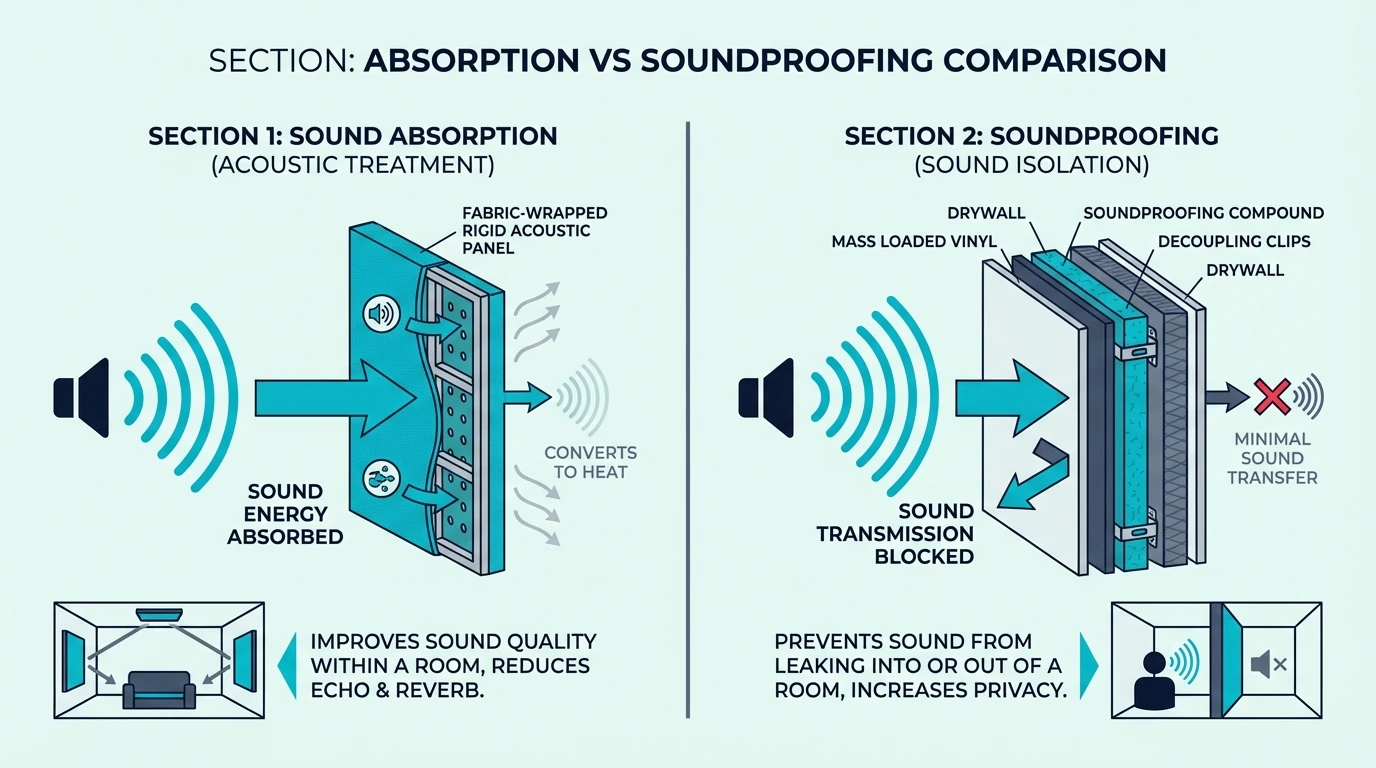
No. Acoustic foam does not soundproof a room, even if you cover a lot of wall space.
The cleanest analogy is curtains versus walls. Curtains soften the sound inside the room, but they do not stop sound traveling through the window.
Sound absorption vs soundproofing (the simplest way to separate them)
Sound absorption is about taming reflections after sound is already in the space. It is the “make this room less echoey” problem.
Soundproofing is about stopping vibration and air leaks at the boundaries. It is the “make this room less audible next door” problem.
Foam products are usually discussed with NRC (absorption). Walls and assemblies are usually discussed with STC (blocking).
If you keep seeing “sound deadening foam” labels, treat that as marketing shorthand for absorption. Our guide on sound deadening vs acoustic foam clears up the terminology without getting lost in jargon.
Once you separate absorption from blocking, the physics is straightforward. Foam doesn’t add mass or seal leaks, so the sound path to your neighbor stays open.
Why foam cannot stop neighbor noise (in plain physics)
Most neighbor noise is structure plus gaps. Drywall vibrates, doors leak, windows leak, and sound takes the easiest path.
A soft layer on the surface does not stop that path. It can reduce reflections in your room, but it does not change how the wall transmits sound.
Does foam help on a shared wall at all?
It can help your recordings because it reduces reflections on your side of the room. The neighbor noise can stay, but your mic hears less room smear on top of it.
Think of it as making your microphone’s job easier, not making the apartment quieter. If your goal is actual isolation, you need a different plan than surface foam.
What to do if your real goal is soundproofing
Start with the weak points: door gaps, window gaps, outlets, and any obvious air paths. Sealing those often beats any surface treatment because sound takes the path of least resistance.
A simple under-door seal like MAXTID Door Draft Stopper handles the gap that makes every other fix feel pointless. For cracks around trim, baseboards, and outlets, acoustic caulk stays flexible where regular caulk would crack and re-open the leak.
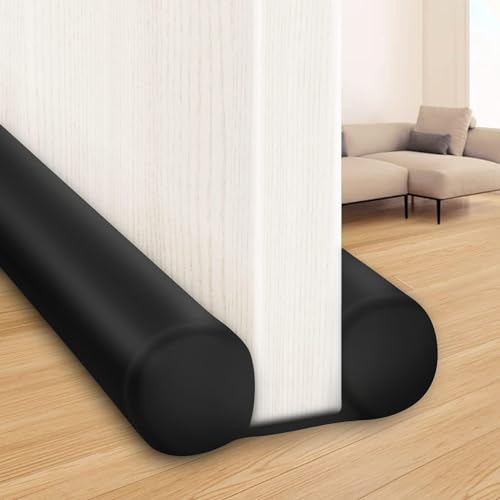
MAXTID Door Draft Stopper
After sealing, real gains come from mass and decoupling, which usually means construction. If you want a practical roadmap written for people who almost bought foam for soundproofing, start with acoustic foam alternatives.
What Does Acoustic Foam Actually Do?
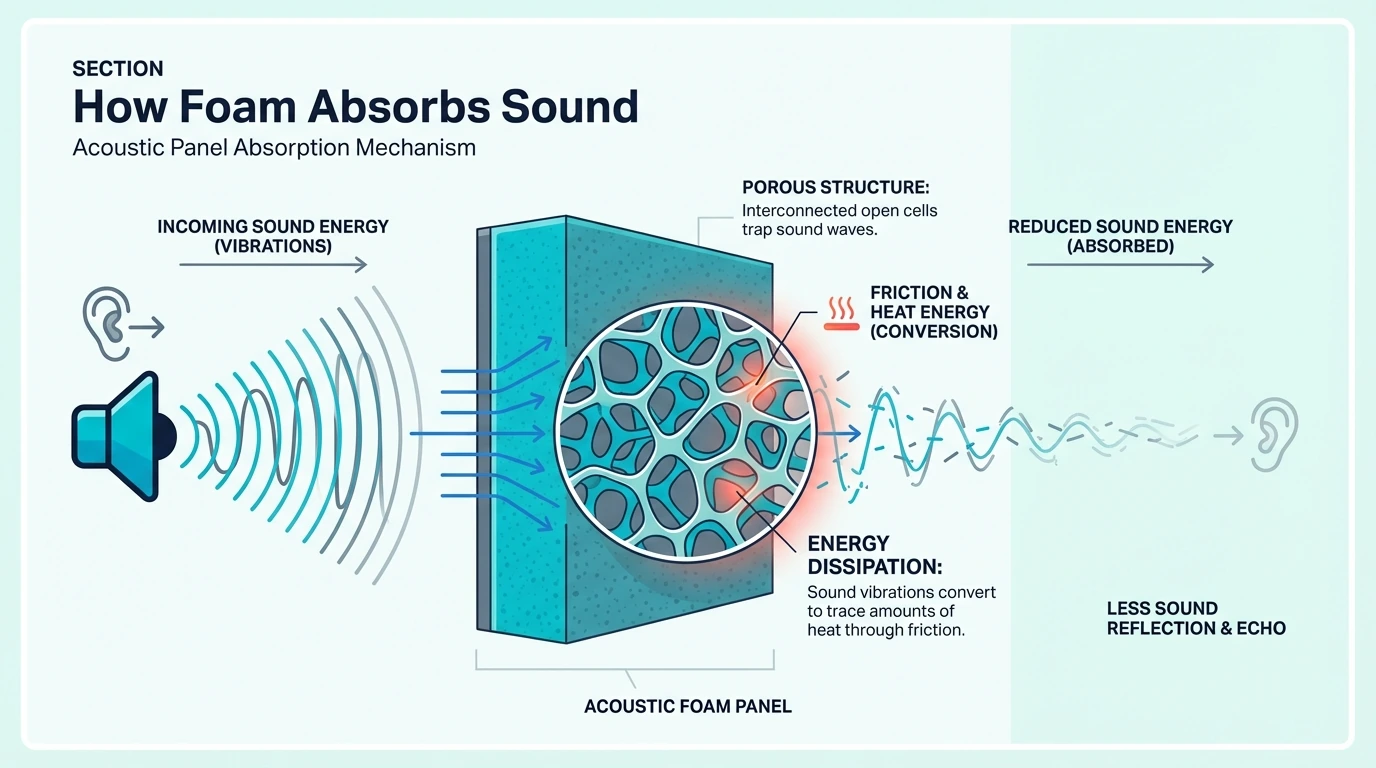
Used correctly, foam is a reflection tool. It shortens the reverb tail and cleans up slap echo so speech and recordings sound more direct.
That is why foam can feel like magic in a bare room, and feel pointless in a room that already has soft furnishings. The more reflective the room, the more obvious the improvement.
How does acoustic foam absorb sound?
Open-cell foam is full of tiny channels. When sound enters, air movement turns into friction, and the reflection coming back is weaker.
You do not need to obsess over the physics to use it well. Place foam where reflections would bounce back into your mic or your listening position.
What frequencies does foam absorb best?
Foam is strongest in mid-to-high frequencies, which is where “roominess” and harsh reflections live. That is why it helps voice so quickly.
Bass needs depth and density, so thin wall foam is not the fix for boomy low end. If bass is the pain point, start with bass traps vs acoustic foam instead of buying more wall tiles.
If you want a clearer picture of thickness versus frequency, acoustic foam frequency absorption breaks it down in plain language. It is the fastest way to avoid buying foam that looks right but does not match what you are hearing.
Does foam shape matter, or is it mostly looks?
Shape matters a little, but thickness and foam quality matter more. A real 2-inch panel usually beats a thin “aggressive looking” pattern made from cheap foam.
If you are choosing between common patterns, acoustic foam pyramid vs wedge is the quick comparison. Use it to decide based on the problem, not the texture.
If you just want a cheap experiment, JBER 12-Pack 1-Inch Acoustic Foam Tiles are enough to hear a change in a very echoey room. If you like what you hear, upgrade the plan (placement and thickness) before you upgrade the wall coverage.
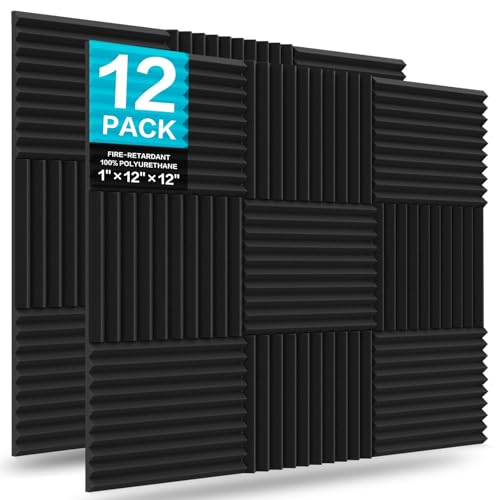
JBER 12-Pack 1-Inch Acoustic Foam Tiles
Does Acoustic Foam Reduce Noise?
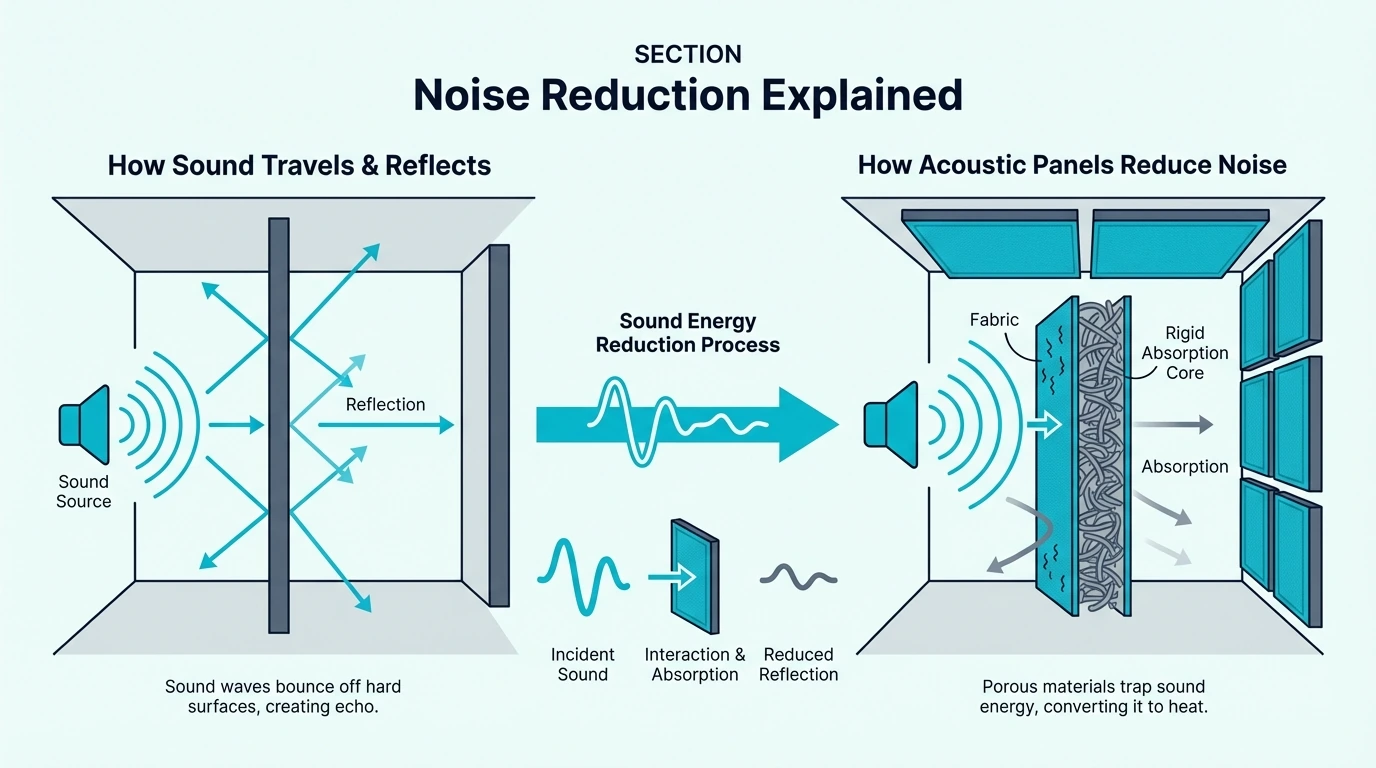
“Reduce noise” is where people talk past each other. Foam can make a room feel quieter because it removes reflections, but it does not reduce the noise coming through the building.
So yes, foam can improve your experience inside the room. But no, it will not turn a loud apartment into a quiet one.
Does foam reduce echo and reverb?
Foam reduces echo and reverb when hard, parallel surfaces are feeding reflections back into the room. In that case, you can noticeably shorten the clap tail with a small amount of coverage in the right spot.
A quick check: record 10 seconds of speaking before and after, then listen for the ring behind your words. If the ring shrinks, the foam is doing its job.
Does foam reduce outside noise or keep sound from leaving?
Outside noise is a transmission problem, and foam does not change the wall assembly. If you can hear it through the wall now, surface foam will not close that path.
If you are here because of neighbors, do not keep buying foam hoping the fifth box will suddenly work. Follow the soundproofing path instead, and treat foam as optional.
Is Acoustic Foam Worth It?
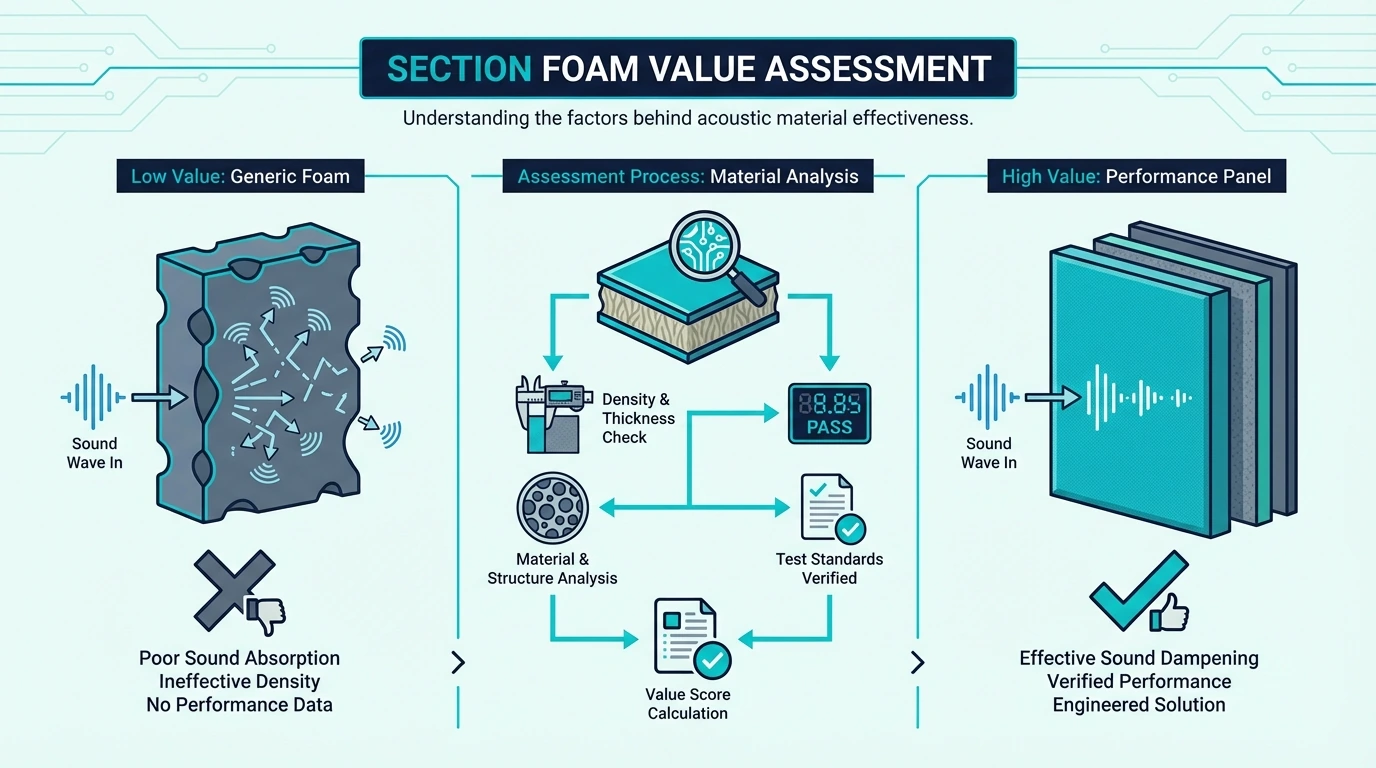
Worth it depends on whether you are fixing reflections or chasing isolation. Foam is cheap when it is the right tool, and expensive when it is the wrong one.
When foam is a smart buy
Foam makes sense for podcasting, streaming, and casual vocal recording where the room is the main thing ruining the sound. In those cases, you do not need perfection to hear the improvement.
If you want to shop with less regret, how to choose acoustic foam explains what actually matters (density, thickness, and placement) without the Amazon hype. It is a better read than scrolling reviews for hours.
When you should skip foam (or use it differently)
If you are mixing seriously or fighting bass buildup, foam is at best a supporting actor. You will usually pair it with deeper treatment that targets low frequencies.
If you want a short list of foam that is at least decent, best acoustic foam panels is the easiest starting point. It also helps you avoid the “looks thick in photos” trap.
If you are deciding between 1-inch and 2-inch for a bedroom setup, you will usually feel the difference more with a thicker pack like 24-Pack 2-Inch Pyramid Acoustic Foam Panels than with doubling coverage of thin tiles. Measure first so you buy once.
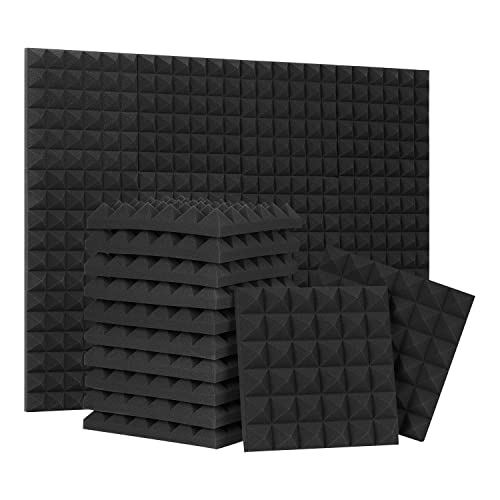
24-Pack 2-Inch Pyramid Acoustic Foam Panels
Where Does Acoustic Foam Work Best?
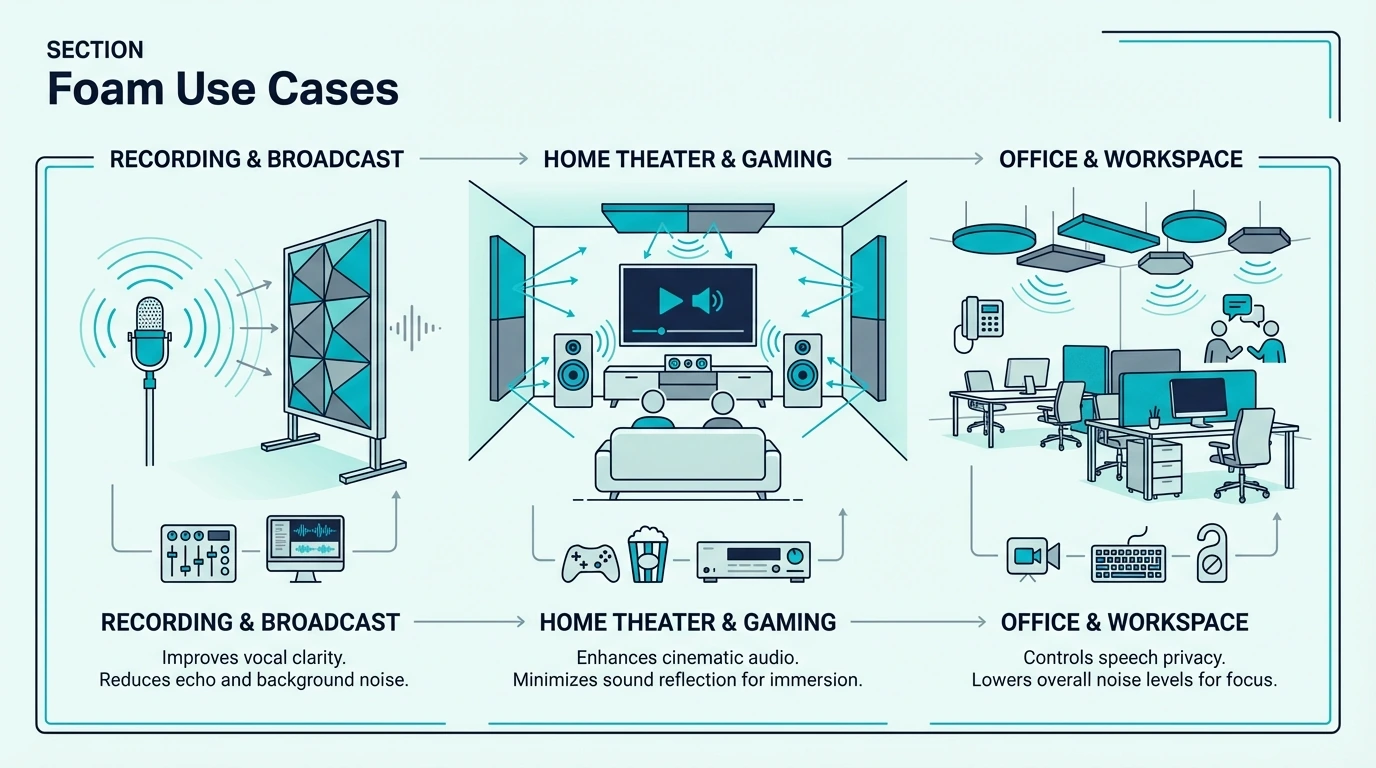
Placement is where foam either feels magical or pointless. The goal is to catch reflections that bounce back into your mic or listening position, not to wallpaper the room.
Recording and podcast corners
For voice work, start with the wall that reflects back into the mic. Depending on your setup, that might be the wall behind the mic or the wall behind you.
If you are unsure which side matters, start with how to arrange acoustic foam and work from reflection points outward. One treated wall in the right spot beats three random walls every time.
For a small recording corner, JBER 48-Pack 1-Inch Acoustic Foam Panels is usually enough to treat one key wall and hear the change. If you still hear slap echo, treat the second wall next, not the entire room.
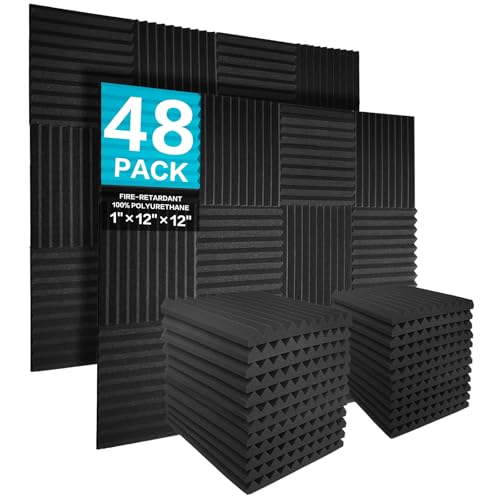
JBER 48-Pack 1-Inch Acoustic Foam Panels
Desk setups follow the same reflection logic, but the desk and monitors can become the loudest bounce-back points.
Streaming and desk setups
Desk setups often need treatment behind the monitor(s) and one wall behind you, depending on where the mic points. Small changes in angle can change which reflection you are fighting.
If you want a simple layout that keeps you from overdoing it, how to arrange acoustic foam gives a clean starting plan. Start with one surface, listen, then add only what you can actually hear.
If your “mic” is really just your ears on the couch, you’re still chasing reflections — just with dialogue clarity as the goal.
Home theaters and music rooms
Foam can help tame harsh reflections and make dialogue feel clearer, but it will not clean up muddy bass. If the complaint is boom, not echo, foam is not the first move.
That is why a lot of home theater “foam did not work” stories are really bass stories. If bass is the complaint, start with bass traps vs acoustic foam before you buy more wall tiles.
Conclusion
Acoustic foam works when you use it for absorption: it shortens reverb, reduces slap echo, and makes recordings sound cleaner. If you buy it for that job, it can be one of the fastest upgrades for a bare room.
But foam does not soundproof. Blocking sound is a mass, sealing, and decoupling problem, and foam is not built for that path.
If you are buying foam, buy it with a placement plan and realistic expectations. If you are chasing neighbor noise, follow the soundproofing path first and let foam be a secondary tool, not the main bet.
Frequently Asked Questions
Can acoustic foam stop neighbors from hearing me?
No. Foam can reduce echo inside your room, but it will not meaningfully reduce sound transmission through walls.
If neighbors are the real issue, focus on sealing gaps and real soundproofing measures first. Foam can still make your recordings cleaner, but it will not solve the isolation problem.
Does acoustic foam work for vocals and podcasts?
Yes, especially in bare rooms where reflections are obvious. Voice sits right in the range where foam tends to help fast.
Treat one reflection wall first (the one that bounces back into the mic), then add only if you can still hear slap or ring. That approach usually beats buying more foam and guessing.
Does acoustic foam help with bass?
Not much. Bass wavelengths are long, and thin foam does not have enough depth to absorb them well.
If bass is the complaint, start with bass traps vs acoustic foam. Foam can still help reflections, but it will not fix boomy low end.
Can you combine foam with soundproofing?
Yes. Soundproofing handles transmission through the boundaries, and foam handles reflections inside the room. Professional spaces do both.
If you have noise complaints, fix sealing and mass first. Once the space is reasonably isolated, foam is what makes it sound good for recording or listening.
How much foam do I need?
Start small: one wall, then listen. Add only what you can actually hear.
If you want a simple layout that prevents random panel spam, follow how to arrange acoustic foam. It is cheaper than guessing and buying twice.