Is Acoustic Foam Worth It? Honest Answer [2026]
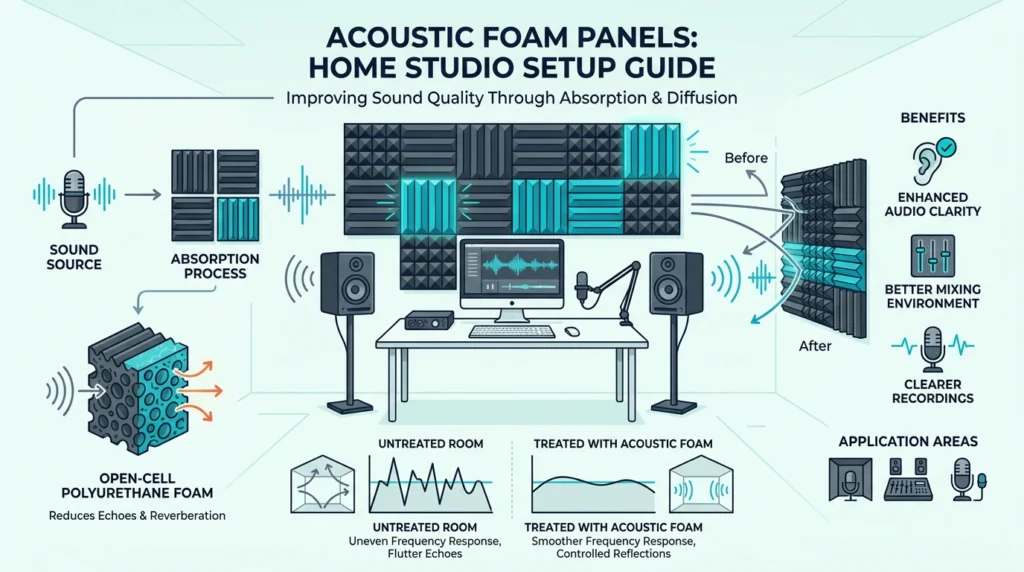
Is acoustic foam worth it? Yes — but only when you’re fighting echo, and no when you’re trying to soundproof a room.
If your recordings sound “roomy” (or your calls sound like you’re in a hallway), your mic is hearing reflections off bare walls and ceilings.
A small amount of foam in the right places can tighten up speech and vocals immediately.
Below, you’ll see when foam is the right spend, when it’s a waste, and what to do instead if the real problem is noise coming through walls.
Acoustic foam is worth it for reducing echo and tightening up speech/voice recordings (it works best in the mid-to-high frequencies). For soundproofing or blocking neighbor noise, skip foam — those problems need mass, sealing, and decoupling.
Is Acoustic Foam Worth It?
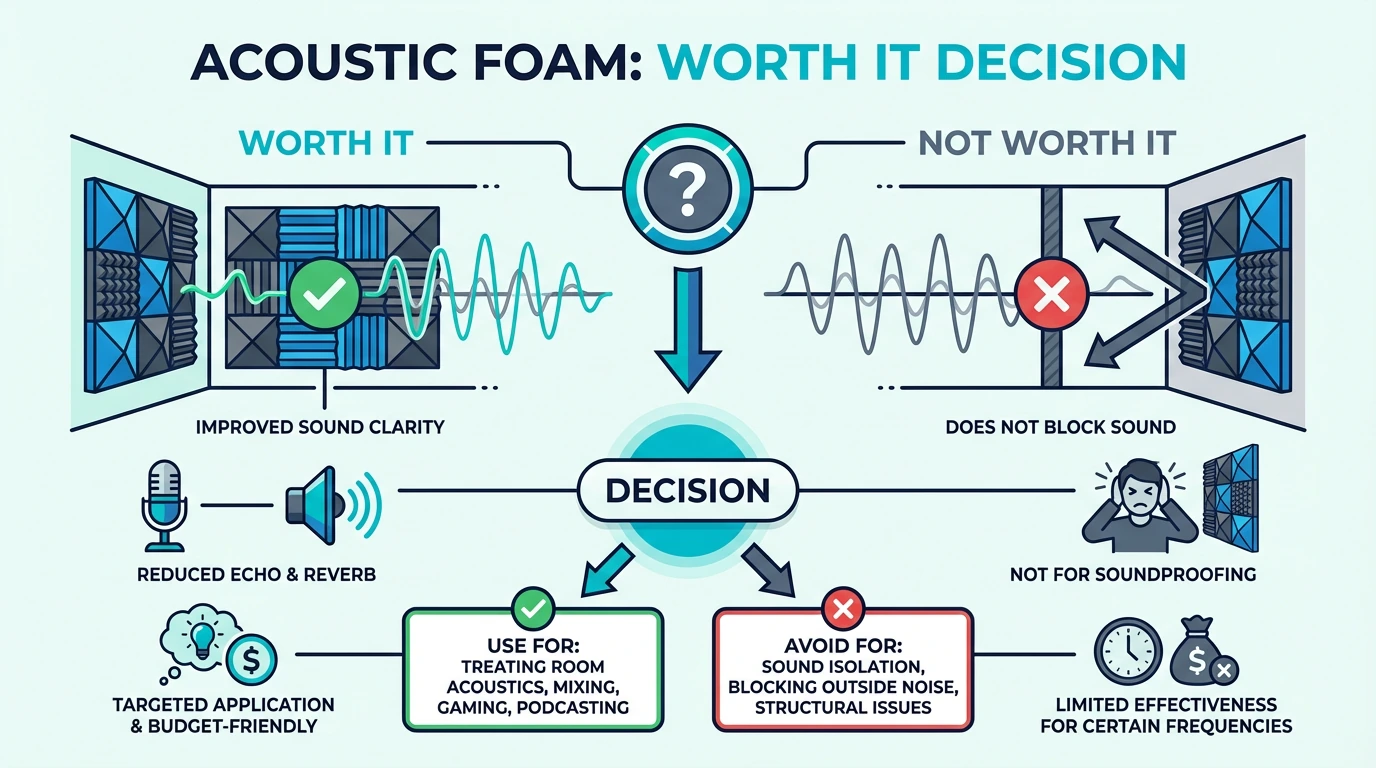
Here’s the straight answer: foam is a tool for controlling reflections inside a room. The moment you expect it to stop sound traveling through a wall, you’re buying the wrong thing.
The Honest Answer: It Depends on Your Goal
Acoustic foam absorbs sound waves bouncing around inside a room. It reduces the reflections that make a bedroom sound like a bathroom.
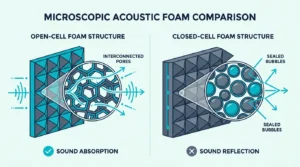
It does this because open-cell foam creates friction as sound waves pass through it. That friction turns a little sound energy into heat and shortens the reverb tail your mic hears.
If you want a quick reality check, clap once in the middle of the room and listen to the decay. If you hear a ringy tail that hangs on, foam can help.
If your goal is cleaner audio in the same room you’re recording in, foam delivers real results. You’ll hear less splash, tighter vocals, and a “closer” voice that sits better in a mix.
If you want the deeper breakdown of why that happens (and where it stops), read does acoustic foam work?.
Once you’re clear on what problem you’re solving, the decision gets a lot less fuzzy. Let’s start with the situations where foam actually pays you back.
When Foam IS Worth It
Foam is worth it when your problem is echo, not “noise leaking in.” That includes bedroom studios, podcast corners, streamer setups, and home theaters that sound harsh.
It can also be worth it in everyday rooms that feel uncomfortable to talk in. If a space has hard floors, parallel walls, and minimal furniture, flutter echo can make it exhausting.
That’s the upside. The downside is that foam gets blamed for problems it can’t touch, so people keep buying more instead of switching tools.
When Foam ISN’T Worth It
Foam will not block sound coming through walls, ceilings, or floors. So if you’re trying to stop neighbors, traffic, or drums from traveling between rooms, skip the foam.
Soundproofing requires mass, decoupling, and sealing. Foam is light and porous, so it doesn’t meaningfully slow down transmission.
If you want the basics broken down, start with our acoustic foam hub. It covers the difference between absorption (inside the room) and soundproofing (between rooms).
If you’re in the “worth it” camp, don’t make the next common mistake: buying too much. Here’s the minimum setup that gets you most of the audible win.
Minimum Treatment for Home Studios (What Actually Works)
Most people over-buy foam because they treat it like wallpaper. You usually get a bigger jump by treating the strongest reflection paths first.
1) Behind your mic (or behind your monitors): Treat the wall you face while recording or mixing. This catches the strongest early reflections before they bounce back into the mic.
2) First reflection points on side walls: Put foam where sound “hits” first from your speakers or your voice. Use the mirror trick: sit in position and slide a mirror along the wall until you can see the speaker in it.
3) Corners (optional): If you notice low-end buildup, add corner treatment before you plaster more foam everywhere. A set of corner bass traps can help with the worst corner resonance, but they won’t replace thick panels for serious bass control.
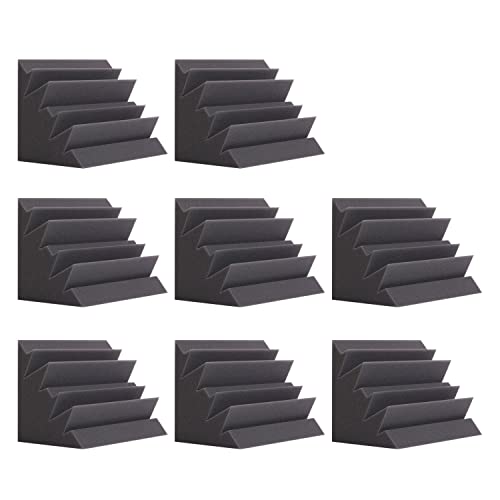
corner bass traps
Start small, record a quick before/after clip, and add coverage only if you can still hear a specific room problem. Going from zero treatment to “some” is huge, but going from “a lot” to “a little more” is usually subtle.
What Does Acoustic Foam Actually Do?
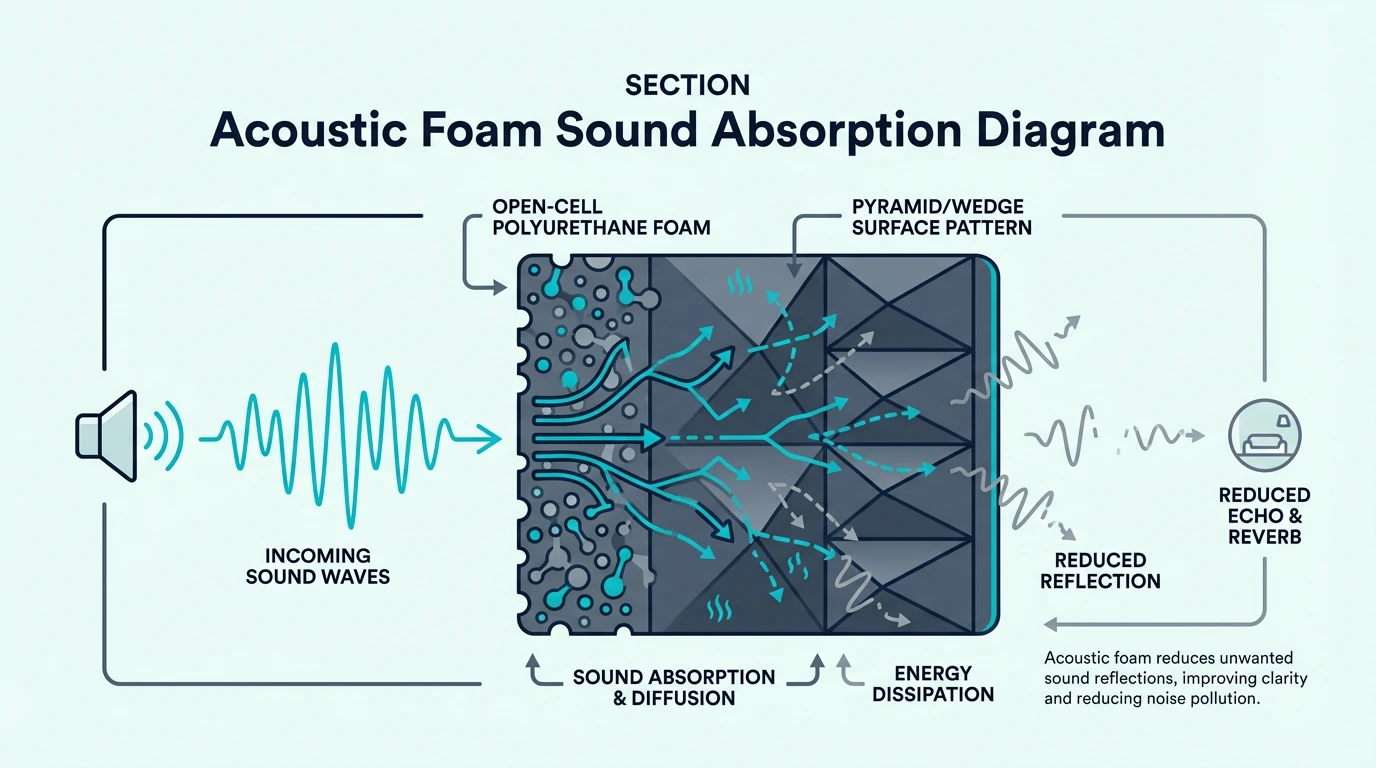
Once you understand the physics, the “worth it” question gets easy. Foam handles reflections inside your room, and that’s a different problem than sound traveling through construction.
Reduces Echo and Reverb (Yes)
In an untreated room, sound bounces off walls, ceilings, floors, desks, and monitors. Those reflections hit your ears (and your microphone) a split-second after the direct sound.
That small delay creates the “echoey” or “boxy” character that makes home recordings feel amateur. Foam shortens the decay by absorbing some of that energy before it bounces again.
If you’re recording vocals, voiceover, or streaming, this is exactly what you want. You’re not changing your microphone, you’re changing what the microphone is listening to.
That’s why foam can make voice and dialogue feel cleaner fast. But it has a hard limit: thin foam doesn’t do much for low frequencies.
But Only for High Frequencies
Standard 1–2 inch foam is strongest in the mid-to-high frequencies. That’s why it helps speech clarity and tamps down harshness.
Lower frequencies have much longer wavelengths, so thin foam barely touches them. If you’re producing music with heavy bass, you’ll eventually need thicker treatment (panels and bass traps), not more foam.
If you’re stuck deciding between “more foam” and “real panels,” start with acoustic foam vs panels so you don’t buy the wrong fix twice.
That low-frequency limit is why foam can make a room sound less harsh while still leaving it a bit boomy. It also explains why foam won’t help with neighbor bass coming through a wall.
Blocks Sound From Neighbors (No)
When you hear a neighbor’s bass, your wall is vibrating like a giant speaker cone. That’s transmission through structure, not reflections in air.
Foam can’t stop that because it doesn’t add meaningful mass or separation. For actual sound blocking, you need materials designed for soundproofing.
One common option is mass-loaded vinyl. It’s not a magic sticker, but it does add mass where foam can’t.
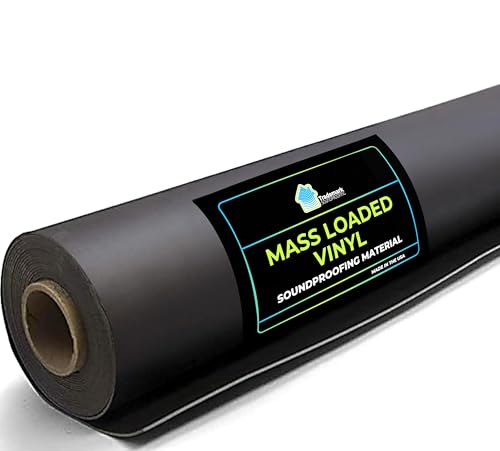
mass-loaded vinyl
So if you’ve been shopping for “soundproof foam,” this is where the wiring gets crossed. Here’s the one-line distinction that keeps the rest of this guide honest.
The Critical Difference
Absorption controls what happens inside the room. Soundproofing controls what passes between rooms.
Foam is a good absorption tool when used strategically. It’s a bad soundproofing tool no matter how much you buy.
Get Studio Tips Weekly
Join 5,000+ creators getting acoustic treatment advice every week.
No spam. Unsubscribe anytime.When Acoustic Foam IS Worth It
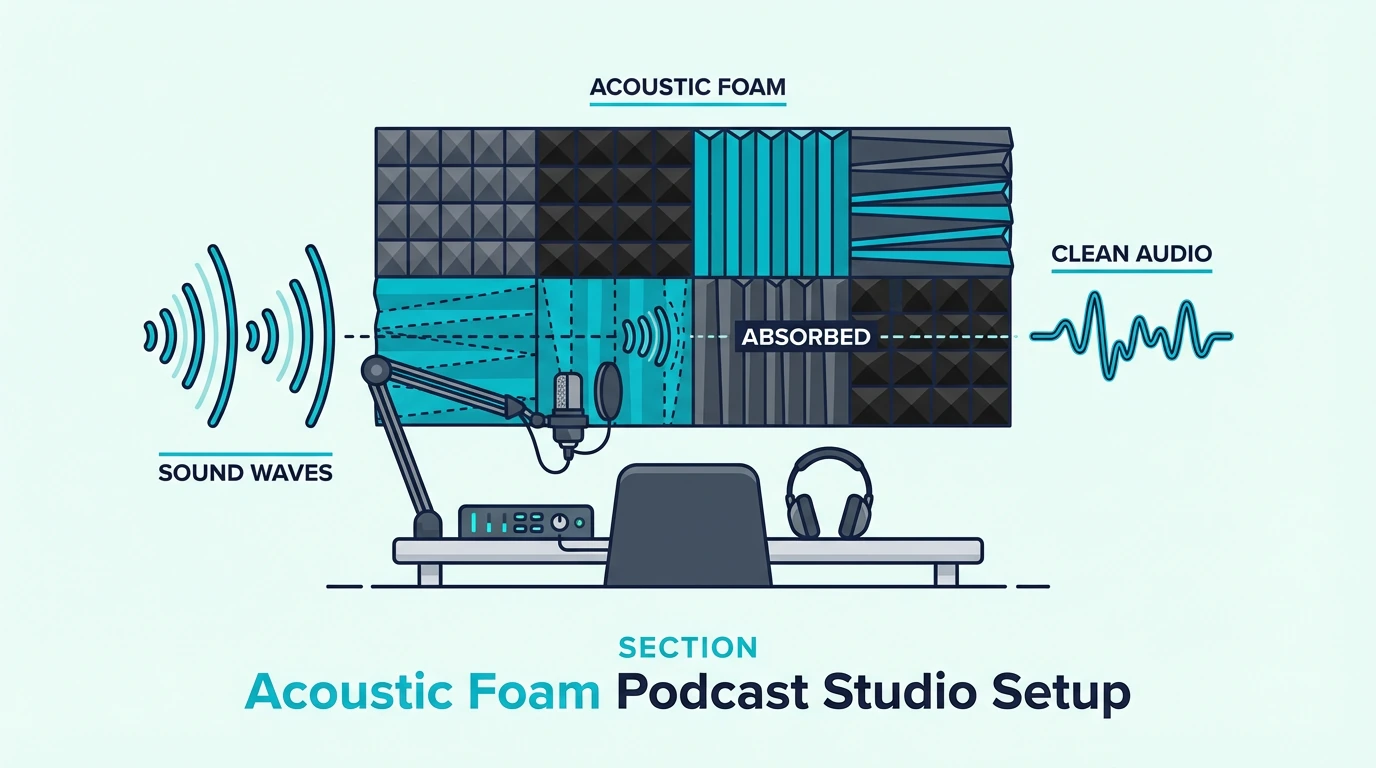
If your goal is cleaner recordings, foam can be one of the fastest upgrades you can make. The key is matching it to voice-focused problems, not expecting it to fix bass or neighbor noise.
Home Recording Studios
Recording in an untreated room captures flutter echo, comb filtering, and “room tone” you can’t EQ out later. Foam at first reflection points reduces the worst of it and makes takes easier to mix.
You don’t need to cover every wall. Even modest coverage in the right spots can make a bedroom studio usable.
If you want a buying shortlist, see our best acoustic foam panels guide. It also shows placement patterns that look clean instead of chaotic.
If you’re mostly recording voice, foam often feels more dramatic because you’re fixing the midrange reflections it actually absorbs. That’s why podcast setups are one of the easiest places to hear a quick before/after.
Podcast Rooms
Podcast listeners don’t forgive hollow audio for long. If your voice sounds distant and splashy, people click away.
Foam helps create that “close mic” sound by lowering early reflections. It won’t fix a bad mic technique, but it will stop your room from fighting you.
Streaming adds a different kind of mess: constant little noises bouncing off a desk and bare walls. Foam won’t silence your keyboard, but it can stop the room from amplifying it.
YouTube and Streaming Setups
Streamers deal with noisy PCs, keyboards, and reflective desks. Room reflections make those noises feel louder and more distracting.
Foam won’t remove the source noise, but it can keep it from bouncing around the room. That usually translates to cleaner voice tracks and less aggressive noise reduction in post.
If you’ve ever turned subtitles on because dialogue felt smeared, that’s an early-reflection problem. Here’s how foam fits (and where it doesn’t) in a home theater.
Home Theaters
In home theater rooms, foam is often used to control first reflections that smear dialogue. It can make speech easier to understand without cranking the volume.
You don’t want to deaden the whole room. Treat the early reflection points and keep some natural life in the space.
And you don’t need a “studio” use case for foam to be worth it. If a room is just harsh to talk in, killing the slap echo is a comfort upgrade.
Rooms With Bad Echo
Some rooms just sound harsh even for conversation. If claps ring or flutter, foam can make the space feel calmer.
You don’t need perfection here. You just need enough absorption to kill the “ping” that bounces between hard surfaces.
When Can You Skip Acoustic Treatment Entirely?
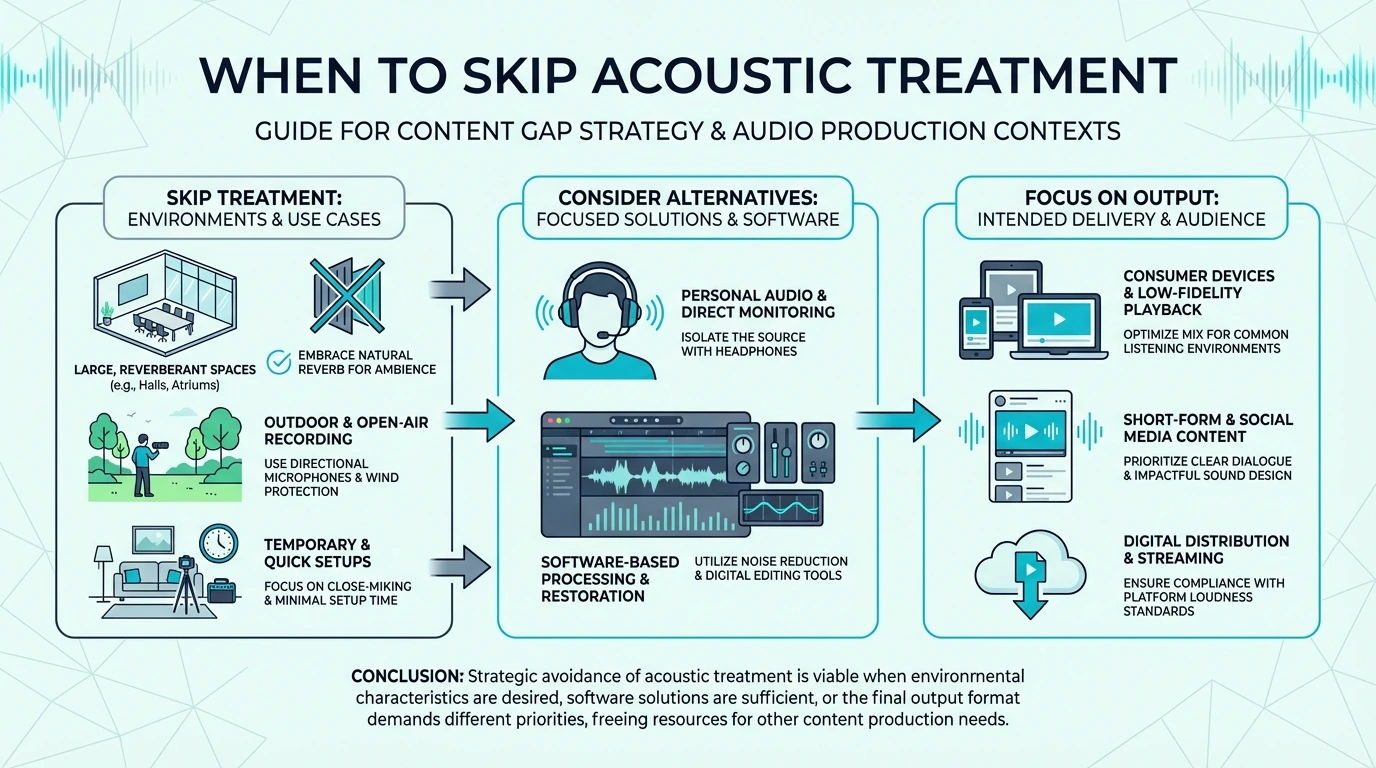
Not every room needs foam. Some spaces already have enough soft material and diffusion that treatment is overkill.
Rooms That Don’t Need Treatment
Carpet, heavy curtains, and upholstered furniture absorb a surprising amount of high-frequency energy. A big couch can do the job of a stack of foam panels.
Bookshelves can also help because they break up reflections. A wall of uneven surfaces acts like a cheap diffuser.
Closets used as vocal booths often need very little extra treatment. Hanging clothes do a lot of absorption naturally.
If you’re not sure whether your room is already “soft enough,” don’t guess. The clap test gives you a quick, repeatable read on whether you have a reflection problem.
The “Clap Test” Decision Point
Stand in the center of the room and clap once. Listen to how long the tail hangs around.
If it dies quickly and sounds natural, you may not need foam at all. If it rings, flutters, or feels metallic, you have a reflection problem worth treating.
If the ring is gone, stop there — you’ve already hit the main goal. Pushing past that is how rooms start feeling weird and lifeless.
When Treatment Makes Things Worse
Over-treating can make a room feel uncomfortable and lifeless. It can also make music playback feel unnatural.
The goal is controlled reflections, not a totally dead box. If your room already sounds fine, save your money for gear that moves the needle more.
When Acoustic Foam ISN’T Worth It
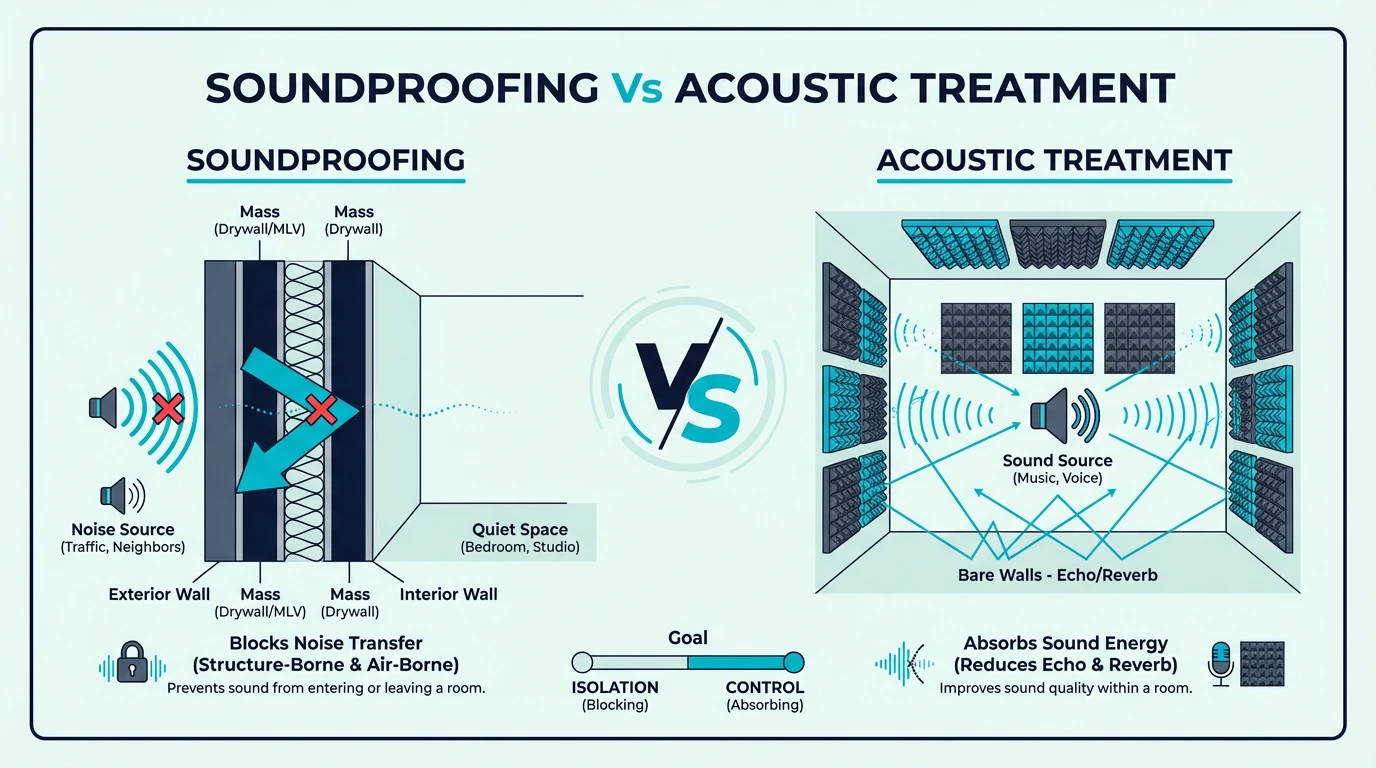
This is where foam gets people in trouble. If you buy it for transmission problems, you’ll be disappointed.
Trying to Block Neighbor Noise
If you can hear conversations, TVs, or footsteps through the wall, foam won’t solve it. The sound is traveling through the building, not bouncing around your room.
At best, you might notice a small change in harsh high frequencies. The midrange and bass that actually bother you will still come through.
That’s the neighbor version of the problem. If your goal is any kind of soundproofing, the fixes live in construction and sealing, not surface treatment.
Soundproofing a Room
True soundproofing is a construction project. It depends on mass, separation, and sealing every air gap.
Extra drywall layers, isolation clips, and acoustic caulk work because they change the structure. Foam doesn’t change the structure, so it can’t do the job.
And it’s not only neighbors — outside noise follows the same rules. If the sound is entering through gaps, foam on a wall won’t touch it.
Noise From Outside
Outdoor noise usually enters through windows, doors, vents, and small gaps. Foam on interior walls doesn’t address the entry point.
If you want less outside noise, start with weatherstripping and door seals. Then look at window upgrades or secondary glazing if the problem is serious.
So what does work? It’s not one magic product — it’s a stack of changes that attack the problem from three angles.
What You Actually Need Instead
For soundproofing, think in three buckets: mass, decoupling, and sealing. Each solves a different part of the problem.
Mass resists vibration. Decoupling breaks the path vibration uses to travel.
Sealing stops sound from leaking through tiny gaps that act like open windows. If you only treat one bucket, you usually get limited results.
Is Cheap Foam a Ripoff?
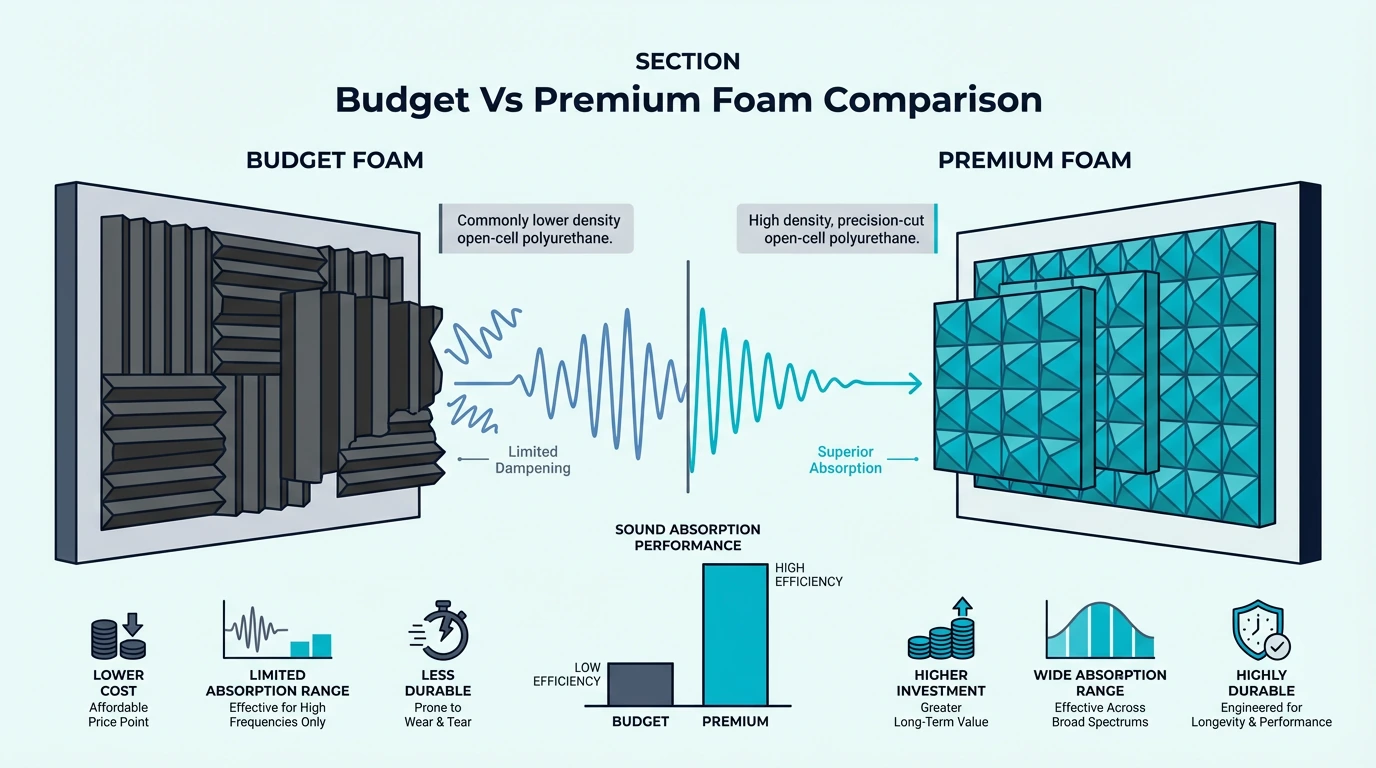
Cheap foam isn’t automatically a scam, but it is often oversold. The real question is whether it solves your problem well enough.
Budget Foam vs Premium: Real Differences
Density and consistency matter more than fancy marketing. Denser foam tends to absorb a bit better, especially as frequencies drop.
Budget foam often varies panel-to-panel. Premium foam is usually more consistent, which matters when you’re treating a room on purpose.
Those differences matter most if you’re chasing consistency and durability. If you’re just trying to tame slap echo, budget foam can still do the job.
When Cheap Foam Works Fine
If you’re treating a home office, casual streaming setup, or hobby recording space, budget foam can be totally fine. You’re mostly trying to knock down slap echo and harsh reflections.
Start with a small amount and test. If you like the change, add more coverage where your room still rings.
But if you’re using the room daily, cheap foam’s weaknesses show up faster. That’s when spending more stops being “upgrade bait” and starts being practical.
When You Should Spend More
If you’re recording professionally, small improvements compound over time. Consistency and durability matter when you use the space every day.
Cheap foam can yellow and crumble faster depending on material quality and sun exposure. If this is a long-term room, it’s worth buying something that stays stable.
If you want vetted options, see our best acoustic foam panels guide. It covers picks across budget tiers so you can find panels that are cheap without being useless.
How Much Should You Spend?
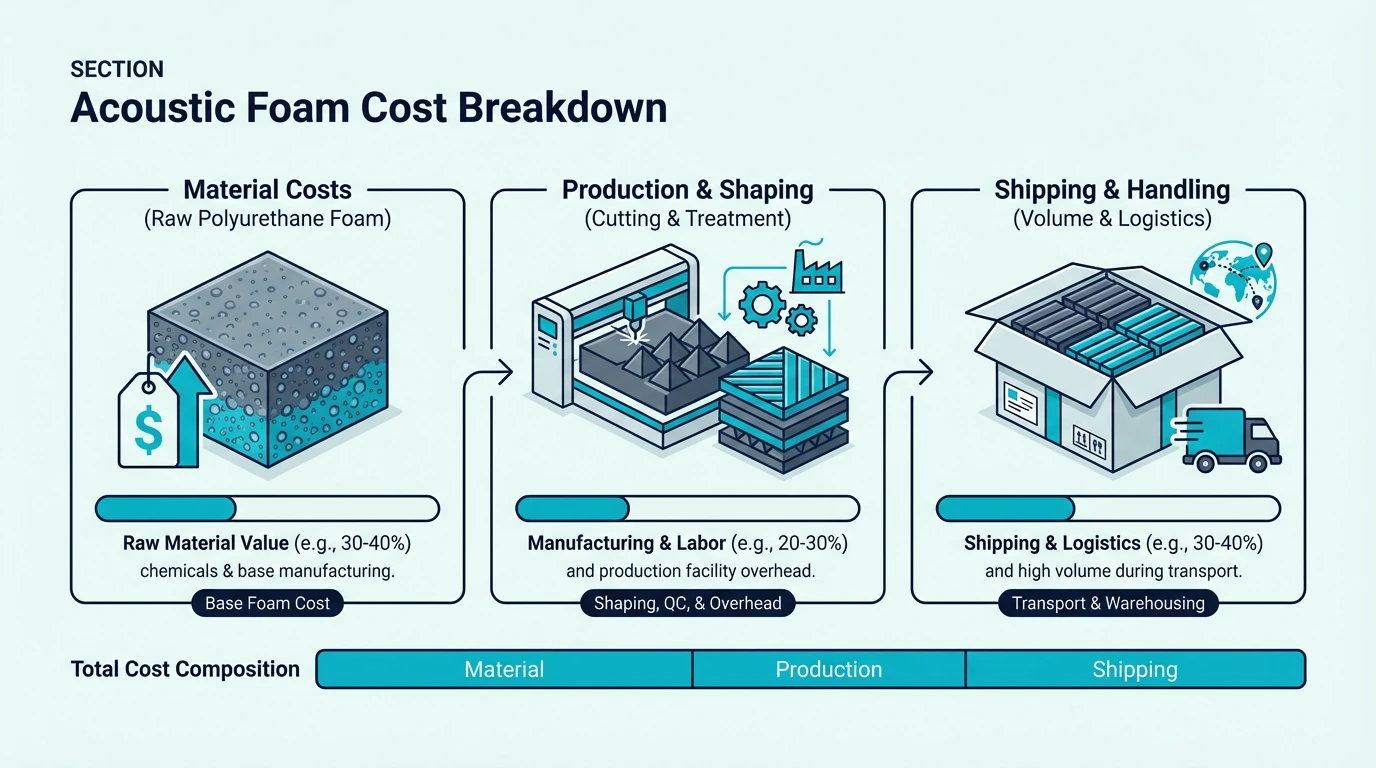
There isn’t a single “right” budget because rooms and goals are different. But there is a right order of operations: treat the biggest reflection problems first.
Budget Tier: Entry-Level Treatment
Entry-level packs are best for testing if your room is the problem. You can cover key reflection points with a small set and immediately hear whether treatment helps.
If you want a simple starting pack, this 12-pack foam starter kit is enough for a first pass. Treat one wall properly before you buy enough to cover everything.
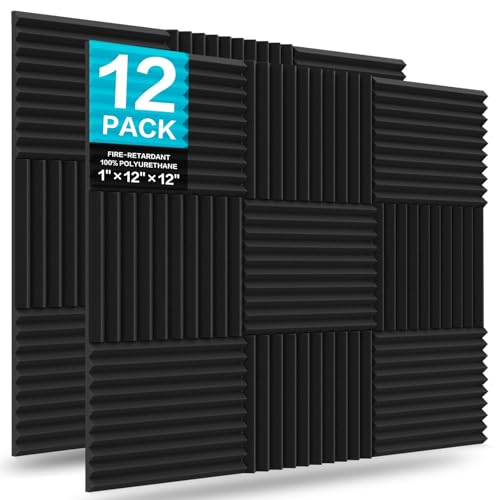
12-pack foam starter kit
If that starter pack gets you the improvement you wanted, great — you can stop. If the room still sounds roomy after you treat the key surfaces, mid-range thickness and coverage is where the next jump lives.
Mid-Range: Serious Home Studios
Mid-range setups give you more coverage and thicker foam where it matters. That’s usually where rooms start sounding “controlled” instead of just “less echoey.”
A set of 24-pack 2-inch pyramid panels can handle first reflections plus a back wall. If you’re making music (not just voice), plan for bass control too.
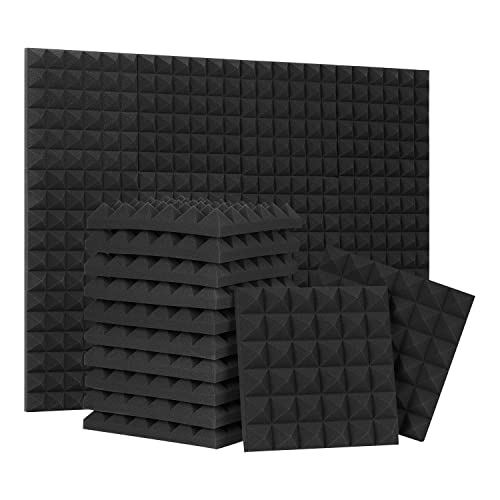
24-pack 2-inch pyramid panels
Once you’re in the “serious” zone, foam usually becomes one piece of a mixed plan. That’s what premium setups are really about: balance, not more wedges.
Premium: Professional Applications
At the high end, foam is usually part of a mixed treatment plan. Studios combine foam with panels, bass traps, and sometimes diffusion for balance.
This is also where measurement tools matter. REW (Room EQ Wizard) can show you what your room is doing instead of guessing.
If you’re building a dedicated vocal area, see our acoustic foam vocal booth guide. It explains coverage and thickness choices for voice-first rooms.
No matter what tier you choose, coverage is where people overspend. Use a simple coverage target so you add foam where it matters, not everywhere.
How to Estimate Coverage (Without Overbuying)
Most home setups do well starting around 15–30% wall coverage, focused on reflection points. That doesn’t mean “cover every wall,” it means “treat the walls that matter.”
If you have a typical bedroom-size room (say, around 10×12 feet), you can get a big improvement without going extreme. Start with side wall reflections, the wall behind your mic, and the wall behind your monitors.
The Bottom Line: Worth It for Echo, Not for Soundproofing
Acoustic foam is worth it when you use it for what it’s designed to do: control reflections. If you want tighter voice recordings, clearer dialogue, and less slap echo, it’s a smart buy.
If soundproofing is the goal, foam isn’t worth it. If the problem is sound traveling through walls, foam won’t change the physics.
If you’re ready to buy, start with our best acoustic foam panels guide. You’ll get product picks and placement patterns that don’t turn your room into an ugly checkerboard.
Frequently Asked Questions
Is acoustic foam a waste of money?
No, not when you use it for echo control. It becomes a waste only when you buy it expecting soundproofing.
Does foam make a noticeable difference?
Yes, especially in small hard rooms. Even basic treatment can make speech and vocals sound less “roomy” right away.
Should I buy foam or DIY panels?
DIY mineral wool or fiberglass panels usually outperform foam, especially for bass. But they take time to build and require careful handling of the materials.
Foam wins on convenience. If you want improvement fast without a build project, foam is the easier starting point.
How much foam do I actually need?
Most rooms benefit from 15–30% coverage focused on first reflections and problem surfaces. Start small, test, and add only if you can still hear a clear reflection issue.
The where to place acoustic foam in a home studio guide covers reflection points without the “cover every wall” myth.