Acoustic Blankets vs Panels: Moving Blankets vs Acoustic Panels [2026]
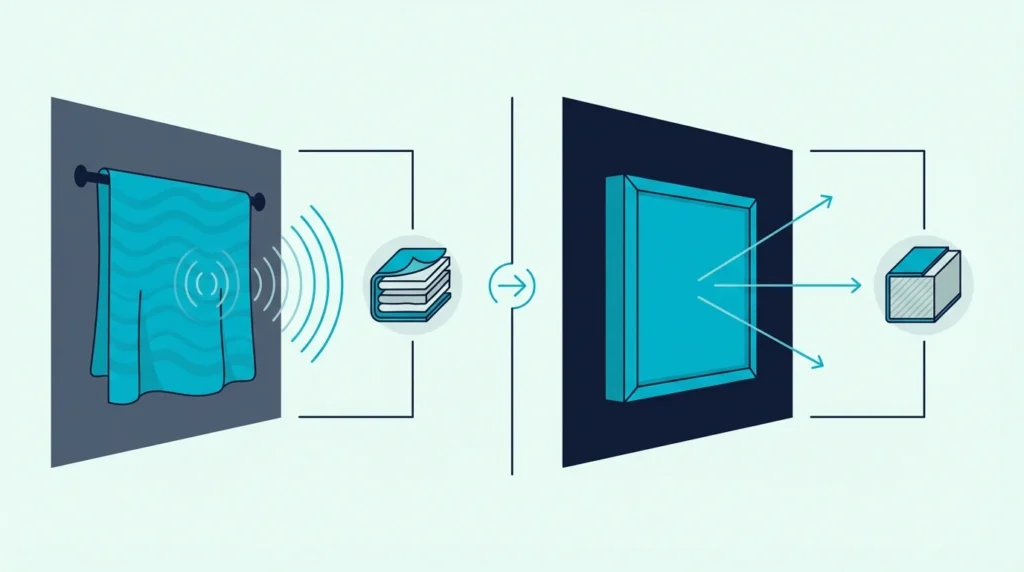
Acoustic blankets vs panels sounds like a simple budget-vs-performance decision, but the real difference is portability vs permanence.
Pick the wrong one and you still end up with boxy, echo-y recordings because early reflections bounce off the walls around your mic.
Match the treatment to your space and you’ll get cleaner, more direct sound without making your room look like moving day. Start by deciding whether you need something you can take down after a session or something you can mount once and forget.
Acoustic blankets (including moving blankets) are a portable, temporary way to cut high-frequency reflections, but they’re limited in the low end and aesthetics. Acoustic panels are the permanent, higher-performance choice for most dedicated rooms (studios, home theaters, offices).
Acoustic Blankets vs Panels: What’s the Difference?
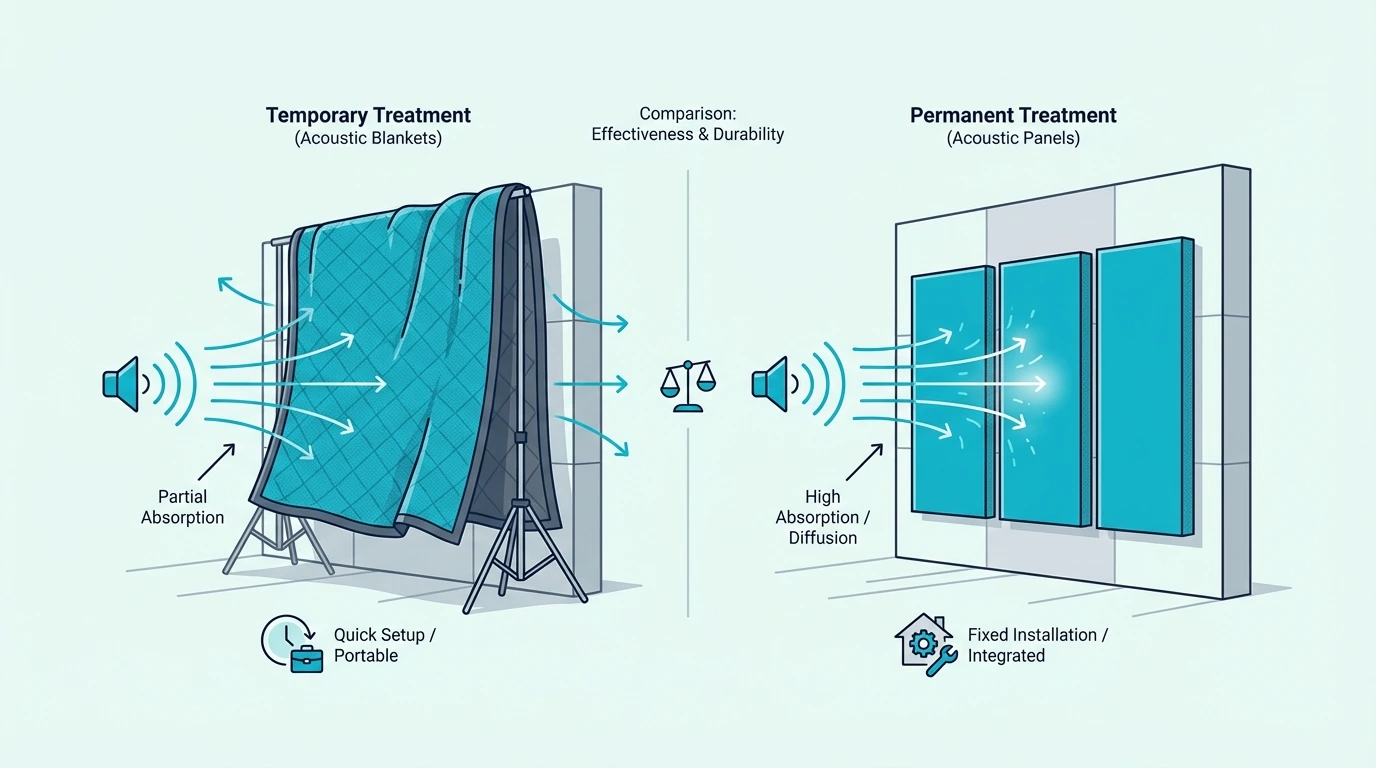
The fundamental difference is purpose: blankets are temporary solutions, panels are permanent installations. How each camp handles portability and how it handles professional-grade performance explain every other trade-off in cost, appearance, and lifespan.
Quick reality check: neither blankets nor panels will soundproof a room; they mainly reduce echo and reverb inside it. If your goal is to keep sound from leaking to neighbors, the acoustic panels vs soundproofing guide explains the gap between absorption and isolation.
Blankets = Temporary/Portable
Acoustic blankets, including heavy-duty moving blankets, are designed to be hung, moved, and stored. They typically feature grommets for hanging on stands or hooks, and they fold flat when not in use.
A purpose-built option like US Cargo Control Sound Dampening Blanket hangs flatter than typical moving blankets, which helps when you’re trying to tame early reflections in a tight setup.
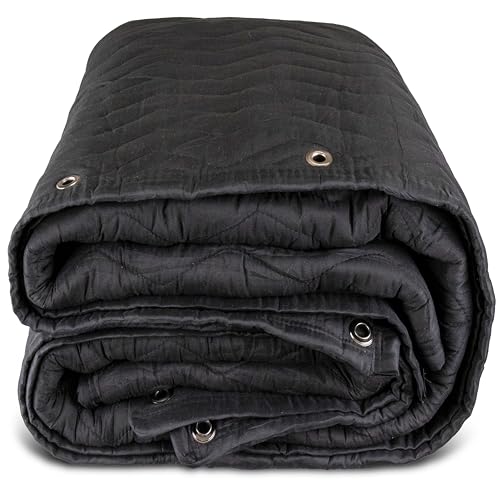
US Cargo Control Sound Dampening Blanket
The portability makes them ideal for traveling musicians, temporary recording setups, or rental spaces where permanent installation isn’t allowed. Renter-friendly setups are covered in the acoustic panel spacing guide.
You can set up a functional vocal booth in minutes and pack it away just as quickly. The trade-off is appearance and performance.
Blankets look industrial — there is no getting around the quilted, utilitarian aesthetic. They also absorb less sound than purpose-built panels because they are thinner and less dense.
Panels = Permanent/Professional
Acoustic panels are designed for permanent wall mounting. They feature rigid frames, fabric wrapping, and professional finishes that integrate into room decor rather than fighting against it.
Once installed at first reflection points and problem areas, panels deliver reliable acoustic treatment every time you use the space. The consistent positioning is what separates panels from blankets that shift between sessions.
The rigid construction outperforms flexible blankets because fiberglass or mineral wool cores provide consistent density throughout, while fabric stretches tight over the frame.
What Are Acoustic Blankets?
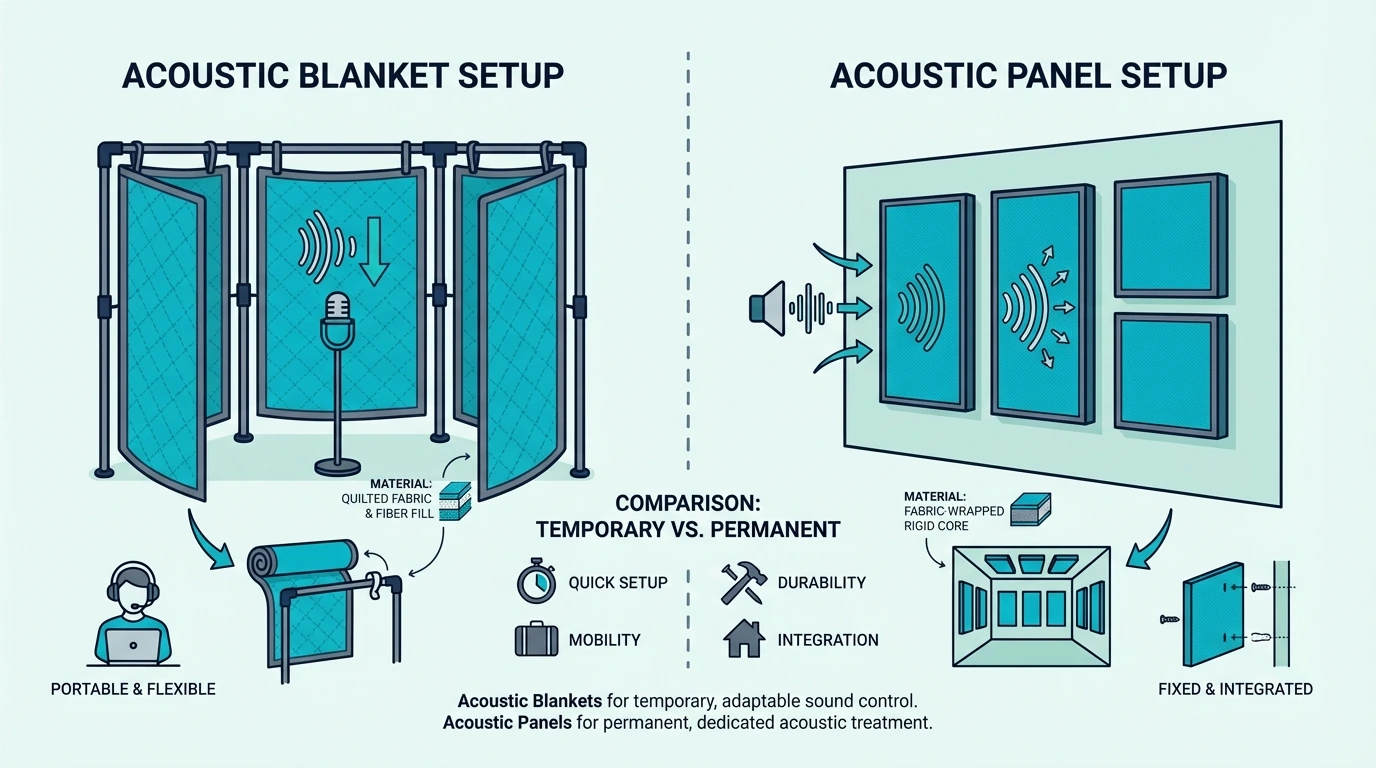
Acoustic blankets range from purpose-built studio products to repurposed moving blankets — and the difference matters more than you might expect. Two things determine whether a blanket is worth buying: how the absorption mechanism works and how effective the end result actually is.
How They Work
Blankets absorb sound through dense, fibrous layers that convert air movement into heat. Sound waves enter the batting and lose energy as they rub against the fibers in the weave.
Moving blankets use quilted cotton or polyester batting — the same insulation principle as a winter jacket. Purpose-built sound blankets use heavier, denser fill and sometimes add a mass-loaded vinyl layer to reduce sound passing through.
The key limitation is thickness — most blankets measure well under an inch. That means they mainly tame high and mid frequencies (roughly 500 Hz and above), while bass and low-mids bounce around the room almost untouched.
Effectiveness
Acoustic blankets typically achieve NRC ratings between 0.4 and 0.6, which means they absorb 40–60% of the sound that hits them. That is decent for temporary treatment but noticeably less than what panels deliver.
A quick test shows the difference: hang a blanket on one wall and speak toward it, then speak toward a bare wall. You will hear less echo and a slightly “deader” sound in the blanket direction, but the effect is subtle compared to purpose-built treatment.
Moving blankets — the furniture-padding type — sit on the lower end of that 0.4–0.6 range because they are designed for physical protection, not acoustic performance. Purpose-built sound blankets use denser fill and tighter weave patterns, which pushes their NRC closer to 0.6, though they cost two to three times more than a basic moving blanket.
Get Studio Tips Weekly
Join 5,000+ creators getting acoustic treatment advice every week.
No spam. Unsubscribe anytime.What Are Acoustic Panels?
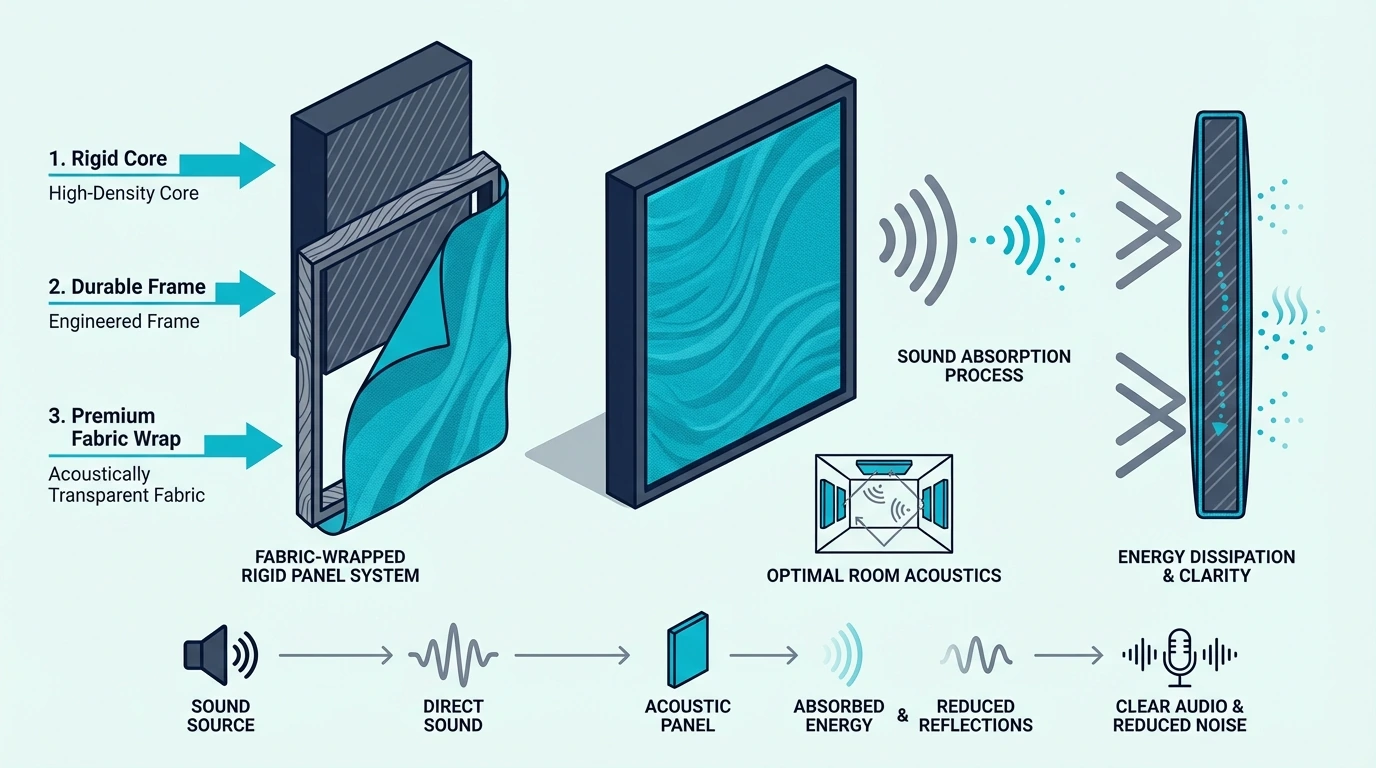
Purpose-built absorbers represent the professional standard for permanent acoustic treatment. Three construction details explain the performance gap over blankets: core material, thickness, and rigid framing.
How They Work
Acoustic panels use rigid fiberglass or mineral wool cores wrapped in acoustically transparent fabric. The core material provides consistent, high-density absorption, while the fabric contains the fibers and provides a finished appearance.
Most panels are 2 to 4 inches thick, which is why they absorb meaningfully lower than blankets.
As a rough rule, 2-inch panels start working down around 250Hz, while 4-inch panels can reach closer to 125Hz in many rooms. The 1-inch vs 2-inch panels and 2-inch vs 4-inch panels comparisons break down the trade-offs by frequency.
The rigid frame maintains consistent density and prevents sagging over time. Blankets can bunch up or develop thin spots; panels maintain uniform performance indefinitely.
Effectiveness
Quality acoustic panels achieve NRC ratings between 0.85 and 1.0. At the high end, they absorb virtually all sound that hits them—a stark improvement over blankets.
The Olanglab Fiberglass Acoustic Wall Panels 4 Pack demonstrates typical professional panel construction—fiberglass core with a finished panel form factor, achieving the kind of absorption people expect from permanent treatment.
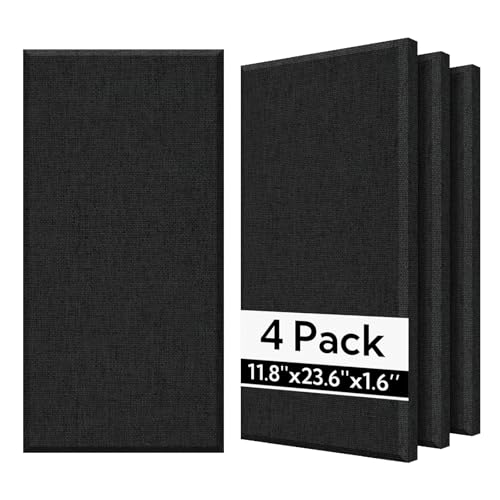
Olanglab Fiberglass Acoustic Wall Panels 4 Pack
The difference is immediately audible. Recording in a panel-treated room versus a blanket-treated room reveals noticeably cleaner sound, tighter frequency response, and more controlled reflections.
How Do Acoustic Blankets and Panels Compare on Performance?
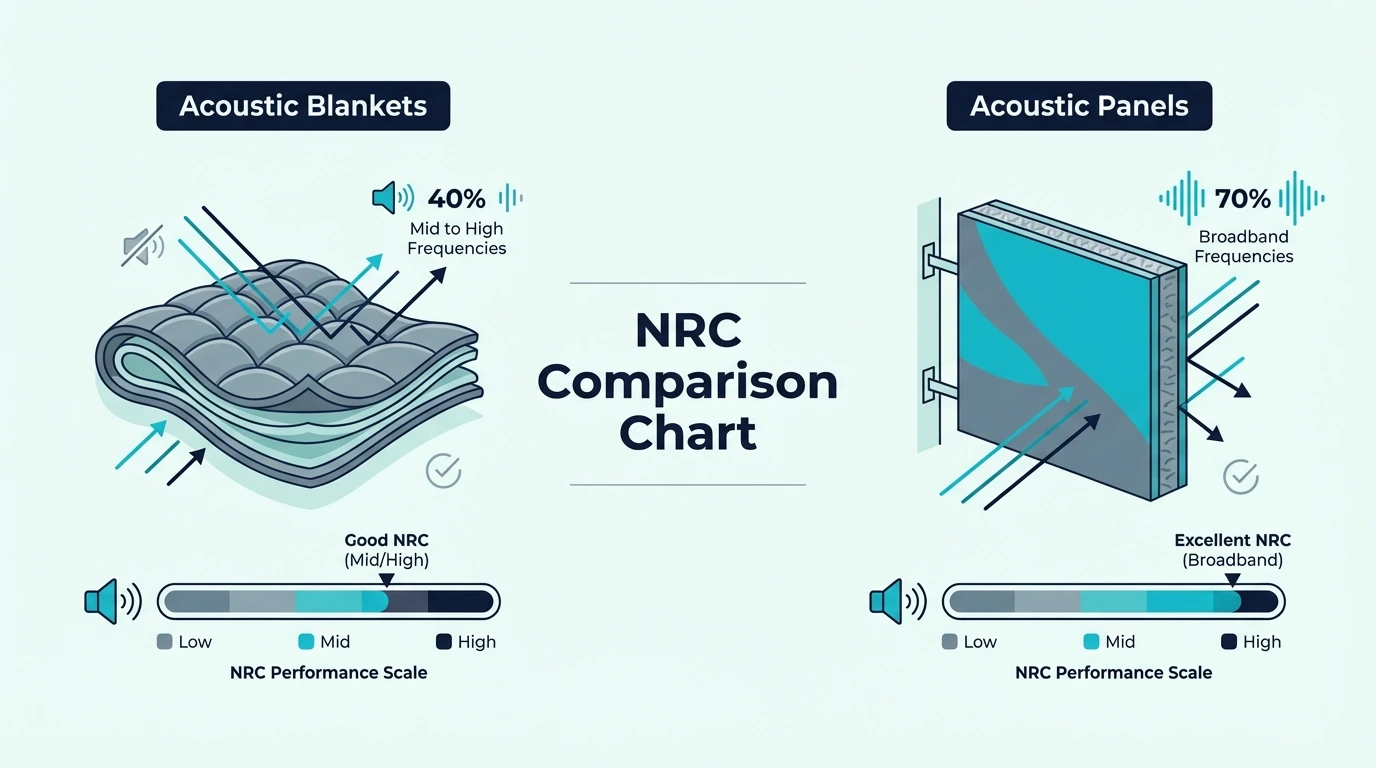
Raw NRC numbers tell part of the story, but the real-world gap between blankets and panels shows up most at lower frequencies. Which absorbs better and how the NRC ratings compare are the two questions worth answering here.
Which Absorbs Better?
Panels win decisively on raw absorption — the combination of greater thickness, higher density, and consistent construction creates superior performance at every frequency. Think of it this way: blankets are like wearing a sweater in winter (better than nothing, but not ideal), while panels are like proper wall insulation (engineered specifically for the job).
The gap is largest at lower frequencies, where blankets provide almost no absorption below ~500 Hz while 2-inch panels remain effective down to around 250 Hz. For speech-only recording (podcasts, voiceover), that low-end gap matters less because the human voice sits mostly above 300 Hz — but for music production, acoustic guitar, or drum bleed, untreated low-mids muddy the entire mix.
NRC Rating Comparison
| Product Type | Typical NRC | Effective Range |
|---|---|---|
| Moving Blankets | 0.35-0.50 | 500Hz+ |
| Acoustic Blankets | 0.50-0.65 | 400Hz+ |
| 2” Acoustic Panels | 0.85-0.95 | 250Hz+ |
| 4” Acoustic Panels | 0.95-1.0 | 125Hz+ |
The biggest jump in the table is between acoustic blankets (NRC 0.50–0.65) and 2-inch panels (NRC 0.85–0.95). That gap means panels absorb roughly 30–40% more of the sound energy hitting them, which translates to a noticeably shorter reverb tail and tighter stereo imaging in a treated room.
The effective-range column matters just as much as the NRC number. A moving blanket rated at NRC 0.50 sounds useful on paper, but nearly all of that absorption happens above 500 Hz — leaving the low-mids and bass completely untreated.
A 2-inch panel rated at NRC 0.85 absorbs energy a full octave lower, reaching down to around 250 Hz where room modes and boxy coloration live.
For the full breakdown of how NRC ratings work (including why some panels exceed 1.0), that guide covers the measurement method and what the numbers mean in practice.
When Should You Use Acoustic Blankets Instead of Panels?
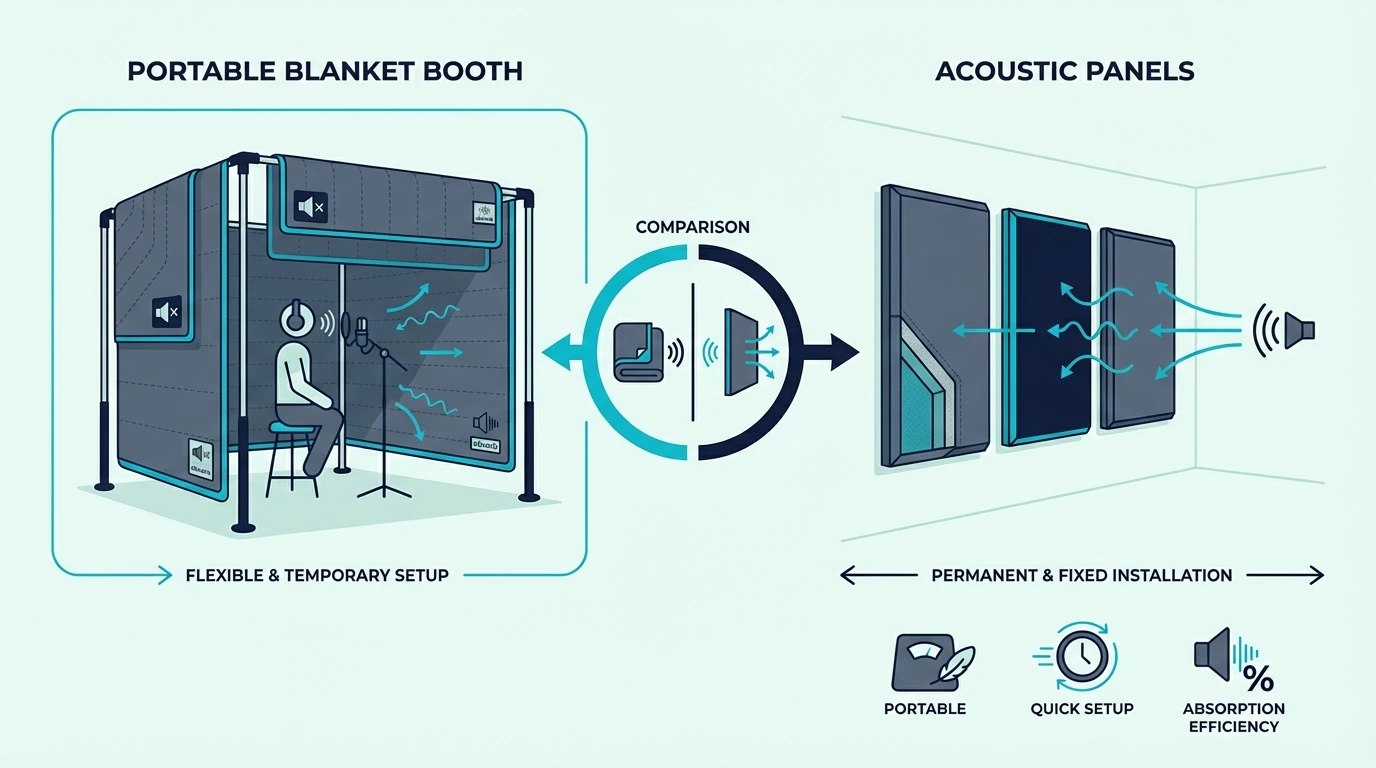
Despite the performance gap, blankets have legitimate use cases where portability and cost outweigh panel performance. Three scenarios favor blankets over panels.
Temporary Setup
If you are recording in different locations — hotel rooms on tour, temporary office spaces, or rooms you don’t own — blankets provide treatment without permanent installation. Hang them before a session, record, then fold them into a duffel bag and move on.
That flexibility is impossible with panels, which stay mounted wherever you install them. A touring musician or freelance voice actor who works in a new room every week gets zero benefit from permanent treatment — blankets are the only practical option.
Portable Recording
Vocal booths made from blankets hung on C-stands or PVC frames create functional recording environments that pack away between sessions. Many podcasters and voice actors use this approach in shared spaces.
The setup takes 10-15 minutes; teardown is faster. For occasional recording in non-dedicated spaces, this workflow makes sense despite the performance compromise.
Budget Treatment
Moving blankets run roughly one-fifth the cost per square foot of fabric-wrapped fiberglass panels. That price gap means you can cover three or four walls with blankets for the same money it takes to mount four panels at first reflection points.
The trade-off is performance per dollar spent over time. Blankets wear out in three to five years with regular hanging and folding, while panels maintain rated performance for a decade or longer — so the upfront savings can evaporate if you replace blankets repeatedly.
When Are Acoustic Panels the Better Choice?
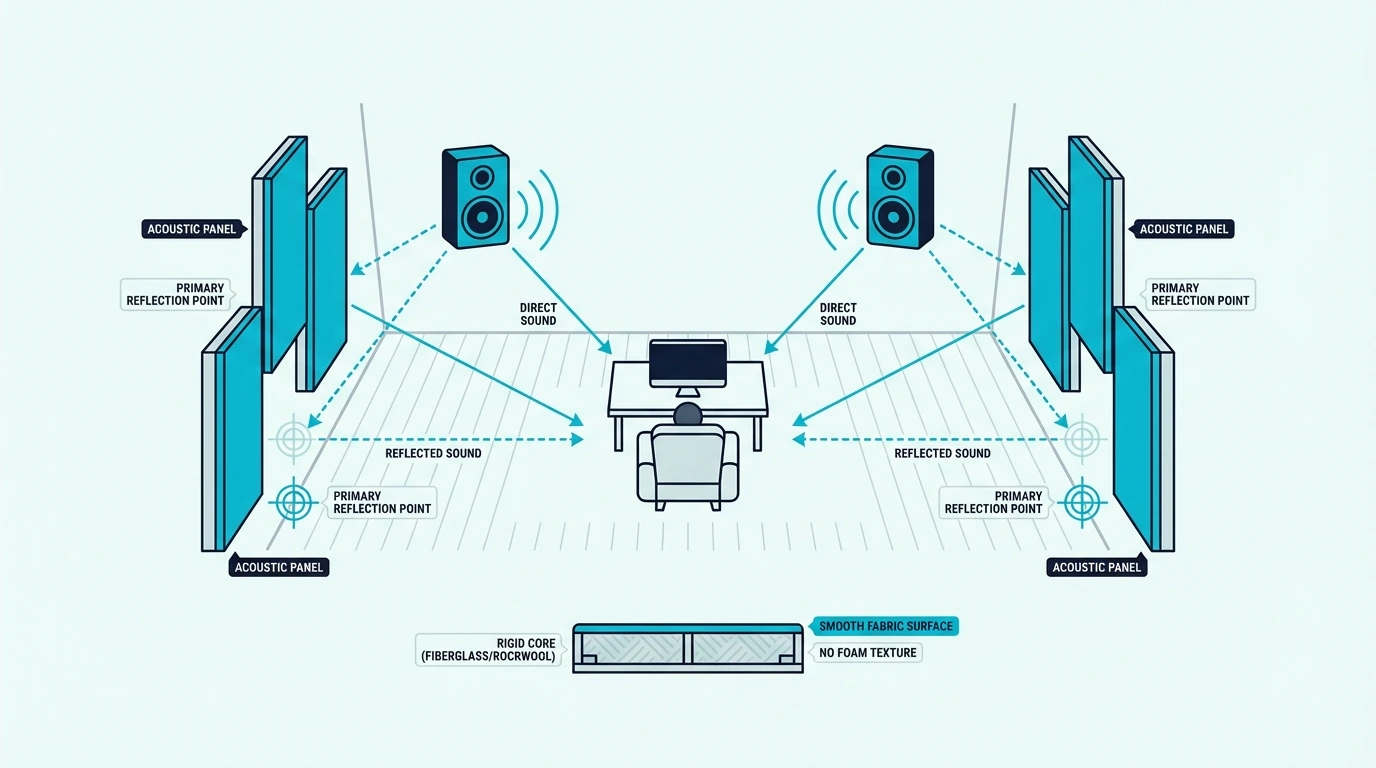
If the room is yours (or it’s a long-term setup), panels are usually the smarter move. Two use cases tip the scale toward permanent treatment.
Permanent Treatment
If the room will be used for recording, mixing, or critical listening long-term, panels are worth the investment. The superior performance compounds over every session.
Professional studios use panels rather than blankets. The consistency, appearance, and performance justify the higher upfront cost through years of daily use—the recording studio panels guide covers specific product picks for that setup.
The Rockboard 60 Mineral Wool Rigid Acoustic Insulation Board 2 Inch, 4 Pack shows what a premium panel core looks like when long-term acoustic performance matters more than portability.
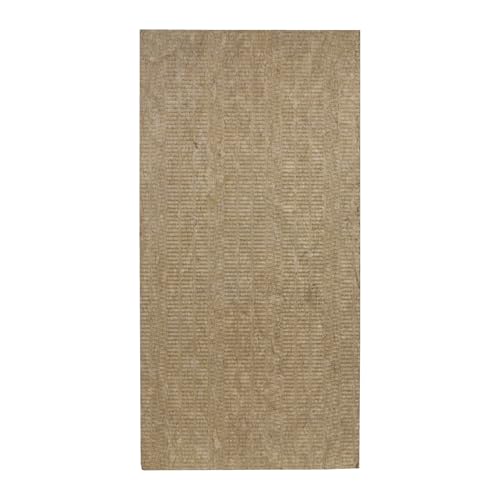
Rockboard 60 Mineral Wool Rigid Acoustic Insulation Board 2 Inch, 4 Pack
Professional Results
If audio quality is the priority — whether for commercial recording, content creation, or serious home theater — panels deliver results blankets cannot match. The frequency extension alone justifies the upgrade: blankets leave low-mids and bass almost untouched, while 2-inch panels absorb meaningfully down to 250 Hz.
In a mixing environment, that extra octave of absorption translates to tighter low-end in monitors, more accurate panning, and fewer EQ corrections in post. Home theater rooms benefit the same way — dialogue clarity improves when the 200–400 Hz range is controlled instead of ringing between hard walls.
The acoustic panel installation guide walks through mounting methods step by step, including adhesive, impaling clips, and French-cleat options for renters who want semi-permanent treatment.
How Do Blankets and Panels Compare Side by Side?
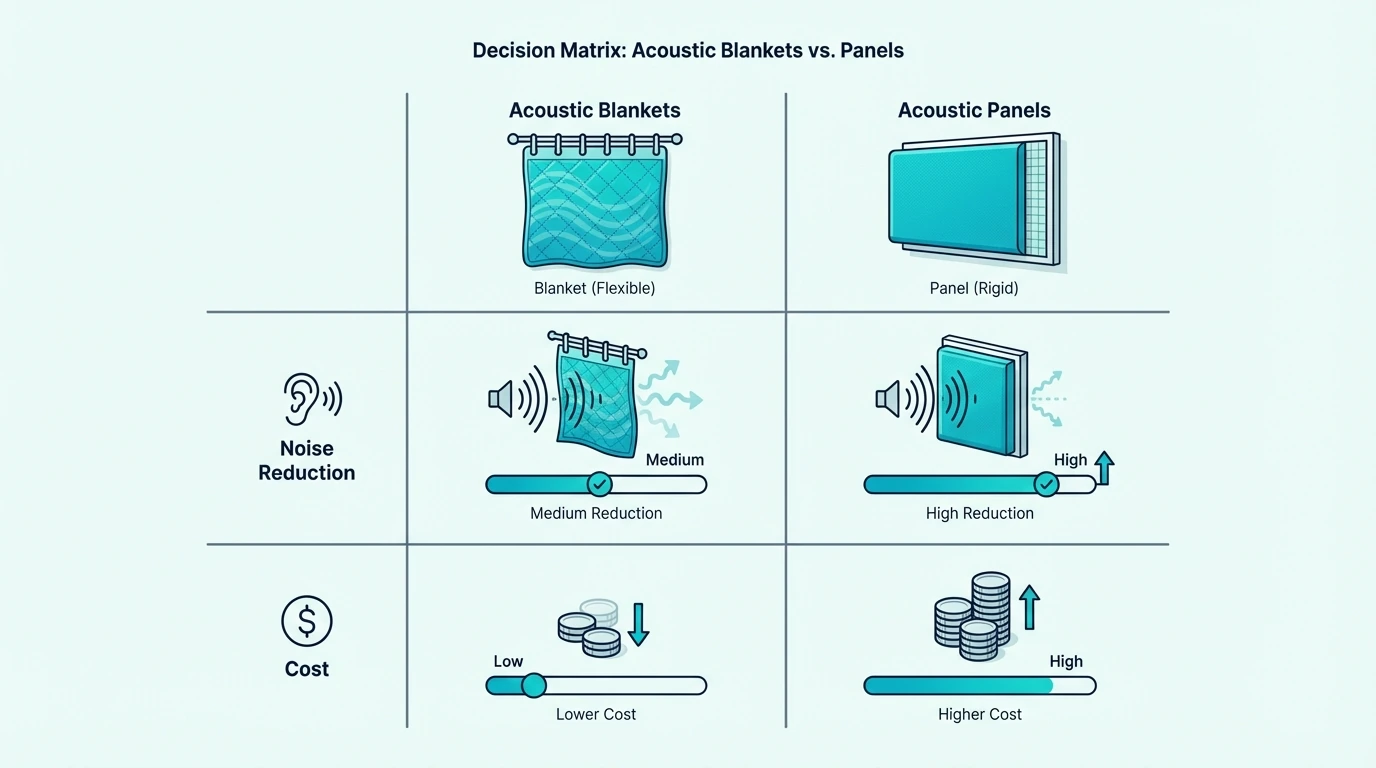
The table below puts the eight factors that matter most into a single view so you can weigh them against your own room, budget, and timeline.
| Factor | Acoustic Blankets | Acoustic Panels |
|---|---|---|
| Setup Type | Temporary/Portable | Permanent |
| Typical NRC | 0.40-0.60 | 0.85-1.0 |
| Frequency Range | 500Hz+ | 125-250Hz+ |
| Appearance | Industrial/Utilitarian | Professional/Decorative |
| Portability | Excellent | None |
| Cost per sqft | Lower | Higher |
| Lifespan | 3-5 years | 10+ years |
| Best For | Portable, temporary, budget | Permanent, professional, quality |
The rows where blankets win — portability and upfront cost — matter most when the space is temporary or shared. If you are renting a room month-to-month or recording at different locations every week, those two factors outweigh everything else in the table.
The rows where panels dominate — NRC, frequency range, appearance, and lifespan — stack up fast once the room is permanent. A 10-year lifespan at NRC 0.95 means you install once and forget about acoustic treatment for a decade, while blankets need replacing two or three times over the same period.
Appearance is the sleeper factor most people underestimate. Blankets draped on C-stands look fine off-camera, but they can kill the visual credibility of a YouTube studio or client-facing podcast room where the backdrop matters as much as the audio.
The Bottom Line on Acoustic Blankets vs Panels
Neither option is universally “better”—acoustic blankets vs panels is a portability-vs-performance trade-off that depends on your room situation.
Choose blankets if you need portable treatment, you’re in a rental without mounting permission, you have severe budget constraints, or you only record occasionally in a non-dedicated space.
Choose panels if you’re treating a permanent space, appearance matters, you need professional-grade absorption, or you’re investing in a room you’ll use regularly for years.
For most home studios and content creators with dedicated spaces, panels are the better long-term investment. The performance gap is real, and the professional appearance integrates into your room rather than looking like a construction site.
The acoustic panels placement guide shows how to prioritize first reflection points for the biggest return. The best acoustic panels guide covers specific product recommendations across different budgets.
Frequently Asked Questions
Do Acoustic Blankets Actually Soundproof?
No—acoustic blankets and panels mainly reduce echo and reverb inside the room, not the sound that leaks out.
Real isolation requires mass, decoupling, and sealing — absorption alone won’t block sound from traveling through walls, floors, or ceilings.
Can Moving Blankets Work for Recording?
Yes, but with clear limitations. Moving blankets provide real absorption—better than bare walls—but they’re designed for furniture protection, not acoustic performance.
The quilted construction absorbs high frequencies reasonably well. Voice recording over moving blankets produces cleaner results than recording against hard walls, though bass and low-mid frequencies pass through almost untouched.
They also look distinctly unprofessional on camera, which can matter as much as the acoustics for video podcasts and streaming.
Which Lasts Longer?
Panels win decisively on longevity. Quality acoustic panels maintain performance for 10-15 years or longer because the rigid frame prevents sagging and the core doesn’t compress.
Blankets wear out faster through repeated hanging, folding, and transport. Expect 3-5 years of regular use before replacement becomes necessary.
The lifespan difference affects total cost of ownership—panels cost more upfront but may be cheaper over a decade when blanket replacements are factored in. The panel hanging guide covers mounting methods that preserve panel longevity.