Owens Corning Vs Knauf For Acoustic Treatment (Honest Comparison)
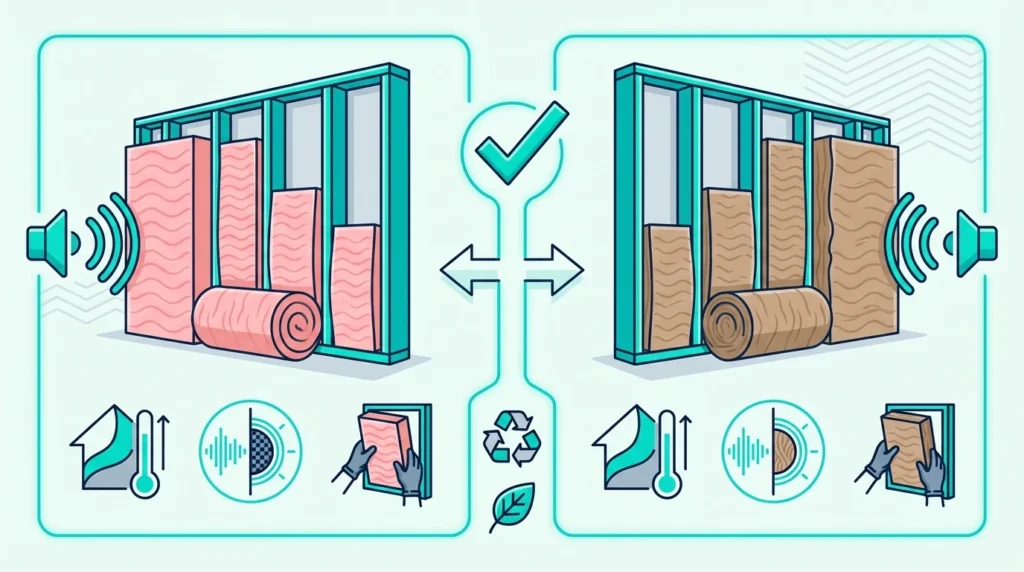
Acoustic treatment Owens Corning vs Knauf is a comparison that comes up whenever builders start sourcing rigid fiberglass for DIY panels, but the answer depends less on which brand is technically superior and more on which one you can actually find and afford in your region.
Both manufacturers produce rigid fiberglass insulation boards that work well for acoustic panels and bass traps. The acoustic performance differences between them are small — far smaller than the difference between either brand and cheap acoustic foam.
The problem is that choosing the wrong product — or settling for low-density foam because you could not find either brand locally — leaves reflections bouncing off your walls and muddying every recording and mix you produce in that room. Fiberglass density is what determines how much sound absorption a panel delivers, and both OC and Knauf offer the densities that actually solve room problems.
The real deciding factors are availability, density options, and price per board. Owens Corning dominates the US market with decades of documented acoustic use.
Knauf is the stronger option in Europe and parts of Asia, with a growing US presence.
Below you will find what each brand offers, how they compare on absorption, handling, and cost, and which to choose based on where you live. Start by checking local supplier stock — the best insulation board is the one you can get without paying excessive shipping.
Owens Corning 703 (3 lb per cubic foot) and Knauf Insulation Board perform within 5-10% of each other on acoustic absorption tests. OC 703 is easier to source in the US with more documented acoustic data. Knauf boards are more widely available in Europe and use Ecose bio-based binder technology that reduces skin irritation during handling. Choose whichever is locally available at a reasonable price — both produce excellent acoustic panels.
Owens Corning For Acoustic Treatment
Owens Corning is the default recommendation in nearly every US-based DIY acoustic treatment guide. Their rigid fiberglass boards have been tested, measured, and documented by acousticians and home studio builders for decades.
OC 703 — The Standard Broadband Absorber
OC 703 is a rigid fiberglass board with a density of 3 lb per cubic foot. At 2 inches thick, it achieves an NRC (Noise Reduction Coefficient) of approximately 1.0 — meaning it absorbs virtually all sound energy that hits it across the mid and high frequency range.
That level of absorption is what separates proper acoustic treatment from decorative foam. A 2-inch foam panel typically achieves an NRC of 0.4-0.6, absorbing less than half the energy at the same thickness.
The 703 is the go-to product for wall panels at first reflection points, ceiling clouds, and general broadband absorption. It comes in standard 24 x 48 inch boards that fit common panel frame sizes without cutting.
The OC 703 6-pack is the most common purchase unit for home studio builders. Six boards produce six standard 2 x 4 foot panels — enough for first reflection points and a ceiling cloud in a small room.
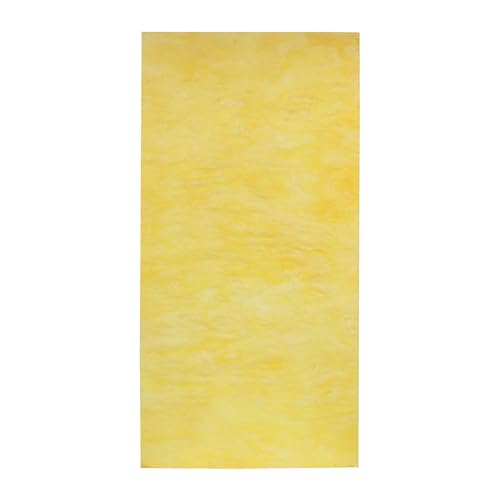
OC 703 6-pack
OC 705 — For Bass Traps
OC 705 is the denser variant at 6 lb per cubic foot. The higher density absorbs lower frequencies more effectively per inch of thickness, making it the better choice for corner bass traps.
A 4-inch OC 705 bass trap absorbs meaningfully down to 100 Hz. The same thickness of OC 703 starts losing effectiveness below approximately 200 Hz.
The tradeoff is cost — OC 705 boards are roughly 50% more expensive per board than OC 703. For most builds, the recommendation is OC 703 for wall panels and OC 705 for bass traps where low-frequency absorption matters most.
OC Availability And Pricing
OC 703 and 705 are available through insulation distributors, some building supply stores, and online retailers across the US. Pricing runs approximately 20-25 dollars per 24 x 48 inch board at 2 inches thick.
The main drawback is that OC boards are not stocked at standard hardware stores like Home Depot or Lowes. You typically need to order from a specialty insulation distributor or purchase online with shipping costs that can add significantly to the total.
For a detailed breakdown of fiberglass panel costs versus alternatives, the cost comparison guide covers every price tier.
Knauf For Acoustic Treatment
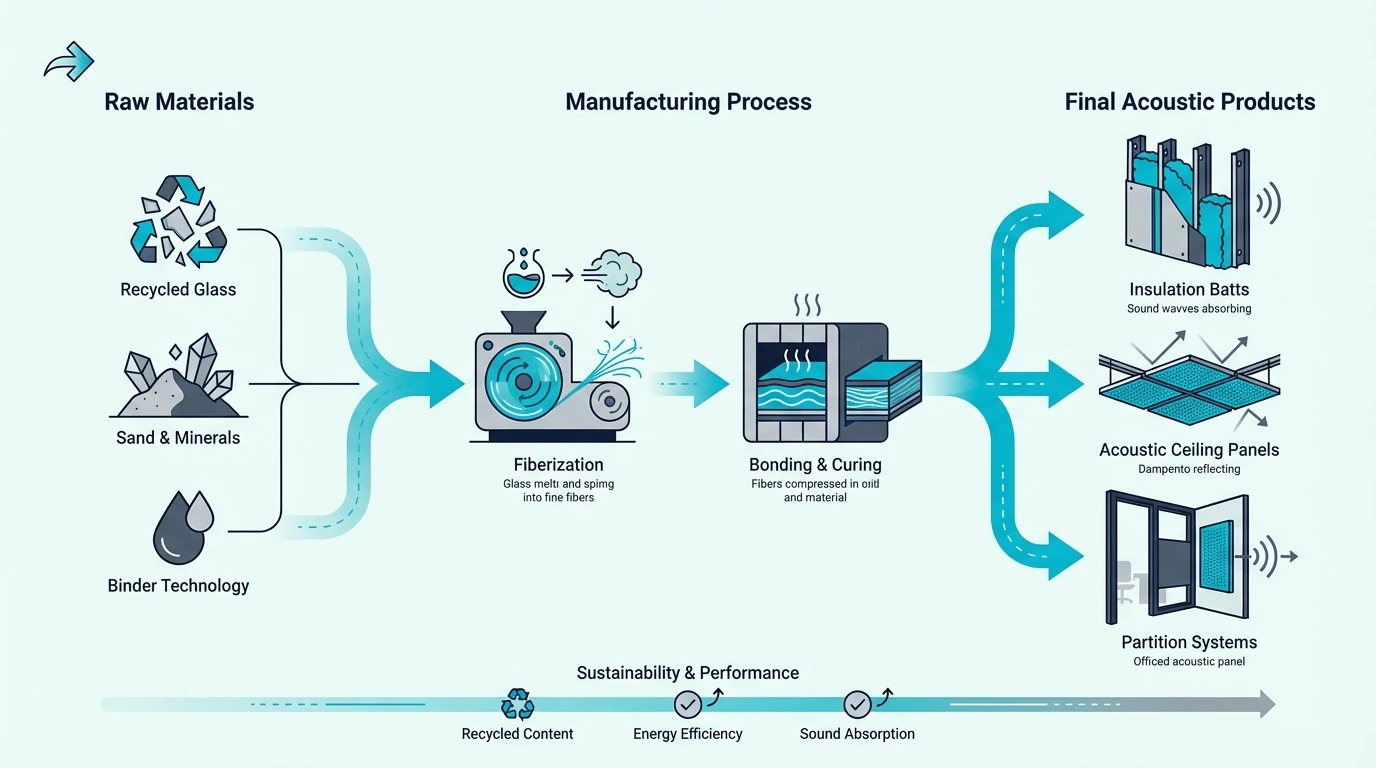
Knauf is one of the largest insulation manufacturers in the world, headquartered in Germany with operations across Europe, Asia, and a growing presence in the US. Their fiberglass insulation boards are widely used for acoustic treatment in European studios.
Knauf Insulation Board
Knauf produces rigid and semi-rigid fiberglass insulation boards in various densities. Their acoustical board products range from approximately 2.5 to 6 lb per cubic foot, overlapping with the OC 703 and 705 density range.
At equivalent densities, Knauf boards perform within 5-10% of Owens Corning products on standard absorption tests. The NRC values are comparable — a 2-inch Knauf board at 3 lb per cubic foot density absorbs essentially the same amount of sound as an OC 703 board of the same dimensions.
The product naming and specification system differs from Owens Corning. Where OC uses the simple 703/705 numbering, Knauf uses regional product names that vary by market.
This makes direct comparison slightly more confusing, but the underlying physics is the same — fiberglass at a given density absorbs a given amount of sound regardless of the brand name on the packaging.
Knauf Ecose Technology
Knauf’s distinguishing feature is their Ecose binder technology. Traditional fiberglass uses a formaldehyde-based binder to hold the glass fibers together.
Knauf Ecose uses a bio-based binder derived from rapidly renewable materials.
The practical benefit for panel builders is reduced skin irritation during handling. Ecose fiberglass is noticeably less itchy than traditional fiberglass when cutting and fitting boards.
You should still wear gloves and a dust mask, but the irritation is milder.
The Ecose binder also gives Knauf boards a distinctive brown color instead of the yellow or pink color of traditional fiberglass. This is purely cosmetic — the color has no effect on acoustic performance.
Knauf Availability And Pricing
In Europe, Knauf insulation boards are readily available at building supply stores and are often cheaper than importing Owens Corning products. In the US, Knauf availability varies significantly by region.
Some US building supply chains carry Knauf products, particularly in regions where Knauf has manufacturing facilities. In other areas, sourcing Knauf boards requires ordering online with shipping costs that may eliminate any price advantage.
Get Studio Tips Weekly
Join 5,000+ creators getting acoustic treatment advice every week.
No spam. Unsubscribe anytime.Head-To-Head Comparison
| Factor | Owens Corning (703/705) | Knauf Insulation Board |
|---|---|---|
| Density range | 3-6 lb per cubic foot | 2.5-6 lb per cubic foot |
| NRC at 2 in (3 lb density) | ~1.0 | ~0.95-1.0 |
| Binder technology | Formaldehyde-based | Ecose bio-based |
| Handling comfort | Standard fiberglass irritation | Reduced irritation (Ecose) |
| US availability | Widely available via distributors | Regional, growing |
| European availability | Limited, expensive to import | Widely available |
| Price (US) | 20-25 dollars per 2×4 ft board | 15-22 dollars where available |
| Acoustic documentation | Extensive (decades of testing) | Good but less widely cited |
| Board rigidity | Semi-rigid, holds shape well | Varies by product line |
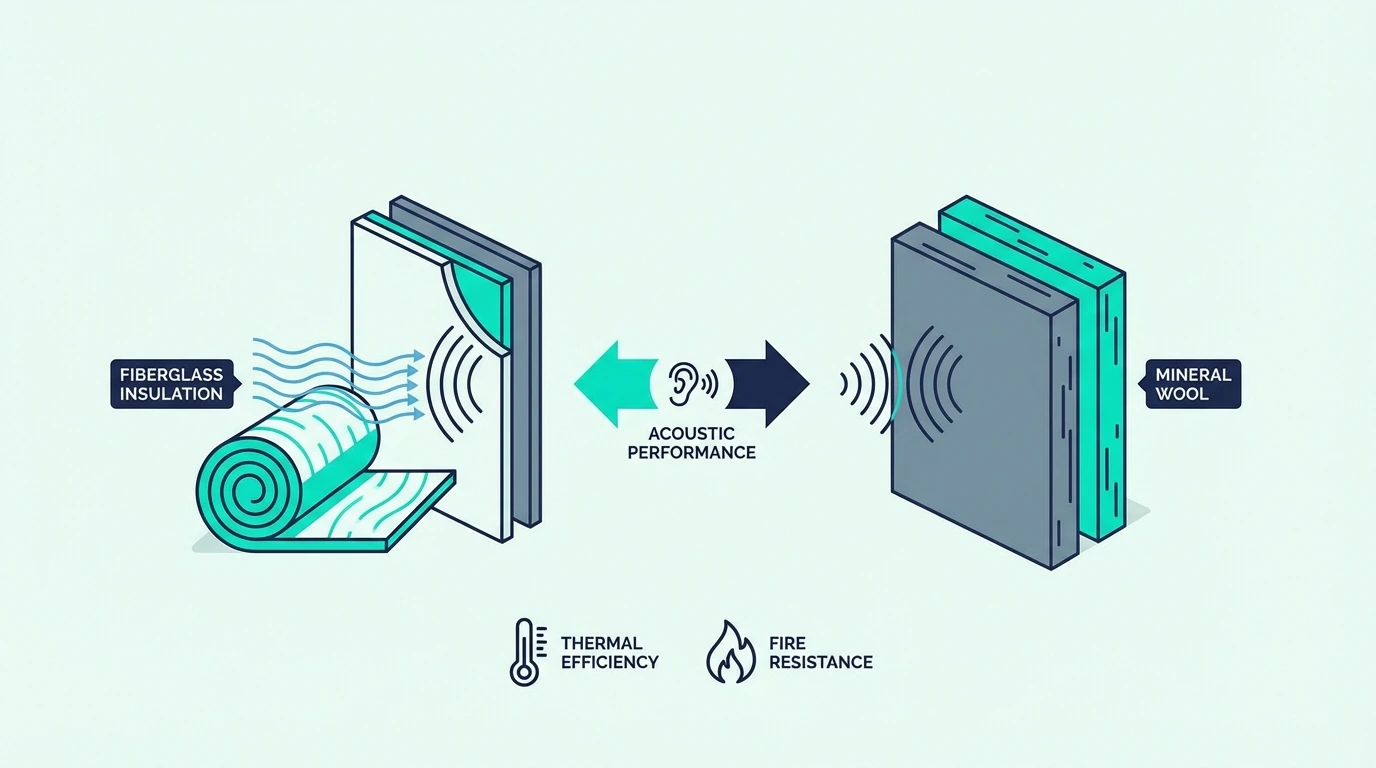
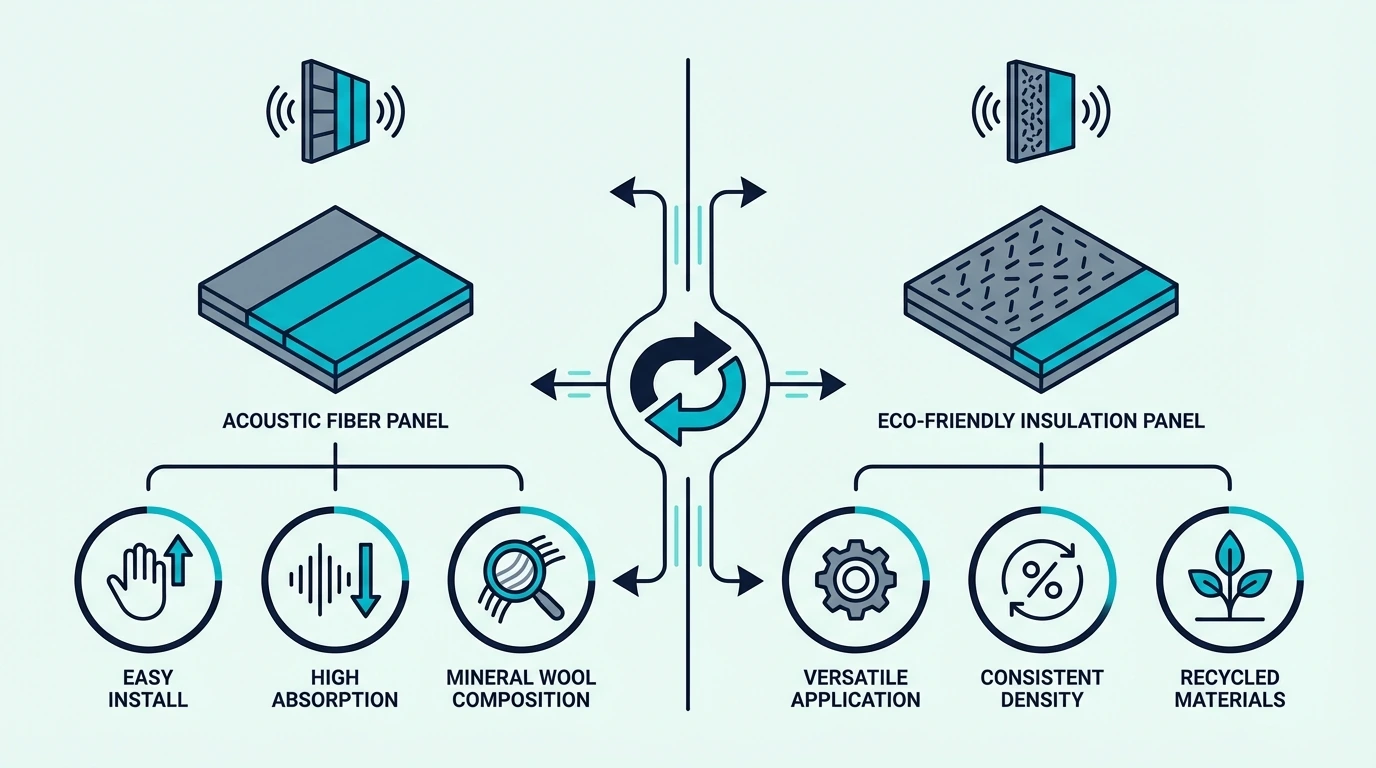
The absorption performance difference between the two brands at equivalent densities is negligible for practical purposes. A room treated with Knauf boards will sound indistinguishable from the same room treated with OC boards of the same density and thickness.
The meaningful differences are logistical. If you are building panels in the US, OC 703 is likely easier and cheaper to source.
If you are in Europe, Knauf boards are the obvious choice.
For builders who cannot source either brand locally, pre-built fiberglass panels skip the sourcing problem entirely. They arrive ready to hang and use the same fiberglass core material — you just pay a premium for the convenience of not building the panels yourself.
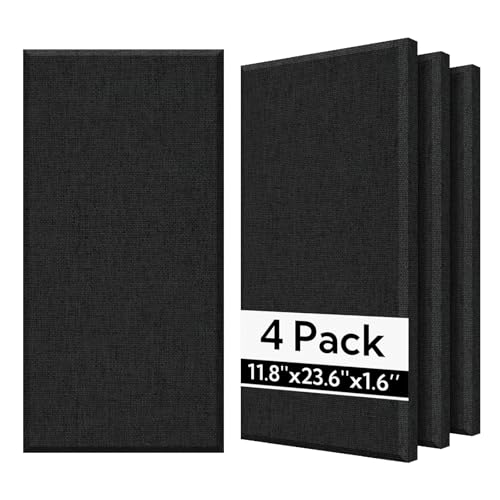
pre-built fiberglass panels
The Bottom Line
Owens Corning and Knauf both produce fiberglass insulation boards that make excellent acoustic panels. The absorption performance at equivalent densities is within 5-10% — a difference that is inaudible in any real-world listening environment.
Choose based on availability and price in your region. US builders should default to OC 703 for wall panels and OC 705 for bass traps.
European builders should use Knauf boards at equivalent densities.
The full guide to acoustic treatment covers panel placement priorities. The fiberglass treatment guide walks through the complete build process from raw boards to finished panels.
For cost planning, the cost guide compares DIY fiberglass panels against pre-built alternatives at every price point.
If you are deciding between fiberglass and Rockwool, both materials produce excellent results — the choice often comes down to local availability and personal handling preference, just like the OC vs Knauf decision.
Frequently Asked Questions
Is Knauf insulation good for soundproofing?
Knauf fiberglass boards work well for acoustic absorption panels that control reflections and reverb inside a room. They are not soundproofing products — no insulation board alone prevents sound from passing through walls.
For actual soundproofing, you need mass, decoupling, and airtight construction. The home theater guide explains the distinction between treatment and soundproofing in a practical context.
What is the best insulation for acoustic panels?
OC 703 (3 lb per cubic foot rigid fiberglass) is the most widely recommended product for wall panels. OC 705 or Rockwool AFB is better for bass traps due to higher density.
Knauf boards at equivalent densities perform nearly identically. Use whichever brand is locally available at a reasonable price.
Is OC 703 or 705 better?
OC 703 is better for general wall panels and ceiling clouds — it provides broadband absorption across the mid and high frequency range at a lower cost per board. OC 705 is better for bass traps where maximum low-frequency absorption per inch matters.
Most home studio builds use OC 703 for wall panels and OC 705 for corner bass traps. That combination covers the full frequency range efficiently.