Sound Absorption Vs Diffusion? (They Fix Different Problems)
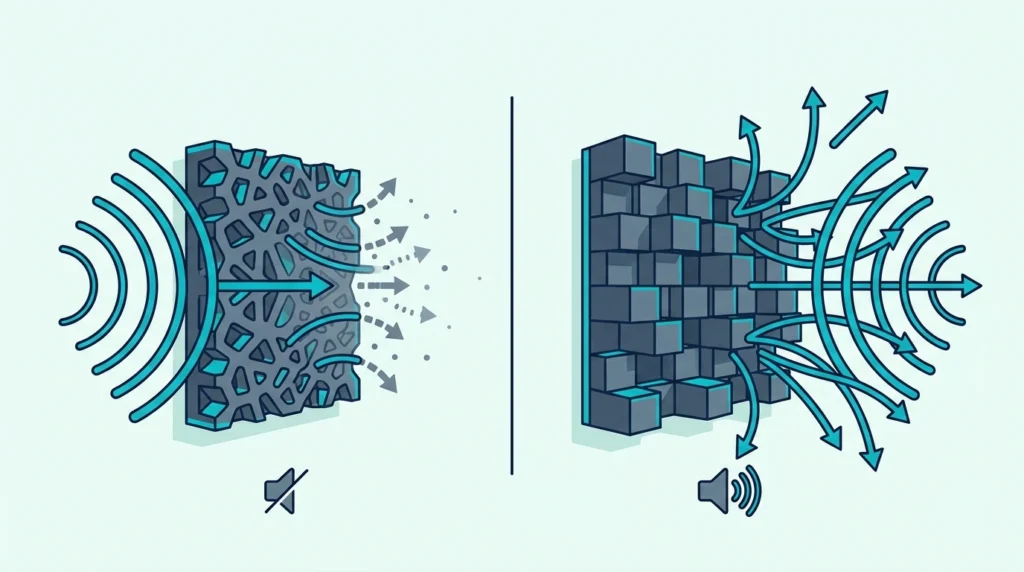
Sound absorption vs diffusion trips up nearly everyone who treats a room for the first time — because both are acoustic treatment, but they solve completely different problems.
You’ve covered your walls with panels and the echo is gone, but the room sounds dead and claustrophobic — that’s what happens when you absorb reflections that should have been scattered instead.
Matching the right treatment to the right wall means a room that sounds controlled and open at the same time — clarity without the lifeless compression that drives you out after thirty minutes.
You’ll start with understanding what each mechanism actually does to sound energy, then place each type where it belongs.
Absorption converts sound energy to heat, reducing reverb time and controlling specific reflections. Diffusion scatters reflections into smooth ambient energy without removing them. Most rooms need absorption at first reflection points and the front wall, diffusion on the rear wall — the live-end/dead-end layout that professional studios have used since the 1980s.
Sound Absorption Vs Diffusion — What’s The Difference?
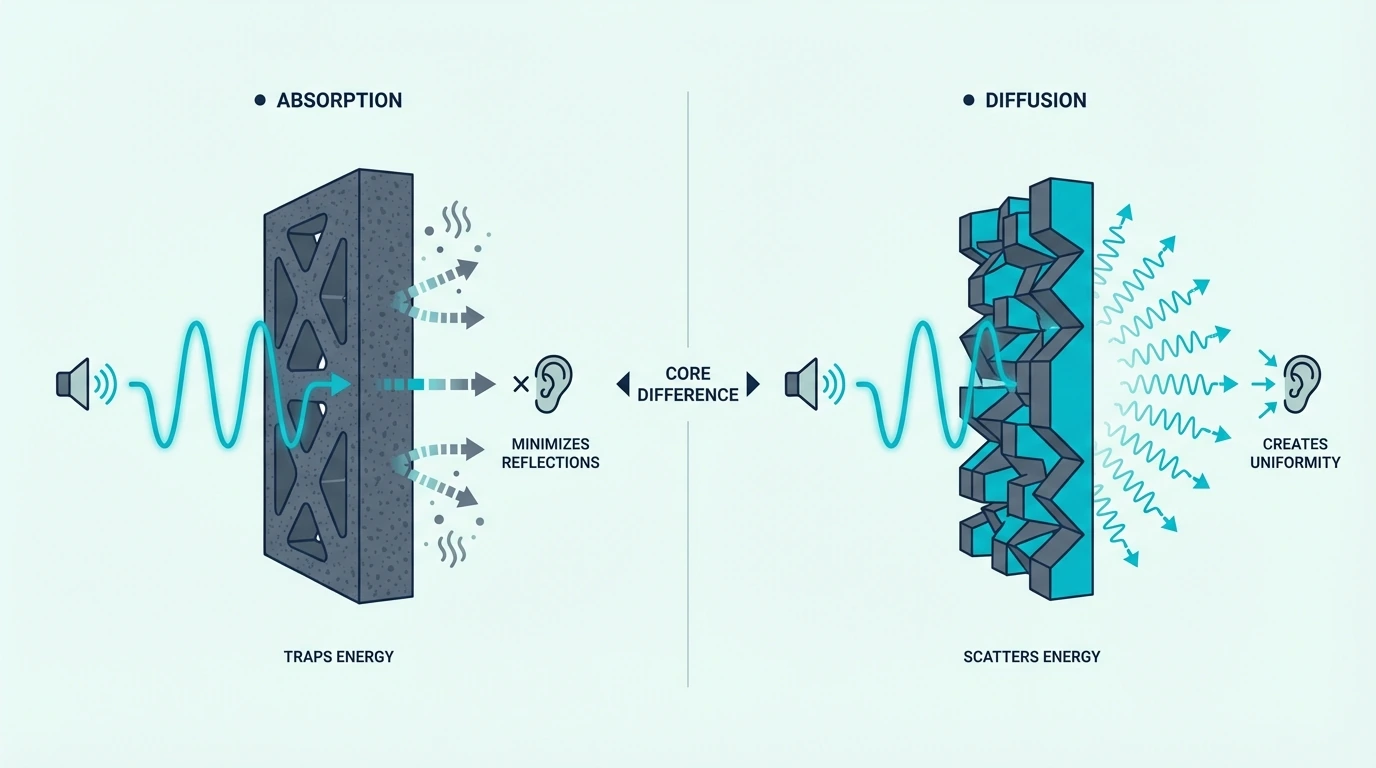
Both are acoustic treatment, but they solve fundamentally different problems. Confusing them leads to rooms that are either too dead or still problematic — and a lot of wasted money on the wrong panels.
Absorption targets specific reflections and removes them. The sound wave enters a porous material, bounces around inside the fibers, and converts to heat — gone from the room entirely.
Diffusion targets reflections and redirects them. The sound wave hits an uneven surface and scatters into dozens of smaller reflections that spread across the room evenly.
The energy stays — your brain still senses the room’s size and character — but without focused echoes or flutter.
Think of it this way: absorption is a sponge that soaks up water. Diffusion is a sprinkler head that takes one stream and fans it out in every direction.
Both control the water, but one removes it and the other redistributes it. For a product-level comparison, our diffuser vs absorber guide covers the specific panels and when each earns its spot.
How Does Sound Absorption Work?
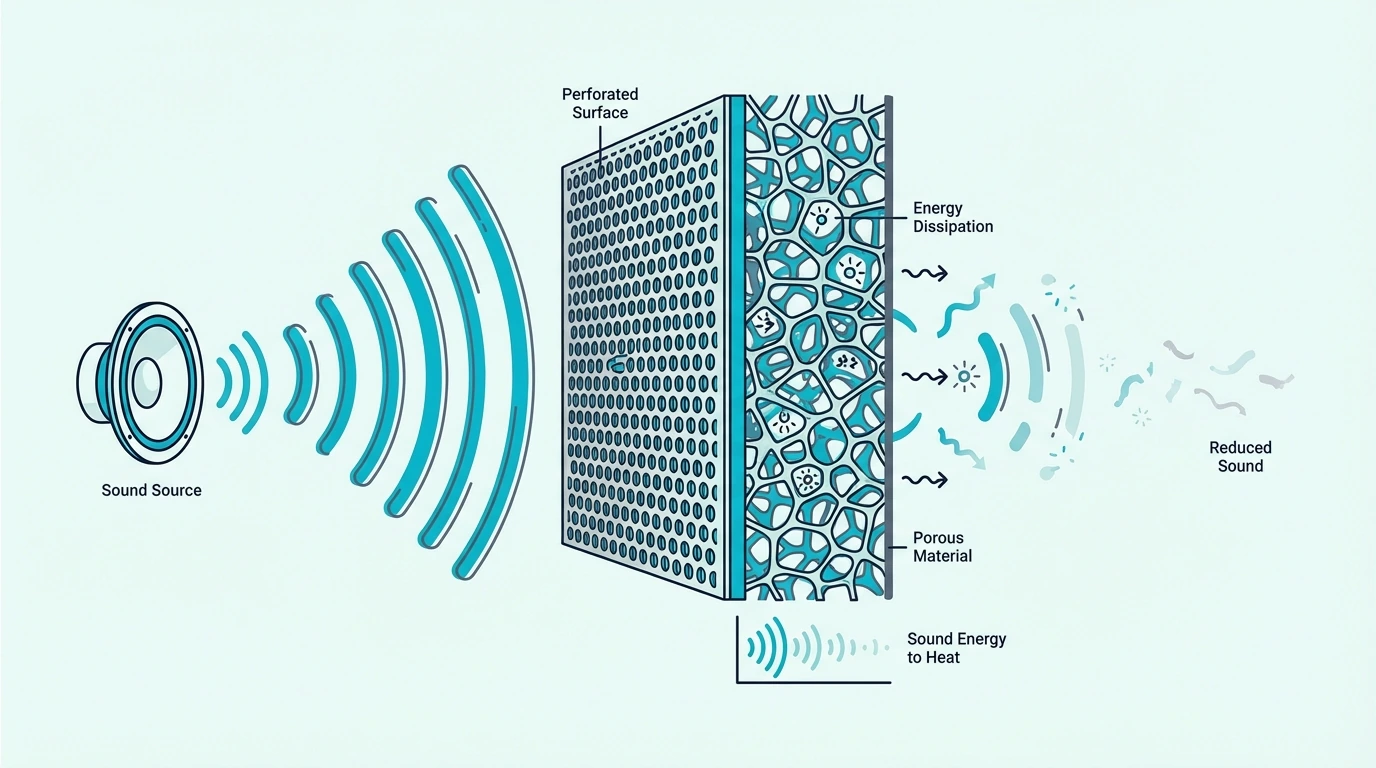
Sound waves carry kinetic energy. When they hit a hard, flat surface like drywall, nearly all that energy bounces back.
Absorption materials interrupt that bounce by trapping the wave inside a fibrous or porous structure.
Porous Materials And The NRC Scale
Fiberglass and mineral wool are the industry standards because their dense fiber networks create millions of tiny air channels. Sound enters, bounces between fibers, and loses energy as friction converts it to heat.
The NRC (Noise Reduction Coefficient) measures how much sound a material absorbs on a 0-to-1 scale. An NRC of 0.85 means 85% of the sound energy that hits the surface gets absorbed — only 15% reflects back.
Bare drywall scores about 0.05 NRC. Budget foam hits 0.30-0.50.
Quality fiberglass panels reach 0.95+, which is why studios use them instead of foam despite the higher cost.
Which Frequencies Does Absorption Target?
Material thickness determines which frequencies get absorbed. A 2-inch panel handles mid and high frequencies well but lets bass pass right through — the wavelengths are too long for the material to capture.
A 4-inch panel extends absorption down to roughly 250 Hz. Below that, you need bass traps — thick absorbers wedged into corners where low frequencies naturally build up.
The air gap trick helps without adding thickness. Mounting a 2-inch panel with a 2-inch gap behind it gives you the absorption of a 4-inch panel at a fraction of the weight.
The gap lets the panel interact with lower-frequency wavelengths that would otherwise pass through.
Get Studio Tips Weekly
Join 5,000+ creators getting acoustic treatment advice every week.
No spam. Unsubscribe anytime.How Does Sound Diffusion Work?
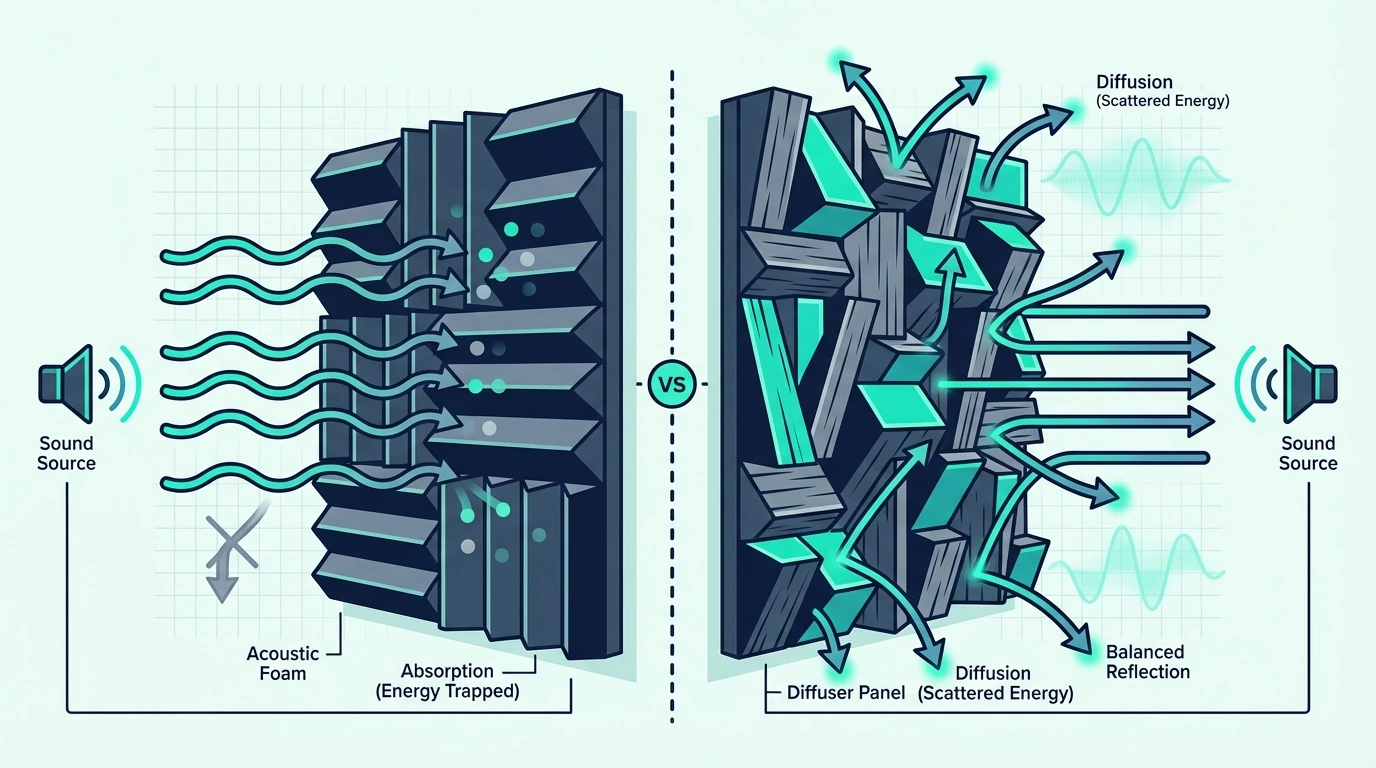
Where absorption converts energy to heat, diffusion relies purely on geometry. A rigid surface with varying depths or heights forces different parts of the same sound wave to reflect at different angles and times.
Surface Geometry And Scattering
A QRD (Quadratic Residue Diffuser) uses wells of mathematically calculated depths. Sound enters each well, reflects off the bottom, and exits at a slightly different time than the neighboring wells — creating a fan of scattered reflections instead of one focused beam.
Skyline diffusers use the same principle with blocks of varying heights instead of wells. The BXI Wood Sound Diffuser (2D Skyline) scatters in both horizontal and vertical planes — useful for ceilings and rear walls where reflections arrive from multiple directions.
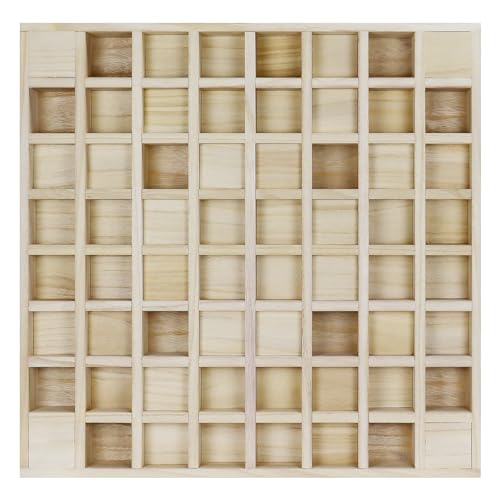
BXI Wood Sound Diffuser (2D Skyline)
Well depth determines the lowest frequency scattered. A 2.8-inch panel scatters from roughly 1 kHz up, covering the range where speech intelligibility and flutter echo live.
The Role Of Material Rigidity
Diffusers must be rigid — wood, hard plastic, or dense composites. If the surface flexes when sound hits it, the material absorbs energy instead of reflecting it cleanly.
This is why foam “diffusers” don’t work as actual diffusers. Foam is soft and porous — it absorbs sound rather than scattering it, regardless of what shape it’s molded into.
The BXI Wood Sound Diffuser (1D QRD) uses solid wood for exactly this reason — the rigid surface reflects cleanly while the calculated well depths handle the scattering math. For a full breakdown of which materials work for diffusion, that guide covers wood, plastic, and composite options.
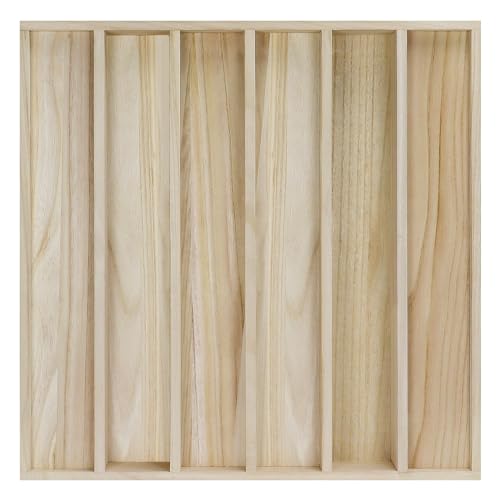
BXI Wood Sound Diffuser (1D QRD)
When Does A Room Need Absorption Vs Diffusion?
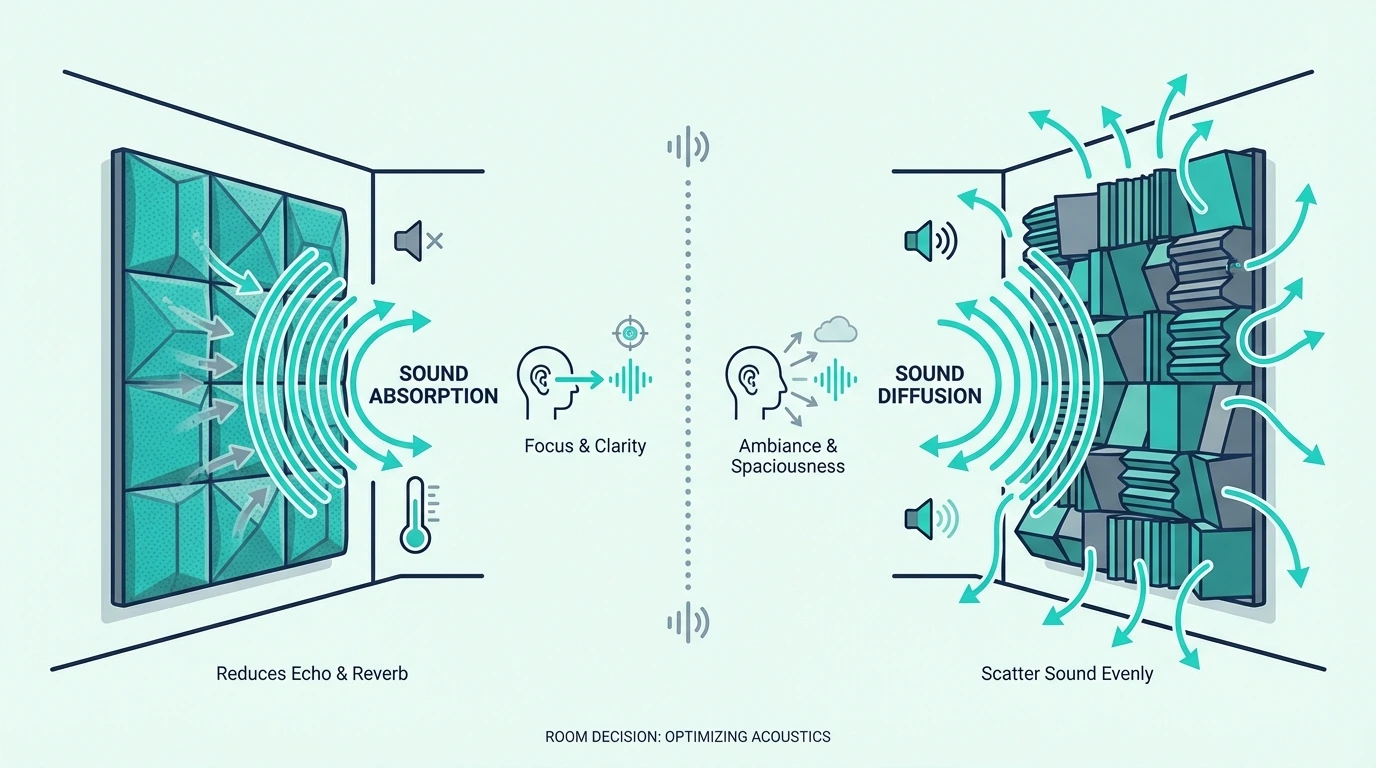
The decision depends on what you’re hearing and what you’re doing in the space. Each problem has a clear treatment — the skill is diagnosing which problem you actually have.
Use Absorption When
Recording booths and podcast rooms need maximum reflection control. Any reflection that reaches the microphone colors the recording — and unlike mixing, you can’t undo a bad recording with EQ later.
Rooms with severe echo problems — long reverb tails, muddy speech, or boomy bass — need absorption first. These are symptoms of too much uncontrolled energy bouncing around, and diffusion alone won’t solve them.
Bass buildup in corners is exclusively an absorption problem. Low frequencies pile up where walls meet, creating pressure zones that no diffuser can address.
Corner-mounted bass traps are the only fix.
Use Diffusion When
Mixing rooms and mastering suites need controlled reflections to preserve spatial cues. Engineers rely on hearing the room’s natural ambience to make mix decisions that translate to other playback systems.
Home theaters and listening rooms benefit from diffusion because immersion requires reflected energy. A completely absorbed theater sounds flat and small — scattered reflections make the space feel expansive and three-dimensional.
The Art3d Wood Slat Acoustic Panels work well in living spaces where aesthetics matter — the wood slat design scatters mid-high frequencies while looking like intentional decor rather than studio equipment.
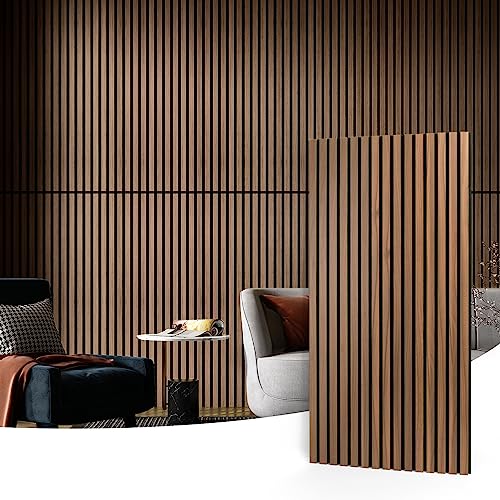
Art3d Wood Slat Acoustic Panels
Hybrid Approach
Most professional rooms use both treatments in specific zones. The live-end/dead-end (LEDE) layout puts heavy absorption at the front wall and first reflection points, then diffusion on the rear wall.
The front absorbs early reflections that would interfere with direct speaker output. The rear scatters late reflections into smooth ambience that keeps the room feeling alive.
A common starting ratio is 60% absorption, 30% diffusion, 10% untreated surfaces. Adjust based on what you hear — if the room feels dead, swap some absorbers for diffusers.
If it’s still echoey, add more absorption. Our diffuser placement guide covers exactly where each treatment type goes.
What Happens When You Over-Absorb A Room?
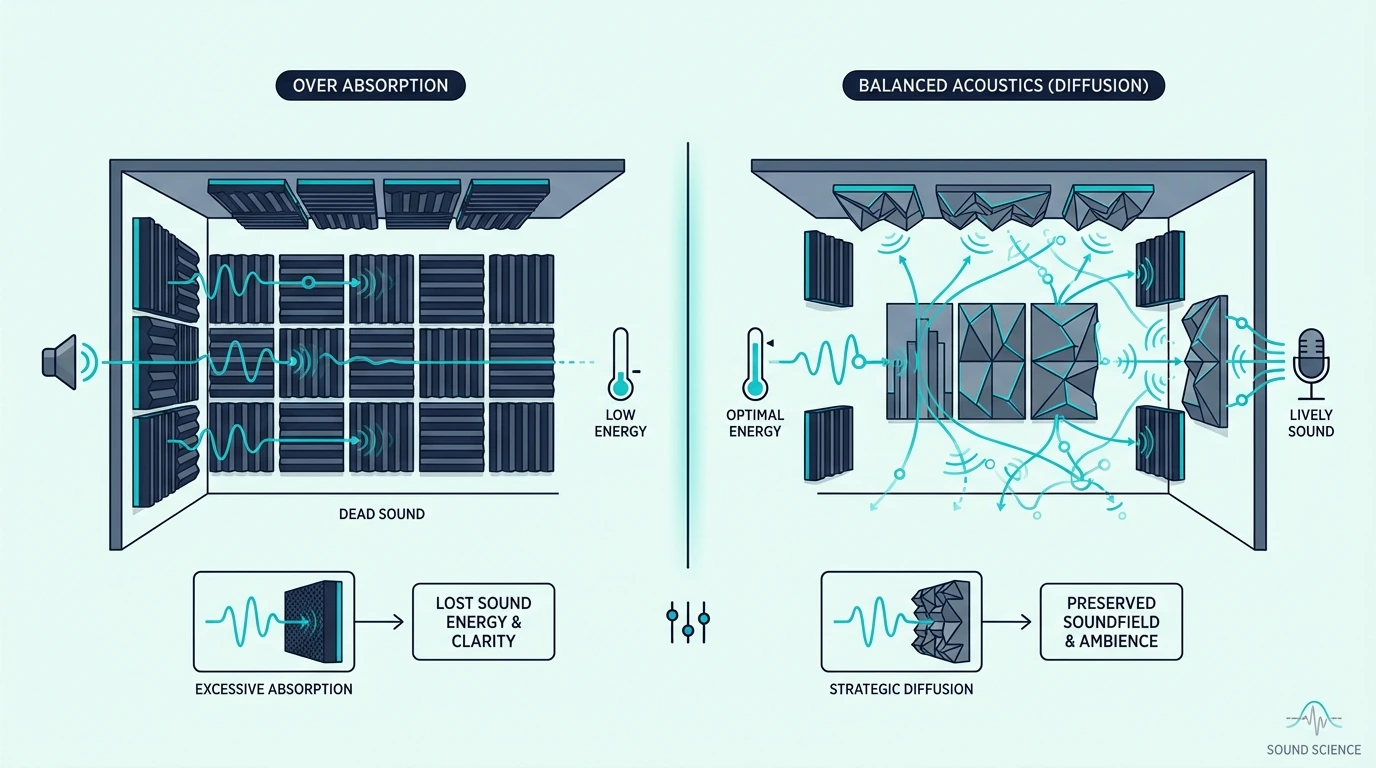
This is the strongest argument for understanding diffusion — because almost everyone who treats a room for the first time over-absorbs it. Absorption panels are cheaper, easier to find, and feel like they’re “doing something” immediately.
Symptoms Of Over-Absorption
The room sounds tight and claustrophobic — like wearing headphones in a closet. Listening for more than 30 minutes becomes fatiguing because your brain can’t detect spatial cues.
Mixes made in over-absorbed rooms consistently sound too bright when played elsewhere. The engineer compensates for the dead highs by boosting them, then the mix sounds harsh on every other system.
Clap your hands in the center of the room. If you hear almost nothing — no tail, no decay, just a flat thud — the room is over-absorbed.
Fixing An Over-Absorbed Room
The fix is straightforward: remove absorption panels from the rear wall and replace them with diffusers. This restores ambient energy without reintroducing the focused echoes you originally treated.
Start with one or two diffuser panels on the rear wall directly behind the listening position. If the room still feels too dead, remove side-wall absorption next and test with diffusion instead.
For the mounting details and hardware, that guide walks through hanging diffusers on drywall, concrete, and ceiling surfaces.
Preventing Over-Absorption
Plan both treatments from the start instead of covering every wall with absorption and fixing it later. Map your room into zones: dead end (front), live end (rear), first reflections (sides), and corners (bass traps).
This approach costs the same as blanket absorption but sounds dramatically better. For a complete room diffusion walkthrough, that guide covers the full treatment process from first panel to final tuning.
The Bottom Line
Absorption and diffusion solve different problems — removal vs redistribution. Most rooms need both, and the placement determines which one works where.
Absorb at first reflection points and the front wall to clean up early reflections. Diffuse the rear wall to preserve natural room energy without focused echoes.
Trap bass in the corners.
That LEDE layout covers the vast majority of studios, home theaters, and listening rooms. For the full picture on what diffusers actually do at a physics level, that guide covers the mechanics behind every design type.
Frequently Asked Questions
Is absorption or diffusion more important?
Neither dominates — they serve different functions. A recording booth needs almost pure absorption, while a mastering suite needs significant diffusion.
For most multipurpose rooms, start with absorption at first reflection points and add diffusion to the rear wall.
Can you have too much diffusion in a room?
Yes, particularly in small rooms. Diffusers need minimum clearance (2+ meters) to scatter properly.
In a room under 10×10 feet, scattered reflections arrive too close together and create comb filtering instead of smooth ambience.
What is the sound absorption coefficient?
The NRC (Noise Reduction Coefficient) rates a material’s absorption from 0 to 1.0 — where 1.0 means total absorption. Quality fiberglass panels score 0.90-0.95, budget foam scores 0.30-0.50, and bare drywall scores about 0.05.