Sound Diffuser Vs Sound Absorber? (Which One Your Room Actually Needs)
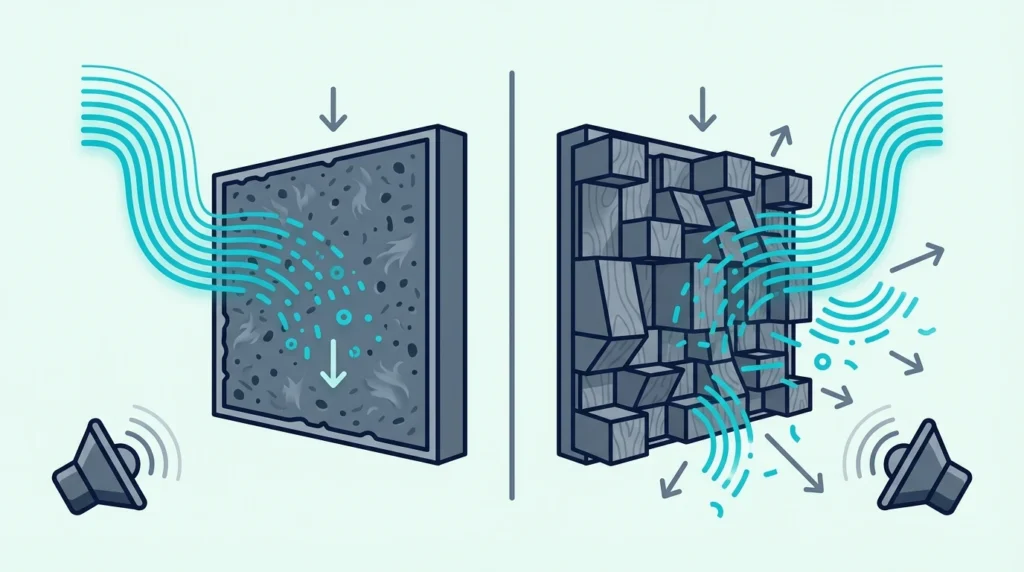
Sound diffuser vs sound absorber is the first decision you’ll face when treating a room — but only if you understand what each one does to sound energy. One removes it, the other redirects it, and picking wrong can leave your room sounding worse than when you started.
Most people default to absorption because foam panels are cheap and everywhere. The problem is that a room with too much absorption sounds dead — lifeless and claustrophobic, like recording inside a closet.
Below, you’ll see exactly when absorption is the right call, when diffusion solves the problem better, and how most professional studios use both in a specific layout that balances clarity with natural room energy.
Sound absorbers remove sound energy from a room (reducing echoes, reverb, and noise), while sound diffusers redirect it (scattering reflections to preserve liveliness without harsh echoes). Most rooms need both — absorption at first reflection points and the front wall, diffusion on the rear wall — following the live-end/dead-end layout used in professional studios.
Sound Diffuser Vs Sound Absorber — What’s The Difference?
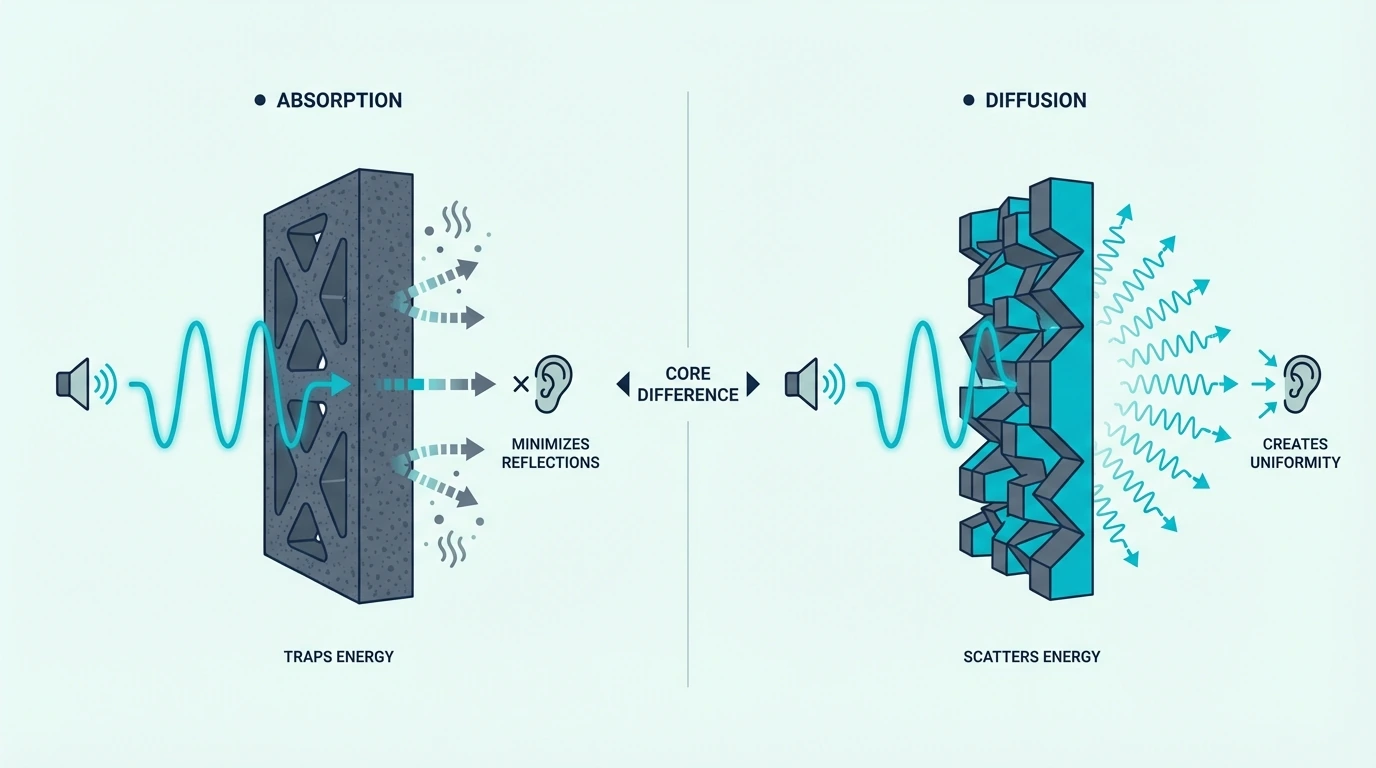
An absorber converts sound energy into heat. A diffuser bounces sound energy back into the room — just scattered across multiple directions and arrival times instead of a single focused reflection.
That single difference changes everything about how your room sounds. Absorption makes a room quieter and more controlled by removing reflections.
Diffusion keeps the room lively and spacious by breaking up reflections without eliminating them.
The mechanism and the result are completely different, though.
If you’re new to this topic, understanding what a sound diffuser does gives you the foundation for everything that follows.
What Is Sound Absorption?
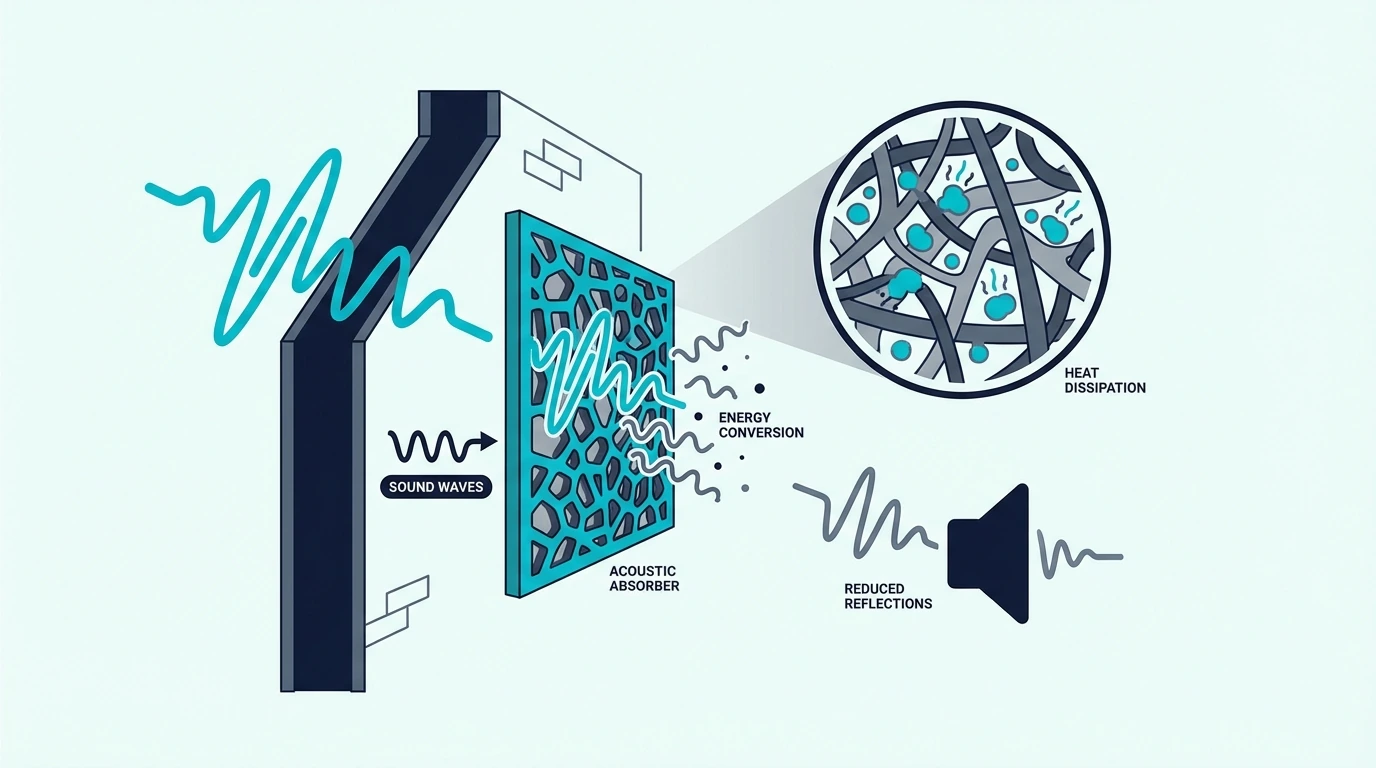
Sound absorption happens when sound waves enter a porous material and lose energy through friction. The air molecules vibrating inside fiberglass, mineral wool, or open-cell foam slow down as they push through the material’s fibers — and that kinetic energy converts to a tiny amount of heat.
The result is simple: less sound bouncing back into the room.
How Absorption Materials Work
Every absorption material has an NRC (Noise Reduction Coefficient) rating between 0 and 1. An NRC of 0.85 means the material absorbs 85% of the sound energy that hits it and reflects only 15%.
Fiberglass and mineral wool panels (2-4 inches thick) typically hit NRC ratings of 0.80-1.05. Professional-grade fiberglass panels hit NRC ratings near 1.0 — meaning they absorb virtually all sound energy that reaches them.
Acoustic foam wedges and pyramids land lower, around 0.40-0.70, because they’re thinner and less dense.
The thickness matters because it determines which frequencies get absorbed. A 2-inch panel absorbs mid and high frequencies well but lets bass pass through almost untouched.
A 4-inch panel reaches deeper into the low-mid range.
What Absorption Does To A Room
Absorption reduces reverb time — the duration sound lingers after the source stops. In an untreated bedroom, reverb time might be 0.8-1.2 seconds.
Add absorption panels at key spots and you can bring that down to 0.3-0.5 seconds.
The room sounds tighter, more controlled, and easier to work in. Dialogue is clearer, music sounds more defined, and the “echoey” quality disappears.
The tradeoff is liveliness. Over-absorb a room and it feels like the walls are pressing in on you — no sense of space, no natural ambience.
Recording vocals in a heavily absorbed booth sounds clean, but mixing in one makes your ears fatigue within an hour.
Get Studio Tips Weekly
Join 5,000+ creators getting acoustic treatment advice every week.
No spam. Unsubscribe anytime.What Is Sound Diffusion?
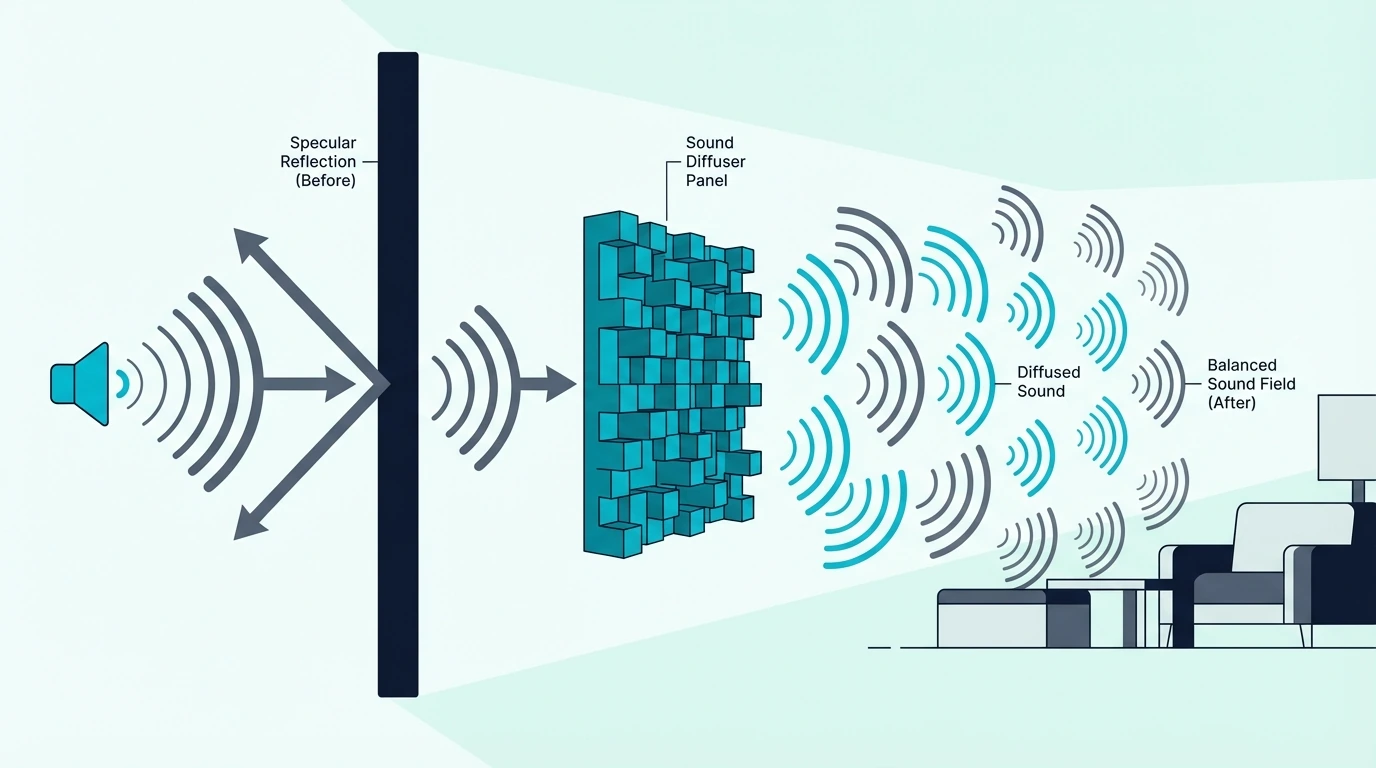
Sound diffusion happens when a reflection hits an uneven surface and scatters in multiple directions at different times. Instead of one strong reflection bouncing straight back at you, you get dozens of weaker reflections arriving from different angles over a spread of 15-20 milliseconds.
Your brain interprets those scattered reflections as natural ambience — the sense that you’re in a room with space around you.
How Diffusion Scatters Sound
A QRD (Quadratic Residue Diffuser) uses wells of mathematically calculated depths to create phase differences in the reflected sound. Each well depth corresponds to a specific wavelength — when the reflections emerge from the wells, they interfere constructively and destructively in a pattern that spreads the sound energy evenly across the hemisphere.
Skyline diffusers work on the same principle but in two dimensions. The varying block heights scatter sound both horizontally and vertically, making them effective for ceiling mounting where reflections come from all angles.
The BXI Wood Sound Diffuser (2D Skyline) uses this two-dimensional approach — solid wood blocks at varying heights that scatter rear-wall reflections evenly instead of bouncing them straight back at the listener.
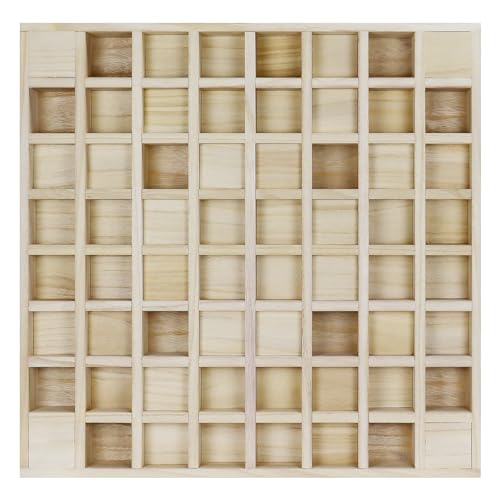
BXI Wood Sound Diffuser (2D Skyline)
What Diffusion Does To A Room
A diffused room sounds open and spacious without the harsh echoes of an untreated space. The reflections are still there — your brain still senses the room’s size and character — but they arrive scattered enough that no single reflection dominates.
This is why concert halls use diffusion extensively. The audience needs to feel immersed in the music, surrounded by natural reverb that enhances the performance.
Flat, absorptive walls would make a concert hall sound like a recording booth — technically clean but emotionally empty.
For a deeper look at the physics, sound absorption vs diffusion covers the acoustic principles in more detail.
When Should You Use Absorption, Diffusion, Or Both?
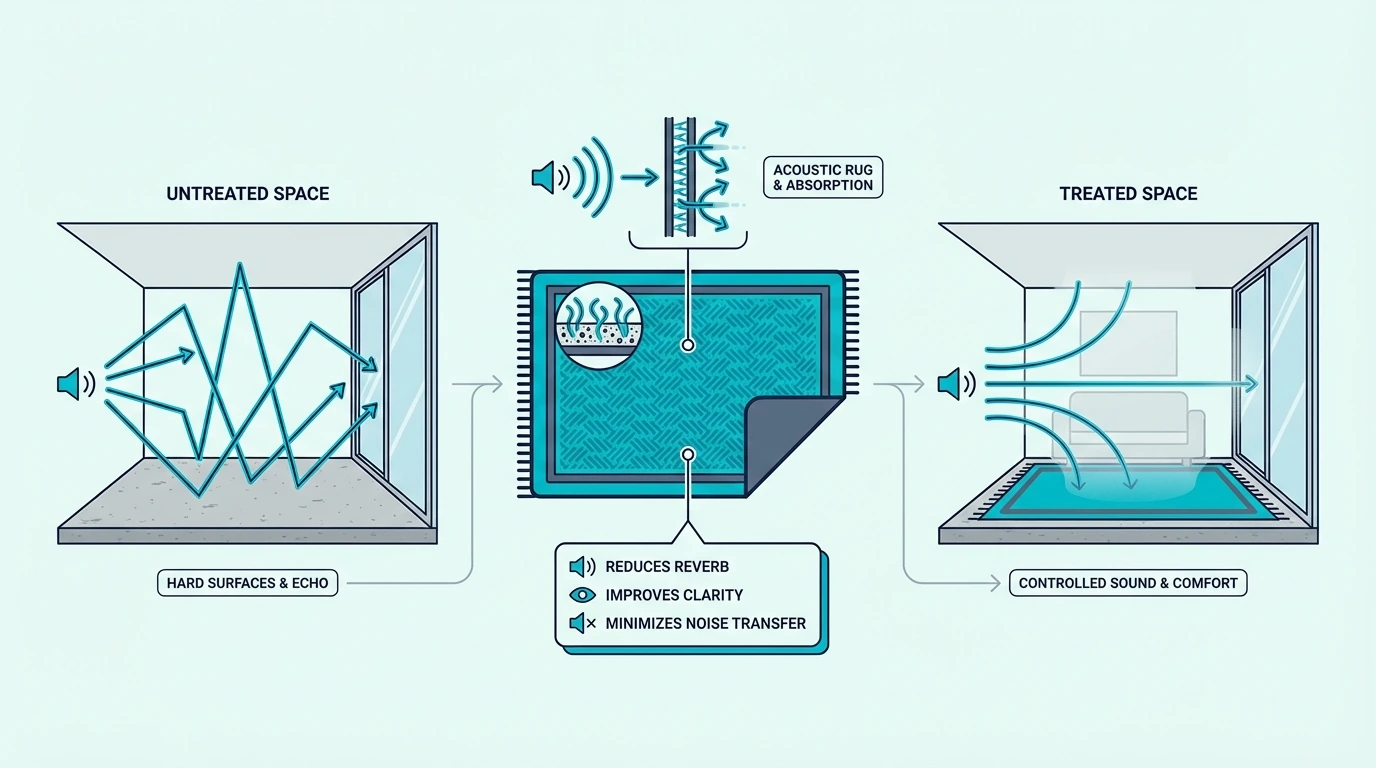
The right treatment depends on where the problem is and what you’re using the room for. The wrong choice isn’t just unhelpful — it actively makes things worse.
When To Use Absorption
Recording booths and vocal isolation rooms need absorption almost exclusively. The goal is to capture only the direct sound from the performer without room reflections coloring the recording.
First reflection points — the spots on your side walls where sound bounces once between speakers and ears — are absorption territory in mixing environments. A strong early reflection from a side wall creates comb filtering that smears your stereo image, and absorption eliminates it cleanly.
Small rooms under 100 square feet with low ceilings often need more absorption than diffusion. The distances are too short for scattered reflections to develop properly, so diffusion at close range creates a blurred, comb-filtered mess instead of smooth ambience.
Our small-room diffusion guide covers the distance thresholds.
When To Use Diffusion
Mixing rooms, mastering suites, and dedicated listening rooms benefit from diffusion on the rear wall. You want the space behind you to sound lively and open — not dead — so your ears have a natural reference point.
Home theaters and music listening rooms prioritize immersion over clinical precision. Absorbing every reflection strips the spatial cues that make surround sound feel three-dimensional.
Diffusion preserves those cues while preventing harsh echoes.
The EVA Acoustic Diffusers (4-Pack) offer a budget-friendly starting point — a lightweight waffle pattern that scatters high frequencies across your rear wall.
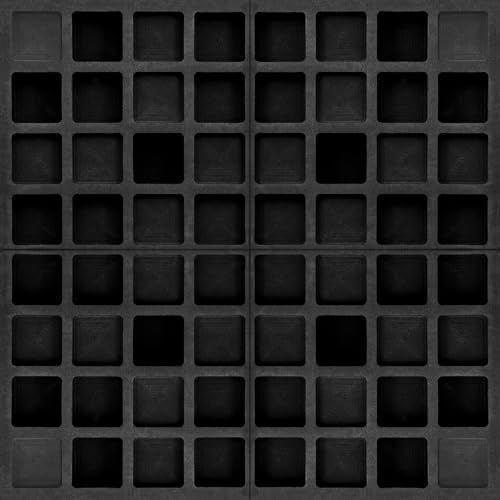
EVA Acoustic Diffusers (4-Pack)
When To Use Both
Most real-world rooms need both. The live-end/dead-end (LEDE) layout is the industry standard: absorption on the front wall and first reflection points (the “dead end” facing you), diffusion on the rear wall (the “live end” behind you).
This layout gives your brain two distinct signals. Clean, direct sound arrives from the front without interference from early reflections.
Scattered, diffuse energy arrives from behind, preserving the room’s natural sense of space.
If you’re building a home studio, start with absorption at the first reflection points and front wall, then add diffusion to the rear wall. That combination handles 80% of room problems.
For placement specifics, where to put sound diffusers walks through every position.
What Are The Best Placement Strategies For Absorption And Diffusion?
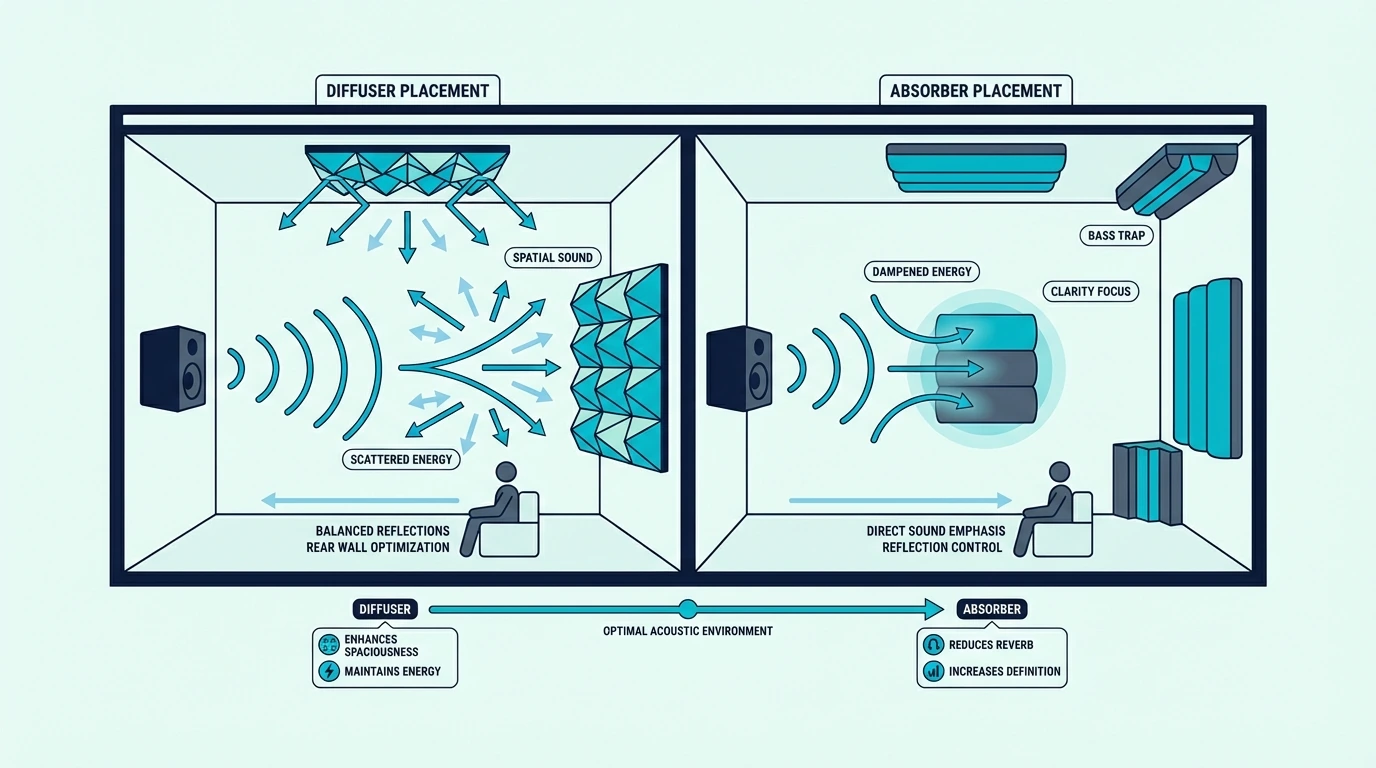
Knowing what each treatment does matters less than knowing where to put it. The same panel in the wrong spot either does nothing or creates new problems.
First Reflection Points
Use the mirror trick: sit at your listening position and have someone slide a mirror along the side wall at ear height. Where you see the speaker reflected is the first reflection point.
Absorption panels go here — typically 2-4 inch thick fiberglass or mineral wool. A 4-pack of fabric-wrapped panels covers both first reflection points plus the front wall.
Side wall reflections arrive within 5-15 milliseconds of the direct sound. That’s short enough to cause comb filtering (frequency cancellations) that shifts your stereo image.
Absorption eliminates the reflection entirely, giving you tighter imaging and more accurate panning.
Rear Wall Treatments
The rear wall is diffusion territory. Sound travels from your speakers to the back wall and returns as a delayed reflection — late enough to hear as a distinct echo but not late enough to blend into natural reverb.
Diffusers scatter that reflection into dozens of weaker arrivals spread over time. The Art3d Wood Slat Acoustic Panels handle this while doubling as wall art — the wood slat pattern blends into home studio and listening room decor.
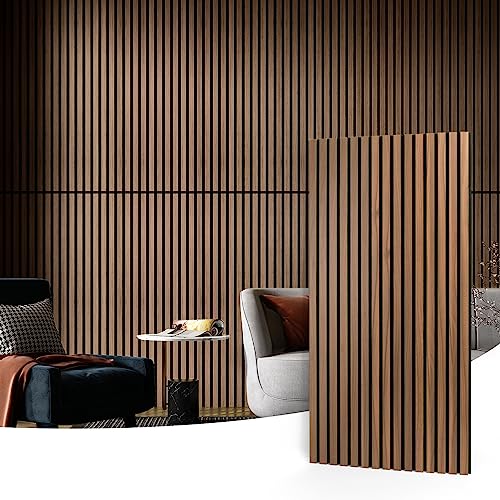
Art3d Wood Slat Acoustic Panels
Keep at least 2 meters between the diffuser and your listening position. Below that distance, the scattered reflections don’t have enough travel time to separate properly.
Ceiling Treatments
Ceiling choice depends on height. Rooms with ceilings above 9 feet can handle diffusion overhead — the distance gives scattered reflections enough room to develop.
Rooms with ceilings below 9 feet usually need absorption instead. The short floor-to-ceiling distance means flutter echo cycles rapidly, and diffusion at close range creates comb filtering rather than smooth scatter.
A 2-inch absorption panel above the listening position solves the flutter without killing the room’s openness. The BXI Wood Sound Diffuser (1D QRD) works overhead in rooms with 9+ foot ceilings — the scattered reflections have enough distance to separate before reaching your ears.
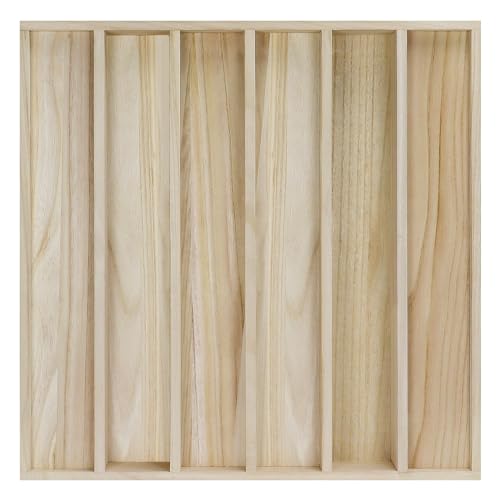
BXI Wood Sound Diffuser (1D QRD)
For a complete ceiling guide, see diffuser placement strategies.
The Bottom Line
Absorption removes sound energy, and diffusion redirects it. Most rooms need both — absorption up front to clean the direct sound path, diffusion behind you to keep the space alive.
Start with the LEDE layout: absorb at first reflection points and the front wall, diffuse on the rear wall. Add ceiling treatment based on height.
The biggest mistake is over-absorbing. If your room feels dead and claustrophobic, you’ve gone too far with absorption and need to swap some panels for diffusers.
If it still sounds echoey and harsh, you need more absorption at the reflection points or a diffuser with better scatter coverage on the rear wall.
For more on whether wood diffusers actually work, that guide covers the science behind material choice. And if you’re deciding between diffuser panels vs acoustic panels, that comparison breaks down the product categories.
If you want to build your own panels, our DIY wooden sound diffuser guide walks through the build process. For choosing between diffusion materials, that guide covers wood, plastic, and polystyrene options.
Once you know how many panels you need, how many diffusers you actually need gives you the calculation.
Frequently Asked Questions
What is the difference between sound diffusion and absorption?
Absorption removes sound energy from a room by converting it to heat inside porous materials like fiberglass or mineral wool. Diffusion keeps the energy in the room but scatters it across multiple directions and arrival times, turning a harsh single reflection into smooth ambient energy.
When to use sound diffusers?
Use diffusers on rear walls behind the listening position, in rooms where you want to preserve natural liveliness, and in spaces prioritizing immersion over clinical control. Mixing rooms, home theaters, and music listening rooms all benefit from diffusion.
Can you use both diffusers and absorbers together?
Yes — most professional studios use both in a live-end/dead-end layout. Absorption goes at first reflection points and the front wall to clean the direct sound path.
Diffusion goes on the rear wall to maintain spaciousness behind the listener.
Are sound diffusers worth it?
If your room sounds dead or claustrophobic after adding absorption, diffusers restore the liveliness you lost. They’re essential for any room where you listen critically — the scattered reflections give your brain spatial cues that flat absorption panels remove entirely.