Best 49 Key MIDI Controller — The Sweet Spot Between Portable and Playable
Best 49 key MIDI controller hits the range that most producers actually need, but the gap between a responsive 49-key board and a mushy one comes down to key action quality — and that detail won’t show up in a product photo.
The problem is caused by manufacturers cutting costs on key mechanisms to hit lower price points. Two 49-key controllers at the same price can feel completely different under your fingers, and the one with better velocity curves will make your performances sound noticeably more musical.
This list starts from the 49-key controllers currently available, narrowed to models known for consistent velocity response, reliable build quality, and genuine production value. Key feel matters across the full four-octave range, not just the middle octave where most reviews focus.
Below you will find our top picks sorted by feature set and price, followed by a guide on when 49 keys makes more sense than 25 or 61.
The best 49 key MIDI controller for most producers is the M-AUDIO Keystation 49 MK3 because it keeps the format simple: full-size keys, transport buttons, and a proven reliability record. If you want your 49-key board to double as a DAW control surface, the Novation Launchkey 49 MK4 and M-AUDIO Oxygen Pro 49 add pads, faders, and deeper software integration without changing key count. Budget buyers should start with the Nektar SE49, which keeps the full four-octave layout at the lowest price in this lineup.
Why 49 Keys Is The Production Sweet Spot
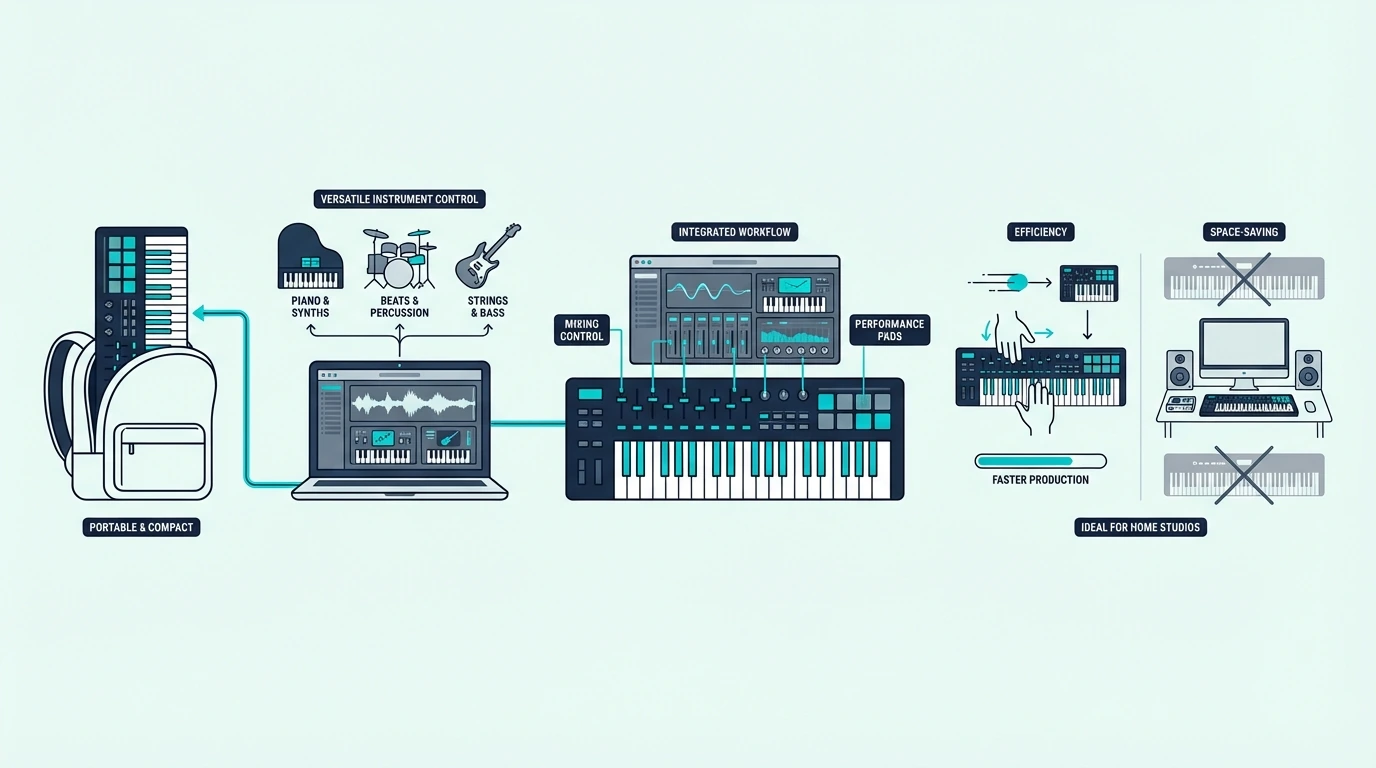
Forty-nine keys span four octaves — enough range for two-handed chord progressions, bass lines with the left hand and melodies with the right, and most piano parts without constant octave shifting. That coverage hits the practical needs of 90 percent of production workflows.
Two-Handed Playing Without Compromise
Twenty-five-key controllers force you into one-handed playing or constant octave button pressing. The moment you want to play a left-hand bass note while holding a right-hand chord, 25 keys runs out of room.
Forty-nine keys solve that problem cleanly. Four octaves give you enough spread to play most pop, electronic, and jazz voicings without reaching for the octave buttons. The result is faster recording sessions because you capture complete performances in a single take.
Novation’s own guide gives its 49-key Launchkey a starting range of C1 to C5, and our answer to is 49 keys enough for music production works through what that range covers.
Smaller Footprint Than 61 Or 88 Keys
A 49-key controller measures roughly 32 inches wide — it fits on a standard computer desk alongside a monitor and speakers. A 61-key controller adds almost a foot of width, and an 88-key controller stretches past four feet.
For bedroom producers and home studios where desk space is limited, 49 keys delivers the best ratio of playing range to physical footprint. You get serious two-handed capability without dominating your workspace.
If a 49-key board still won’t fit the desk, 37-key controllers that keep three octaves give up one octave to save space.
The Price-To-Capability Ratio
Forty-nine-key controllers sit in the most competitive price bracket — roughly eighty to one hundred fifty dollars for quality models. Below that range, you get 25-key mini controllers with less range. Above it, you pay for extra keys and premium features most producers use infrequently.
The controllers in this bracket include full-size keys (not mini), synth-action or semi-weighted action, and basic transport controls. That feature set covers production, recording, and practice without the premium pricing of larger formats.
| Product | Link |
|---|---|
Best Overall 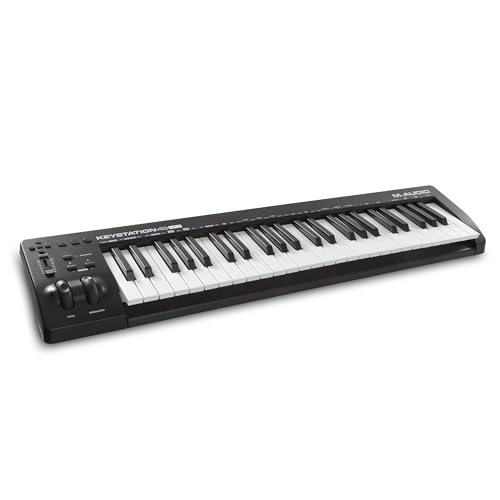 | See ratings |
Best Value 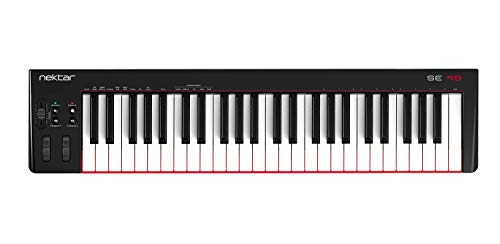 | See ratings |
Best for Pads 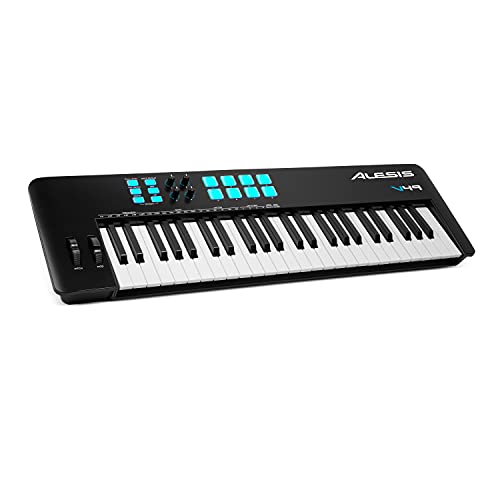 | See ratings |
Best Software Bundle 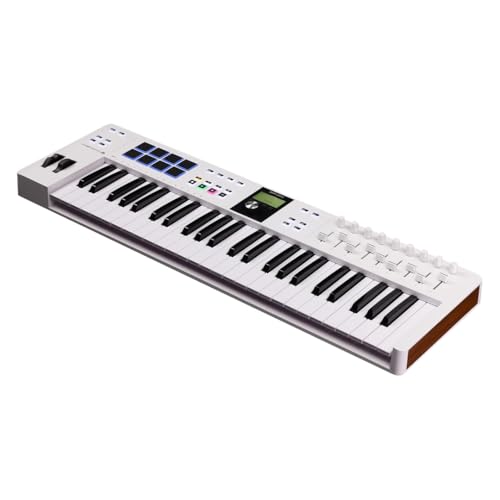 | See ratings |
Best for Advanced Control 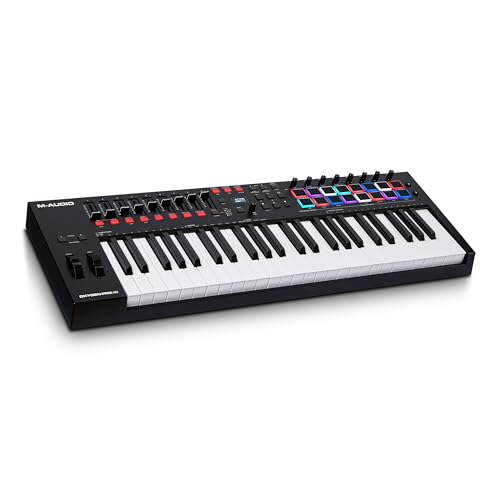 | See ratings |
Best Premium Pick 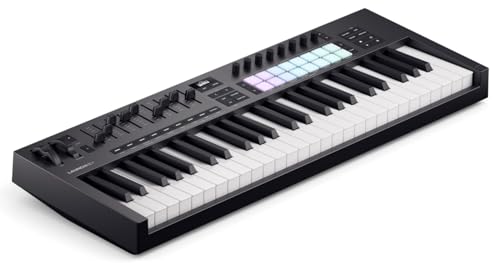 | See ratings |
What Are the Best 49 Key MIDI Controllers
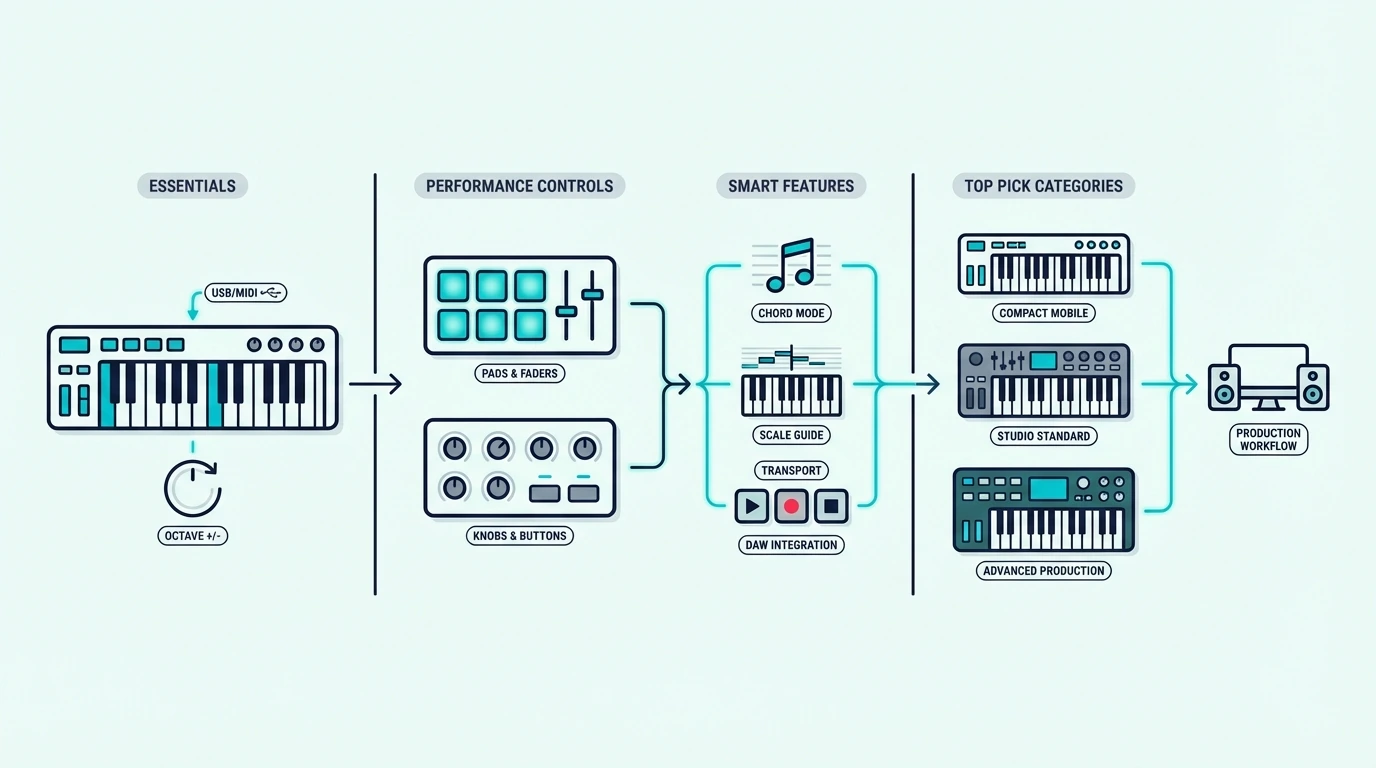
Here are 6 dedicated 49-key controllers sorted by workflow, from stripped-down keybeds to full production command centers.
The M-AUDIO Keystation 49 MK3 wins Best Overall because it nails the core 49-key job: responsive full-size keys, transport control that works across every major DAW, and a long track record. If you mostly need to play chords, bass lines, and melodies rather than manage an entire session from the keyboard, this is the safest buy in the category.
M-AUDIO Keystation 49 MK3
The Nektar SE49 earns Best Value because it gives you the full four-octave layout for less than almost every serious competitor. The chassis is light, the DAW integration is better than the price suggests, and the savings are meaningful if you just need a solid keyboard to get notes into your session.
Nektar SE49
The Alesis V49 MKII is the best 49-key option for producers who want pads and performance features without jumping into premium pricing. The eight pads handle beat entry, the four knobs cover quick plugin tweaks, and the extra onboard modes make it more flexible than barebones keybeds.
Alesis V49 MKII
The Arturia KeyLab Essential mk3 49 stands out for software-heavy producers. Between the bundled Analog Lab ecosystem, built-in creative modes, and ready-made DAW mappings, it feels less like a generic keyboard and more like a complete production starter system.
Arturia KeyLab Essential mk3 49
The M-AUDIO Oxygen Pro 49 is the best choice for producers who want their 49-key board to cover drums, mixer moves, and plugin automation in one place. It is more complex than a Keystation, but that complexity pays off if you actually use pads, faders, and performance tools every session.
M-AUDIO Oxygen Pro 49
And the Novation Launchkey 49 MK4 is the premium 49-key pick if you want one controller to run the whole session. It gives you a better keybed than most entry-level boards, plus a serious pad-and-fader section for clip launching, drum programming, and mixer work.
Novation Launchkey 49 MK4
What To Look For In A 49-Key Controller
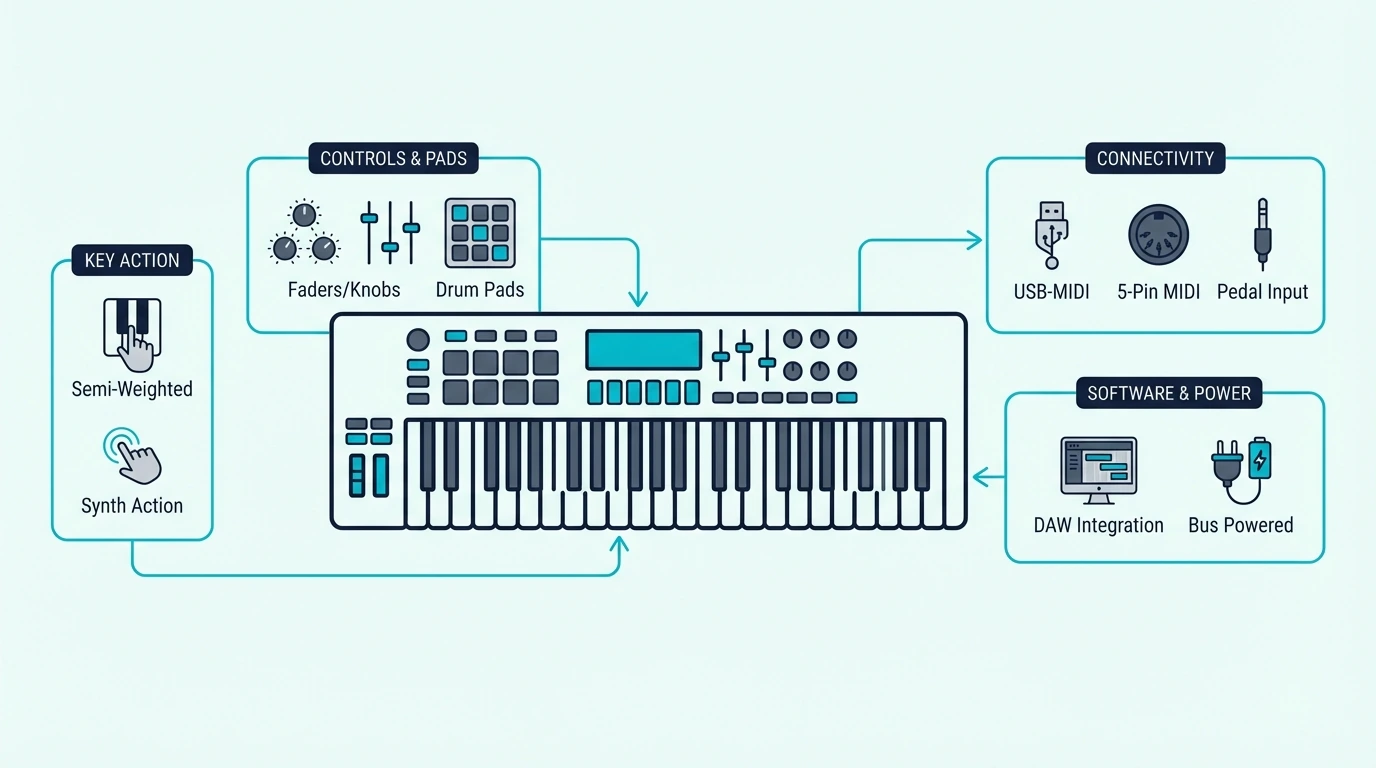
The picks above cover specific recommendations. This section explains the features that differentiate good 49-key controllers from mediocre ones.
Key Action Quality
Synth-action (unweighted) keys feel light and bouncy — ideal for fast synth leads, organ parts, and rapid-fire chord stabs. This is the standard action on controllers under two hundred dollars and suits most production work.
For organ, the key count matters as much as the action, since organ controllers such as Crumar’s DK61 span 61 notes from C to C, so a guide built around organ manuals sticks to 61-key boards.
Semi-weighted keys add spring resistance for a more substantial feel. Producers who play piano-style parts alongside electronic production prefer this middle ground because the keys push back enough to feel musical without the fatigue of fully weighted hammer action.
Transport Controls
Play, stop, record, and navigation buttons on the controller let you manage your DAW session without switching to keyboard shortcuts or clicking the mouse. The M-AUDIO Keystation series includes transport controls on every model. The Nektar SE49 skips them to hit a lower price point.
Transport controls matter more than most buyers realize. Over a four-hour session, reaching for the mouse to press play hundreds of times adds friction that dedicated buttons eliminate.
Pitch Bend And Mod Wheels
Every 49-key controller worth buying includes pitch bend and modulation wheels on the left side. Pitch bend adds guitar-style note bending to synth leads and brass patches. The mod wheel controls vibrato, filter sweeps, or any parameter you assign in your DAW.
Controllers that omit these wheels (rare at the 49-key size but common on mini controllers) sacrifice expression that makes MIDI performances sound musical rather than mechanical.
Bundled Software Value
The software bundle can add hundreds of dollars in value. M-AUDIO controllers include Ableton Live Lite and AIR plugin suites. Nektar controllers include DAW integration software. Akai controllers include MPC Beats.
For beginners who do not own a DAW yet, the bundled software determines whether you can make music on day one or need to spend additional money before hearing a single note.
USB Connectivity And Power
Every 49-key controller on this list connects and powers through a single USB cable. No external power supply, no audio interface required, no driver installation on modern operating systems.
That plug-and-play simplicity matters for producers who move between studio setups, take their controller to a friend’s studio, or switch between desktop and laptop. One cable handles everything, and the controller works identically on Mac and Windows without driver differences.
The Bottom Line
The M-AUDIO Keystation 49 MK3 is still the best 49-key controller for most producers because it gets the essentials right without wasting money on controls you may never touch. If your workflow depends on pads, faders, and deep DAW scripts, step up to the Novation Launchkey 49 MK4. Budget buyers should start with the Nektar SE49 and keep the full four-octave format intact.
If you regularly run out of range, step up to 61 keys. If you rarely use the top octave and care more about portability than two-handed playing, a smaller 25-key controller may make more sense.
Frequently Asked Questions
Is 49 keys enough for music production?
For most production workflows — beat making, synth programming, chord progressions, and melody recording — 49 keys covers everything comfortably. The four-octave range handles two-handed playing without constant octave shifting. Only classical pianists and orchestral composers regularly need more.
What is the difference between 49-key and 61-key controllers?
A 49-key controller spans four octaves while a 61-key spans five. The extra octave helps pianists who play wide voicings or need more range for orchestral parts. For general production, the difference is rarely noticeable since octave shift buttons give you access to the full MIDI range regardless of key count.
Should I get a 49-key controller or a 25-key with pads?
That depends on your primary workflow. If you play two-handed parts (chords, piano, keys), get 49 keys. If you make beats, trigger samples, and tweak knobs more than you play keys, a 25-key controller with pads covers more ground in less space.
Do I need weighted keys on a 49-key controller?
Only if you practice piano technique alongside production. Weighted keys simulate acoustic piano feel but add cost and weight. Synth-action keys on standard 49-key controllers feel responsive enough for production and are lighter for desk use.