Bose Soundbar vs TV Speaker: What’s Actually Different?
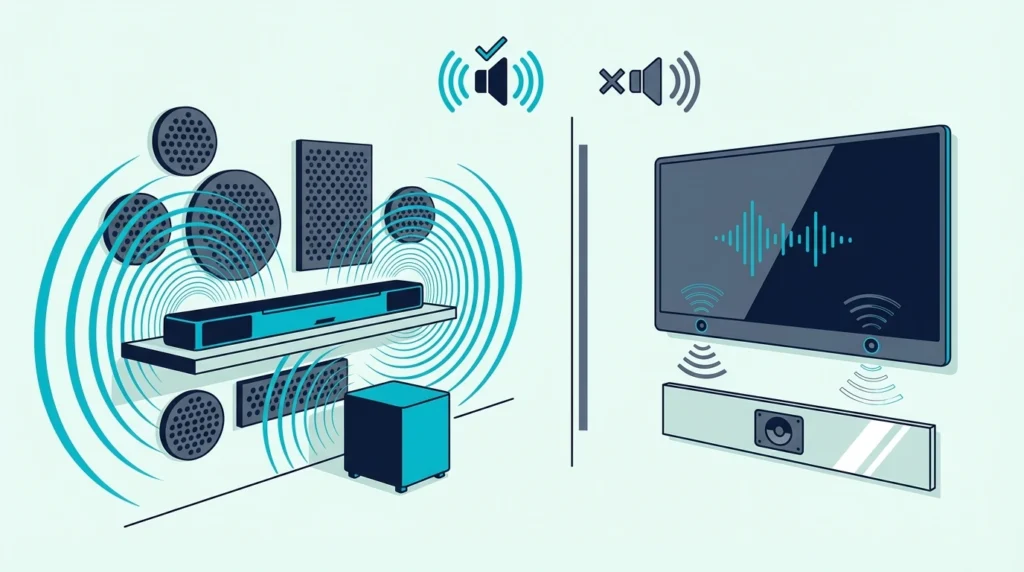
Difference between Bose soundbar and Bose TV Speaker models comes down to one tension many buyers miss — both wear the Bose name, but one is a simple dialogue upgrade and the other is the start of a smarter, more expandable system.
That is why people buy the wrong one. They assume the TV Speaker is just a cheaper Smart Soundbar, or they pay Smart Soundbar money for a bedroom TV that only needed clearer voices and easier everyday use.
Once you match the bar to what you actually watch, the decision gets much cleaner. You can avoid overspending, avoid outgrowing the setup, and pick the Bose option that fits your room and habits the first time.
Start with what the TV Speaker and Smart Soundbar line are each built to do. Next, look at where the gap shows up in daily use, what features disappear when you choose the TV Speaker, and which Bose option actually makes sense for your budget.
Choose the Bose TV Speaker if you want the simplest possible jump from weak TV speakers to clearer dialogue and better everyday sound.
Choose a Bose Smart Soundbar, usually the Smart Soundbar 600, if you want Dolby Atmos, WiFi music streaming, app control, and a real path to adding a subwoofer or rear speakers later. The TV Speaker fits small-room, speech-first viewing, while the Smart line fits buyers who want the bar to be the start of a system, not the whole system.
What Is the Difference Between the Bose TV Speaker and Bose Smart Soundbars?
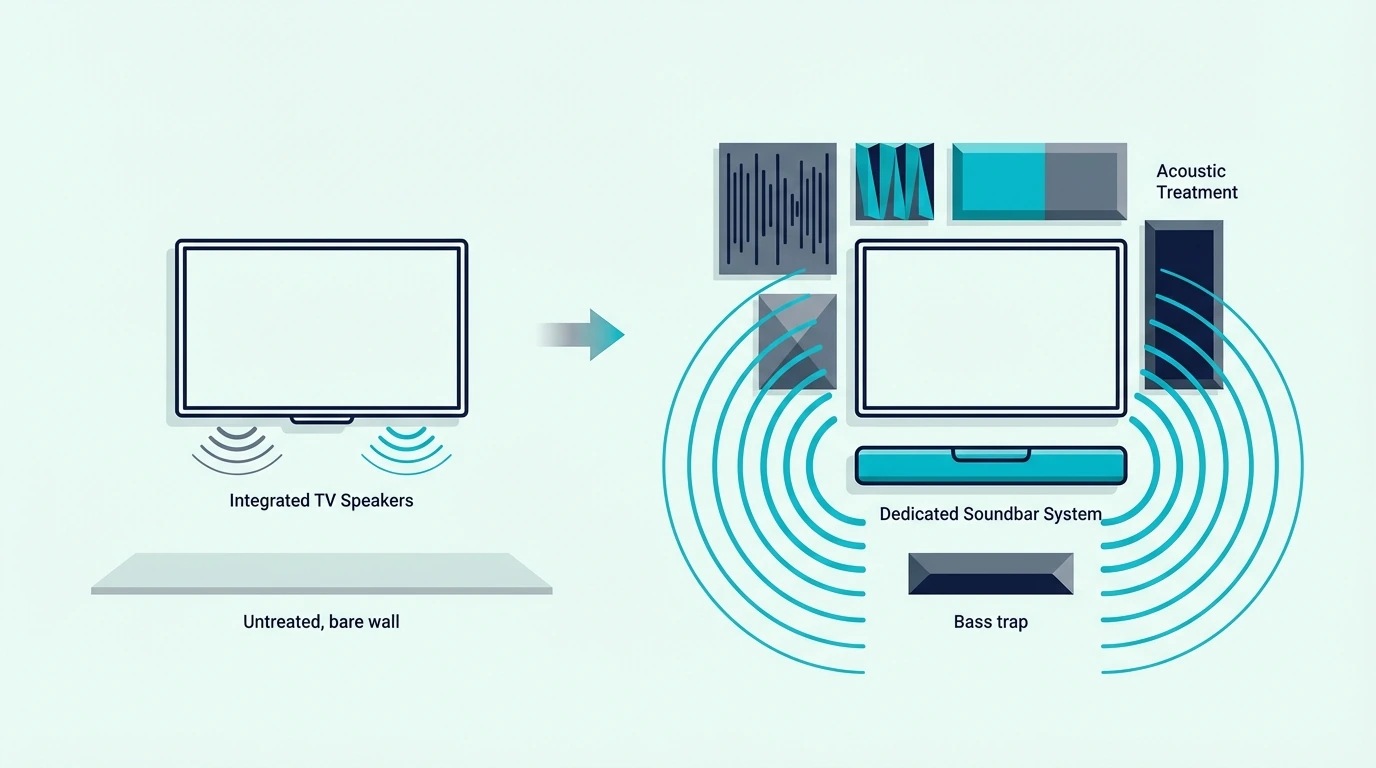
When people search for “Bose soundbar vs TV Speaker,” the real choice is usually between the Bose TV Speaker and Bose’s current Smart Soundbar path. The TV Speaker is Bose’s stripped-down dialogue bar.
The Smart line starts with the 600 and scales up to the Ultra for buyers who want more immersive movie sound and a broader feature set.
| Feature | Bose TV Speaker | Bose Smart Soundbar 600 | Bose Smart Ultra Soundbar |
|---|---|---|---|
| Main job | Simple TV dialogue upgrade | Smart Atmos bar for most rooms | Premium single-bar Bose option |
| Dolby Atmos | No | Yes | Yes |
| WiFi / AirPlay / app control | No | Yes | Yes |
| Expand with sub / rears | No | Yes | Yes |
| Best for | Small rooms, casual TV, zero-fuss setup | Buyers who want features and upgrade headroom | Buyers staying in Bose and wanting the best single-bar experience |
That table is the core decision. The TV Speaker is about simplicity.
The Smart Soundbar line is about capability. Once you know which side of that line you live on, the choice gets much easier.
What the Bose TV Speaker Actually Does Well
The Bose TV Speaker is not just a cheaper Bose bar. It is a deliberately limited product for a specific buyer: someone who wants TV voices to sound clearer without adding apps, account logins, WiFi setup, or extra hardware.
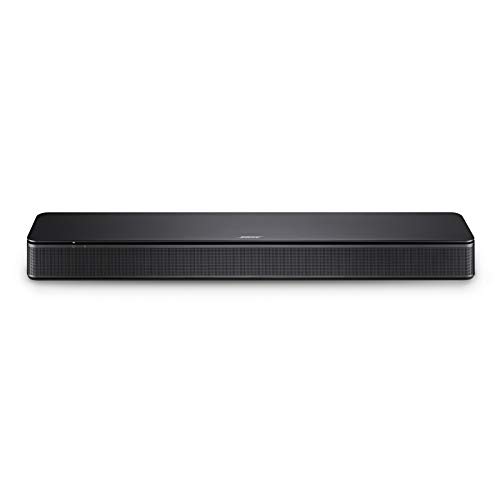
Bose TV Speaker
It handles the basics well. You get HDMI ARC, optical as a fallback, Bluetooth for occasional music from a phone, and Bose dialogue mode to lift speech above background effects.
Either bar hooks up to the TV in a few steps, and our guide on how to connect a Bose soundbar to a TV lays out the app route and the optical fallback.
For a bedroom TV, a secondary living room, or an older set where the built-in speakers sound thin and harsh, that can be enough.
It is also physically easy to live with. The TV Speaker is compact, quick to place, and much less intimidating for buyers who do not want to think about calibration, streaming protocols, or whether the TV is passing the right audio format.
If your real goal is “I want the TV to stop sounding bad,” the TV Speaker answers that need directly. Our best soundbar for dialogue guide and best soundbar for small rooms cover the same practical, speech-first use case.
The limitation is that it never grows beyond that. It is a finished product, not the start of a larger Bose system.
What You Pay More For in a Bose Smart Soundbar
The Bose Smart Soundbar 600 is the point where Bose stops selling “better TV sound” and starts selling a smarter home-audio platform. The higher cost is not just about sound quality.
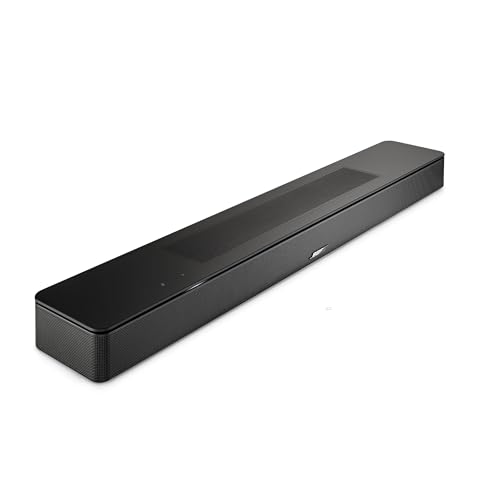
Bose Smart Soundbar 600
It is about the feature stack.
You add Dolby Atmos decoding, WiFi streaming, Apple AirPlay 2, Chromecast, Spotify Connect, Bose Music app control, voice assistant support, and the ability to add a Bose Bass Module or Bose Surround Speakers later. That changes the product from a simple bar under the TV into something that can anchor a broader Bose setup.
That is why the Smart line fits movie-heavy households better. Atmos mixes, streaming audio, and future expansion all matter more when the soundbar is your main entertainment audio system instead of a basic dialogue fix.
If that is how you use your TV, the TV Speaker starts to feel small very quickly. Our best Dolby Atmos soundbar guide and best soundbar guide show where a more capable bar starts to justify its price.
At the premium end, the Bose Smart Ultra Soundbar adds Bose’s best single-bar performance and stronger room-filling presentation for buyers who want to stay inside the Bose ecosystem. Most people deciding between the TV Speaker and a “real Bose soundbar” do not need to start at the Ultra, but it helps show the ceiling of what the Smart line is trying to be.
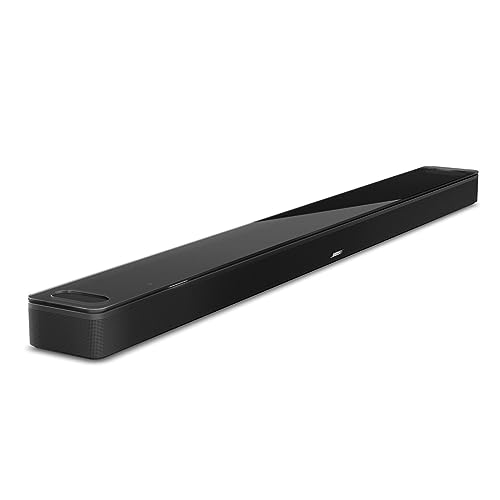
Bose Smart Ultra Soundbar
If you are choosing within Bose’s premium range, our best Bose soundbar guide is the better next step.
How Does the Gap Show Up in Real Daily Use?
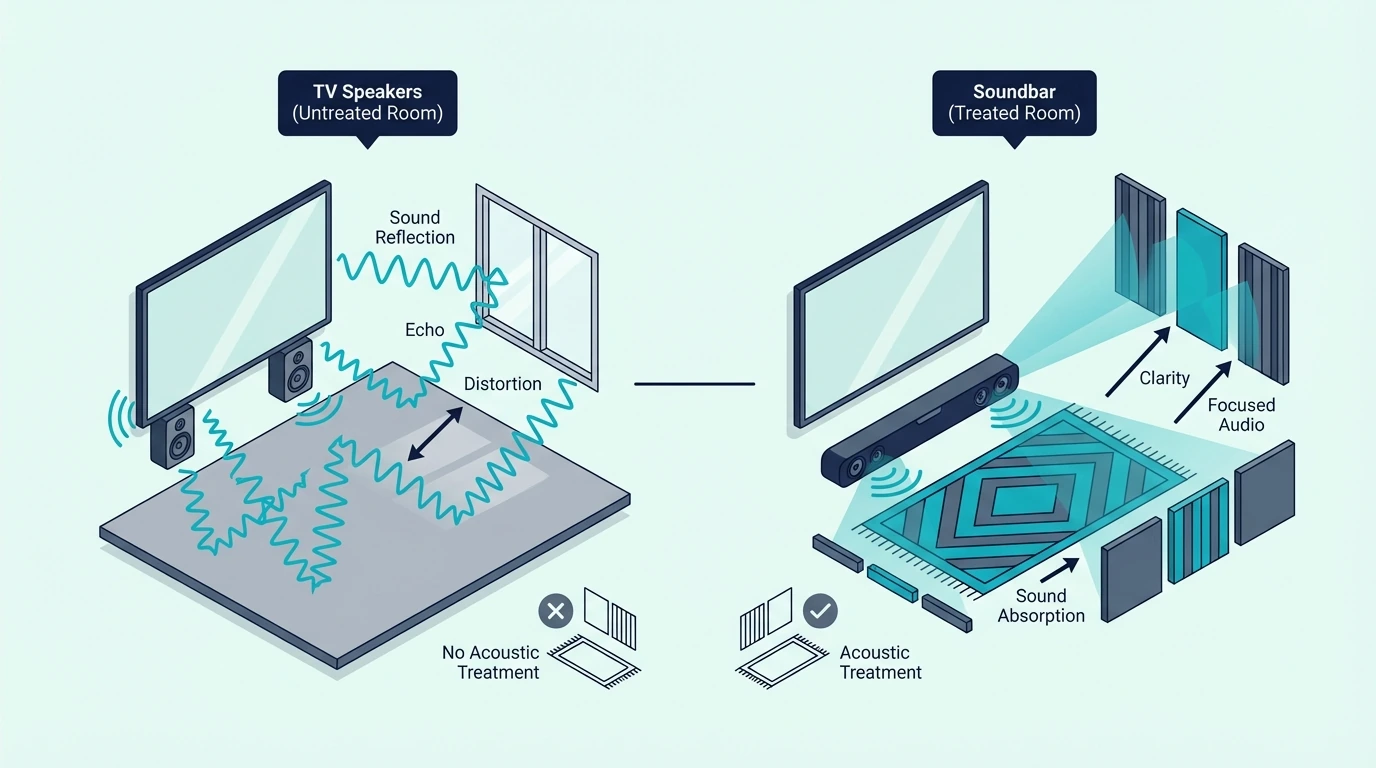
The easiest way to understand the gap is to stop looking at spec lists and think about what happens on an ordinary week of use.
For TV news, sitcoms, YouTube, and casual streaming, the TV Speaker already feels like a meaningful upgrade over built-in TV sound. Dialogue becomes clearer, the sound spreads wider than the panel, and the setup stays simple enough that nobody in the house has to learn a new system.
For movies, Atmos streaming, and larger rooms, the Smart Soundbar line pulls away. The extra processing, wider presentation, and ability to handle richer source audio matter more when you actually sit down to watch films instead of just leaving the TV on in the background.
This is also where the lack of expandability on the TV Speaker becomes obvious. If you want more bass or more immersion later, you cannot build on it.
Music use changes too. The TV Speaker is a Bluetooth bar.
That is fine for occasional playback, but it is not the same as a WiFi-based soundbar that can join a multiroom setup, stream directly from services, and stay connected without relying on your phone as the transport device. If music matters as much as TV, our best soundbar for music guide shows what you gain when you move beyond Bluetooth-only playback.
If you already use AirPlay or whole-home audio, the Smart Soundbar fits that workflow in a way the TV Speaker never will.
What You Give Up by Choosing the TV Speaker
The TV Speaker saves money because Bose removes the very features that make its smarter bars interesting.
You give up Atmos entirely. Even if your TV and streaming apps support Atmos, the TV Speaker does not decode it.
You also give up WiFi-based streaming, app-based control, multiroom flexibility, and any path to rear speakers or a subwoofer later.
That last point is where many buyers misread the decision. They treat the TV Speaker as a cheaper entry point into Bose, then assume they can expand later once they are ready.
You cannot. If there is any real chance you will want deeper bass, better movie performance, or a more immersive setup a year from now, it is usually smarter to start with the Smart Soundbar line rather than replace the whole bar later.
Connection quality still matters too. If you buy a Smart Soundbar for Atmos and eARC passthrough, make sure the TV path is actually configured to preserve what you paid for.
If you already know you want more bass or a more theater-like upgrade path later, our best soundbar with subwoofer guide shows what sits above the TV Speaker tier.
When the Bose TV Speaker Is the Better Buy
The TV Speaker is the better choice when the problem is narrow and specific.
If your TV sounds weak, voices are hard to hear, and you do not care about Atmos, app control, or future upgrades, the TV Speaker is the clean answer. It also makes sense in small rooms, bedrooms, guest rooms, and secondary TVs where spending Smart Soundbar money would be hard to justify.
It is also the better choice for buyers who dislike complexity. Some people do not want to manage another app, another wireless device, or another system menu.
They want one bar, one HDMI connection, and a clear dialogue button. In that case, simplicity is not a compromise.
It is the feature.
If that sounds like you, the Bose TV Speaker is the one that matches your actual use case.
When a Bose Smart Soundbar Is Worth the Extra Money
A Bose Smart Soundbar earns its price when you know you will use the extra capability.
If you watch a lot of movies, care about Atmos mixes, stream music often, use AirPlay, or want the option to add bass and surround speakers later, the Smart line makes more sense. The biggest reason is not just better sound today.
It is that you are buying into a system that can grow instead of a product you will outgrow.
For most buyers in this lane, the Bose Smart Soundbar 600 is the real decision point. It gives you the full Bose smart-platform experience without forcing you straight to flagship pricing.
The Ultra only makes sense when you already know you want Bose’s best single-bar experience, have a room large enough to hear the difference, and are comfortable paying Bose premium pricing for it. If you are unsure, the 600 is the more rational first step.
What Buyers Regret Most
The most common regret is buying the TV Speaker while secretly hoping it will behave like a cheaper Smart Soundbar. It will not.
It is simpler because Bose removed the features that make the Smart line expandable and more immersive.
The second regret is the opposite: buying a Smart Soundbar for a small secondary TV, never using Atmos, never streaming music through it, and never adding a subwoofer or rears. In that case, the extra spend does not buy real value.
The third regret is ignoring setup reality. A Smart Soundbar connected the wrong way, or fed the wrong TV audio settings, can underperform and make the upgrade feel smaller than it should.
If you want the more capable bar, set it up properly.
That is why the honest decision starts with how you actually watch. If your needs are simple, buy simple.
If you know you want a system, buy the platform.
Get Studio Tips Weekly
Join 5,000+ creators getting acoustic treatment advice every week.
No spam. Unsubscribe anytime.The Bottom Line
The Bose TV Speaker and Bose Smart Soundbar line are not just two price points in the same product family. They are two different buying decisions.
Choose the TV Speaker if you want a compact, easy, dialogue-first upgrade and do not care about Atmos, WiFi streaming, or future expansion.
Choose a Smart Soundbar if you want richer movie performance, better music streaming, app control, and room to add bass or surround speakers later. For most people, the Smart Soundbar 600 is the real sweet spot.
The Ultra is the premium step for buyers who know they want the best Bose single-bar experience.
If you want broader context before you decide, start with what a soundbar actually does and our best Bose soundbar guide.
Frequently Asked Questions
Is the Bose TV Speaker a real soundbar?
Yes. The Bose TV Speaker is a real soundbar, but it is a very simple one.
It is built for clearer dialogue and better TV audio, not for Atmos, WiFi streaming, or home theater expansion.
Can you add a subwoofer or rear speakers to the Bose TV Speaker?
No. The Bose TV Speaker is a closed system.
If you want a bar that can grow with a Bose Bass Module or Bose Surround Speakers, you need to start with the Smart Soundbar line.
Is the Bose Smart Soundbar 600 enough, or should you buy the Ultra?
For most people, the 600 is enough. It gives you Atmos, WiFi streaming, app control, and Bose expansion options at a much more reasonable price.
The Ultra makes more sense in larger rooms or for buyers who specifically want Bose’s best single-bar performance.
Does the Bose TV Speaker support WiFi, AirPlay, or Spotify Connect?
No. The TV Speaker supports Bluetooth, HDMI ARC, and optical, but it does not include WiFi-based streaming features like AirPlay or Spotify Connect.
Those are part of Bose’s Smart Soundbar line.
Will HDMI ARC give the Bose TV Speaker Dolby Atmos?
No. HDMI ARC can carry different kinds of audio depending on the device, but the Bose TV Speaker itself does not decode Atmos.
If Atmos is important to you, start with a Smart Soundbar instead.