How To Pick A Soundbar — Size, Channels, Features & Buyer Mistakes To Avoid

How to pick a soundbar sounds simple, but the wrong bar can leave you with muddy dialogue, weak bass, or features that look impressive on the box and barely matter in your room.
A lot of buyers compare Dolby Atmos badges, channel counts, and brand names before they decide whether they even need a compact single bar, a 2.1 setup with a subwoofer, or a fuller surround package. That is how people end up overspending on the wrong type of system instead of fixing the real weakness in their TV audio.
Once you match the soundbar type to your room size, listening habits, and connection path, the shortlist gets much easier. You stop shopping by hype and start choosing the bar that actually fits the way you watch TV.
Start by deciding how much bass, immersion, and simplicity you really want, because that one choice removes most of the wrong options before you compare brands.
Now that the decision path is clear, let us walk through how to pick a soundbar the smart way.
To pick a soundbar well, decide four things first: your room size, how much bass you want, whether you need advanced features like Dolby Atmos or eARC, and whether you actually have space for rear speakers or a subwoofer. Small rooms and casual TV watching usually do best with a compact bar, movie-heavy setups often benefit from a subwoofer, and larger rooms are where Atmos and surround packages start to make more sense.
Why Are TV Speakers Still the Real Problem?
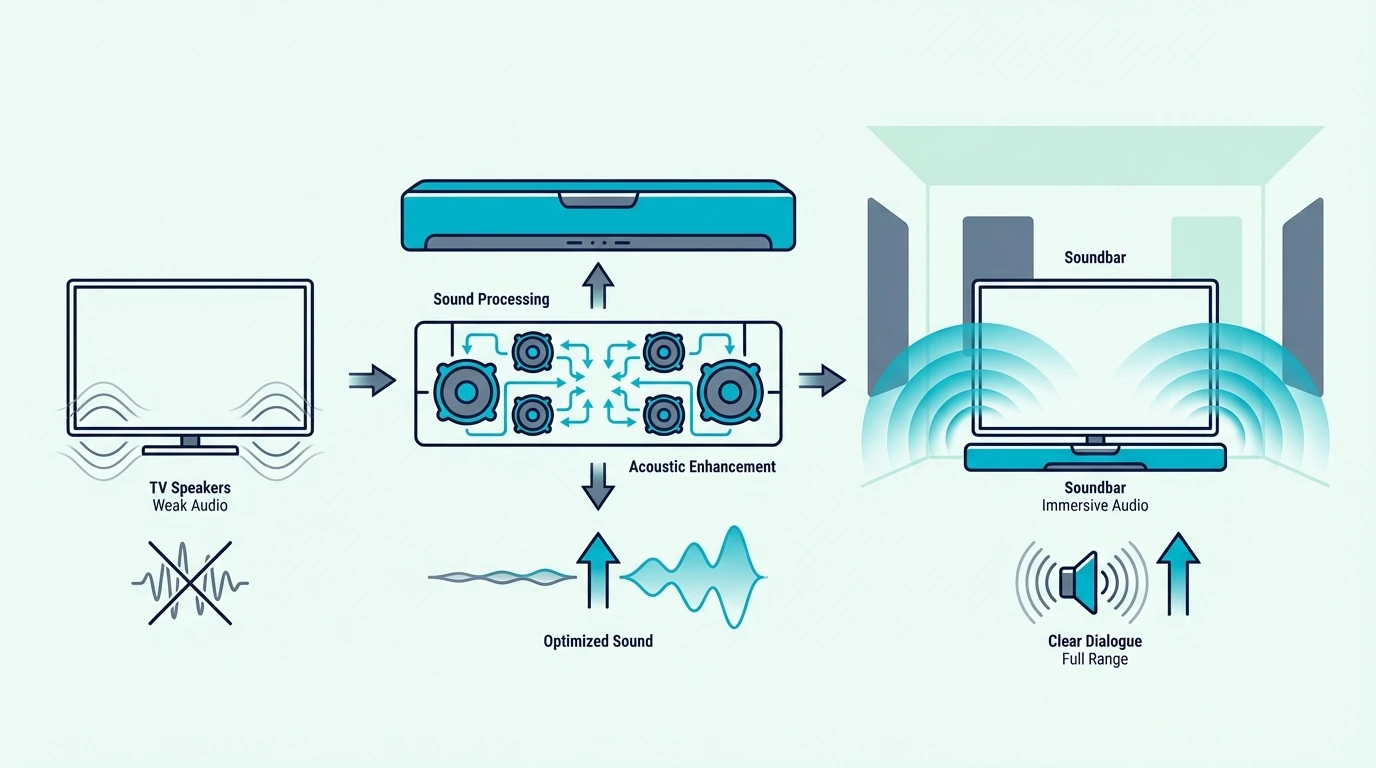
The reason this matters is that TV speakers usually fail in the same few ways. Dialogue gets buried, action scenes sound flat, and the sound feels like it is coming from inside the screen instead of filling the room.
That does not mean every buyer needs the biggest or most expensive soundbar. It means you need a bar that fixes the specific weakness you notice most in your current setup.
That is also why this page is different from the broader best soundbar guide or the more budget-focused best budget soundbar roundup. Those pages help you compare finished product recommendations, while this guide helps you decide what kind of soundbar you should even be shopping for in the first place.
For some buyers, the main goal is speech clarity for news, sports, and everyday TV. In that case, the most useful comparison point is often the best soundbars for dialogue guide, because clear voices matter more than flashy surround labels.
For other buyers, the problem is that music, movies, and games feel too thin through built-in TV speakers. That is usually the point where bass, width, and immersion start to matter more than basic voice clarity.
One overlooked point is seating distance. If the couch is close to the TV, a clean front stage and better dialogue often matter more than chasing rear-channel immersion, but in a deeper room the same bar can feel small and strained.
The mistake is assuming more channels automatically equal better sound. If the room is small or the listening position is off-center, a simpler bar can outperform a more ambitious system that never gets used the way it was designed.
You also have to think about room context, not just product marketing. A bar that feels perfect in a bedroom or apartment can feel underpowered in a large open living room, while a big system with rear speakers can be wasted in a small room where you mostly watch dialogue-heavy shows.
That is why choosing well starts with honesty about the room and your habits. If you mostly want cleaner TV sound with less clutter, you should shop very differently than someone building a movie-first living room around immersive audio.
How Should You Filter by Size, Channels, and Speaker Layout?
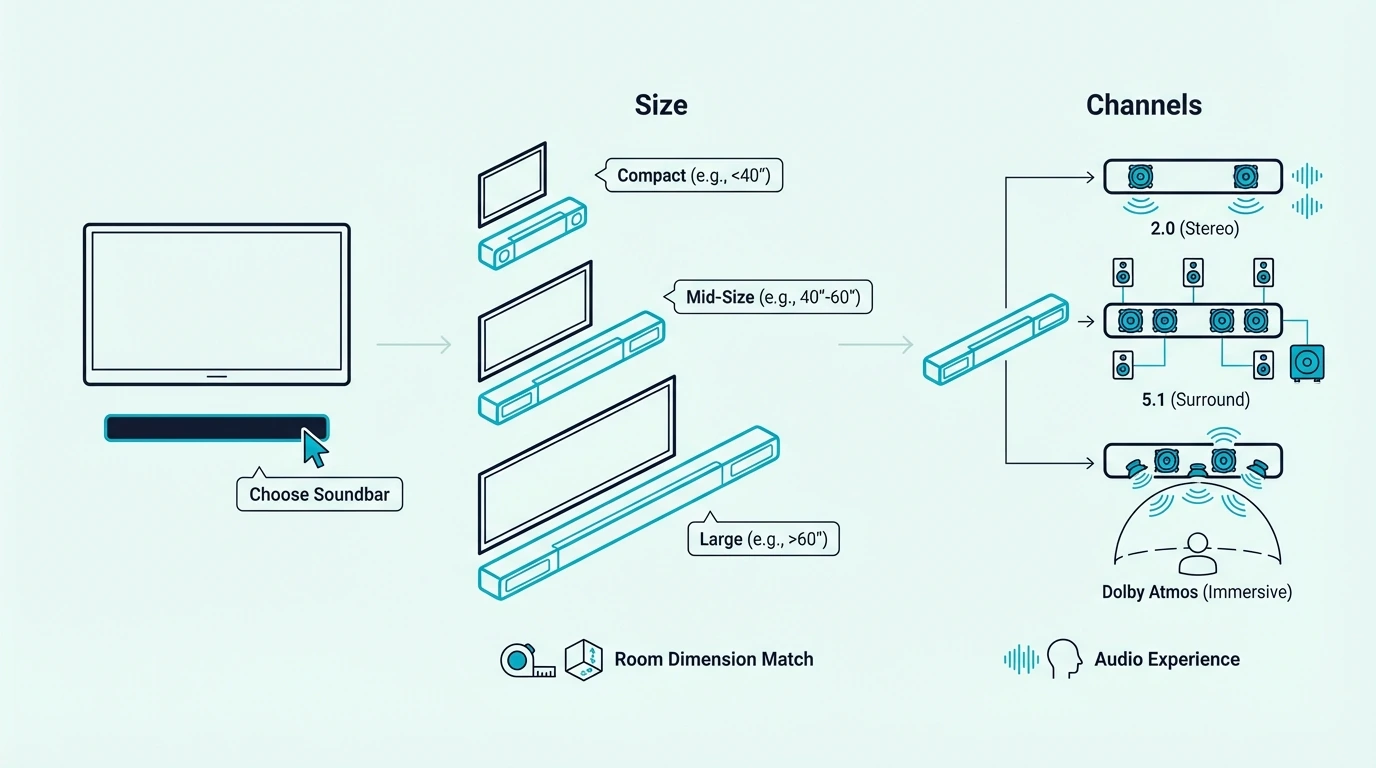
The first practical filter is not brand. It is size and speaker layout.
A soundbar should fit your room and furniture before it fits a spec sheet. If the bar is too small for the room, it can sound thin and limited, but if the system is too large for the space, you may pay for bass and surround effects that the room or listening distance never lets you enjoy properly.
Compact 2.0 or all-in-one bars make the most sense when you sit fairly close, watch mostly everyday TV, or simply want a clean upgrade without placing extra hardware. That is the same logic behind the broader best soundbar guide when the simplest one-piece options rise to the top over bigger, more complicated systems.
A compact option like the Sony S100F 2.0ch Soundbar with Bass Reflex Speaker is a good example of the buyer who should keep things simple. It works best when the real goal is better forward sound and easier placement, not cinematic low-end weight.

Sony S100F 2.0ch Soundbar with Bass Reflex Speaker
A 2.1 soundbar is the next step up when you want a more satisfying movie and music experience. The separate subwoofer changes the feel of explosions, drums, and low-end effects far more than most buyers expect.
That is why a model like the Samsung HW-C450 2.1ch Soundbar with Subwoofer is a helpful reference point when you are deciding whether a single bar will feel too limited. If you care about impact and warmth more than minimalism, a basic 2.1 system is often the smarter buy.
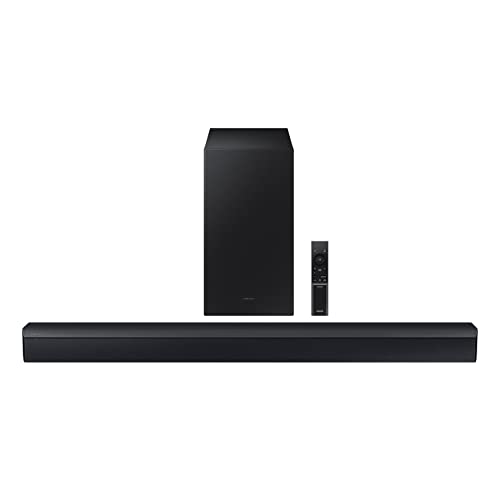
Samsung HW-C450 2.1ch Soundbar with Subwoofer
It also helps to think about where each extra piece will live before you buy. A wireless subwoofer still needs floor space and power, while rear speakers only help when the room lets people sit inside the sound field instead of far off to one side.
TV width matters too, but not in the simplistic way buyers sometimes hear online. You want the bar to sit cleanly under the screen and project across the seating area, not blindly match the exact width of the panel.
Once you move into 3.1, 5.1, or larger packages, the question changes again. At that point you are no longer just replacing TV speakers, and you are starting to build a more theater-style system around your room.
That is where the best soundbar with subwoofer guide becomes useful, because it shows when a packaged subwoofer setup is the right middle ground. If you are shopping for a desk, bedroom, or smaller display, a compact bar is usually the better comparison instead.
Get Studio Tips Weekly
Join 5,000+ creators getting acoustic treatment advice every week.
No spam. Unsubscribe anytime.Which Features Matter and Which Ones Mostly Sound Good on Paper?
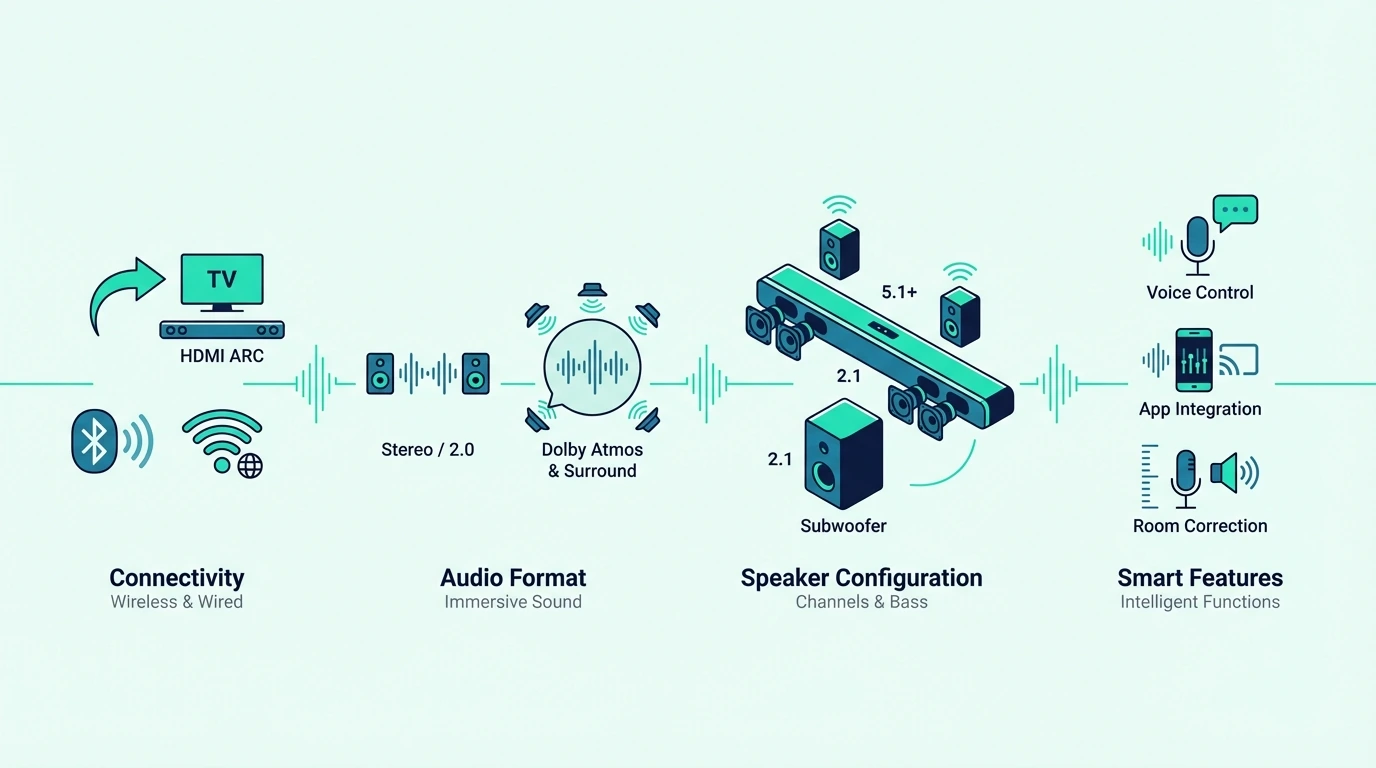
This is the part where buyers often get distracted by marketing terms. A feature only matters if your TV, room, and habits can actually use it.
Start with connections before anything else. If the TV and soundbar are going to be part of your daily setup, HDMI ARC or eARC is usually more important than a long feature list because it affects how easily the system turns on, switches audio, and handles volume control.
That is why the how to connect soundbar to TV guide matters even before you buy. A soundbar that fits your room but fights your connection path can still become the wrong purchase.
Bluetooth is helpful for convenience, but it should not be the main reason you buy a bar for TV use. If Bluetooth matters to you, it is better to treat it as a bonus feature and understand its limits through the how to connect TV to soundbar via Bluetooth guide rather than assuming it replaces a stable HDMI path.
Dolby Atmos matters most when your room, seating distance, and content habits can actually benefit from a more spacious presentation. It matters less when your room is small, the ceiling is awkward, or your priority is simply clearer dialogue from everyday TV.
A model like the Sonos Beam Gen 2 – Soundbar with Dolby Atmos is a good example of where feature priorities become more nuanced. Buyers choose a bar like this because they want a cleaner premium system, smart-platform support, and room to expand later, not just because the word Atmos appears on the box.
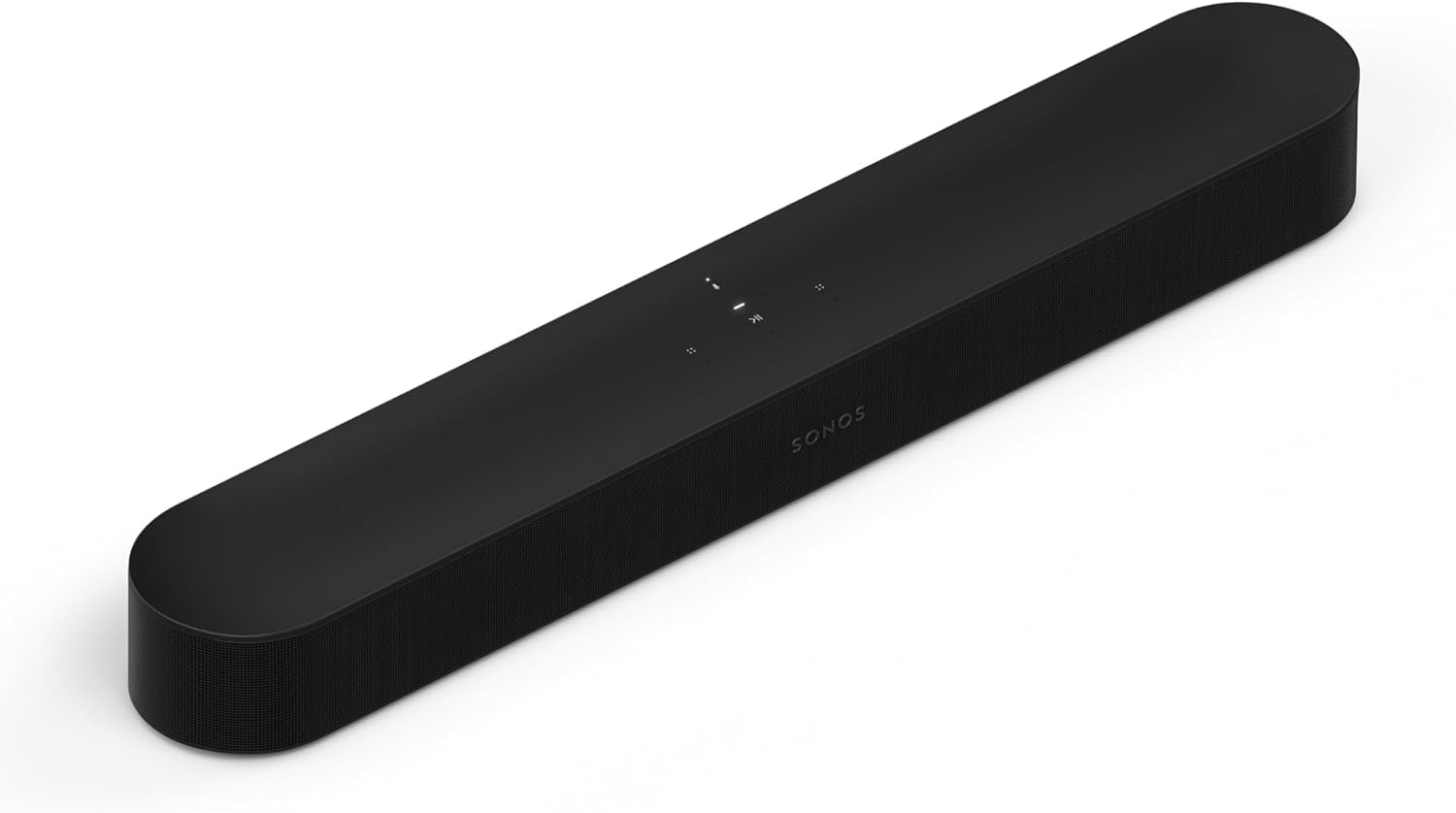
Sonos Beam Gen 2 – Soundbar with Dolby Atmos
You should also think about dialogue enhancement, room correction, voice assistants, and app quality in the same practical way. Those features matter most when they solve a real annoyance, such as struggling to hear speech at night or wanting the bar to fit neatly into a specific streaming or smart-home ecosystem.
It is also worth checking whether the bar supports the formats your TV can actually pass through. A flashy Atmos badge matters less if the TV only feeds stereo over optical, if eARC is missing, or if the set is known for handshake issues that make daily use annoying.
Remote behavior is another real-world filter buyers skip. If you want one-remote volume control and painless daily switching, HDMI behavior and CEC compatibility matter far more than a long list of secondary sound modes.
If your setup is not a standard TV living-room setup, this matters even more. Buyers using a projector or a PC should think carefully about ports, routing, and audio return paths, which is why the best soundbar for projector guide and the how to use soundbar with PC guide stay different from a standard TV-buying guide.
When Does Paying More Actually Change the Listening Experience?
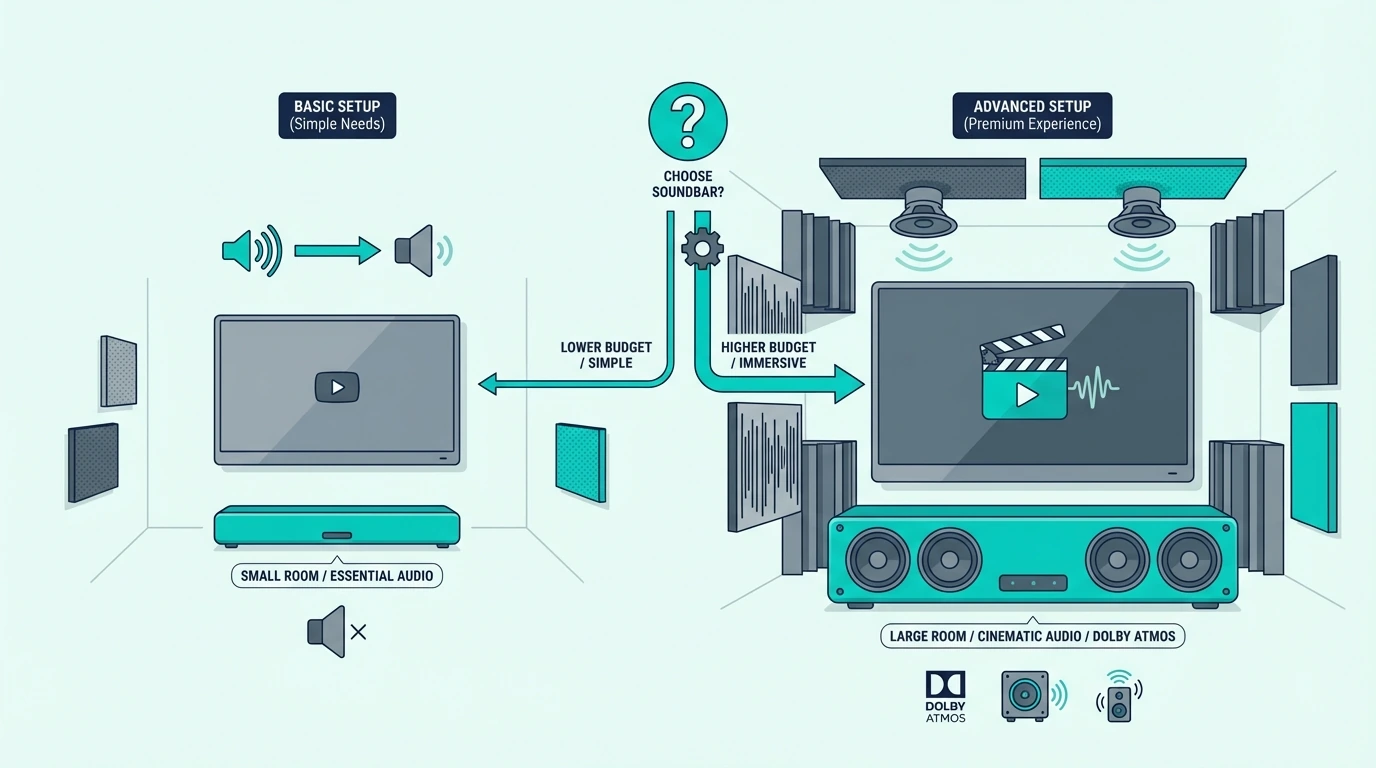
Paying more only makes sense when the extra hardware or feature set changes your real listening experience. If it does not, you are just buying complexity.
A buyer who mostly watches news, sitcoms, sports, or everyday streaming in a modest room usually gets more value from a well-chosen simple bar than from a larger package. In that situation, cleaner speech, easier setup, and better everyday usability usually matter more than chasing the biggest surround effect.
The decision changes when you have a larger room, sit farther from the TV, or care a lot about movies and games. That is where stronger bass, wider front sound, Dolby Atmos processing, and rear speakers become easier to justify.
A fuller system like the Sony BRAVIA Theater System 6 5.1ch Soundbar is the kind of example that helps clarify this threshold. It represents the buyer who is no longer just trying to improve TV speakers and is ready for a more immersive room setup.
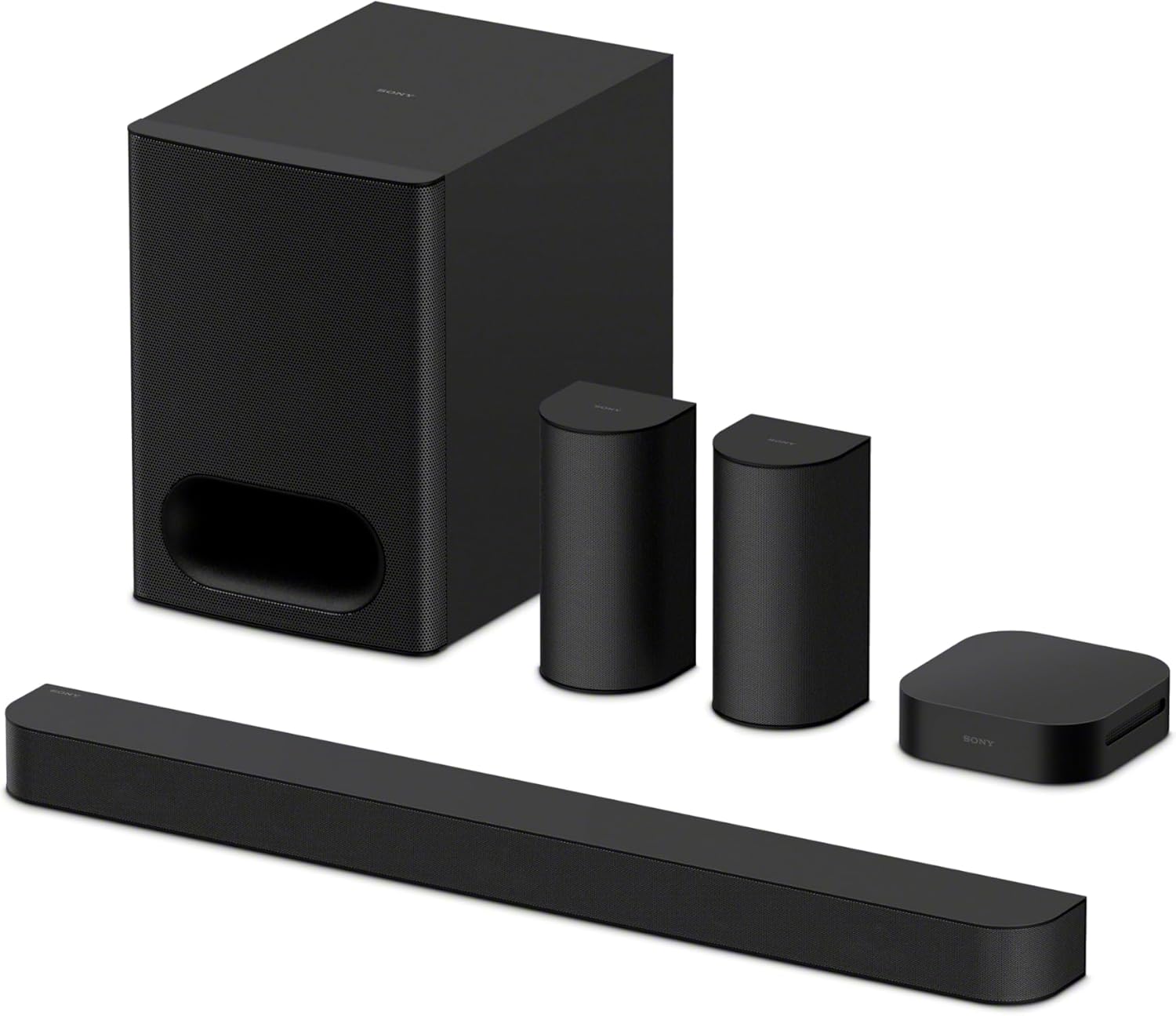
Sony BRAVIA Theater System 6 5.1ch Soundbar
This is also where you have to be careful with premium marketing. Some buyers really do need the bigger step up, but plenty of people would be happier spending less on the right 2.1 or compact bar instead of stretching for features their room cannot reveal properly.
That is why the most useful comparison page at this stage is the best Dolby Atmos soundbar guide. It helps you see whether the premium is really about a better fit for your room or just a more expensive label.
Another good test is whether you plan to expand later or whether you want the purchase to stay simple for years. Some buyers are happier with a closed, easy system now, while others should buy into a platform that lets them add surrounds or a subwoofer later without replacing the whole bar.
If music is a major part of your decision, pay extra attention to tonal balance and bass control instead of shopping only by movie terms. If gaming matters more, focus on latency, input behavior, and how well the front stage stays clear during busy scenes.
The Bottom Line
How to pick a soundbar gets much easier when you stop asking which model is most impressive and start asking which setup actually matches your room, content habits, and connection needs. The right starting point is usually simpler than buyers expect.
Small rooms and everyday TV use often point toward a compact bar. Movie-heavy rooms, bass expectations, and longer seating distances are where subwoofers, Dolby Atmos, and larger surround packages begin to make sense.
If you want the fastest path from decision-making into actual product choices, the broader soundbar hub is the best next stop.
Frequently Asked Questions
How do I know which soundbar to get?
You know which soundbar to get by matching the bar to your room size, your content habits, and how much bass or immersion you actually want. Buyers who mostly want clearer TV audio should usually start simpler than buyers building around movies, gaming, or large-room listening.
Is a 2.1 or 5.1 sound bar better?
A 2.1 soundbar is better when you want stronger bass without adding too much complexity or taking over the room. A 5.1 system is better when you actually have the space, seating distance, and movie-focused habits to benefit from rear-channel immersion.
What should I consider when buying a soundbar?
The most important things to consider are room size, speaker layout, HDMI ARC or eARC compatibility, bass expectations, and whether you want a simple single bar or a bigger system with more hardware. It also helps to think about dialogue clarity, Bluetooth convenience, and whether you may want to expand the setup later.
What are the top 5 soundbars?
There is no single top five that fits every buyer, because the right pick changes based on budget, room size, and use case. The best way to narrow the field is to decide whether you want a compact all-in-one bar, a 2.1 system with a subwoofer, or a more immersive Atmos or surround setup first.