Soundbar vs Speakers: Which Setup Actually Sounds Better for Your Room?

The soundbar vs speakers decision seems straightforward until you realize both options overlap in price — but deliver fundamentally different listening experiences that depend on what you actually use your audio system for.
A soundbar is a single bar (sometimes paired with a wireless subwoofer) that connects to your TV with one cable and handles everything from dialogue to music to surround processing internally.
Speakers — whether bookshelf, tower, or satellite — are separate units that require an amplifier or receiver and physical placement around your room.
The soundbar trades audio quality for convenience, while speakers trade convenience for audio quality.
Understanding where that tradeoff actually matters for your listening habits and room layout helps you avoid buying a system that looks right on paper but sounds wrong in your space.
Below, we’ll compare what each system delivers for movies, music, and daily TV use, then help you decide which approach fits your priorities.
A soundbar is a compact, all-in-one bar that connects to your TV with one cable — simple setup, clean look, and good enough audio for most TV watching and casual movie nights. Speakers (bookshelf, tower, or satellite) require an amplifier or receiver and physical placement but deliver superior stereo imaging, wider dynamic range, and significantly better music reproduction.
Choose a soundbar if you want a quick, meaningful upgrade from TV speakers with minimal hardware. Choose speakers if music quality matters to you or if you want the flexibility to upgrade individual components over time.
What Is a Soundbar?
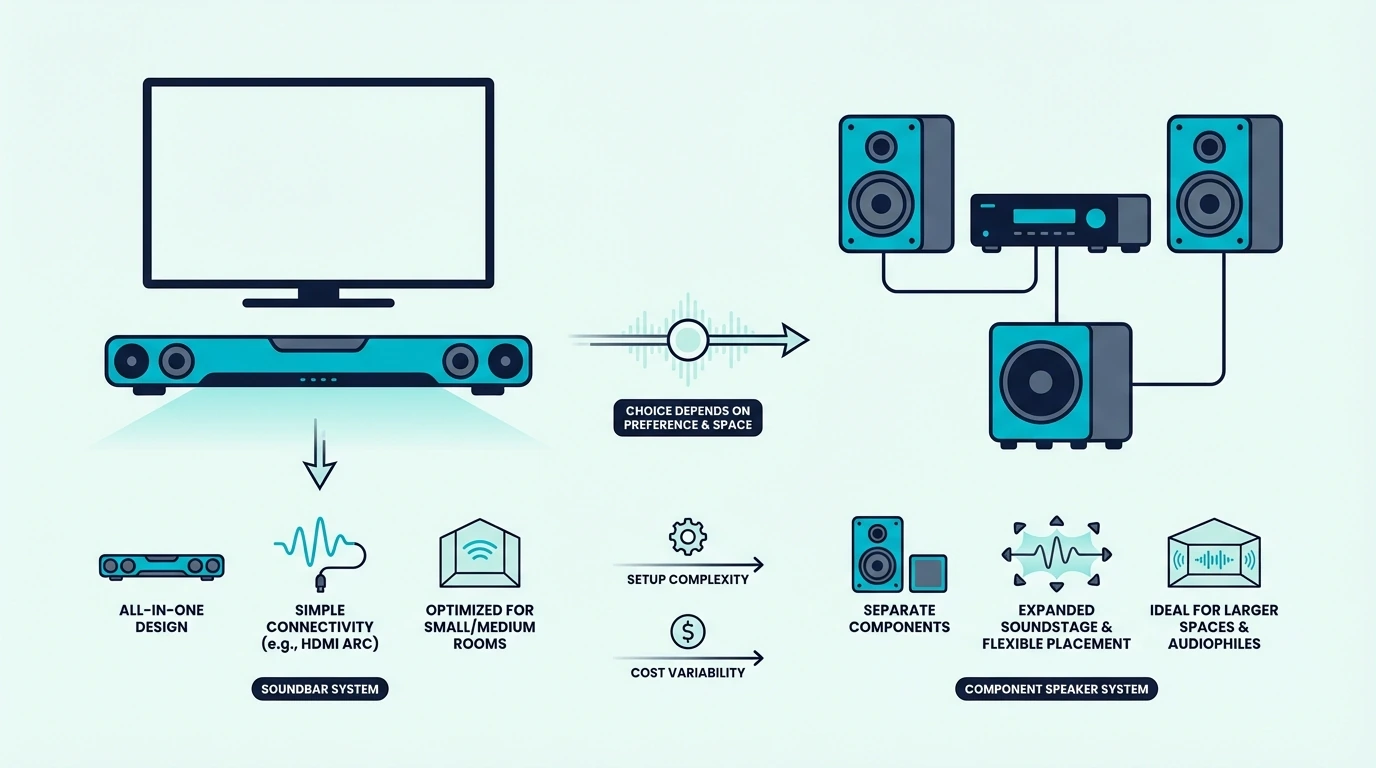
A soundbar is a single elongated speaker enclosure — usually 20 to 50 inches wide — that sits below or in front of your TV.
Inside that enclosure, multiple small drivers handle left, center, and right audio channels, with digital signal processing simulating a wider soundstage than the physical size suggests.
Most soundbars connect to your TV through a single HDMI ARC or eARC cable.
That one connection carries audio from the TV to the bar and lets you control volume with the TV remote — no separate remote needed for daily use.
How Soundbars Work
The drivers inside a soundbar are angled and tuned to project sound outward and to the sides.
Digital processing — Dolby Atmos, DTS Virtual:X, or proprietary algorithms — uses timing delays and frequency shaping to create the impression that sound is coming from beyond the bar’s physical boundaries.
Higher-end models like the Polk Audio Signa S4 add a dedicated center channel for dialogue, upward-firing drivers for Atmos height effects, and a wireless subwoofer for bass — all still controlled from your TV remote.
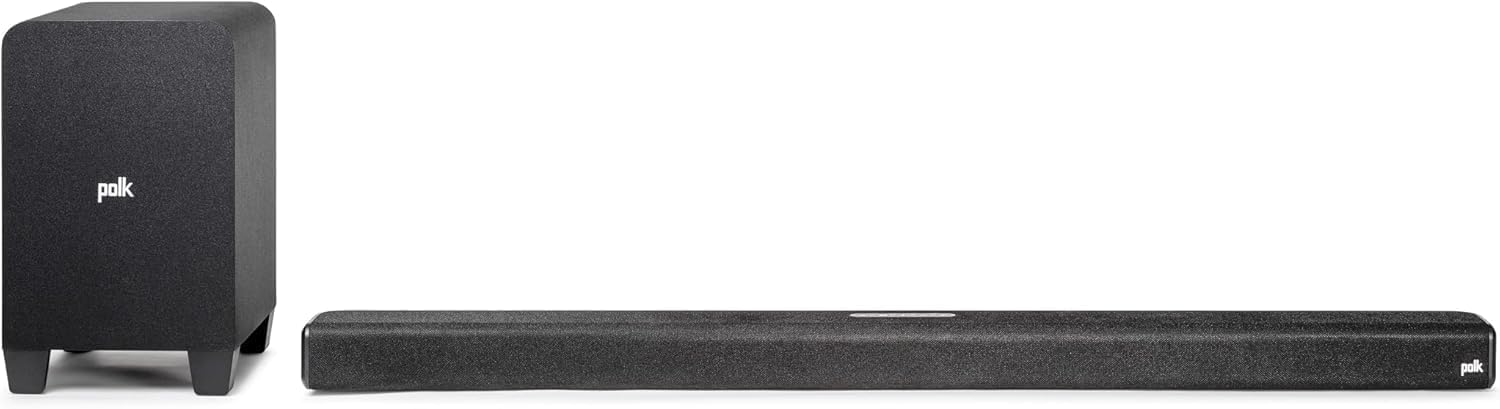
Polk Audio Signa S4
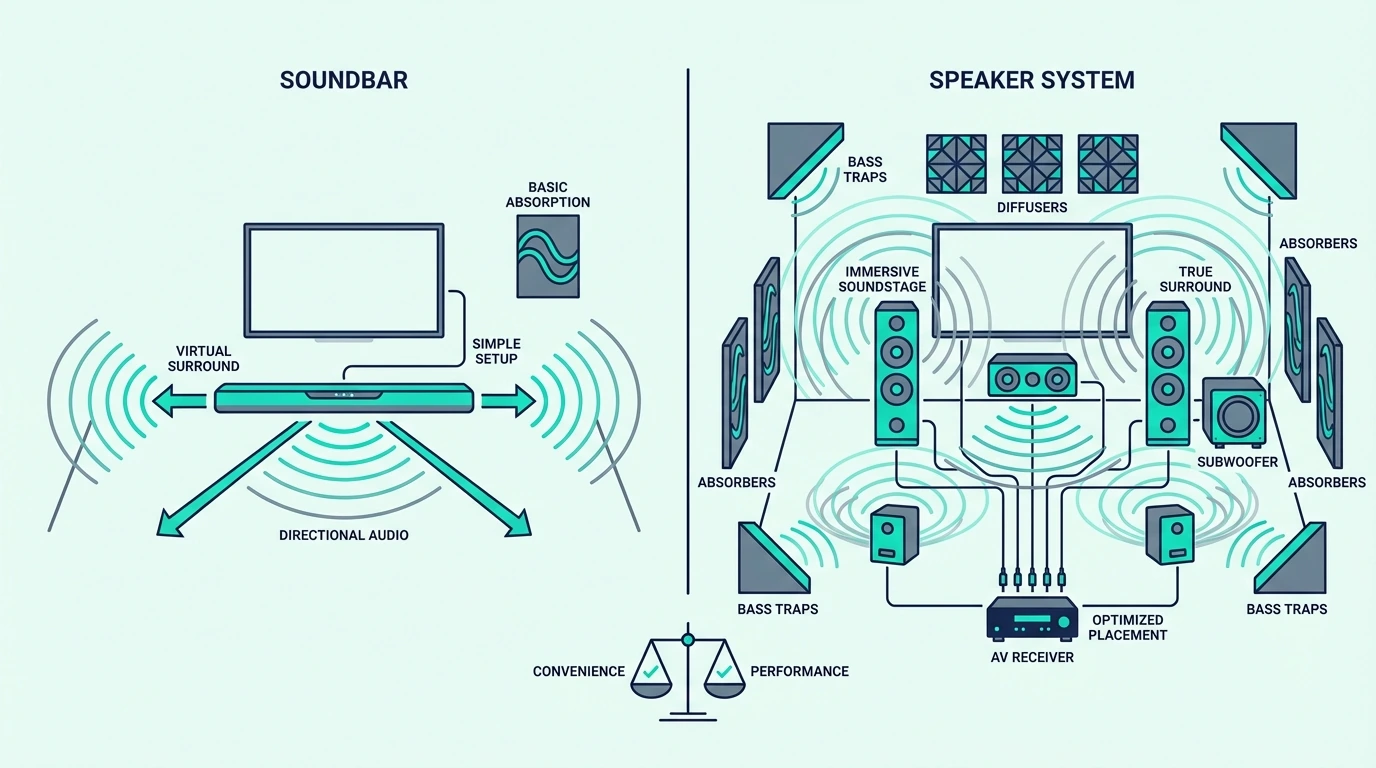
The key limitation is physics — all the drivers share one narrow enclosure, which means the stereo image is compressed compared to two physically separated speakers.
Virtual surround helps, but it is simulating spatial audio rather than producing it from distinct locations.
Types of Soundbars
A 2.0 soundbar is the simplest — just the bar, no subwoofer — while a 2.1 adds a wireless subwoofer for bass and a 3.1 adds a dedicated center channel driver for dialogue clarity.
A 5.1 or higher adds surround effects through side-firing or upward-firing drivers.
For most living rooms, a 2.1 or 3.1 configuration delivers the biggest upgrade from TV speakers without the complexity or cost of higher channel counts.
For a deeper look at how soundbar configurations work, our what is a soundbar guide explains each type.
If dialogue clarity is your top concern, our best soundbar for dialogue guide covers which configurations matter most for speech.
What Are Speakers?
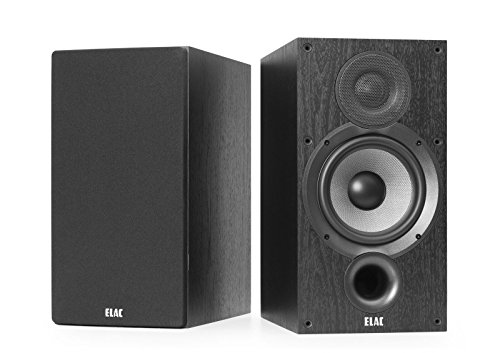
“Speakers” in the soundbar-vs-speakers context typically means a pair of bookshelf speakers, tower (floor-standing) speakers, or satellite speakers — two separate units placed on either side of your TV or listening position.
Unlike a soundbar’s all-in-one design, speakers are individual components in a modular audio chain.
That modular design is both the strength and the complexity.
You choose each piece separately — the speakers, the amplification, the source connections — which gives you control over every link in the chain but also means more hardware and more decisions.
Powered vs Passive Speakers
Powered (active) speakers have a built-in amplifier. You connect them directly to your TV’s audio output or to a Bluetooth source and they work immediately — no receiver needed.
A pair like the Edifier R1280T is a powered bookshelf pair — built-in amp, multiple inputs, and wood enclosures that produce richer bass than their compact size suggests.
Edifier R1280T
Plug them into your TV’s headphone or optical output and you have a working stereo system.
Passive speakers require a separate amplifier or AV receiver to power them, with the upside being flexibility.
You can upgrade the amp or the speakers independently, and receivers add features like room correction, multiple HDMI inputs, and surround decoding.
The downside is more hardware, more cables, and a steeper learning curve.
Why Physical Separation Matters
The single biggest advantage speakers have over soundbars is physical separation. When left and right drivers are placed 3-6 feet apart on either side of the screen, the stereo image expands dramatically.
Instruments and vocals get distinct positions in the soundstage — guitar on the left, piano on the right, voice centered between them.
That spatial detail is something no soundbar can replicate from a single enclosure, regardless of how much DSP processing it applies.
For a broader look at how speakers compare to full home audio systems, our soundbar vs home theater guide covers the expanded setup.
Get Studio Tips Weekly
Join 5,000+ creators getting acoustic treatment advice every week.
No spam. Unsubscribe anytime.How Do Soundbars and Speakers Compare?
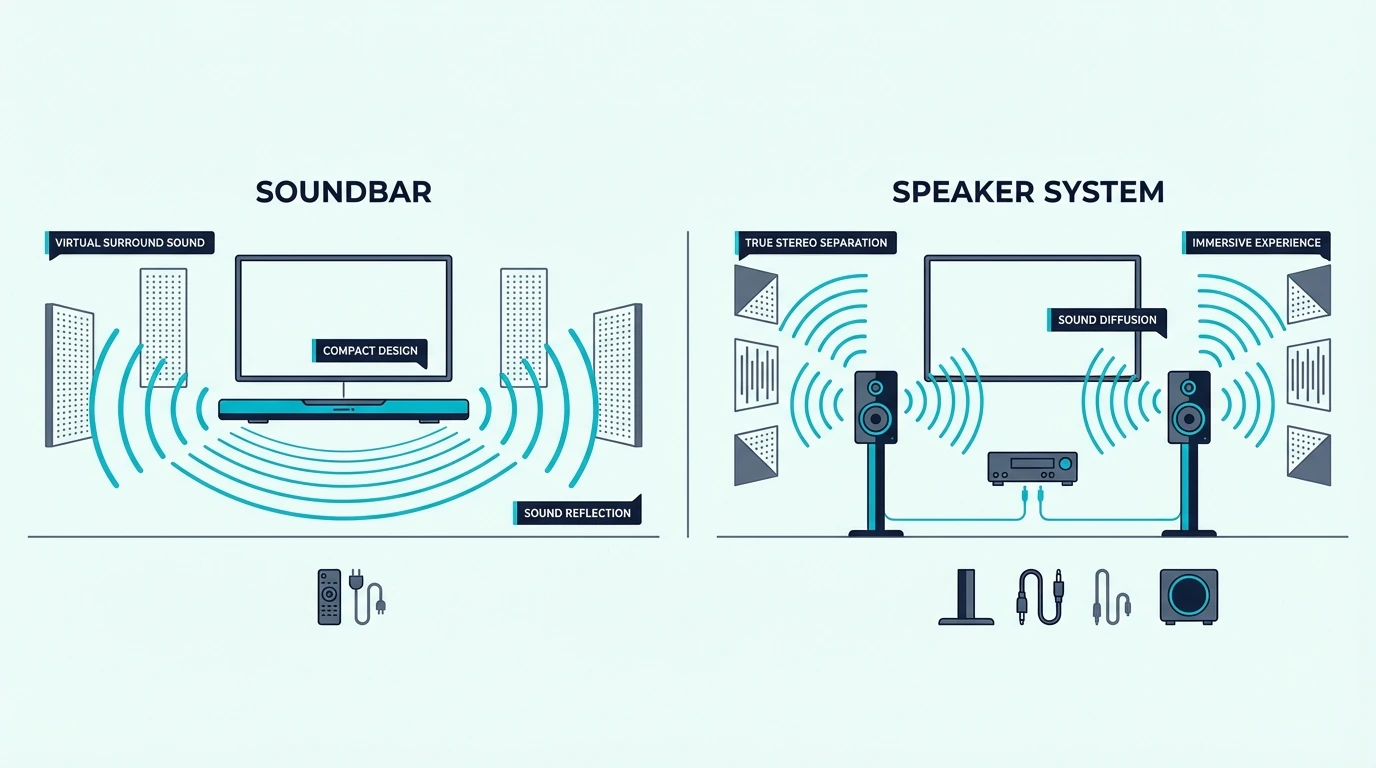
With both systems defined, the comparison comes down to how each handles the content you actually listen to and the tradeoffs you are willing to make.
Movies and TV Shows
For dialogue-heavy content, a soundbar with a center channel (3.1 or higher) outperforms a basic stereo speaker pair because the center driver isolates voices from effects.
With stereo speakers, dialogue shares the left and right channels with everything else — music, explosions, ambient noise — which can muddy voices during complex scenes.
For cinematic immersion, speakers with a subwoofer deliver more dynamic range and impact than most soundbars. The physical separation creates a wider soundstage for movie scores and spatial effects.
A mid-range option like the Samsung HW-C450 pairs a wireless subwoofer with DTS Virtual:X — enough bass for movie impact and virtual surround for a wider soundstage without the complexity of a speaker setup.
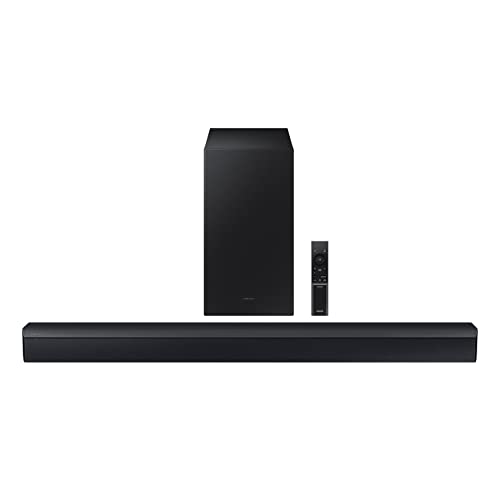
Samsung HW-C450
For surround-level movie audio, our soundbar vs surround sound guide covers the full spectrum of options.
Music Listening
This is where speakers pull ahead decisively. Music is mixed in stereo, and the quality of stereo reproduction depends directly on the physical separation between left and right channels.
A soundbar reproduces music from drivers that are inches apart inside a single enclosure. Even with processing tricks, the stereo image is narrower and less defined than what two physically separated speakers produce.
For listeners who prioritize music accuracy, studio monitors like the Edifier MR3 take this further. Their stu dio-tuned frequency response means you hear the mix closer to how the engineer intended it.
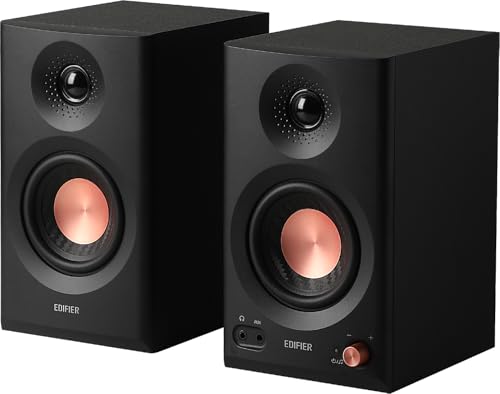
Edifier MR3
A well-placed speaker pair gives better stereo imaging and tonal detail than a soundbar at comparable prices — every time.
Gaming
Gaming audio benefits from both systems depending on the game type. Competitive games with positional audio (footsteps, gunshots from specific directions) work better with speakers or a surround soundbar because the spatial separation helps identify sound direction.
Casual gaming works well with either system. A soundbar with a subwoofer adds impact to explosions and bass-heavy effects, while speakers deliver cleaner audio detail for games with rich soundtracks.
If your setup is built around a console, our best soundbar for PS5 guide covers which soundbar features matter for gaming.
Daily Convenience
A soundbar wins on daily usability — volume syncs with your TV remote over HDMI ARC, and our HDMI ARC guide covers the setup.
One input, one remote, no configuration.
Speakers require more daily attention if you switch between sources (TV, phone, turntable).
Powered speakers simplify this with Bluetooth input, but the experience still involves more steps than a soundbar’s single-remote approach.
When a Soundbar Is the Better Choice
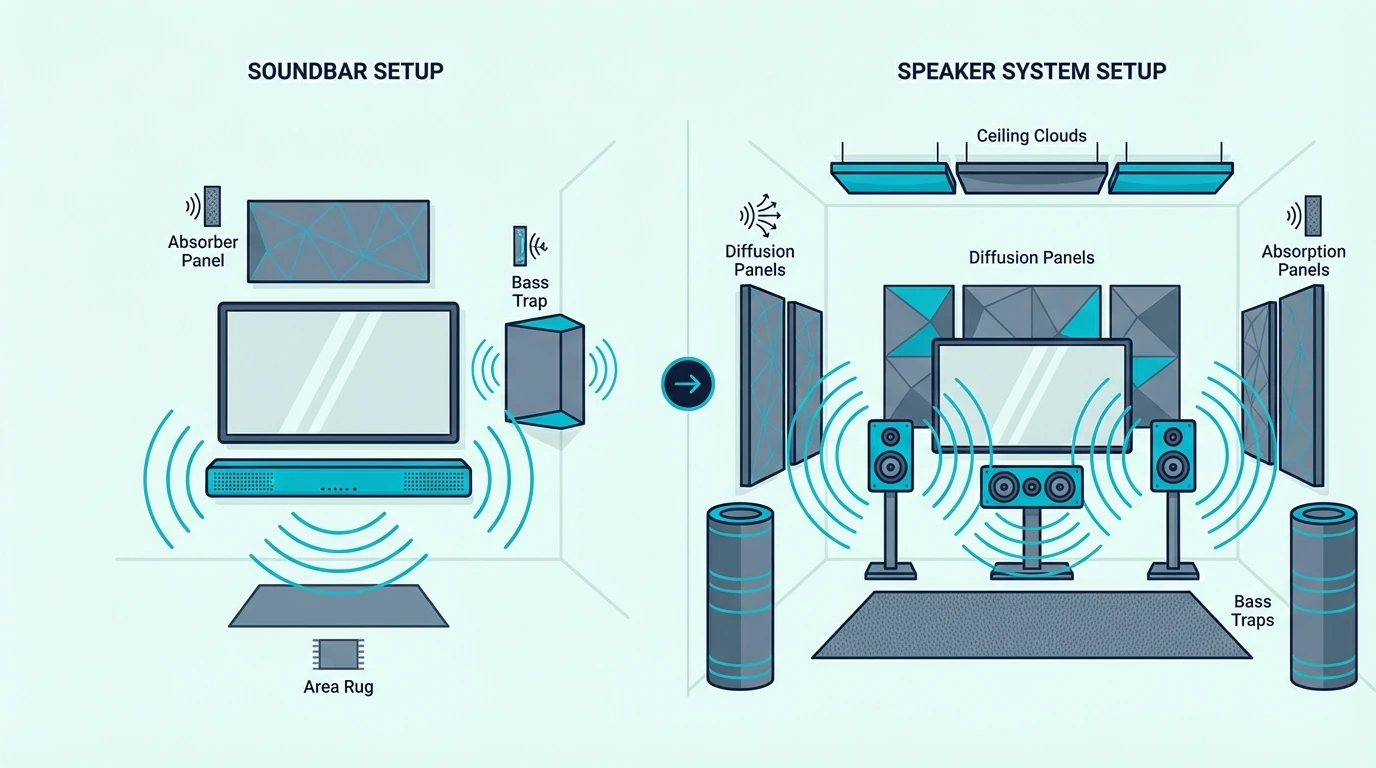
Despite the performance gap, soundbars have legitimate use cases where their convenience and form factor outweigh the audio quality difference.
TV-First Listening
If your TV is the primary audio source — news, shows, sports, casual movie nights — a soundbar delivers a meaningful upgrade from built-in TV speakers with zero room rearrangement.
The improvement in dialogue clarity alone justifies the purchase for most households.
The bar sits below the screen, connects with one cable, and works with your existing TV remote. That simplicity means every person in the household can use it without instructions.
Space-Constrained Rooms
In apartments, bedrooms, and compact living rooms, a soundbar fits cleanly below a wall-mounted TV or on a TV stand without consuming shelf space.
Speakers require surfaces on either side of the screen — bookshelves, stands, or wall mounts — plus cable management between two separate units.
If space is tight, the soundbar’s footprint is often the deciding factor. For small room recommendations, our small room soundbar guide covers the options.
Renters and Temporary Setups
If you move frequently or cannot mount hardware, a soundbar’s single-unit design travels easily and sets up in minutes.
Speakers involve more hardware, more cables, and more placement decisions every time you relocate.
To understand whether a soundbar is the right investment for your situation, our is a soundbar worth it guide covers the value question in detail.
When Speakers Are the Better Choice
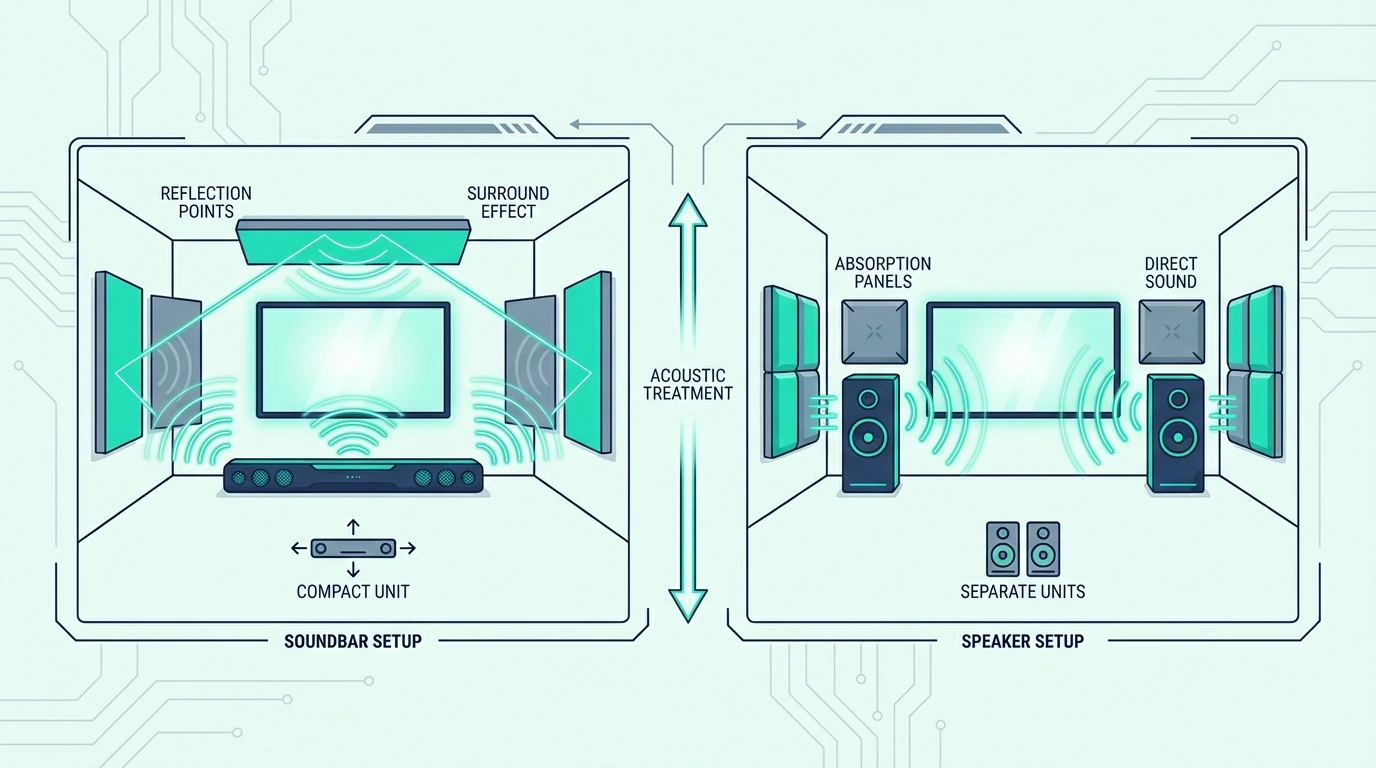
If audio quality is a priority — or if you want a system that grows with you — speakers are usually the smarter long-term investment.
Music Matters to You
If music listening makes up a significant share of your audio time, speakers deliver stereo imaging and tonal detail that a soundbar cannot match at any price.
The physical separation between left and right channels creates a listening experience that single-enclosure designs fundamentally cannot reproduce.
Budget pairs like the Saiyin Bluetooth Bookshelf Speakers provide genuine left-right imaging with Bluetooth connectivity — no receiver needed, and the stereo quality already exceeds what most soundbars can achieve.
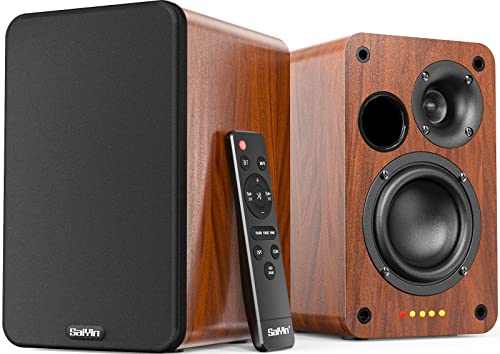
Saiyin Bluetooth Bookshelf Speakers
For the stereo-first buyer, our soundbar vs bookshelf speakers guide is the more focused comparison.
You Want to Upgrade Over Time
Speakers are modular — start with a powered pair today, add a subwoofer next year, and swap to passive speakers with a receiver when the budget allows. Each upgrade improves the system without replacing everything.
A soundbar is a closed ecosystem — what you buy is what you get. When you outgrow it, you replace the entire unit.
You Already Own an Amplifier or Receiver
If you already have an AV receiver or stereo amplifier, adding a pair of passive speakers costs less than buying a new soundbar and gives you significantly better audio.
The receiver handles surround decoding, room correction, and multiple HDMI inputs — features that a soundbar bundles at a premium.
If you still want the simple route, our how to choose a soundbar guide helps narrow the field.
Soundbar vs Speakers: Quick Comparison
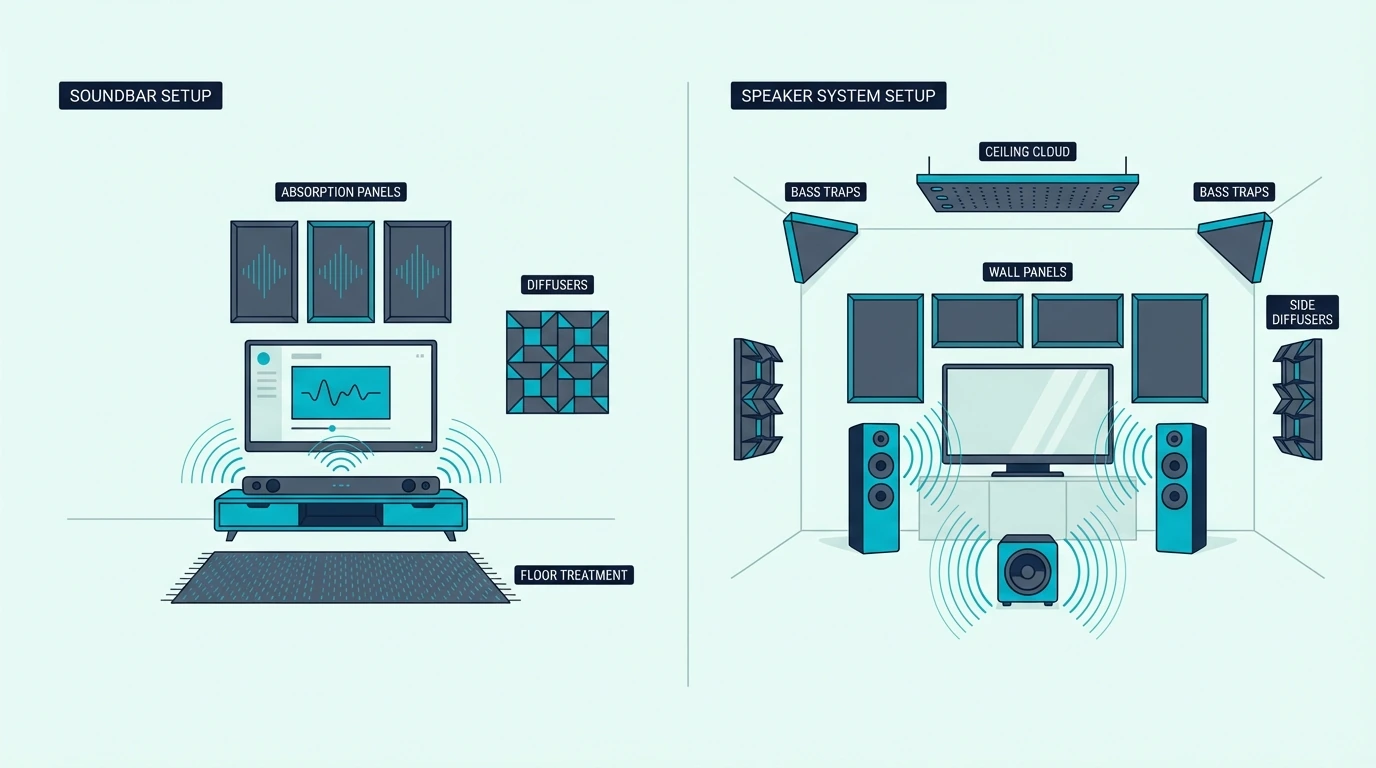
| Factor | Soundbar | Speakers |
|---|---|---|
| Setup | One cable, one unit | Two+ units, amplification needed |
| Stereo Imaging | Compressed (single enclosure) | Wide (physically separated) |
| Dialogue Clarity | Excellent (3.1+ with center channel) | Good (stereo mix only) |
| Music Quality | Adequate for casual listening | Superior at every price point |
| Bass | Needs wireless sub (2.1+) | Better low-end from larger cabinets |
| Space Required | Minimal. Si ts below TV | Needs surfaces on both sides of TV |
| Upgradability | None. Replace the whole unit | Modular — upgrade piece by piece |
| Daily Convenience | TV remote controls everything | May need separate remote or app |
| Best For | TV-first, space-constrained, simplicity | Music, upgradability, audiophile path |
The budget entry point for a soundbar with virtual surround is the Amazon Fire TV Soundbar — DTS Virtual:X and HDMI ARC in a compact bar.
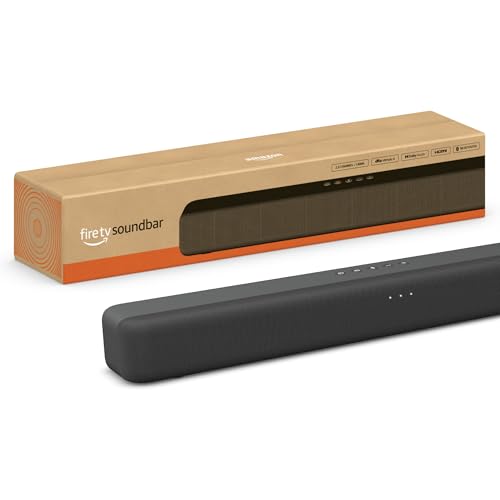
Amazon Fire TV Soundbar
On the speaker side, the Edifier R1280T remains one of the best budget powered pairs for TV and music use.
For understanding how soundbars work at a fundamental level, start there.
The Bottom Line
The soundbar vs speakers decision is not about which sounds “better” in the abstract — it is about which system matches how you actually use audio in your room.
A soundbar is the practical choice for TV-first households where setup simplicity and space efficiency matter more than audiophile performance.
Speakers are the better foundation for anyone who values music, wants the option to upgrade incrementally, or already has amplification gear.
The simplest shortcut: buy the system you will actually place correctly, connect properly, and use every day. Convenience ignored at purchase time turns into regret when a complex system ends up collecting dust.
Frequently Asked Questions
What are the disadvantages of a soundbar?
The main disadvantages are compressed stereo imaging (all drivers in one narrow bar), limited upgradability (you cannot swap individual components), and lower audio quality ceilings compared to dedicated speakers at the same price.
Virtual surround processing depends on room shape and never fully matches physically separated speakers.
Does a soundbar replace speakers?
A soundbar replaces your TV’s built-in speakers and can serve as your primary audio system for TV, movies, and casual music.
It does not replace a quality speaker setup for serious music listening, and it cannot match the stereo separation or dynamic range of dedicated bookshelf or tower speakers.
Can a soundbar be used as a speaker?
A soundbar is a speaker — it contains multiple speaker drivers in a single enclosure, and you can use it for music playback via Bluetooth, HDMI, or optical input.
The audio quality for music is adequate for background listening but will not match dedicated stereo speakers for critical listening.
Is a soundbar or bookshelf speakers better for a small room?
In a small room, both work well because the short listening distance compensates for the soundbar’s narrower stereo image. Bookshelf speakers still produce better stereo separation, but the difference is less noticeable at close range.
A soundbar’s smaller footprint and simpler setup may be more practical in tight spaces. For small room recommendations, our small room soundbar guide covers the options.
Should I get a soundbar or speakers for my apartment?
For most apartments, a soundbar is the safer choice.
The compact form factor works in tight spaces, the single-cable setup avoids wall mounting or speaker stands, and the lower bass output is actually a benefit — you are less likely to disturb neighbors.
If music quality is a priority, powered bookshelf speakers with Bluetooth give you better stereo without needing a receiver. The tradeoff is placement — you need surfaces on either side of the screen and cable runs between both units.