Does Soundproofing Work (And When Does It Actually Make A Difference)
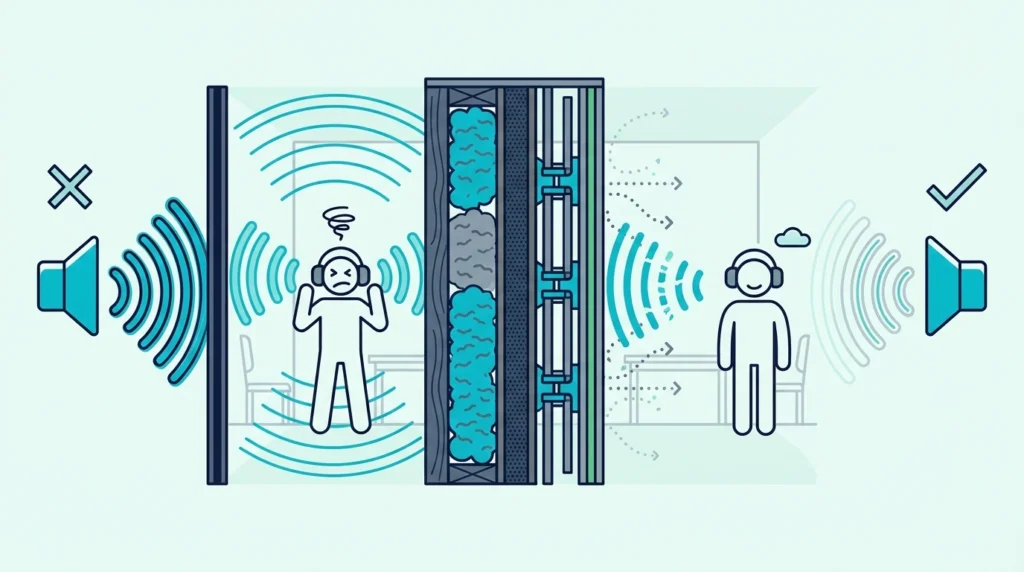
Does soundproofing work? Yes, but only when the method matches the path the noise is actually using in the room.
That is why so many people buy a “soundproof” product, put it on the wrong surface, and still hear the same neighbor, traffic, or TV noise because the real leak is still the door, window, wall, floor, or ceiling.
Get that diagnosis right and soundproofing can reduce outside noise, reduce sound leakage, and make a room meaningfully quieter without pretending a light fix will create total silence.
Below, you’ll see what “working” really means, which noise types respond best, why soundproofing fails, when lighter noise reduction is enough, and how to decide whether a real upgrade is worth it.
Does soundproofing work? Yes, but only when the fix matches the noise type and the real weak point. Soundproofing works both ways because stronger barriers resist sound entering and leaving, but the result depends on whether you are treating the door, window, wall, floor, or ceiling that is actually leaking the noise.
What “Working” Really Means in Soundproofing
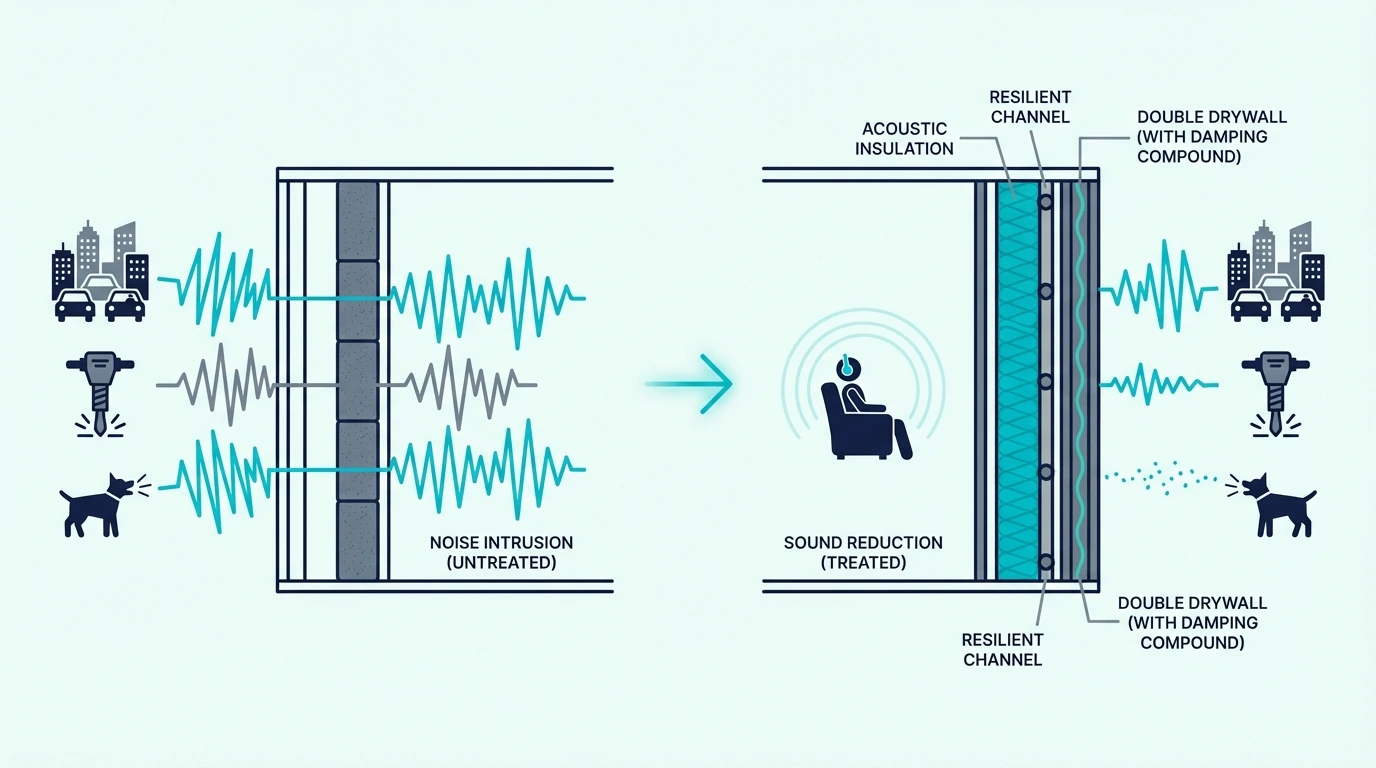
Now that the short answer is on the table, the first step is defining what “work” should mean in a normal home, apartment, or studio room.
Realistic expectations vs total silence
Working means a noticeable reduction in unwanted noise, not total silence. Even strong professional builds are judged by how much they reduce and control sound, not by whether they erase every last trace of it.
For most home situations, success means the noise drops enough to stop dominating the room. That might mean neighbor voices turn into a faint murmur, traffic becomes background sound, or your own TV and music stop carrying so clearly into the next room.
Soundproofing also works both ways because the same barrier resists sound traveling in either direction. A better-sealed window reduces outside noise entering the room, and that same stronger window also helps keep your own sound from leaking out.
Which noise types respond best
That realistic-reduction mindset also depends on the type of noise. Mid-frequency and high-frequency sounds are the easiest to reduce. That includes voices, TV audio, office noise, and a lot of everyday neighborhood sound.
Air leakage is the next big factor. If the problem is mainly a hollow door, a leaky window, or perimeter gaps, better sealing can make a noticeable difference surprisingly quickly.
Impact and structure-borne noise are harder because they use the building itself as the path. Footsteps, furniture movement, kick drums, and mechanical vibration often require floor, ceiling, or assembly changes rather than one simple wall product.
Bass is hardest of all. Low-frequency sound carries more energy, travels farther, and needs much more mass and isolation than speech or TV noise.
Why people think soundproofing fails
Even with the right noise type, disappointment is common — and almost always traces back to diagnosis, not physics. Most soundproofing failures happen because the buyer treated the wrong thing. Foam on a wall will not stop neighbor noise if the real problem is transmission through the wall assembly or leakage around the door.
The other common reason is weak-link thinking. If you improve one surface and leave the weakest opening untouched, the noise simply bypasses the upgraded surface and keeps using the easier path.
Expectation is the third problem. Many buyers are really asking for near-total silence from a light upgrade, when their room actually needs more mass, better sealing, and sometimes deeper construction than they planned for.
Where Soundproofing Delivers Real Results
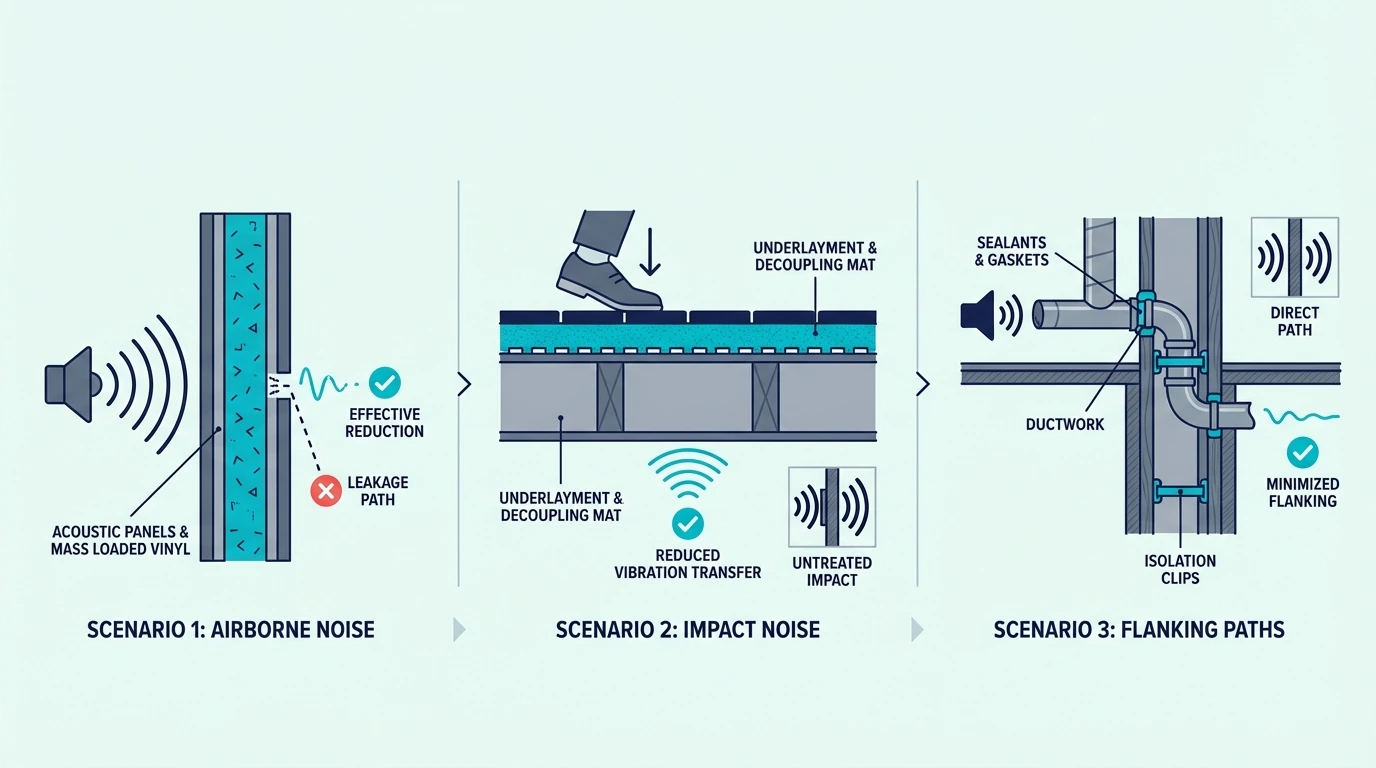
Once you stop treating soundproofing like one universal trick, the cases where it works well become much easier to spot. It works best when the noise path is clear and the fix actually strengthens that part of the room.
Walls
Wall soundproofing works well when the wall is truly the path that is leaking the noise. Shared walls between apartments, condos, offices, and bedrooms are the most common example because the partition is often too light for the sound it is trying to resist.
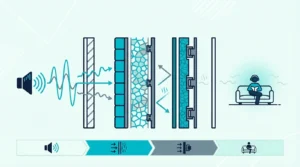
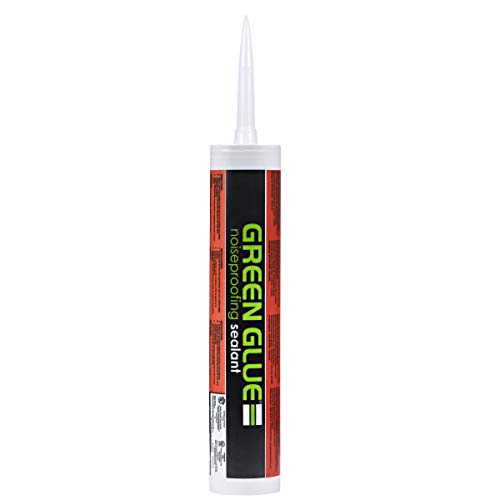
That is where more mass and damping start to matter. A damping layer like Green Glue Noiseproofing Compound between drywall layers can make a real difference because it helps the wall absorb vibration instead of passing as much of it through.
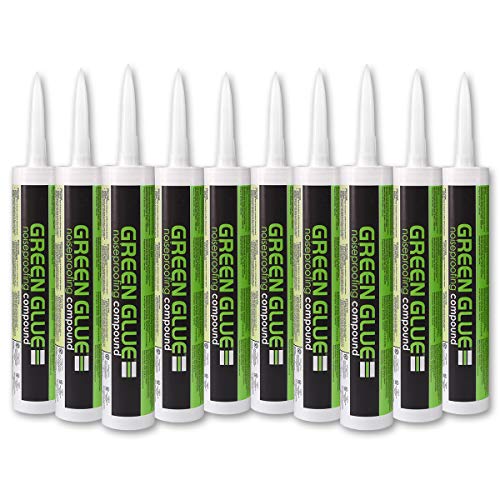
Green Glue Noiseproofing Compound
Wall work disappoints when it is partial, leaky, or applied to the wrong side of the problem. For a deeper wall-specific breakdown, how to soundproof a wall covers the full upgrade path.
Floors and ceilings
The same mass-and-sealing logic applies between levels, but floors and ceilings need a more honest diagnosis because they deal with both airborne sound and impact transfer. Voices and TV noise between levels behave differently from footsteps, dropped objects, and structure-borne vibration.
That is why cavity fill, decoupling, and floor-side softening each solve different parts of the problem. Dense insulation like AFB Acoustical Fire Batts helps inside an assembly, while underlayments, clips, and channels address different floor or ceiling paths.
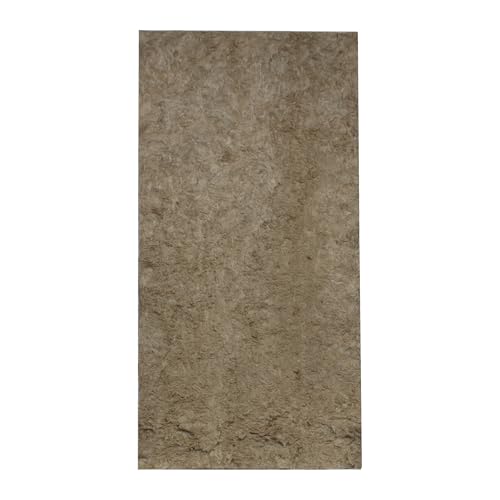
AFB Acoustical Fire Batts
That is why soundproofing a ceiling and soundproofing a floor usually become separate projects in practice instead of one generic “between floors” fix.
Doors and windows
Walls, floors, and ceilings get the most attention, but doors and windows are often the best first test because they are usually the weakest barriers in the room. If a hollow door or leaky window is doing most of the damage, fixing that opening can outperform a heavier wall upgrade that leaves the weak point untouched.
This is also the clearest example of soundproofing working both ways. A tighter door or window helps block outside noise coming in and your own sound going out because the barrier itself is stronger and more airtight.
For perimeter leaks, a product like 33 Ft Self-Adhesive Soundproofing Weather Stripping is a practical first move because it targets the opening directly instead of assuming the wall is already the problem.
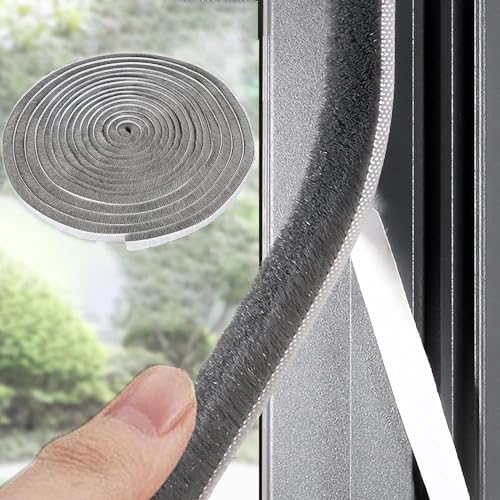
33 Ft Self-Adhesive Soundproofing Weather Stripping
If you want the full opening-specific path, compare soundproofing a door and soundproofing windows before jumping into broader wall work.
Get Studio Tips Weekly
Join 5,000+ creators getting acoustic treatment advice every week.
No spam. Unsubscribe anytime.Why Soundproofing Fails: The Three Most Common Mistakes
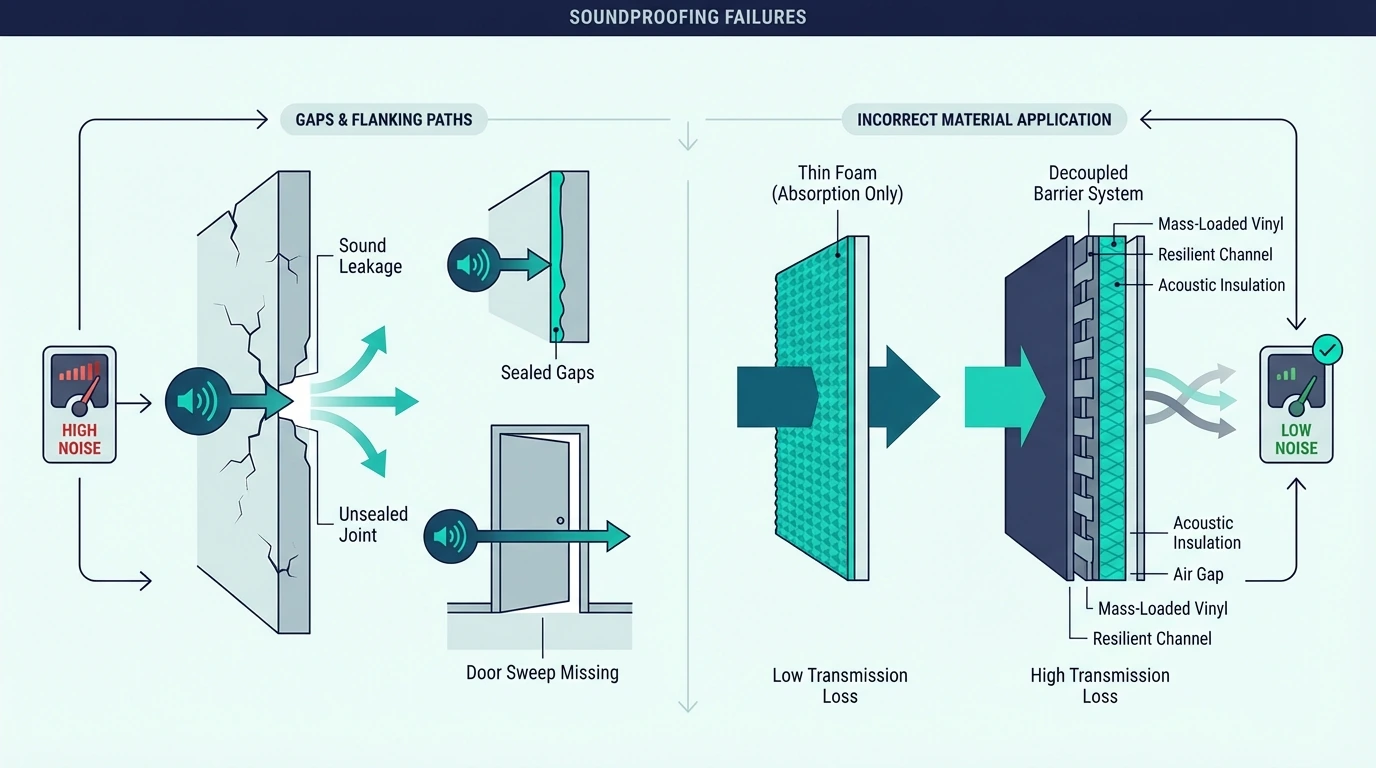
Most soundproofing disappointments come from predictable mistakes rather than from the idea itself failing. The concept usually holds up; the diagnosis usually does not.
Treating absorption as if it were blocking
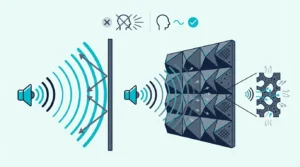
The most expensive mistake is buying the wrong category entirely. Acoustic foam is designed to absorb reflections inside a room, not to block sound transmission through a wall. It helps echo and harshness inside the room far more than it helps sound crossing the shell.
This is the single biggest reason people think soundproofing does not work. They buy a treatment product for a transmission problem, then conclude the whole category is fake when the neighbor noise barely changes.
If you need the clean distinction on that boundary, compare your expectations against do soundproof panels work. The difference between treatment and real barrier performance is the heart of the confusion.
Leaving gaps that bypass the upgrade
Even when the right category of product is chosen, small leaks can undo big investments. Sound follows the path of least resistance, just like air. A small leak around trim, a frame, or an outlet can undermine a much heavier upgrade nearby because the noise keeps choosing the easier opening.
That is why sealing matters as much as people say it does. A heavier but leaky assembly often underperforms a lighter one that is actually tight at the edges and joints.
That is where a flexible sealer like Acoustical Caulk (29 oz) matters. It is not glamorous, but it is one of the clearest examples of why real soundproofing depends on airtightness as much as weight.
Underestimating bass
Sealing and mass handle most mid-and-high-frequency noise, but bass exposes the limits of lighter builds. Bass is hard to stop because low-frequency waves are long, energetic, and much better at moving walls, floors, and ceilings. That is why many projects succeed on speech and still disappoint on subwoofers, traffic rumble, or music with deep low end.
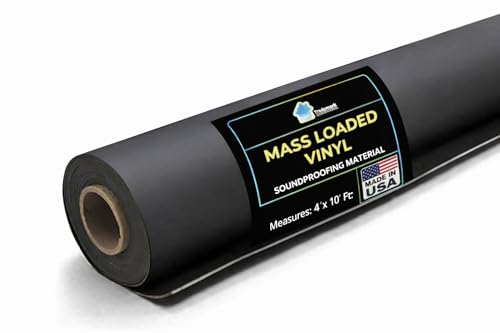
When you are already upgrading a wall or ceiling assembly, a real mass layer like Trademark Soundproofing Mass Loaded Vinyl belongs in the conversation because it addresses the barrier side of the problem, not just the room-acoustics side.
Bass is also where expectations need the biggest correction. If the room is light and the source is powerful, soundproofing may still work, but the level of build required may be much higher than the buyer originally expected.
When Lighter Noise Reduction Is Enough
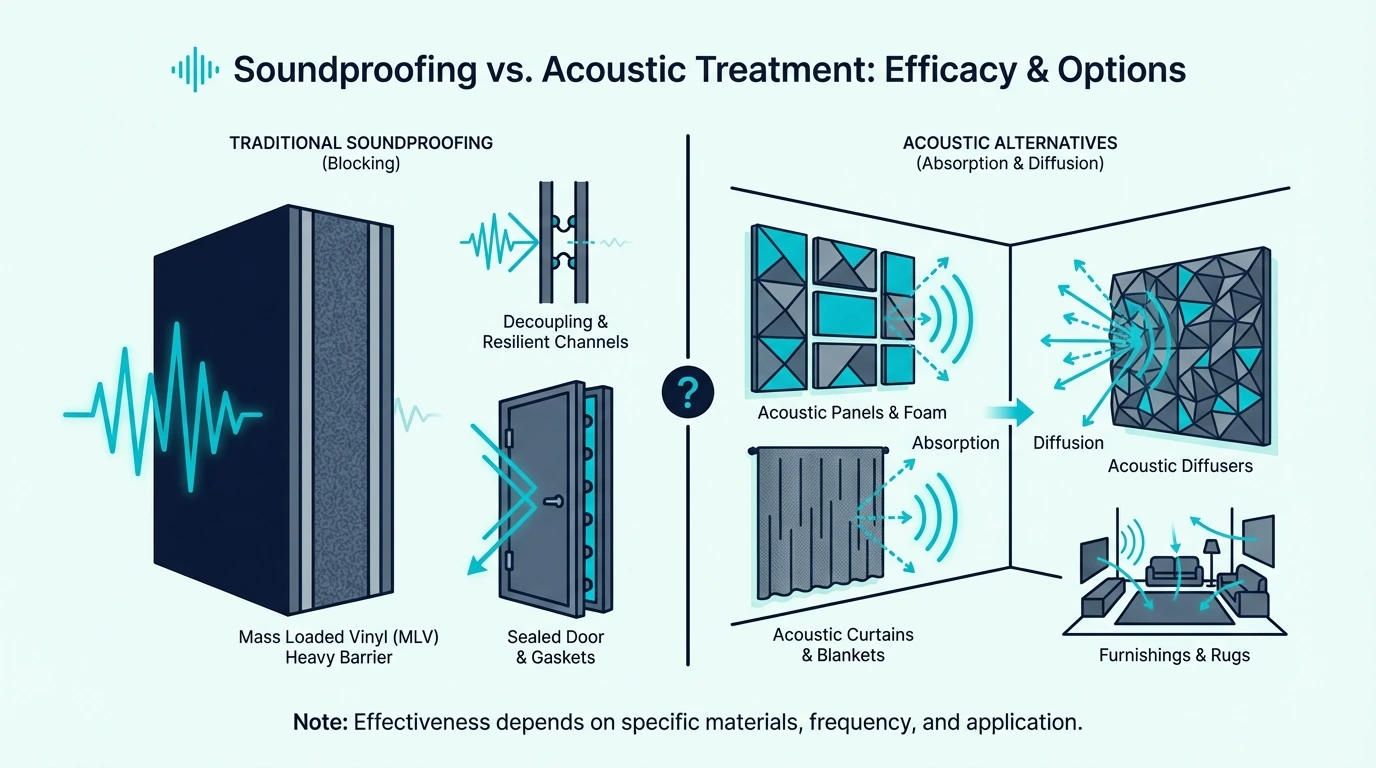
Not every noise problem needs a full construction-grade answer. Sometimes the right move is not “more soundproofing,” but a lighter form of noise reduction that solves the real comfort problem well enough.
Comfort vs isolation
Noise reduction is good enough when the goal is comfort rather than isolation. If you want better sleep, easier focus, or a calmer room without eliminating every sound, lighter upgrades can often do enough to make daily life better.
This is where curtains, sweeps, sealing, and other weak-point improvements start to make sense. A product like RYB HOME Soundproof Divider Curtain belongs here because it is honest about being a lighter step rather than a full shell upgrade.
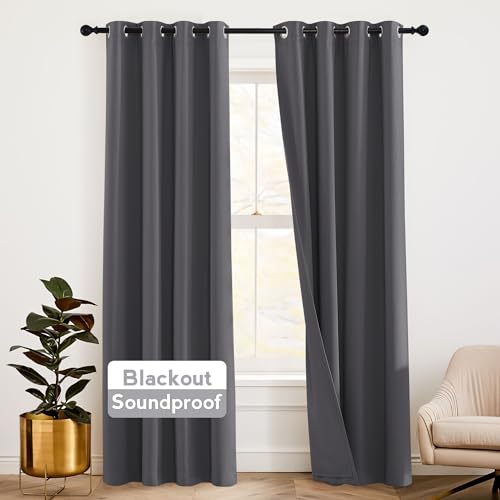
RYB HOME Soundproof Divider Curtain
Treatment as a complement, not a substitute
That comfort-level approach sometimes overlaps with acoustic treatment. Acoustic treatment is useful when the quality of sound inside the room matters more than blocking sound through the room shell. That includes podcasting, recording, video calls, and rooms that sound too harsh or echoey even when outside noise is not the main problem.
But treatment is not a substitute for soundproofing. It changes reflections, reverb, and internal clarity without doing much to strengthen the barrier between you and the noise source.
That is why treatment can be valuable and still fail the soundproofing test. If the real complaint is what is coming through the wall or window, you still have to improve the barrier.
When real soundproofing becomes necessary
If lighter fixes and treatment still leave the noise dominating the room, the problem has outgrown accessories. Invest in real soundproofing when the noise is persistent, severe, and clearly coming through a specific path that lighter fixes cannot solve. Shared walls with noisy neighbors, bedrooms facing busy roads, and rooms that need true isolation are the clearest examples.
The threshold is simple: if you already tightened the obvious leaks and the noise is still affecting sleep, work, recording, or daily comfort, then the next step is probably real soundproofing instead of more small accessories.
Deciding Whether Soundproofing Is Worth the Investment
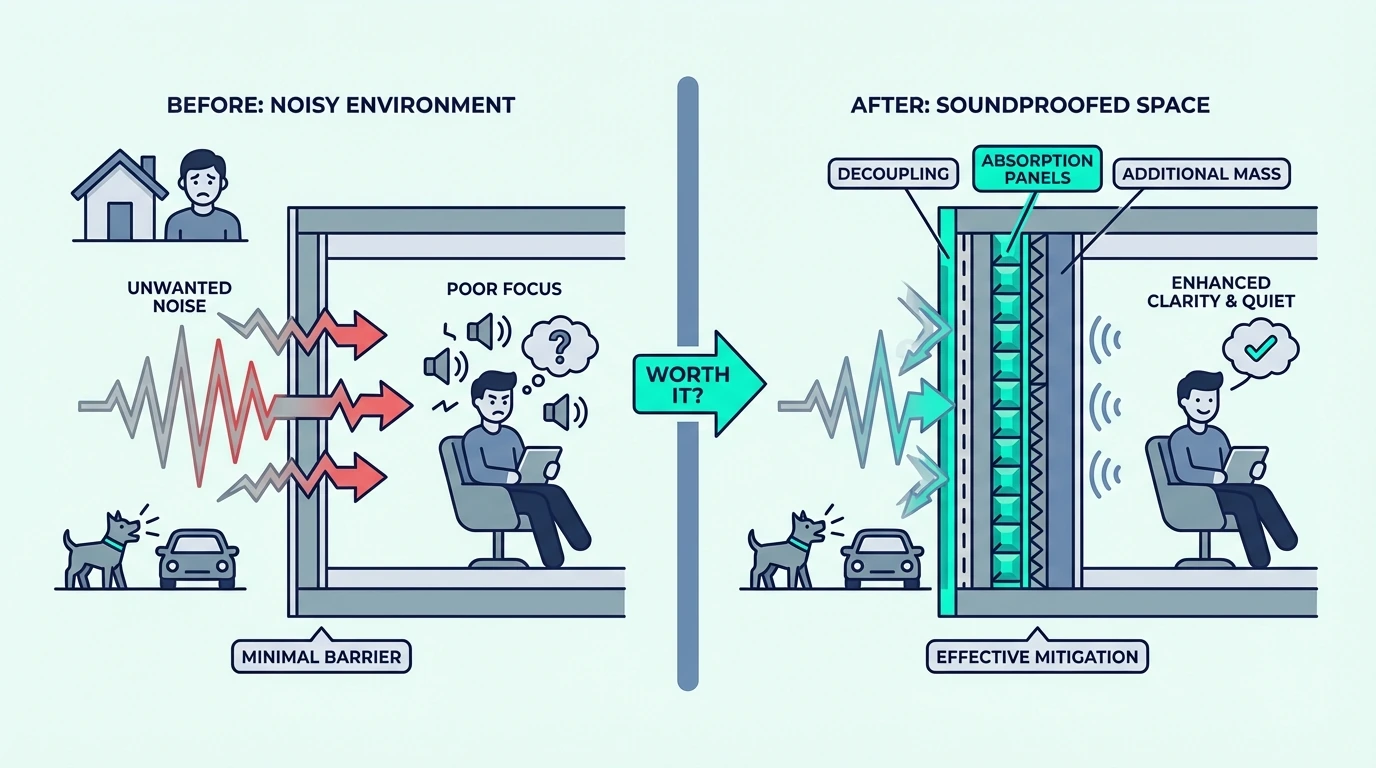
At this point the decision becomes practical rather than theoretical. The real question is not “does soundproofing work in general?” but “will the right upgrade make enough difference in this specific room to justify the cost and effort?”
Start with the weakest barrier
Start with the weakest barrier in the room. In many cases that is the door, then the window, then the wall or ceiling path behind them.
That order matters because removing the worst bottleneck usually changes the result more than spreading a little money across every surface. A small first win also tells you whether the room is mostly leaky or fundamentally too light.
For a budget-conscious test, 33 Ft Self-Adhesive Soundproofing Weather Stripping is often the clearest first move because it tests the opening before you commit to bigger work.
How much improvement you actually need
Fixing the weakest barrier sets the baseline, but the next question is how much improvement matters. Most people notice a meaningful change at around a 5–10 dB reduction. That may sound small on paper, but it feels substantial in real life once an intrusive noise drops into the background.
The important part is that this kind of improvement usually comes from properly treating the main weak point, not from adding a little bit of everything everywhere. One real upgrade often beats five partial ones.
When to call a professional
If DIY fixes have delivered some improvement but not enough, the next step may be professional diagnosis. Call a professional when the noise is severe, the structure is clearly involved, or your DIY attempts have not delivered enough improvement. That is also the right move for home studios, media rooms, and any project where “noticeably quieter” is not a high enough standard.
Professionals matter most when the room needs measured diagnosis rather than guesswork. If the problem may involve multiple paths, compare your situation against soundproofing an apartment and best soundproofing material so you can judge whether you are still in DIY territory or already in assembly territory.
The Bottom Line
Does soundproofing work? Yes, soundproofing works when the method matches the noise type, the weak point is identified correctly, and the barrier is actually strengthened.
It works both ways, but it only feels convincing when the room stops leaking through the path that was really doing the damage.
That is why some projects feel dramatic and others feel fake. Foam will not stop transmission, sealing alone will not solve bass, and one treated surface will not overcome a still-open weak link somewhere else.
But when you match the fix to the real path, soundproofing can make a room meaningfully quieter and absolutely worth the effort.
If you are deciding where to start, compare this page with how to soundproof a room and best insulation for soundproofing so you can choose the right level of upgrade before you buy the wrong one.
Frequently Asked Questions
Does soundproofing a room actually work?
Yes, soundproofing a room actually works when the treatment matches the noise type and covers the main weak points. Most failures happen because the wrong method was used or because gaps and untreated surfaces let sound bypass the upgraded area.
Does rockwool soundproof?
Rockwool helps with soundproofing when it is used inside a wall, floor, or ceiling assembly because it adds useful density and absorption in the cavity. It is not a standalone fix, but it improves a stronger assembly when it is paired with real mass and sealing.
How to block out 100% of noise?
Blocking 100% of noise is not realistic with any single consumer product or light retrofit. The closest result requires a fully sealed room with mass, decoupling, and stronger assemblies on every relevant surface, so most projects aim for meaningful reduction rather than total silence.