Soundproof Drywall Vs Regular Drywall (What Actually Changes And When It Matters)
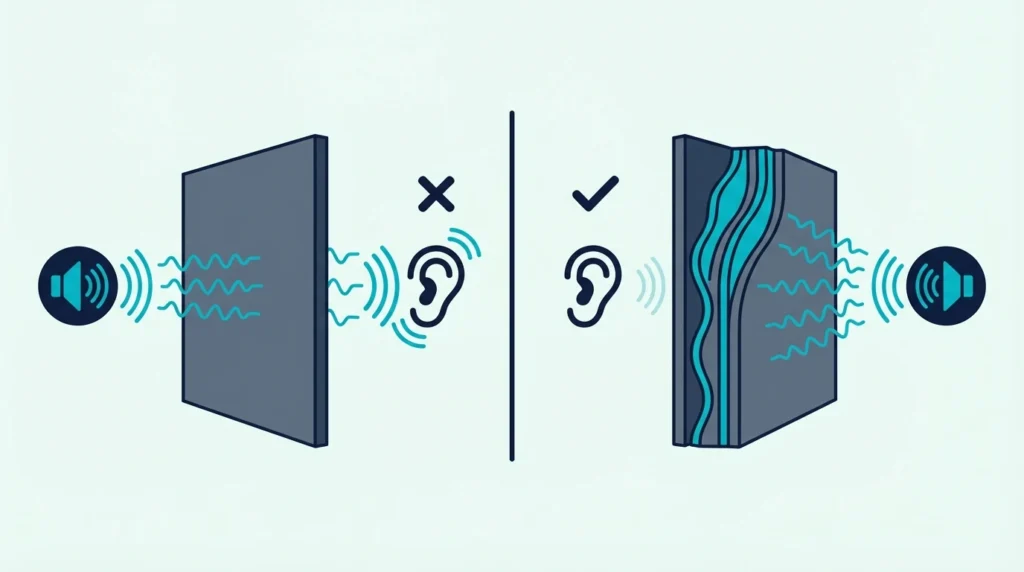
Soundproof drywall vs regular drywall is a comparison that matters most when you are building or renovating a wall and want to know whether the premium product is worth the extra cost, but only if you understand that no single drywall layer solves a noise problem by itself.
Many buyers overspend on specialty drywall and still feel disappointed. The drywall is one layer in a multi-layer assembly, and upgrading it while leaving the insulation thin, the seals open, and the framing rigidly connected changes less than most product descriptions suggest.
The better way to evaluate the decision is to compare the drywall options within the context of the full wall assembly. Once you understand what soundproof drywall actually adds and when that addition matters versus when cheaper alternatives deliver the same result, the spending decision becomes much clearer.
Start with what changes inside the panel, then move to when the premium really pays off, where the cost stops making sense, and which alternatives usually deserve the money first.
This guide makes that order explicit so you can decide whether you need a specialty panel, a stronger full assembly, or simply a better-value drywall strategy.
Soundproof drywall vs regular drywall comes down to a built-in damping layer that reduces vibration transfer through the panel. It helps most when the rest of the wall assembly is already well-built, but it is not a substitute for insulation, sealing, and decoupling — and a double layer of regular drywall with a damping compound between them can often match or exceed its performance at a lower total cost.
The Real Difference Is Built Into The Panel
The product sounds more dramatic than it usually behaves in a full wall assembly.
The useful question is not whether specialty drywall is different, but how much that difference actually changes the wall once the other layers are factored in.
Soundproof Drywall Adds Damping Between Gypsum Layers
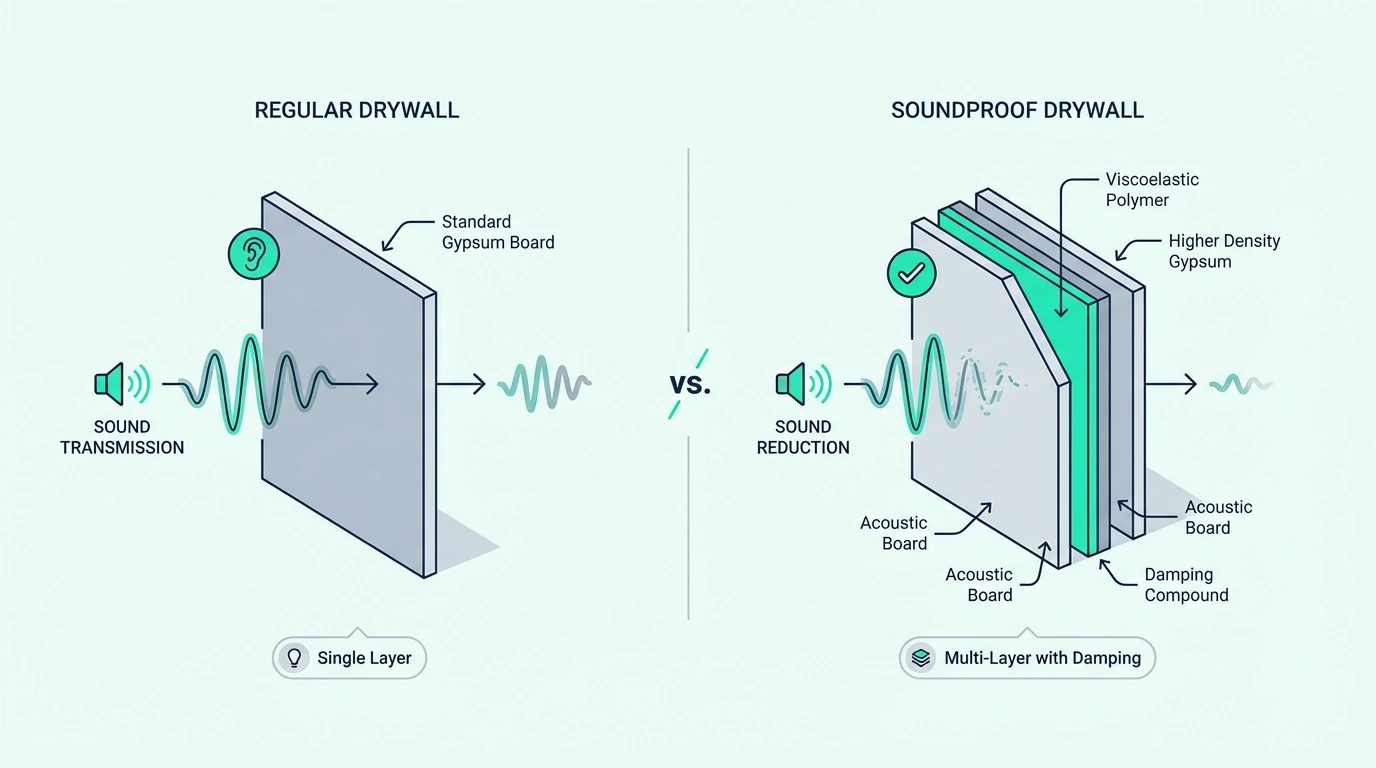
Soundproof drywall uses a viscoelastic damping layer sandwiched between two gypsum layers. That damping layer converts vibration energy into heat instead of transmitting it through the panel, which reduces the amount of sound that passes through the drywall itself.
The most common brand is QuietRock, but other manufacturers offer similar products. The key specification is the Sound Transmission Class (STC) rating, which measures how much sound the panel blocks.
Soundproof drywall typically rates 3–8 STC points higher than standard drywall of the same thickness when tested as a standalone panel.
Drywall Choice Can Shift Performance, But Usually Not By Itself
The drywall layer contributes to the overall wall performance, but it is only one factor. A wall’s STC rating depends on the combination of drywall, insulation, framing, air gaps, and sealing.
Upgrading the drywall alone while leaving the rest of the assembly unchanged typically improves the wall by 3–5 STC points, which is noticeable but modest.
For context, a 5 STC improvement is roughly equivalent to a perceptible-but-not-dramatic reduction. Voices that were clearly audible may become muffled, but they will not disappear.
The bigger gains come from treating the full assembly rather than upgrading one layer.
Regular Drywall Stays Competitive In A Strong Assembly
Regular drywall is good enough when the wall already has adequate insulation, the framing is decoupled, and the seals are tight. In those cases, the drywall layer is not the bottleneck, and upgrading it delivers diminishing returns compared to what the rest of the assembly is already doing.
Standard 5/8-inch drywall also outperforms 1/2-inch for sound simply because it is heavier. If you are choosing between thicknesses of regular drywall, the thicker option is almost always better for sound and often cheaper than switching to specialty panels.
That same mass-first logic applies across every surface in the room, which is why soundproofing a ceiling and soundproofing between floors follow the same assembly principles as wall drywall decisions.
The Premium Only Pays Off In The Right Wall
Once you know what the specialty panel adds, the buying decision gets narrower.
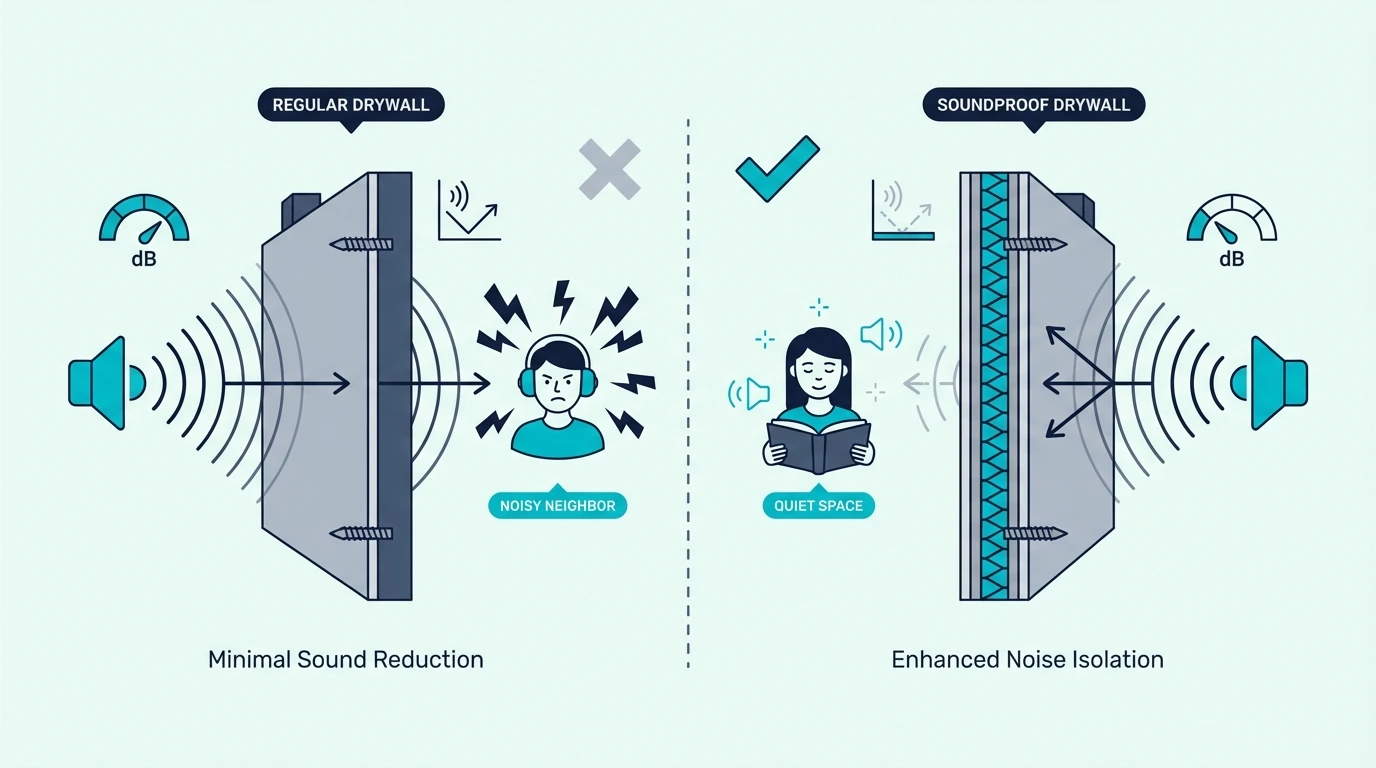
The premium only pays off when the rest of the wall is strong enough for the drywall layer to become the next real bottleneck.
Specialty Panels Help Most When The Assembly Is Already Strong
Soundproof drywall makes the biggest difference when used in an otherwise well-built wall assembly. If the wall already has dense insulation in the cavity, resilient channels or isolation clips on the framing, and sealed joints and penetrations, the drywall layer becomes the next meaningful upgrade because the other weak points have already been addressed.
It also makes sense when you want to maximize performance in a single layer — for example, when adding a second layer of drywall is not practical because of space constraints, door clearance, or trim complications. In those cases, one layer of soundproof drywall delivers better performance per inch than one layer of standard drywall.
Weak Walls Hide Most Of The Premium’s Benefit
The extra cost is hard to justify when the rest of the wall assembly is weak. If the wall has no insulation, rigid framing with no decoupling, and visible air gaps around outlets and penetrations, upgrading to soundproof drywall will not produce a noticeable improvement because the noise is bypassing the drywall through easier paths.
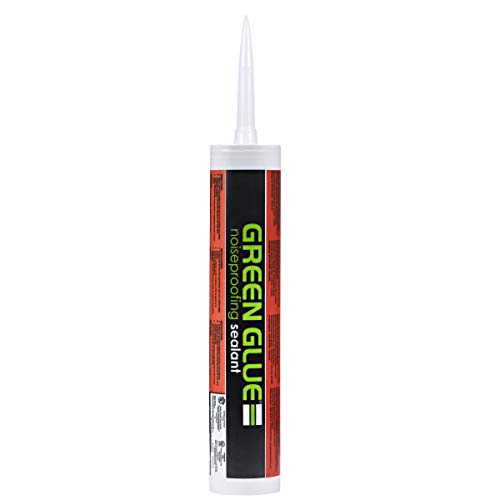
It is also hard to justify when a double layer of regular drywall with a damping compound like Green Glue Noiseproofing Compound between them achieves similar or better STC performance at a lower total cost. That combination adds mass and damping without the premium price of specialty panels.
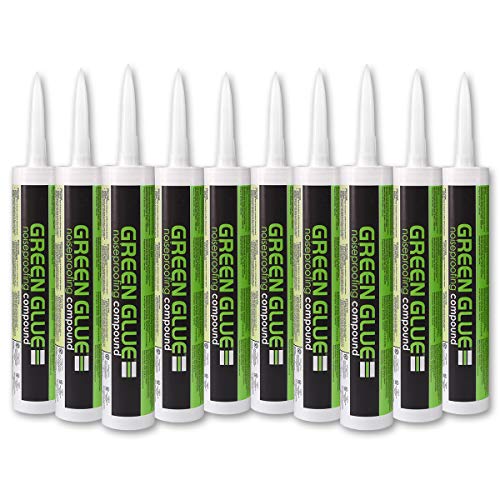
Green Glue Noiseproofing Compound (12 Tubes)
The Full Assembly Usually Matters More Than One Material
Because sound follows the weakest path, not the strongest. A wall with excellent drywall but thin insulation, rigid framing, and unsealed penetrations will perform worse than a wall with standard drywall, dense insulation, resilient channels, and tight sealing.
Soundproofing a wall always starts with the assembly rather than the surface material. The drywall is the last layer to optimize, not the first, and getting the foundation right before upgrading the drywall delivers a much stronger return on investment.
Get Studio Tips Weekly
Join 5,000+ creators getting acoustic treatment advice every week.
No spam. Unsubscribe anytime.Cost Changes The Value Calculation Fast
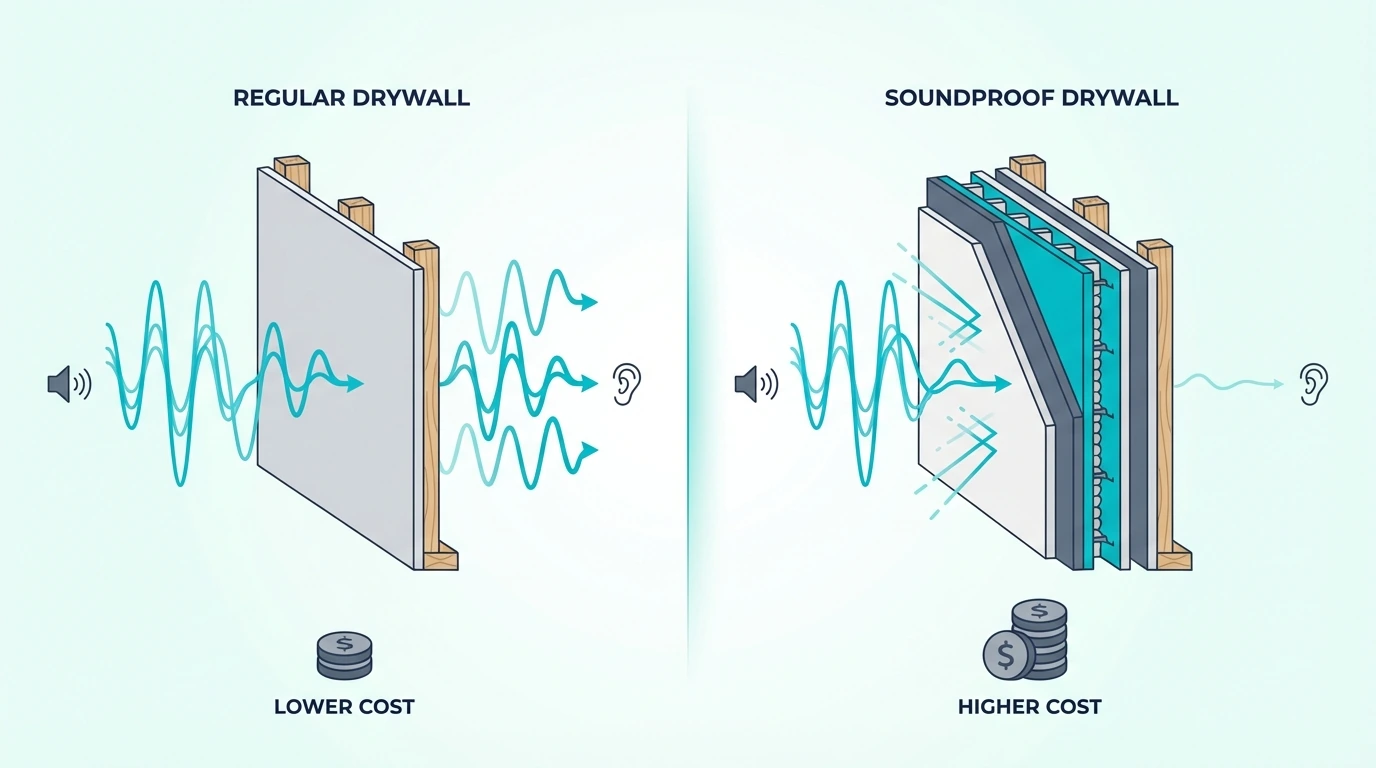
Price is what turns this from a technical comparison into a real project decision.
Once the specialty panel costs several times more per sheet, you have to compare not just performance but what else the same budget could buy in the assembly.
The Extra Cost Pays For Built-In Damping
Soundproof drywall typically costs two to four times more per sheet than standard drywall of the same thickness. The premium pays for the viscoelastic damping layer and the manufacturing process that bonds the multiple layers together.
For a typical bedroom wall, the material cost difference between standard and soundproof drywall can range from a few hundred dollars for a single wall to over a thousand for a full room. That premium is the reason alternatives like double drywall with damping compound exist — they deliver comparable performance with cheaper materials.
Labor Usually Changes Less Than Material Cost
Soundproof drywall is heavier than standard drywall, which can increase handling time and may require additional help during installation. The hanging, taping, and finishing process is essentially the same, so the labor increase is modest.
The bigger labor consideration is whether you are installing soundproof drywall as a single layer or as part of a decoupled assembly. If the wall needs resilient channels or isolation clips, the labor for those components is the same regardless of which drywall goes on top.
The Premium Makes Sense Mostly When Thickness Is Limited
The premium makes sense when space is tight, when you want a single-layer solution, and when the rest of the assembly is already performing well. It also makes sense in multi-family projects where the per-unit cost is amortized across many walls and the time savings of a single-layer install add up.
For single-room residential projects, the math usually favors double drywall with damping compound because the total cost is lower and the performance is equal or better. If you are budgeting for a full room, the soundproof room cost breakdown puts the drywall decision into the context of total project spending.
Alternatives Usually Win The Value Argument
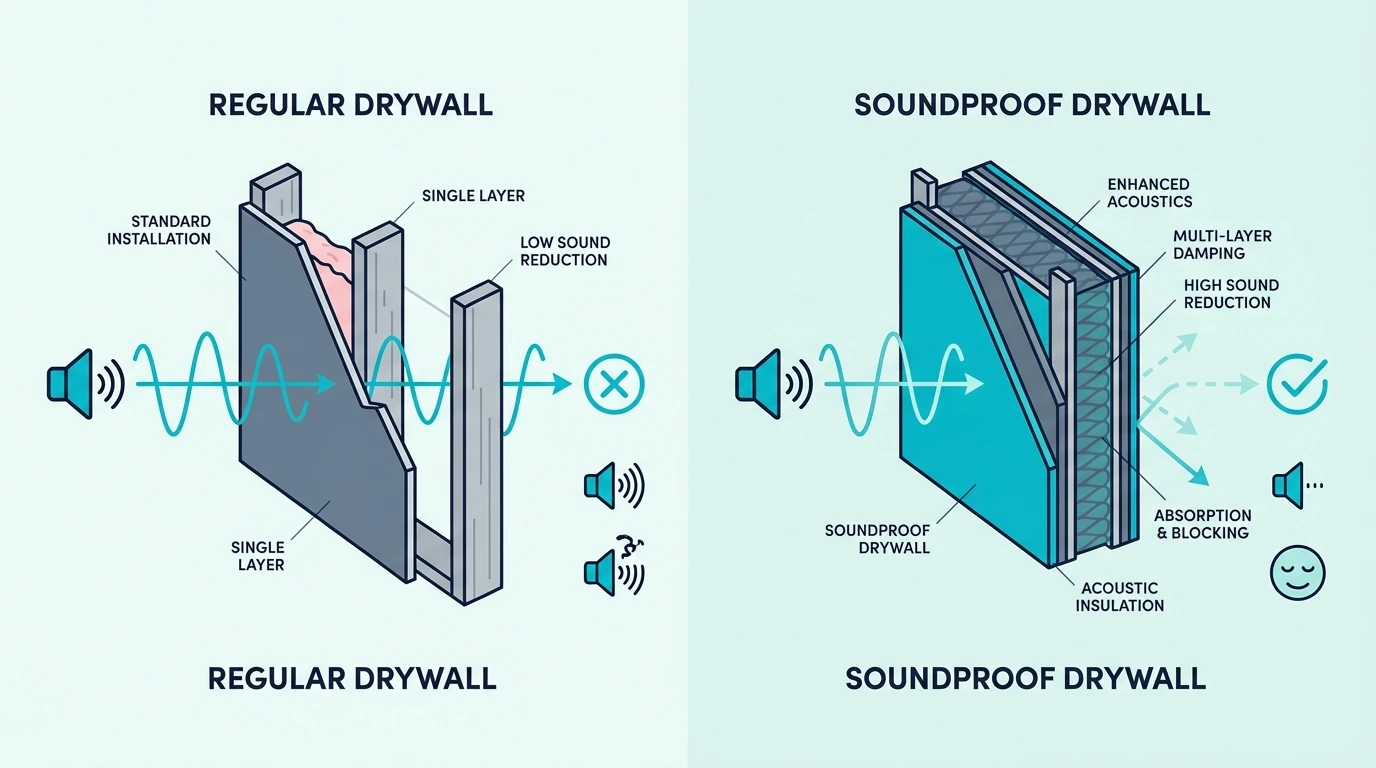
The comparison usually stops being abstract once you price the alternatives side by side.
Once you compare specialty drywall against the main alternatives, the better-value path is often the one that improves mass, damping, sealing, or decoupling in a more complete way.
Double Drywall With Damping Usually Wins On Value
A double layer of regular drywall with a viscoelastic damping compound between the layers is the most common alternative because it adds both mass and damping at a lower total cost. Two layers of 5/8-inch standard drywall with Green Glue Noiseproofing Compound between them typically outperform a single layer of soundproof drywall by 2–4 STC points because the total mass is higher.
The tradeoff is thickness. Two layers of drywall plus compound add about 1-1/4 inches to the wall, which affects door frames, window trim, and outlet boxes.
If that thickness is acceptable, the double-layer approach is almost always the better value.
Adding a mass loaded vinyl barrier like Trademark Soundproofing Mass Loaded Vinyl between the drywall layers is another option that adds mass in a thinner profile than a full second drywall sheet.
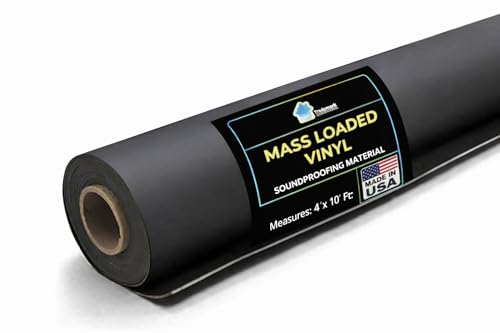
Trademark Soundproofing Mass Loaded Vinyl
Insulation, Seals, And Decoupling Usually Matter First
Insulation, sealing, and decoupling matter more than the drywall choice in most residential situations because they address the biggest sound transfer paths first.
Adding dense insulation to an empty wall cavity can improve the wall by 5–10 STC points. Sealing air gaps around outlets, switches, and penetrations can add another 2–5 points.
Decoupling the drywall from the studs with resilient channels or isolation clips adds another 5–10 points. Each of those upgrades delivers more improvement per dollar than switching from standard to soundproof drywall, especially in rooms where existing wall upgrades have to be chosen carefully.
If the wall is already open, a stud-bay product like AFB Acoustical Fire Batts is usually a smarter first upgrade than premium drywall because it improves cavity absorption across the full wall assembly. At the finishing stage, a bead of Acoustical Caulk (29 oz) around outlet boxes, perimeter joints, and small penetrations helps preserve those gains by stopping leaks that would otherwise bypass the heavier wall layers.
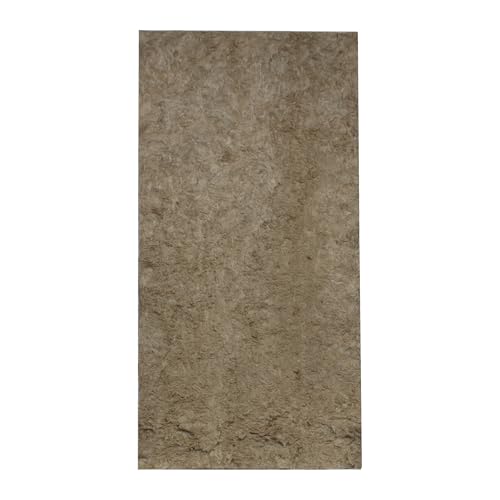
AFB Acoustical Fire Batts
Choose Based On The Assembly Weakness, Not The Marketing
Start with the assembly fundamentals: insulation, sealing, and decoupling. If those are already in place and the noise is still too high, compare the cost of soundproof drywall versus double standard drywall with damping compound.
If space is tight and a single layer is required, soundproof drywall wins on convenience. If space allows two layers, the double-layer approach usually wins on both cost and performance, much like the tradeoffs you see when soundproofing a ceiling or planning room-level soundproofing costs.
For a temporary diagnostic before committing to drywall work, a heavy blanket like VEVOR Sound Dampening Blanket hung on the suspect wall can help you confirm that the wall is actually the main noise path before spending on a drywall upgrade.
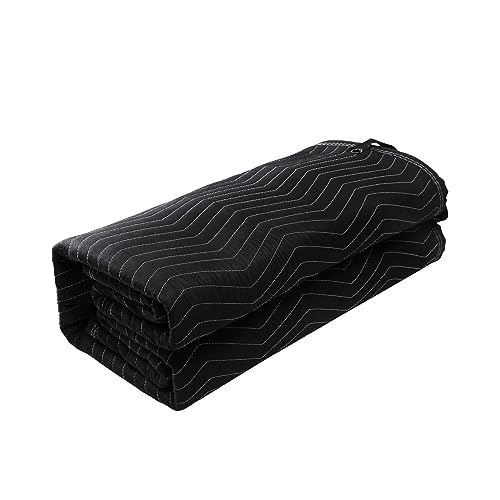
VEVOR Sound Dampening Blanket
Compare this page with best insulation for soundproofing, green glue soundproofing, soundproofing an existing wall, and the broader soundproofing hub so the drywall decision stays in proportion to the rest of the assembly.
The Bottom Line
Soundproof drywall vs regular drywall gets much easier to decide once you stop treating the panel like the whole wall.
If the assembly is weak, spend first on insulation, sealing, and decoupling.
If the assembly is already strong and you need the best value, double regular drywall with damping usually wins.
If the assembly is already strong but thickness is limited, soundproof drywall is where the premium finally makes sense.
That is the decision rule that keeps you from paying for a specialty panel before the rest of the wall is ready to benefit from it.
Frequently Asked Questions
What drywall is best for soundproofing?
The best drywall for soundproofing depends on the assembly. In a well-built wall with insulation and decoupling, soundproof drywall like QuietRock adds meaningful damping.
For most projects, two layers of standard 5/8-inch drywall with a damping compound between them deliver stronger performance at a lower total cost.
Is soundproof drywall worth the extra cost over regular drywall?
It depends on the rest of the wall. If the assembly already has dense insulation, decoupled framing, and sealed penetrations, soundproof drywall adds meaningful damping as the finishing layer.
If those fundamentals are missing, the premium is hard to justify because a double layer of standard drywall with a damping compound often delivers equal or better results for less money.