What Is Green Glue For Soundproofing (And Does It Actually Work)
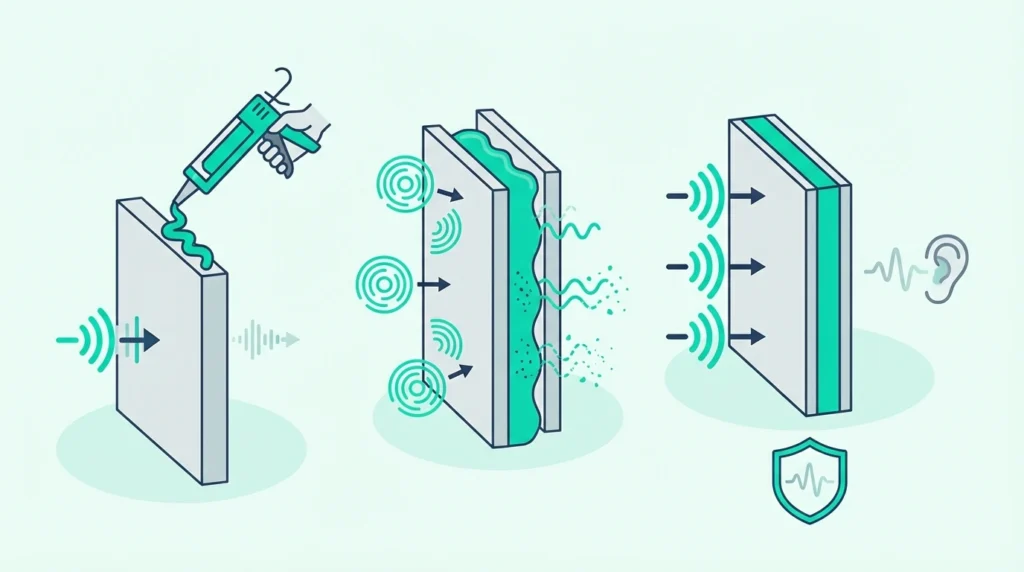
What is Green Glue for soundproofing? It works, but only when it sits inside the right wall or ceiling build.
That is where buyers get frustrated. They pay for the compound, then find the room still leaks through thin drywall, open seams, or a weak door.
The better result comes from using Green Glue for the job it actually does. In the right assembly, it reduces panel vibration and makes voices, TV noise, and bass less intrusive.
So the real decision is not whether the tube is good. It is whether your wall is ready for damping or still needs a more basic upgrade first.
The sections below walk through how Green Glue works, where it fits, when it pays off, and when mass or decoupling should come before it.
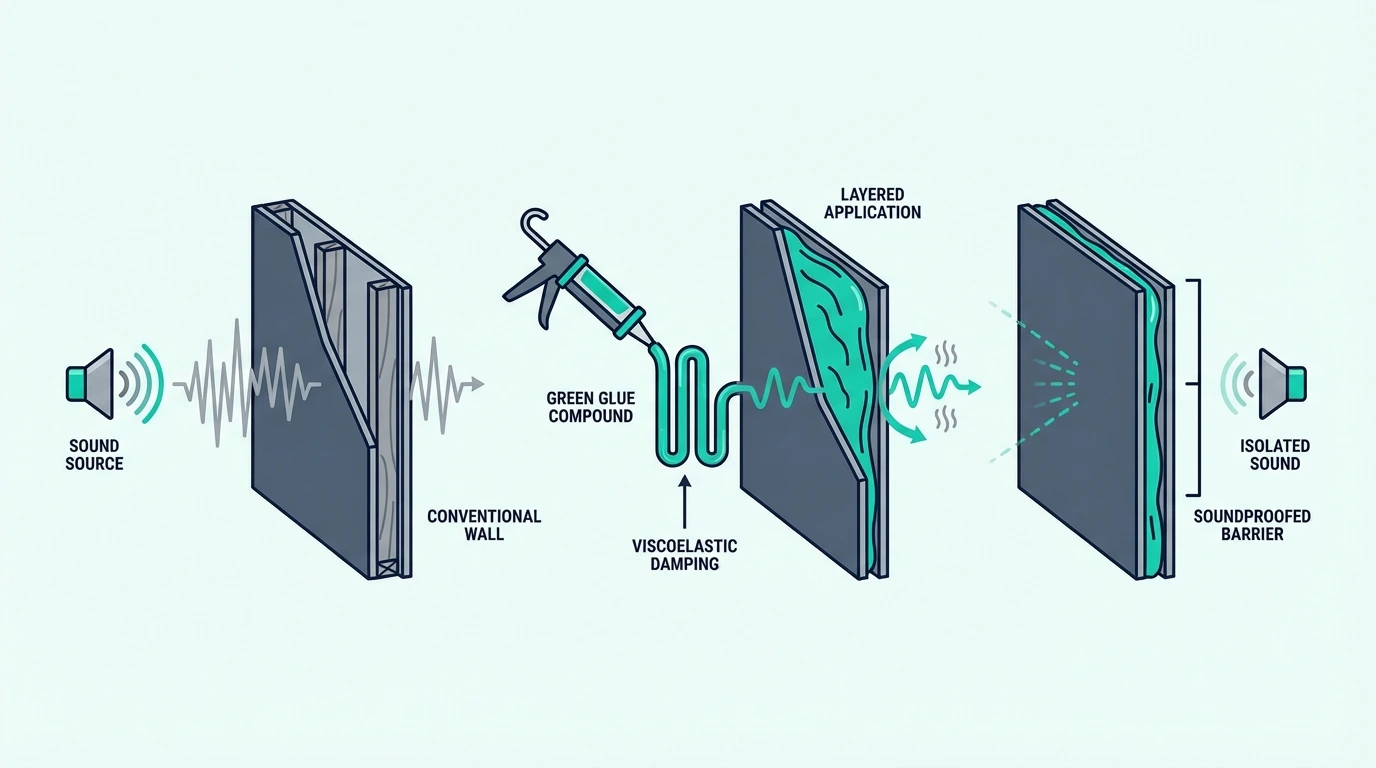
What is Green Glue for soundproofing? It is a viscoelastic damping compound applied between two rigid layers (usually drywall) that converts vibration energy into heat. It reduces the amount of sound that transmits through the panel assembly. Green Glue works best as one layer in a multi-layer wall or ceiling build, and it disappoints most when treated as a standalone fix without addressing mass, insulation, and sealing.
How Green Glue Works Inside a Wall Assembly
The useful question is not whether Green Glue is real. It is what job it actually does once it is trapped between two rigid layers.
That matters because buyers usually hear the brand name before they understand the physics. Once the physics is clear, the rest of the decision gets much easier.
The damping mechanism
Green Glue matters because drywall does not just block sound. It also vibrates when sound energy hits it.
Put one rigid sheet against another and that motion can pass through the stack. Green Glue sits between the layers and turns part of that motion into tiny amounts of heat instead.
That is why it belongs in the same conversation as soundproof drywall. Both approaches are trying to stop the second panel from joining the first panel’s vibration.
The effect shows up most clearly in speech, TV, and general household noise. Those mid frequencies are where panel vibration often becomes a big part of what you hear on the far side.
Green Glue also has a very specific identity. It is not a structural adhesive, so the drywall still needs screws to clamp the sandwich together.
This is also why ordinary construction glue is not a substitute. A rigid adhesive hardens into a bridge, while Green Glue works because it stays flexible after curing.
What Green Glue does not do
Once that damping role is clear, its limits matter just as much. Green Glue does not add meaningful mass, seal perimeter leaks, replace cavity insulation, or break stud contact.
That list matters because buyers often expect one product to fix the whole wall. It cannot.
If air is slipping around outlet boxes or perimeter joints, the sound has already bypassed the drywall face. If the studs are carrying vibration, Green Glue never sees that path either.
The easiest way to think about it is as a multiplier on a decent wall. Put it on a weak build and the result stays weak.
Put it on a wall that already has mass, sealing, and absorption, and the compound starts working on one of the few important paths left.
Where Green Glue fits in a build
That is why Green Glue belongs late in the decision tree, not first. The usual place is between the first and second drywall layers on a wall or ceiling.
In a retrofit, the first layer may be the drywall you already have. The new layer goes over it with Green Glue on the back, which is why the product is popular on shared walls and ceilings that you do not want to demolish.
It can also sit between drywall and plywood, plywood and plywood, or rigid layers in some floor builds. The rule is simple: two panels, tight contact, and a vibration path you are trying to calm.
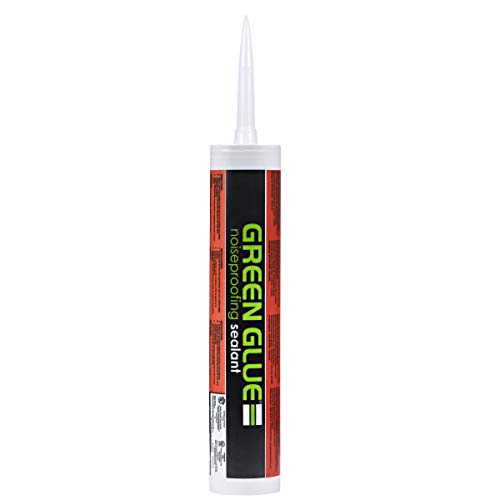
For most homeowners the tube format is the practical choice because it works with a standard caulk gun. A case of 12 tubes covers roughly 6 sheets of drywall at the recommended 2 tubes per sheet for walls.
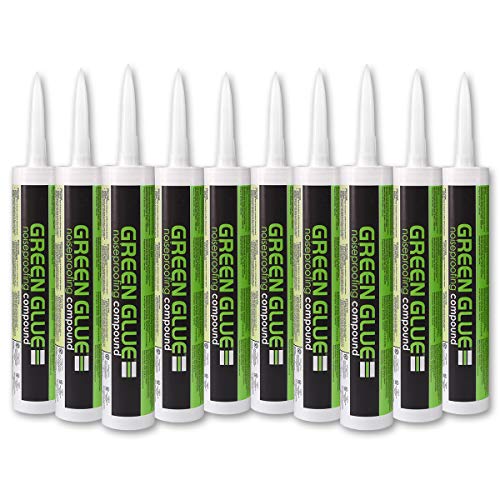
Green Glue Noiseproofing Compound (12 Tubes)
That retrofit logic is a big reason the product stays popular with homeowners. Soundproofing an existing wall covers the broader second-layer approach when Green Glue is part of the plan.
Real-World Performance: When Green Glue Delivers
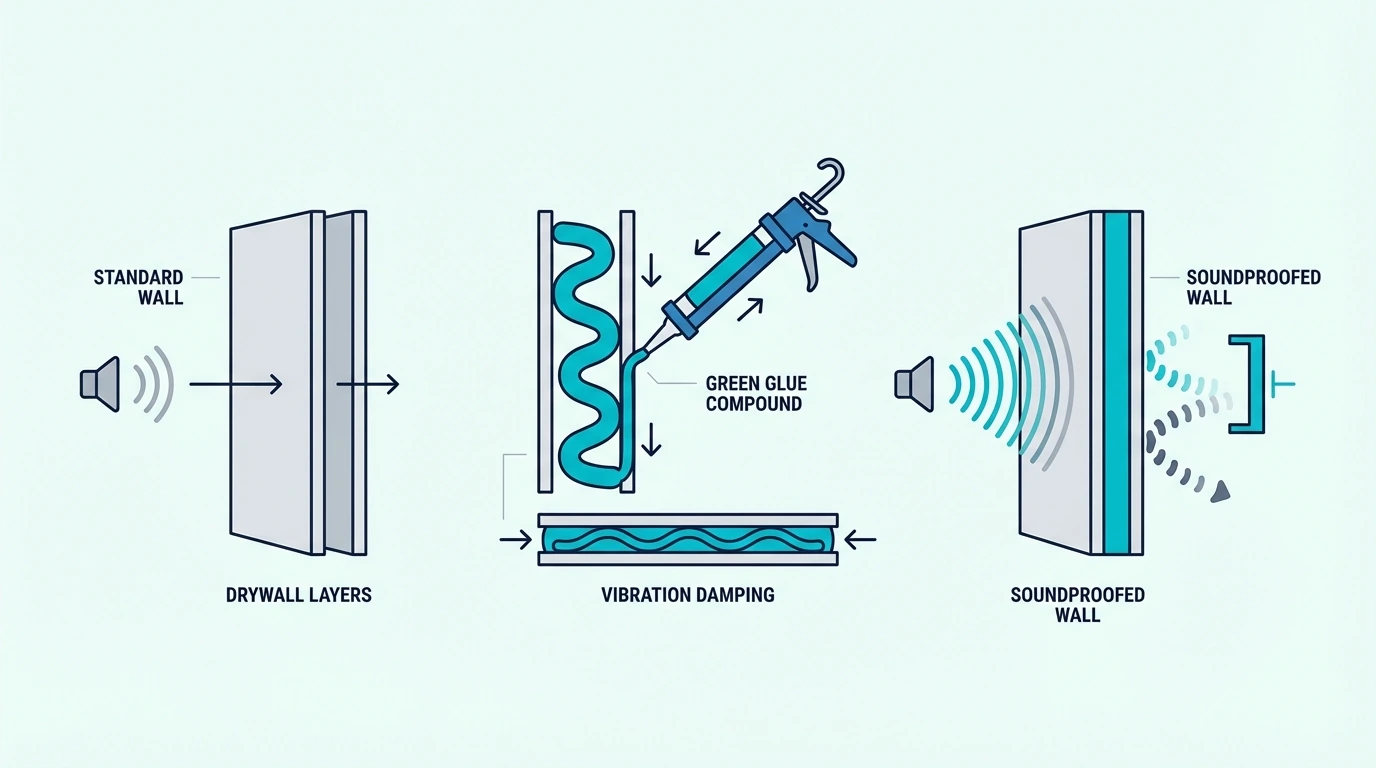
Once Green Glue’s job is clear, the next issue is payoff. Buyers do not really want chemistry; they want to know when the wall starts feeling quieter in real life.
That answer depends less on the brand and more on the assembly around it. Green Glue helps most when it is refining a wall that is already halfway serious.
When Green Glue makes the biggest difference
Green Glue earns its keep when the rest of the wall is already respectable. That is when panel vibration becomes one of the main paths left to improve.
If the cavity already has dense fill like AFB Acoustical Fire Batts, the seams are sealed, and the drywall already has decent mass, damping becomes a smarter next dollar than random add-ons.
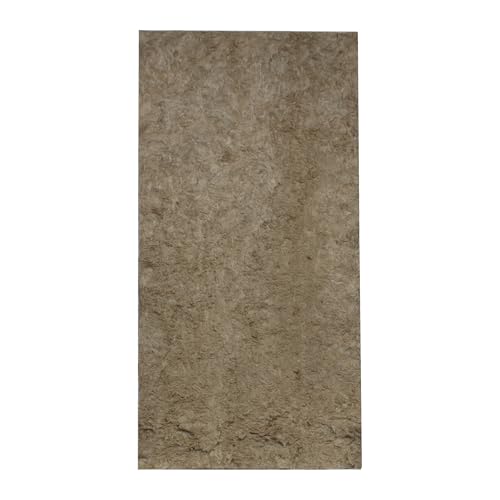
AFB Acoustical Fire Batts
That is why published improvements usually show up as assembly gains, not miracle-product gains. Add Green Glue between two 5/8-inch drywall layers and the wall often improves by about 3–9 STC points compared with the same stack without it.
The biggest gains often sit in the low-to-mid bands around 100–500 Hz. That is the range where voices, TV wash, traffic, and bass annoyance still leak even after basic upgrades.
In plain terms, Green Glue helps most when the wall is already serious enough that the remaining problem is the drywall sandwich itself. Shared walls, media rooms, and apartments are common examples, which is why Soundproofing an apartment often leads back to damping as a later-stage upgrade.
Why Green Glue alone disappoints
That same logic explains the disappointment stories. Green Glue fails expectations when people ask it to cover for missing mass, missing seals, or a weak door.
A single drywall sheet with Green Glue smeared on the back is not a damping system. The compound needs two rigid faces so it can sit between their motion and resist it.
Even with two layers, air leaks can still win. If sound is pouring through outlet openings, perimeter cracks, or a hollow-core door, the wall face is no longer the dominant path.
Stud-borne vibration creates the same problem from another angle. If the framing is carrying the energy, the compound between drywall sheets only touches part of the transmission.
That is why Green Glue should never be sold as the answer by itself. It is a strong component, but only after the assembly stops failing in more obvious ways.
Curing time and patience
Even on a good wall, Green Glue is not an instant result. The damping layer improves as it cures.
The rough rule is about 80% performance in the first 48 hours and full performance in roughly 7–30 days, depending on temperature and humidity. Cooler or wetter rooms sit on the slower end of that range.
That delay confuses plenty of DIY installers. They tap the wall the next day, hear only a small difference, and assume the product was oversold.
A better approach is to treat the first week as setup time, not verdict time. Ventilate the room, let the smell fade, and judge the wall after the compound has settled into its final flexible state.
The patience point matters because Green Glue is often used in retrofit rooms where expectations are already high. Test too early and you risk blaming the product for a timeline issue instead of a physics issue.
Get Studio Tips Weekly
Join 5,000+ creators getting acoustic treatment advice every week.
No spam. Unsubscribe anytime.Application: Layers, Quantity, and Common Mistakes
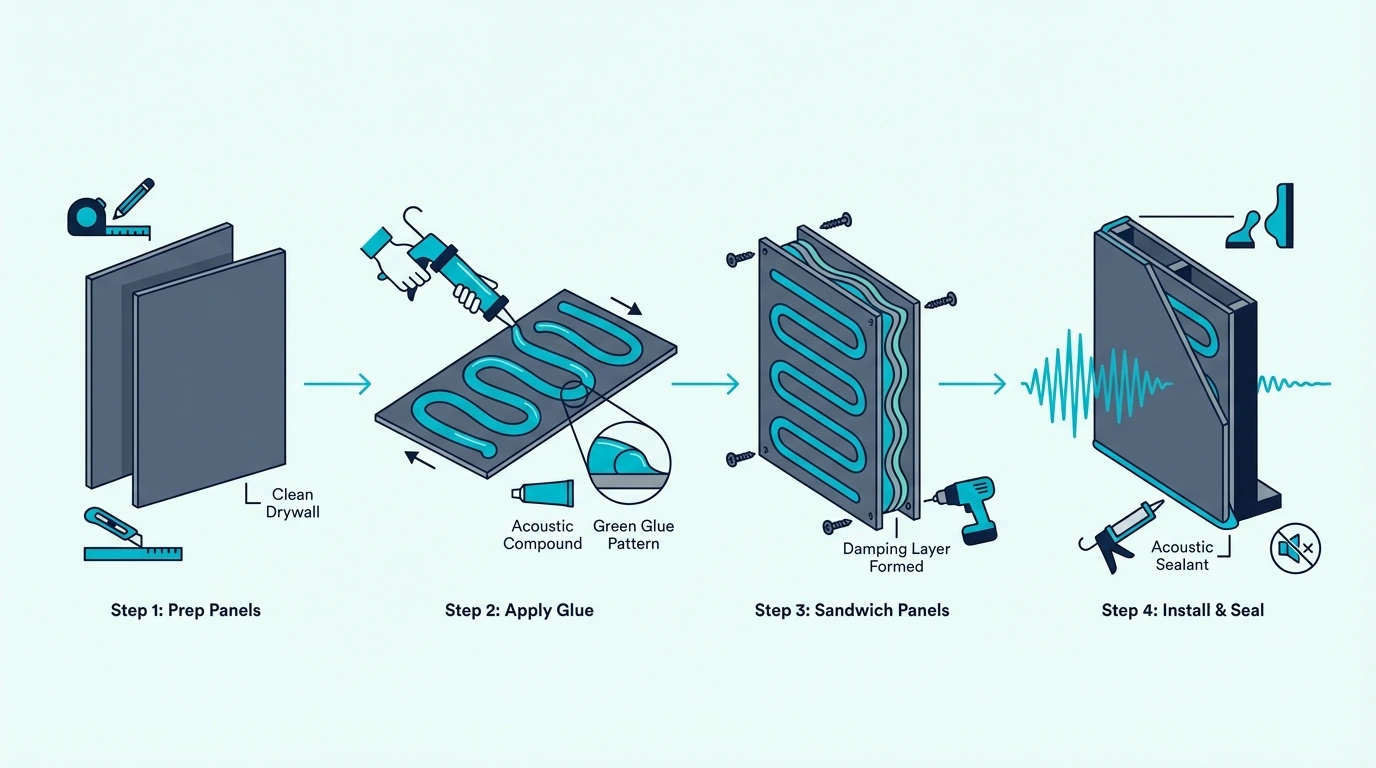
Once you decide damping belongs in the build, installation details start deciding whether you get the published result or a watered-down version.
Green Glue is easy to apply, but it is not forgiving of lazy sequencing. Small mistakes outside the tube can erase the benefit inside it.
Which layers to sandwich
Green Glue belongs between two rigid sheets. Most often that means drywall over drywall.
The first sheet goes up normally. The compound then goes on the back of the second sheet in a random pattern before that second layer is screwed into place.
That random layout is not a gimmick. It helps create uneven damping across the panel instead of forming one uniform hard film.
The same idea also works with drywall-to-plywood, plywood-to-plywood, or retrofit drywall over an existing wall face. What matters is rigid panel contact, not the exact board combination.
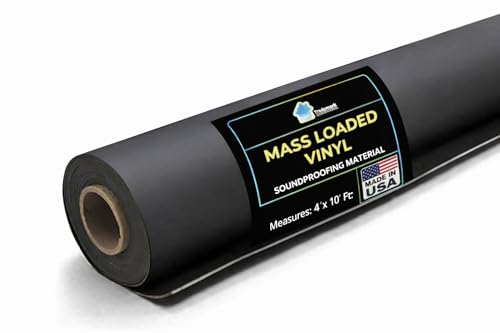
If you also need more mass, a layer such as Trademark Soundproofing Mass Loaded Vinyl can join the same build. That move makes sense when thickness is limited and the wall still needs heavier panel behavior, not just calmer vibration.
How much compound per sheet
Once the stack is set, coverage becomes the next real decision. Too little compound is the most common quiet underperformance.
The standard rule is 2 tubes per 4×8 sheet on walls and 3 tubes per sheet on ceilings. Ceilings get more because gravity and low-frequency transfer make those assemblies harder to calm.
That math gets real fast. An 8-by-12 wall needs about 6 tubes, and a whole room with four walls plus a ceiling can push you toward a pail instead of cases of tubes.
More is not automatically better, though. Over-application mainly burns budget, while under-application gives you a thinner damping layer than the assembly was designed around.
A case of 12 tubes covers about 6 sheets at wall coverage. That makes planning easier before you buy drywall, not after the second layer is already leaning against the wall.
Installation mistakes that ruin performance
Coverage alone does not save a sloppy build. Most Green Glue failures come from the surrounding details.
The first mistake is treating the panel face and ignoring the perimeter. If the edges, outlet boxes, and other penetrations are not sealed with acoustic caulk, sound can bypass the new drywall layer entirely.
The second mistake is poor panel contact. Green Glue still needs screws because the compound works best when the two rigid layers are clamped together instead of floating unevenly.
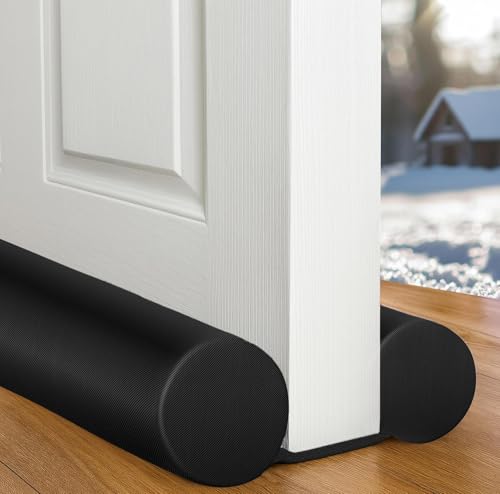
The third mistake is solving the wrong surface first. If a hollow door and visible bottom gap are still the easiest leak, a under-door draft stopper can tell you more in one hour than another wall layer will tell you after a full weekend.
That is why door control still belongs early in the sequence. Soundproofing a door and best door sweep for soundproofing matter because Green Glue cannot rescue a room that is still bleeding sound through the opening beside the wall.
Alternatives: When Something Else Works Better
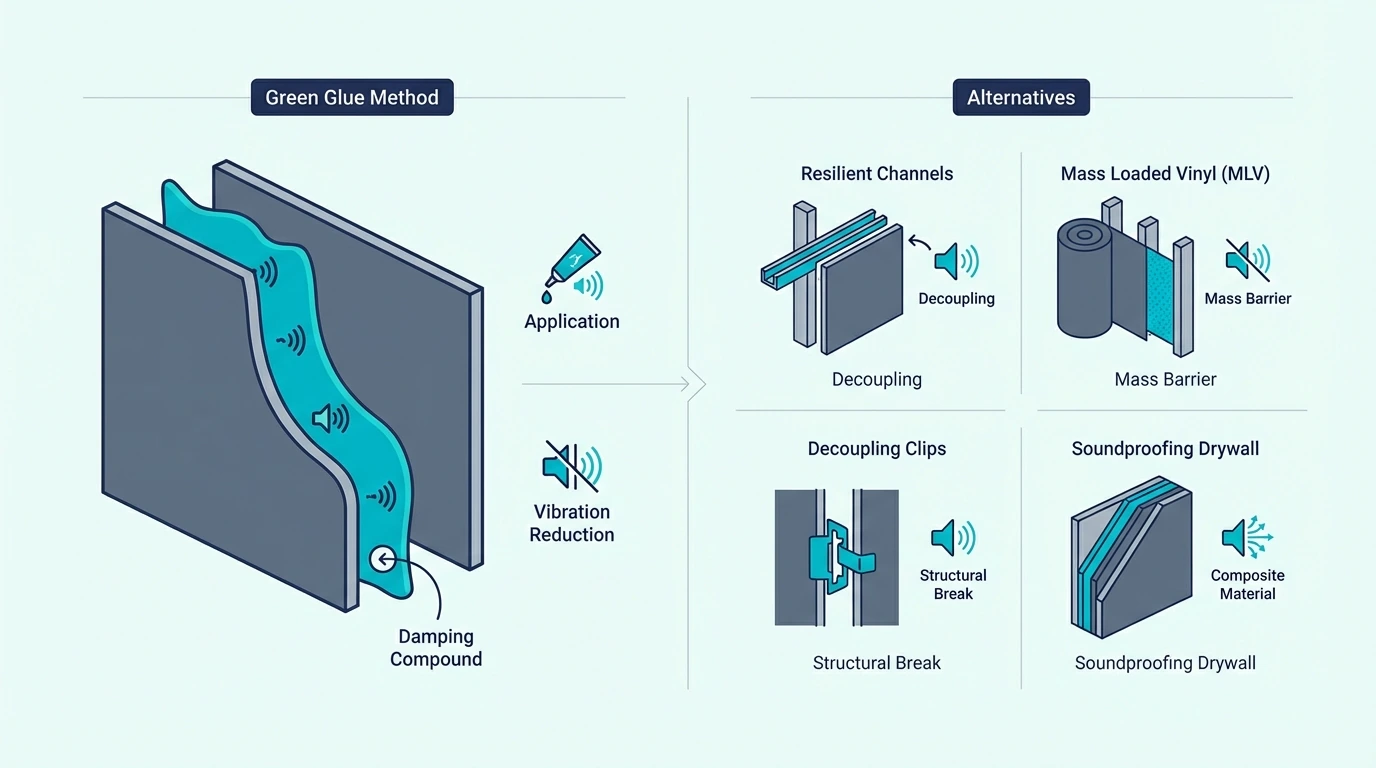
Even when Green Glue is applied correctly, it is not always the first or best upgrade. The smarter move is to compare damping against the problem that is actually dominating the room.
That comparison usually comes down to three forks: does the wall still need more mass, does the framing need decoupling, or are you already at the stage where damping is the right refinement.
Extra mass vs damping
Start with mass if the wall is still light. A flimsy single layer of 1/2-inch drywall usually gains more from heavier board than from a damping layer between weak panels.
That is because mass changes the wall’s basic resistance before damping starts refining it. If the panel is too light, the assembly never gives Green Glue a strong foundation to work from.
A test layer such as TroyStudio mass loaded vinyl (1 lb/sq ft) can help you gauge whether the wall still needs weight more than refinement. It adds mass, but it does not replace damping, which is exactly why the comparison is useful.
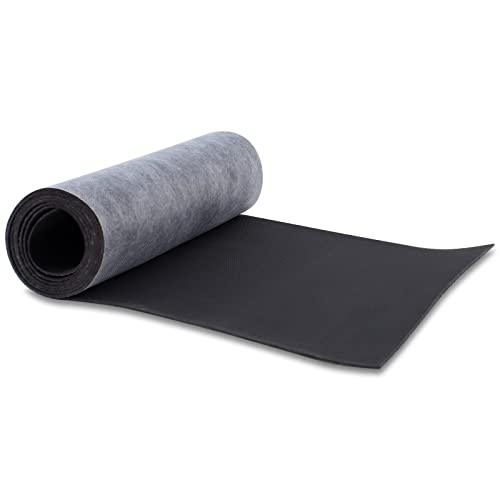
TroyStudio mass loaded vinyl (1 lb/sq ft)
Green Glue becomes more attractive once the wall already has decent weight. At that point the question shifts from making the wall heavier to calming the panel vibration that is still left.
Decoupling for structure-borne noise
Mass solves airborne transfer better than structure-borne transfer. That distinction decides a lot of wasted budgets.
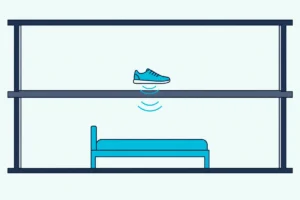
If the complaint is footsteps, mechanical vibration, or bass you can feel in the framing, the rigid connection through studs or joists is often the main path. Green Glue does not break that path.
This is where resilient channel, isolation clips, or floating floor details can outperform damping by a wide margin. They attack the connection itself instead of just calming the panels attached to it.
In a strong assembly, decoupling and Green Glue are partners rather than rivals. Decoupling cuts the direct bridge, and Green Glue reduces the vibration that still reaches the drywall sandwich.
If you can only choose one, match it to the noise type. Use damping for airborne-heavy complaints and decoupling for structure-borne complaints such as the scenarios in Soundproofing a ceiling, soundproofing between floors, and soundproofing a wall.
When Green Glue still earns its place
That comparison leaves Green Glue in a very clear role. It earns its place when a second drywall layer is already part of the plan and you want more performance without reopening the whole strategy.
That is why it makes sense in retrofits, ceiling rebuilds, studios, and media rooms. The labor for the second layer is already happening, so the compound adds damping without forcing a more invasive jump.
It also earns its place when you have already checked the obvious weak links. A quick diagnostic with US Cargo Control Sound Dampening Blanket or a door test can keep you from spending on the wall when the leak is actually elsewhere.
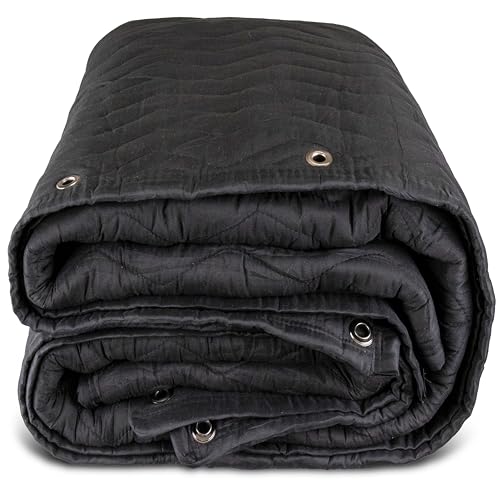
US Cargo Control Sound Dampening Blanket
The cost math is not mysterious. Green Glue usually adds about 15–25% to the drywall portion of a project, which is often worth it once the room already justifies a second layer.
That is why it stays in serious build conversations even when alternatives exist. In the right assembly, it is not hype or magic; it is simply the cleanest way to add damping without changing the whole wall concept.
Compare this page with soundproof drywall vs regular drywall, does MLV soundproofing work, best soundproofing material, best insulation for soundproofing, soundproofing an existing wall, and does soundproofing work if you are still sorting the assembly logic.
Then use is soundproofing worth it, soundproofing an apartment, soundproofing a basement, soundproofing a studio, soundproofing a home theatre room, and the broader soundproofing hub to keep the Green Glue decision in proportion to the whole project.
The Bottom Line
What is Green Glue for soundproofing? It is the damping layer that sits between two rigid panels and reduces how much vibration the second panel receives.
That makes it useful when you are already building a real wall or ceiling sandwich. It does not replace mass, sealing, insulation, or decoupling.
For most residential jobs, the order stays simple. Seal leaks, fill the cavity, add the second layer, and then use Green Glue to calm the panel transfer that is left.
If you are planning new construction, that upgrade is easy to justify because the second layer is already in the plan. If you are doing a retrofit, it is worth it only when you are actually willing to add that second rigid layer.
If you are not adding drywall, Green Glue has no real job. In that case, fix the actual weak path first, whether that is the door, the window, the wall mass, or the framing connection.
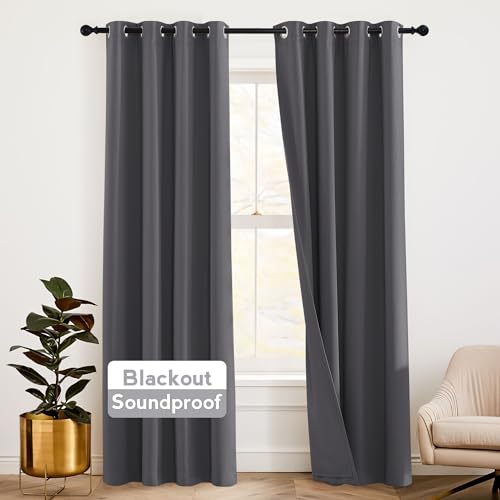
For renters who cannot modify walls at all, lighter options like soundproof curtains on windows can still help a little while you focus on removable leak control.
Frequently Asked Questions
How long does green glue last?
Green Glue is designed to last the life of the wall assembly. Once cured, it maintains its viscoelastic damping properties indefinitely under normal indoor conditions.
The compound remains flexible inside the wall for decades, which is what allows it to continue converting vibration energy into heat over time. Unlike rigid adhesives that harden and lose damping ability, Green Glue is specifically formulated to stay viscoelastic permanently.