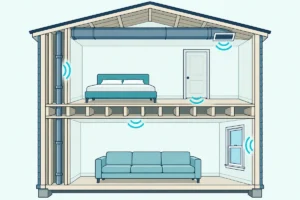
How To Soundproof A Metal Roof (What Works And What Doesn’t)

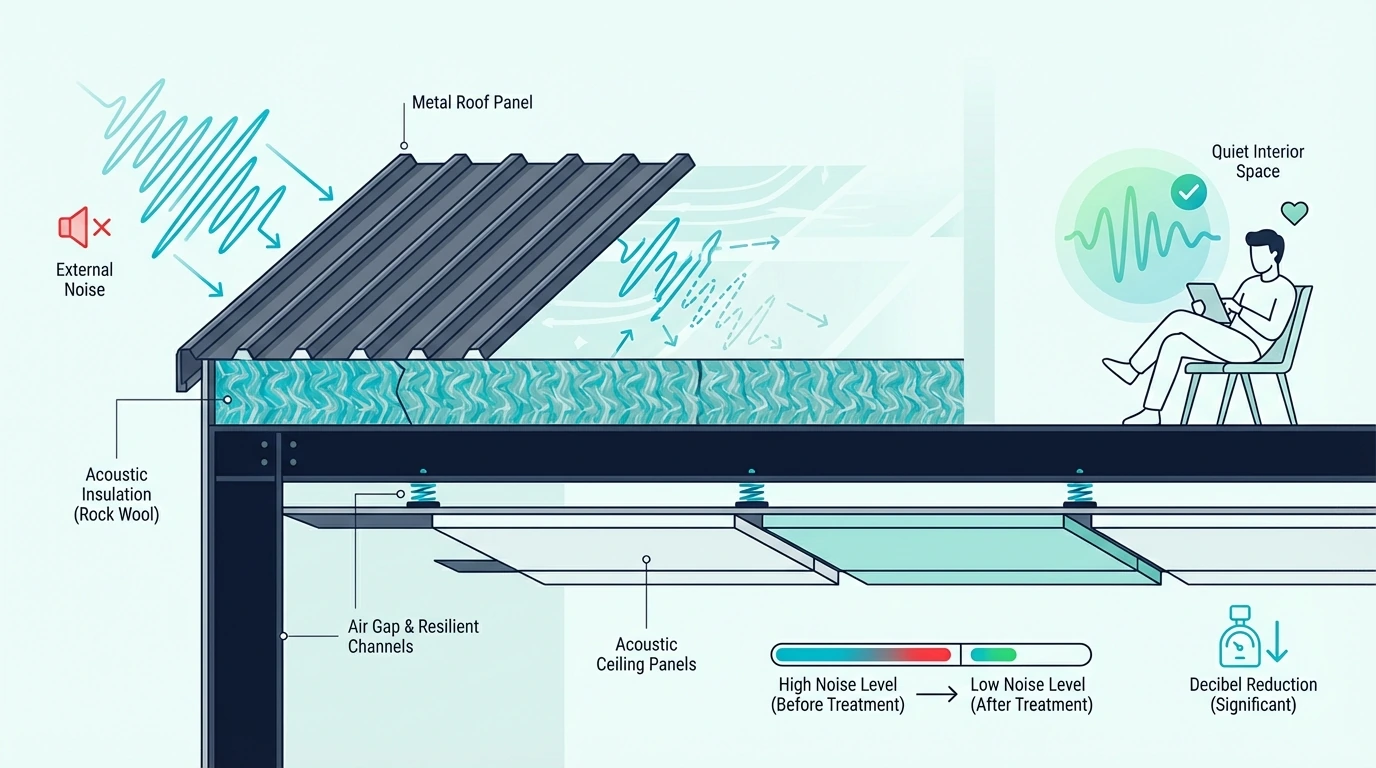
How to soundproof metal roof assemblies matters most when the rain, hail, and wind noise inside the house is loud enough to disrupt sleep or conversation, but only if you understand that the metal itself is rarely the real problem.
Many metal roof owners feel frustrated because the roof itself is not the problem.
The problem is usually the assembly underneath it — the underlayment, insulation, decking, and ceiling layers that determine how much sound actually reaches the living space.
The better way to approach metal roof noise is to treat it as an assembly problem rather than a surface problem. Once you understand which layer is missing or underperforming, the right fix becomes much clearer and you stop wasting time on coatings or patches that barely change the result.
Start with why some metal roofs are louder than others, then move through which fixes actually work, how to reduce rain noise specifically, and when the smarter upgrade is inside the house rather than on the roof itself.
This guide makes that order practical so you can decide whether the next real upgrade belongs in the roof assembly, the attic, or the ceiling below.
How to soundproof a metal roof depends on whether the noise is from rain impact, wind vibration, or a thin roof assembly. The strongest fixes target the layers under the metal — underlayment, insulation, and ceiling — rather than the metal surface itself. A properly built assembly can make a metal roof as quiet as any other roofing type.
Metal-Roof Noise Starts With The Assembly Underneath
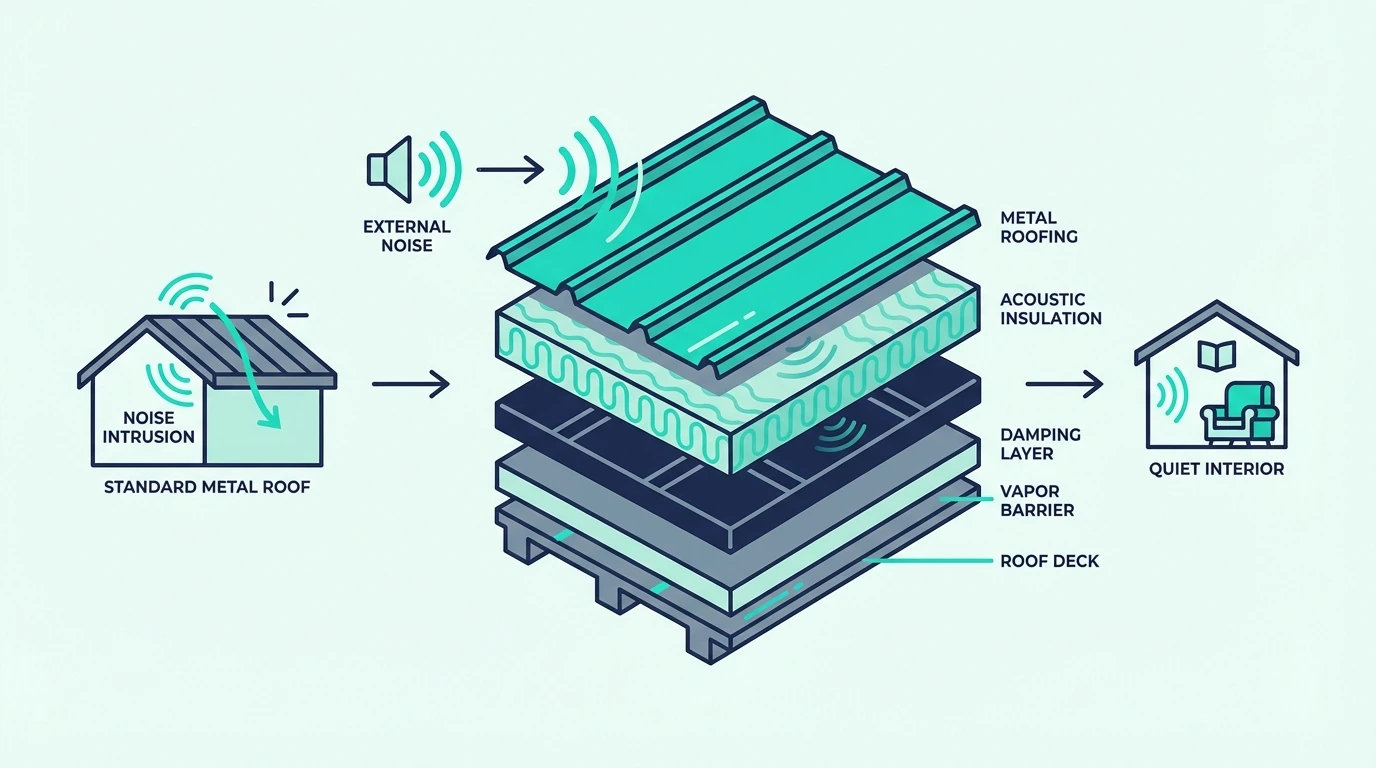
The smartest first step is understanding why some metal roofs are noisier than others.
Thin Assemblies Make Metal Roofs Sound Loud
Metal roofs sound noisy when the assembly underneath is thin or incomplete. A metal panel installed directly over purlins with no solid decking, no underlayment, and minimal insulation will transmit every rain impact and wind gust straight into the living space because there is nothing to absorb or dampen the energy before it reaches the ceiling.
A metal roof installed over solid sheathing with proper underlayment and insulation can be just as quiet as asphalt shingles. The difference is not the metal itself — it is what sits between the metal and the room below.
Rain, Wind, And Resonance Do Not Behave The Same Way
Rain noise is the most common complaint, followed by hail, wind, and general resonance or drumming from the panels. Each type responds to different treatments.
Rain and hail noise respond best to mass and damping in the roof assembly — heavier underlayment, solid decking, and thicker insulation all help. Wind noise and panel vibration respond better to fastener tightening, structural support, and eliminating loose connections that allow the metal to flex.
Realistic Improvement Depends On The Starting Assembly
A properly built metal roof assembly can reduce interior noise to the point where rain is barely audible during normal activity. That is not total silence, but it is a dramatic improvement from the “tin can” sound that poorly assembled metal roofs produce.
The key is managing expectations based on the starting condition. A bare metal panel over purlins with no decking will need more work than a metal roof over plywood with existing but thin insulation.
The closer the assembly already is to a complete build, the less work and cost the improvement requires.
Roof-Side Fixes Work Best When The Assembly Is Already Open
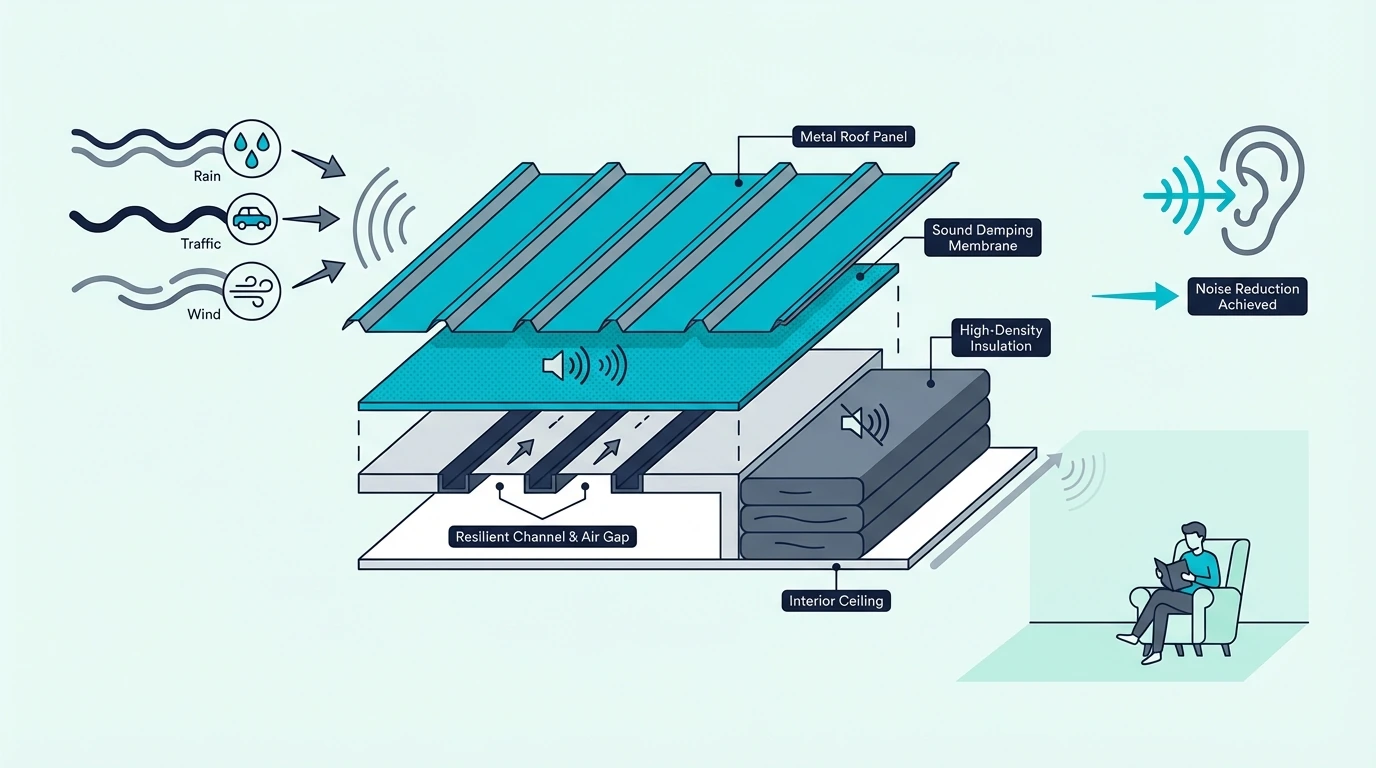
Yes, but the best answer depends on when you have access to the assembly. If the roof is already being replaced, roof-side layers like decking and underlayment matter most.
If the roof is staying in place, the biggest wins usually shift to insulation, ceiling mass, and leak control from inside.
Underlayment Matters Most During Re-Roofing
Underlayment makes the biggest difference when a re-roof is already on the table or when the existing assembly has thin decking and very little damping below the metal. In that situation, the layer directly under the panels is one of the cleanest places to reduce impact noise before it enters the structure.
For an existing roof, that usually means waiting for planned replacement work rather than trying to retrofit from inside the house. A roofing underlayment like DuPont Roof Protector Roofing Underlayment fits that moment because it adds both weather protection and a meaningful damping layer without pretending to be a standalone miracle fix.
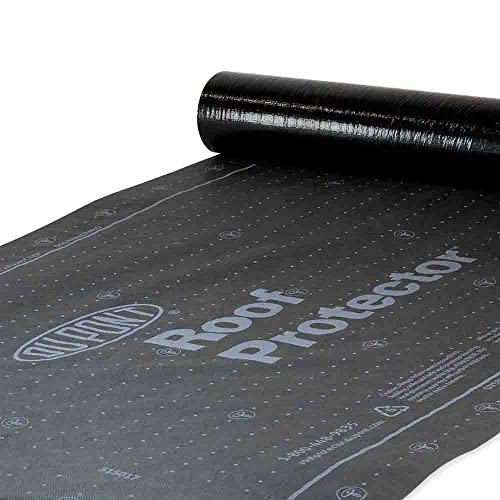
DuPont Roof Protector Roofing Underlayment
Insulation And Ceiling Layers Matter More When The Roof Stays Put
Insulation and interior layers matter more when the roof itself is staying in place and the cavity below is the obvious weak point. That is common when the roof deck is acceptable but the attic is underinsulated, the ceiling is light, or the cavity is mostly empty.
Spray foam is one of the strongest options because it bonds to the underside of the roof deck, fills irregular voids, and adds both insulation and damping in one step. When the cavity is already accessible and you want a more conventional assembly upgrade, mineral wool batts are a strong default because they improve the part of the assembly that is actually letting the sound through.
Once the cavity is improved, the ceiling layer itself becomes the next limiter. A heavier ceiling with proper drywall, sealed joints, and no gaps will block more sound than a thin or incomplete ceiling, which is the same logic behind soundproofing a ceiling and best soundproofing material when the roof-side work is not the first place you want to spend money.
Thin Coatings Do Not Replace Missing Assembly Layers
Rubberized coatings, sound-deadening paints, and thin foam strips are the most commonly overpromised metal roof noise solutions. They can help a little with surface resonance, but they do not replace missing decking, underlayment, insulation, or ceiling mass.
Burton Acoustix’s soundproof paint test breakdown shows the same limit on a wall, where 28 mils of coating added 2 to 3 STC points, mostly at high pitches.
The reason is physics. Metal roof noise is an assembly problem, not a surface problem, so the biggest gains come from improving the layers underneath the metal rather than brushing on one more thin coating and hoping it changes the whole path.
Get Studio Tips Weekly
Join 5,000+ creators getting acoustic treatment advice every week.
No spam. Unsubscribe anytime.Rain Noise Gets Loudest When The Roof Can Flex And Resonate

Rain noise is the most specific and most solvable metal roof complaint for most homeowners.
Flat Panels And Missing Decking Amplify Rain Noise
Flat or low-profile panels sound louder than standing-seam or corrugated profiles because the flat surface acts like a drum head. Longer unsupported spans between purlins or rafters also amplify the sound because the metal flexes more under impact.
The absence of solid sheathing is the single biggest amplifier. A metal panel directly over purlins with air space underneath resonates much more than one over a solid plywood or OSB deck with underlayment.
Loose Fasteners Turn Impact Noise Into Rattling Noise
Loose fasteners allow the metal to vibrate independently of the structure, which creates rattling, ticking, and drumming sounds that would not exist if the panel were tightly secured. Over time, thermal expansion and contraction can loosen fasteners, especially exposed-fastener systems.
Checking and tightening roof fasteners is one of the cheapest and most overlooked fixes for metal roof noise. If the noise includes a rattling or ticking component that changes with wind or temperature, loose fasteners are the most likely cause and the easiest to address.
Interior Retrofits Help Until The Roof Build Itself Becomes The Limit
A retrofit from inside — adding insulation, improving the ceiling, and sealing air paths — is usually enough when the roof deck is already solid and the main issue is thin insulation or an incomplete ceiling assembly.
A bigger rebuild is worth considering when the roof has no solid decking, the underlayment is missing or degraded, or the noise is severe enough that interior fixes alone cannot bring it down to an acceptable level. That usually means the next re-roofing project should include proper decking, underlayment, and assembly improvements rather than just replacing the metal panels.
Interior Fixes Matter Most When Roof Access Is Off The Table
If you cannot or do not want to open the roof itself, the interior becomes the next best target. The right move depends on whether you have an accessible attic, a direct-to-rafter ceiling, or a flat and shallow assembly with very little cavity depth.
Ceiling-Side Work Usually Beats Guessing At The Roof Surface
Focus on the ceiling or attic side first if you have accessible space above the rooms below. Adding insulation at the attic floor or the underside of the roof deck is usually easier and less expensive than modifying the roof from outside, and it addresses the path the sound actually takes before it reaches the living space.
If the ceiling is attached directly to the rafters with no attic space, the options are more limited and the ceiling build matters more. Adding a second layer of drywall with a damping compound between layers is one approach, and using resilient channels or isolation clips to decouple the ceiling from the rafters is another, which is the same assembly logic used in soundproofing between floors when structure-borne vibration is part of the problem.
If that ceiling belongs to a loft room or finished attic, this guide to rooms under the roof covers its floor, walls and windows as well.
For the ceiling layer itself, adding mass with a barrier material like Trademark Soundproofing Mass Loaded Vinyl between the existing ceiling and a new drywall layer can make a significant difference when the current ceiling is thin.
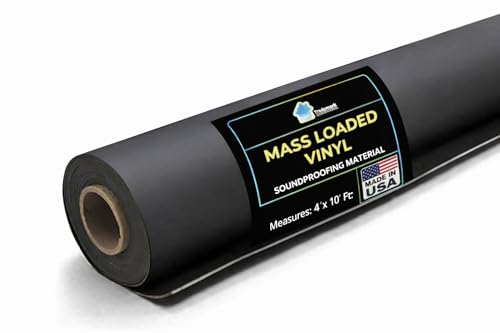
Trademark Soundproofing Mass Loaded Vinyl
Flat And Low-Slope Roofs Leave Less Room For Error
Flat and low-slope metal roofs are harder to treat from inside because the ceiling is often close to the roof deck and the available cavity depth is limited. In those cases, spray foam applied to the underside of the roof deck is usually the most practical option because it fills the shallow space with both insulation and damping.
If spray foam is not an option, the fallback is usually improving the ceiling below and sealing every visible gap with Acoustical Caulk (29 oz) around the perimeter, light penetrations, and duct openings so the limited assembly does not leak even more noise.
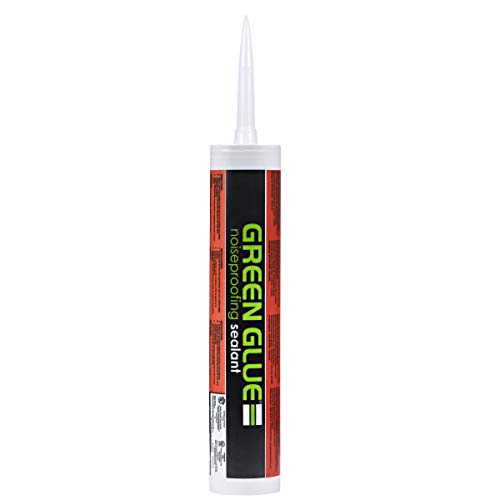
Acoustical Caulk (29 oz)
Professional Help Matters Once Roofing And Moisture Details Intersect
Call a professional when the noise is severe, the roof deck condition is unknown, or when you want spray foam insulation applied safely. Roofing and insulation work involve moisture management, ventilation, and structural considerations that are easy to get wrong without experience.
You should also call a professional if you plan to re-roof and want the new assembly designed for noise performance from the start. A roofing contractor who understands acoustic assemblies can specify the right combination of decking, underlayment, and fastening to make the new roof significantly quieter than the old one, especially when the roof noise is overlapping with broader how to soundproof a room problems elsewhere in the house.
The Bottom Line
How to soundproof a metal roof gets much clearer once you treat the assembly underneath rather than the metal surface on top.
If the roof is already being replaced, start with decking and underlayment upgrades while the assembly is open.
If the roof is staying in place, start from the attic or ceiling side with insulation, mass, and leak control.
If the roof has no solid decking or the noise is still severe after the interior upgrades, save the real money for a better roof rebuild instead of chasing thin coatings and surface patches.
If you are also dealing with noise through walls, windows, or floors, compare this page with soundproofing a wall, soundproofing windows, best insulation for soundproofing, and the broader soundproofing hub so the roof fix stays in proportion to the rest of the house.
Frequently Asked Questions
How to reduce the sound of a metal roof?
The most effective way to reduce metal roof sound is to improve the assembly underneath: add solid decking if missing, install proper underlayment, fill the attic or cavity with insulation, and seal any gaps in the ceiling. These layers absorb and dampen sound before it reaches the living space.
What materials block high frequency sound?
Dense, heavy materials like mass loaded vinyl, multiple layers of drywall, and closed-cell insulation are the most effective at blocking high-frequency sound. For metal roofs specifically, solid decking with rubberized underlayment is the most relevant high-frequency barrier.
Is it worth sound deadening roof?
Yes, sound deadening a metal roof is worth it when the noise is disruptive enough to affect sleep, conversation, or comfort inside the home. The improvement from a properly treated assembly is dramatic and long-lasting, especially compared with the ongoing frustration of living under a noisy roof.