Is Soundproofing Worth It? (What It Costs And When It Pays Off)

Is soundproofing worth it depends on what the noise is costing you and which tier of fix the room actually needs. A cheap sealing test, a targeted window upgrade, and a full wall-and-ceiling rebuild can all be “worth it,” but not for the same kind of problem.
That is where most bad decisions start. People either underbuy for a serious sleep-or-privacy problem or overbuy for a room that only needed a clear diagnosis and one targeted fix.
The value question gets easier once you stop treating soundproofing as one category. Mild, occasional irritation belongs in a different budget class than recurring neighbor noise, traffic-heavy bedrooms, or rooms that are hurting work and concentration every day.
The right way to judge the spend is to follow the decision in order: first measure how much the noise disrupts daily life, then match it to the cheapest tier with a real chance of solving the weak point, and only then decide whether deeper construction money is justified.
Start with the size of the disruption, then the scenarios where lighter fixes pay off, and finally the point where bigger construction costs do or do not make sense.
Is soundproofing worth it? Yes, when the noise is frequent, the weak point is identifiable, and the improvement matters to sleep, work, privacy, or daily comfort. Cheap diagnosis-first fixes are often worth it fast, but thousand-dollar builds are only worth it when the problem is severe enough and the room is being treated at the real leak path.
Soundproofing Pays Off When The Disruption Is Real And The Path Is Clear
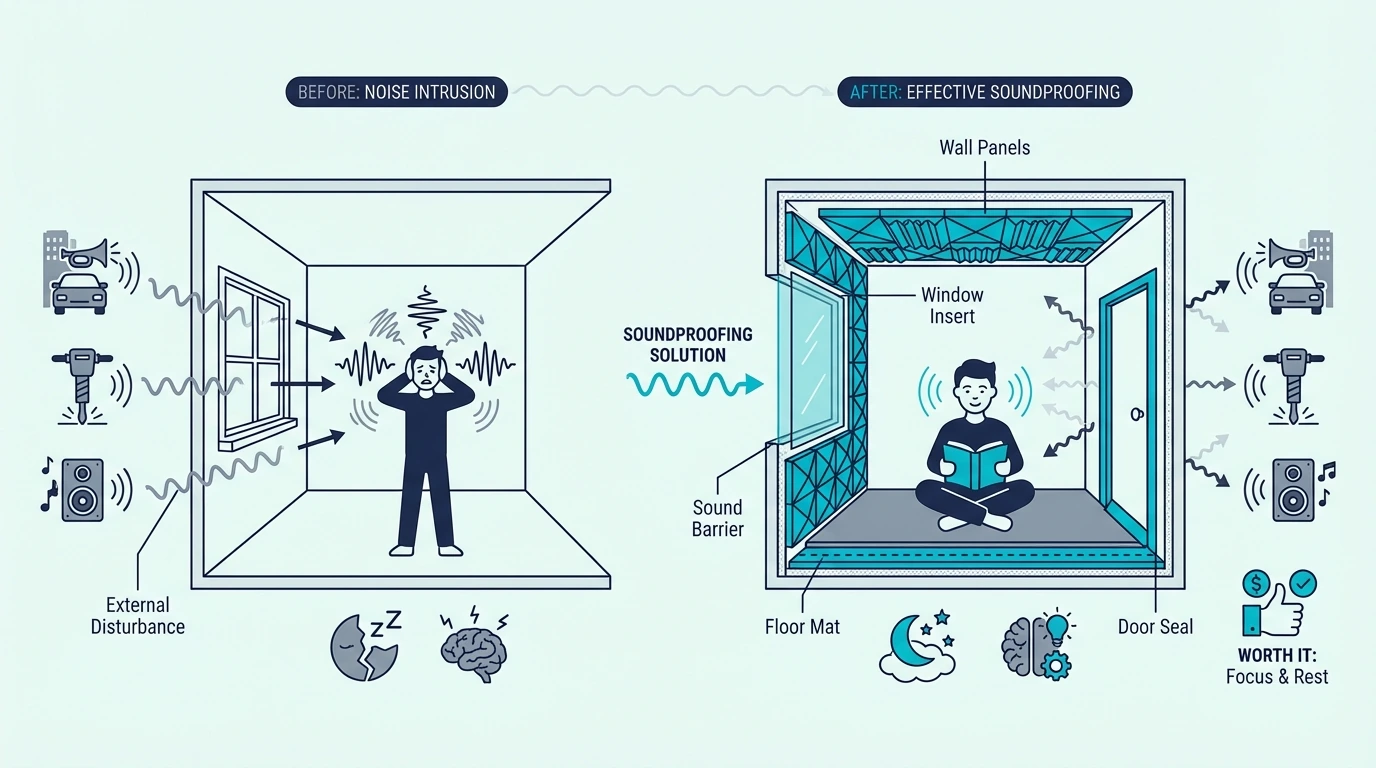
The shortest honest answer is still yes, but only when the room problem is strong enough and specific enough to deserve the spend.
| Situation | Typical first spend | Usually worth it? | Why |
|---|---|---|---|
| Leaky bedroom door or window | About $16 to $125 | Yes | Cheap first win for sleep, focus, and comfort |
| Street noise through one obvious window | About $45 to $800+ | Often yes | Targeted window upgrades can change a room fast |
| Shared-wall neighbor voices | About $100 to $1,500+ | Often yes | Daily disruption with one likely path is a strong ROI case |
| Mild occasional noise | About $0 to $50 | Usually not beyond diagnosis | The ceiling on improvement is often too small to justify bigger spend |
| Bass or structural impact noise | About $1,000 to $4,000+ | Sometimes | Harder problem, higher cost, and more realistic limits needed |
| Room with several weak paths and no diagnosis | Diagnose first | Depends | Wrong first spend wastes money more than almost any other mistake |
Value Starts With The Part Of Life The Noise Keeps Damaging
Worth it means the room gets quiet enough to improve the part of life you actually care about. That might be sleep, focus, privacy, recording quality, or simply feeling less stressed by noise every day.
That is different from chasing total silence. Most home soundproofing projects feel worth it long before they get anywhere close to a studio-grade result.
Frequent And Predictable Noise Creates The Strongest ROI Case
Once “worth it” is defined that way, the best candidates become easier to spot.
It is usually worth it when the noise is frequent, the source is predictable, and the same weak point keeps showing up. Bedrooms facing traffic, shared walls with noisy neighbors, and home offices with constant interruptions are the clearest examples.
It is also worth it when the fix is cheaper than the ongoing cost of doing nothing. Losing sleep, struggling to work, or thinking about moving because of noise usually makes even a moderate upgrade look far more reasonable.
Mild Or Vague Problems Rarely Deserve Big Money
The opposite pattern matters just as much.
It is usually not worth it when the noise is mild, occasional, or hard to notice unless you listen for it. In that situation, a big spend often buys a subtle result that feels smaller than the invoice.
It is also not worth it when expectations are unrealistic from the start. If the goal is perfect silence from bass, footsteps, or an old building on a tiny budget, the project can still help, but the return often feels weak compared with the money and effort involved.
The Spend Feels Worth It Only When The Budget Matches The Noise Tier
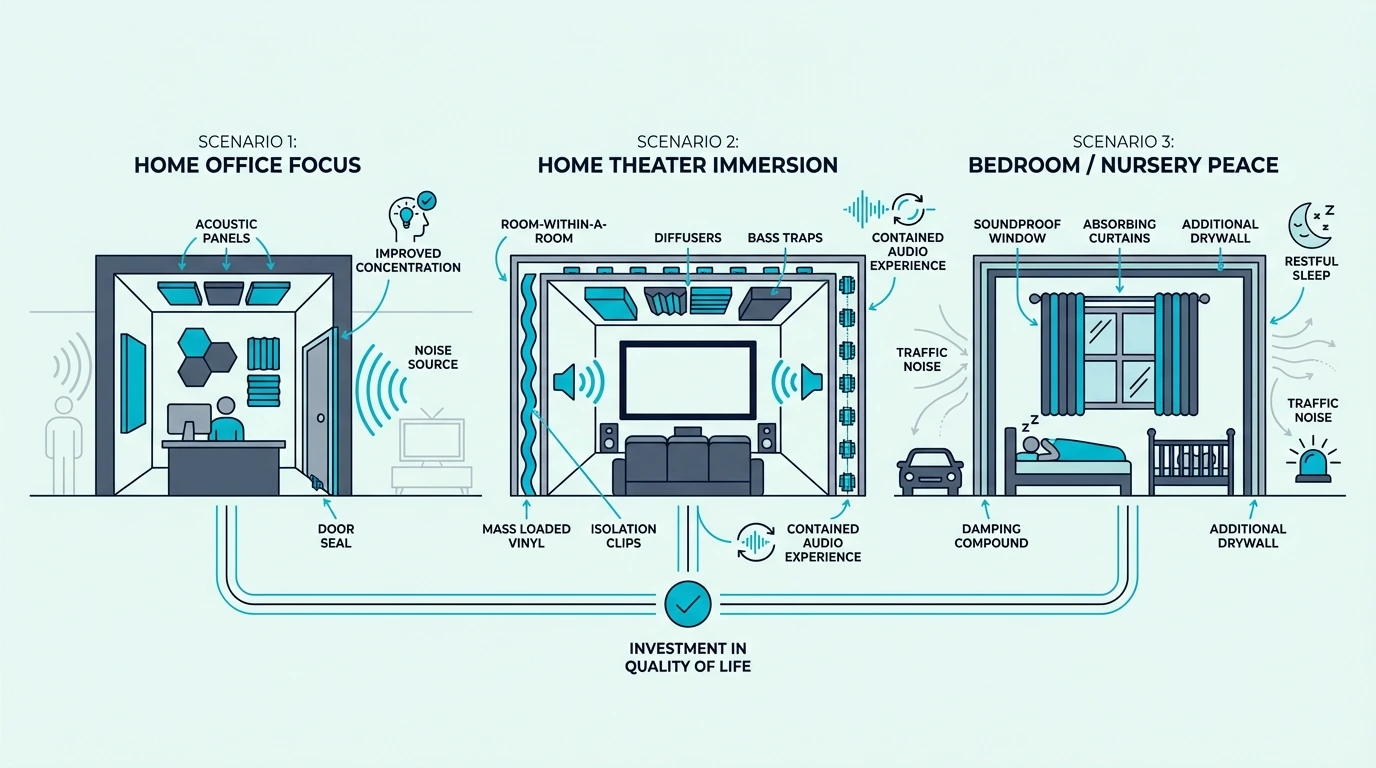
That is why cost should be read as layers of commitment rather than one giant number.
Each spend tier buys a different kind of answer, and the cheapest tier is often worth it precisely because it tells you whether the room deserves more money at all.
Cheap Diagnostic Fixes Often Deliver The Best First Return
This is where many worth-it projects begin. A roll of 33 Ft Gray Self-Adhesive Soundproofing Weather Stripping costs little, but it can tell you immediately whether the room is failing at the door or window perimeter.
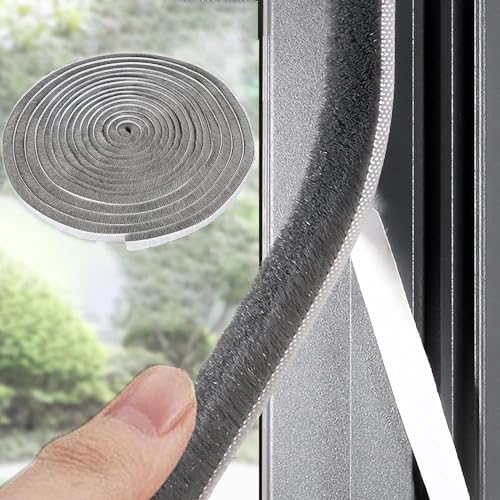
33 Ft Gray Self-Adhesive Soundproofing Weather Stripping
Add a temporary test layer like US Cargo Control Sound Dampening Blanket, and you can often test a room for well under $100. That tier is usually worth it because it reduces guesswork before you commit to real build money.

US Cargo Control Sound Dampening Blanket
Mid-Range Upgrades Win When One Surface Is Clearly The Main Offender
If the cheap tier points to a specific opening or barrier, the next dollars usually become much easier to justify.
Mid-range soundproofing usually lives in the low hundreds rather than the thousands. That includes stronger door sealing, better window treatment, one upgraded opening, or an added-mass layer like Trademark Soundproofing Mass Loaded Vinyl used in the right assembly.
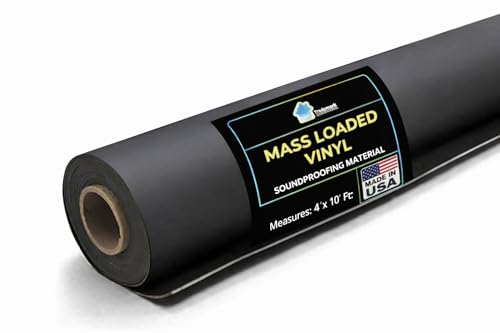
Trademark Soundproofing Mass Loaded Vinyl
This tier feels worth it when one door, one window, or one wall is clearly the main offender. That is why readers often need to compare this page with soundproof windows cost, soundproofing a door, and soundproofing a wall instead of treating every room like a full renovation.
Full Construction Only Pays Off When The Problem Is Severe Enough
That logic changes again once the project crosses into building work.
Full construction starts when you open assemblies, add new drywall, work on ceilings, or build for stronger isolation instead of lighter comfort upgrades. At that point, the budget can move from the high hundreds into the thousands quickly, especially when labor or multiple surfaces are involved.
That level of spend only feels worth it when the room problem is serious enough to justify it. If you are comparing major work, use soundproof room cost, soundproofing a ceiling, and how to soundproof a room together so the decision is based on real scope instead of hope.
Get Studio Tips Weekly
Join 5,000+ creators getting acoustic treatment advice every week.
No spam. Unsubscribe anytime.Soundproofing Loses Its Value Fast When The Tradeoffs Get Ignored
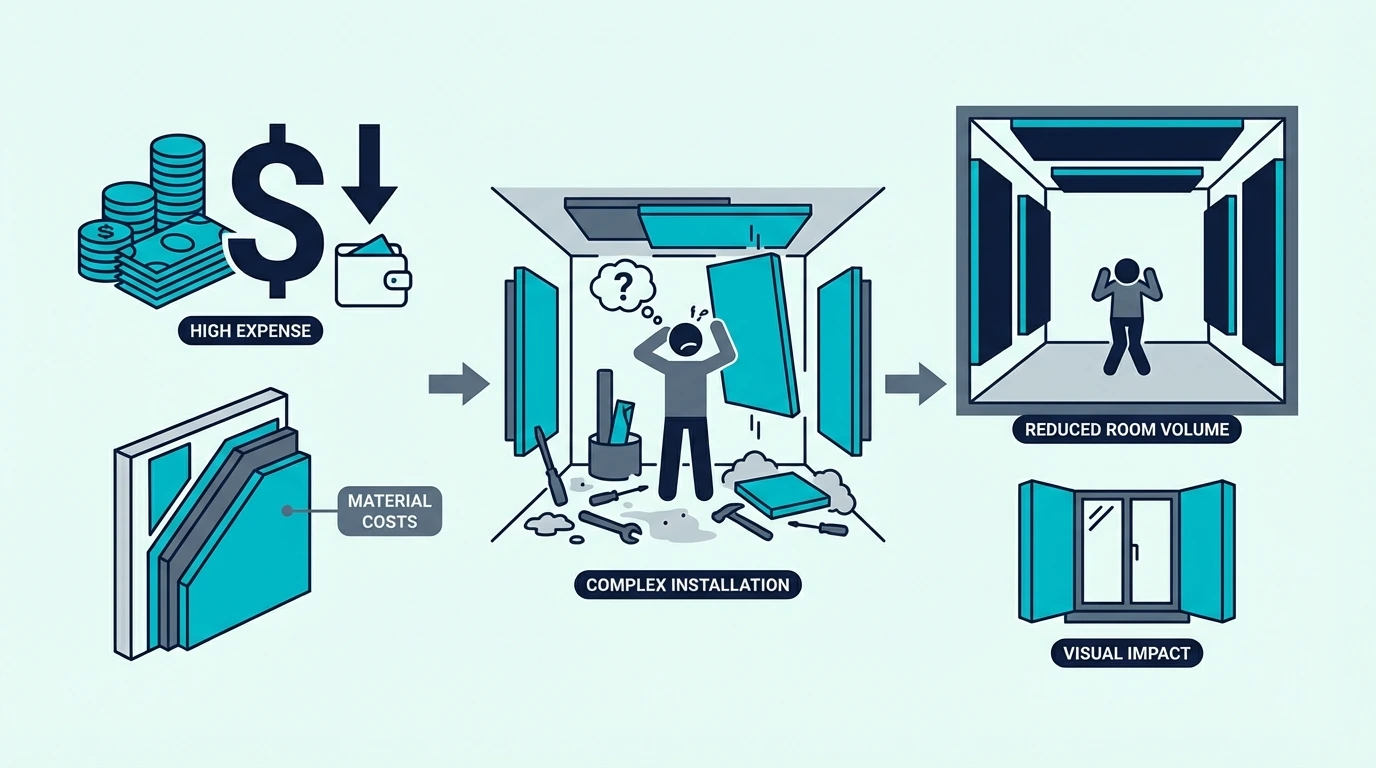
The project can still be worth it and still come with real costs beyond the invoice.
Those tradeoffs are where a rational upgrade turns into a regret purchase if the problem was never diagnosed properly.
Cost And Disruption Rise Together Once You Leave The Light-Fix Tier
The moment the project moves past sealing and removable layers, cost and disruption rise together. Doors, inserts, added wall layers, ceiling work, and contractor labor all raise the total while also making the room messier, slower, and harder to use during the work.
Serious builds can also steal space and flexibility. New wall layers, clips, channels, and heavier assemblies improve performance, but they also take inches, time, and installation care that light fixes never demand.
Every Untreated Weak Path Can Undercut The Money You Spent
That is why partial upgrades need realistic expectations.
Because sound follows the weakest remaining path. A better wall can still be bypassed by the ceiling, the window, the door, the floor, or a leaky vent, which is why one upgraded surface does not automatically transform the whole room.
That is also why bad expectations destroy perceived value. If the goal is complete silence from a partial upgrade, even a solid improvement can feel disappointing.
ROI Feels Weak When The Room Never Needed That Much Spend
This is the pattern behind most disappointment.
The return feels weak when the noise was never severe enough to justify the spend in the first place. It also feels weak when the treatment attacked the wrong path or when the budget was too small for the type of noise involved.
Bass and structural impact noise are the clearest example. They can still be worth treating, but they usually require more mass, better isolation, and a bigger budget than simple speech or traffic problems, so small-product expectations create the wrong ROI math from the start.
Realistic Improvement Matters More Than The Fantasy Of Total Silence
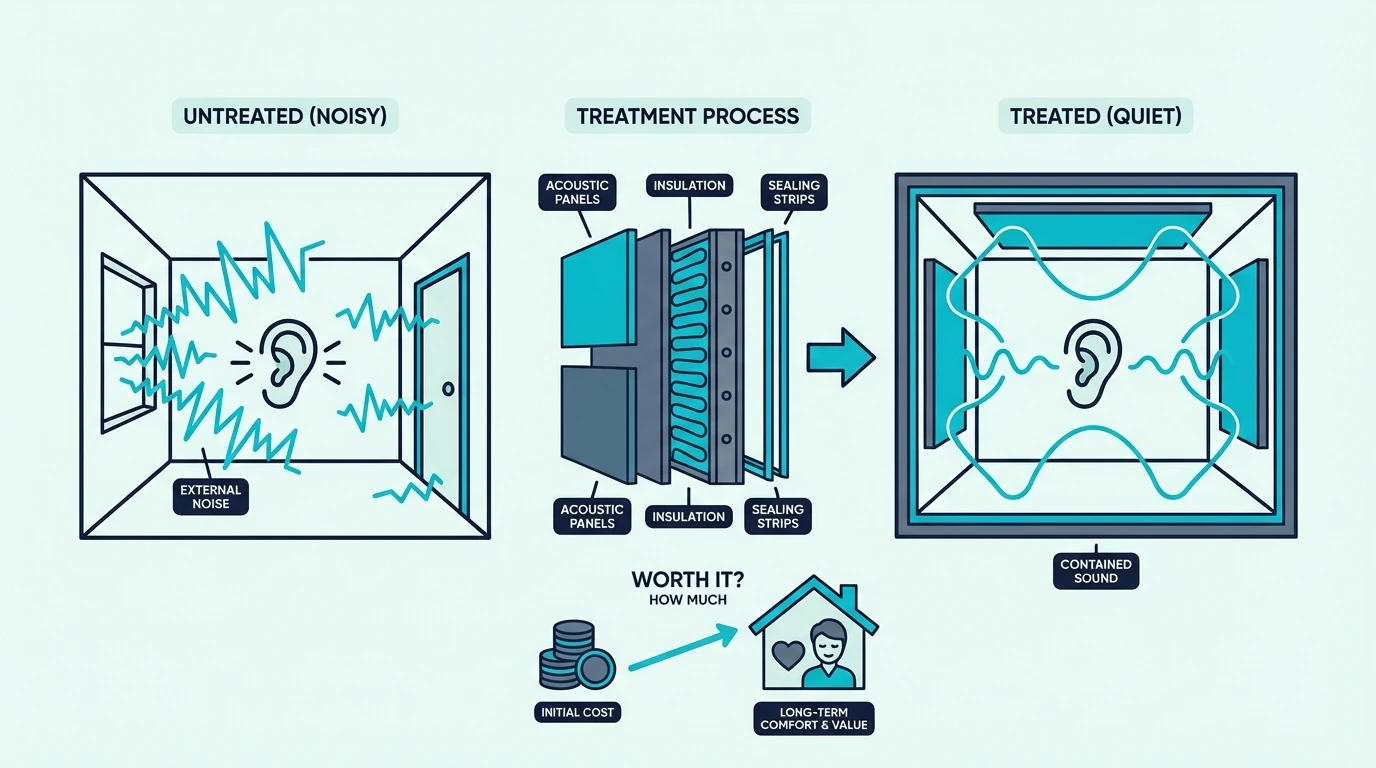
Once tradeoffs are clear, the real question becomes outcome.
If the likely result is big enough to change daily life, the spend feels smarter. If the likely result is tiny, it does not.
Light Upgrades Can Be Worth It Without Being Dramatic
Light upgrades usually deliver modest but noticeable gains. Sealing, blankets, better door closure, and targeted opening fixes often land in the rough range of a few decibels, which is enough to take the edge off moderate noise and make sleep or focus easier.
That is why low-cost fixes can be so worth it. They do not need to create silence to create relief.
Serious Builds Pay Off Only When The Assembly Gets Stronger As A System
The bigger gains arrive only when the build quality actually matches the budget.
Serious builds can deliver a much larger shift when the assembly is actually strengthened. Open-wall work with proper mass, sealed joints, and cavity fill like AFB Mineral Wool Insulation and the right barrier layers can make speech far less intrusive and turn a stressful room into a usable one.
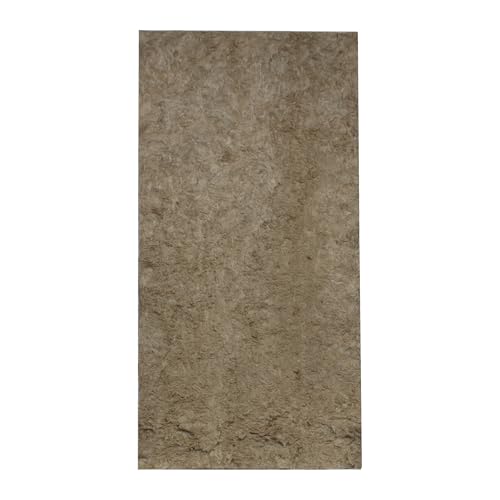
AFB Mineral Wool Insulation
That said, the bigger result depends on the whole build being right. A stronger assembly usually beats a pile of random accessories, but only if the real path has been identified first.
Total Soundproofing Is The Wrong Benchmark For Most Homes
That is the mindset shift that usually makes the whole article click.
Because 100% soundproofing is not the benchmark most homes actually need. A bedroom does not need studio isolation to be worth fixing, and a home office does not need perfect silence to become workable again.
The better benchmark is “quiet enough for the intended use.” Once the noise drops below the level where it ruins sleep, focus, calls, or relaxation, the project has already started paying off.
The Best Decision Comes From Buying The Next Right Tier, Not The Biggest One
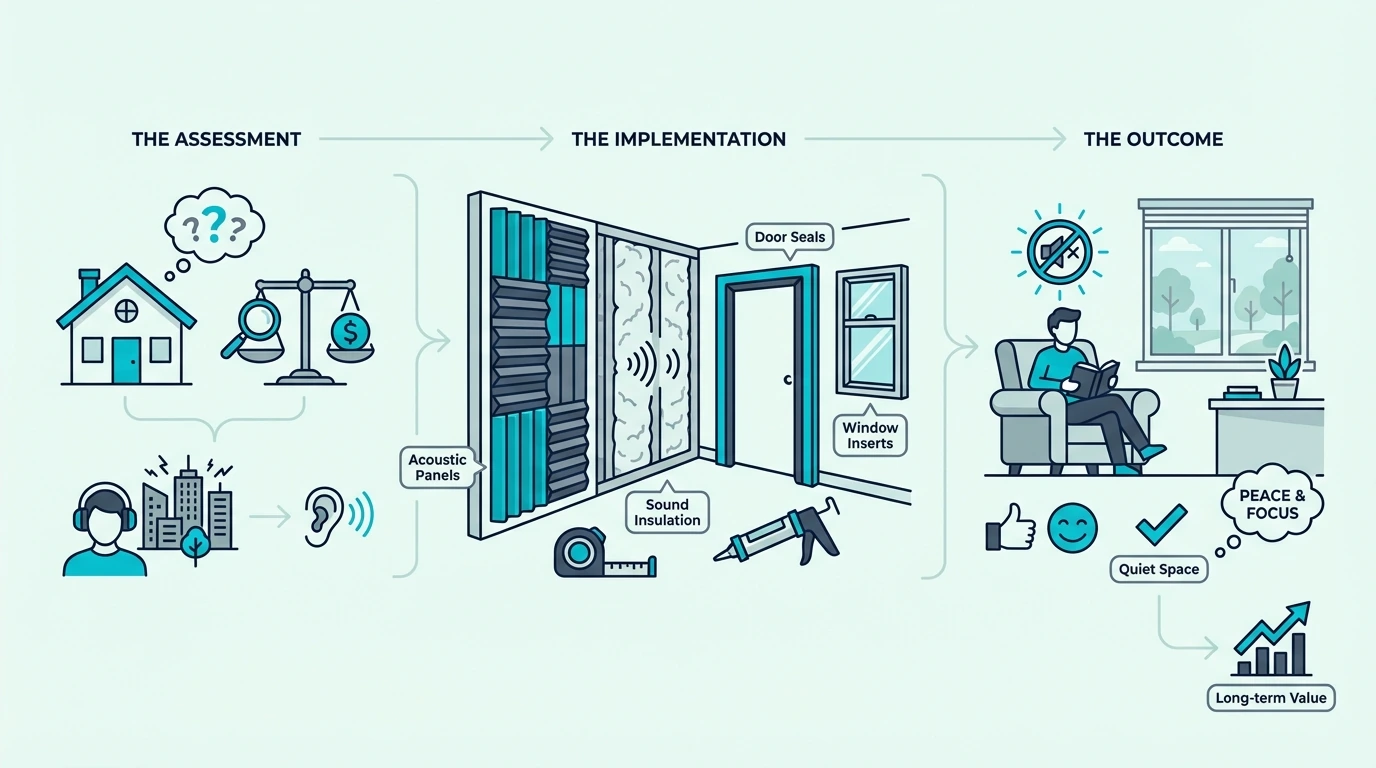
At that point the final decision framework is simple.
The cleanest call comes from matching the room problem to the cheapest tier that has a real chance of solving it, then stopping when the room becomes usable enough for its purpose.
Diagnosis Should Always Come Before Bigger Spend
Always start there. Walk the room, listen at the door, window, wall, ceiling, and any vent or gap, then spend first where the noise is loudest or leakiest.
If the cheap first step changes the room, that tells you where the next dollar belongs. If it changes nothing, that is also valuable, because it keeps you from doubling down on the wrong path.
Many Rooms Become Worth Fixing Long Before They Become Truly Soundproof
That is where many people can save themselves a lot of money.
Noise reduction is good enough when the goal is comfort, not isolation. If the room becomes quiet enough to sleep, work, or relax without constant interruption, then the project is already worth it even if outside noise is not fully gone.
That is why many rooms should stop at the targeted-upgrade stage. Not every problem needs a construction budget, and not every room needs to be treated like a studio.
A Professional Makes Sense When The Room Stops Behaving Like A Simple Opening Problem
The line usually appears when DIY logic stops giving clear answers.
Call a professional when the room has multiple likely paths, the DIY fixes have plateaued, or the problem clearly involves structure rather than just openings. That matters most on ceilings, bass-heavy problems, and projects where failure would waste a lot more money than a diagnosis visit.
If you are near that line, compare your situation with soundproofing an apartment, soundproofing windows, and the broader soundproofing hub so you can decide whether you are still in targeted-fix territory or already in full-build territory.
The Bottom Line
Is soundproofing worth it when the room problem is clear, the disruption matters, and the budget matches the real weak point.
It is most worth it when the result improves sleep, focus, privacy, or daily comfort often enough that you feel the benefit every day.
It is least worth it when the noise is mild, the expectations are unrealistic, or the first dollars go to the wrong surface. Start with diagnosis, move up in tiers, and use the cost guides for rooms and windows before turning a fixable problem into an oversized project.
Frequently Asked Questions
How to block out 100% of noise?
Blocking 100% of noise usually requires a room-within-a-room style build with full sealing, mass, and isolation on every relevant surface. For most homes, the smarter target is meaningful reduction rather than total silence.
Does rockwool soundproof?
Rockwool helps with soundproofing when it is used inside a wall or ceiling assembly because it improves the cavity part of the build. It is helpful, but it is not a standalone surface fix.
Is soundproofing worth it for home?
It is worth it for home when the noise is frequent enough to affect sleep, work, privacy, or comfort and the fix can be targeted to the real path. It is much less worth it when the noise is mild or the plan is based on guesswork.
Can you completely soundproof a room?
You can get very close only with a serious high-cost build, and even then perfect isolation is rarely practical in a normal home. Most worthwhile projects aim for the room to feel calm and usable, not mathematically perfect.