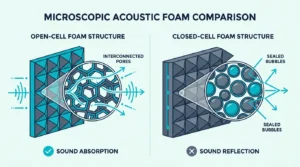
Acoustic Foam vs Normal Foam: Why Regular Foam Fails
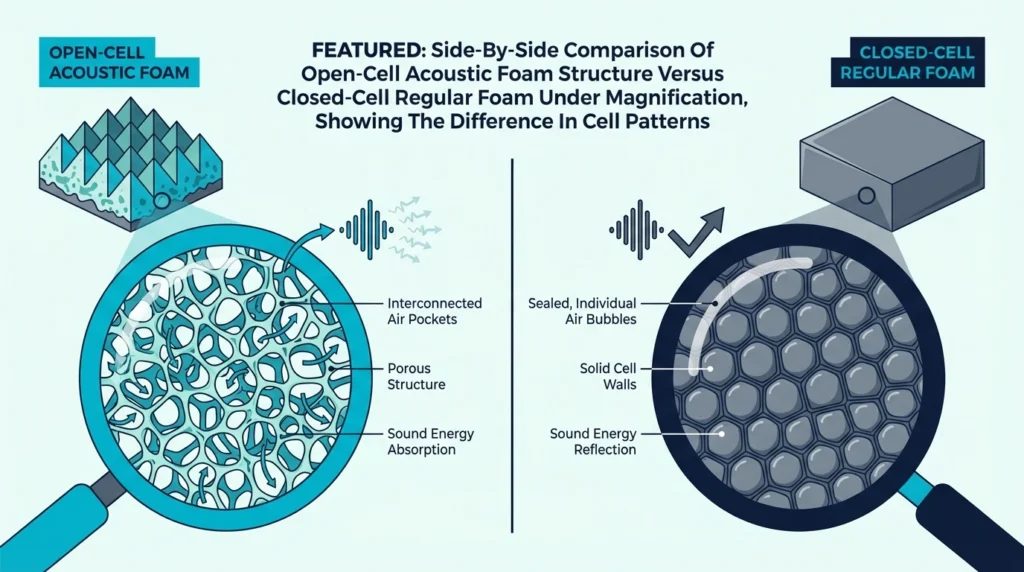
Acoustic foam vs normal foam seems like a distinction made just to charge more money, but trying to save cash by gluing packing foam to your walls is a guaranteed way to ruin your room’s sound.
If your recordings still pick up every flutter echo or your calls sound like you’re trapped in a tiled bathroom, those closed cells are bouncing sound waves instead of catching them.
Getting true open-cell material instantly stops that hollow reflection, giving you the clean, direct audio needed for professional results.
Start with the quick takeaway below to see why regular foam fails, then each section covers the microscopic differences that actually kill room reflections.
Acoustic foam uses an open-cell polyurethane structure that absorbs sound waves. Regular foam (packing foam, memory foam, closed-cell foam) has a closed structure that reflects sound instead of absorbing it — making it useless for acoustic treatment.
What’s the Real Difference Between Acoustic Foam and Normal Foam?
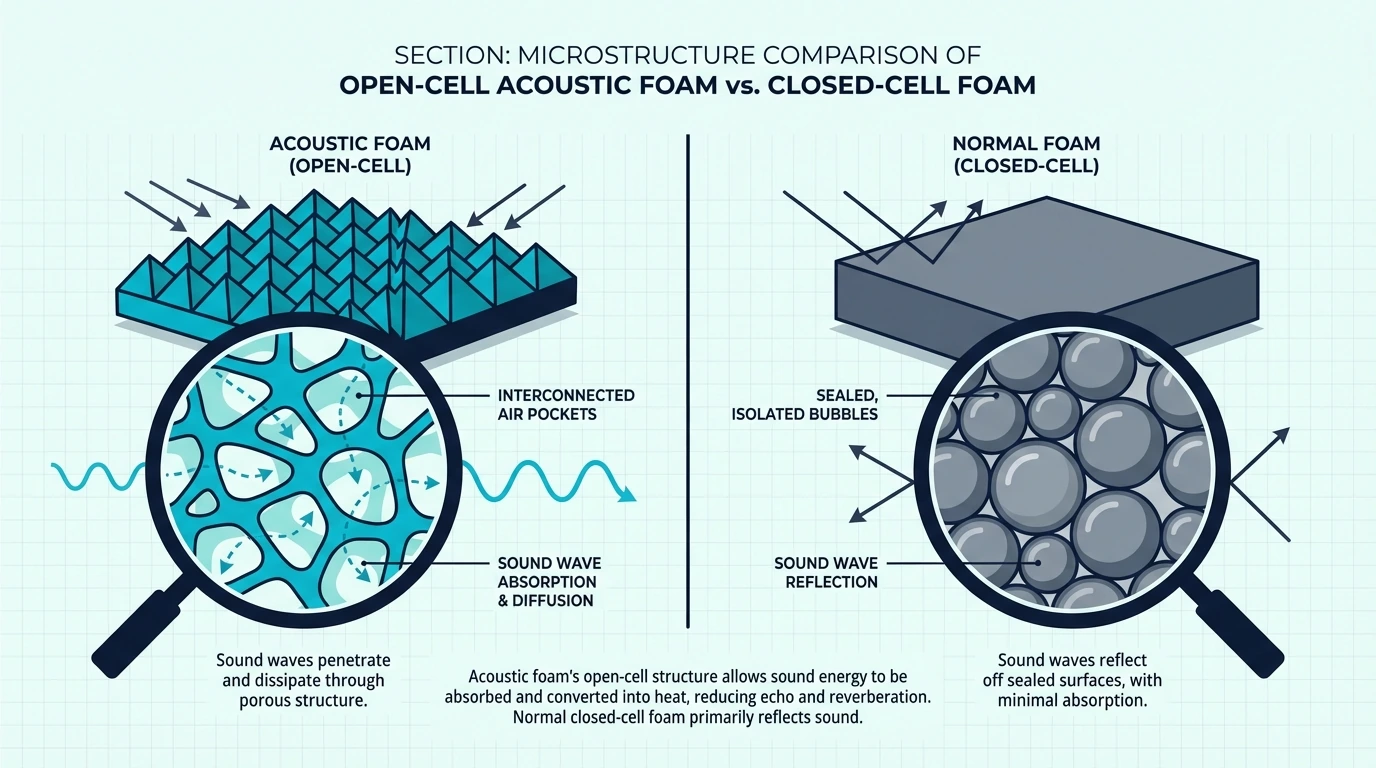
So what exactly separates these two materials? The difference isn’t visible to the naked eye, but it’s everything.
Acoustic foam has interconnected air pockets throughout its structure. Sound waves enter these channels and lose energy bouncing around inside.
Normal foam has sealed, independent cells that act like tiny balloons. Sound hits the surface and reflects right back because there’s nowhere for the energy to go.
If you want the bigger picture on what foam can (and can’t) fix in a room, read does acoustic foam work.
The Short Answer: Open-Cell vs Closed-Cell Structure
Open-cell foam has a NRC (Noise Reduction Coefficient) rating between 0.3 and 0.6 depending on thickness. That means 30-60% of sound energy gets absorbed rather than reflected.
Closed-cell foam? Its NRC hovers around 0.05 — basically the same as bare drywall.
You’d get roughly the same acoustic benefit from hanging cardboard on your walls.
Quick Comparison Table
| Factor | Acoustic Foam (Open-Cell) | Normal Foam (Closed-Cell) |
|---|---|---|
| Cell Structure | Interconnected air pockets | Sealed independent cells |
| NRC Rating | 0.3–0.6 | 0.05–0.10 |
| Sound Absorption | Yes — waves enter and dissipate | No — waves bounce back |
| Typical Uses | Studios, podcasting, home theaters | Insulation, packaging, flotation |
| Price Point | Budget-friendly for acoustic treatment | Cheaper, but useless for sound |
What Is Acoustic Foam Actually Made Of?
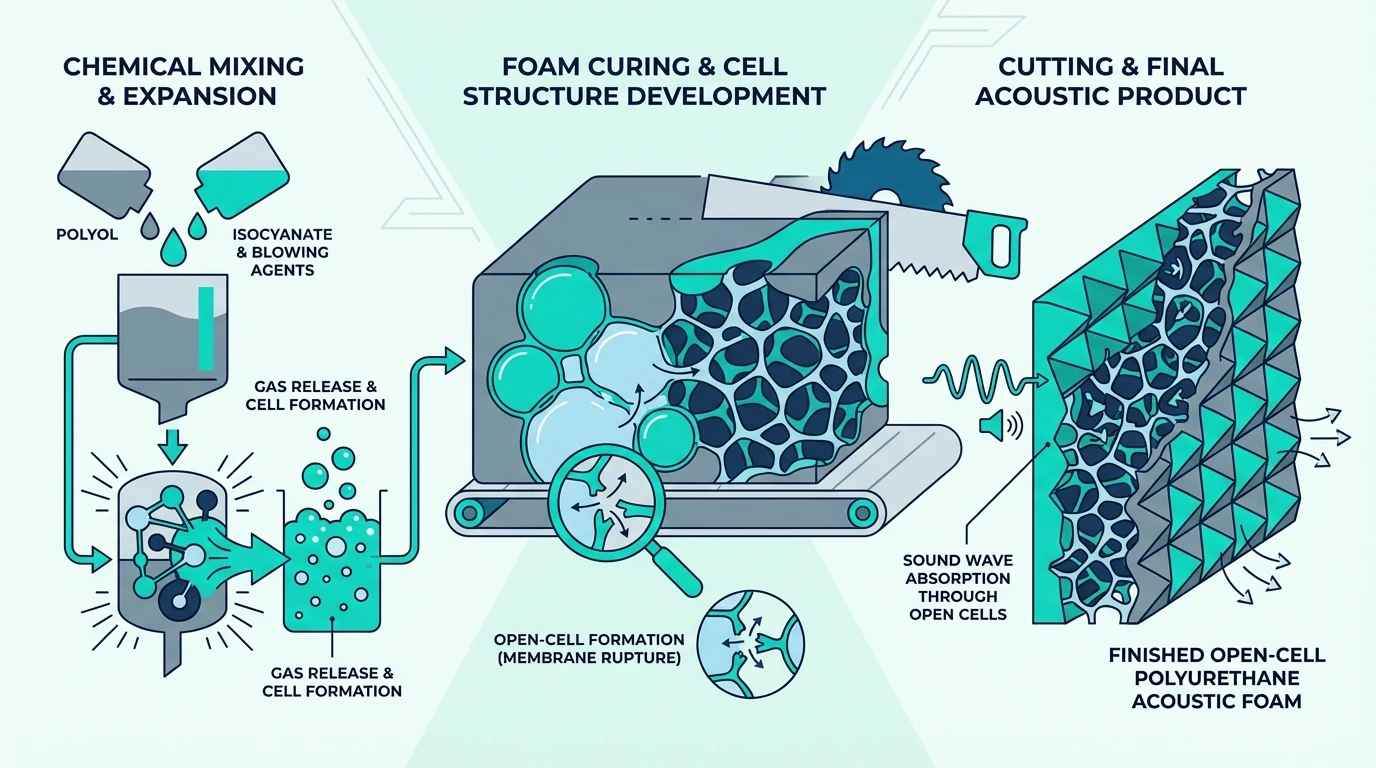
Understanding the cell structure difference is one thing, but what actually creates it? Acoustic foam is polyurethane manufactured with a process that produces open cells.
During production, gas bubbles form and then pop, leaving interconnected channels throughout the material. That’s what gives sound a path into the foam instead of reflecting off the surface.
This isn’t marketing — it’s physics. The open structure creates friction that converts sound energy into tiny amounts of heat, effectively “eating” the sound waves.
Open-Cell Polyurethane Structure
The manufacturing process intentionally ruptures cell walls during production. What remains is a sponge-like network of channels that sound waves can penetrate.
This is where those NRC ratings come from — the more consistent the open-cell structure, the higher the absorption coefficient. Manufacturing quality directly affects acoustic performance.
When you’re shopping, focus on real open-cell polyurethane foam and enough thickness to matter. The best acoustic foam panels guide breaks down practical picks by thickness and use case.
Why the Cell Structure Matters for Sound
Sound travels as pressure waves through air. When those waves hit open-cell foam, they enter the porous structure and encounter resistance.
The air inside the foam’s channels creates friction against the moving sound waves. This friction converts acoustic energy into thermal energy — the sound literally becomes heat, though you’d never notice the temperature change.
That’s why thicker foam works better than thin foam. More depth means more channels for sound to travel through, more friction, more absorption.
A 2-inch panel absorbs far more than a 1-inch panel, especially in the mid frequencies that matter most for speech clarity. The frequency absorption guide covers exactly which ranges each thickness handles.
Get Studio Tips Weekly
Join 5,000+ creators getting acoustic treatment advice every week.
No spam. Unsubscribe anytime.Can You Use Normal Foam for Acoustics?
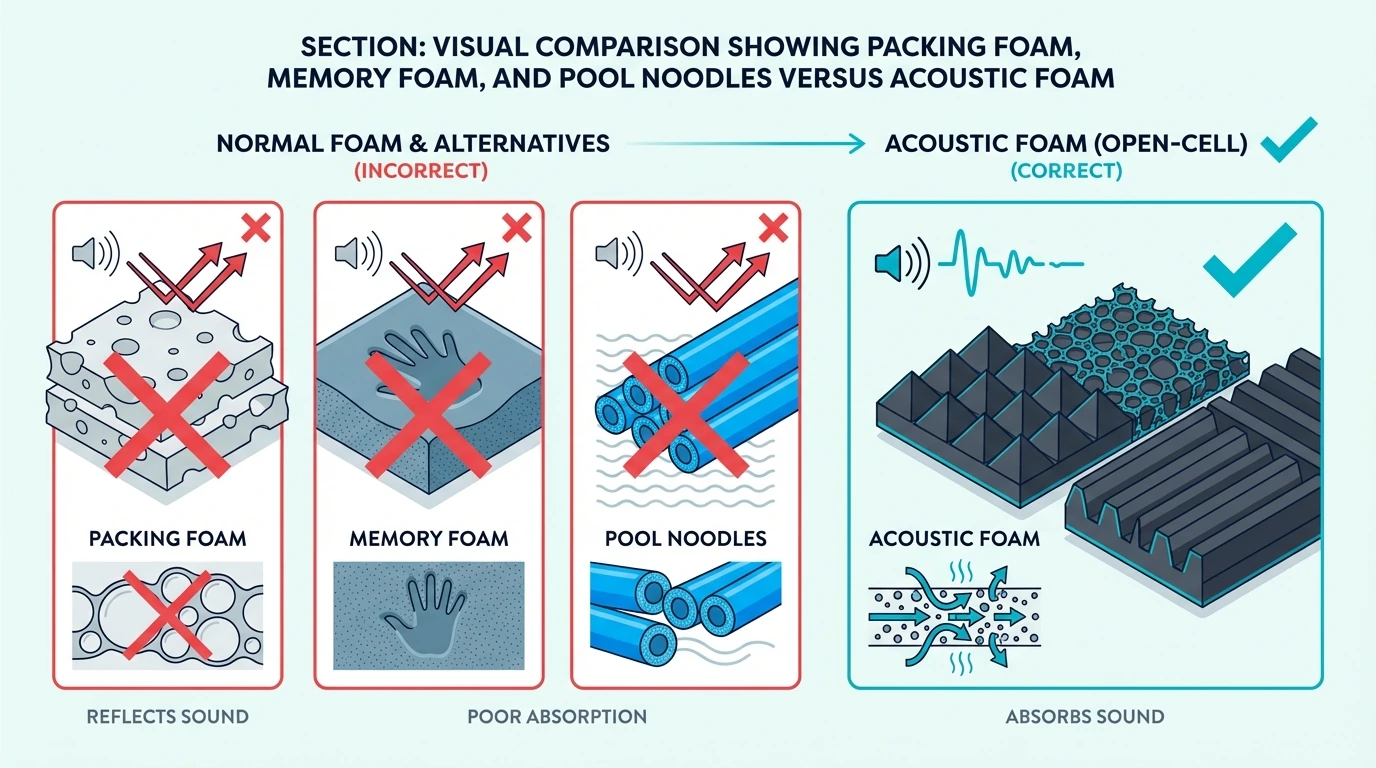
Short answer: no — the physics don’t allow it, regardless of how thick you make it or how much you use.
People try this constantly because normal foam is cheaper and more available. But you can’t change closed-cell foam into open-cell foam by stacking it, cutting it, or arranging it differently.
Regular Foam: Why It Doesn’t Work
Closed-cell foam was designed to resist penetration — that’s the whole point. It keeps water out of life jackets, cushions impacts in packaging, and insulates against temperature changes.
Those same properties that make it useful for other applications make it terrible for sound. Sound waves need somewhere to go, and closed-cell foam gives them nowhere.
Remember those interconnected air pockets from earlier? Closed-cell foam has none of them.
Each cell is a sealed bubble that bounces sound back instead of letting it in. That’s why it behaves more like a reflective surface than an absorber.
Packing Foam: Does It Absorb Sound?
Packing foam — the stuff that comes in boxes protecting electronics — is almost always closed-cell polyethylene. It’s designed to absorb physical impacts, not sound waves.
Try this test: squeeze a piece of packing foam and listen. It makes a crunchy, plasticky sound because you’re compressing sealed air pockets.
Acoustic foam compresses quietly because air flows freely between cells.
Memory Foam: Is It the Same?
Memory foam confuses people because it feels soft and absorbent. But viscoelastic memory foam has a different cell structure optimized for pressure distribution, not sound absorption.
Some memory foam has partially open cells, giving it minimal acoustic properties — around NRC 0.15-0.25. That’s better than packing foam but still nowhere near purpose-built acoustic foam.
You’d need multiple layers of memory foam to achieve what a single layer of proper acoustic foam does. At that point, you’ve spent more money and used more space than just buying the right product.
For a closer look at why mattress foam falls short, see the acoustic foam vs mattress foam breakdown.
What Types of Foam DON’T Work for Sound?
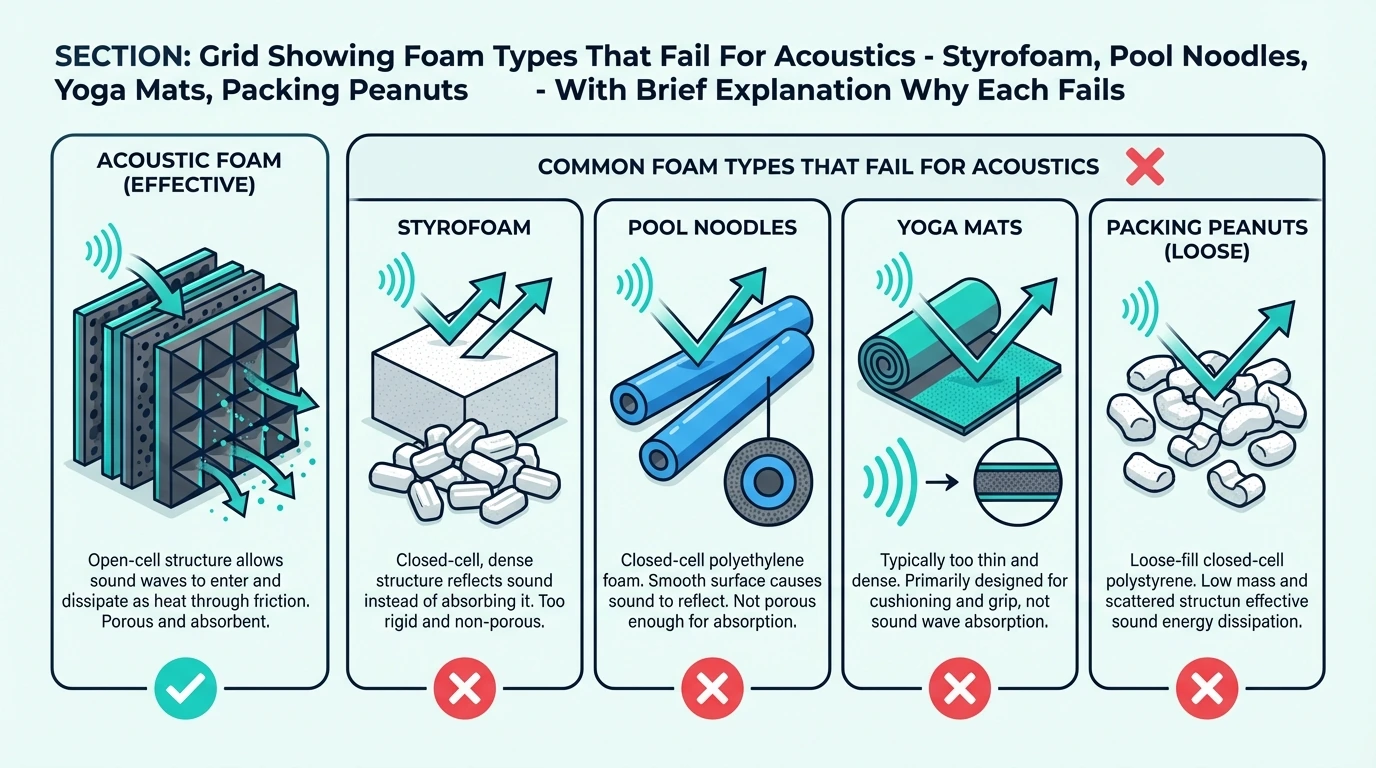
With the physics clear, here’s a specific list of about what doesn’t work. People keep trying these alternatives, and every single one has the same fundamental problem: closed or semi-closed cell structure.
Understanding why each fails reinforces the core principle. It’s not about brand names or marketing — it’s about physics that can’t be cheated.
Closed-Cell Foam (Doesn’t Absorb)
Any foam marketed as “closed-cell” is automatically disqualified for acoustic use. This includes most insulation foams, flotation devices, and protective padding.
Closed-cell foam mats are useful for vibration damping, not airborne sound absorption. If your problem is rattles and vibration, read sound deadening vs acoustic foam for the right materials.
Styrofoam and Packing Material
Expanded polystyrene (Styrofoam) is approximately 95% air by volume. Sounds like it should absorb sound, right?
Wrong. That air is trapped in completely sealed cells.
The material is so rigid that sound waves reflect off it almost as effectively as a solid surface.
Pool Noodles and Mattress Foam
Pool noodles are closed-cell polyethylene — the same material as packing foam, just shaped differently. Hanging pool noodles in a studio is a waste of effort and looks ridiculous.
Mattress foam varies, but most modern foam mattresses use high-density memory foam or latex, neither of which has meaningful acoustic absorption. The softness that makes them comfortable for sleeping doesn’t translate to sound absorption.
Is All Acoustic Foam the Same?
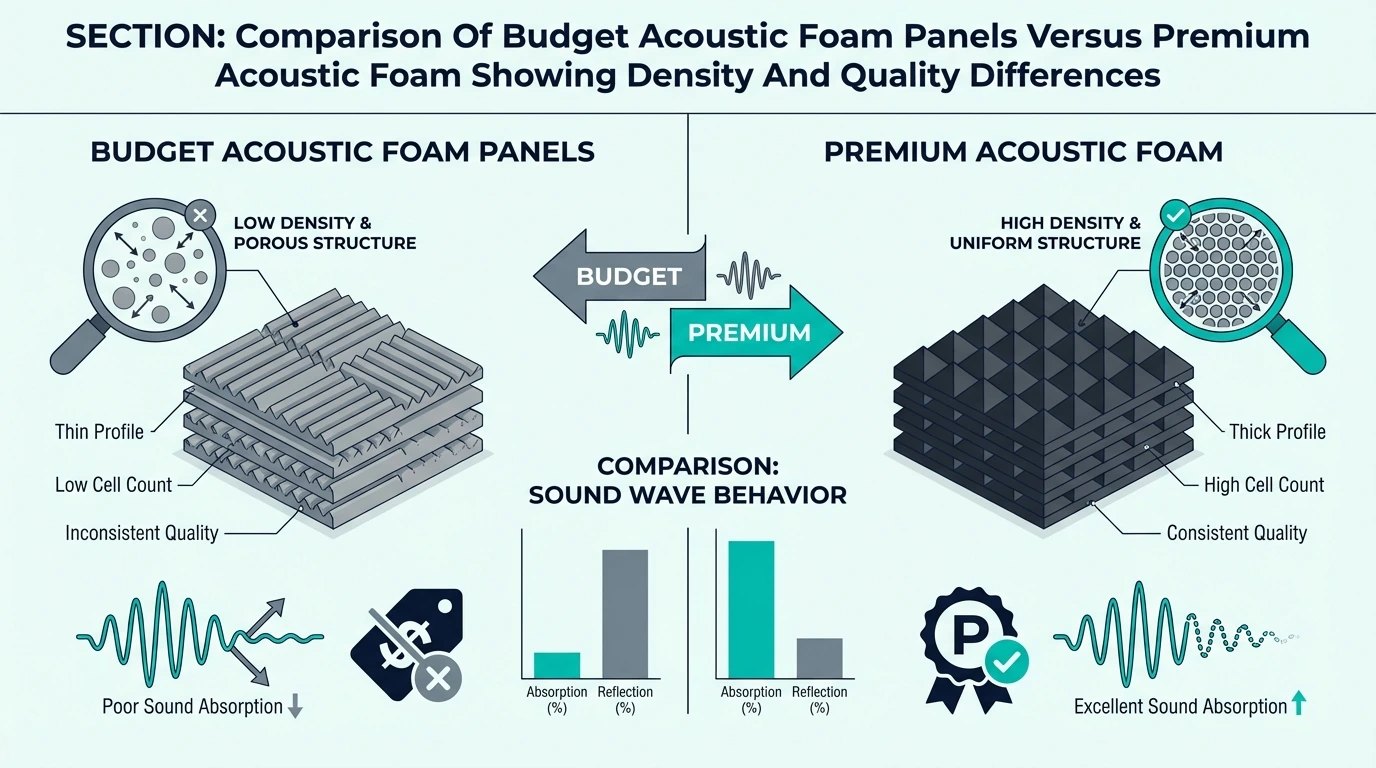
So you’ve decided to buy actual acoustic foam – smart choice. Not all acoustic foam is created equal, and that difference shows up fast in real rooms.
The category spans from barely-functional budget options to higher-density foam that performs more consistently. If you buy the wrong kind, you get the “treated wall” look without the “cleaner recordings” result.
Quality differences affect how much sound gets absorbed, how long the foam lasts, and whether it maintains its shape over time. Understanding these differences helps you avoid wasting money on foam that looks right but underperforms.
Quality Differences in Acoustic Foam
Density is the primary quality indicator — and it ties directly back to that open-cell structure covered earlier. Higher-density foam absorbs more sound and lasts longer without sagging or compressing.
Budget foam often uses lower-density polyurethane that’s cheaper to manufacture. It works initially but may lose 20-30% of its effectiveness within 2-3 years as the cell structure breaks down.
The cell walls in cheap foam are thinner and more fragile. Over time, they collapse and the foam loses its porous structure — essentially becoming more like the closed-cell foam described above.
NRC Ratings: How to Compare
Always check NRC ratings when comparing products. A rating of 0.50 means the material absorbs 50% of sound energy at test frequencies.
The catch: not all manufacturers test or report NRC honestly. The best acoustic foam panels guide focuses on options with consistent reviews and clear specs.
Cheap vs Premium Acoustic Foam
Ultra-cheap foam usually means lower density, inconsistent cell structure, and a shorter useful life. It can still reduce some flutter echo, but it’s easier to end up with panels that look right and barely change the room.
Better foam costs more because you’re paying for higher density that maintains shape and a more consistent open-cell structure. In practice, that means more predictable absorption and less “sagging foam” over time.
For most home studios and podcasting setups, prioritize thickness and enough coverage to treat first reflection points before you obsess over shapes and marketing claims. If you’re ready to buy, the three picks below are solid starting points.
Three solid open-cell foam picks (by use case)
If you want a simple option for treating a small room, start with these 24 self-adhesive 2-inch foam panels. You’ll still need decent placement, but 2-inch thickness makes it easier to hear a difference on voice and guitars.
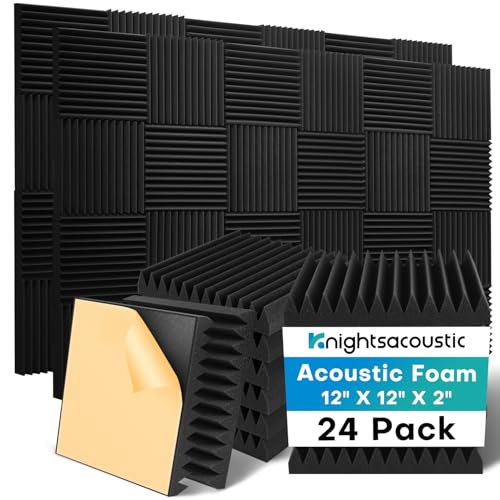
24 Pack 2-inch Acoustic Foam Panels (Self-Adhesive)
If you’re just testing first reflection points (or treating a tiny setup), a 12-pack of 1-inch wedge panels is an inexpensive way to learn what treatment actually changes in your room.
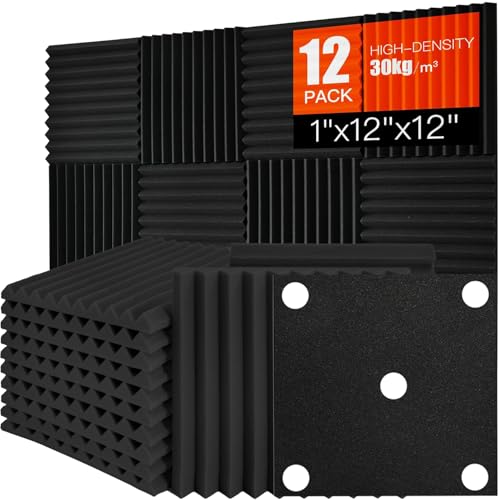
12 Pack 1-inch Wedge Acoustic Foam Panels
If corners are your worst hotspots, add corner pieces like these 12 foam bass traps. They’re not a magic fix for deep bass, but they can help tame corner buildup in small rooms.
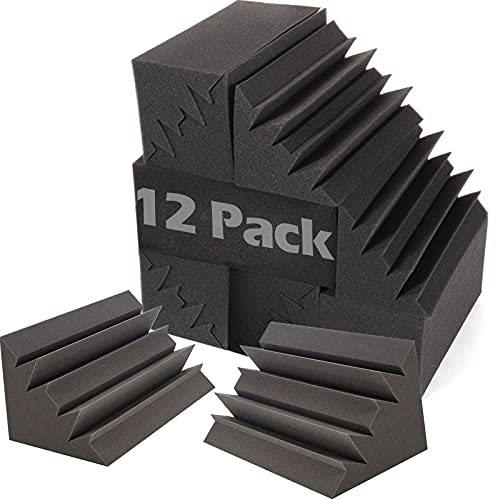
12 Pack Foam Bass Traps (Corner Blocks)
What About Egg Cartons and DIY Alternatives?
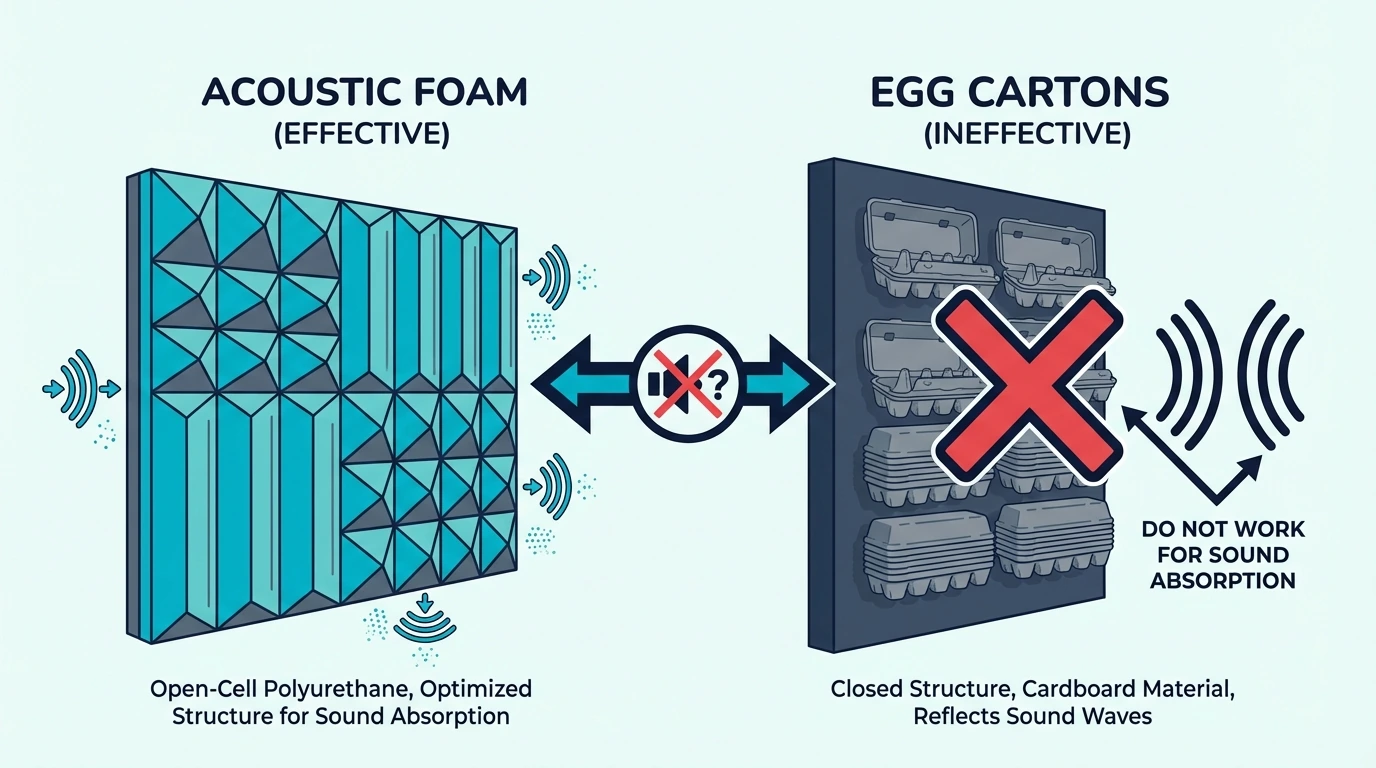
Egg cartons are the most persistent myth in DIY acoustics — they look like acoustic foam with their bumpy surface, but the similarity is purely visual.
Cardboard egg cartons have an NRC around 0.05-0.10 — essentially zero acoustic benefit. The bumpy shape doesn’t create the open-cell structure that actually absorbs sound.
If you want the full breakdown, see egg cartons vs acoustic foam.
Why the Egg Carton Myth Persists
The myth started because pyramid-shaped acoustic foam looks vaguely similar to egg carton patterns. People assumed the shape was what mattered.
Shape helps with diffusion — breaking up sound waves so they don’t reflect directly back. But absorption requires the right material structure, not just the right shape.
DIY Alternatives That Actually Work
If you want budget acoustic treatment, look for open-cell materials like rockwool or fiberglass (wrapped in breathable fabric), heavy moving blankets, and thick curtains. None of these will match purpose-built acoustic foam, but they provide real acoustic benefit unlike cardboard or closed-cell foam.
Corner hotspots are real, but coverage and placement still matter most. If you want the broader pros/cons of different alternatives, start with acoustic foam vs insulation.
The Bottom Line: Don’t Waste Money on Regular Foam
Everything in this article comes down to one principle: open-cell structure. The cell structure difference between acoustic foam and normal foam isn’t a minor technical detail — it’s the entire mechanism that makes sound absorption possible.
Regular foam, regardless of type or thickness, lacks the open-cell structure needed to absorb sound waves. Using packing foam, memory foam, or egg cartons for acoustic treatment is like using a colander to hold water — the physics simply don’t work.
Invest in actual acoustic foam with verified open-cell construction. The cost difference between real acoustic foam and useless alternatives is minimal compared to the time and frustration you’ll waste trying to make the wrong materials work.
For more details on how acoustic foam actually reduces sound, the what is acoustic foam guide covers how absorption actually works. If you’re ready to choose panels, the best acoustic foam panels guide covers top options by use case and budget.
Frequently Asked Questions
Can I mix acoustic foam with regular foam?
You can, but the regular foam contributes nothing acoustically. It’s like mixing working batteries with dead ones — the dead ones don’t help and take up space that could hold working components.
How do I test if my foam is open-cell or closed-cell?
Blow air through a small piece. Open-cell foam allows air to pass through with minimal resistance.
Closed-cell foam blocks airflow almost completely — you’ll feel back pressure against your lips.
Is thicker foam always better for sound absorption?
Yes, up to a point. Thicker foam absorbs lower frequencies that thin foam misses.
But beyond 4 inches, you get diminishing returns for most applications. The thickness difference between 1-inch and 2-inch foam matters more than 4-inch versus 6-inch.
Does the shape of acoustic foam matter?
Shape mainly affects surface area and a bit of diffusion. Pyramid and wedge patterns add texture that helps break up reflections.
In practice, thickness and placement matter more than whether you pick wedge or pyramid. If you’re choosing between shapes, the pyramid vs wedge comparison covers the tradeoffs.