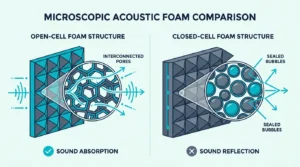
Egg Cartons vs Acoustic Foam: Why the Myth Refuses to Die
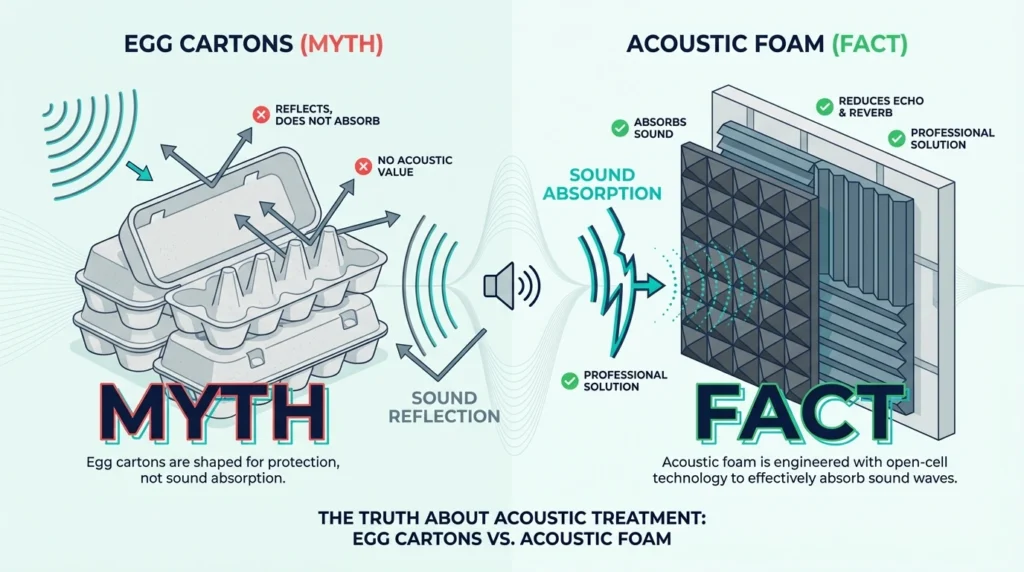
Egg cartons look like acoustic foam, but they don’t work like acoustic foam. Cardboard absorbs roughly 5% of sound energy — acoustically meaningless — while even budget foam absorbs 6-16× more.
The real cost of egg cartons isn’t money — it’s the echo that stays, the fire hazard you’ve mounted on a wall full of electronics, and the time wasted collecting material that does nothing for your recordings.
Even a single pack of budget acoustic foam absorbs 6-16× more sound than egg cartons, and it costs about the same as a few coffees. Below, you’ll see exactly why egg cartons fail the physics test, which affordable alternatives actually work, and how to treat a room on a tight budget without cutting corners on safety.
For a broader look at foam options, start with the acoustic foam hub.
Egg cartons don’t absorb real sound and won’t fix echo. They’re also a fire hazard in a room with electronics and lighting. If budget is the worry, skip the myth and use real acoustic foam (or a heavy moving blanket as a temporary stopgap). You’ll get real absorption immediately without turning your wall into tinder.
Do Egg Cartons Absorb Sound?
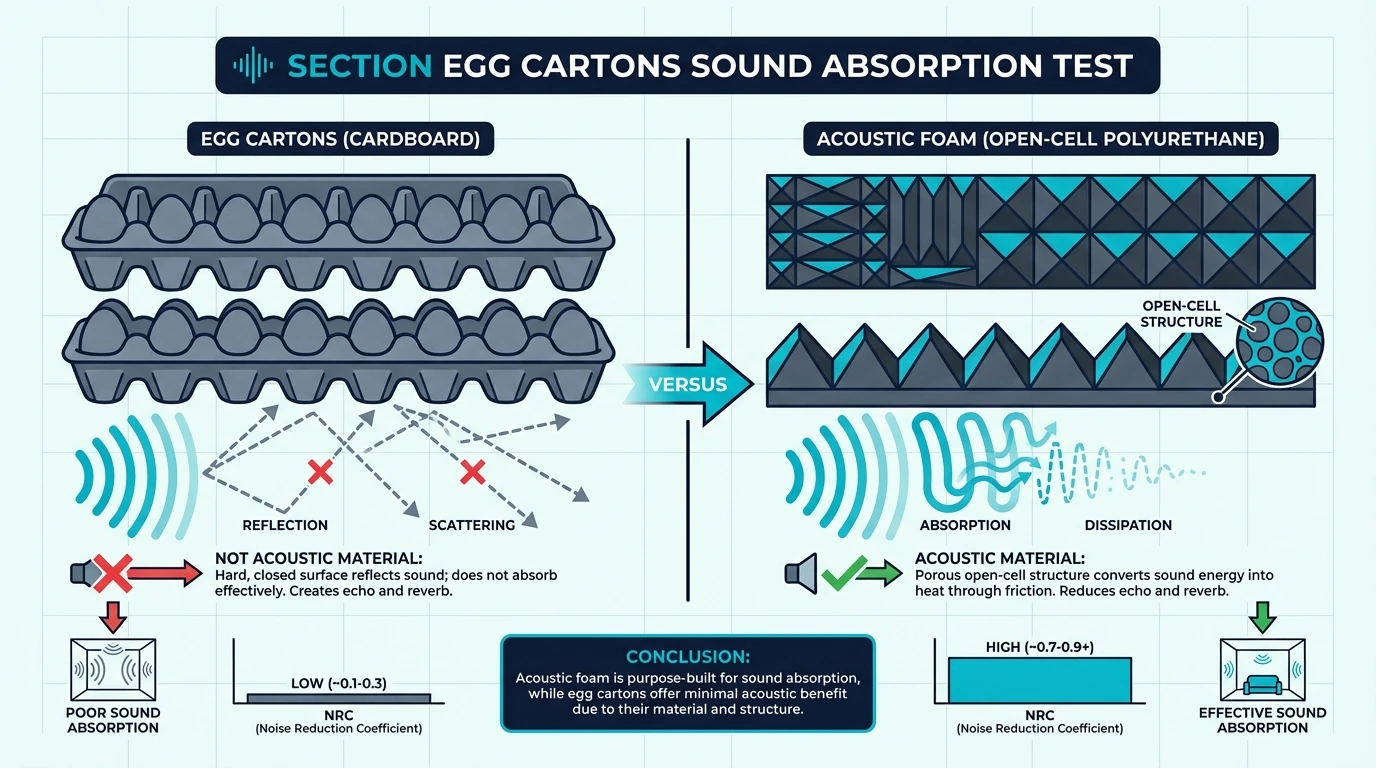
Here’s the short version: egg cartons do not absorb sound in any real way. People spend hours collecting cartons, carefully mounting them, and end up with a room that sounds exactly the same — just uglier.
The Science: Why Cardboard Fails
Sound absorption requires porous materials that allow sound waves to enter and lose energy through friction. Think of it like a sponge absorbing water — the liquid enters the material and gets trapped in the structure.
Open-cell foam works because sound penetrates the material and bounces between thousands of tiny cell walls, converting acoustic energy to heat with each bounce. The what is acoustic foam guide covers the full science. By the time the wave tries to exit, most of its energy is gone.
Cardboard is dense and non-porous. Sound waves hit the surface and bounce right back, like throwing a ball at a wall.
The thin material provides no depth for absorption to occur. It’s the acoustic equivalent of putting up a poster and expecting it to stop echoes.
The Numbers Don’t Lie
NRC (Noise Reduction Coefficient) measures absorption on a 0-1 scale. Here’s the reality check:
Egg cartons: ~0.05 NRC — They absorb roughly 5% of sound energy. That’s not “some absorption.” That’s statistical noise. Your t-shirt absorbs more sound than egg cartons.
1-inch acoustic foam: 0.30-0.50 NRC — Six to ten times more absorption than egg cartons. That’s actual treatment.
2-inch acoustic foam: 0.50-0.80 NRC — Ten to sixteen times more absorption. This is where real improvement happens.
Professional panels: 0.80-1.0 NRC — The gold standard, but honestly overkill for most home setups.
The difference isn’t subtle. It’s the difference between treatment that works and treatment that decorates your wall while doing nothing.
What Egg Cartons Actually Do (Almost Nothing)
To be completely fair, egg cartons provide minimal sound scattering. The bumpy surface breaks up reflections slightly, creating minor diffusion.
But here’s the thing: this diffusion effect is so small it’s acoustically irrelevant. You’d need to cover every square inch of every surface in egg cartons to notice any change.
And even then, the room would still have the same echo problems. You’d just have a fire hazard that smells like breakfast.
Why the Egg Carton Myth Persists
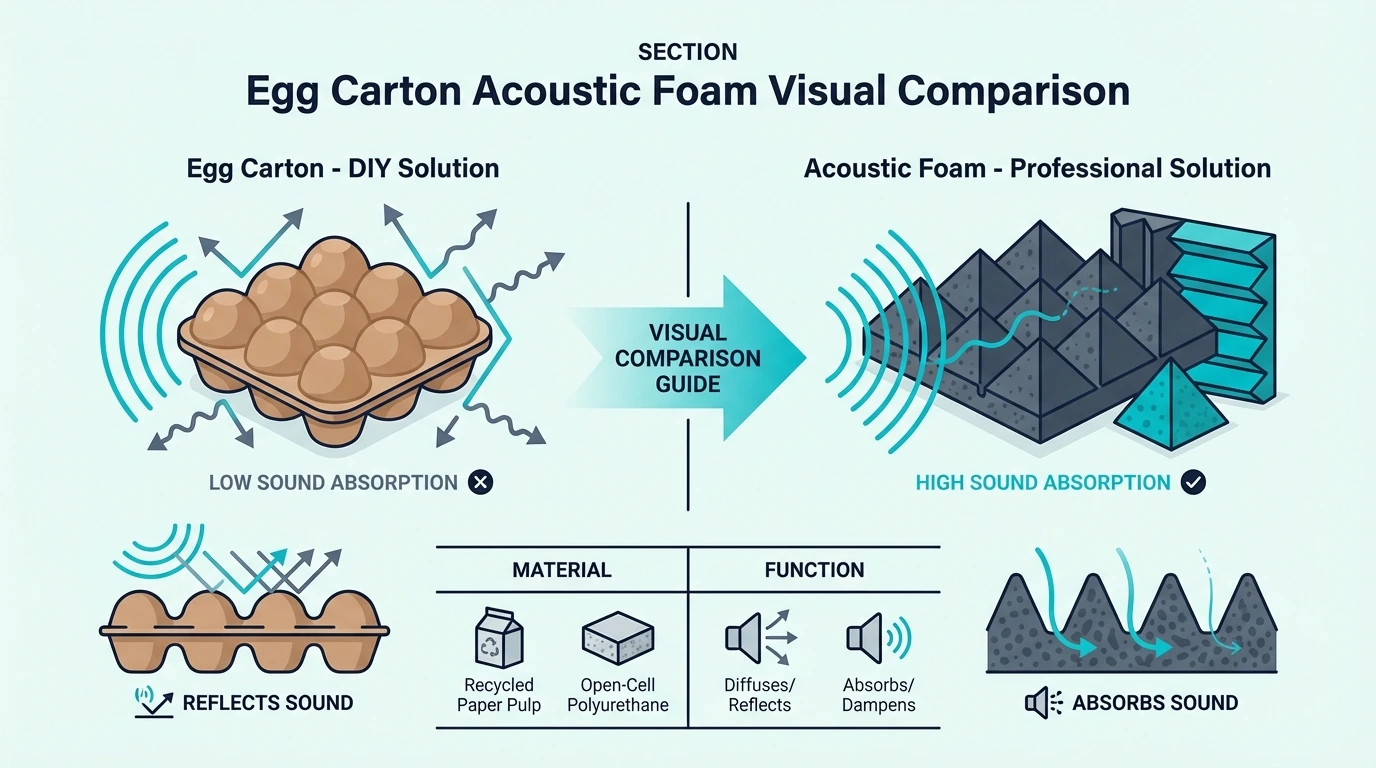
This myth has survived for decades despite being completely wrong. It’s the acoustic equivalent of “you only use 10% of your brain” — sounds plausible, gets repeated constantly, and falls apart under any scrutiny.
The Visual Similarity Trap
Look at an egg carton. Look at acoustic foam.
They both have bumpy, textured surfaces with peaks and valleys. Your brain sees the similarity and makes a logical leap: similar shape must mean similar function.
This is like assuming a cardboard cutout of a car can drive because it looks like a car. Shape doesn’t determine acoustic properties—material composition does.
Foam absorbs sound because of its porous cellular structure, not because it has bumps. You could make foam completely flat and it would still absorb sound.
You could make egg cartons into perfect pyramids and they’d still reflect everything.
The “Free” Delusion
Egg cartons cost nothing. Acoustic foam costs money.
People desperately want to believe the free option works.
That’s understandable. When you’re starting out, every dollar matters.
The idea that you could solve your acoustic problems with something you’d otherwise throw away is incredibly appealing.
Unfortunately, physics doesn’t care about your budget. Egg cartons fail regardless of how much you want them to succeed.
And here’s the kicker: the time you spend collecting, cleaning, and mounting egg cartons has value too. By the time you’ve gathered enough cartons to cover a wall, you could have bought real foam that actually works.
The Echo Chamber of Bad Advice
Many people confuse sound absorption with soundproofing, and both with “doing something about sound.” Egg cartons do none of these effectively.
The myth spreads because people who don’t understand acoustics share advice with other people who don’t understand acoustics. Someone tries egg cartons, doesn’t know what good treatment sounds like, assumes it helped, and tells their friends.
It’s the blind leading the blind, generation after generation.
Forums and comment sections are full of people defending egg cartons because they’ve already invested time in the approach and don’t want to admit it was wasted. Sunk cost fallacy meets acoustic ignorance.
Get Studio Tips Weekly
Join 5,000+ creators getting acoustic treatment advice every week.
No spam. Unsubscribe anytime.The Fire Hazard Problem
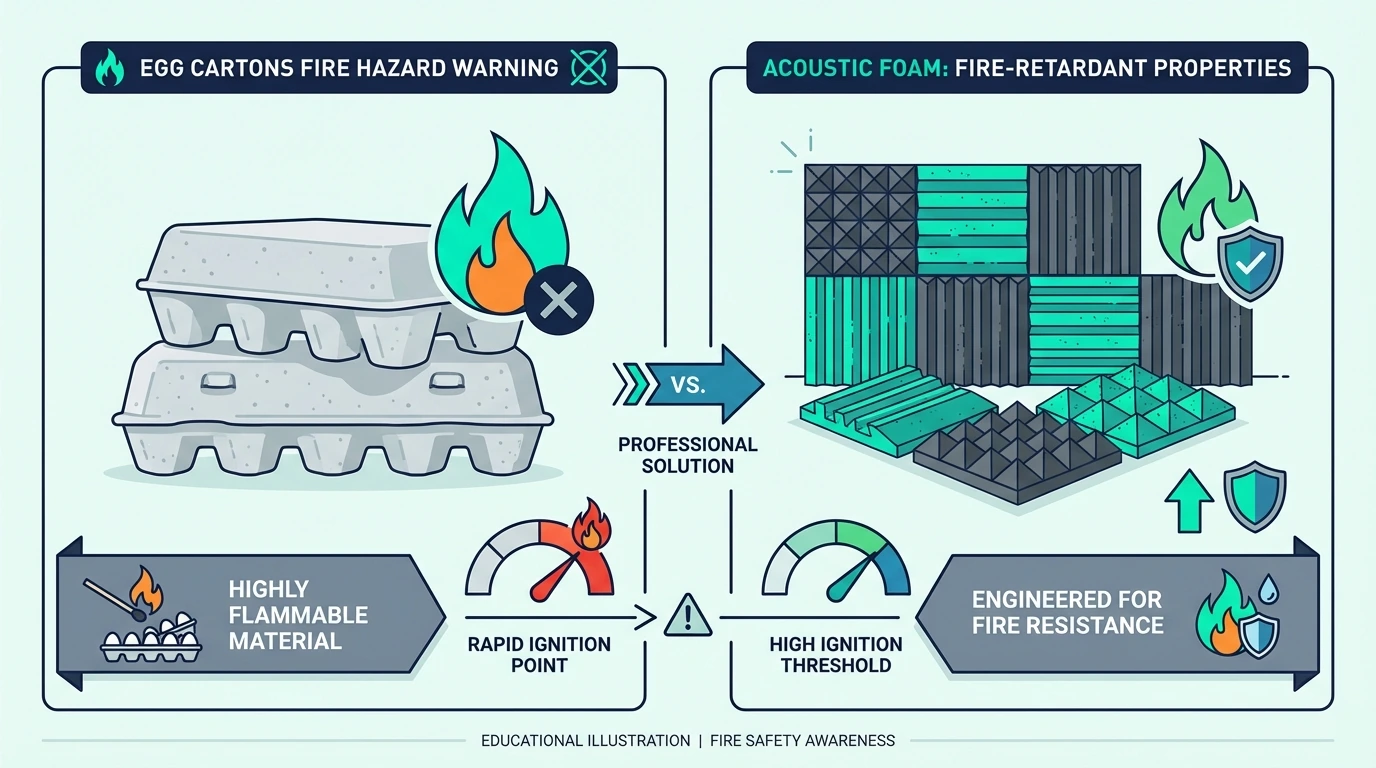
Beyond being acoustically useless, egg cartons present a serious safety risk that most DIY enthusiasts don’t consider until it’s too late.
Cardboard + Electronics = Bad Combination
Egg cartons are made of recycled paper and cardboard—materials designed to be lightweight and biodegradable. They’re also highly flammable.
A room covered in egg cartons is kindling waiting for a spark.
Now think about what’s in a typical recording space: computers generating heat, audio interfaces with power supplies, studio lights that get hot, cables that can short circuit, maybe a space heater in winter. You’re surrounding all of this with flammable material mounted on walls where heat rises and accumulates.
Recording studios have burned down. This isn’t theoretical fear-mongering—it’s documented reality.
And while foam can also burn under extreme conditions, reputable manufacturers include fire-retardant treatment that slows ignition and spread. Learn more about acoustic foam safety.
The Certification Difference
The Sonic Acoustics 24 Pack Fire Retardant Panels specifically includes fire-rated material. This isn’t marketing fluff — it’s tested, documented protection.
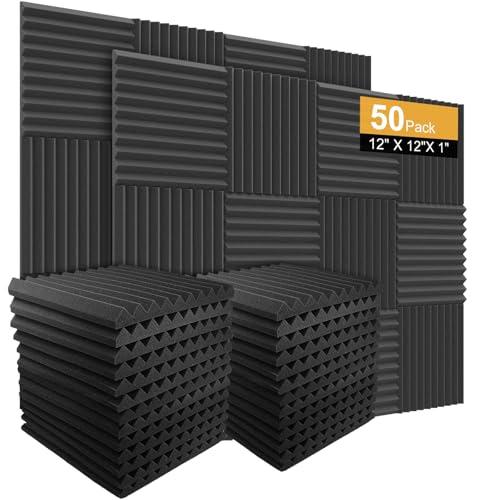
Sonic Acoustics 24 Pack Fire Retardant Panels
Egg cartons have no fire rating because they’re not designed for wall mounting. They’re designed to protect eggs during transport and then be recycled.
Using them as permanent wall covering ignores their intended purpose and basic safety considerations.
The Insurance Nightmare
Here’s something nobody thinks about until there’s a problem: if a fire starts in a room you’ve intentionally covered with flammable material not designed for that purpose, your insurance claim gets complicated fast.
Insurance adjusters look for reasons to deny claims. “Homeowner covered walls with cardboard egg cartons” is exactly the kind of negligence that voids coverage.
The small amount you “saved” could turn into a much bigger problem fast—financially and for safety.
Is that risk worth avoiding a small foam purchase? The math doesn’t work.
What Actually Works: Affordable Alternatives
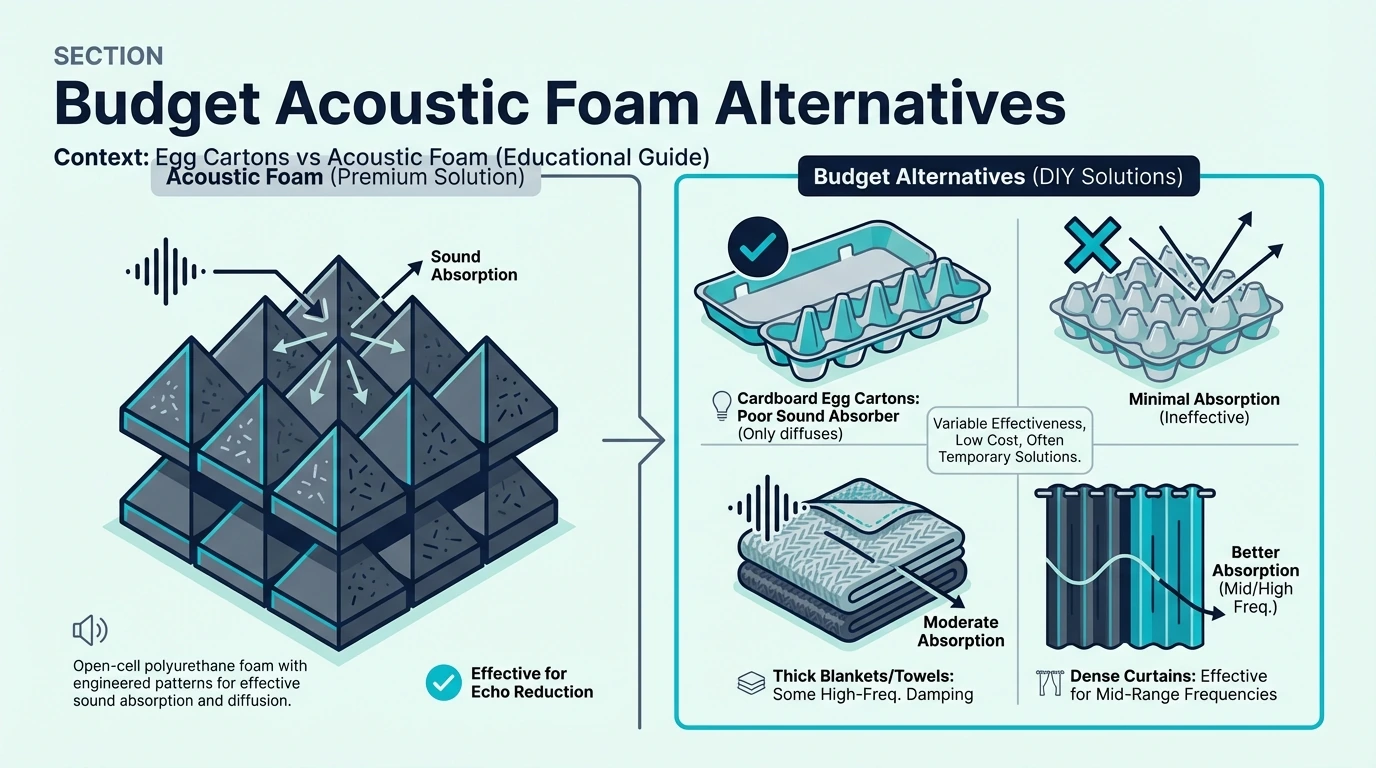
Here’s the good news: if budget is your concern, real acoustic treatment costs far less than you probably think. The “egg cartons are free” argument falls apart when you realize actual foam costs about the same as a fast food meal.
The Budget Reality Check
The 12-pack self-adhesive wedge foam panels provides 12 square feet of real acoustic treatment. That’s enough to cover the wall behind your microphone — the single most impactful placement for voice recording.
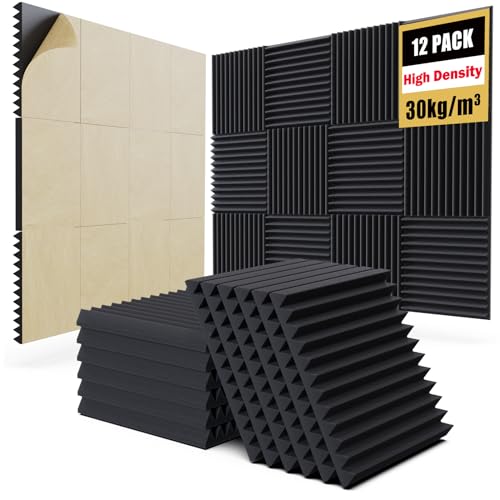
12-pack self-adhesive wedge foam panels
Think about that. For roughly the cost of a few coffees, you can treat your primary reflection point with material that actually absorbs sound.
Compare that to spending hours collecting egg cartons that do nothing.
Spoiler: acoustic foam is not expensive.
Stepping Up: The Sweet Spot
If you want better performance without breaking the bank, 2-inch foam reaches frequencies that 1-inch panels can’t touch. The 2-inch self-adhesive pyramid foam panels (12-pack) delivers noticeably better absorption, especially for the low-mid frequencies that give voice recordings warmth.
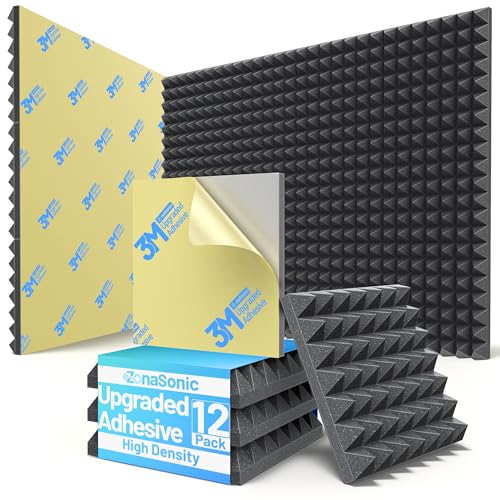
2-inch self-adhesive pyramid foam panels (12-pack)
The price gap between 1-inch and 2-inch foam is usually small. The performance difference is much more noticeable.
If you’re only buying once, buy the thicker option.
The DIY Route: Maximum Value
For the truly budget-conscious who don’t mind some work, building your own panels from rigid mineral wool delivers professional-grade absorption at DIY prices.
A single sheet of mineral wool can make multiple panels that outperform most foam options. Add a simple wood frame and fabric wrap, and you have treatment that rivals far more expensive commercial panels.
The tradeoff is time and effort—expect a few hours for your first batch. But if you’re considering egg cartons, you were already willing to invest time in a DIY approach.
This one actually works. Compare the options in the acoustic foam vs rockwool guide.
The “I Need Something Today” Option
Heavy moving blankets provide moderate absorption and are inexpensive in bulk packs. They’re not as effective as foam, but they’re easy to buy locally and work for temporary setups.
Hang one behind your microphone or drape it over a mic stand. It’s not pretty—your recording space will look like you’re about to move furniture.
But it’s functional. And unlike egg cartons, it actually absorbs sound.
This is the legitimate “cheap and fast” option. Use it while you save up for proper foam, or keep it as your portable recording solution.
Egg Cartons vs Acoustic Foam: The Honest Comparison
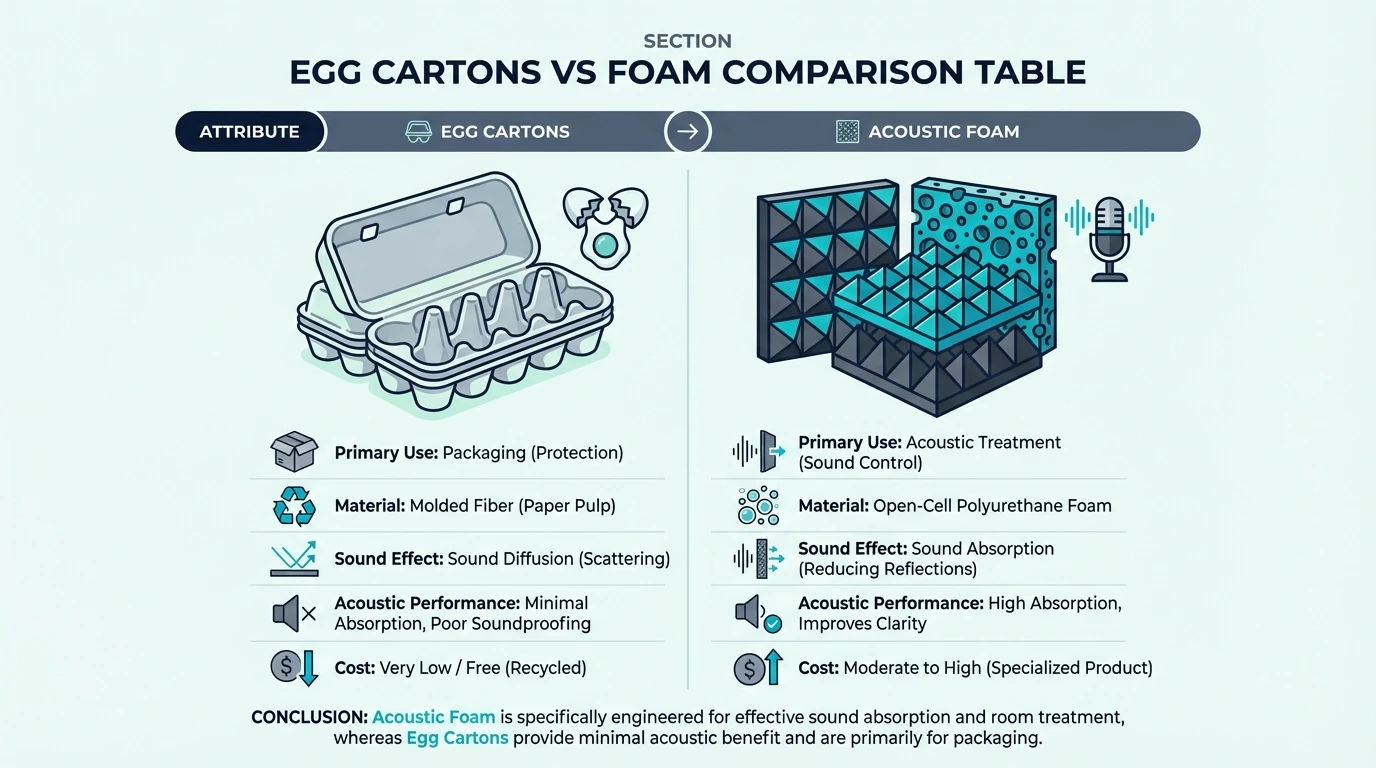
Here’s the honest breakdown so there’s no ambiguity about which option makes sense:
| Factor | Egg Cartons | Acoustic Foam | The Verdict |
|---|---|---|---|
| Sound Absorption | ~5% (essentially zero) | 30-80% | Foam wins by 6-16x |
| Fire Safety | Highly flammable hazard | Fire-rated options available | Foam is actually safe |
| Real Cost | “Free” + wasted time | Budget-friendly starter kit | Foam costs less than you think |
| Appearance | Looks like garbage (because it is) | Clean, professional studio look | Foam looks intentional |
| Durability | Degrades, attracts pests | 3-5+ years | Foam lasts |
| Installation | Won’t stick properly, falls off | Easy with adhesive strips | Foam actually stays up |
| Does It Work? | No | Yes | This is the only row that matters |
The comparison isn’t close. Egg cartons fail on every single metric except initial cost — and even that advantage disappears when you factor in the time spent collecting them and the fact that they don’t solve your problem.
Here’s the brutal truth: if you cover your walls in egg cartons, you’ll still have echo problems. You’ll just also have ugly walls and a fire hazard.
Then you’ll buy foam anyway, after wasting time and creating a mess to clean up.
Skip the intermediate step. Check the how to choose acoustic foam guide and buy real panels from the start.
The Bottom Line
Egg cartons don’t work for acoustic treatment. The myth persists because of visual similarity to foam and wishful thinking about free solutions.
Real acoustic foam is surprisingly affordable. Even a small starter pack can make a noticeable difference behind your microphone.
Don’t waste time on solutions that don’t work. Invest in proper treatment and hear the difference immediately. If you want help picking, the best acoustic foam shape guide breaks down wedge vs pyramid vs flat.
For more guidance on acoustic treatment, visit the acoustic foam hub, explore best budget acoustic foam picks, or learn how to choose acoustic foam. Check if acoustic foam is worth it for your setup.
Frequently Asked Questions
Can egg cartons reduce echo at all?
Technically, any textured surface provides minimal diffusion. But the effect is so small it’s acoustically irrelevant.
You’d notice more improvement from hanging a blanket on one wall than covering every wall in egg cartons.
What about egg crate foam mattress toppers?
Egg crate foam (the mattress material) is different from cardboard egg cartons. Foam mattress toppers provide some absorption, though less than purpose-built acoustic foam.
If you have an old mattress topper, it’s worth trying.
But buying one specifically for acoustic treatment makes less sense than buying actual acoustic foam. Learn acoustic foam vs normal foam differences.
Why do some studios have egg cartons on walls?
Old photos of budget studios sometimes show egg cartons. These studios had bad acoustics — the egg cartons were decoration, not treatment.
The myth spread because people saw the photos without understanding the context. Those studios would have sounded better with proper treatment.
Are there any legitimate uses for egg cartons in acoustics?
No. Egg cartons belong in recycling bins or compost, not on studio walls.
If you’re determined to use free materials, heavy blankets, thick curtains, or bookshelves full of books provide more absorption than egg cartons.
How much does real acoustic foam cost?
Budget acoustic foam is very affordable. A 12-pack of quality foam costs roughly the same as a few coffees and provides real sound absorption.
For full room coverage, bulk packs offer even better per-panel value. The investment is minimal compared to the improvement in recording quality.
Is acoustic foam safe compared to egg cartons?
Yes—quality acoustic foam from reputable manufacturers includes fire-retardant treatment. Egg cartons are highly flammable and present a serious fire hazard in recording spaces with electronics and lighting.