How Much Acoustic Treatment Do I Need (The Real Numbers For Your Room)
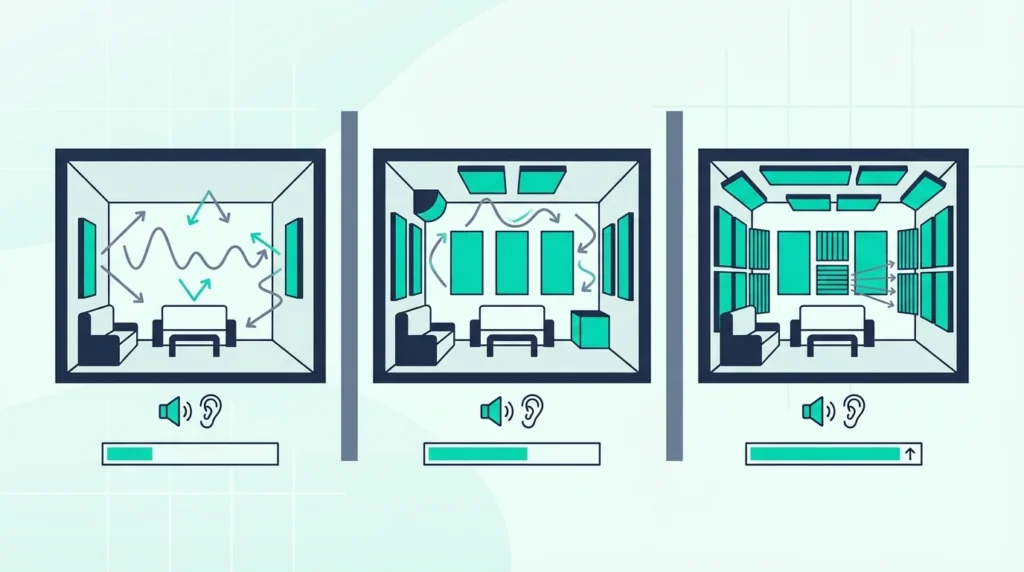
How much acoustic treatment do i need — yes, there is an actual formula, but the right amount depends on your room size, what you use the room for, and whether you are solving echo problems or bass problems.
Most people either under-treat and wonder why their room still sounds bad, or over-treat and end up with a dead, lifeless space that makes everything sound flat.
The wrong amount of treatment wastes money in both directions. Too little and you still hear flutter echo and muddy bass.
Too much and vocals lose their natural energy.
Below, this guide breaks down the wall coverage percentages, panel counts, and placement priorities so you can get the right amount of acoustic treatment for your specific room without guessing.
To calculate how much acoustic treatment you need, measure your total wall surface area and plan for 20-40% coverage with absorption panels, depending on room purpose. Home studios need 30-40% coverage plus corner bass traps. Home theaters need 25-35%. Offices need 15-25%. Start with first reflection points and corners, then add panels until the room sounds controlled but not dead. A typical bedroom studio needs 6-10 panels total: 4 corner bass traps, 2 side-wall panels at first reflection points, 1 ceiling cloud, and 1-2 rear panels.
How Much Acoustic Treatment Do I Need — And Why Does It Matter?
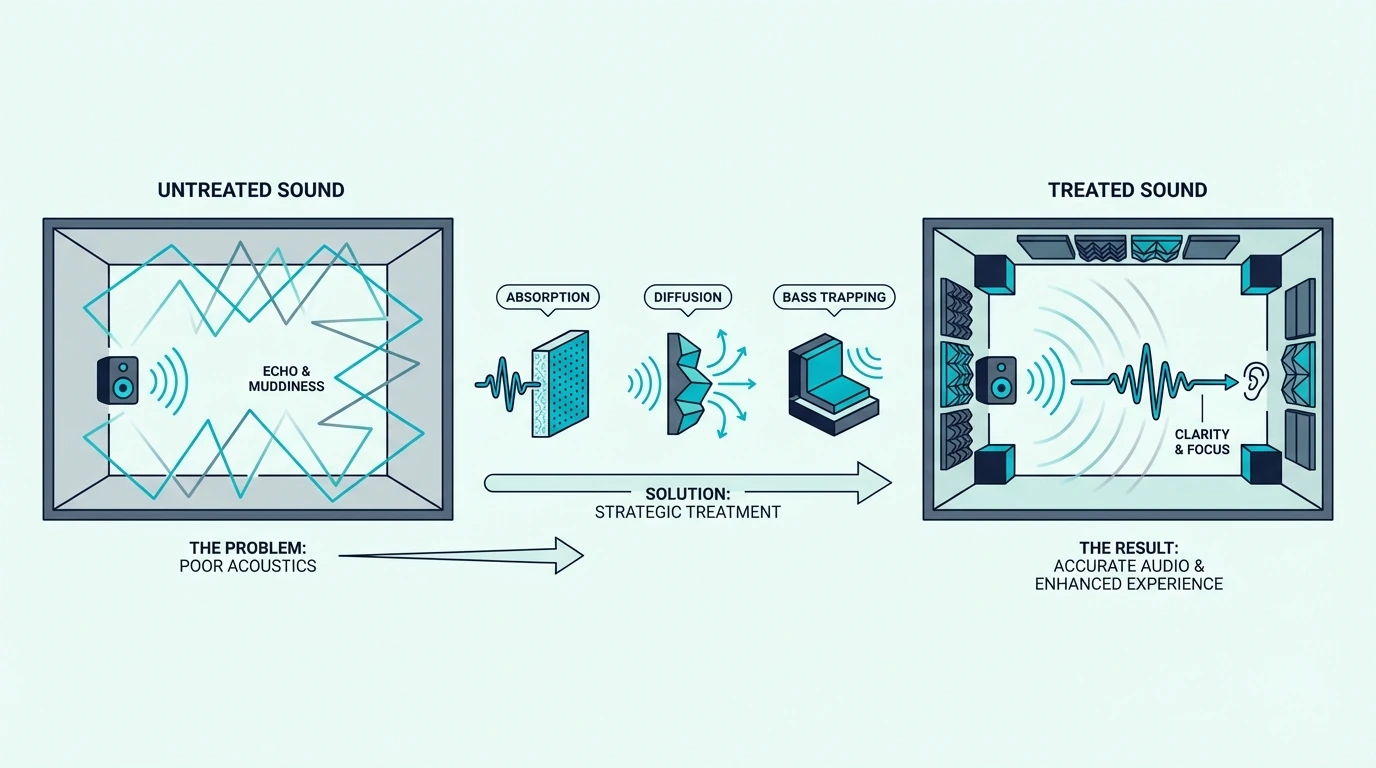
Getting the amount right is the difference between a room that works and one that fights you on every mix. Here is what happens when you get it wrong — and why the numbers matter more than most people realize.
The Wall Surface Area Method
The simplest starting point is wall surface area. Measure the total square footage of your walls (length times height for each wall, added together) and calculate 20-40% of that number.
That percentage is your target coverage for absorption panels. A room with 400 square feet of wall surface needs 80-160 square feet of panel coverage depending on how aggressively you want to treat the space.
Bass traps are separate from that calculation. Corner bass traps handle low frequencies that wall panels cannot absorb, so you add them on top of your wall coverage number.
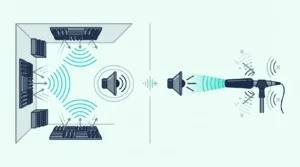
The mirror trick helps you find where to place panels first. Sit at your mix position and have someone slide a mirror along each wall.
Every spot where you can see your monitors in the mirror is a first reflection point — and those points are your highest-priority panel locations.
Room Purpose Changes The Math
A recording room needs more absorption than a mixing room. When you record vocals or acoustic instruments, you want the microphone to capture as little room sound as possible, which means heavier treatment on walls near the mic.
Mixing rooms need a different balance. Too much absorption kills the natural room sound that helps you judge how a mix translates to other spaces.
For home studios where you both record and mix in the same room, aim for 30-35% wall coverage. That gives you enough absorption for clean recordings without making the room too dead for critical listening.
Listening rooms and home theaters sit at the lower end — 20-30% coverage focused on first reflection points and the rear wall. The goal is clarity without removing the sense of space that makes movies and music feel immersive.
How Do You Calculate Acoustic Treatment Coverage?
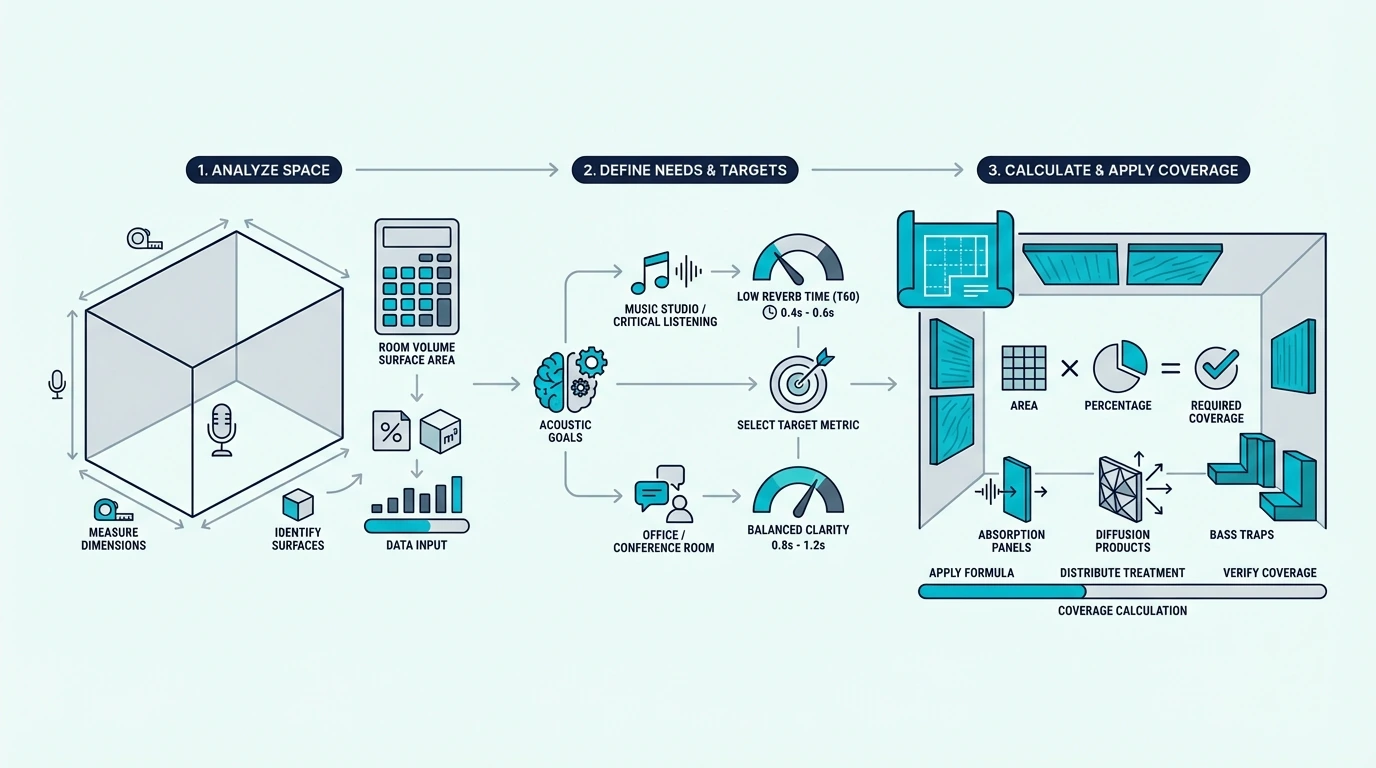
The wall surface area method gives you a target number, but turning that number into an actual panel count requires a few more steps. Here is the practical math that tells you exactly how many panels to buy.
Start with your room dimensions. A 12×10 foot room with 8-foot ceilings has approximately 352 square feet of wall surface area (two 12×8 walls plus two 10×8 walls).
At 30% coverage, you need about 105 square feet of panels. A standard 2×4 foot acoustic panel covers 8 square feet.
That means roughly 13 panels — but you will not place them all on walls.
Four of those panels become corner bass traps (stacked in pairs in two corners). One becomes a ceiling cloud above the mix position.
The remaining eight go on walls at first reflection points and behind the monitors.
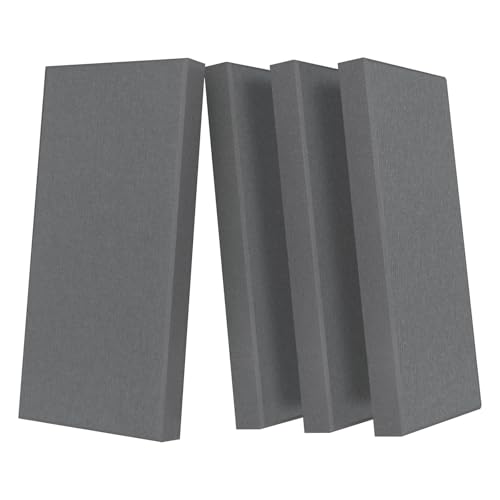
The UMIACOUSTICS 4-Pack Acoustic Panels cover key reflection points when mounted at ear height on side walls.
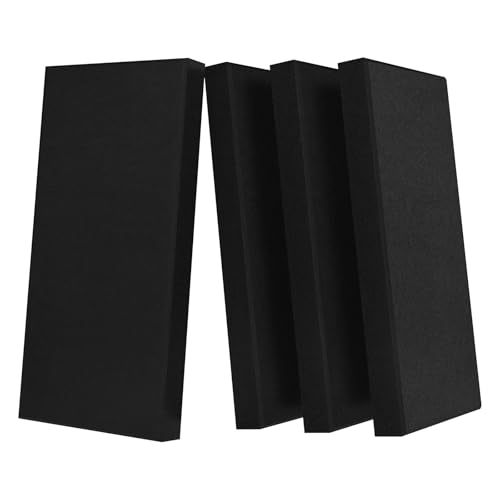
UMIACOUSTICS 4-Pack Acoustic Panels
For larger wall coverage, 24×48-inch panels give you 16 square feet per pair — the same size as most DIY panels.
Get Studio Tips Weekly
Join 5,000+ creators getting acoustic treatment advice every week.
No spam. Unsubscribe anytime.Is There Such A Thing As Too Much Acoustic Treatment?
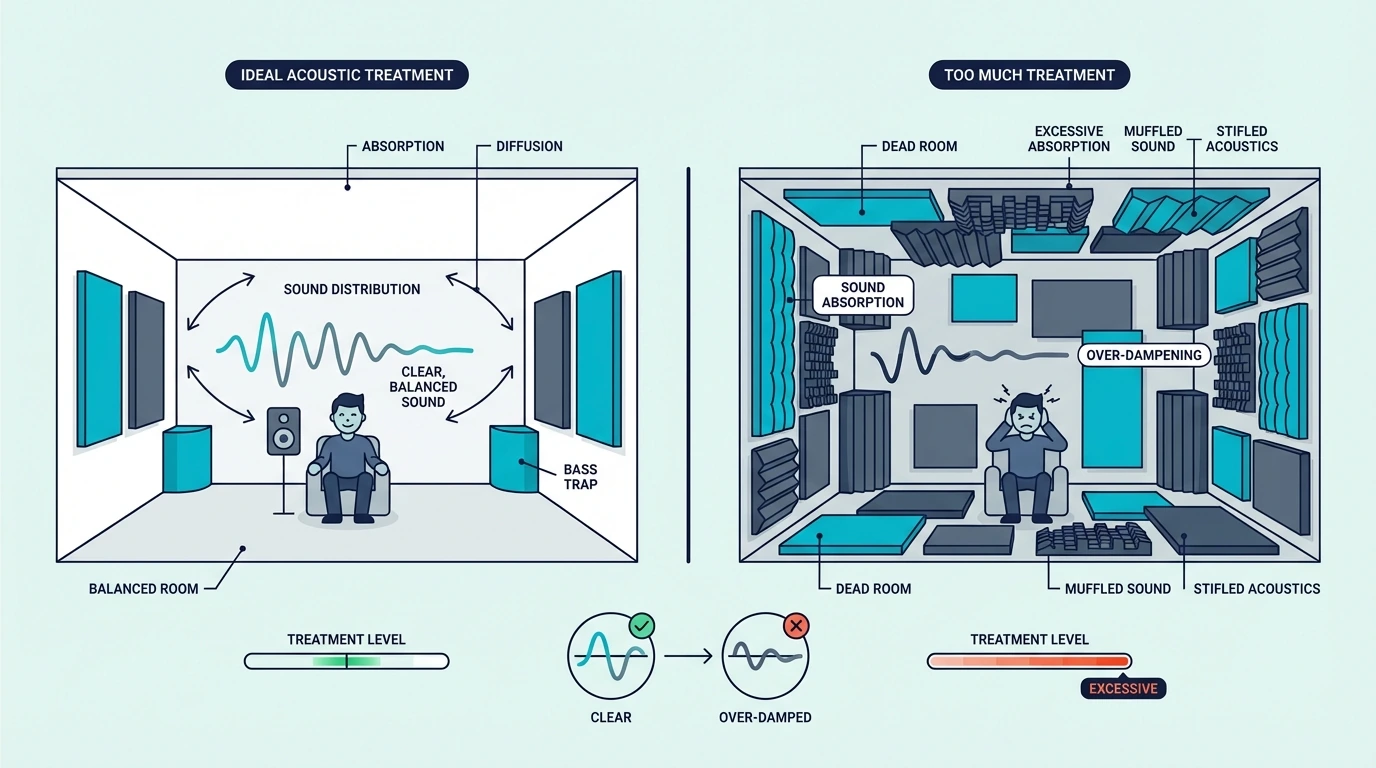
Absolutely — and over-treating is more common than you would expect. The difference between a well-treated room and an over-treated one is immediately obvious when you walk in and start talking.
Signs You Have Over-Treated
Your voice sounds unnaturally dry when you speak. Clap your hands in the center of the room — if you hear a dull thud with zero decay, you have gone too far.
Recordings in an over-treated room sound lifeless. Vocals lose their natural warmth and presence because the room reflections that give a voice body are completely gone.
Mixing becomes harder, not easier. Without any early reflections, your brain struggles to judge the spatial characteristics of a mix.
Everything sounds flat and narrow in the room, then too wide and reverberant when you play it in a car or on headphones.
The room acoustics feel uncomfortable. Humans are accustomed to hearing some reflected sound.
A completely dead room creates a subtle sense of unease that causes ear fatigue faster than a moderately treated space.
How To Fix An Over-Treated Room
Remove panels from the rear wall first. The rear wall benefits from diffusion more than absorption in most studio setups, because scattered reflections from behind you add a sense of depth without causing comb filtering at the mix position.
Replace some absorption panels with diffusers. Sound absorption and diffusion serve different purposes — absorption removes energy, diffusion redistributes it.
A room with only absorption feels dead. A room with both feels controlled and natural.
Leave some hard surfaces exposed. The ceiling above and behind you, portions of the rear wall, and areas outside the first reflection zones can remain untreated.
Those surfaces provide the natural room sound that keeps recordings and mixes sounding alive. When building replacement panels or adding targeted absorption at specific spots, Rockboard 60 mineral wool boards cut to exact sizes so you can build panels that fit precisely where the room needs them without over-covering adjacent areas.
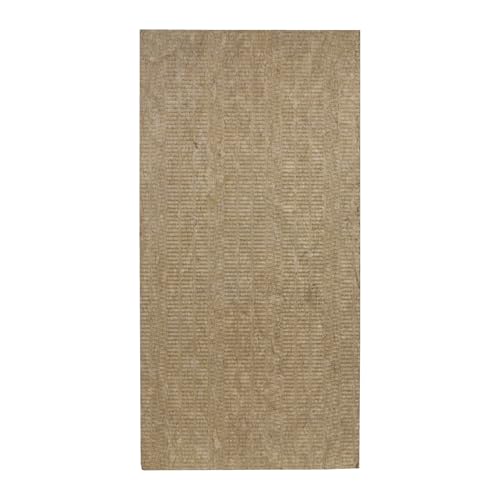
Rockboard 60 mineral wool boards
What Percentage Of Walls Should Be Covered?
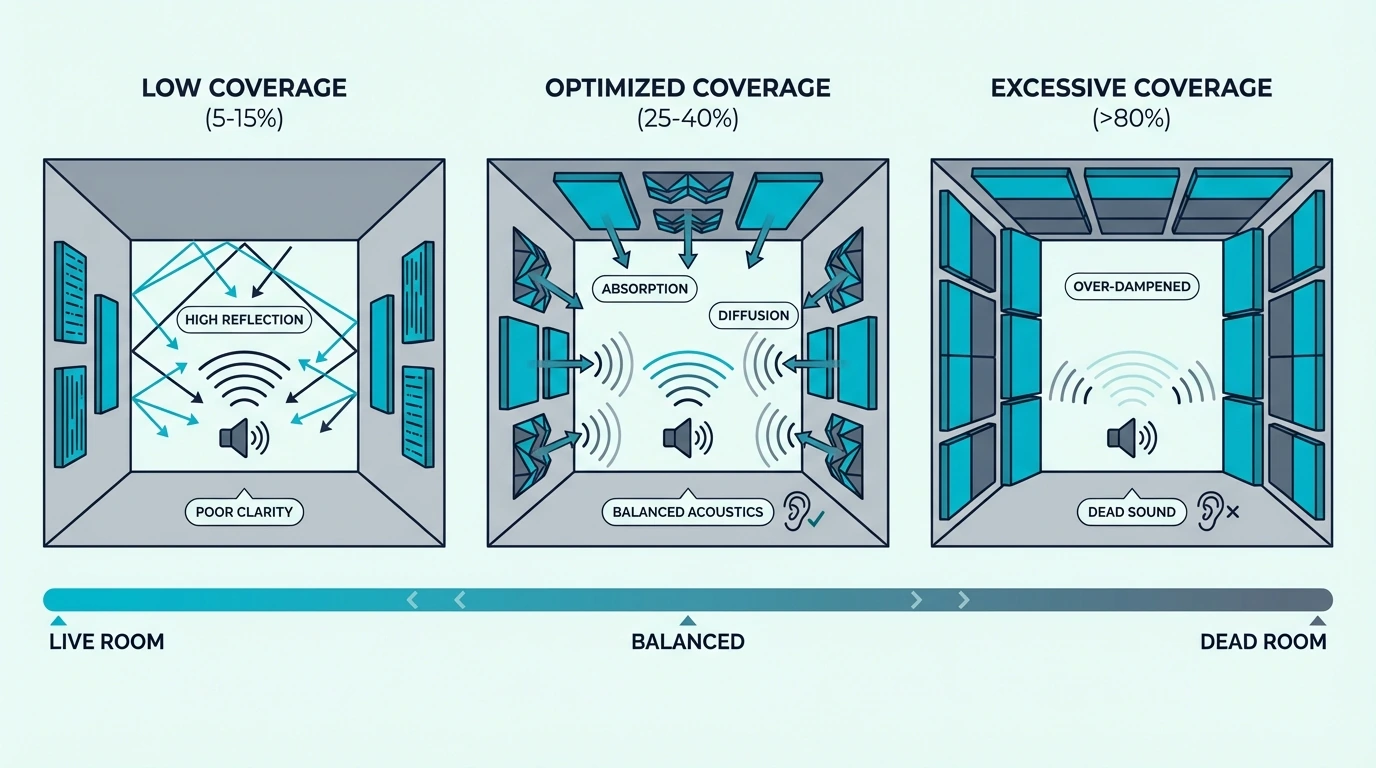
The percentage changes based on room type, and small rooms need higher coverage ratios than large ones because they pack more acoustic problems into less space. Here is a breakdown by use case.
Home Studios
Target 30-40% wall coverage plus 4-8 corner bass traps. The bass traps are non-negotiable — low frequencies are the biggest problem in small rooms, and wall panels do nothing below about 200 Hz. A budget starting point like the TroyStudio Bass Traps 24-Pack gets foam into every corner while you save for thicker fiberglass options.
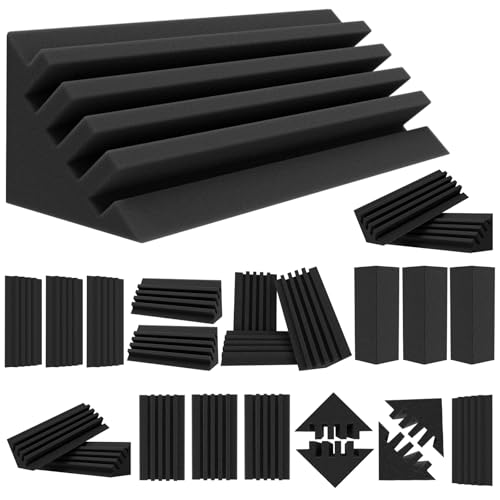
TroyStudio Bass Traps 24-Pack
Place panels at the first reflection points on both side walls, behind the monitors on the front wall, and on the ceiling between you and the monitors. That configuration addresses the most destructive reflections first.
A 4-pack of fiberglass panels with included hanging hardware handles side-wall reflections in a typical bedroom studio with one set.
If you need to prioritize, start with corner bass traps and side-wall panels. Those two positions solve approximately 60-70% of the acoustic problems in a typical home studio.
Home Theaters
Target 25-35% coverage focused on first reflection points and the rear wall. Home theaters benefit from slightly less treatment than studios because you want to preserve the immersive feel of surround sound.
Side-wall panels at the primary listening position prevent harsh early reflections from the front speakers. Rear-wall treatment controls the reflections that arrive late and cause dialogue intelligibility problems.
Diffusion on the rear wall often works better than absorption for home theaters. Scattered reflections add a sense of envelopment that makes movie soundtracks feel more spacious without creating echo.
Offices And Conference Rooms
Target 15-25% coverage focused on speech frequencies. Office acoustic treatment prioritizes intelligibility — reducing the reverb time so that speech is clear across the room.
Ceiling panels are especially effective in offices because most conference table conversations bounce off the ceiling directly. A few well-placed ceiling clouds can solve more problems than twice as many wall panels.
Open-plan offices need more treatment than enclosed conference rooms. The lack of floor-to-ceiling walls means sound travels farther and reflects off more surfaces before decaying.
The Bottom Line
The right amount of acoustic treatment depends on room purpose, but the universal starting point is the same: first reflection points plus corner bass traps. That combination solves the majority of room problems regardless of whether you are building a studio, theater, or office.
The number one mistake is treating walls while ignoring corners. Bass traps handle the frequencies that cause the most mixing problems, and no amount of wall coverage compensates for untreated corners.
Frequently Asked Questions
What Is The 38% Rule Room Acoustics?
The 38% rule is a placement guideline for your listening position, not your panels. Place your chair at 38% of the room length measured from the front wall.
That position minimizes the overlap of the strongest bass room modes, giving you the flattest low-frequency response at the mix position.
Is There Such A Thing As Too Much Acoustic Treatment?
Too much absorption makes a room sound lifeless and unnatural. The fix is balance — use diffusion alongside absorption, leave some reflective surfaces untreated, and stop adding panels once clapping in the room produces a short, clean decay rather than a dead thud.
How Many Acoustic Panels Do I Need For A Bedroom Studio?
A typical bedroom studio needs 6-10 panels. Four corner bass traps (stacked in pairs in two corners), two side-wall panels at first reflection points, one ceiling cloud above the mix position, and one to two panels on the front wall behind the monitors. A set like the UMIACOUSTICS 4-Pack with Hanging Hardware covers both side walls at first reflection points in a single purchase. Start with the corners and side walls — those positions deliver the biggest improvement per panel.