How Does Soundproofing Work? (Mass, Damping, Decoupling, And Real Limits)
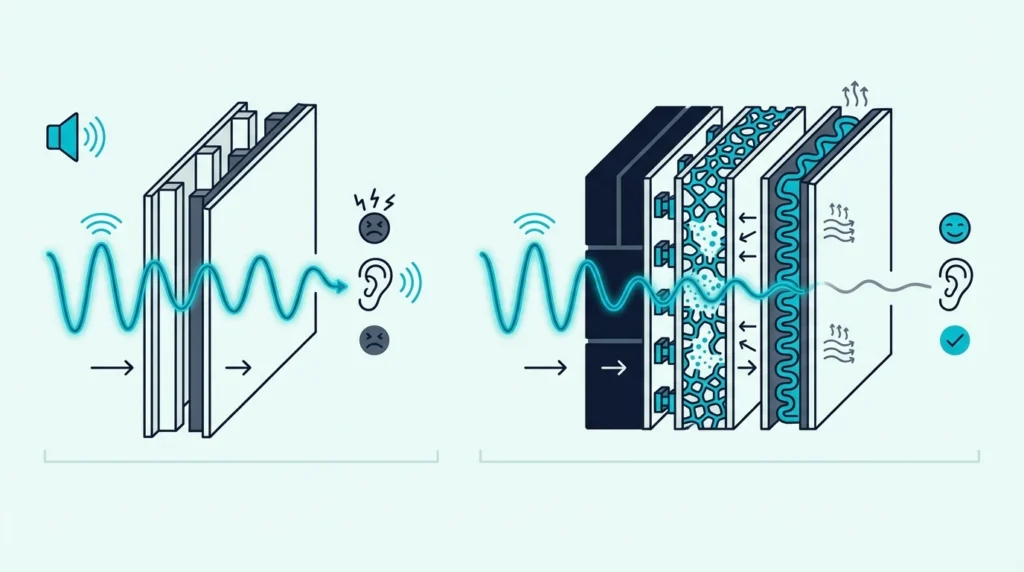
How does soundproofing work? Yes, but only when the room shell gets harder to move, harder to leak, and harder to vibrate through.
That is where most bad advice falls apart. People calm echo with foam, then wonder why voices, traffic, and bass still pass through the wall.
Once you separate airborne leaks from structural vibration, the upgrade path gets much clearer and your budget stops chasing the wrong materials.
Below, you’ll see the three noise paths, the four core principles, and the point where a light fix stops being enough.
Soundproofing works by reducing sound transmission from one space to another. The core tools are sealing air leaks, adding mass, damping vibration inside an assembly, and decoupling surfaces so vibration cannot bridge straight through. Acoustic foam and panels can absorb sound inside a room, but they do not replace true soundproofing when your goal is blocking noise from getting in or out.
The Three Noise Paths and the Weak-Link Problem
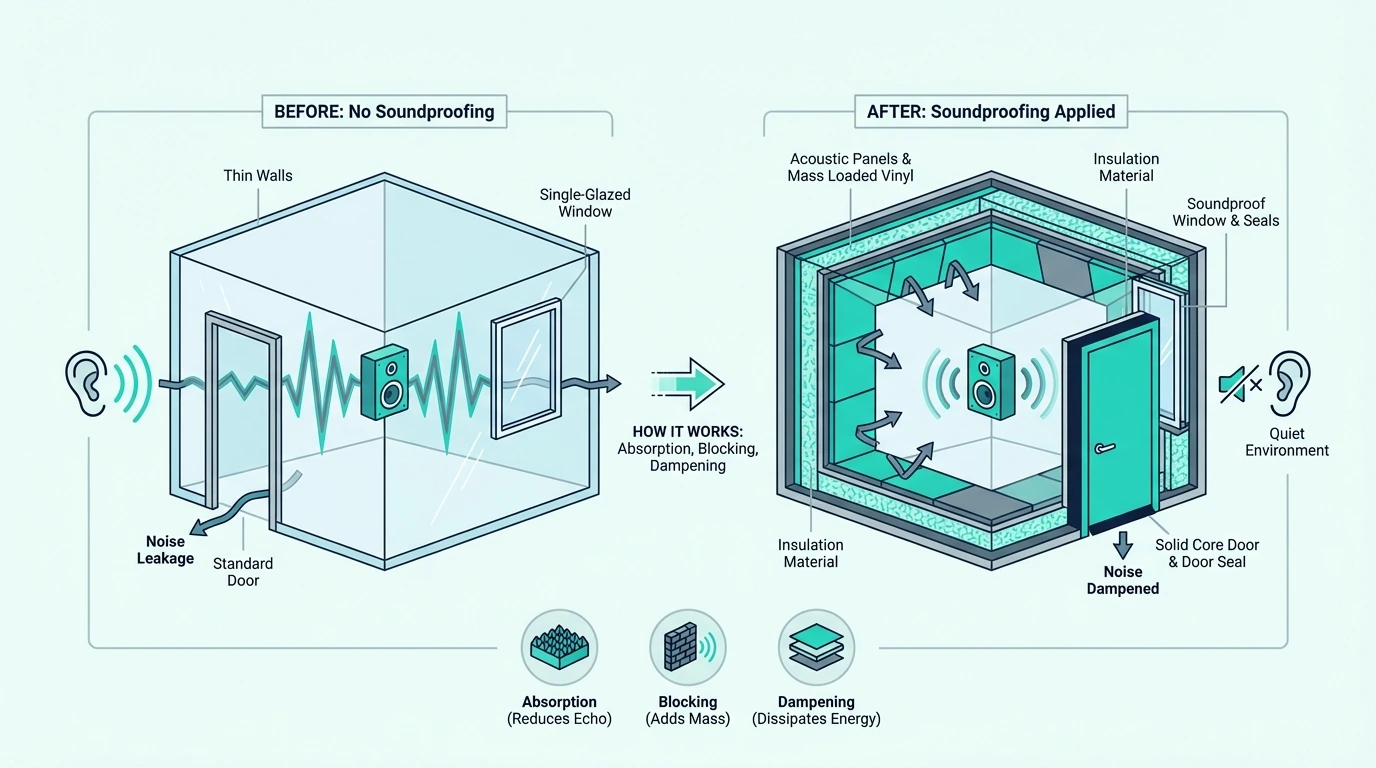
Real soundproofing starts with diagnosis, not product names. Sound crosses a room shell through air, through structure, and through the weak links that let both slip past the main barrier.
That shell includes the walls, floor, ceiling, doors, windows, outlets, duct openings, and every joint where one material meets another. If even one part is weak, the whole room performs closer to that weak point than the strongest surface.
Airborne, impact, and structure-borne noise
The first split is between noise that starts in the air and noise that turns the building into part of the problem. That includes less noise through the wall from your neighbor, less traffic noise entering through the window, or less of your music escaping into the next room.
Airborne noise includes voices, TV audio, barking dogs, and traffic because those sound waves begin in the air and then hit a surface. Impact noise starts with physical contact, like footsteps, dropped objects, or chair legs dragging across a floor.
Structure-borne sound goes one step further because that impact or bass energy keeps traveling through studs, joists, concrete, or framing and then re-radiates somewhere else in the building. Once the structure starts acting like the speaker, light surface fixes fall behind quickly.
That distinction matters because the right fix changes with the path. Airborne noise often responds well to sealing and added mass, while impact noise and low-frequency vibration usually need some form of isolation or decoupling to make real progress.
Why total silence is unrealistic
Once sound can use more than one path, total silence starts to look unrealistic. Sound waves spread, bend around edges, and excite whatever part of the structure is easiest to move.
Heavy construction helps because heavier surfaces resist vibration better than light ones. But even a very good wall can be undermined by a hollow door, a vent, a thin window, or a flanking path through the ceiling and floor.
This is why “soundproof” is usually marketing shorthand rather than a literal promise. In real homes, the goal is to significantly reduce sound, not to create a room where nothing at all gets through.
A drop of 10 decibels is already perceived by many people as roughly cutting the noise in half. That means a project can work very well in real life even when you still hear a faint murmur, a distant thump, or some background noise during louder moments.
The hardest part is low frequency energy. Bass from subwoofers, home theaters, drums, or heavy footsteps is stubborn because long wavelengths and structure vibration are much harder to stop with light materials.
The gap problem
Of all those weak links, gaps are the easiest to underestimate. Sound follows the path of least resistance, so a tiny opening around a door or window can leak far more sound per square inch than the wall beside it.
That is why people get frustrated after treating the big surface while ignoring the edges. A wall can have respectable mass, but if the door has a visible undercut or the window frame has unsealed cracks, the room still leaks badly.
This is also where sealing products earn their keep. Something as simple as self-adhesive weather stripping matters because soundproofing works only as well as the weakest air leak in the room shell.
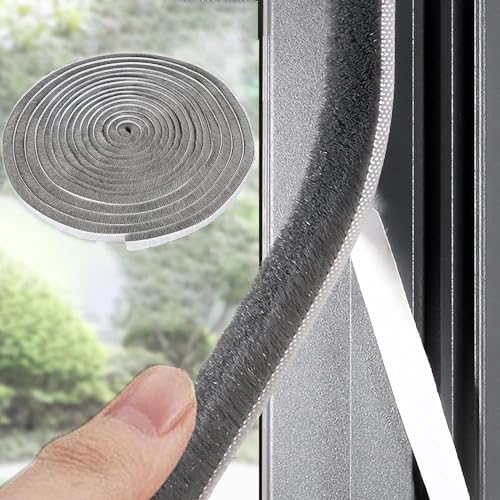
33 Ft Gray Self-Adhesive Soundproofing Weather Stripping for Doors and Windows
For fixed joints and perimeter cracks, acoustical caulk belongs in the same first-step category because stopping sound leakage is often more important than adding one more lightweight surface product.
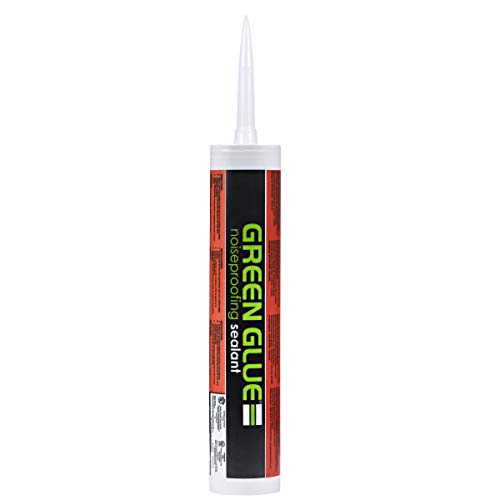
Acoustical Caulk (29 oz) 1 Tube with clean up wipe
Think of it like wearing a winter coat with the zipper half open. The insulation still exists, but the opening ruins the real-world performance.
If you want to test this yourself, stand next to the edges of a noisy door or window while sound plays on the other side. Your ears will usually tell you faster than any spec sheet where the real leak is.
The Four Core Principles: Mass, Damping, Decoupling, and Absorption
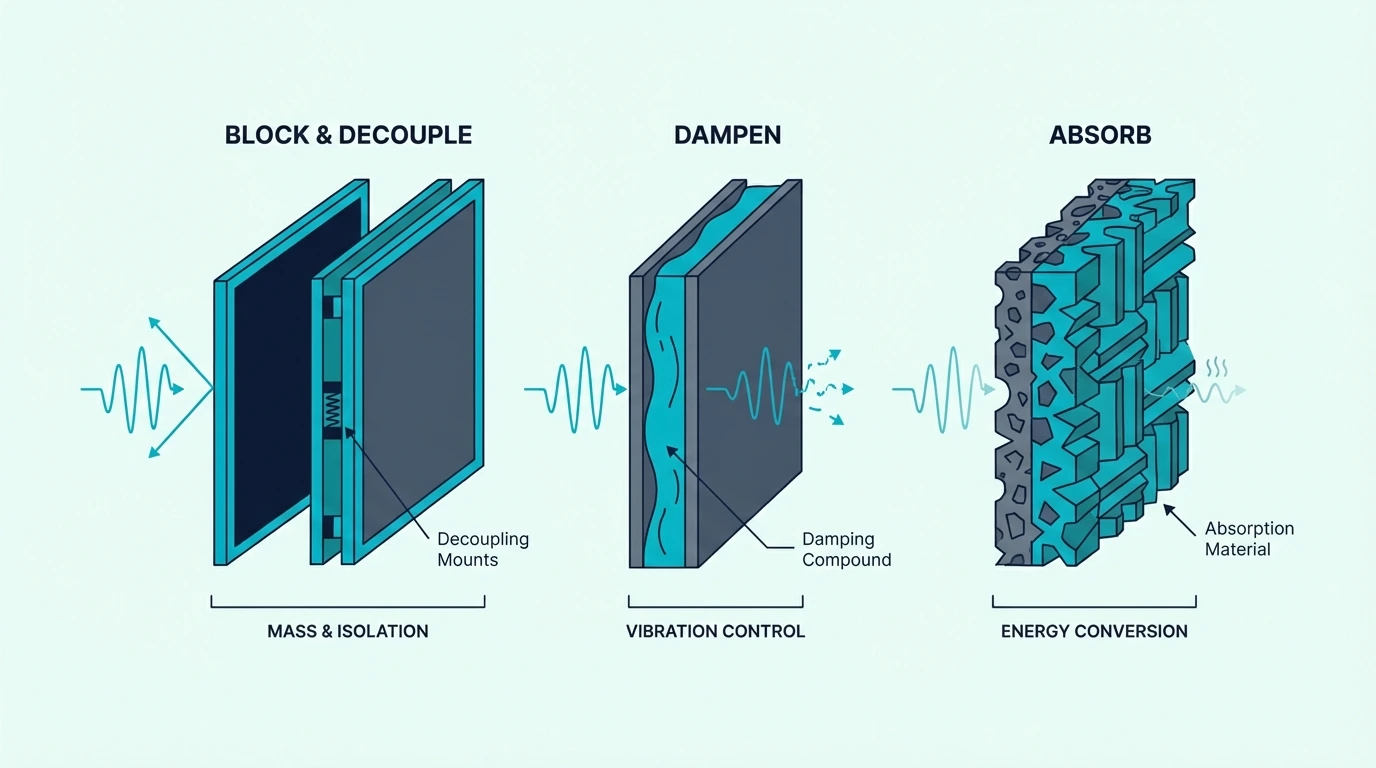
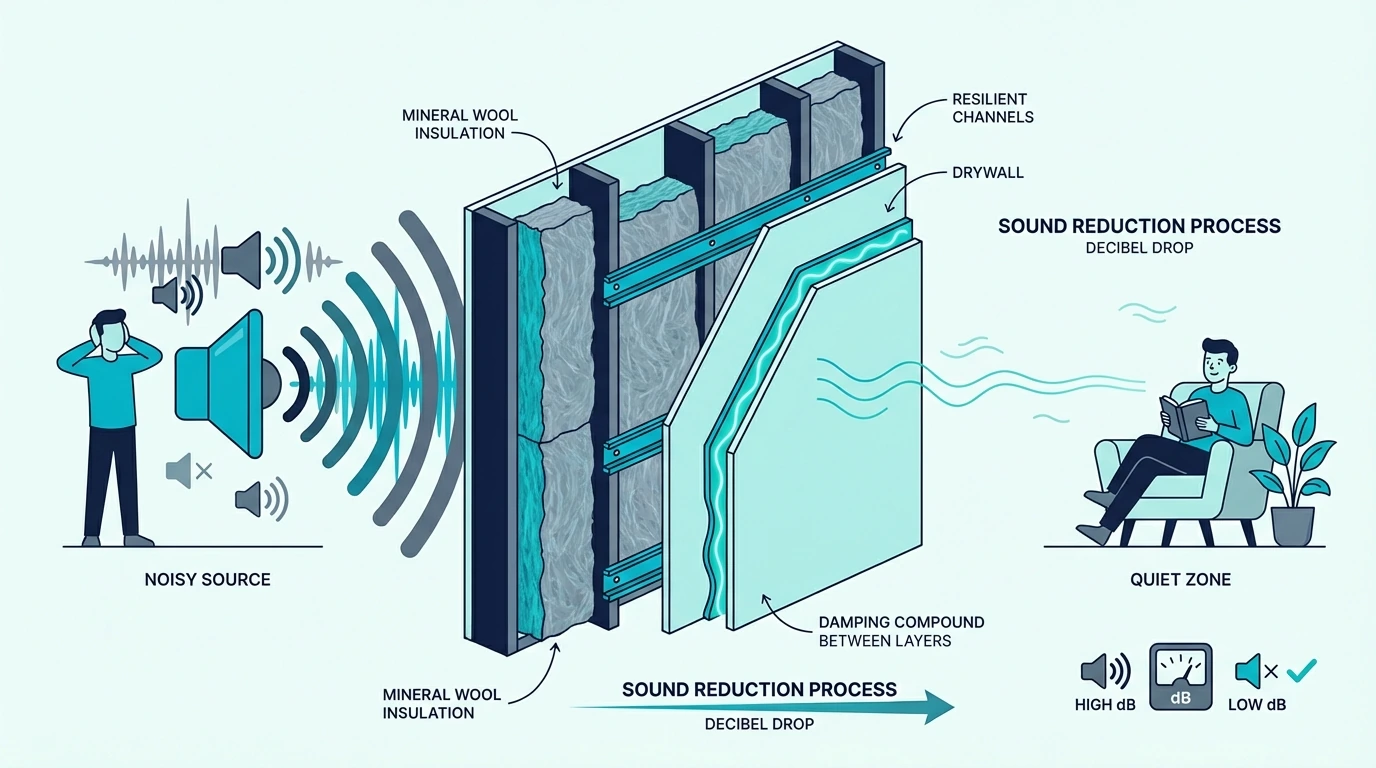
Once the leak paths are clear, the assembly logic stops sounding mysterious. Most real soundproofing systems are just combinations of four jobs: resist motion, waste vibration, break the bridge, and calm the cavity.
Each one does a different job, and that is where people get tripped up. If you use the wrong tool for the wrong part of the problem, the project looks busy but the results feel disappointing.
Mass: heavier surfaces vibrate less
Mass comes first because every other layer benefits from a face that is harder to move. If a wall, ceiling, or door is light and flexible, it vibrates more easily and passes more energy to the other side.
That is why solid-core doors outperform hollow-core doors and why a double layer of drywall blocks more sound than a single thin layer. The surface has more weight, so sound waves have a harder time pushing it into motion.
A true soundproofing material like mass loaded vinyl works on that same idea. It adds a dense barrier layer to the assembly, which helps reduce sound transmission without adding a huge amount of thickness.
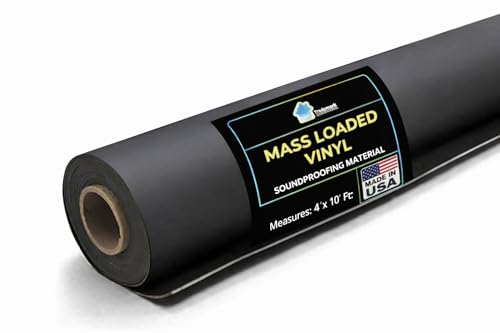
Trademark Soundproofing Mass Loaded Vinyl
Mass is especially useful for everyday airborne noise like speech, TV audio, and general household noise. If your issue is conversation through a shared wall, added mass is usually part of the answer.
The catch is that mass alone is not enough when vibration is already traveling through framing. That is where the next two principles start doing the heavy lifting.
Damping: converting vibration to heat
Once the face has some weight, the next issue is what happens after it starts moving. Damping reduces how much of that vibration survives. Instead of letting the assembly ring like a drum skin, damping helps convert a portion of that vibration into a tiny amount of heat.
This is why damping compound gets mentioned so often in soundproofing builds. When you sandwich a viscoelastic layer between two solid surfaces, the vibration has to work harder to keep moving through the assembly.
A product like Green Glue Noiseproofing Compound makes the idea more concrete because it is built specifically to sit between drywall layers and waste more vibration inside the assembly.
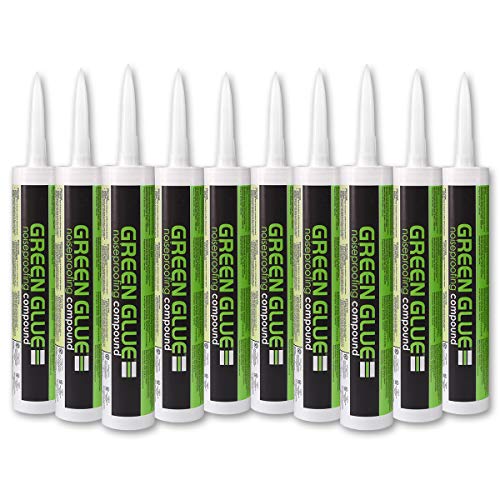
Green Glue Noiseproofing Compound
That matters most in wall and ceiling upgrades where you are layering materials rather than rebuilding from scratch. Two rigid surfaces with no damping can still pass vibration between them surprisingly efficiently.
Once you add damping, the assembly becomes less “live.” Same idea, but the structure now wastes more energy internally instead of radiating it into the next room.
If mass is the brick wall part of the system, damping is the shock absorber. Same principle applies in cars, speakers, and buildings: if vibration is part of the problem, controlling resonance changes the result.
Decoupling: breaking the structural bridge
Mass and damping both help on the panel face, but they still leave one stubborn bridge: the framing. This is where soundproofing gets more construction-heavy. Decoupling means mechanically separating one side of an assembly from the other so vibration cannot bridge straight through the structure.
In a basic interior wall, the drywall on one side and the drywall on the other side are connected by the same studs. Sound hits one face, the studs carry vibration, and the opposite face re-radiates that energy into the next room.
Decoupling breaks that direct path. Resilient channel, isolation clips, staggered studs, double-stud walls, and floating floor systems all exist for the same reason: reduce sound transfer by interrupting the mechanical connection.
This is often the turning point for serious problems like bass, impact noise, home theaters, drum rooms, and upstairs footsteps. When the structure itself is carrying the noise, simply adding one more surface layer usually will not solve the root cause.
A good comparison is tapping one spoon against another versus tapping a spoon wrapped in rubber and suspended separately. The less rigid the connection, the less energy gets passed along.
Absorption: the misunderstood fourth layer
That is where absorption often gets misunderstood. Mass, damping, and decoupling all target the barrier path, while absorption helps reduce reflections inside a room and also helps inside wall cavities. It does not replace mass or decoupling when the goal is blocking sound between spaces.
That is why cavity insulation helps but does not finish the job. Mineral wool or fiberglass inside a wall can absorb sound energy moving through the cavity and reduce resonance, but the wall still needs proper faces, sealing, and sometimes decoupling.
This is also where product categories get muddled. A cavity product like AFB Acoustical Fire Batts, Mineral Wool Insulation helps inside an opened wall or ceiling assembly because it absorbs sound moving through the cavity and reduces resonance.
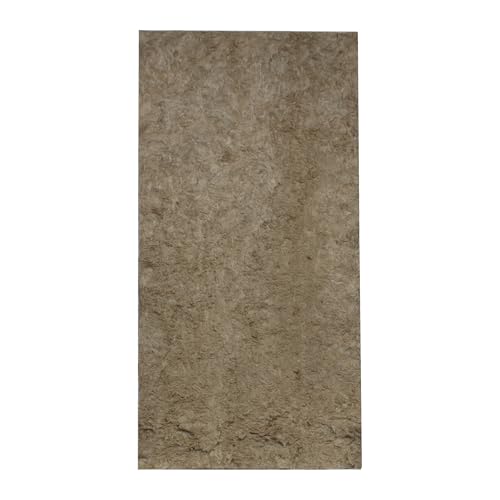
AFB Acoustical Fire Batts, Mineral Wool Insulation
What it does not do by itself is create the full soundproofing system. The assembly still needs proper faces, sealing, and sometimes decoupling.
So where does absorption belong? Inside assemblies, inside room treatment plans, and inside conversations about echo control.
Where it does not belong is as a substitute for true soundproofing. If you are trying to stop neighbor noise, acoustic treatment and soundproofing are related topics, but they are not interchangeable.
Get Studio Tips Weekly
Join 5,000+ creators getting acoustic treatment advice every week.
No spam. Unsubscribe anytime.Real-Room Results: Simple Fixes vs Full Assemblies
Once those four principles are in place, the practical question becomes cost versus depth. Yes, soundproofing a room really does work, but the result depends on the noise type, the weakest links, and whether the solution depth matches the problem.
That is why one person sees a noticeable improvement from weatherstripping and a door sweep while another needs clips, double drywall, and a much bigger budget. Context changes everything.
When simple fixes are enough
Simple fixes earn the best returns when the room is obviously leaking at the perimeter. A hollow-core door, a large gap under the slab, rattling window frames, back-to-back outlets, or a vent path can all leak enough sound that sealing them produces an immediate improvement. Those figures have names — STC for airborne noise, IIC for impact — and what a good STC and IIC rating looks like is worth knowing before you buy to a spec.
This is where you want to start in almost every room. If the shell is leaking around the edges, there is no point pretending the bigger surface upgrades are doing all the work.
For renters and lighter-duty spaces, a temporary heavy layer can also help a bit. Something like a sound dampening blanket can add some removable mass over a weak area, especially on doors or thin openings.
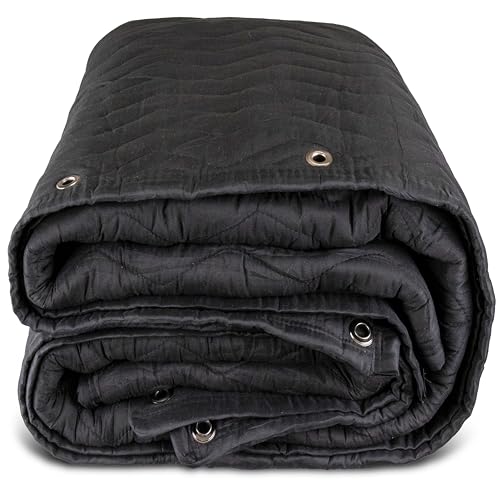
US Cargo Control 96 x 80 in Extra Large Sound Dampening Blanket with Grommets
The improvement from these moves is usually most noticeable with speech, TV bleed, and lighter outside noise. They do not transform a room into a studio bunker, but they can make the space calmer enough to sleep, work, or focus.
A good rule is this: if the noise sounds sharper at the edges than at the center of the wall, simple fixes deserve your attention first. That weak-link principle from earlier pays off here.
When the assembly itself needs upgrading
If those edge fixes barely move the needle, the assembly itself is probably too light. That means the wall, floor, or ceiling is passing sound because the whole structure is easy to excite.
This is common in shared walls, apartment ceilings, thin doors, older windows, and rooms with a lot of low-mass construction. The fix usually means adding mass, adding damping, or rebuilding with some level of decoupling.
For example, conversation through a shared bedroom wall often responds well to another drywall layer and damping. Footsteps from above usually point you toward floor treatment upstairs or a decoupled ceiling below.
Bass and home theater energy are where people discover the limits of surface-level fixes. If the subwoofer is energizing framing, you are no longer dealing with just one wall face – you are dealing with the building structure.
That is also why a how to soundproof a room plan usually has to look at the whole shell instead of one isolated product. Rooms are systems, and the loudest leak often shifts once you strengthen the first weak point.
Why some projects still disappoint
That is also the point where many DIY projects go sideways. Most disappointing projects fail for one of three reasons: wrong diagnosis, untreated weak links, or unrealistic expectations. People often buy products that affect room acoustics when their actual problem is sound transmission.
Foam on a shared wall is the classic example. It can absorb sound inside your room, but it does not stop much sound from getting through the wall, so the person who bought it feels like soundproofing is fake.
The second failure point is flanking. You treat the wall, but the sound goes through the ceiling, floor, ductwork, window frame, or door perimeter instead.
The third is expecting total silence from light retrofits. If your problem is drums, bass, or impact noise, a renter-safe setup and a heavy blanket are not competing with a decoupled room-within-a-room build.
When soundproofing disappoints, it usually is not because physics failed. It is because the project attacked the wrong path or did not go deep enough for the noise source.
Soundproofing Works Both Ways — With Caveats
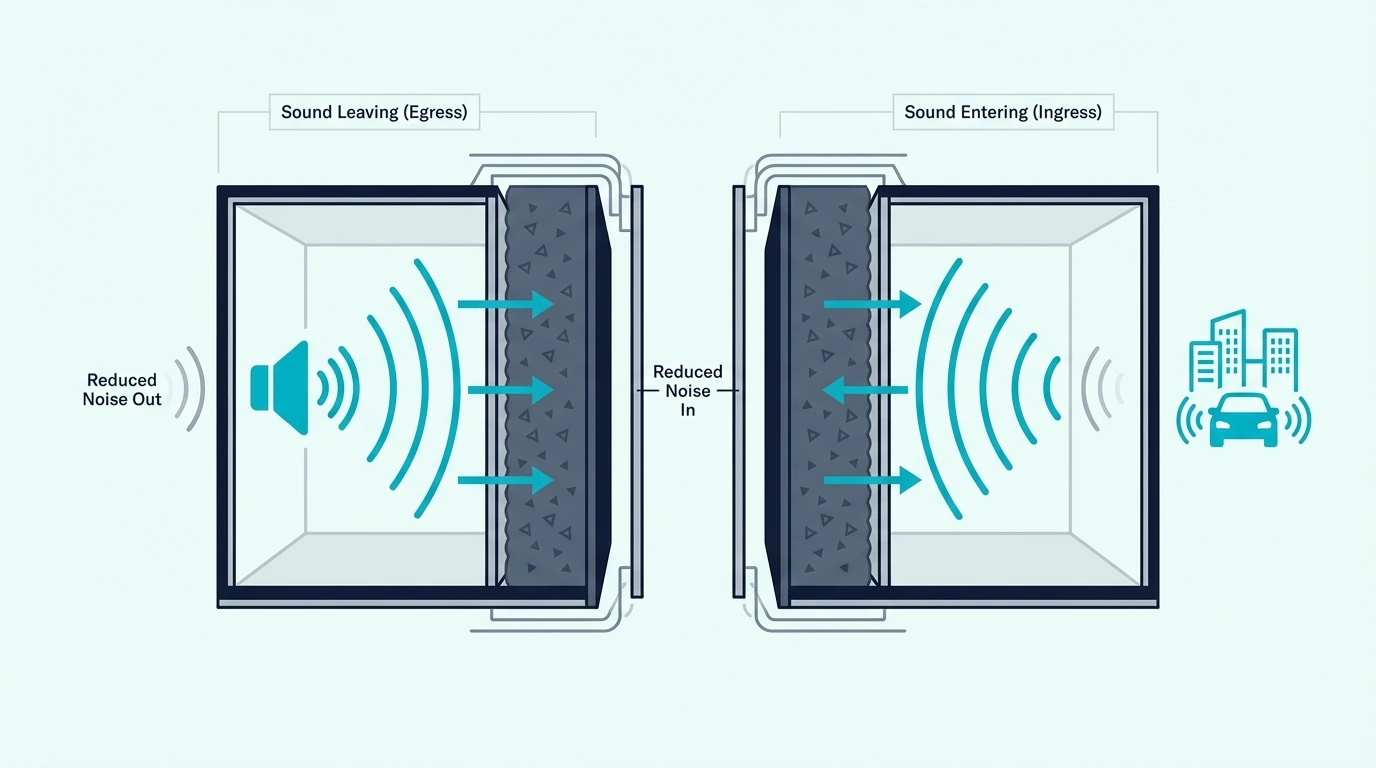
Once people see the room as an assembly, this question comes up naturally. In principle, yes – a wall or floor assembly that reduces sound transmission can help reduce sound going out and sound coming in.
But the real-world answer still has some nuance because source strength, frequency, and installation quality shape what you experience on each side. Symmetry in theory does not always feel symmetrical in daily life.
The physics are symmetrical
The physics are symmetrical at the partition level. If the assembly is heavier, better sealed, and better isolated, it resists sound moving through it in either direction.
That is why the same upgraded wall can protect a bedroom from hallway noise and also keep your TV from bothering the next room. The underlying physics are about reducing sound transmission across the assembly, not choosing a favorite direction.
This is also why lab testing talks about wall performance rather than “inbound” or “outbound” mode. A tested partition has a certain ability to reduce sound transfer, and that benefit applies both ways under comparable conditions.
The complication is that room layout and the source itself can make one side feel worse. A subwoofer pressed against the wall or a loud speaker in a corner creates a harder test than everyday conversation several feet away.
So yes, soundproofing works both ways, but the source conditions still matter. Same wall, different stress level.
Why one direction can feel worse
That symmetry breaks down in perception, not in the wall itself. This is where people think the two-way idea failed, when really the source changed the challenge. A weak voice on one side and a high-output theater system on the other are not equivalent situations.
Placement matters too. If a speaker is touching the wall or a desk is physically coupled to the floor, the system is feeding vibration straight into the structure.
Low frequencies are the biggest example. Bass has longer wavelengths, carries more energy through structure, and often leaks through the floor and ceiling as much as the wall itself.
That is why source control can be part of the solution. Speaker isolation pads, pulling equipment off shared walls, and reducing direct contact do not replace soundproofing, but they lower how much punishment the assembly has to absorb.
You see the same principle in home offices and music rooms. If you reduce the force at the source, the room shell does not have to work as hard.
Lab results vs installed performance
The last complication is installation reality. Lab performance assumes a controlled assembly with controlled installation. Real homes have imperfect framing, old seals, recessed lights, ducts, outlets, uneven floors, and all the little shortcuts buildings accumulate over time.
That means installed performance usually depends on workmanship as much as materials. A great design with bad sealing can lose far more than most people expect.
It also means real homes have more flanking paths than test assemblies. Sound can go around the upgraded wall through joists, party-wall intersections, or attached structural elements.
This is why one room in a detached house may feel easy to quiet while an apartment with shared structure feels far harder. Same concept, different context.
If you want lab-style results, the installation has to be just as disciplined. Most residential projects land somewhere in the middle, which is why realistic expectations matter so much.
Honest Limits: What Soundproofing Cannot Fix
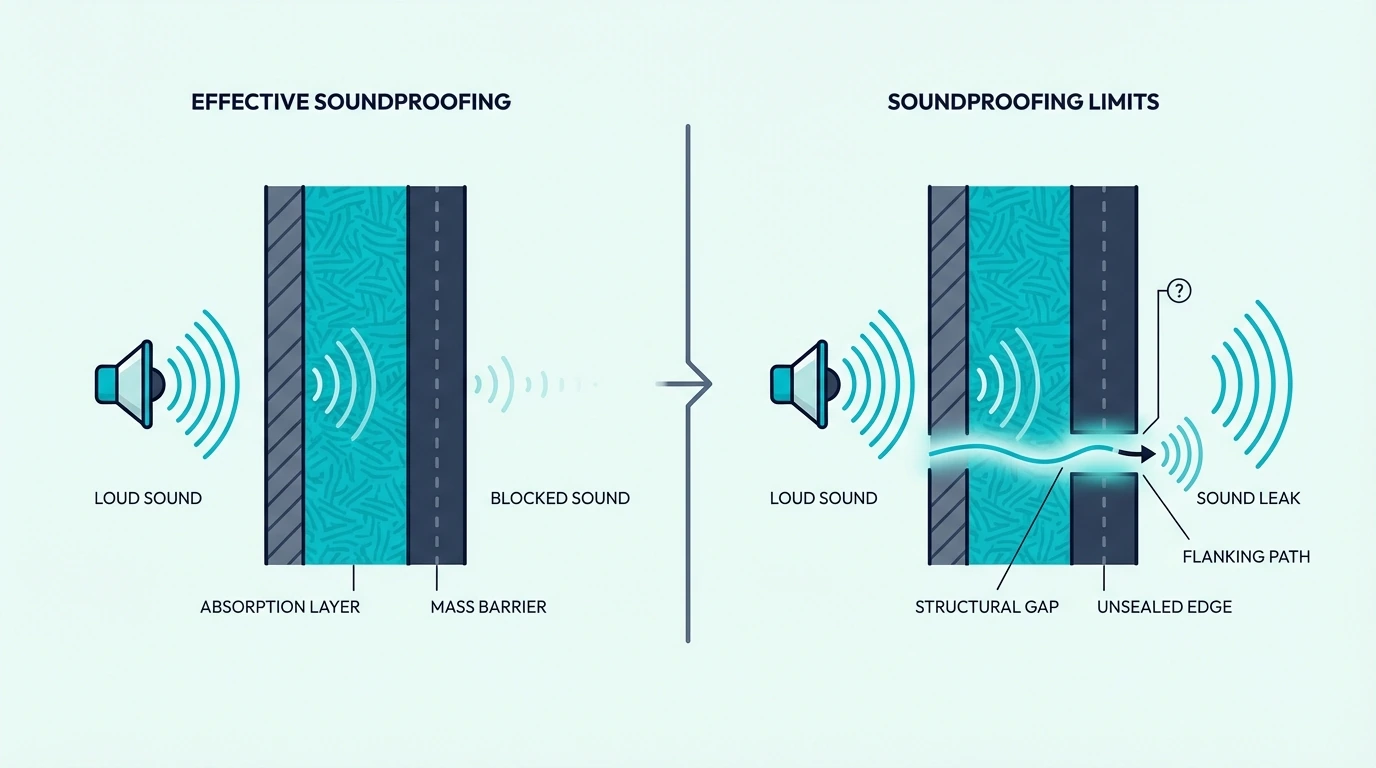
That brings the whole topic back to its limits. Soundproofing is powerful when the assembly and strategy are right, but it still has weak spots and tradeoffs.
That honesty is what saves you from wasting money. Knowing what soundproofing does not do well is often the fastest way to choose a smarter fix.
Foam and the absorption-vs-blocking confusion
Most foam failures start with a category mistake. Foam fails as a wall soundproofing solution because it is too light. To block sound transmission, a material needs enough mass and enough system support to resist movement.
Foam does the opposite job well: it lets sound enter and then absorbs part of that energy to reduce reflections. That can improve speech clarity, reduce echo, and make a room feel less harsh.
What it cannot do is behave like a dense barrier. If your goal is neighbor noise, hallway noise, or street noise coming through the wall, acoustic foam is solving the wrong problem.
This is the line people need to keep straight: acoustic treatment helps inside the room, soundproofing helps between rooms. If the problem is transmission, surface foam is a distraction more often than a cure.
That is also why foam explanations need to be blunt. It works for absorption, not for true wall isolation.
Bass: the hardest frequency to stop
Once that barrier mistake is clear, bass becomes the next reality check. Bass is difficult because low frequencies have long wavelengths and high energy. They move large surfaces easily, and they travel through structure better than lighter, higher-frequency sound.
That is why a room can block speech reasonably well but still struggle with subwoofer rumble or kick drum impact. The frequencies are different, and the structure responds differently.
Low-frequency control usually pushes you toward deeper construction solutions. More mass helps, but decoupling and source isolation become much more important as the frequency drops.
Bass also makes flanking more obvious. You may think the wall failed, when in reality the floor joists, ceiling plane, or connected framing are carrying most of the vibration.
So if your main complaint is bass, you need to budget for realism. It is the hardest noise to stop, and it exposes every shortcut in the room.
Choosing the right strategy
With foam limits and bass challenges both clear, the decision framework becomes practical. The smartest strategy starts with the path, not the product. First ask where the sound is crossing: through a gap, through a light assembly, or through connected structure.
If the main leak is a door or window gap, start there with sealing. If the issue is a thin shared wall, think about mass and damping.
If the room shakes from bass or footsteps, start thinking about decoupling, source isolation, and whether the floor or ceiling is part of the problem. Same principle, different path.
A practical ladder helps here: seal leaks first, add mass second, add damping where layering makes sense, and consider decoupling when vibration or low-frequency energy is the real enemy. If you can lower the punishment at the source too, the whole shell has less work to do.
And if the problem still feels fuzzy, compare your room against targeted guides for how to soundproof a wall, how to soundproof a door, how to soundproof windows, and how to soundproof a ceiling. Once the path is clear, the right soundproofing strategy usually becomes obvious.
The Bottom Line
Soundproofing works by reducing sound transmission, not by magically deleting sound from existence. The strongest results come from matching the fix to the path: sealing air leaks, adding mass, damping vibration, and decoupling structure when the problem is more serious.
The main mistake is confusing acoustic treatment with soundproofing. If you need less echo inside the room, absorption helps; if you need less noise getting through the wall, floor, ceiling, window, or door, the system needs true soundproofing materials and details.
If you want to go deeper, start with how to soundproof a room, then narrow the diagnosis with guides on the specific weak points in your space, including how to soundproof an apartment, best soundproofing material, best insulation for soundproofing, and best soundproofing panels.
Frequently Asked Questions
How to block out 100% of noise?
You usually cannot block 100 percent of noise in a normal home with light retrofit materials alone. The closest approach is a fully isolated room-within-a-room build with heavy assemblies, airtight detailing, decoupling, and controlled ventilation, but even then real homes still have limits.
Does rockwool soundproof?
Rockwool helps soundproofing when it is used inside a wall, floor, or ceiling assembly because it absorbs sound energy in the cavity and reduces resonance. It does not replace mass, sealing, or decoupling, so it works best as one part of a larger system rather than a standalone fix.
How do I block noise on a shared wall?
Start by sealing every gap, outlet, and perimeter joint on the shared wall, because weak links often leak more sound than the field of the wall itself. If that is not enough, add mass with another drywall layer and damping, and move toward decoupling if the problem includes bass, impact noise, or persistent structure-borne vibration.