2.1 vs 3.1 Soundbar: Is the Center Channel Worth the Upgrade?
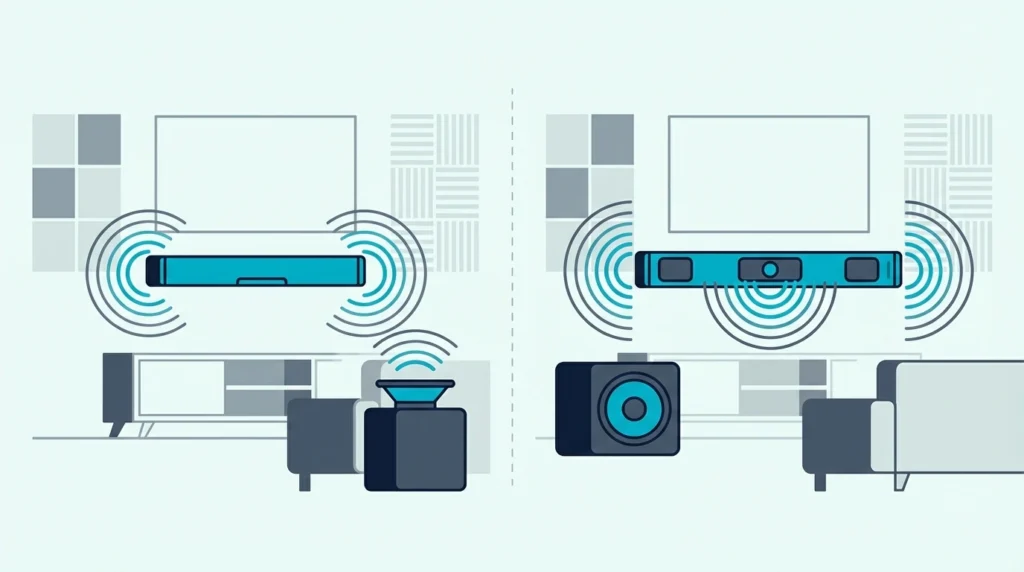
The 2.1 vs 3.1 soundbar question looks like a small channel-count jump, but it changes whether dialogue stays clear once a soundtrack gets busy.
Both setups include a subwoofer, so this is usually not a bass decision. The real question is whether a dedicated center channel is worth paying for when voices keep getting buried under music and effects.
That frustration shows up when you turn the volume up to catch a line of dialogue, then grab the remote again when the next explosion or score swell hits.
A 2.1 bar asks the left and right drivers to handle everything.
A 3.1 bar gives speech its own lane.
If you mostly watch casual TV, the cheaper layout can still make sense.
Below, we compare 2.1 and 3.1 soundbars across dialogue clarity, music performance, room size, and upgrade value.
You can tell when the center channel is worth paying for.
Choose a 2.1 soundbar if you want stronger bass for movies and music, mostly sit centered, and rarely struggle with dialogue. A 2.1 setup is usually the better value when fuller sound matters more than surgical voice separation.
Choose a 3.1 soundbar if you routinely miss lines in movies or have multiple people watching from different seats. The dedicated center channel keeps dialogue clearer without changing the bass equation because both layouts still include a subwoofer.
What Do 2.1 and 3.1 Mean on a Soundbar?
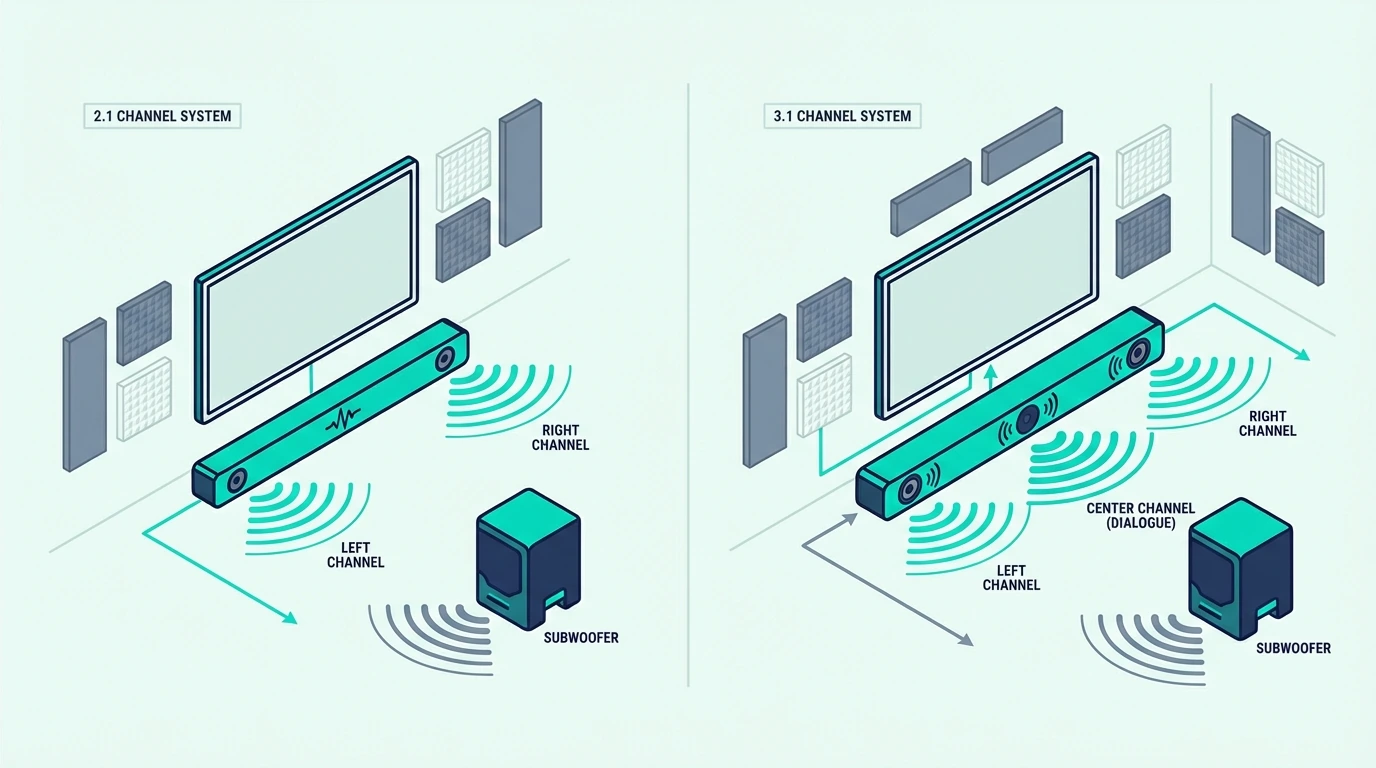
The channel notation tells you exactly what hardware you’re getting. The gap between 2.1 and 3.1 is smaller than most people assume — but it targets the single most common complaint about TV audio.
What a 2.1 Soundbar Delivers
A 2.1 soundbar has three components: a left channel, a right channel, and a subwoofer. The bar handles mids and highs through its stereo drivers while the subwoofer handles bass frequencies separately.
This division of labor is the core advantage of any “.1” system. The bar’s drivers don’t strain to produce bass, so they deliver cleaner mids and highs than a 2.0 bar at the same volume.
A budget 2.1 like the Samsung HW-C450 2.1ch Soundbar gives you meaningful bass and stereo clarity without much setup friction.
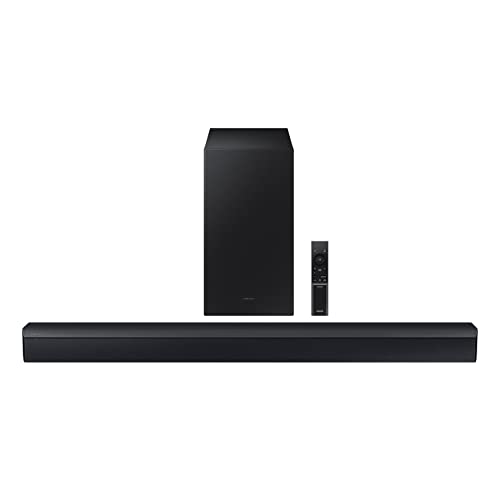
Samsung HW-C450 2.1ch Soundbar
For many viewers, that hits the sweet spot — noticeably better than TV speakers without paying extra for a center driver they may barely notice in everyday use.
The limitation is dialogue. In a 2.1 system, voices share the same left and right drivers with music and explosions.
Watch a Christopher Nolan film like Tenet, Interstellar, or Oppenheimer and the dialogue competes directly with the score through the same two speakers.
During complex scenes, voices get buried because there is no dedicated hardware to keep them separate.
What the Center Channel Adds in 3.1
The “3” in 3.1 means three front channels: left, center, and right. The subwoofer (the “.1”) is the same as in a 2.1 system — bass performance between the two is functionally equivalent.
The center channel is a dedicated driver positioned in the middle of the soundbar. It handles the dialogue track independently.
In movie and TV mixes, the center channel carries most spoken dialogue by design — that’s how content creators intend it.
When a 3.1 bar receives a surround-encoded signal like Dolby Digital, DTS, or Atmos, the processor routes speech to the center driver.
Music and effects stay in the left and right channels.
The center driver handles the range where most human voice fundamentals live.
That physical separation means you hear every word in a whispered conversation even when an explosion hits three seconds later — without touching the remote.
That isolation also helps off-axis seating. A 2.1 bar’s phantom center weakens when listeners sit to one side.
A dedicated center driver projects speech equally to everyone in the room. A budget 3.1 option like the Samsung HW-B630F 3.1ch Soundbar brings that center-channel advantage into an affordable upgrade tier.
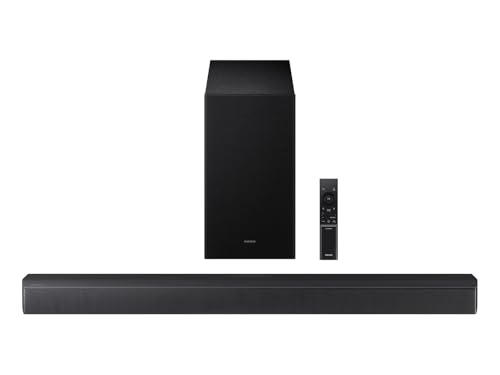
Samsung HW-B630F 3.1ch Soundbar
The Polk Audio Signa S4 3.1.2 Soundbar takes this further with VoiceAdjust technology that lets you independently control center channel volume — turning dialogue up or down without affecting music or effects.
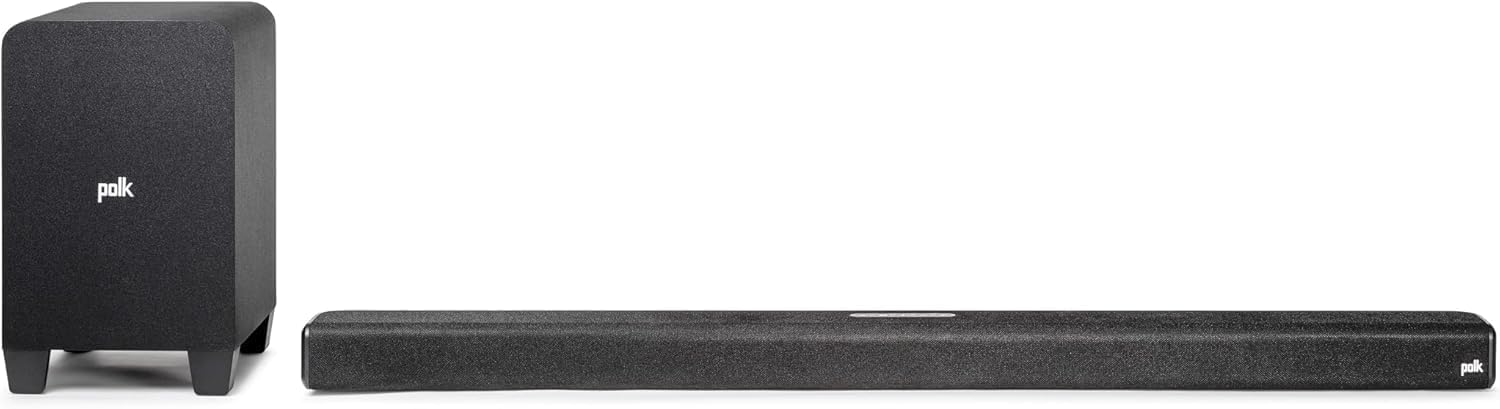
Polk Audio Signa S4 3.1.2 Soundbar
Where Bass Fits In
Since both configurations include a subwoofer, bass is not the deciding factor between 2.1 and 3.1. The subwoofer in a 2.1 system performs the same job as the subwoofer in a 3.1 system.
If bass is your primary concern and you’re currently using a system without a subwoofer, either 2.1 or 3.1 will solve that problem. The choice between them is purely about the center channel and dialogue clarity.
Our best soundbar with subwoofer roundup shows where the bass upgrade matters most if low-end impact is still your main goal.
Which Use Cases Fit 2.1 vs 3.1?
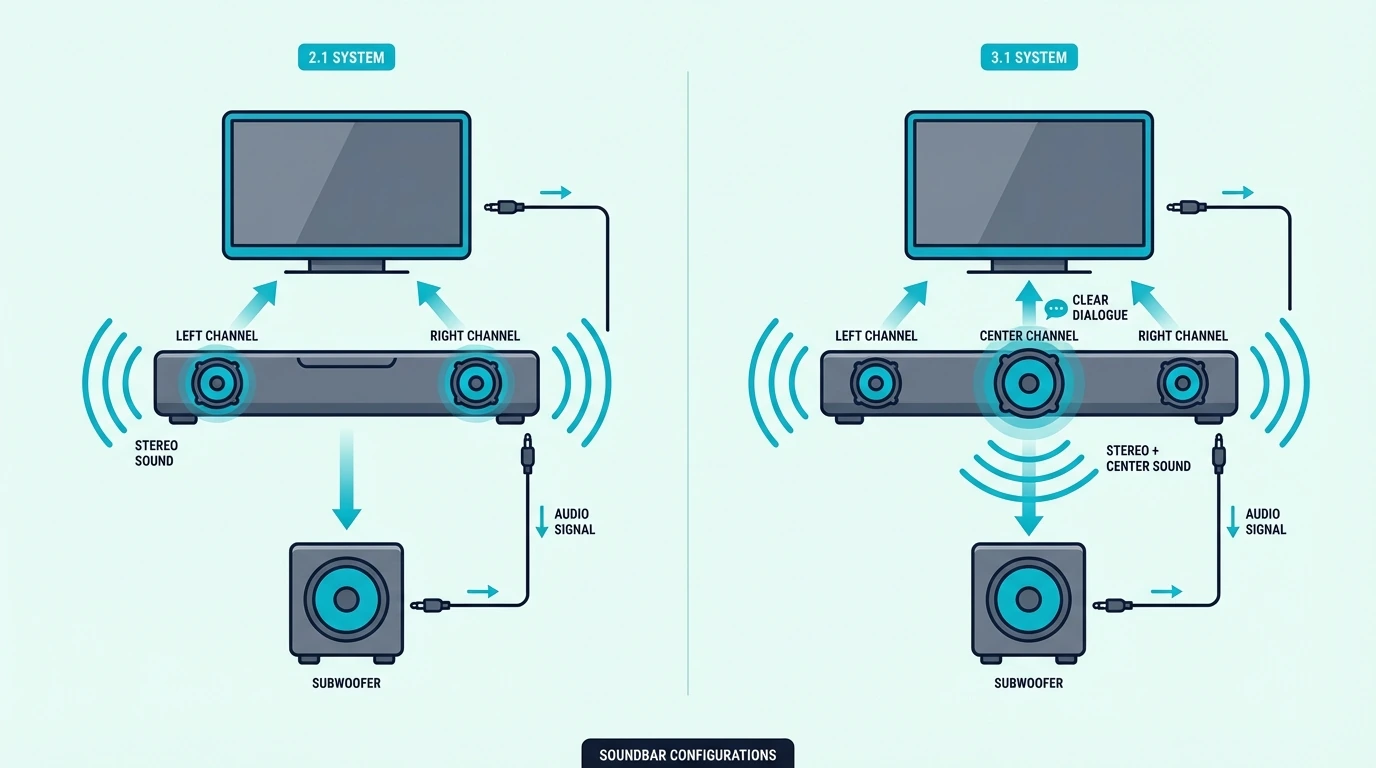
The center channel question maps directly to how you actually use the system. Here is where each setup tends to make the most sense.
Movies and TV Shows
Movies are where the 3.1 center channel earns its price. Film audio mixes include a dedicated center channel track for dialogue, and a 3.1 bar decodes and plays that track through its own driver.
Action movies, thrillers, and sci-fi benefit most.
Think Marvel movies where quips happen mid-battle, or Game of Thrones where characters whisper plot points over sword fights.
The center channel keeps those lines intelligible without constant volume adjustments.
For dialogue-heavy shows like dramas, documentaries, and talk shows, the improvement is real but less dramatic.
These shows already give dialogue more space in the mix.
You notice the center channel most in the smaller number of scenes where competing audio creeps in.
Music Listening
Here’s something most comparison articles skip: music is mixed in stereo, so there is no center channel in a song recording. A 3.1 bar’s center driver literally has nothing to play during music.
Some 3.1 bars disable the center channel during music and revert to pure stereo. Others blend the center into the mix, which can actually narrow the stereo image rather than improve it.
If music is your primary soundbar use, spend the budget on a better 2.1 bar with stronger stereo drivers.
Do not pay extra for a center channel that sits idle during every song.
Our how to choose a soundbar guide helps you match your main listening habits to the right layout.
Room Size and Seating
In small rooms where you sit 6 to 8 feet from the TV, dialogue clarity is rarely a problem with either setup.
Direct sound reaches you before room reflections muddy it.
A 2.1 bar usually handles speech just fine in bedrooms and small living rooms.
In larger rooms or open-plan spaces, dialogue degrades more noticeably over distance.
Sit 10+ feet from a 2.1 bar and voices start blending into the room’s ambient reflections.
A 3.1 bar projects speech more directly.
Another overlooked factor: off-axis seating. If people sit to the side of the TV rather than dead center, a 2.1 bar’s phantom center image weakens.
A dedicated center driver projects dialogue evenly to every seat in the room. For guidance on matching placement to the room itself, our soundbar setup guide covers the basics.
Budget Considerations
The price gap between a budget 2.1 and a budget 3.1 is usually modest rather than dramatic. In practice, you are paying a bit more for the center channel, not for radically different bass hardware.
Ask yourself one question: do you currently adjust the volume during movies because dialogue is too quiet? If yes, the 3.1 upgrade directly solves that problem and is usually the better use of the extra budget.
For the full picture on how soundbar channel counts scale up, our 3.1 vs 5.1 comparison covers the next step, and the what is a soundbar hub covers the core terminology behind these layouts.
Get Studio Tips Weekly
Join 5,000+ creators getting acoustic treatment advice every week.
No spam. Unsubscribe anytime.The Bottom Line
The difference between a 2.1 and 3.1 soundbar is the center channel for dialogue. Bass performance is the same in both because both include a subwoofer.
Pick 2.1 if you want a clean, affordable audio upgrade with solid bass and dialogue is not a specific frustration.
Pick 3.1 if you struggle to hear voices during loud movie scenes and want hardware that physically separates speech from effects.
If you are also weighing whether to add more channels, our 3.1 vs 5.1 guide covers that next step.
If you’re connecting via HDMI ARC, make sure your setup supports the audio formats your content uses.
Frequently Asked Questions
What does 3.1 sound bar mean?
The “3” means three front channels — left, center, and right. The “.1” means one subwoofer.
The center channel is dedicated to dialogue, and the subwoofer handles bass. Together with the left and right channels, you get four physical speakers working together for clearer speech and fuller sound than a 2.1 system.
Is 2.1 enough for home theater?
For casual streaming and everyday TV, absolutely. The subwoofer adds bass that makes movies feel immersive, and stereo sound is significantly wider than TV speakers — most people are genuinely happy with a 2.1 setup.
Where it falls short: if you watch action movies regularly and find yourself riding the volume remote — up for dialogue, down for explosions — a 3.1’s center channel eliminates that frustration.
For more surround immersion, our 3.1 vs 5.1 guide covers when rear speakers start to matter.
Which is better, a 3.1 or 5.1 soundbar?
A 3.1 soundbar handles front audio with a center channel for dialogue plus a subwoofer. A 5.1 adds rear surround speakers for spatial audio effects — sounds that come from behind or beside you.
If your priority is dialogue clarity and bass, 3.1 covers it. If you want an immersive surround experience for movies and gaming, 5.1 adds the spatial dimension.
Our 3.1 vs 5.1 guide covers this comparison in detail.
Where should a 3.1 sound system be placed?
Center the soundbar directly below your TV screen.
This matters more for a 3.1 than a 2.1.
The center channel driver should align with the screen so dialogue appears to come from the actors’ mouths rather than off to one side.
The subwoofer goes on the floor near the front wall or in a corner. Corner placement boosts bass (walls reinforce low frequencies), so start there and pull it out if the bass sounds boomy.
The wireless connection means you can experiment freely — play a dialogue-heavy scene and a bass-heavy scene while trying different positions until both sound right.