2.0 vs 2.1 Soundbar: Is a Subwoofer Worth the Extra Cost?

The 2.0 vs 2.1 soundbar difference comes down to one component, but that single change can reshape how movies, music, and games feel in your room.
A 2.0 soundbar packs two stereo channels into one bar with no external hardware. A 2.1 adds a wireless subwoofer that handles bass independently.
Without a subwoofer, compact bar drivers cannot reproduce frequencies below 80–100 Hz. You hear the boom, but you do not feel it.
The 2.1 subwoofer fills that gap. It also cleans up dialogue and mids because the bar drivers no longer strain to handle bass.
But if you mostly watch TV in a bedroom, the extra hardware may feel unnecessary. In that case, a simple 2.0 bar often makes more sense.
Below, we compare 2.0 and 2.1 soundbars across bass performance, audio clarity, setup complexity, room size, and price so you can choose the right setup for how you actually use your TV.
Choose a 2.0 soundbar if you mostly watch dialogue-heavy TV, news, and podcasts in a bedroom or small room and want the simplest setup with no extra hardware. A 2.0 bar gives you clear stereo audio at the lowest price and avoids subwoofer placement concerns.
Choose a 2.1 soundbar if you watch movies, play games, or want fuller low-end in a medium-to-large room. The dedicated wireless subwoofer adds bass impact a 2.0 bar cannot physically reproduce and usually makes the main bar sound cleaner too.
How Do 2.0 and 2.1 Soundbars Compare for Sound Quality?
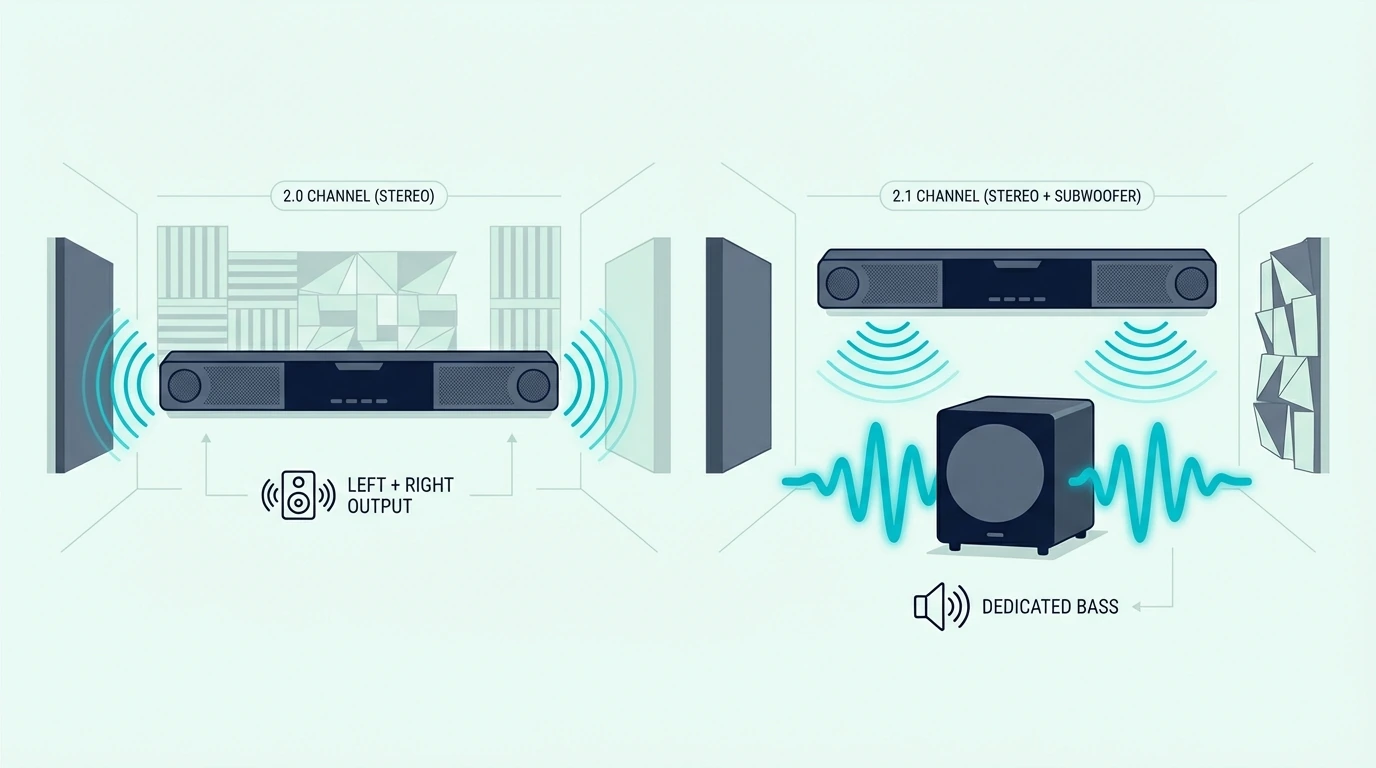
The difference goes beyond having a subwoofer. Offloading bass to a dedicated unit changes how the entire system sounds — not just the low end but the mids and highs too.
2.0 Soundbars: Clean Stereo Without Deep Bass
A 2.0 soundbar delivers left and right stereo from two channels in a single bar. Voices sound clearer than they do on TV speakers, and the stereo image feels wider.
It also offers enough volume to fill a bedroom without straining.
Most 2.0 bars include Bluetooth for wireless music streaming from your phone, and many offer HDMI ARC or optical connections for TV audio.
That simplicity matters if you rent, move rooms often, or hate cable clutter. A single-bar setup is easier to live with day to day.
The Sony S100F 2.0ch Soundbar is a solid example of what a 2.0 bar delivers — clean stereo audio with bass reflex tuning that squeezes respectable low-end from compact drivers at an affordable price.

Sony S100F 2.0ch Soundbar
The trade-off is limited bass extension. Even with bass reflex engineering, compact drivers physically can’t reproduce frequencies below 80–100 Hz.
At moderate volumes, this barely matters. Dialogue stays clear, and music still sounds balanced.
Push the volume higher or switch to bass-heavy content, and the limitation becomes obvious.
In a bedroom watching The Office, you won’t miss the deep bass. In a living room watching Top Gun: Maverick, you absolutely will.
Our what is a soundbar hub explains how channel layouts fit into the broader soundbar landscape and gives you the baseline terminology behind 2.0, 2.1, and bigger setups.
2.1 Soundbars: Deep Bass Plus Clearer Mids
A 2.1 soundbar adds a wireless subwoofer that handles everything below roughly 80–120 Hz. This produces two distinct improvements you notice immediately.
The Samsung HW-C450 2.1ch Soundbar is a textbook example of the 2.1 upgrade. Its wireless subwoofer delivers bass impact that no standalone bar can match, and the main bar can focus on cleaner dialogue.
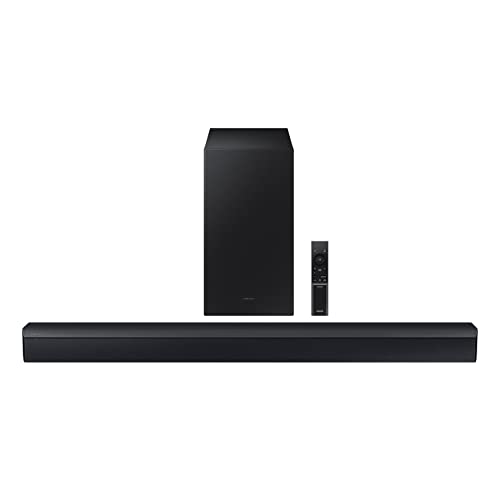
Samsung HW-C450 2.1ch Soundbar
First, the subwoofer reaches down to 40–50 Hz. That is the range you feel in your body.
Hans Zimmer scores gain weight. EDM drops hit harder, and gaming explosions shake the couch.
Once bass is offloaded, the bar handles mids and highs with less strain. Dialogue sounds crisper, and the whole system stays cleaner as volume rises.
The difference is obvious the first time you switch between 2.0 and 2.1 in an action scene. You stop just hearing the explosion and start feeling it.
That extra bass is not only about louder explosions. It also makes music sound fuller and gives bigger rooms a sense of scale that a standalone bar struggles to create.
Our best soundbar with subwoofer roundup shows what current 2.1-style options look like, and our guide to pairing a subwoofer with a soundbar explains the setup trade-offs that come with adding separate bass hardware.
Which Room and Setup Needs Favor 2.0 vs 2.1?
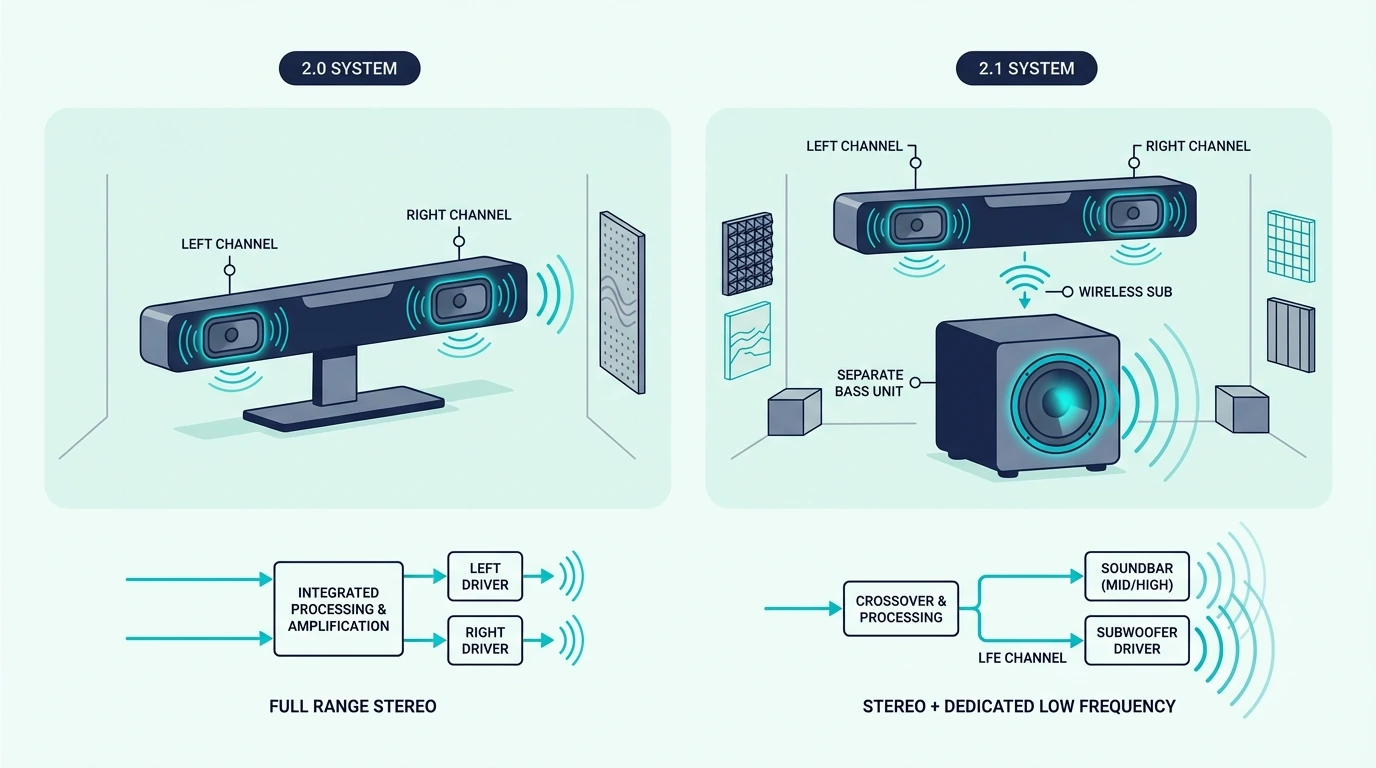
Beyond sound quality, these two setups differ in space needs and day-to-day hassle. Those practical factors often matter more than spec sheets.
When a 2.0 Soundbar Is the Right Choice
A 2.0 bar works well in a bedroom, office, or guest room where deep bass is not a priority. Setup is simple because you place one bar and connect one cable.
No extra hardware on the floor, no wireless pairing, and no subwoofer placement decisions. Budget 2.0 bars start under $50 — the most affordable meaningful TV audio upgrade available.
For apartment dwellers, 2.0 bars are particularly practical. Thin shared walls mean a subwoofer’s low frequencies travel directly into your neighbor’s living space, regardless of how low you set the volume.
Also ideal for late-night viewing. Without a subwoofer producing room-shaking frequencies, you get clear dialogue without bass energy traveling through walls and disturbing others in adjacent rooms.
A 2.0 setup also gives you predictable results with zero tuning. Since there is no separate sub to position, you avoid the trial and error that often comes with chasing smoother bass.
Our best budget soundbar roundup shows what entry-level bars look like today, and our soundbar to TV connection guide walks through the setup process that applies to both 2.0 and 2.1 configurations.
When a 2.1 Soundbar Is Worth the Premium
A 2.1 soundbar is worth the extra cost for a primary living-room TV if you watch movies, game, or listen to music regularly. The subwoofer moves the experience from “better than TV speakers” to genuinely immersive.
Medium and large rooms benefit most because bass has more space to fill. In a small bedroom, a 2.0 bar can cover the basics.
In a bigger living room, you will feel the gap every time an action scene hits.
The wireless subwoofer sits on the floor and auto-pairs with the soundbar during initial setup — zero cables running between the bar and sub. Place it near your entertainment center or in a corner for naturally reinforced bass output.
Avoid putting it inside a closed cabinet (muffles output) or directly behind large furniture (blocks the driver). Most people find the sweet spot within 15 minutes of sliding it around while playing a bass-heavy movie scene.
The subwoofer connects wirelessly to the bar during initial setup — press the pairing button once, and it stays connected permanently. No Bluetooth re-pairing each time you turn the system on.
That matters even more if your TV sits in an open-plan room. The farther sound has to travel, the more a dedicated sub helps the system feel substantial instead of thin.
A better living-room value example is JBL Bar 2.1 Deep Bass (MK2), which makes more sense when you want a dedicated subwoofer without stepping into a pricier surround package.
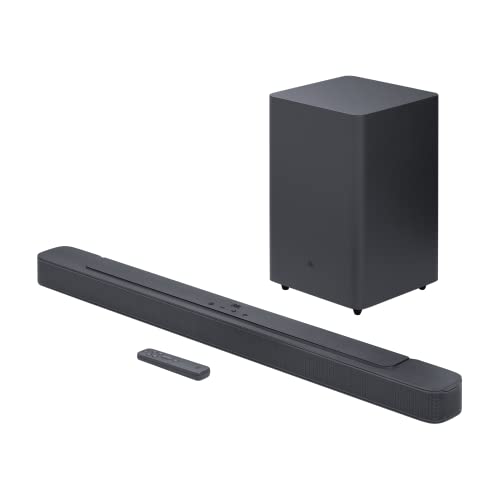
JBL Bar 2.1 Deep Bass (MK2)
Our HDMI ARC setup guide explains the cleanest connection path for newer TVs, and our soundbar setup guide shows how placement changes bass performance in real rooms.
Get Studio Tips Weekly
Join 5,000+ creators getting acoustic treatment advice every week.
No spam. Unsubscribe anytime.The Bottom Line
Choose 2.0 for bedrooms, small rooms, and secondary TVs. It gives you clear stereo with the simplest setup.
Choose 2.1 for your primary living room where you watch movies, game, or listen to music. The subwoofer produces dramatically deeper bass and simultaneously improves vocal clarity by offloading low frequencies from the bar’s drivers.
If you’re unsure, 2.1 is the safer bet for a primary TV. You can always turn the subwoofer down for late-night viewing.
You cannot add deep bass later to a 2.0 bar with no subwoofer output.
Our guide to mounting a soundbar helps if you want a cleaner install under or above the TV, and our how to choose a soundbar guide helps you weigh room size, bass goals, and budget before you buy.
Frequently Asked Questions
What does 2.0 mean on a soundbar?
The first number is speaker channels, the second is subwoofer count. “2.0” means two stereo channels and no subwoofer.
All audio — including whatever bass the small drivers can manage — comes from the bar itself. It’s the simplest setup: one bar, one cable, no extra hardware on the floor.
What is the difference between 2.0 and 2.1 speakers?
The subwoofer. A 2.1 system adds a separate wireless unit (the “.1”) that handles bass below ~100 Hz.
That offloading produces deeper low-end you can physically feel and simultaneously cleans up dialogue and mids from the main bar. The difference is obvious the first time you watch an action scene or play a bass-heavy song.
Are 2.0 soundbars worth it?
Yes, especially for bedrooms or secondary TVs. A 2.0 bar gives you clearer dialogue and real stereo separation in a small room.
It is one of the cheapest meaningful audio upgrades you can make for any TV. But if you are a movie buff or gamer building a main living room setup, you will notice the missing bass fast.
For many buyers, that is exactly enough. The goal is clearer TV audio and better stereo, not theater-level rumble.