2.0 vs 5.0 Soundbar: Basic Stereo or Virtual Surround From One Bar?

The 2.0 vs 5.0 soundbar comparison looks like a simple channel-count jump, but it changes the problem the bar is trying to solve.
A 2.0 bar is about cleaner TV audio at the lowest price.
A 5.0 bar tries to create surround-style immersion and stronger dialogue focus from one enclosure.
The catch is that virtual surround only pays off when your room and viewing habits give it something to work with.
In a small bedroom or a dialogue-first setup, extra processing can add cost without adding much real immersion.
That is where buyers often make the wrong call. They either overspend on surround features they barely notice or buy simple stereo and still feel underwhelmed every time a movie soundtrack is supposed to open up around them.
If you mostly watch movies and games in a medium-to-large living room, 5.0 can sound meaningfully bigger than stereo alone.
Below, we compare 2.0 and 5.0 soundbars across surround immersion, dialogue clarity, room fit, and bass trade-offs.
You can tell when the upgrade is worth paying for.
Choose a 2.0 soundbar if you mostly watch dialogue-heavy TV or listen to music in a small room and want the simplest, lowest-cost upgrade. A 2.0 bar gives you clean stereo without paying extra for surround processing your room may never reveal.
Choose a 5.0 soundbar if you watch movies, play games, or want surround-style immersion from one bar in a medium-to-large living room. A 5.0 bar adds a center channel for clearer dialogue and virtual surround effects that make soundtracks feel wider than stereo alone.
What Does 5.0 Add Beyond Basic Stereo?
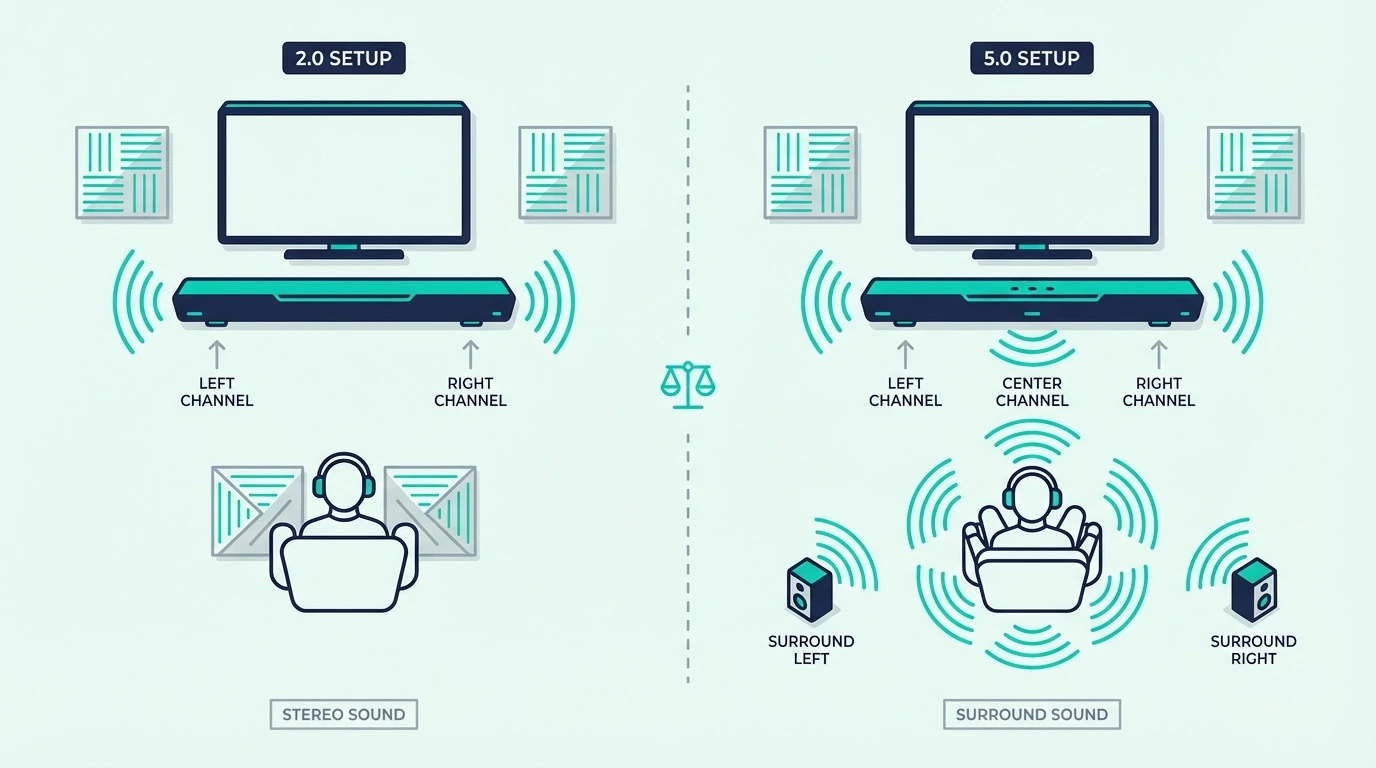
The jump from 2.0 to 5.0 is not just about more speakers inside the bar.
It adds two things a 2.0 bar cannot deliver.
First, you get a dedicated center channel for dialogue isolation.
Second, you get virtual surround channels that push sound beyond the bar’s physical width.
2.0 Soundbars: Clean Stereo, No Surround
A 2.0 soundbar delivers left and right stereo audio — the same basic configuration as headphones or desktop speakers. Sound comes from directly in front of you with clear left-right separation.
Phantom center imaging (blending both channels to simulate centered dialogue) works well for news, talk shows, and casual TV viewing in small rooms.
The Sony S100F 2.0ch Soundbar is a reliable example of a 2.0 bar. It noticeably upgrades small-room TV viewing without adding setup complexity.

Sony S100F 2.0ch Soundbar
When the soundtrack includes audio meant to come from beside or behind you, a 2.0 bar collapses everything into a flat stereo field.
Explosions that should rumble from behind feel like they come from the same two speakers delivering dialogue. Ambient environmental sounds lose their directional immersion.
Our best soundbar with subwoofer roundup shows when bass upgrades matter more than channel count.
Our how to choose a soundbar guide helps you decide whether simple stereo or more processing is the smarter next step.
5.0 Soundbars: Virtual Surround From One Bar
A 5.0 soundbar packs five virtual channels into a single bar — left, center, right, and two surround channels.
Beam-forming drivers bounce audio off your room’s side walls.
Psychoacoustic processing then tricks your brain into hearing sound from beside and behind you.
The Samsung HW-S60D 5.0ch All-in-One Soundbar shows what a true all-in-one 5.0 bar is aiming for: wider immersion and cleaner dialogue from a single enclosure.
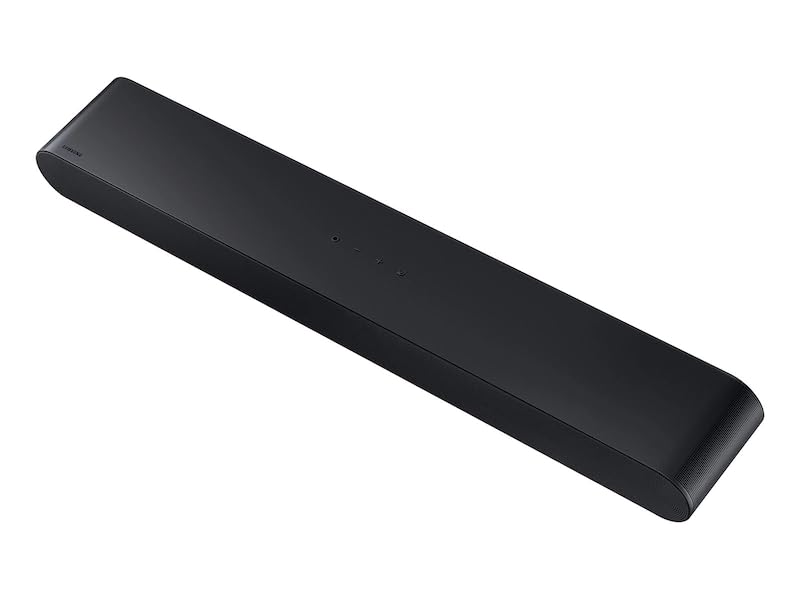
Samsung HW-S60D 5.0ch All-in-One Soundbar
The dedicated center channel is the most immediately noticeable upgrade from 2.0. Dialogue becomes clearer and stays anchored to the screen regardless of volume.
The virtual surround channels add spatial immersion that makes movie soundtracks feel wider and more enveloping. The effect varies depending on your room’s wall geometry and reflective surfaces.
That means room shape matters more here than it does with a basic stereo bar.
Open sides, heavy drapes, or asymmetrical furniture can make a 5.0 bar sound closer to a wide 3.0 bar than true wraparound surround.
Our what is a soundbar hub explains the broader channel language, and our how to choose a soundbar guide helps you judge whether your room can actually benefit from virtual surround.
Which Rooms Actually Benefit From 5.0?
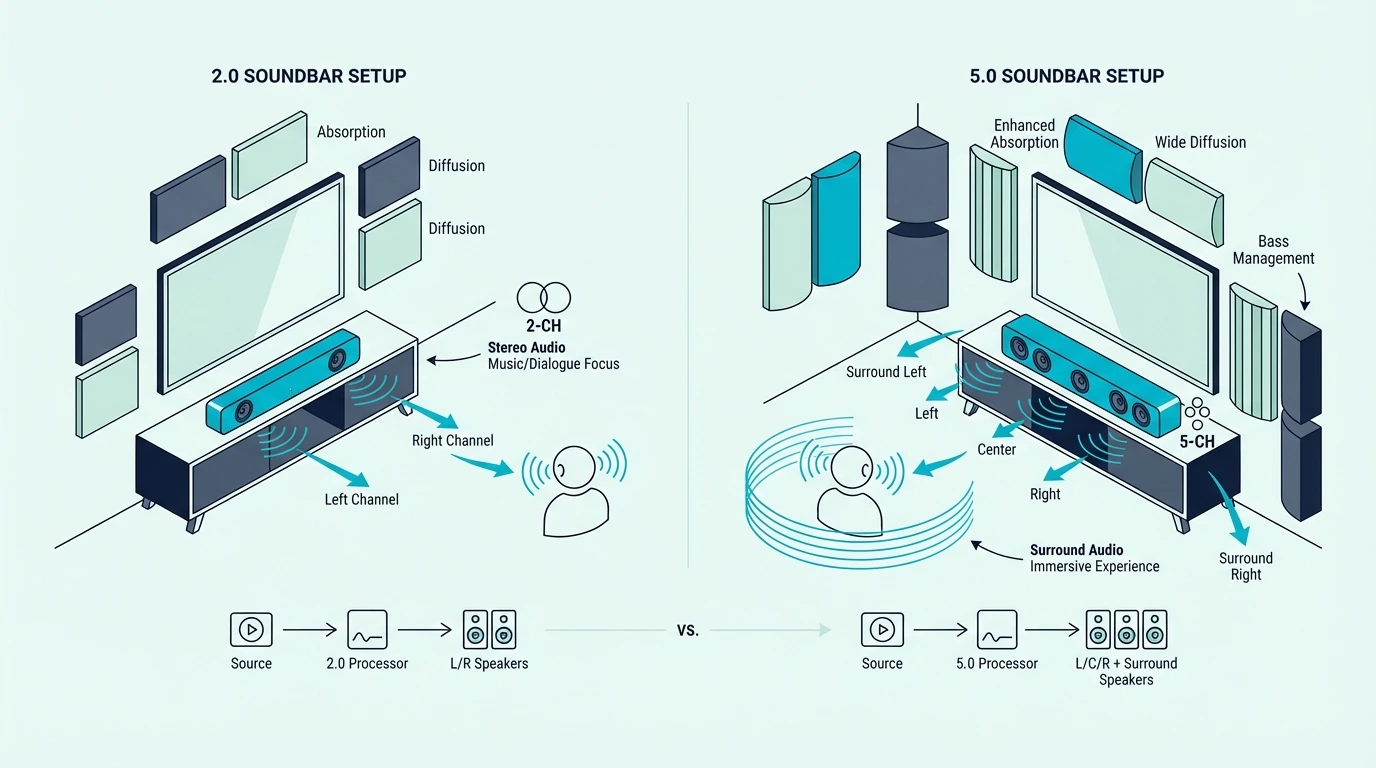
Beyond surround and dialogue improvements, 2.0 and 5.0 soundbars differ in pricing and room requirements. Where each fits in the upgrade path from basic stereo to full home theater matters for your long-term plans.
When 2.0 Makes Sense: Small Rooms and Budgets
A 2.0 soundbar is the right choice for bedrooms, offices, and small rooms under 150 square feet.
Virtual surround processing needs wall reflections to work.
Small rooms with soft furnishings usually do not provide enough reflective surfaces.
Budget 2.0 soundbars start under $50, making them the most affordable TV audio upgrade with an immediately noticeable improvement over built-in speakers.
For music listening, 2.0 stereo preserves the original recording’s spatial characteristics without virtual surround processing that can color the sound. Audiophiles who primarily use their soundbar for music may prefer the simpler stereo presentation.
That simplicity also makes 2.0 easier to place and easier to trust from room to room. You are not relying on wall reflections or DSP tricks that can change dramatically when furniture, curtains, or seating positions change.
Some buyers land in the middle and decide they want clearer dialogue without committing to full virtual surround. A Sonos Beam Gen 2 is the kind of middle-ground bar that makes sense in that situation.
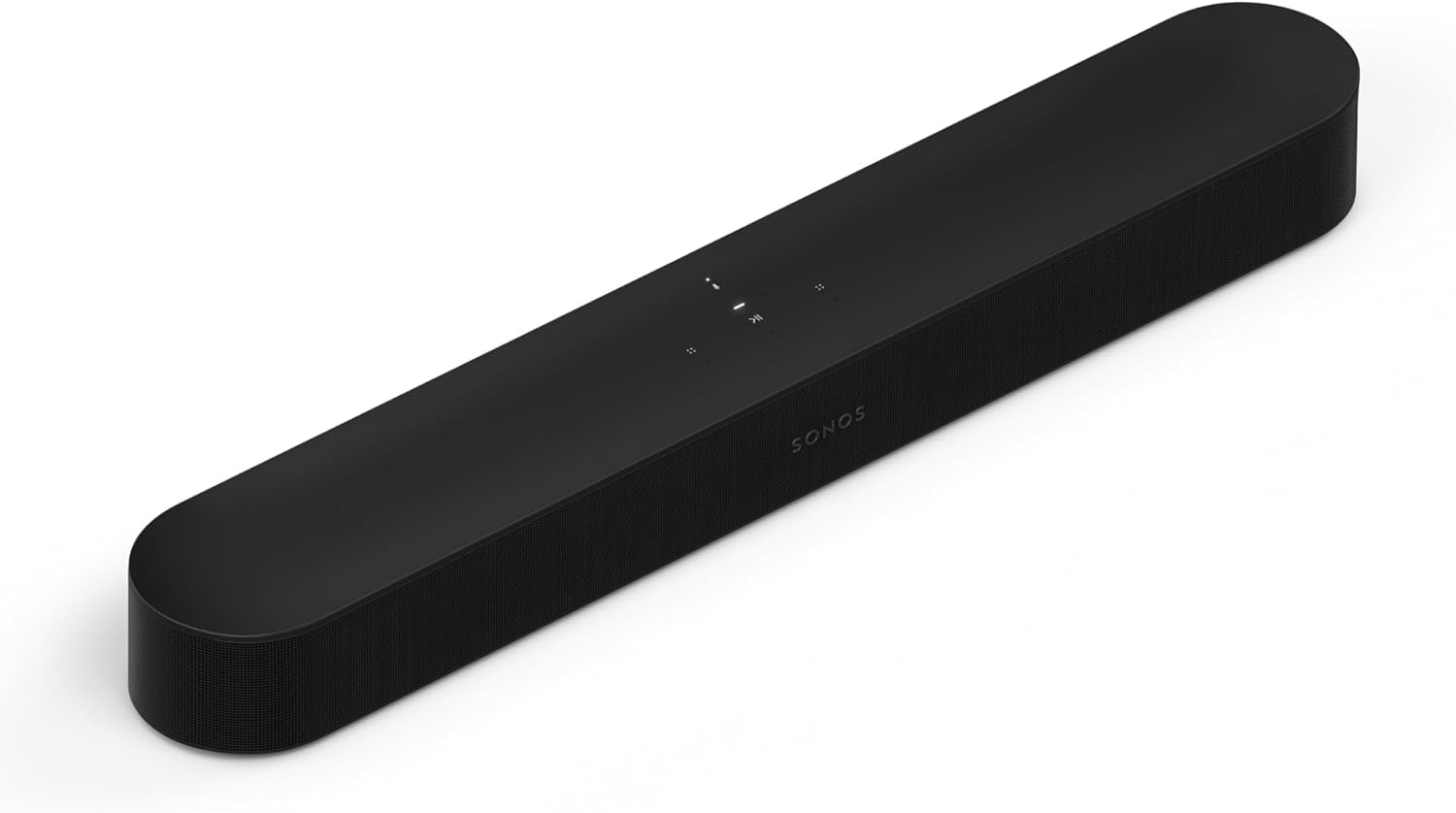
Sonos Beam Gen 2
It is not a 5.0 replacement, but it shows why some people stop at a strong 3.0-style bar instead of paying extra for surround effects they may not fully hear.
Our best budget soundbar roundup shows what strong entry-level bars look like today, and our how to choose a soundbar guide helps you match channel count to room size and habits.
When 5.0 Makes Sense: Movies and Medium-Large Rooms
A 5.0 soundbar delivers its best performance in medium-to-large living rooms with hard walls that reflect the beam-forming surround channels.
Rooms between 150 and 400 square feet with drywall or plaster side walls usually give virtual surround enough surface to create a convincing effect.
5.0 works best when you have clean side boundaries and sit far enough back for the effect to develop.
If one side of the room opens into another space, the surround illusion usually weakens before you hear what the processing was designed to do.
It also helps if your main use is movies, sports, or games where width and movement matter more than pure stereo accuracy.
If most of your screen time is news, podcasts, or casual sitcom watching, the extra processing may feel subtler than the price jump suggests.
Our soundbar to TV connection guide covers how more advanced bars connect cleanly, and our soundbar setup guide shows how placement affects width and clarity once you move beyond stereo.
The Shared Limitation: No Subwoofer
Both 2.0 and 5.0 soundbars lack a dedicated subwoofer. Neither produces deep bass below 80-100Hz — the low-frequency rumble that makes explosions and bass-heavy music feel physically impactful.
If bass matters, stepping up to a 2.1 or 5.1 configuration with a wireless subwoofer addresses this gap.
That is why a 5.0 bar can still sound bigger than 2.0 without sounding fuller. You get more width and clearer dialogue, yet action scenes may still miss the chest hit a subwoofer adds.
For some buyers, that trade-off is completely fine because they care more about simplicity than maximum impact. For others, it is the reason a 5.1 package ends up feeling like the more complete home-theater jump.
Our HDMI ARC setup guide explains the cleanest connection path for newer TVs, and our best soundbar with subwoofer roundup shows where the bass upgrade starts to justify the extra hardware.
Get Studio Tips Weekly
Join 5,000+ creators getting acoustic treatment advice every week.
No spam. Unsubscribe anytime.The Bottom Line
Choose a 2.0 soundbar for small rooms, music listening, and budget-conscious upgrades. Basic stereo delivers a clear improvement at the lowest price.
Choose a 5.0 soundbar for medium-to-large living rooms where you watch movies and games often enough to notice the extra width and dialogue control.
The 5.0 center channel keeps dialogue clearer while virtual surround makes soundtracks feel bigger from one bar.
But if bass is part of the experience you care about, you still need to think beyond channel count.
You need a system with a real subwoofer.
Our guide to mounting a soundbar helps if you want a cleaner install, and our how to choose a soundbar guide walks through the trade-offs between clarity, surround effects, and simplicity.
Frequently Asked Questions
Is a 2.0 soundbar worth it?
Yes. A 2.0 soundbar is a major upgrade over your TV’s built-in speakers.
It gives you clearer dialogue, better stereo separation, and more usable volume starting under $50.
For small rooms and dialogue-focused viewing, 2.0 bars are often the best-value TV audio upgrade.
Do I need a 2.1 or 5.1 soundbar?
If deep bass matters for your viewing habits, you need at least a 2.1 configuration with a wireless subwoofer.
Neither 2.0 nor 5.0 bars produce deep bass on their own.
If you want both surround immersion and bass, a 5.1 configuration is the more complete upgrade.
Does the size of the soundbar matter?
Soundbar size affects both audio performance and practical fit. Longer bars generally produce wider stereo separation and more effective virtual surround because drivers are spaced farther apart.
However, the bar should roughly match your TV’s width for aesthetics and optimal sound coverage.