Roku Speakers vs Soundbar: Which Makes More Sense for Your TV? [2026]

Roku speakers vs soundbar sounds like a simple Roku-vs-Roku choice, but the real decision is whether you want Roku-only convenience or a TV audio upgrade that stays flexible later.
The pain is that both paths keep you tied to the Roku ecosystem.
That becomes a problem when you want better bass, broader compatibility, or a cleaner next upgrade, because Roku designed these products around platform simplicity first.
Understanding that tradeoff helps you avoid paying for lock-in when a traditional soundbar may sound better and keep working with your next TV.
Below, we’ll compare Roku Wireless Speakers, the Roku Soundbar, and traditional soundbar alternatives step by step.
Then we’ll narrow down which option makes the most sense for music, movies, and long-term value.
Choose Roku Wireless Speakers if you specifically want true stereo separation, simple Roku TV control, and the easiest speaker-pair experience inside the Roku ecosystem.
Choose a Roku soundbar if you want a single-bar upgrade with built-in Roku streaming and somewhat fuller bass than the Wireless Speakers can deliver.
If your priority is better movie sound, deeper bass, and long-term flexibility, a traditional HDMI ARC soundbar from a dedicated audio brand is still the better buy.
How Do Roku Wireless Speakers and a Roku Soundbar Compare?
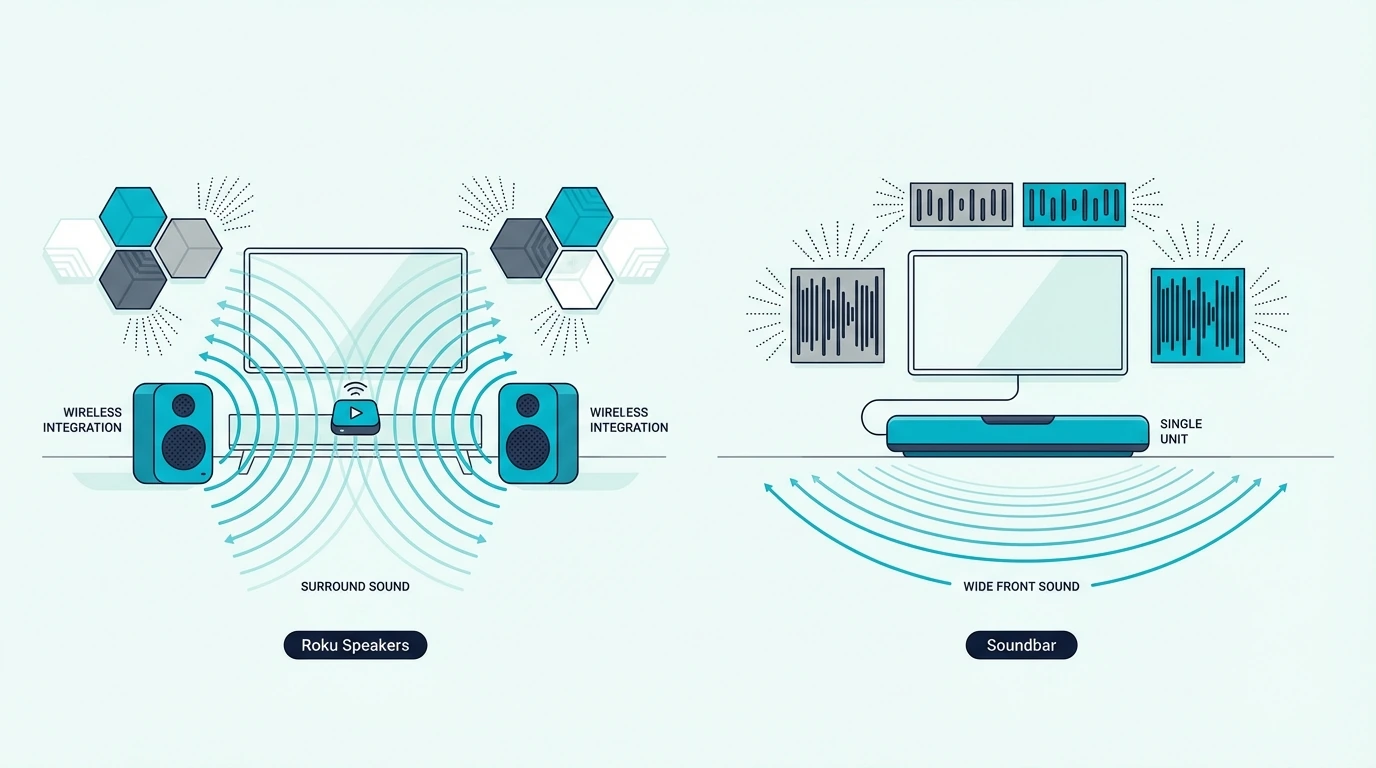
If you’re committed to the Roku ecosystem, understanding how the Wireless Speakers and Roku Soundbar differ helps you pick the right product.
Each has genuine advantages for specific Roku TV use cases.
Roku Wireless Speakers: True Stereo Separation
The Roku Wireless Speakers are a stereo pair that connect wirelessly to your Roku TV and use your existing Roku remote.
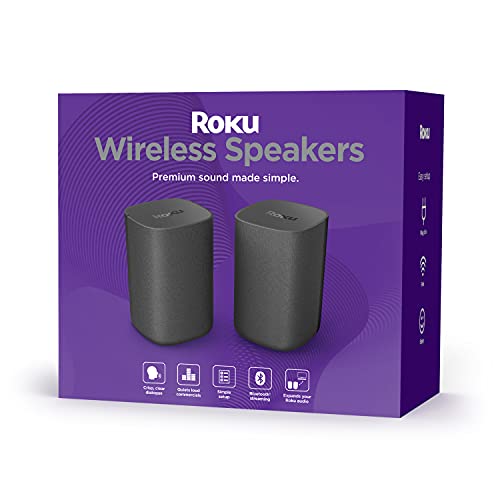
Roku Wireless Speakers
Their main advantage is true stereo separation.
Because the speakers sit on opposite sides of the TV or room, they create a wider soundstage than a single bar can.
That gives music and TV a broader left-right spread.
The limitations are still significant.
The speakers lack a dedicated subwoofer for deep bass. They also offer no Dolby Atmos or advanced surround processing.
They’re best viewed as a simple upgrade over built-in TV speakers.
They make the most sense in a bedroom, apartment, or secondary TV room where you want cleaner sound and wider stereo without adding extra boxes.
They are also a better fit for casual music listening than they are for action-heavy movie nights.
If you mainly watch sports, news, sitcoms, and YouTube content, that tradeoff can still feel worthwhile.
If you want stronger dialogue anchoring, deeper bass, or a more cinematic front soundstage, the limitations show up much faster.
If you want the broader TV audio upgrade path, the soundbar hub and the soundbar to TV connection guide are useful next steps.
Roku Soundbar: Streaming Device Plus Audio
The Roku Streambar SE serves double duty as a soundbar and full Roku streaming device.
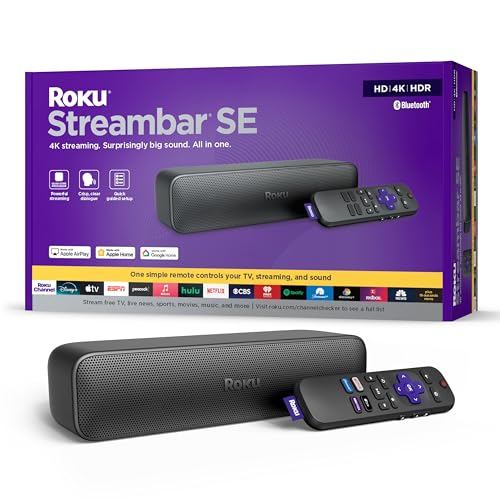
Roku Streambar SE
It adds Roku OS to any TV with HDMI input.
The single-bar design delivers stronger bass than the Wireless Speakers and adds virtual surround processing.
That makes it the better Roku-native choice for buyers who want one compact box.
Its audio quality is still modest compared with dedicated soundbar brands.
It upgrades TV speakers, but it lacks Dolby Atmos, a wireless subwoofer, and the multi-channel processing found on similarly priced dedicated bars.
That means the Roku soundbar is easiest to justify when you want to simplify a second TV, add Roku streaming to an older display, or reduce cable clutter in a smaller room.
It is less compelling when your TV already has Roku built in, because then you are mostly paying for a modest bar instead of a meaningful audio jump.
For movie-first buyers, this is usually the point where a standard HDMI ARC soundbar starts making more sense.
If you want to compare setup paths, the HDMI vs optical guide and the TV-to-soundbar Bluetooth guide show where Roku convenience still gives up flexibility.
Why Is a Traditional Soundbar Usually the Better Audio Choice?

For Roku TV owners who prioritize audio quality over ecosystem integration, traditional soundbars deliver dramatically better sound at every price point.
They also work with any TV via HDMI ARC or eARC, so they are not locked to a single platform.
Why Dedicated Soundbars Outperform Roku Audio
Traditional soundbars from dedicated audio brands invest their full budget into audio performance.
That means larger drivers, Dolby Atmos processing, wireless subwoofers, room calibration, and multi-channel configurations Roku doesn’t attempt to match.
For this kind of small-room, dialogue-first setup, a current example is Philips B5306 2.1 Channel Soundbar with Wireless Subwoofer.
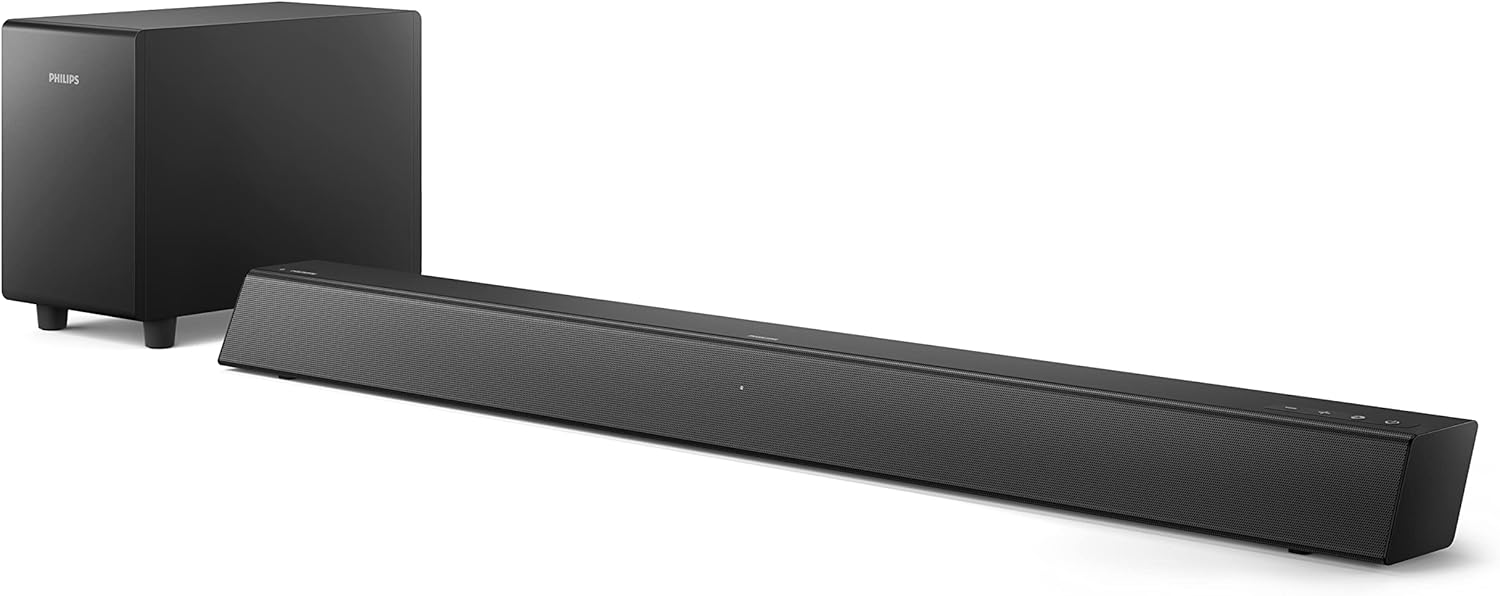
Philips B5306 2.1 Channel Soundbar with Wireless Subwoofer
It is a reasonable example when you want an easy everyday TV upgrade without moving into a larger surround package.
The audio quality gap becomes even more apparent with systems that include wireless subwoofers.
For large-room movie use, a current example is Hisense HS5100 5.1Ch Sound Bar with Wireless Subwoofer.
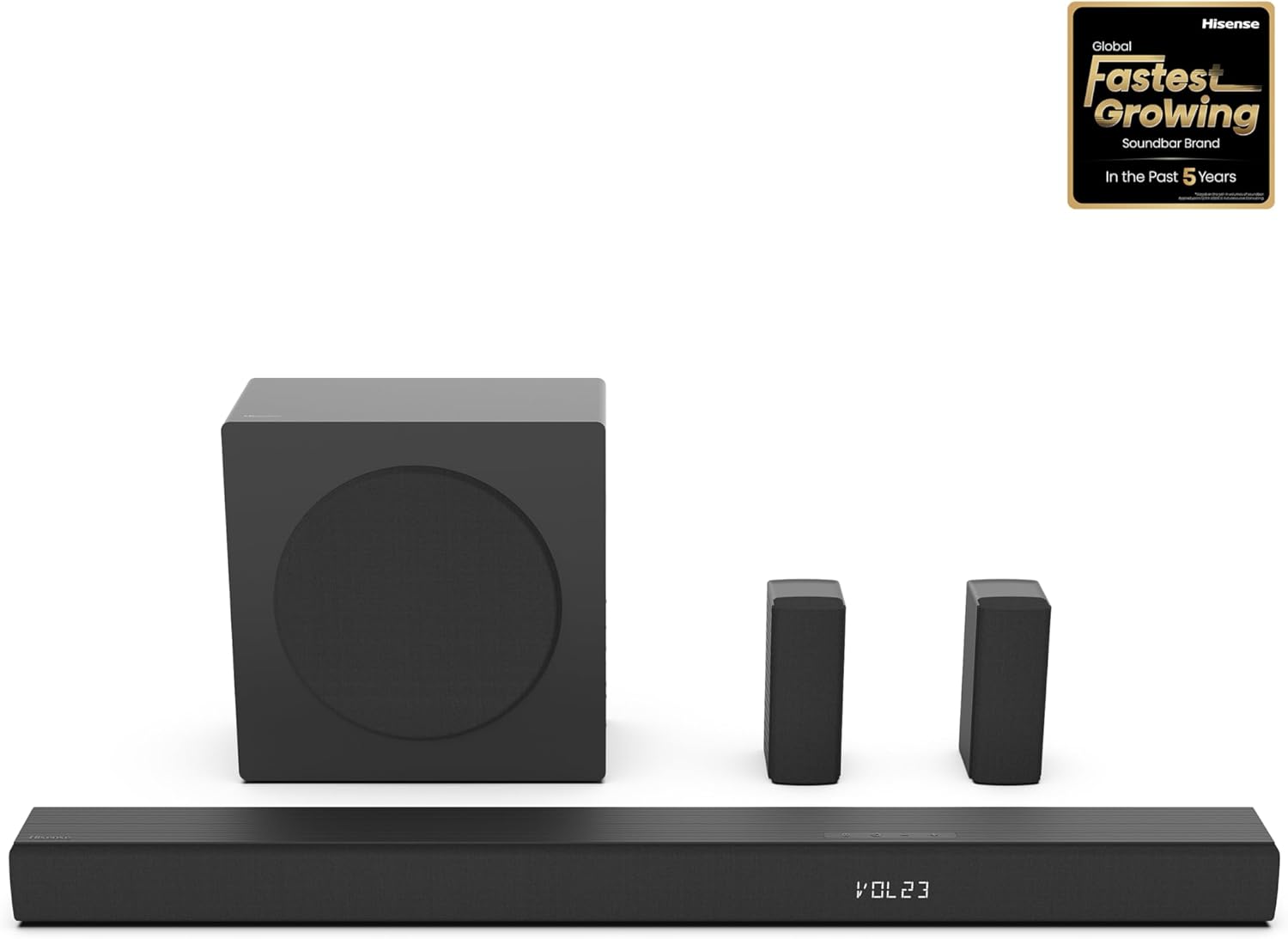
Hisense HS5100 5.1Ch Sound Bar with Wireless Subwoofer
That kind of system makes the difference obvious when you want fuller low end and a more cinematic feel.
It also makes the upgrade easier to justify if several people use the TV, because stronger bass and clearer dialogue improvements are noticeable even to non-audio hobbyists.
In practice, that is why traditional bars often feel like the better long-term buy even when Roku-branded options look simpler at first glance.
If you want to compare convenience against a broader long-term upgrade path, the soundbar setup guide is a relevant next read.
For a more detailed upgrade-path discussion, the soundbar vs receiver comparison explains when a larger system starts to make sense.
Which Buyer Profile Fits Each Option Best?
Choose Roku Wireless Speakers when your top priority is stereo spread with the least friction inside a Roku TV setup.
That route works best when you care more about simplicity and casual listening than home-theater impact.
Choose the Roku soundbar when you want an all-in-one streaming box and audio upgrade for a smaller room.
It is the more practical Roku-native pick if you are starting with an older non-Roku TV and want one device to handle both jobs.
Choose a traditional 2.1 or 3.1 soundbar when dialogue clarity and bass matter more than Roku-only integration.
That is the sweet spot for most buyers who simply want TV, movies, and streaming to sound fuller without overcomplicating setup.
Choose a larger multi-channel soundbar system when movie nights are important and you want a more obvious jump in scale, impact, and immersion.
That path also gives you a cleaner upgrade story if you change TVs later, because HDMI ARC gear is not tied to a single brand ecosystem.
Setup and Compatibility: Universal vs Locked
Traditional soundbars connect via HDMI ARC or eARC, a universal standard that works with every TV brand including Roku TVs.
If you switch TV brands later, your soundbar still works.
Roku’s audio products only work with Roku TVs, which makes them a riskier long-term investment.
The setup difference is minimal.
Traditional soundbars connect with a single HDMI cable and auto-configure through CEC, while Roku speakers pair through the Roku TV menu.
Both take under 10 minutes to set up.
Our HDMI vs optical guide explains connection options for traditional soundbars with Roku TVs, and our soundbar to TV connection guide covers the simple setup process.
Did Roku Discontinue Audio Products?
Roku discontinued the original Wireless Speakers, and availability of its remaining audio products has become more limited.
That makes investing in Roku-exclusive audio increasingly risky.
If Roku fully exits audio hardware, your ecosystem-locked speakers become orphaned products with no upgrade path.
Our 2.1 vs 5.1 soundbar guide explains channel configurations available from traditional soundbar brands, and the TV speaker vs soundbar comparison shows what a more standard upgrade path looks like when you are not tied to one platform.
Get Studio Tips Weekly
Join 5,000+ creators getting acoustic treatment advice every week.
No spam. Unsubscribe anytime.The Bottom Line
For the best audio quality with your Roku TV, choose a traditional soundbar from a dedicated audio brand.
These connect via universal HDMI ARC, deliver Dolby Atmos and deeper bass, and keep working if you switch TV brands.
Our best soundbar for Roku TV guide ranks the current picks that pair cleanly with any Roku TV.
If you specifically want Roku ecosystem integration with simple remote control, the Roku Soundbar delivers better overall audio than the Wireless Speakers.
It offers stronger bass, virtual surround processing, and adds Roku streaming to non-Roku TVs.
If you are still shopping broadly, our best soundbar for TV guide covers the top universal picks.
If your main goal is keeping setup simple while still learning the upgrade path, the soundbar to TV connection guide and the soundbar setup guide are the best follow-up reads.
Frequently Asked Questions
Are the Roku speakers good?
The Roku Wireless Speakers deliver a meaningful upgrade over built-in TV speakers with genuine stereo separation and seamless Roku TV integration.
They’re good for what they are, but modest compared to traditional soundbars.
For casual viewers who want simple improvement, they’re a solid choice.
Is Roku soundbar worth it?
The Roku Soundbar is worth it primarily for non-Roku TV owners who want both a Roku streaming device and improved audio in a single purchase.
For Roku TV owners who already have streaming built in, a traditional soundbar from a dedicated audio brand usually delivers better audio at comparable prices.
Which is better, soundbar or speakers?
For TV audio, a soundbar is typically better.
It delivers dialogue clarity, virtual surround processing, and bass from a single compact unit.
Separate stereo speakers like Roku’s Wireless Speakers deliver wider stereo imaging for music but lack the surround focus and bass depth soundbars provide for movies and TV shows.
Can Roku speakers work without a Roku TV?
No. Roku Wireless Speakers are designed for Roku TVs and do not work as universal TV speakers for other brands.
That limitation is one of the biggest reasons many buyers end up better served by a standard HDMI ARC soundbar that can move with them to a future TV.