Best Sheetrock for Soundproofing (What Actually Helps)
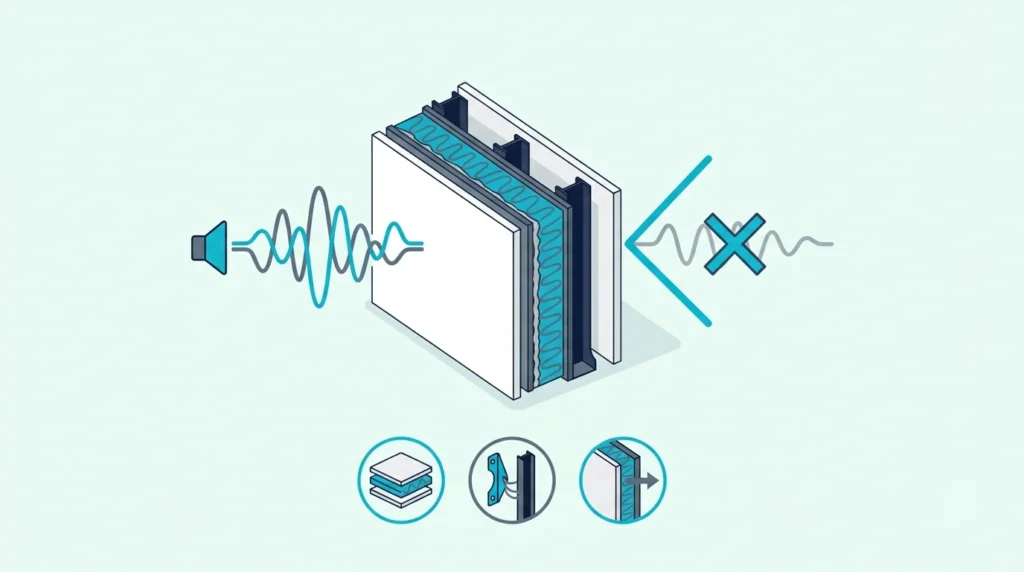
Best sheetrock for soundproofing is usually 5/8-inch drywall, but the board alone rarely fixes the noise problem people are actually trying to solve.
That is the part many buyers miss when they start comparing Sheetrock, soundproof drywall, plasterboard, and thicker gypsum board. The panel matters, but the real result comes from the full wall or ceiling system around it.
If you are dealing with voices through a shared wall, TV bleed in a home office, or upstairs noise over a basement ceiling, the best drywall choice depends on whether you need a stronger baseline, a thinner premium upgrade, or a layered build with damping.
Below, you’ll see when standard 5/8-inch drywall is good enough, when specialty sound-rated drywall is worth the extra cost, what thickness actually helps, and why sealing, damping, and decoupling often matter as much as the drywall panels themselves.
For most projects, the best sheetrock for soundproofing is standard 5/8-inch drywall used as part of a complete assembly. Specialty soundproof drywall can be worth it when you need better performance with less thickness or less labor, but drywall alone is rarely the full answer if gaps, flanking paths, or structural vibration are still in play.
Drywall Types for Soundproofing: Standard, Specialty, and Layered
The best drywall choice starts with one honest reset: Sheetrock is a brand name, but most buyers are really asking which gypsum board or drywall products give the best soundproofing performance.
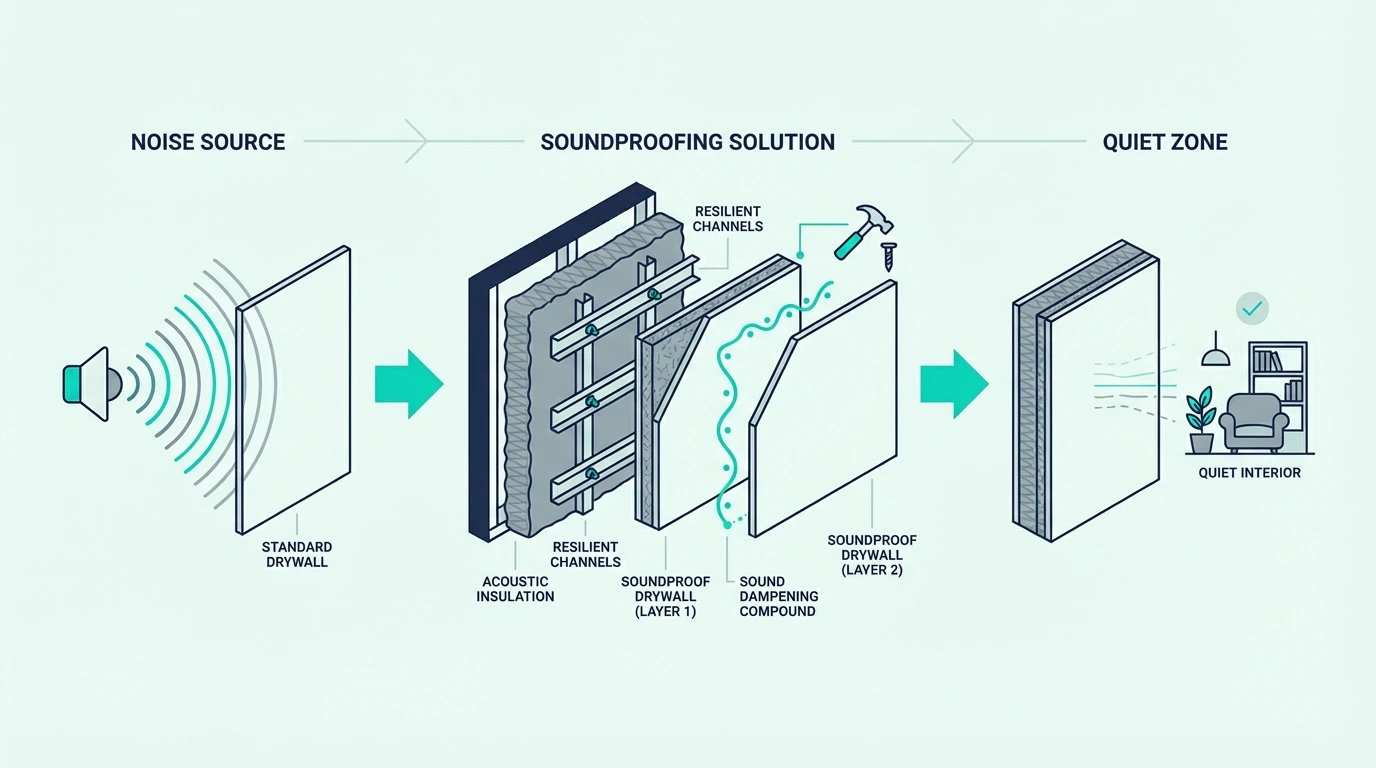
In practical terms, you are usually choosing between regular drywall, heavier 5/8-inch drywall, and specialty soundproof drywall with a viscoelastic core. The right answer changes with budget, wall thickness limits, labor, and how much sound transmission you are actually trying to reduce.
Standard 5/8-inch drywall as the baseline
For many homes, yes. Standard 5/8-inch drywall is the most practical baseline because it adds more mass than 1/2-inch drywall, improves fire resistance in many assemblies, and gives you a stronger starting point for reducing airborne noise.
That makes it a smart default for shared bedrooms, home office walls, and many basic remodels where you want a real improvement without jumping straight to premium panels. If you are comparing room-level priorities first, our guide on how to soundproof a room helps frame where drywall fits in the bigger plan.
The reason 5/8-inch works so often is simple: more mass makes the wall harder to move. It will not create silence by itself, but it usually beats lightweight drywall when the rest of the assembly is reasonably solid and well sealed.
When specialty soundproof drywall earns its premium
Specialty soundproof drywall becomes easier to justify when you need more performance from less thickness or you want to avoid building up multiple regular layers. Products like QuietRock, SilentFX, and SoundBreak XP are specifically designed with damping layers that help reduce vibration inside the panel itself.
That can make them attractive in renovations where space is tight, trim details are already set, or the project needs a cleaner one-panel upgrade path. In a tighter room where every inch matters, that tradeoff can beat adding a second standard layer plus extra finishing labor.
Specialty panels also make more sense when the wall or ceiling already has decent fundamentals and you are trying to push performance higher without a full rebuild. But if the weak point is really the door, the window, or a leaky joint, premium drywall can still disappoint because the rest of the room shell is still leaking.
If you are comparing full wall approaches rather than just panel brands, our guide to best soundproofing walls helps show where drywall upgrades fit inside a stronger assembly.
Multiple layers vs one specialty panel
Specialty panels solve the thickness problem, but they are not always the best value. Two layers of standard drywall with damping compound between them can be a very strong alternative. Two layers of standard drywall with damping compound between them can be a very strong value play because you add both mass and vibration control in one move.
That approach often makes sense when you are already opening the wall, redoing trim, or treating a shared partition where thickness is less of a problem than cost. It also pairs naturally with broader wall strategies like the ones covered in how to soundproof a wall.
If you want the classic example of that layered approach, Green Glue Noiseproofing Compound exists for exactly that use case.
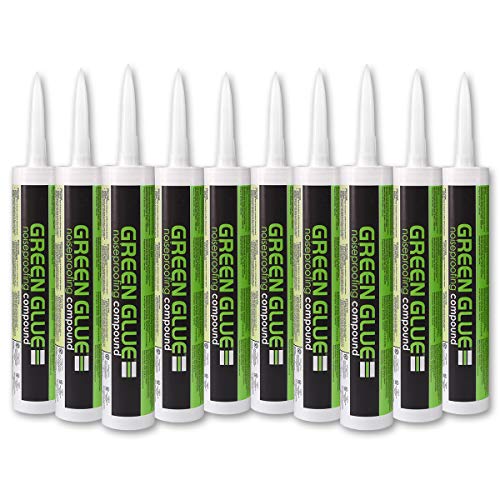
Green Glue Noiseproofing Compound
A single specialty panel can still win when simplicity, thinner build-up, or faster installation matters more than lowest material cost. The real comparison is not just panel versus panel, but complete assembly versus complete assembly.
| Product | Link |
|---|---|
| See ratings |
 | See ratings |
 | See ratings |
Drywall Thickness and Why It Only Tells Part of the Story
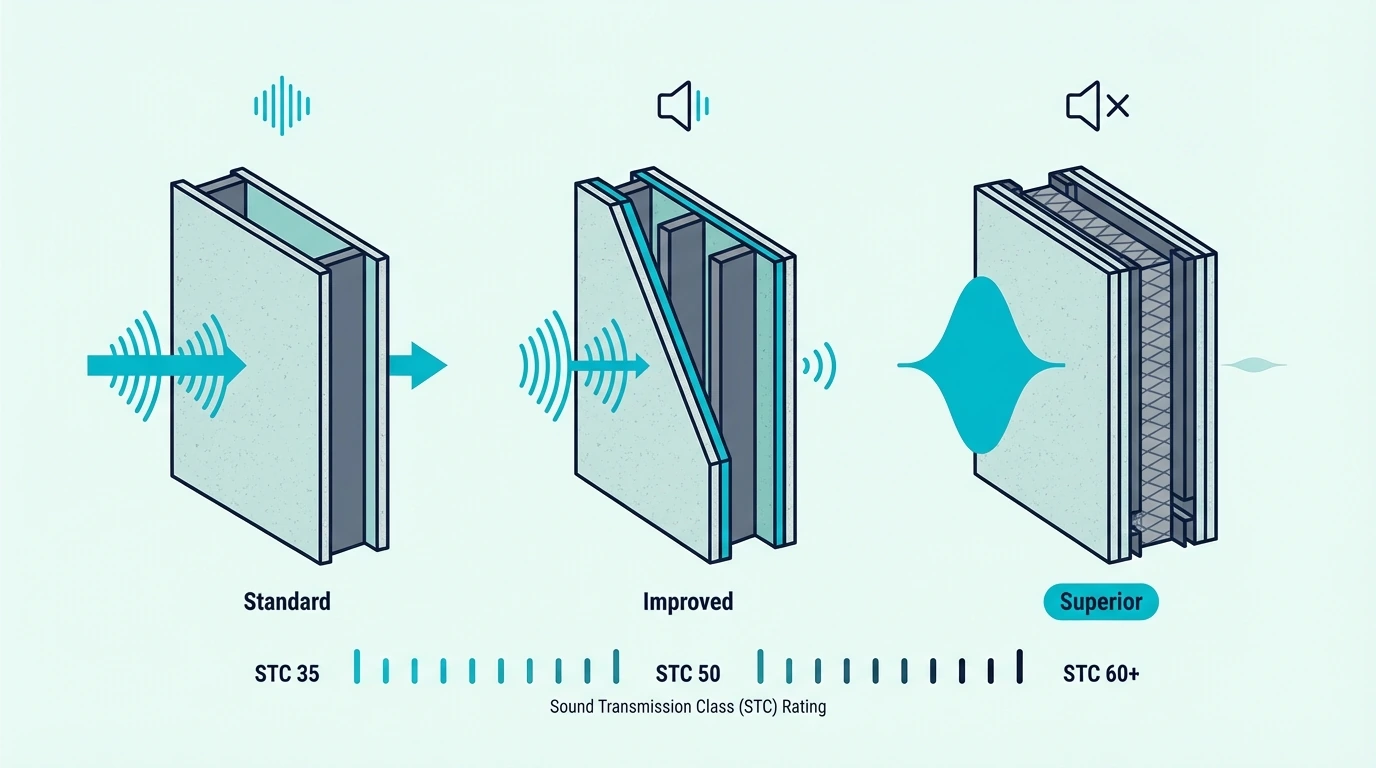
Thickness matters because it usually means more mass, and more mass usually means better resistance to airborne sound transmission. But thickness only tells part of the story because damping, layering, and the rest of the assembly still shape the final result.
That is why buyers who focus only on sheet thickness sometimes overestimate the jump from one panel to another. The drywall helps, but the system still decides the result.
Why 5/8-inch usually beats 1/2-inch
The short answer is weight. A 5/8-inch panel gives you more mass than a 1/2-inch panel, which usually improves how the wall resists movement when sound waves hit it.
That extra mass is why 5/8-inch drywall shows up so often in better soundproofing assemblies, home theaters, and shared-wall upgrades. It is also why many people treat it as the normal first step before looking at more expensive soundproof drywall products.
For ceilings and floor-adjacent assemblies, the same logic still applies, but the noise path may change what matters most. If the bigger complaint is impact noise from above, drywall thickness may help less than the floor-side fix explained in how to soundproof a floor or a better soundproof ceiling strategy below the joists.
When thicker drywall does not help as much as expected
That mass advantage has a ceiling. Thicker drywall usually helps, but it is still possible to spend more and solve the wrong problem if flanking, leakage, or structural vibration are doing most of the work.
For example, a heavier wall can still underperform if the studs bridge vibration directly, the electrical boxes leak air, or the window beside the wall is the real weak point. In those cases, added thickness gives some improvement, but not the full payoff buyers expect.
This is also where Sound Transmission Class language gets misunderstood. STC is a rating for a full tested wall system, not a promise attached to one gypsum board sheet floating in isolation.
When two layers beat thicker panels
If a single thicker panel still leaves gaps in performance, two layers with damping compound usually close them. Two layers make more sense when you want a larger improvement from common materials and you have room to build outward. The combination gets stronger when you add damping compound between the layers because the assembly resists both motion and resonance better than a simple single-sheet upgrade.
That approach is often more compelling for serious shared-wall problems, bedrooms beside living rooms, and home office partitions where speech privacy matters. If your project is already reaching into deeper upgrades, you may also want to compare the full system against other options in best soundproofing material before choosing drywall alone as the centerpiece.
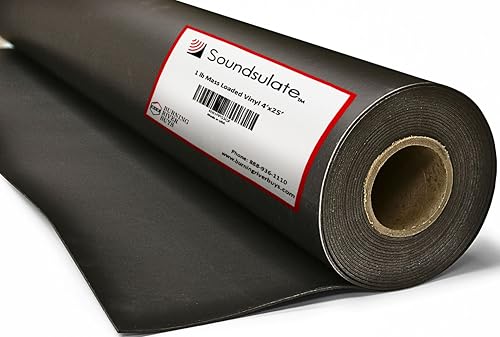
For a heavier barrier-layer example, Soundsulate 1 lb MLV shows what you add when changing the assembly matters more than changing drywall brand names.
Soundsulate 1 lb MLV
The tradeoff is labor, thickness, and finishing complexity. More layers mean more weight, more perimeter sealing, and more work around trim, boxes, and openings.
Get Studio Tips Weekly
Join 5,000+ creators getting acoustic treatment advice every week.
No spam. Unsubscribe anytime.What to Pair with Drywall for Real Soundproofing Results
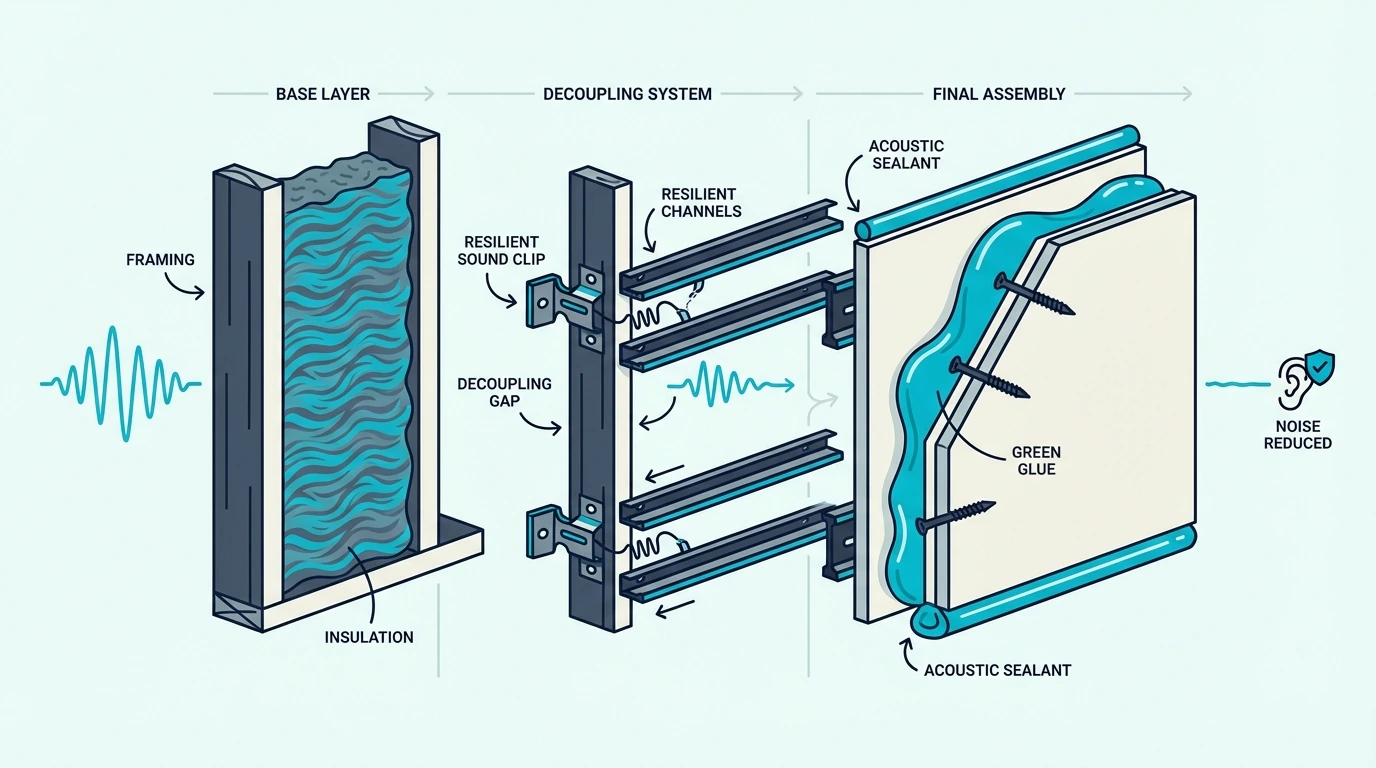
Drywall works best as one part of a soundproofing assembly, not as a standalone cure-all. If the article stopped at drywall choice, it would miss the very upgrades that usually decide whether the finished room feels noticeably quieter or only slightly different.
This is the system-thinking section buyers actually need, because the right panel can still underperform when the supporting details are weak. Drywall is the face of the wall, but not the whole strategy.
Damping compound between layers
Yes, often. Damping compound is worth serious consideration when you are already using double drywall because it helps reduce vibration transfer between the layers instead of letting the wall ring more freely.
That matters most in speech-heavy problems, TV bleed, and general airborne noise where a stronger layered wall can pay off clearly. It is one of the simplest ways to get more out of a multi-layer drywall build without jumping straight to a more complex decoupled wall.
If you still mix up damping with absorption, read sound deadening vs soundproofing before you buy materials that solve the wrong problem.
Insulation behind the drywall
Damping handles vibration between the face layers, but the cavity behind them still matters. Insulation inside the cavity helps absorb sound energy and reduce resonance in the air space, which is why it often improves the performance of a drywall assembly.
What it does not do is replace mass, airtightness, or damping. If you are choosing the cavity layer at the same time, our breakdown of best insulation for soundproofing helps separate what insulation can do from what drywall still needs to do.
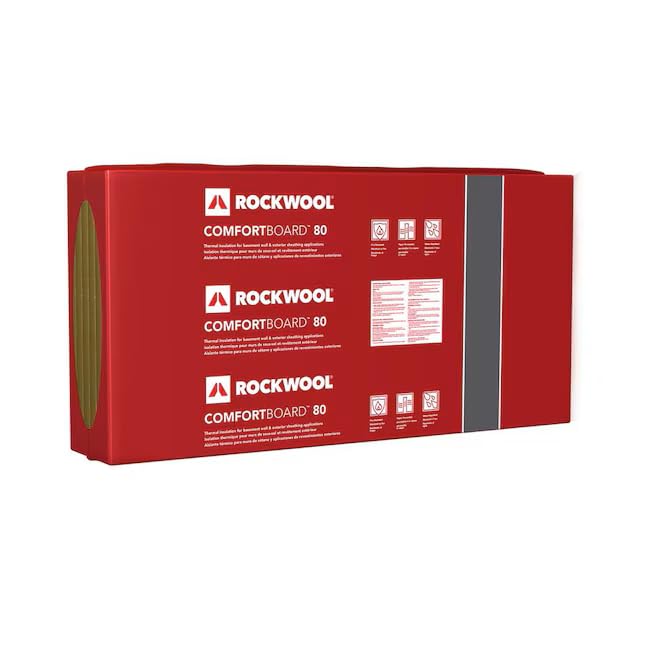
A product like Rockwool ComfortBoard 80 is a good example of the kind of cavity-side material that helps the drywall assembly perform better without pretending insulation replaces the drywall itself.
Rockwool ComfortBoard 80
A good way to think about it is this: drywall handles the face of the assembly, while insulation helps calm what happens inside it. You usually want both working together instead of expecting one to carry the whole load.
When decoupling matters more than the drywall itself
Insulation and damping both work inside the assembly, but neither breaks the direct vibration path through the studs. Decoupling becomes more important when vibration is traveling through the framing and re-radiating on the other side. That is why hard cases like home theaters, drums, heavy footfall, and persistent shared-wall problems often resist simple drywall-only upgrades.
Once the studs or joists are carrying the energy, adding another face layer helps less than people hope. In those situations, resilient channel, isolation clips, or a more isolated assembly can change the result more than switching from one drywall panel to another.
That is especially true in apartments and attached homes where flanking paths complicate the picture. If the broader context is rental or shared-building noise, our guide on how to soundproof an apartment can help you set realistic expectations before you commit to drywall alone.
Walls vs Ceilings: Where Drywall Upgrades Pay Off Most
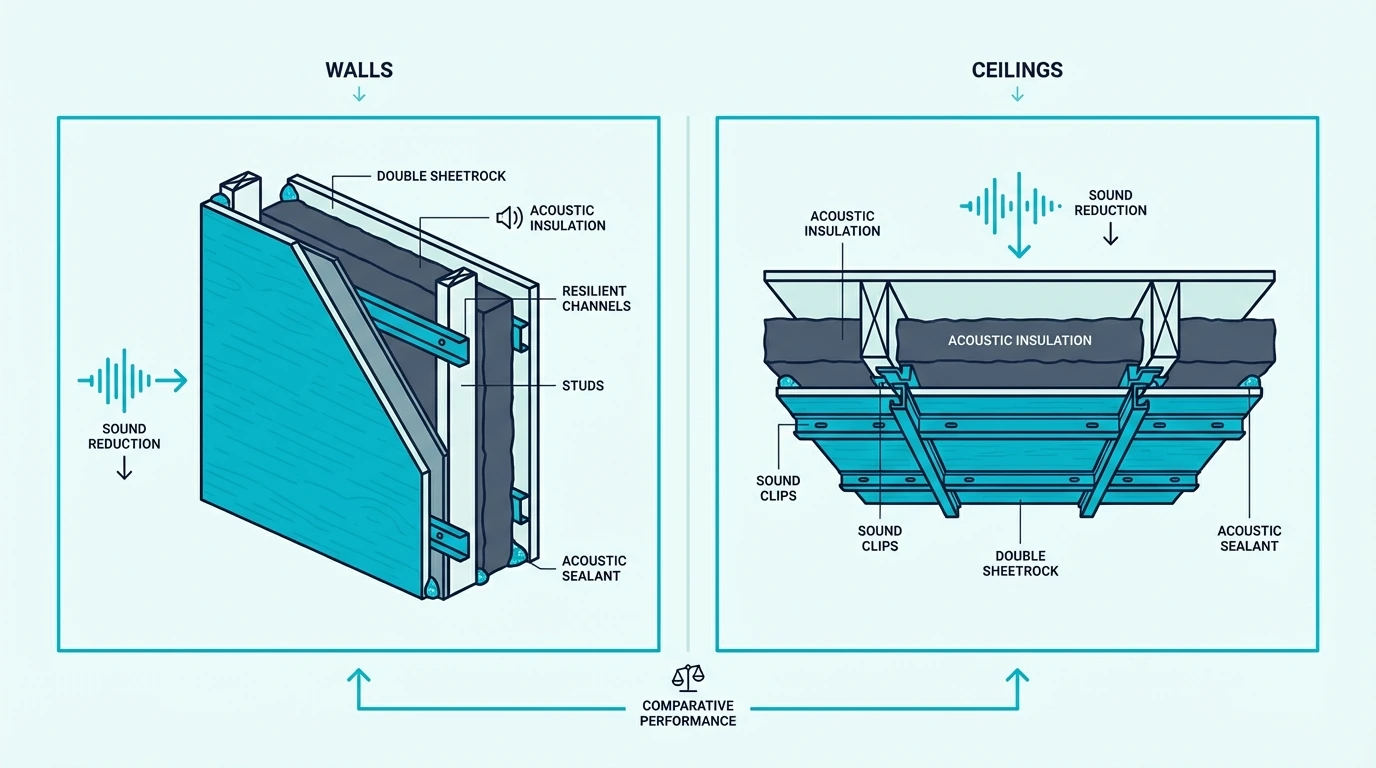
The answer depends on the noise path. Walls and ceilings can both benefit from better drywall, but buyers usually get the best results when they match the upgrade to the specific source instead of treating every surface the same way.
This is where many projects waste money by upgrading the easiest surface instead of the noisiest one. A smart drywall choice still needs the right target.
Walls: side-to-side airborne noise
Soundproof drywall helps most on walls when the main problem is room-to-room airborne noise like speech, TV audio, or general household sound coming through a shared partition. In those cases, a better drywall assembly can make a real difference because the wall is directly in the transmission path.
That is why bedroom walls, home office walls, and townhouse or condo party walls are such common candidates. If the issue is mostly side-to-side transfer, the wall upgrade often earns its keep faster than a ceiling-first strategy.
The code targets and lab results for those party walls are laid out in our townhouse party wall guide.
Ceilings: overhead noise and its limits
The same mass-and-damping logic applies overhead, but ceilings hit the limit of drywall-only thinking faster. Ceilings benefit most when the noise is coming from above and the joist cavity can be upgraded as part of the project. Basement ceilings, upstairs living-room bleed, and some duplex layouts are common cases where better drywall helps as part of a broader ceiling assembly.
But ceiling noise is also where buyers hit the limit of drywall-only thinking fastest. Footsteps and impact noise often point to the floor above, structural vibration, or a need for stronger isolation details instead of just a heavier board below.
For that specific use case, see how to soundproof a basement ceiling before assuming a better drywall panel is the whole fix.
When drywall alone is not enough
Whether the upgrade targets a wall or a ceiling, drywall alone falls short when the room has obvious leakage, flanking paths, or a problem driven by impact and structure-borne vibration rather than simple airborne sound. In those cases, drywall still contributes, but it cannot carry the whole project.
If your noise problem still revolves around a thin window, a hollow door, or an unsealed opening, fix that first. If it revolves around a high-vibration ceiling or a weak shared wall, drywall may need help from sealing, damping, insulation, or decoupling before the project feels like true progress.
If the real complaint is next-door speech or TV through one partition, compare your plan against how to soundproof a wall from noisy neighbours so you do not over-focus on drywall thickness alone.
The Bottom Line
Best sheetrock for soundproofing usually means standard 5/8-inch drywall for the baseline, specialty soundproof drywall when space or labor favors a premium panel, and double-layer builds when you want stronger value from a full assembly. The best choice is the one that fits the actual noise path, not just the most expensive board on the shelf.
If you are treating a shared wall, drywall choice matters. If the real leak is the opening, floor, ceiling, or full room shell, combine that drywall decision with the right supporting fix instead of expecting gypsum board alone to do all the work.
Frequently Asked Questions
Is soundproof drywall worth it?
Soundproof drywall is worth it when you need better performance with less build-up or less installation complexity than a double-drywall assembly. It is less compelling when the real weak point is leakage, flanking, or structural vibration that the premium panel cannot fix on its own.
Is two layers of drywall better than soundproof drywall?
Sometimes, yes. Two regular layers with damping compound can be a better value and a stronger upgrade when thickness is acceptable, while specialty soundproof drywall can win when space, labor, or cleaner installation matters more.
What drywall thickness is best for blocking sound?
For most standard builds, 5/8-inch drywall is the best practical starting point for blocking sound because it adds more mass than 1/2-inch drywall. It still works best as part of a complete system with sealing, insulation, and sometimes damping or decoupling.