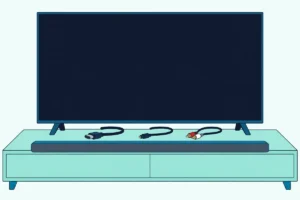
Can You Put a Soundbar Behind You? What Happens to the Sound
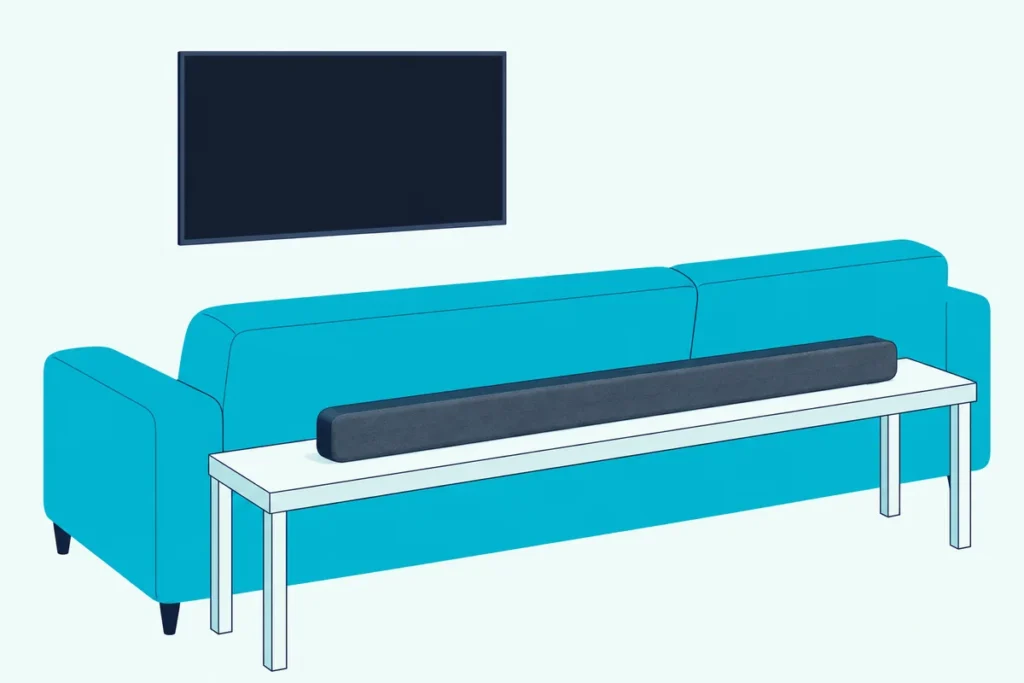
Can you put a soundbar behind you? It will play from there, but Sonos, Bose, Sony and Vizio all set the bar up at the TV, and none of their guides puts it behind the seats.
Set it on a sofa table behind your head and voices come from over your shoulder while faces talk on screen, and a bar facing you swaps left and right.
Keep the bar at the screen and put speakers behind the couch instead, and you get voices from the picture with effects from behind.
Sonos, Bose and Sony sell rear speakers for their bars, and Samsung’s HW-Q990D and Vizio’s V51x-J6 come with a pair in the box.
Here’s what a bar behind you does to dialogue, stereo and surround, what each maker says instead, and how to get sound from behind while the bar stays at the screen.
Can You Put a Soundbar Behind You?
That sofa-table setup will make sound, so the real question is what it costs you. You can put a soundbar behind you, but no maker checked here recommends it: Sonos says to place Arc Ultra “in front of and below your TV,” Bose prefers its Smart Soundbar below and in front of the TV with its front “facing into the room,” and Sony’s Bar 7 guide puts the bar “in an open space in front of the TV.”
Vizio’s V51x-J6 manual adds that the bar should be centered below the TV and close to ear level. Dolby’s own placement article gives the best spot for surround sound as “directly in front of your TV.”
Those rules all assume you face the bar, and the table shows what changes when you don’t.
| What changes | With the bar behind you | Whose guidance |
|---|---|---|
| Dialogue | Voices come from behind, while the center channel belongs at the TV | Dolby |
| Left and right | The sides swap if the bar faces you | Geometry; no maker covers it |
| Virtual surround | Built for seats that face the bar with nothing in between | Dolby |
| Atmos height effects | Need the bar at least 4 to 5 feet from your seat | Dolby |
The rest of this guide takes those rows one at a time, then turns to the speakers makers actually put behind the couch.
Does a Soundbar Have to Be in Front of the TV?
Every rule in that table assumes the bar sits at the screen. A soundbar has to be at the front of the room with the TV, though not always on the stand in front of it, because Dolby says a bar placed “off-center, too high, or too low” sounds like it’s coming from somewhere other than the action on screen.
Within that rule, you get some room. Sonos lets Ray and Beam mount above or below the TV, Bose allows above the TV as its second choice, and Dolby describes a media console below the TV or a wall mount, with the bar about level with your ears.
Behind the TV fails the same test: our guide to tucking the bar behind the TV explains why you can’t conceal it there and keep the sound it was designed for. If the space under the screen is taken, putting the soundbar above the TV is the option some makers allow.
For heights, gaps and stands, see our guide on where to put a soundbar in front of the seats. Its soundbar placement rules all start from the same idea: the bar and the picture work as a pair.
Get Studio Tips Weekly
Join 5,000+ creators getting acoustic treatment advice every week.
No spam. Unsubscribe anytime.What Happens to Dialogue When the Soundbar Is Behind You?
That “somewhere other than the action” effect shows up first in the voices. When the soundbar is behind you, dialogue comes from behind your head while the person talking is on the screen in front of you.
Dolby’s speaker guide says the center speaker, which mainly carries dialogue, belongs just below or above the TV “so that the sound is coming directly at you.” In a soundbar, the drivers that play the voices sit inside the bar itself, so wherever the bar goes, the voices go with it.
Try it with any scene where one person talks. With the bar under the screen, the voice sits on the face; move the bar behind the couch and it sits over your shoulder.
Dialogue settings target a different problem. Sonos describes Speech enhancement as making TV dialog easier to hear, and Samsung says its Voice enhance mode makes spoken dialog easier to hear, but neither guide says the setting changes where the voice comes from.
Do Left and Right Swap When the Soundbar Is Behind You?
Voices aren’t the only thing that turns around. If the bar faces you from behind, its left and right channels play on your right and left, because a bar’s left speaker sits on your left only when you face the bar.
Picture a friend standing behind your seat, facing your back, raising their left hand: it’s on your right. Turn the bar to face the back wall instead and the sides line up again, but then its front-firing speakers point at the wall rather than at you.
None of the soundbar manuals saved for this guide has a setting that swaps a bar’s left and right. The position settings they do have are for the extra speakers: Samsung’s HW-Q990D lets you set its two extra speakers to front or rear positions, and Vizio’s V51x-J6 has a Front setting for its two extra speakers placed next to the bar.
What Happens to Surround Sound and Dolby Atmos?
Swapped sides are only part of it for bars that create the effects on their own. Surround and Atmos effects lose the setup they’re built for, because Dolby designs virtual surround to wrap sound around you “without speakers behind or to the side of the listener,” with the bar below the TV and the seats facing it.
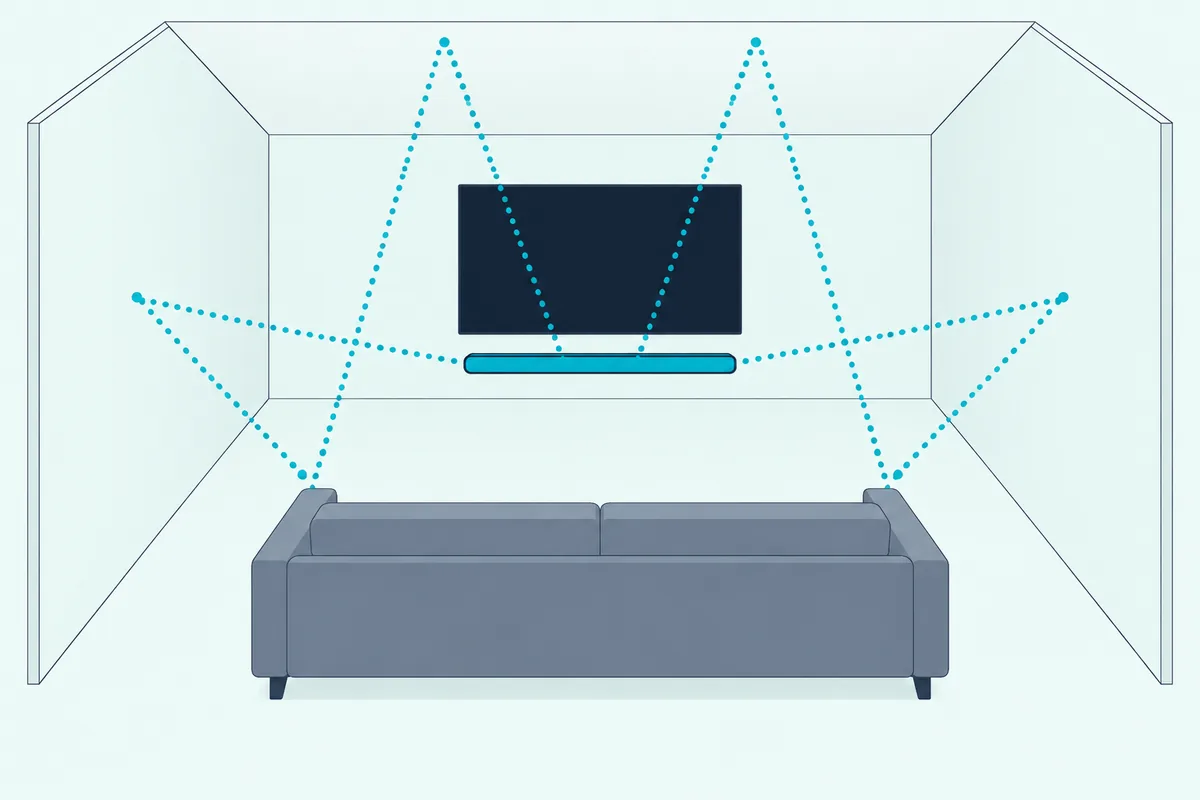
Dolby’s Atmos sound bar guide asks for nothing between the bar and the listening position. Side-firing speakers need a direct line to the side walls, with their first reflection reaching you unobstructed by furniture, and upward-firing drivers need a clear line to the ceiling.
Distance matters too: Dolby wants an Atmos bar at least 4 to 5 feet (1.2 to 1.5 meters) from your seat. A bar on a table right behind the cushions usually sits much closer than that.
Bose’s Smart Soundbar is built the same way, with up-firing and side-firing speakers that its guide says to keep unblocked for best sound quality. Bose also asks for the bar’s front to face into the room, which a bar behind the couch can only do by facing your back.
Can a Soundbar Go Behind the Couch?
That 4-to-5-foot rule is hard to meet from a sofa table. A soundbar can sit on a table behind the couch, but that spot works against three of Dolby’s rules: seats that face the bar, at least 4 to 5 feet of distance, and nothing between the bar and the listening position.
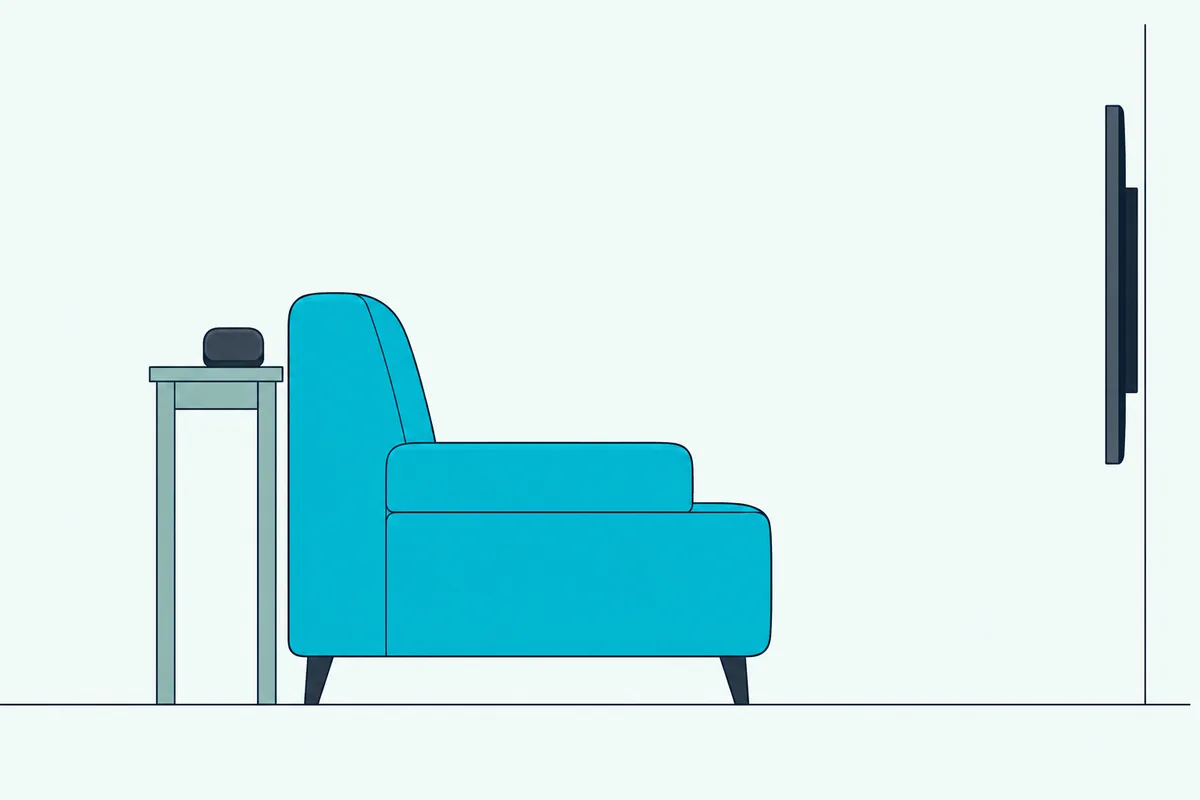
That spot does suit the speakers made for it. Sonos’s surround guidelines put the rear pair “behind and to the left and right of your usual listening position,” and Sony’s Bar 7 guide puts its rear speakers “in the rear as a pair, facing the viewing position,” at about ear height.
The listing photos for Sonos’s Era 100 SL pair even show the two speakers on a table behind a couch, with the bar under the TV. Sonos’s Ray guide adds a distance: each rear speaker about 10 feet from your favorite listening position, angled toward the seats.
If the couch is against the back wall, Vizio’s manual has an answer for rooms where rear placement isn’t practical. Its Front Surround Mode puts the two extra speakers next to the bar and uses DTS Virtual:X to fill in the effect.
How Do You Get Sound Behind You Without Moving the Soundbar?
Those rear speakers are the makers’ real answer to the question. You get sound behind you by adding the rear speakers your bar’s maker sells or includes, placed behind or beside the seats, while the bar stays at the TV.
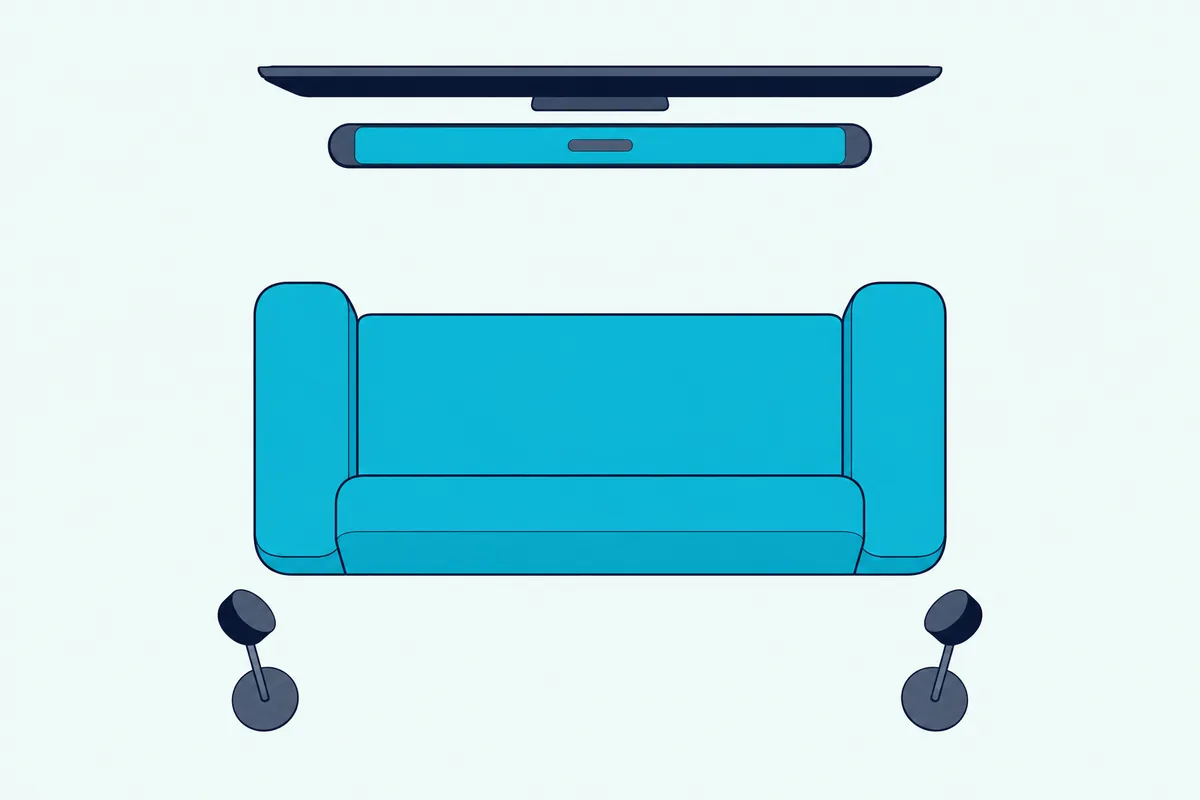
Dolby’s speaker guide describes surround speakers as sitting behind or to the side of the listener, creating a circle of sound. Here’s how each maker handles them:
| Maker | Rear speakers | Where the maker puts them | Extra settings |
|---|---|---|---|
| Sonos | Two speakers of the same model, such as Era 100 or Era 300; no soundbar is on its lists | Behind and to the left and right of your usual seat | Wireless, with line of sight to the bar |
| Bose | Surround Speakers 700 or Surround Speakers | Toward the back of the room | Personal Surround through Ultra Open Earbuds |
| Samsung | Included with the HW-Q990D | Behind the couch, 135 to 150 degrees from the front | Front or rear mode, Private Rear Sound, Sound Grouping |
| Sony | SA-RS5, optional for Bar 7 | In the rear as a pair, facing the seats, at ear height | Sound Field Optimization after a move |
| Vizio | Included with the V51x-J6 | In the rear of the room, with the subwoofer | Front and Dual modes |
That table holds the closest thing to a soundbar behind you that the makers checked here document. Samsung’s Private Rear Sound plays sound from the rear speakers only, with the bar and subwoofer silent, and Samsung’s HW-Q990D manual also lists Sound Grouping, which plays the whole mix through the bar and the rears for music in a large space.
Vizio’s Dual mode does something similar: Vizio’s V51x-J6 manual says both rear speakers then play the same left and right content as the bar. In Sound Grouping and Dual mode the bar keeps playing too, so the voices still come from the screen.
For a Sonos bar, the Sonos Era 100 SL pair gives you the two matching speakers Sonos asks for.
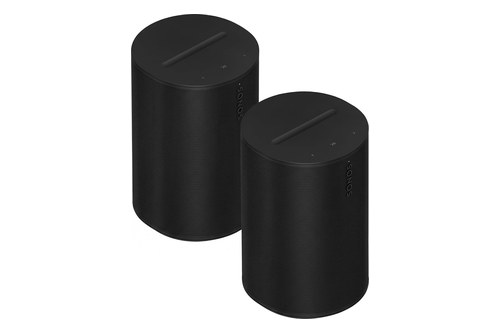
Sonos Era 100 SL pair
For a Sony bar, the Sony SA-RS5 is the rear pair its Bar 7 guide covers. For Samsung bars that shipped without rears, Burton Acoustix’s guide to Samsung rear speakers matches each rear kit to the bars it fits.
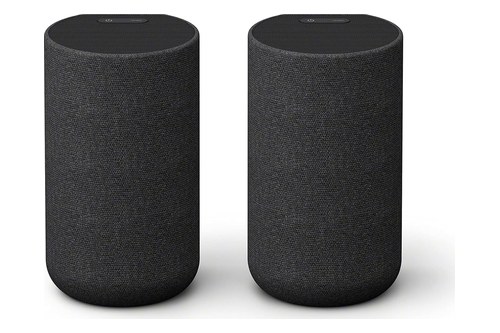
Sony SA-RS5
Where Should the Subwoofer Go When the Bar Stays in Front?
Rear speakers handle the effects, and that leaves the bass. The subwoofer gets the most freedom, since bass isn’t directional: Sony says its subwoofer “can be positioned as desired,” and Dolby’s speaker guide says it can go almost anywhere in a room.
Behind the couch is the exception Dolby’s soundbar setup guide names. It calls a subwoofer behind the listening position “typically not recommended” and suggests the front half of the room, close to the bar.
LG’s S95TR manual also says to install its wireless subwoofer close to the soundbar. Vizio’s V51x-J6 manual goes the other way and puts the subwoofer in the rear of the room, where its rear speakers connect to it by cable.
With makers split like that, your own manual is the one to follow. Our guide to placing the subwoofer behind the couch covers the crawl test and the spots to avoid.
The Bottom Line
Those makers agree on more than they disagree: the bar belongs at the TV, and the space behind the couch belongs to rear speakers. A soundbar behind you plays, but it moves the dialogue, can swap the sides and works against the surround it was built for.
So if you want sound from behind while watching films or a game, buy the rears your bar’s maker lists and leave the bar under the screen. If the couch is against the wall, look for a front mode like Vizio’s or Samsung’s before giving up on rear effects.
Frequently Asked Questions
Can a soundbar be used across the room?
It will play from the far wall, but all of it, dialogue included, then comes from behind the seats, the opposite of the “directly in front of your TV” spot Dolby gives for surround sound. It still needs your smart TV’s audio too, so a bar across the room means a long cable run or a wireless link that both the TV and the bar support. For music on its own that can be fine; for a movie, the voices and the faces end up on opposite sides of you.
Can you use a second soundbar as rear speakers?
Not in a Sonos system. Sonos’s lists of speakers that can serve Ray, Beam, Arc and Arc Ultra name models such as Era 100, Era 300 and One, and no soundbar appears on any of them. The other makers checked here pair their bars with rear speakers made for the job, such as Bose’s Surround Speakers 700 and Sony’s SA-RS5.
Can you put the rear speakers on a table behind the couch?
Yes, as long as they sit behind and to either side of your seat, which is where Sonos places them. Sony asks for its rear pair to face the seats at about ear height, and to run Sound Field Optimization again after any move. Sonos’s Ray guide suggests about 10 feet from your favorite listening position, so a table right behind the cushions is closer than Sonos suggests, though the listing photos for its Era 100 SL pair show exactly that setup.
Do wireless rear speakers need a power outlet?
Bose’s and LG’s do. Bose says its Surround Speakers 700 connect to the soundbar wirelessly but need power for their wireless receivers, with a speaker wire from each receiver to its speaker, and LG’s S95TR manual has you plug power cables into its wireless rear speakers. The Sony SA-RS5 listing describes a built-in battery.
Can you put a soundbar behind a projector screen?
A solid screen in front of the bar is the kind of obstruction Dolby asks you to keep out of the path between the bar and the listening position. Put the bar below the screen instead, the same spot Dolby gives for a TV, and keep it centered so the sound stays with the picture.