Can You Mount a Soundbar Above the TV? Yes, But… [2026]

If you’re asking can you mount a soundbar above the tv, the short answer is yes — but it’s not the ideal placement, and understanding why matters before you drill holes in your wall.
Every soundbar manufacturer designs their products to project audio from below or at the level of the TV screen, with center-channel drivers tuned for ear-level dialogue delivery and front-firing speakers aimed at seated listeners.
Mounting above the TV changes this projection angle, which can make dialogue sound like it’s coming from above the actors rather than from their mouths — a subtle but noticeable shift that affects immersion during movies and shows.
The problem is that many living room layouts force above-TV mounting as the only practical option.
A low-profile media console with no shelf space below the TV, a fireplace mantle setup where the TV sits high on the wall, or a bedroom where the TV mount leaves no room below for a soundbar.
Because these common situations make below-TV mounting impossible, knowing how to mount above the TV while minimizing the audio quality tradeoffs helps you get the best possible sound from a non-ideal position.
Whether you’re considering above-TV, below-TV, or wall-mounted placement, understanding how mounting position affects your soundbar’s audio projection helps you make the right choice.
You can avoid poor dialogue clarity and wasted Dolby Atmos performance from incorrect positioning.
Below, we’ll explain when above-TV mounting works, when it doesn’t, how to compensate for the audio tradeoffs, and the ideal mounting positions ranked from best to worst.
So you can pick the placement that delivers the best audio your room layout allows.
You can mount a soundbar above the TV, but below the TV is still the better position for natural dialogue and more predictable sound.
If above-TV placement is your only realistic option, angle the bar downward and keep it close to the screen.
The goal is not perfection. It is minimizing the compromise.
Above vs Below TV: How Placement Affects Sound
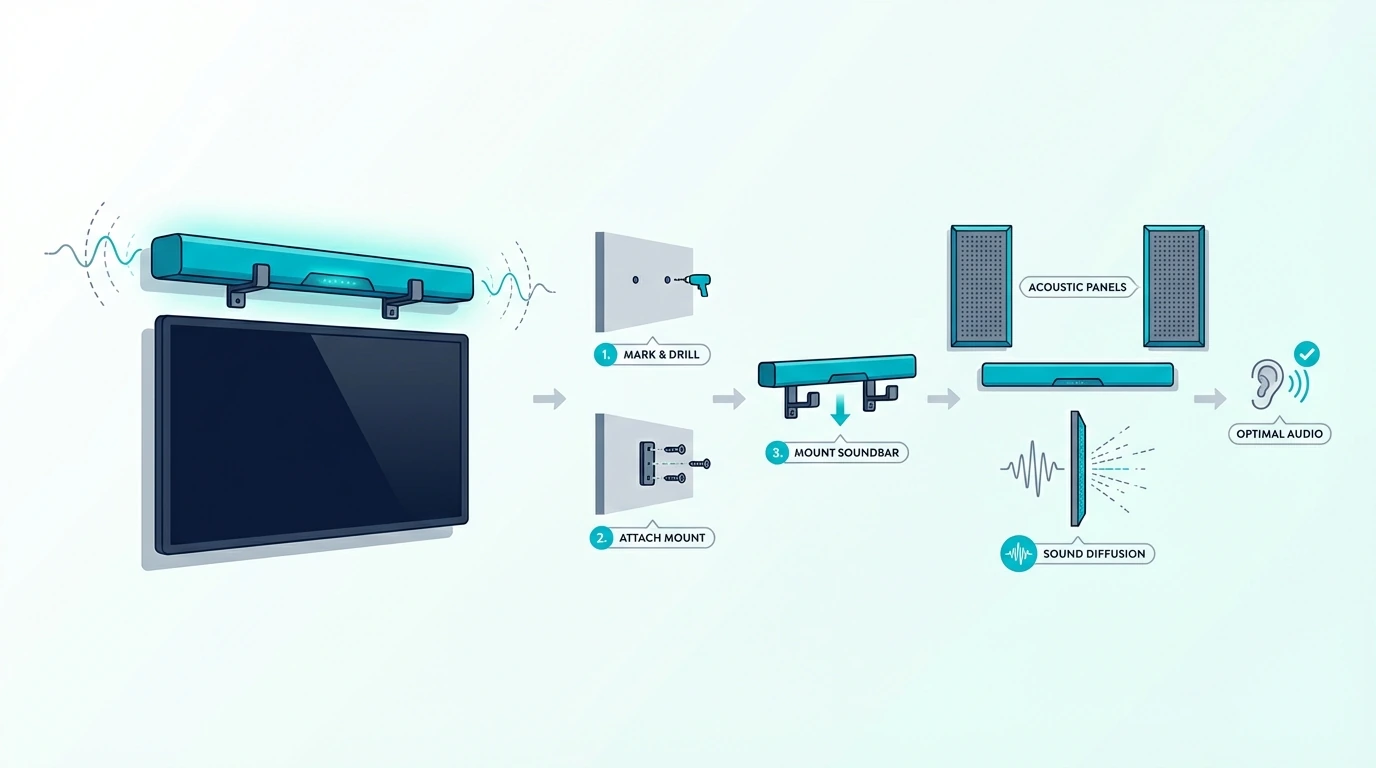
The difference between above-TV and below-TV soundbar mounting isn’t just aesthetic preference.
It directly affects how dialogue, surround effects, and Dolby Atmos height channels reach your ears, and understanding the physics helps you compensate if above-TV is your only option.
Why Below-TV Is Always Better
Soundbar manufacturers tune their speaker arrays for below-TV placement because seated listeners’ ears are typically at or slightly below TV center height.
Placing the soundbar 4-6 inches below the TV’s bottom edge puts the center channel and front-firing drivers at the optimal angle for dialogue to sound natural and anchored to the on-screen action.
The center channel driver (responsible for 70-80% of movie dialogue) projects most clearly when positioned at or slightly below ear level.
For large-room movie use, a current example is Polk Audio Signa S2 Sound Bar for Smart TV with Subwoofer, which is a strong fit for TV and movies when you want fuller bass.
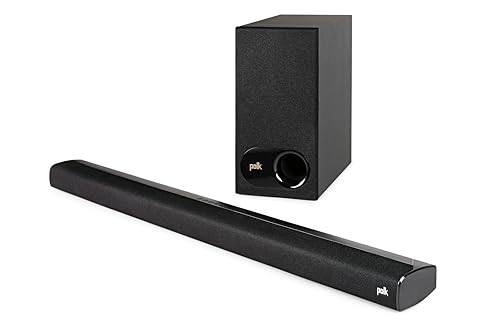
Polk Audio Signa S2 Sound Bar for Smart TV with Subwoofer
Below-TV placement also benefits Dolby Atmos soundbars with upward-firing drivers.
These drivers bounce sound off the ceiling to create overhead effects, and the standard below-TV height gives the sound the correct ceiling-bounce distance to arrive at your ears as convincing height audio.
Moving the soundbar higher shortens this ceiling distance, which can actually improve Atmos height effects in rooms with standard 8-foot ceilings.
Our soundbar fundamentals guide explains how soundbar speaker arrays work, and our soundbar vs surround sound guide covers how Dolby Atmos processing creates spatial effects.
When Above-TV Mounting Works
Above-TV mounting works acceptably in three scenarios: when you have no physical space below the TV (fireplace mantle, low console, bedroom wall mount).
You’re using a Dolby Atmos soundbar where the shorter ceiling distance for upward-firing drivers partially compensates for the non-ideal front-channel position.
When the TV is mounted high enough that the soundbar above it still sits near ear level for standing viewers in open-plan spaces.
If you must mount above the TV, angle the soundbar slightly downward toward your primary listening position.
Even a 5-10 degree downward tilt redirects the center channel and front drivers toward seated ear level, significantly improving dialogue clarity compared to a flat above-TV mount.
Many universal soundbar wall mounts include adjustable tilt brackets specifically for this purpose.
Our is a soundbar worth it guide evaluates the TV audio upgrade, and our soundbar to TV connection guide covers cable routing for wall-mounted setups.
Wall Mounting: Drywall, Studs, and Installation
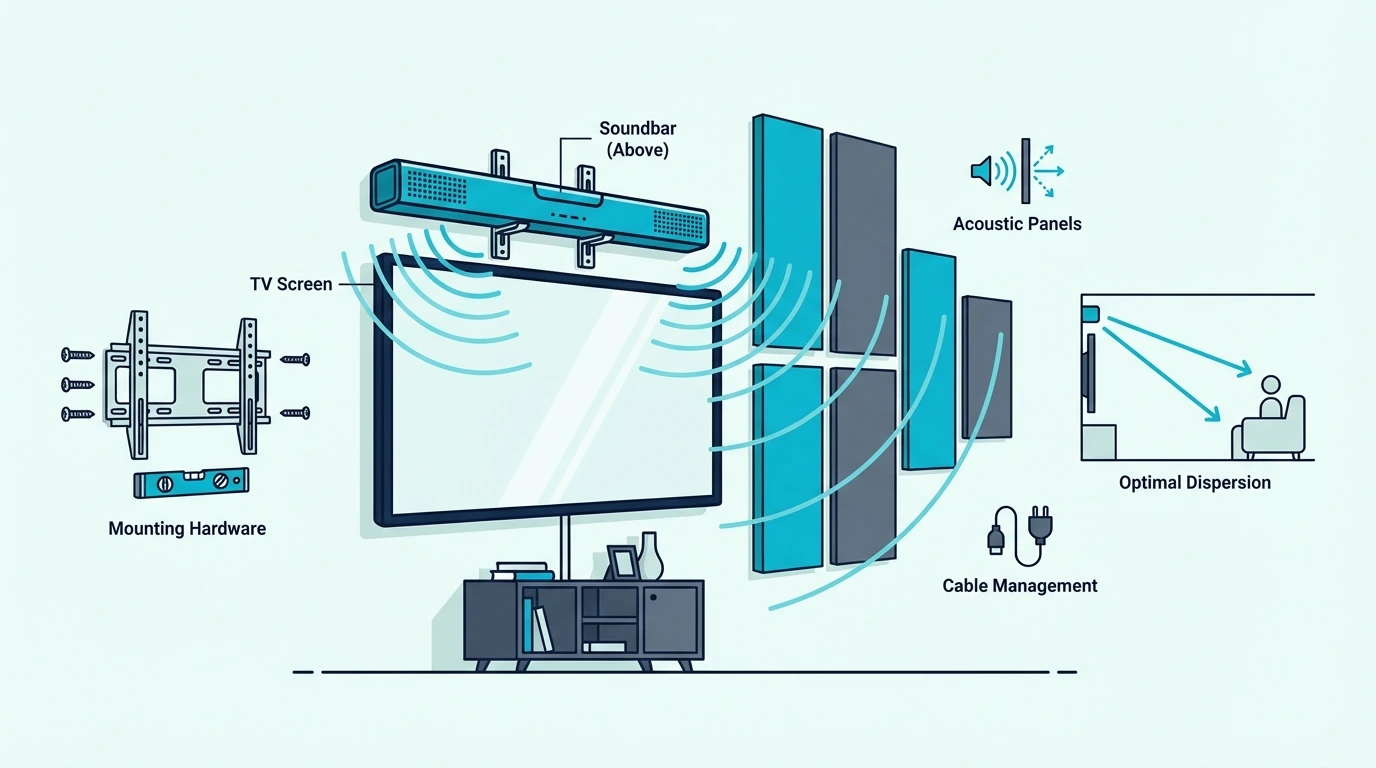
Whether you mount above or below the TV, the physical installation into your wall determines whether your soundbar stays securely mounted — and the answer to “can drywall hold a soundbar” depends entirely on your mounting hardware.
Can Drywall Hold a Soundbar?
Standard drywall (1/2-inch thick) can hold most soundbars (typically 5-15 pounds) when you use proper drywall anchors rated for the weight.
But mounting into wall studs is always more secure and recommended for heavier soundbars or setups where the soundbar might get bumped.
Toggle bolts (also called butterfly anchors) are the strongest drywall-only mounting option, rated for 50+ pounds in 1/2-inch drywall, which far exceeds any soundbar’s weight.
Use a stud finder to locate wall studs behind your drywall — if studs align with your soundbar’s mounting bracket holes, wood screws into studs provide the strongest possible mount.
If studs don’t align, toggle bolts into drywall are your next best option — avoid plastic expansion anchors for overhead mounting because they can slowly pull out under sustained weight.
Our HDMI vs optical guide explains connection options for wall-mounted soundbars, and our do you need a soundbar for smart TV guide explains when your TV needs external audio.
Ideal Mounting Distance and Position
The ideal wall-mounted soundbar position is 4-6 inches below the TV’s bottom edge — close enough to feel visually integrated with the screen but far enough for proper ventilation and cable access behind both devices.
For above-TV mounting, maintain the same 4-6 inch gap above the TV’s top edge.
For this kind of small-room, dialogue-first setup, a current example is WALI Universal Soundbar Mount for TV, which is a strong fit for Budget TV speaker upgrade.
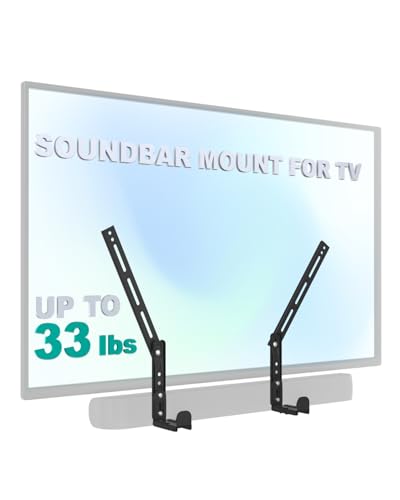
WALI Universal Soundbar Mount for TV
For large-room movie use, a current example is Amazon Fire TV Soundbar, which is a strong fit for Balanced TV and movie upgrade.
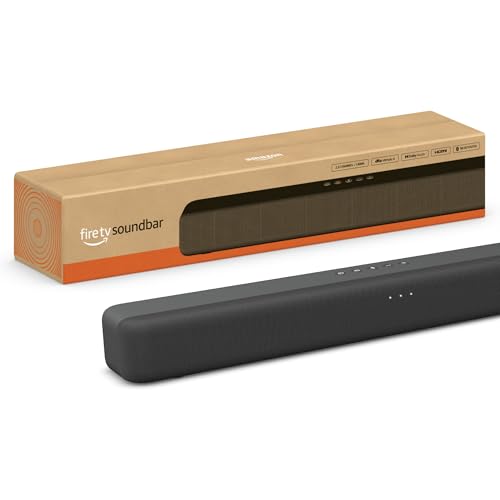
Amazon Fire TV Soundbar
Our 2.1 vs 5.1 soundbar guide explains channel configurations, and our do you need a subwoofer with a soundbar guide covers when adding a sub matters for your setup.
Should Soundbars Be Mounted to TV or Wall?
Some soundbars include TV-mount brackets that attach the soundbar directly to the TV’s VESA mount.
This keeps the soundbar and TV as one unit, which is convenient for swivel mounts but adds weight to the TV arm and limits soundbar placement to directly below the screen.
Wall mounting separately gives you more positioning flexibility and doesn’t stress your TV mount with additional weight.
For most setups, wall mounting the soundbar independently 4-6 inches below the TV delivers the best combination of optimal audio placement, visual integration, and secure installation.
TV-mount brackets work best for smaller, lightweight soundbars under 8 pounds on robust full-motion TV mounts.
Our soundbar vs speakers comparison covers alternative audio setups, and our soundbar vs home theater comparison explains when full systems outperform wall-mounted soundbars.
Get Studio Tips Weekly
Join 5,000+ creators getting acoustic treatment advice every week.
No spam. Unsubscribe anytime.The Bottom Line
Mount your soundbar below the TV whenever possible — it’s the position every soundbar is designed and tuned for, delivering the best dialogue clarity and surround performance.
If above-TV is your only option, angle the soundbar downward toward your listening position, choose a Dolby Atmos model to benefit from the shorter ceiling distance for height effects.
Use toggle bolts for drywall mounting or wood screws into studs for the most secure installation.
Our soundbar vs receiver comparison covers when AV receivers with separate speakers outperform mounted soundbar setups, and our Sonos vs Bose soundbar comparison covers premium wall-mountable options.
Frequently Asked Questions
How far below a TV should a soundbar be mounted?
Mount the soundbar 4-6 inches below the TV’s bottom edge — close enough to look visually integrated with the screen but far enough for ventilation, cable access, and optimal audio projection toward seated listeners at ear level.
Can drywall hold a soundbar?
Yes — standard 1/2-inch drywall can hold any soundbar (5-15 lbs) when using toggle bolts rated for 50+ pounds.
For the most secure mount, find wall studs with a stud finder and use wood screws directly into studs instead of drywall anchors.
Should soundbars be mounted to TV or wall?
Wall mounting independently gives you more positioning flexibility and better audio placement than TV-mount brackets.
TV-mount brackets work for lightweight soundbars under 8 pounds on robust full-motion TV mounts, but wall mounting separately is the more secure and acoustically optimal approach.
Can I mount a soundbar on the ceiling?
Technically yes, but it’s impractical — ceiling mounting reverses the soundbar’s designed audio projection direction, making dialogue sound like it comes from above rather than from the screen.
Above-TV wall mounting with a downward tilt is a much better alternative if below-TV placement isn’t possible.

