2.1 vs 5.1 Soundbar: How Much Surround Do You Actually Need?
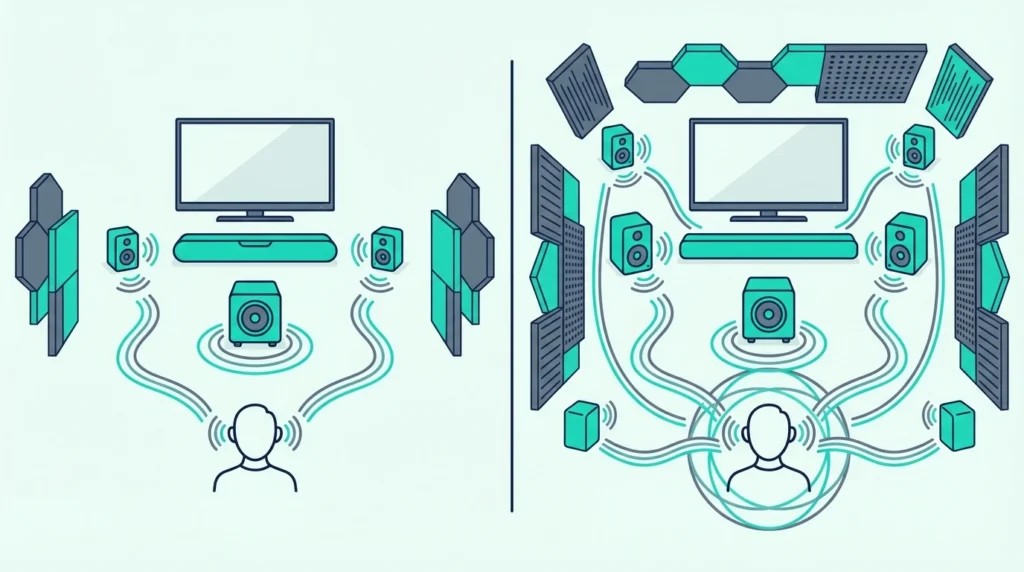
The 2.1 vs 5.1 soundbar comparison looks like a simple channel-count contest, but most buyers get it wrong.
They skip the steps in between and ignore what their room can actually support.
A 2.1 soundbar is a two-piece system that fires all audio forward and adds a wireless subwoofer for bass.
A 5.1 soundbar adds a center channel for dialogue plus two rear speakers that put sound behind and beside you.
That jump sounds like a straight upgrade, but it comes with real costs.
You need more hardware, rear-speaker placement, power outlets behind the couch, and a larger budget.
Those costs only pay off when the room and the content actually use the extra channels.
Below, we break down what each number means, what each layout sounds like with real content, where 3.1 fits as the middle step, and what people regret after choosing the wrong one.
A 2.1 soundbar gives you stereo plus bass in a simple two-piece setup. A 5.1 soundbar adds a center channel for dialogue and two rear speakers for surround.
The center channel alone is the single biggest upgrade most people notice, and you can get that at 3.1 without rear speakers. Only jump to 5.1 if you watch a lot of movies or game with spatial audio, your room has space behind the couch, and you are willing to manage the extra hardware.
What Do the Numbers Actually Mean?
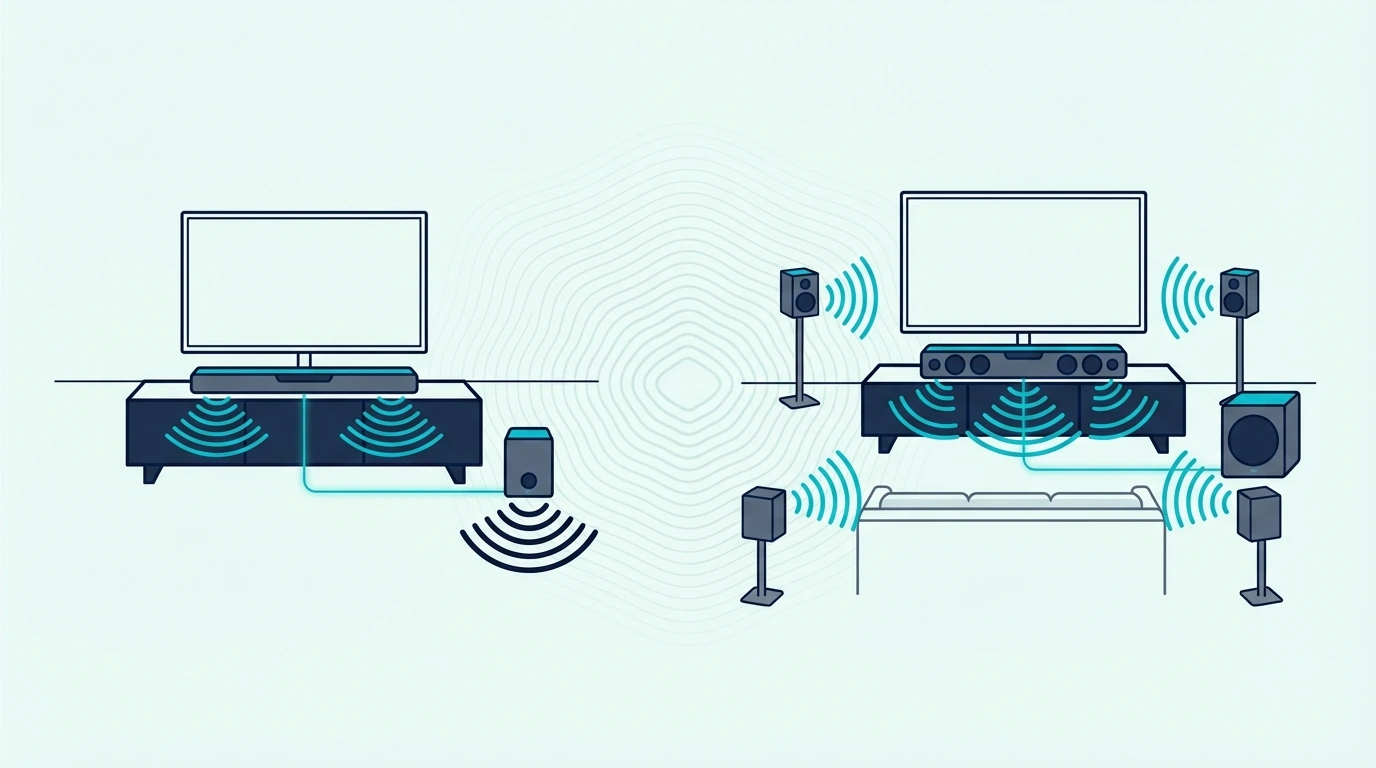
That jump from 2.1 to 5.1 only makes sense once you know what each number buys you. The notation is simpler than it looks, and every digit maps to real hardware in the room.
| Config | Front channels | Center | Rear surrounds | Subwoofer | Typical pieces |
|---|---|---|---|---|---|
| 2.1 | Left + Right | No | No | Yes | 2 (bar + sub) |
| 3.1 | Left + Right | Yes | No | Yes | 2 (bar + sub) |
| 5.1 | Left + Right | Yes | Left + Right rear | Yes | 4 (bar + sub + 2 rears) |
The first number is the speaker channel count. The .1 is the subwoofer, and both 2.1 and 5.1 include one, so bass performance between them is comparable when the sub quality is similar.
If you want the broader terminology explained, including the .2 Atmos suffix, our what is a soundbar hub covers the basics behind these formats.
What a 2.1 Soundbar Delivers
A 2.1 soundbar routes all audio through left and right front channels.
The wireless subwoofer handles bass separately.
Dialogue, music, effects, and ambient sound still share those same two front drivers.
That is why a model like the Samsung HW-C450 2.1ch Soundbar with Wireless Subwoofer feels like such a direct upgrade over TV speakers. Two pieces, one cable, and the bass problem is solved immediately.
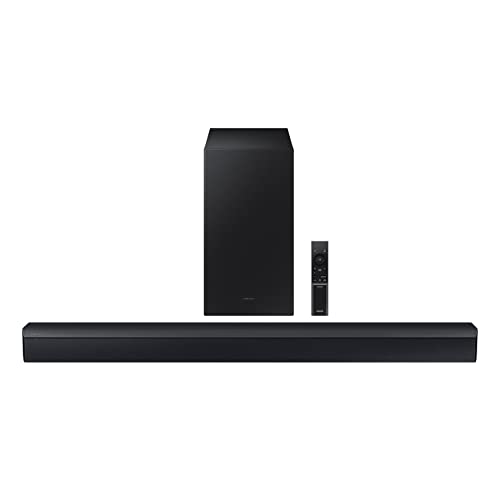
Samsung HW-C450 2.1ch Soundbar with Wireless Subwoofer
The limitation is that everything still comes from the front. There is no way to create the sensation of sound moving behind you because there are no speakers behind you.
What 5.1 Adds on Top
A 5.1 system takes that same front stage and adds two things.
You get a dedicated center channel for dialogue and two rear surround speakers for spatial effects.
The center channel isolates speech from everything else.
Voices stay clearer during loud action scenes instead of competing with explosions for the same drivers.
The rear speakers are the real differentiator.
They sit behind or beside the listening position and handle directional audio mixed specifically for those channels.
When a helicopter pans across the screen or rain fills a scene, that spatial dimension is physically impossible to replicate from a front-only bar.
What Will You Actually Hear Differently?

Now that the hardware difference is clear, the real question is whether you will notice it with the content you actually watch. The answer depends more on your habits than on the spec sheet.
Movies and Streaming Shows
Movies are where 5.1 earns its keep.
Most films since the DVD era have been mixed in at least 5.1.
That means the rear channels were designed for speakers behind you, not an algorithm guessing where to place ambient noise.
Streaming services like Netflix, Disney+, and Apple TV+ pass 5.1 Dolby Digital on most titles.
A 2.1 system collapses those rear channels into the front stereo mix, so you lose the spatial effect entirely.
For casual TV shows and dialogue-heavy content, the center channel matters more than the rears. Most everyday TV has simpler audio mixes where surround activity is minimal.
Gaming
Gaming is the second-strongest argument for 5.1. Modern games output full spatial audio with positional cues that map directly to physical speaker locations.
With 5.1, footsteps behind your character come from the rear speakers. Ambient environmental audio creates a sense of place that a front-only bar cannot match.
In competitive multiplayer, that directional awareness becomes a practical advantage.
With 2.1, all of that positional information collapses into the front image. You still hear the sound, but you lose the spatial location.
Music
Music is mixed in stereo. A 2.1 system plays it exactly as it was recorded, with the subwoofer adding low-end depth.
A 5.1 system playing stereo music usually disables or minimizes the rear channels. Some systems offer a music surround mode, but most listeners prefer pure stereo for fidelity.
If music is your primary use, the 5.1 investment does not improve the experience.
Spend that budget on a better 2.1 bar instead.
Use our how to choose a soundbar guide to match the format to your listening habits.
Get Studio Tips Weekly
Join 5,000+ creators getting acoustic treatment advice every week.
No spam. Unsubscribe anytime.Is 3.1 the Smarter Middle Step?
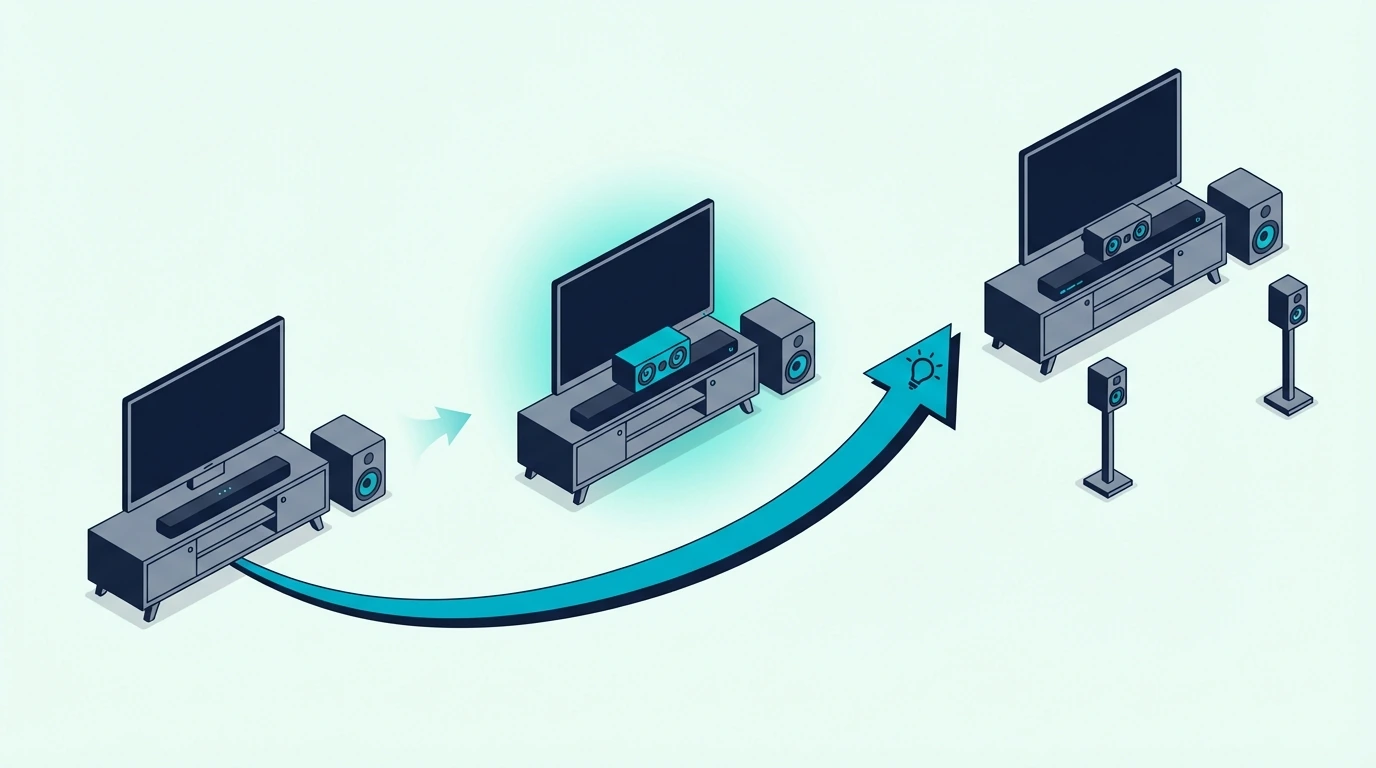
Most 2.1 vs 5.1 articles skip the middle of the ladder entirely, but 3.1 is where most buyers should actually stop and think before jumping all the way to surround.
The Center Channel Is the Biggest Single Upgrade
The center channel is the single most noticeable improvement when stepping up from a 2.1 bar. It isolates dialogue from effects and music, which means voices stay clear during loud scenes without needing to constantly adjust volume.
That is why a bar like the Polk Audio Signa S4 3.1.2ch Soundbar with Wireless Subwoofer and Dolby Atmos solves the most common TV audio complaint — muddy dialogue — without asking you to place rear speakers or manage extra hardware.
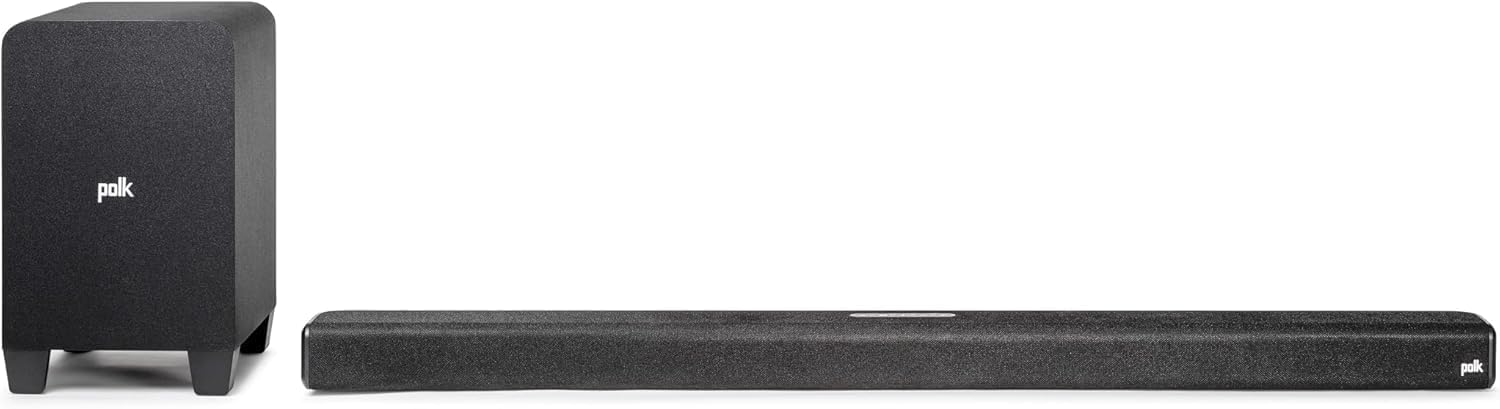
Polk Audio Signa S4 3.1.2ch Soundbar with Wireless Subwoofer and Dolby Atmos
If your main frustration is hearing what people say during movies, 3.1 fixes that directly. The rear speakers in 5.1 do not improve dialogue on their own — they add surround.
When 3.1 Is Enough
For households where most viewing is TV shows, news, streaming dramas, and casual movie nights, 3.1 delivers the upgrade that actually matters without the rear-speaker overhead.
Our 3.1 vs 5.1 guide explains exactly when those rear speakers start earning their keep, while how to choose a soundbar helps if you are still deciding how much system you actually need.
When You Should Skip Straight to 5.1
Skip 3.1 and go straight to 5.1 only if you already know you want surround for movies and gaming.
Your room also needs to support rear-speaker placement.
This is not the move if you are only chasing clearer dialogue.
The surround channels add a dimension that front-only bars cannot replicate.
But they only pay off when the room lets them work properly.
Does Your Room Even Support 5.1?
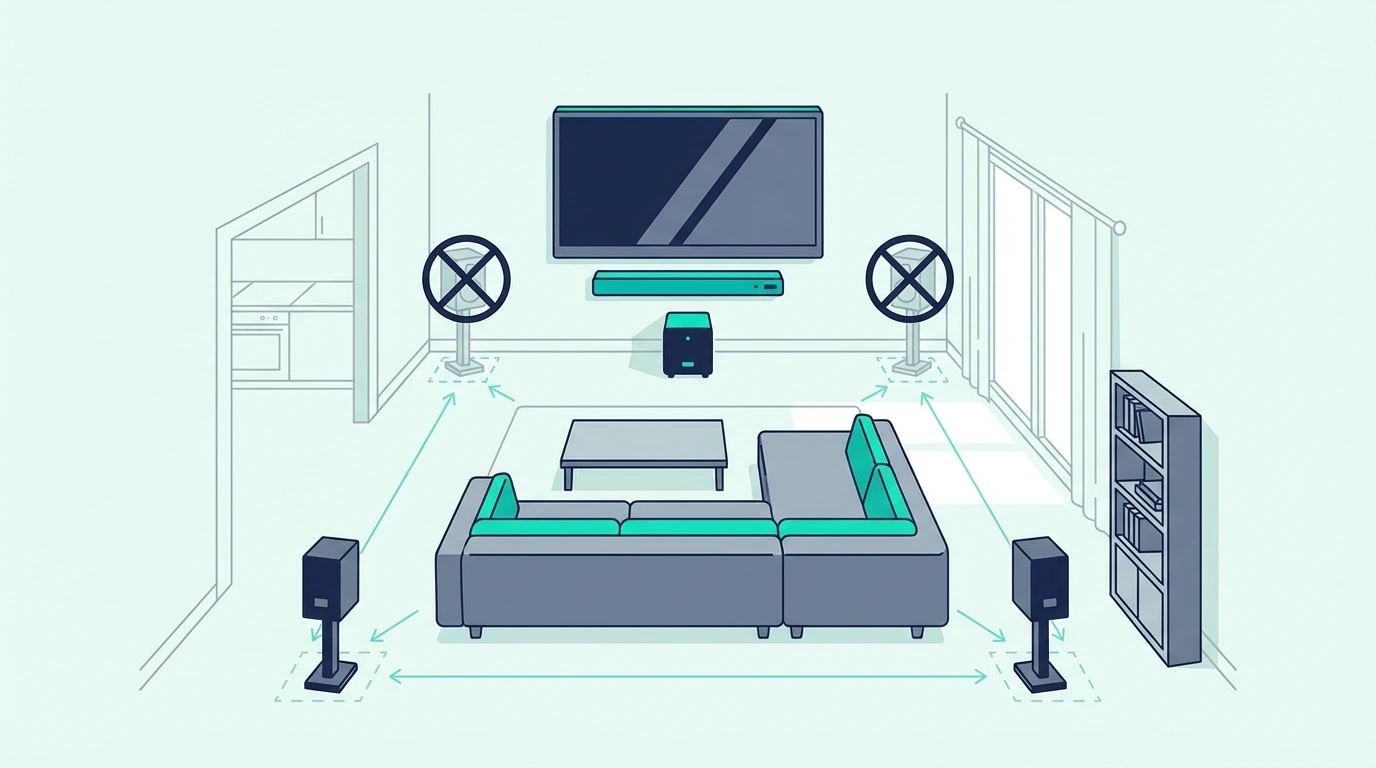
The room question is where most bad 5.1 purchases happen. A system that sounds incredible in a proper setup can disappoint completely in a room that fights the format.
Rear Speakers Need Real Space Behind the Couch
Rear speakers should sit at roughly ear level, two to three feet behind and slightly to the sides of the listening position. They need enough separation from the front stage to create directional cues that feel distinct, not blurred.
If the couch is against the back wall, there is nowhere useful to put them. If the room opens on one side or doubles as a kitchen and living area, the surround field breaks down.
Small Rooms Push Toward 2.1 or 3.1 — or Virtual 5.1
In rooms under roughly 150 square feet, rear speakers often sit too close to the listener.
The surround effect loses much of its spatial punch.
The front bar and center channel still work fine.
But the rears often add less than they cost.
For this kind of small-room, dialogue-first setup, a strong 2.1 or 3.1 bar is usually the cleaner fit.
You avoid rear-speaker placement compromises while still improving TV audio in an obvious way.
If you still want model ideas for tighter spaces, our best soundbar for small room guide is the better next stop.
Larger Rooms and Dedicated Media Rooms Are Where 5.1 Shines
Rooms with at least eight feet of seating distance from the screen and open space behind the couch give 5.1 systems room to breathe.
That is when you get real surround separation.
A system like the Sony BRAVIA Theater System 6 shows what a proper 5.1 setup sounds like when the room cooperates.
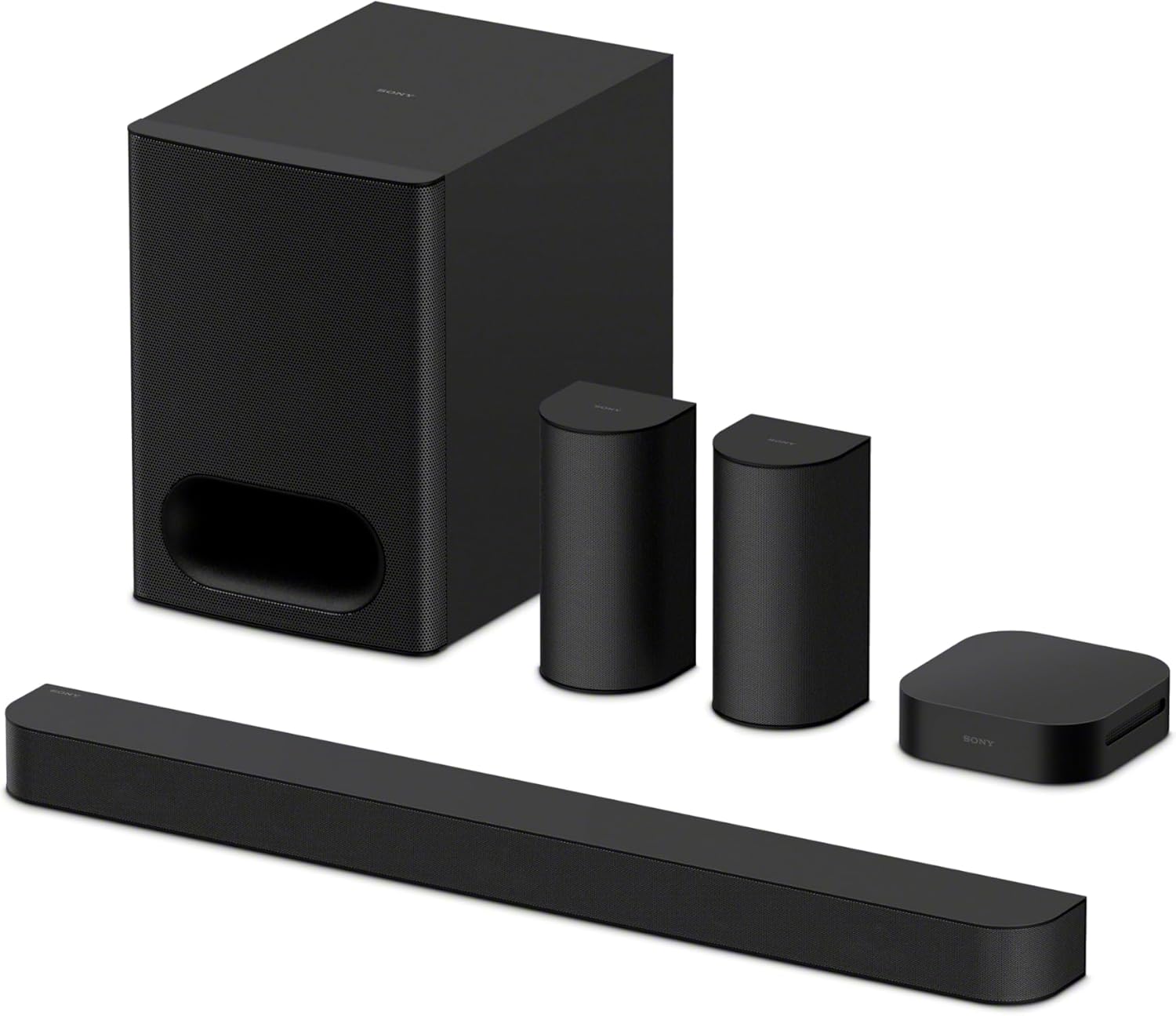
Sony BRAVIA Theater System 6
That kind of room is also where the connection matters.
Both 2.1 and 5.1 benefit from an HDMI ARC or eARC connection to pass the full audio signal.
But 5.1 content needs at least Dolby Digital passthrough.
Otherwise it gets downmixed to stereo before it reaches the bar.
What About Atmos and Height Channels?
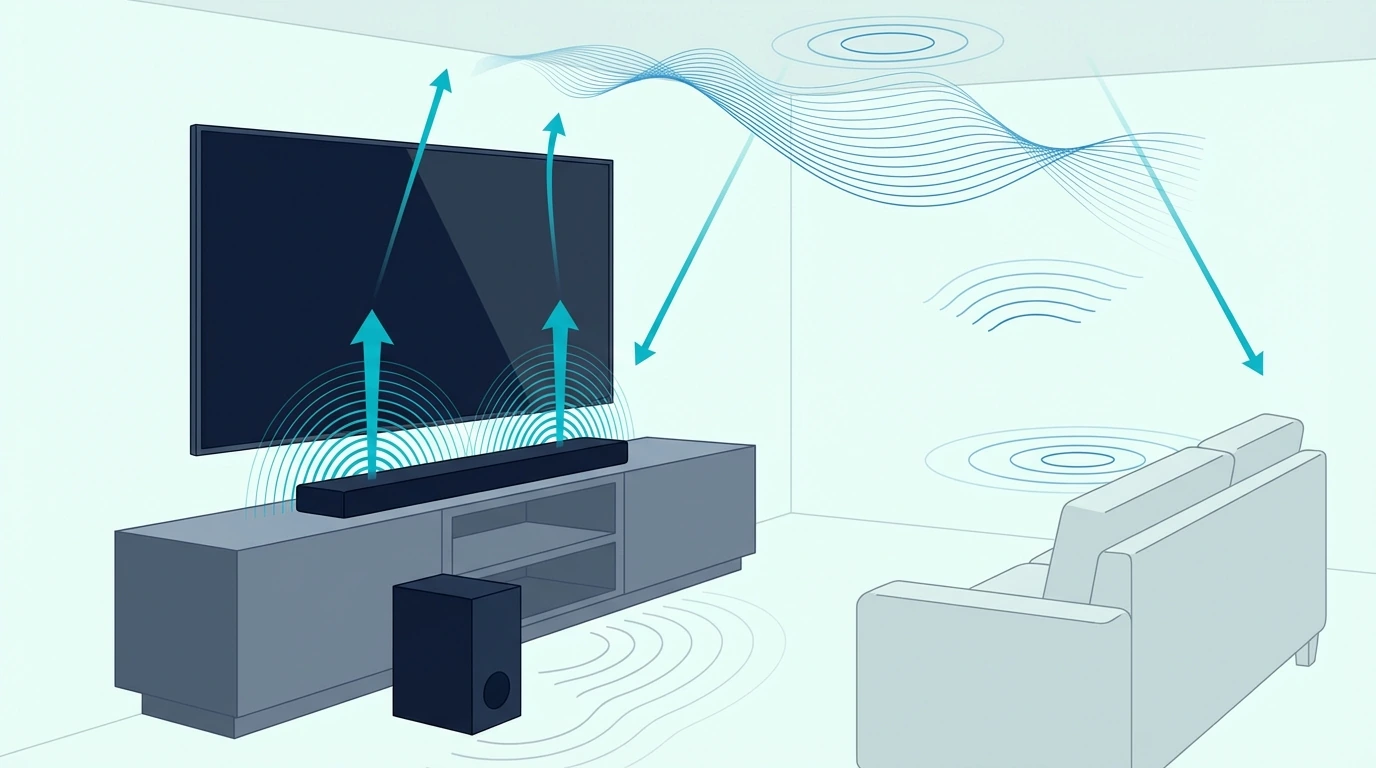
Once you start shopping for 5.1, you will notice that many soundbars today are labeled 5.1.2 or 3.1.2 instead of flat 5.1. That third number matters, and it changes the math.
The Third Number Is the Height Channel Count
The .2 at the end means two upward-firing drivers that bounce sound off the ceiling to create overhead audio effects. Dolby Atmos and DTS:X use those height channels for things like rain, aircraft, and overhead ambient sound.
A 5.1.2 system has the full surround layout plus two height speakers.
A 3.1.2 system has a center channel, subwoofer, and height speakers but no rear surrounds.
A 2.1.2 system has stereo, a sub, and height speakers but no center channel or rears.
Atmos Works Best on Top of a Good Base
The height effect is an enhancement, not a replacement. Atmos overhead audio is most convincing when the base surround layout is already solid.
A 5.1.2 system gives you the full spatial picture.
You get surround behind you and height above you.
A 3.1.2 system like the Polk Signa S4 skips the rear speakers but still gives you the center channel and Atmos processing.
That makes it a strong middle ground for rooms that cannot support rears.
If Atmos is a priority, our best Dolby Atmos soundbar guide shows which models are worth paying for.
What Do People Regret After Choosing Wrong?
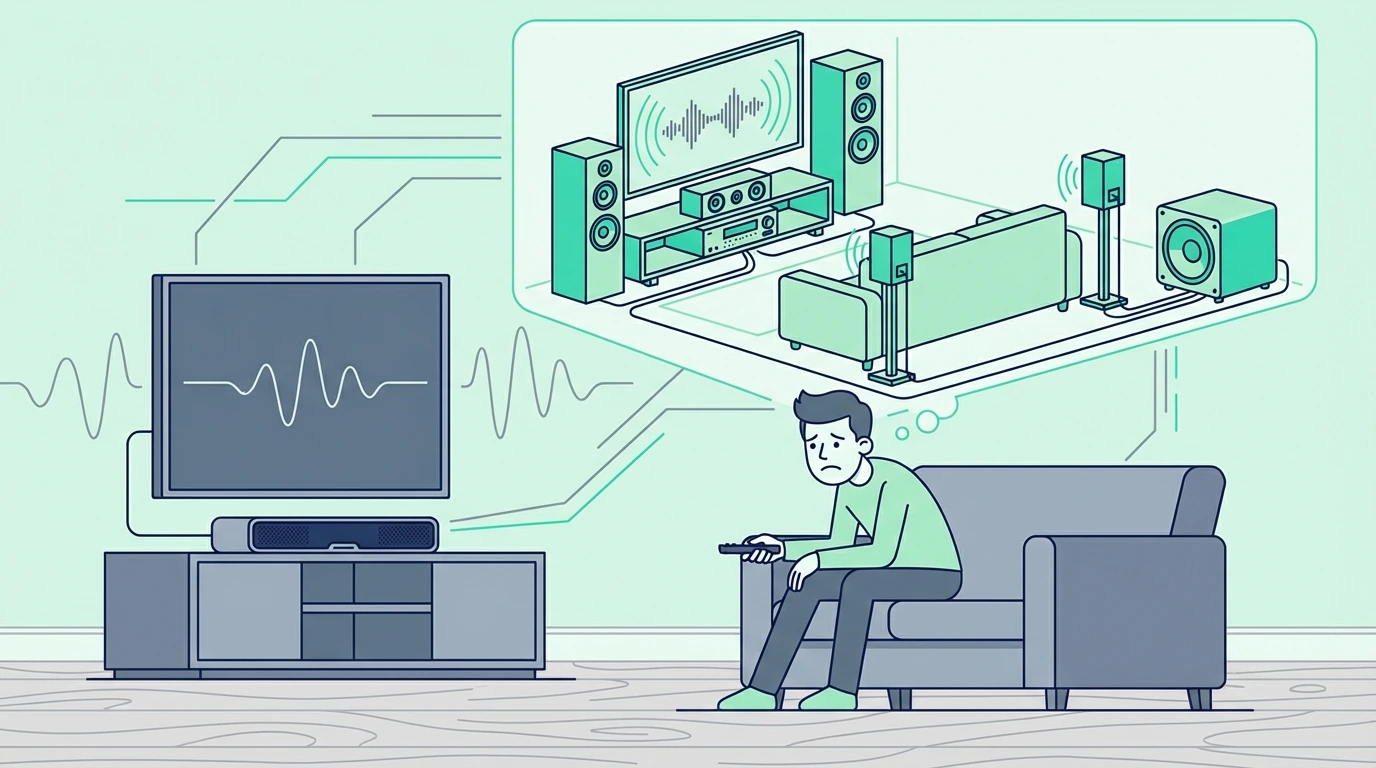
The fastest way to choose well is to understand what goes wrong on both sides of this decision.
5.1 Regret: Rear Speakers That Never Get Used Properly
The most common 5.1 regret is buying surround for the idea of it, then living with rear speakers that sit on the floor behind the couch.
Sometimes they get unplugged because someone trips on the power cord.
In too-small rooms, they never create the spatial effect they were designed to deliver.
A 5.1 system that is not set up properly can sound worse in practice than a clean 2.1 bar that fits the room honestly. The hardware only works when the room gives it what it needs.
2.1 Regret: Wishing You Had Clearer Dialogue or Surround
The most common 2.1 regret is realizing later that dialogue still gets buried during loud scenes.
A center channel would have fixed that.
The second regret is watching immersive movies and knowing the surround information is there but collapsed into two front channels.
If dialogue is the pain point, 3.1 is usually the direct fix. If surround immersion is the pain point, 5.1 is worth the room and hardware commitment. A common but misguided shortcut is to add a second soundbar behind the couch — a second bar will play late, not in true surround channels, because two soundbar systems do not share processing or timing — that is why 5.1 with same-brand wireless rears is the real path, not a duplicate bar.
The One Question That Prevents Both Mistakes
Before you buy, ask whether your room and your habits support the extra hardware. If yes, 5.1 rewards you.
If no, a clean 2.1 or 3.1 bar will sound better in daily use than a 5.1 system that never gets set up the way it was designed to work.
The Bottom Line
A 2.1 soundbar is a simple, honest TV upgrade with real bass. A 5.1 soundbar adds dialogue clarity and surround immersion that changes how movies and games sound, but only when the room supports it.
Most buyers should start by asking whether they need the center channel first. If yes, a 3.1 bar solves the most common complaint without rear-speaker overhead.
If you also want surround and your room cooperates, 5.1 is the format that delivers it.
Our how to choose a soundbar guide covers the format decision.
Our best soundbar guide helps once you know which class fits.
Frequently Asked Questions
What Is the Difference Between 2.1, 3.1, and 5.1 Soundbars?
A 2.1 has left, right, and a subwoofer.
A 3.1 adds a dedicated center channel for dialogue.
A 5.1 adds that center channel plus two rear surround speakers.
Each step adds specific hardware for a specific job. Our 3.1 vs 5.1 guide covers when rear speakers matter, and how to choose a soundbar helps you match the layout to your room.
Is It Worth Getting a 5.1 Soundbar?
A 5.1 soundbar is worth it if you watch a lot of movies or game with spatial audio.
It also needs a room with space behind the couch for rear speakers.
The surround effect adds a dimension that front-only bars cannot replicate.
It is not worth it if your room is small, the couch is against the wall, or most of your viewing is casual TV and music.
In those cases, a 2.1 or 3.1 bar delivers better daily value.
What Is the Difference Between 5.1 and 2.1 Dolby Atmos?
The channel count describes the horizontal speaker layout. Dolby Atmos adds a vertical dimension with upward-firing drivers that bounce sound off the ceiling.
A 5.1.2 system has the full surround layout plus two height speakers. A 2.1.2 system has stereo plus a sub plus two height speakers but no center channel or rear surrounds.
Atmos overhead effects work best on top of a solid base layout.
Is a 5.1 or 2.1 Soundbar Better?
Neither is universally better. A 5.1 soundbar is better for movie immersion, gaming, and rooms that support rear speakers.
A 2.1 soundbar is better for simplicity and tighter budgets.
It also makes more sense for music and small rooms.
For most people, 3.1 is the smarter middle step unless they specifically want and can support rear surround.
Do I Need 5.1 for Netflix and Disney+?
Most Netflix and Disney+ content is available in 5.1 Dolby Digital or Dolby Digital Plus.
A 5.1 soundbar will decode all five channels as intended.
A 2.1 bar will still play the content, but it downmixes the surround channels into the front stereo image.
That means you lose the full spatial mix.