Acoustic Treatment

Make the room easier to hear, speak, record, or listen in.

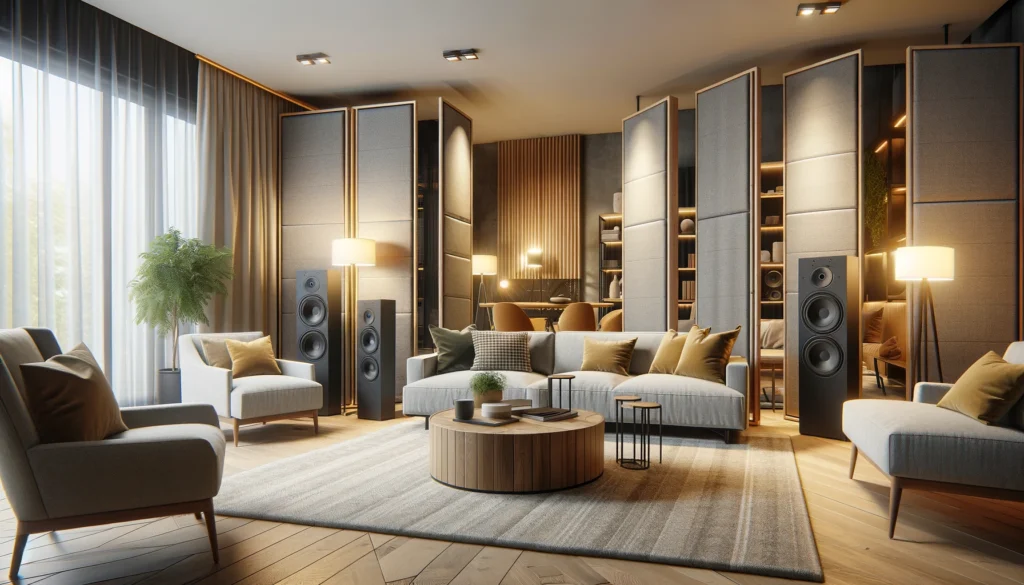
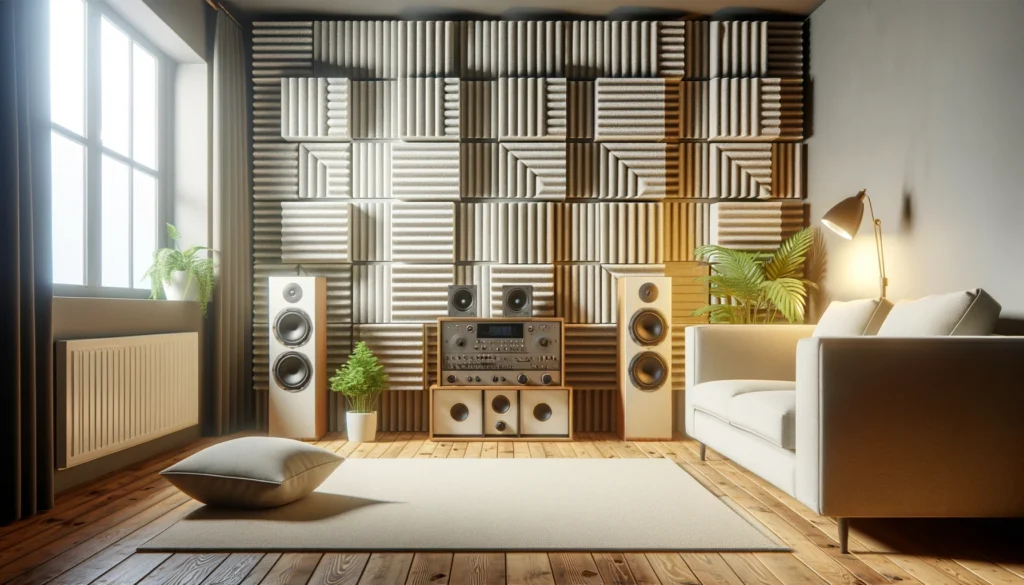
Acoustic treatment is not only for music rooms. Offices, conference rooms, podcast corners, home theaters, churches, gyms, bedrooms, garages, and studios all struggle with the same basic problem: hard surfaces bounce sound around until speech, music, or recordings become tiring.

Start with the room and what you hear. If the sound inside the room is echoey, harsh, boxy, or boomy, treatment can help. If noise is coming through a wall, window, ceiling, or door, that is soundproofing instead.

Chapter 01 Where is sound getting in the way?

Find the space that sounds most like yours. Echoey meetings, hollow podcast audio, muddy movie dialogue, harsh rehearsals, booming halls, and awkward rented rooms each need a different first move.

Offices and meeting rooms

Make meetings easier to follow.

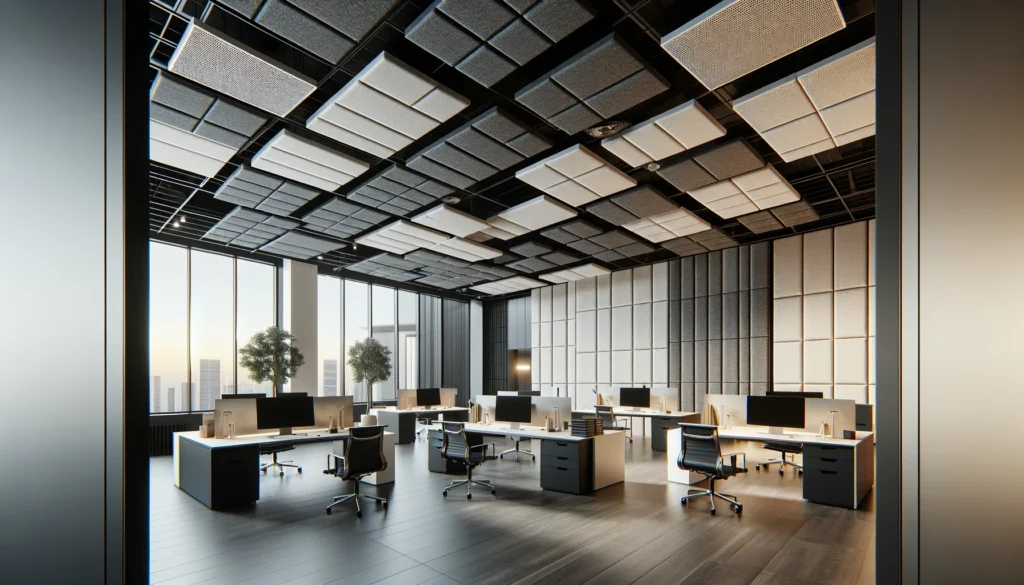
If calls sound hollow, voices carry across desks, or everyone talks louder than they should, start with the walls and ceiling around the table.

Podcasts, streaming, and vocals

Make your voice sound close, not hollow.

If a podcast, stream, or vocal take sounds like an empty bedroom, treat the space around the mic before blaming the mic.

Home theater and listening rooms

Hear the dialogue without turning everything up.

If voices feel buried under music, effects, or room boom, use panels for clarity first and add bass control only when the low end is the issue.

Recording, mixing, and rehearsal

Stop the room from getting into every take.

If vocals sound boxy, rehearsals feel harsh, or mixes only work in this room, calm the first wall and ceiling reflections before adding more gear.

Churches, gyms, and halls

Help the back row understand every word.

In churches, gyms, and halls, speech gets swallowed by hard walls and high ceilings. Use broader wall or ceiling coverage before small foam patches.

Bedrooms, apartments, garages, and windows

Make a difficult room usable without rebuilding it.

Bedrooms, rentals, garages, and rooms with glass need practical treatment you can actually place. If the issue is neighbors or traffic, go to soundproofing first.

Chapter 02 Do you need treatment or soundproofing?

Before you buy foam or panels, ask what is actually bothering you. If the room sounds echoey, harsh, hollow, muddy, or boomy, treatment can help. If noise is coming through walls, doors, windows, floors, or ceilings, you are looking at soundproofing instead.

Acoustic treatment

The room itself sounds bad.

Use treatment when speech, music, calls, or recordings sound echoey, harsh, boxy, muddy, or boomy inside the room.

  • Claps ring or repeat
  • Video calls sound hollow
  • Dialogue or vocals are unclear
  • Bass changes from seat to seat
Match what you hear
Soundproofing

Sound is coming in or getting out.

Use soundproofing when the problem is neighbors, traffic, footsteps, voices through walls, or sound leaking out of your room.

  • You hear people through a wall
  • Traffic or neighbors enter the room
  • Your room bothers someone else
  • Noise comes through a door or window
Go to soundproofing

Chapter 03 What sounds wrong inside the room?

Use the card that sounds closest to your space: echoey calls, boomy bass, muddy movie dialogue, hollow podcast audio, washed-out speech, or a room you cannot mount into. Each one points to the treatment that usually makes the biggest difference first.

People sound echoey in calls, meetings, classes, or normal speech. Panels Start with wall panels near the loudest reflections. Add ceiling treatment when the room is hard-floored or glassy. Bass is boomy in one seat and thin in another. Bass traps Add corner traps after the echo is under control. Foam and thin panels will not fix this well. Movie dialogue is hard to understand even when the volume is high. Panels + bass check Treat side and front reflections first. Add corner bass control if action scenes boom. My podcast, stream, or vocal take sounds hollow or boxy. Panels near the mic Treat the wall behind or beside the mic first. Foam can help as a temporary low-cost layer. A church, gym, hall, or large room makes speech wash out. Broad absorption Use larger wall or ceiling coverage. Tiny foam squares will not do enough in a large reflective room. I want a better room, but I rent or cannot drill into walls. Removable panels Use hanging, stands, or renter-safe mounting. If the problem is neighbors, go back to soundproofing. Recordings or mixes sound fine here, then wrong everywhere else. Panels + traps Treat side reflections and the ceiling, then check corners for bass buildup. The room is already treated but now feels too dry or small. Diffusers later Add diffusion only after echo and bass are controlled. It is not a first purchase for a bare room. I have a tiny budget and just need the room less harsh. Foam as a stopgap Use foam only when price, weight, or temporary mounting matters more than the best result. Foam or panels — which do I actually need? Compare first Panels are the better long-term buy; foam is the budget shortcut. I want to build my own panels to save money. DIY panels Full materials list + step-by-step. Does acoustic foam even work, or is it a gimmick? Foam What foam actually does (and can't).

Chapter 04 Start with the surface making the sound worse.

Most room problems come from a few familiar places: side walls, corners, the ceiling, and the wall behind speakers, people, or a mic. Use the room guide to decide which surface to treat first.

Chapter 05 What treatment usually costs by room.

The budget depends more on the room and job than the product name. A podcast corner can start small. A conference room or theater needs more coverage. A studio or large hall usually needs panels plus bass or ceiling work.

Small start Useful coverage More complete room
Podcast or voice corner Mic area, wall behind the voice, and nearby side reflections
Foam
$40–100 Podcast foam guide
Panels
$180–400 Vocal room guide
Full corner
$500–900 Panel picks
Office or conference room Wall panels first, ceiling treatment when calls still sound hollow
Small room
$200–500 Home office panels
Meeting room
$600–1,500 Office treatment guide
Walls + ceiling
$2,000+ Ceiling treatment
Home theater or listening room Dialogue panels first, then bass control if the room booms
Panels
$250–600 Theater panel guide
Panels + traps
$700–1,500 Bass trap placement
Full room
$1,500+ Home theater treatment
Studio, rehearsal, or large public room Broader coverage, bass control, and ceiling work become more likely
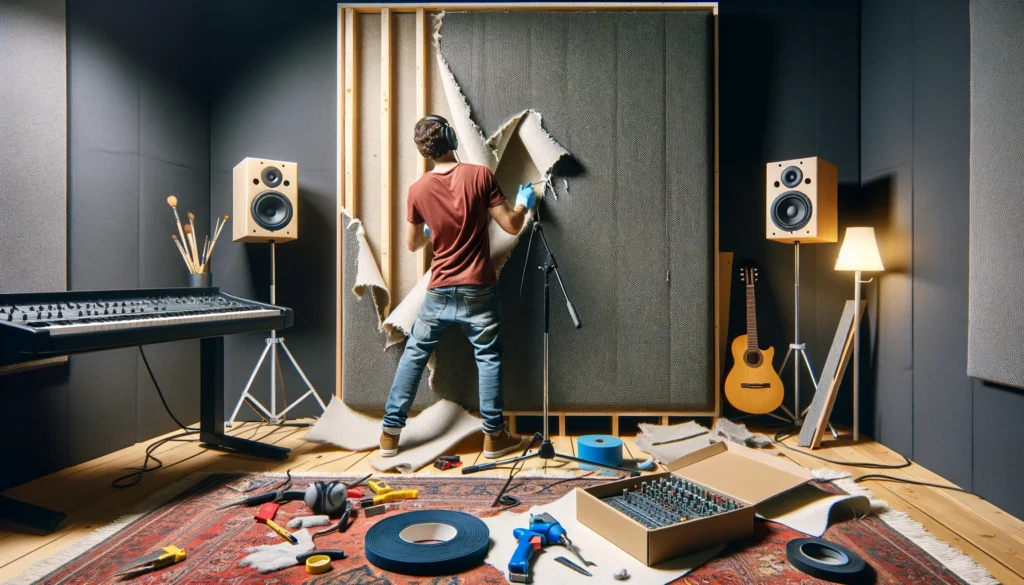
DIY panels
$250–700 DIY treatment guide
Room kit
$800–2,000 Treatment kits
Large room
$2,000+ Large room placement

Chapter 06 Already know how to treat a room? Here’s our shortlist.

Here’s what we’d actually buy, in the order most rooms need. Skip anything that doesn’t match the problem you can hear, and stop spending the moment your room sounds right.

First serious buy

2-inch panels for the main reflection spots

typical $60–120 / panel
Why panels matter early Panels calm the reflections most people actually hear: harsh voice, blurry speakers, hard walls, and tiring rooms.
Where it stops Panels help bass only a little. If low notes boom or vanish, you still need corner bass control.
Cheap fallback

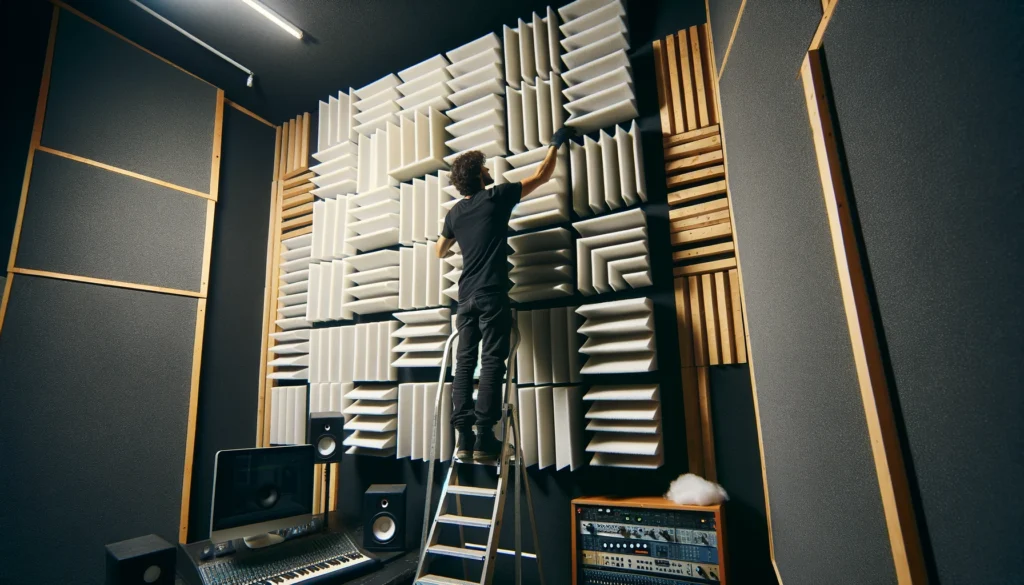
Foam only when panels are out of reach

typical $20–50 / pack
Why it can make sense It is cheap, light, and easy to mount. In a tiny booth or temporary room, that may matter more than the best result.
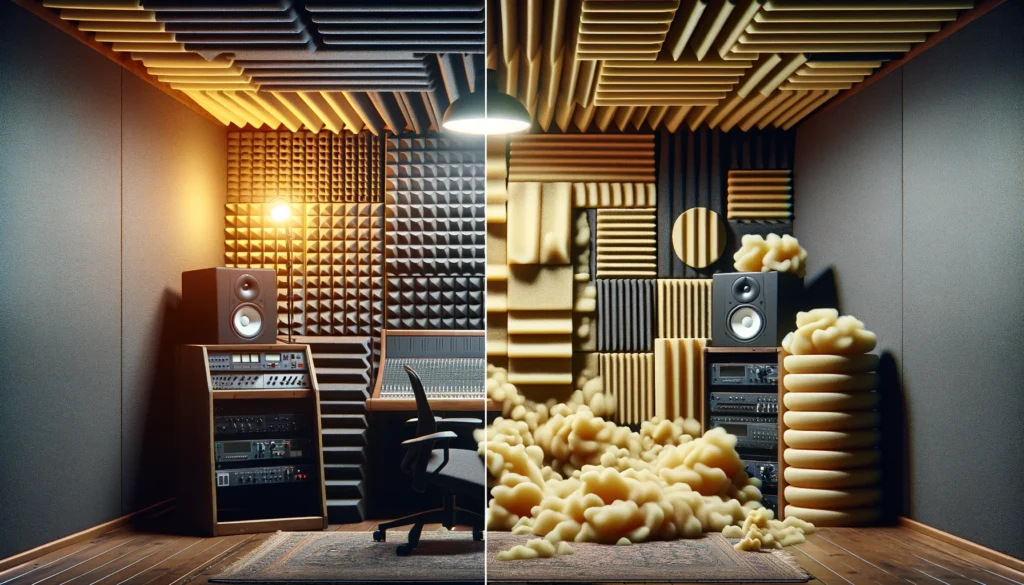
Where it falls short It looks rough, ages poorly, and leaves deeper echo and bass issues behind. Treat foam as a stopgap, not the premium option.
Second layer

Corner-straddle bass traps

price varies / pair
Why it comes after panels Corners are where bass piles up. Traps calm the boom and seat-to-seat changes that panels and foam cannot.
Where it hurts Bass traps are large, visible, and rarely cheap. Check the bass before filling corners.
Last layer

Rear-wall diffuser for rooms that are already controlled

price varies / panel
Why it comes last Diffusion helps a controlled room feel open again. It is not for untreated echo, harshness, or bass.
Where it fails Small, untreated rooms usually need absorption first. Add diffusion only when the room feels too dry after treatment.

Chapter 07 Make sure the room improved before you buy more.

After the first panel, foam, or trap, check what actually changed. If voices are still harsh, move or add panels. If bass still changes from seat to seat, add traps. If the room now feels too dry, diffusion may help.

The 5-minute room check

  1. Clap again

    Stand in the middle of the room. Single sharp clap.

    Good result: the clap stops quickly without a repeating slap
  2. Voice check

    Speak at normal volume from the listening position.

    Good result: your voice sounds dry enough without feeling dull
  3. Bass walk-around

    Play a bass-heavy reference track. Walk the room.

    Good result: bass is closer to even across the main seat
  4. Centre image check

    Close your eyes. Play a vocal track panned centre.

    Good result: the vocal stays focused between the speakers
  5. Seat-to-seat

    Move to a seat 60 cm off axis. Listen again.

    Good result: the balance stays similar when you move slightly

Before you buy the next thing, avoid these mistakes

Claim

Foam soundproofs the room.

Reality

Foam changes sound inside the room. It does almost nothing to stop sound escaping to or arriving from the next room. That is soundproofing, and it needs heavier construction, sealed gaps, and separation.

Claim

Bass traps are just corner foam.

Reality

Bass control needs depth and corner placement. Thin foam wedges can soften slap, but they do not solve the low notes that boom in one seat and disappear in another.

Claim

Diffusers are the first thing to add.

Reality

Almost never. In an untreated room, diffusion spreads the mess around. Reduce the harsh reflections first; add diffusion only when the room has become too dry.

You know what you hear

Find the acoustic treatment guide that matches the room.

If you already know the room, surface, material, budget, or claim you are dealing with, use the library below to keep reading: offices, studios, home theaters, windows, corners, ceilings, panels, foam, traps, and the checks that stop you from buying the wrong thing.

Where to go next

Once the room makes sense, pick the right next guide.

Acoustic treatment is the room-sound overview. If you now know the specific issue, go to the focused hub: compare panels, control bass, use foam honestly, or bring life back with diffusion.