Best Drop Ceiling Tiles for Soundproofing: Which Ratings Count
The movie in your basement still carries into the next room through a drop ceiling, so you’re hunting for the best drop ceiling tiles for soundproofing.
The NRC number in a tile’s specs measures how much sound it soaks up inside the room, not how much it keeps from crossing into the next one.
This guide uses Armstrong’s and USG’s own ratings, a lab paper from the journal Canadian Acoustics and the US General Services Administration’s office targets.
You’ll see which tiles rate highest for blocking, what lights and vents take away from a real ceiling, and what to add above the grid if the tile alone isn’t enough.
Start with the tiles themselves, because the makers’ own numbers sort them quickly.
Which Are the Best Drop Ceiling Tiles for Soundproofing?
That depends on the rating you shop by, and for blocking sound between rooms the makers’ own listings sort the tiles clearly. The best drop ceiling tiles for soundproofing are the highest-CAC ones, led by Armstrong’s Calla PrivAssure at up to CAC 50, while most tiles in the Armstrong and USG listings sit between CAC 35 and 40.
| Tile | Maker | NRC | CAC |
|---|---|---|---|
| Calla PrivAssure | Armstrong | up to 0.80 | up to 50 |
| School Zone Fine Fissured AirAssure | Armstrong | 0.70 | up to 45 |
| Calla High CAC | Armstrong | 0.80 | 40 |
| Radar High-NRC/High-CAC | USG | 0.70 | 40 minimum |
| Radar High-CAC, 2 x 4 ft | USG | 0.55 | 40 minimum |
| Calla High NRC | Armstrong | 0.90 | 35 |
| Radar Open Plan | USG | 0.75 | 35 minimum |
| Fine Fissured, item 1732 | Armstrong | 0.55 | 35 |
| Dune, item 1774 | Armstrong | 0.50 | 35 |
Armstrong’s Calla pair shows the trade most clearly: High NRC absorbs 0.90 but blocks 35, while High CAC absorbs 0.80 and blocks 40.
USG’s Radar sheet splits the same way, with the High-CAC panel at 0.55 and 40, the High-NRC panel at 0.70 and 35, and a balanced panel at 0.70 and 40.
PrivAssure is 1-3/4 inches thick for CAC up to 50, against 5/8 inch for the basic Fine Fissured tile at 35. Thickness isn’t the only lever, though, because USG’s High-CAC panel reaches 40 at 5/8 inch.
Armstrong notes that values vary by item configuration, and USG’s sheet lists CAC as a minimum, so check the data sheet for the exact item before you order.
What Do NRC and CAC Actually Measure?
Those two ratings answer different questions. NRC measures absorption inside a room, while CAC measures blocking between rooms that share the space above a suspended ceiling.
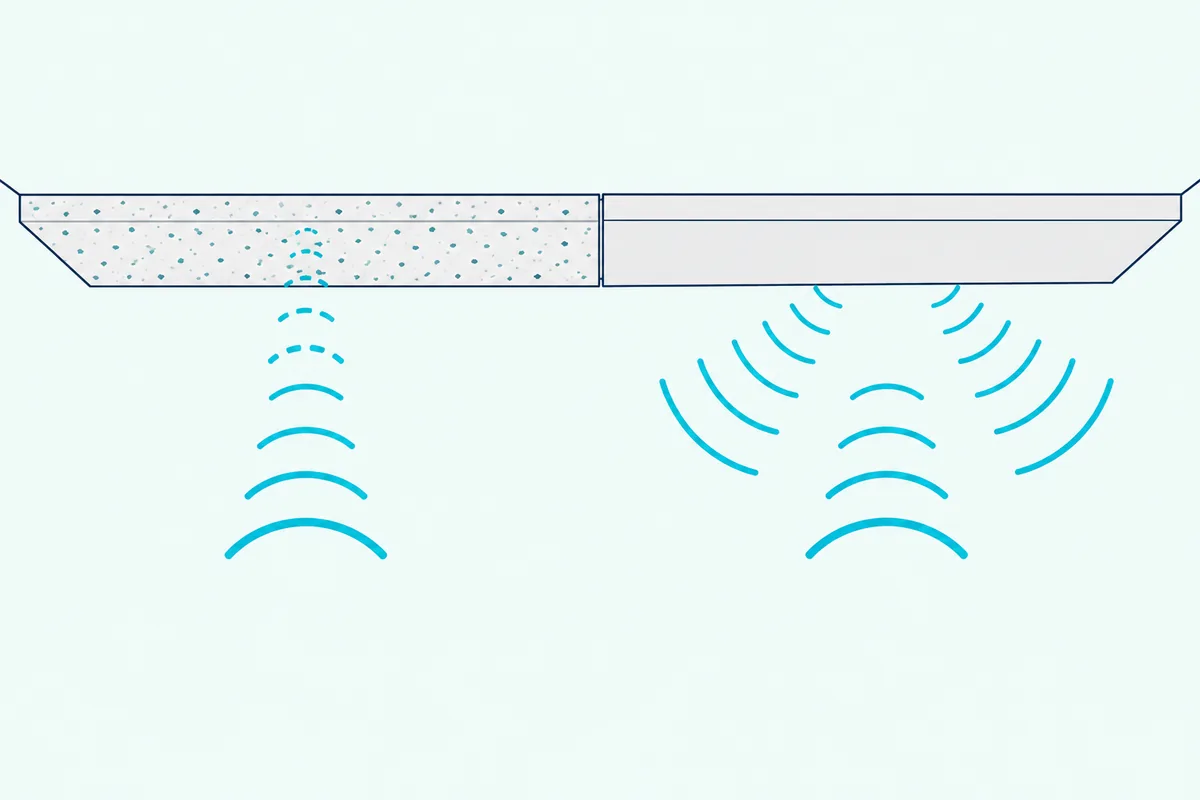
NRC is the average sound absorption at 250, 500, 1,000 and 2,000 Hz, tested under ASTM C423, and Armstrong says it runs from 0.00 for a concrete floor to 1.00 for the best absorbers.
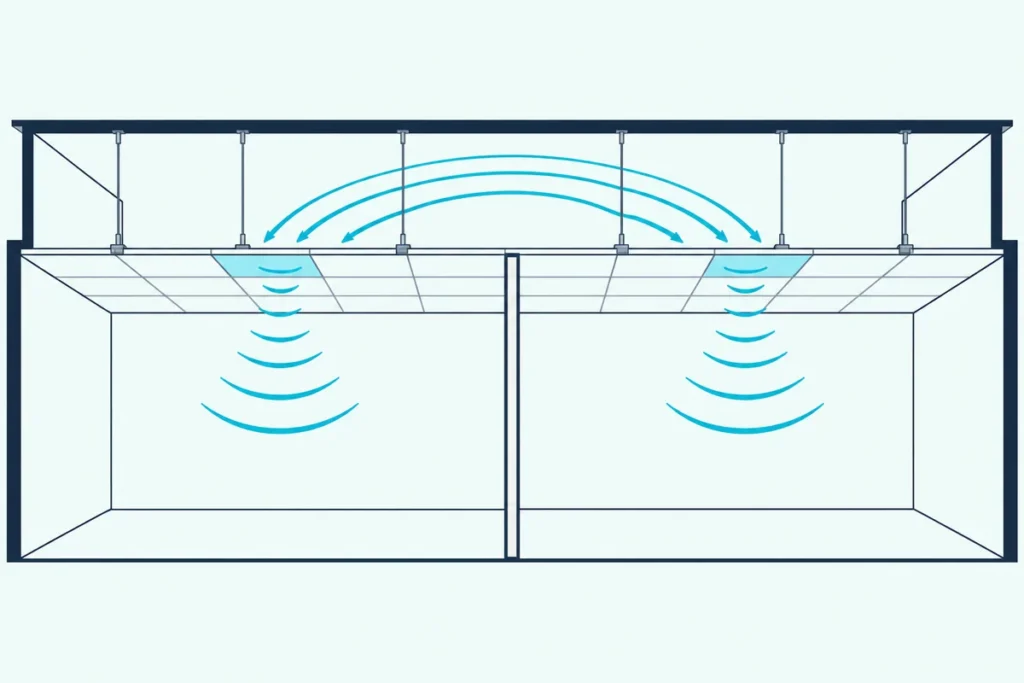
CAC rates a ceiling system as a barrier to airborne sound between adjacent closed spaces that share a plenum, which is the open space above a suspended ceiling.
The test passes sound twice through the ceiling plane, once out of the source room and once into the receiving room with the shared space between, and ASTM E1414 defines it.
USG adds that porous materials such as glass fiber or mineral fiber insulation absorb sound efficiently, while non-porous ones such as gypsum board tend to reflect it, which fits the split in the table.
Armstrong also lists NIC, which estimates the total isolation between two rooms connected by many paths, where STC, CAC and NRC rate a material in a laboratory.
GSA’s office table asks for a ceiling of CAC 40 and NRC 0.8 over enclosed offices with normal or confidential speech privacy, and Armstrong’s Calla High CAC lists exactly that pair. Our guide to setting privacy targets for a home office covers the walls and door that go with that ceiling.
Get Studio Tips Weekly
Join 5,000+ creators getting acoustic treatment advice every week.
No spam. Unsubscribe anytime.Does a Tile’s CAC Hold Up in a Real Room?
Not fully, because that two-pass rating comes from a panel test and real ceilings have holes in them. A Canadian Acoustics paper reports that lights, grilles and diffusers can lower a ceiling’s CAC by about 10 points.
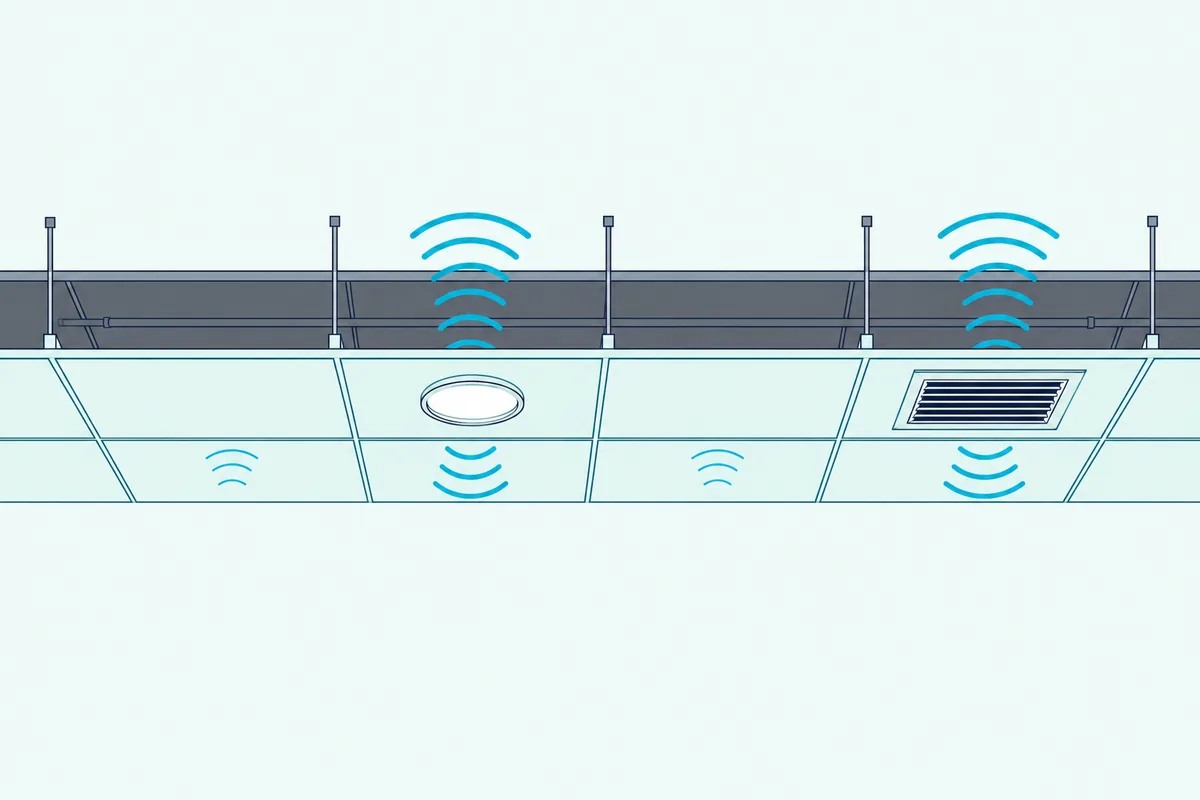
The paper comes from a Rockfon acoustician and an NGC Testing Services engineer, and it adds that the loss can reach 20 dB at 1,000, 2,000 and 4,000 Hz.
Its lab table lists a mineral fiber panel rated CAC 37 at a system rating of 27 in the paper’s test ceiling, which had recessed lights, return grilles and supply diffusers.
The authors write that panels below CAC 40 can’t give adequate sound privacy between rooms on their own, and that most panels give only 20 to 35 dB of blocking between rooms.
Rockfon sells stone wool ceilings and barrier boards, so weigh the source, but the paper says its results are consistent with earlier research by others.
Can a Drop Ceiling Stop Noise From the Floor Above?
That lab result covers sound crossing between rooms, and footsteps from upstairs take a different route. Going by their definitions, neither NRC nor CAC rates that route, so a tile’s specs can’t promise anything about footsteps.
USG’s guide says sound can travel through solid structures when something like footsteps energizes them, and it rates that with IIC, a rating for floor-ceiling assemblies tested under ASTM E492.
For noise from the floor above, the fix sits in the structure, and our guide to stopping noise from the floor above covers it.
What Can You Add Above the Tiles?
Those limits point at the space above the grid, and the same Rockfon and NGC Testing Services paper tested what to put there. A sealed drywall barrier from the top of the wall to the slab lifted a ceiling system from CAC 22 to 46.
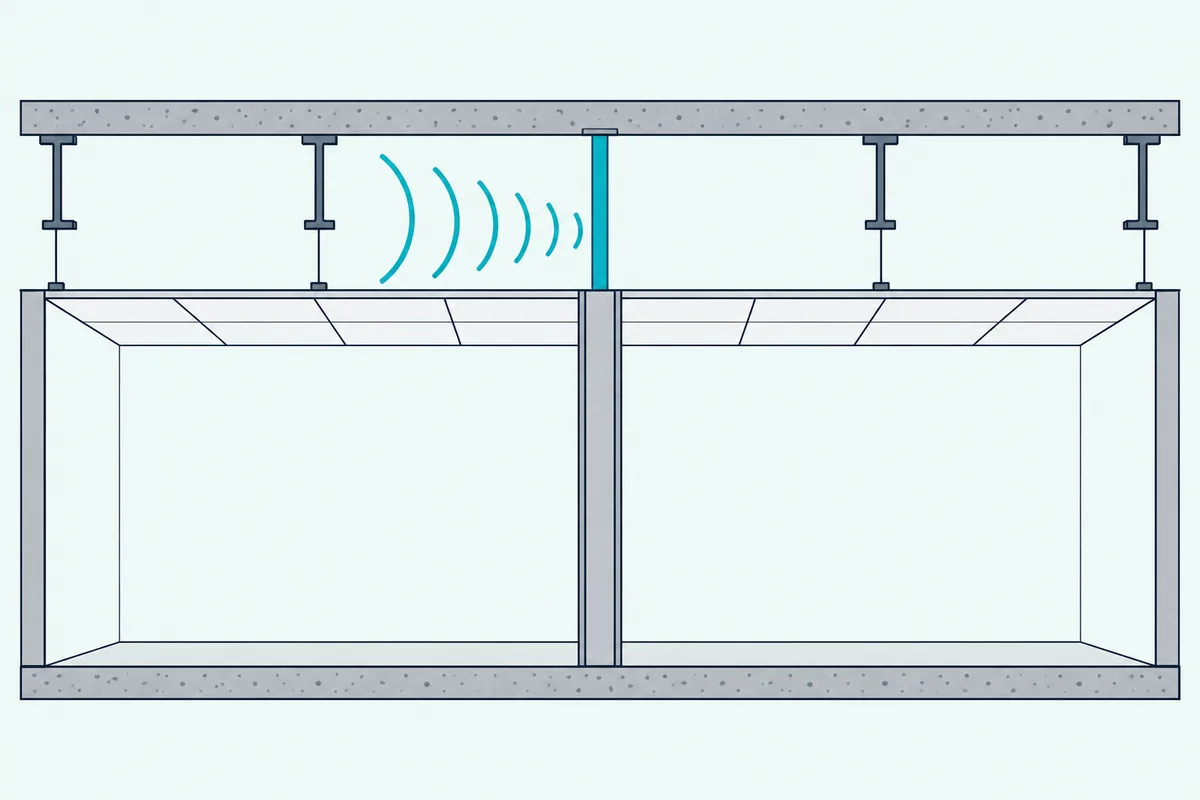
The authors call a full-height wall the preferred way to block noise between rooms, and for walls that stop at the grid they tested lightweight barriers standing from the top of the wall up to the slab.
This table lists the system CAC each setup reached, with every barrier combined with the stone wool test ceiling:
| Setup above the wall | System CAC |
|---|---|
| Stone wool ceiling, no barrier | 22 |
| Mineral fiber ceiling, no barrier | 27 |
| Mass loaded vinyl alone | 37 |
| Stone wool board, 1 layer | 38 |
| Drywall, quick install with gaps open | 41 |
| Mass loaded vinyl plus 3-1/2 in fiberglass | 42 |
| Mass loaded vinyl plus 3-1/2 in stone wool | 44 |
| Drywall, sealed airtight | 46 |
| Stone wool board, 2 layers | 48 |
| Drywall, sealed, plus 3-1/2 in stone wool | 50 |
Sealing mattered: the same 5/8 inch drywall rated 41 with gaps left open and 46 once every joint and screw head was sealed airtight.
The authors included a mineral fiber ceiling to show how small the panel’s effect is next to the barrier’s, at 27 against 22 for stone wool, while the barriers added 15 to 28 points.
In a house, the same idea means closing the gap above any wall that stops at the grid, which is my reading of the lab setup and not a tested home recipe. Our guide to upgrading a basement ceiling for sound covers the heavier options for the ceiling itself.
Are Sound-Blocking Tiles Worth the Cost?
That depends on how many rating points you’re buying and what else lets sound through. On Armstrong’s web shop on 2 October 2026, Calla PrivAssure cost far more per square foot than the basic Fine Fissured tile, for up to 15 more CAC points.
A middle step is Calla Health Zone, which Armstrong lists at NRC 0.80 and CAC 38, three points above the basic tile.
In the lab table the barriers added 15 to 28 points, more than the 5 points between a CAC 35 tile and a CAC 40 tile, though the two figures come from different tests.
Which Tile Should You Buy for Your Room?
Those prices and ratings sort into four cases. This table matches each goal to the rating to look for and an example from the makers’ listings:
| Your goal | What to look for | Example from the listings |
|---|---|---|
| Less echo in a studio or theater | NRC 0.70 or higher | Calla High NRC, 0.90 and CAC 35 |
| Privacy between an office and the next room | CAC 40 with NRC 0.80 | Calla High CAC, 0.80 and 40 |
| The most blocking in a standard tile | CAC 45 to 50 | Calla PrivAssure, up to 50 |
| Replacing stained tiles at the same rating | CAC 35, the entry rating | Fine Fissured 1732, 0.55 and 35 |
Armstrong’s filter calls NRC 0.70 and up High Sound Absorption and CAC 35 and up High Sound Blocking, so a 35 is the entry to its high band while GSA’s office line is 40. Our guide to building a quiet home theatre room covers the echo side of a theater.
For a 2 by 2 foot grid, Armstrong’s Dune 1774 lists NRC 0.50 and CAC 35, and the listing sells 16 tiles to a box.
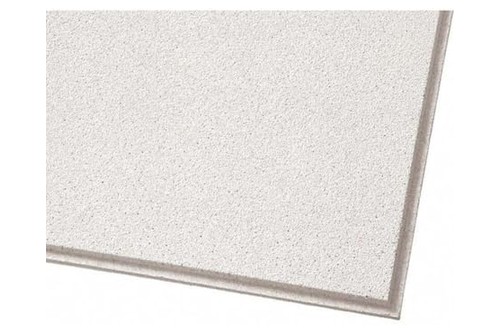
Armstrong’s Dune 1774
For a 2 by 4 foot grid, Armstrong’s Cortega Second Look 2767 lists NRC 0.55 and CAC 35, and its scored face makes a 2 by 4 foot tile look like two 2 by 2 tiles.
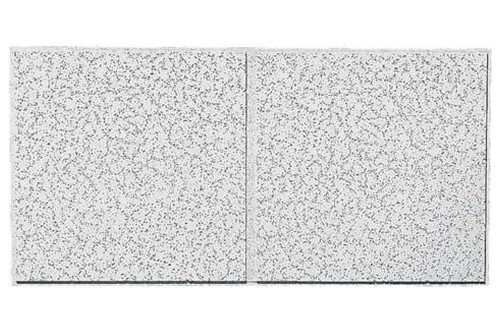
Armstrong’s Cortega Second Look 2767
The higher-rated tiles in the first table came from Armstrong’s and USG’s own pages, because the Amazon search for Armstrong tiles on 2 October turned up only these basic lines. Armstrong sells its higher-rated tiles through its web shop and local reps, and USG lists where to buy on its own site, so check the exact item’s CAC on its data sheet before you order.
The Bottom Line
The best drop ceiling tiles for soundproofing are the ones with the highest CAC your budget allows, which in the makers’ listings means CAC 40 for most high-blocking tiles and up to 50 for the thickest.
No tile does the whole job, because lights and vents can cost a ceiling about 10 points and a sealed barrier above the wall added 15 to 28 points in the lab.
Frequently Asked Questions
Are drop ceiling tiles soundproof?
Not on their own. The Canadian Acoustics paper says most panels give only 20 to 35 dB of blocking between rooms, while standards typically ask for 40, 45 or 50.
What CAC rating do I need?
GSA’s table asks for CAC 40 with NRC 0.8 over enclosed offices, and the Canadian Acoustics paper says standards typically ask for 40, 45 or 50 dB between rooms. Allow about 10 points for lights and vents.
Do ceiling tiles block noise from upstairs?
Their ratings don’t cover it. USG rates footsteps with IIC on the whole floor-ceiling assembly, so a tile’s NRC and CAC can’t predict the result.
What is the best ceiling tile for sound absorption?
In the listings above, Armstrong’s Calla High NRC rates highest at 0.90, with a CAC of 35. USG’s Radar Open Plan and Armstrong’s Fine Fissured High NRC rate 0.75.
Do thicker tiles block more sound?
Often, but not always. Calla PrivAssure is 1-3/4 inches thick at CAC up to 50, while USG’s Radar High-CAC panel reaches 40 at 5/8 inch.
Can you soundproof an existing drop ceiling?
You can add a barrier above the wall. In the lab a sealed 5/8 inch drywall barrier took a stone wool ceiling system from CAC 22 to 46, and sealing every gap mattered.
Do recessed lights and vents matter?
Yes. The Canadian Acoustics paper reports they can cut a ceiling’s CAC by about 10 points, and by 20 dB at 1,000 to 4,000 Hz.