How to Soundproof a Furnace Closet Without Blocking Its Air
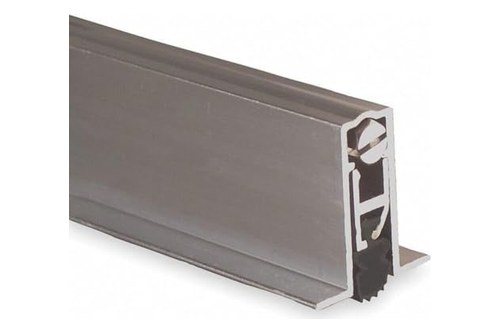
- ✓ Drop bar seal that a plunger lowers against the floor or threshold as the door closes, per Pemko
- ✓ Aluminum case with a PemkoPrene seal, in a 36-inch length
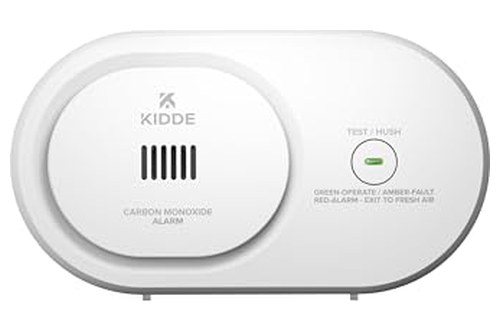
- ✓ Listing says tested to UL 2034 5th Edition
- ✓ Two AA batteries, so it works in a power outage
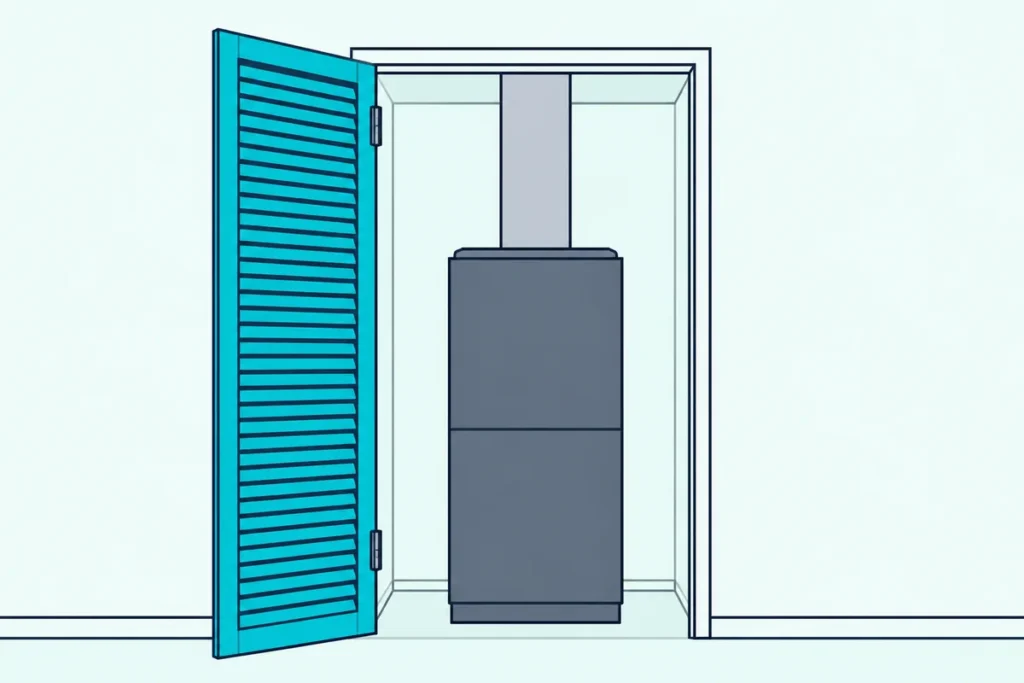
The safest answer to how to soundproof a furnace closet is to get any fault fixed, quiet the ducts and add mass to the shared walls, while every air opening, clearance and service gap in the manual stays as it is.
That drone through the bedroom wall gets out because these closets are mostly light framing, a louvered door and a big return grille, which NBS Handbook 119 says give virtually no sound attenuation.
Work inside those limits and the furnace keeps the air it needs while less of its noise reaches the rooms around it.
The first move needs no tools: find your appliance’s manual and its clearance label, then work out where it gets its combustion air and its return air.
The steps below run from that check to the ducts, walls and door, and they mark the jobs for an HVAC contractor.
How to Soundproof a Furnace Closet in Eight Steps
That order matters, because the early steps decide what the later ones are allowed to touch.
| Step | What to do | Why it sits here |
|---|---|---|
| 1 | Get faults fixed | Carrier calls banging and screeching red flags |
| 2 | Read the manual and the clearance label | Each model sets its own gaps |
| 3 | Find out where the air comes from | It decides whether the door can change |
| 4 | Ask for flexible duct connectors | Bosch uses them to stop vibration traveling |
| 5 | Ask about lined ducts | NBS Handbook 119: ten feet of liner may cut noise 10 dB |
| 6 | Add mass and seal the shared wall | HUD: a one-inch hole takes a 50 STC wall to 40 |
| 7 | Change the door only if the manual allows it | Carrier: no solid doors on a room-air furnace |
| 8 | Fit a CO alarm and recheck the openings | Carrier highly recommends an alarm |
Nothing on that list wraps the unit, blocks a louver or narrows a gap, and your own appliance’s manual overrules anything here. The descriptions come from the makers’ manuals and spec pages.
An AC or HVAC closet with an air handler inside follows the same order. To soundproof a boiler closet or room, start from those makers’ limits instead.
Where Does Furnace Closet Noise Come From?
Steps 1 to 3 make more sense once you know what you’re hearing. Furnace closet noise comes from the blower and motor, the air moving through the ducts, the burners lighting and vibration traveling into the floor and walls.
NBS Handbook 119, the National Bureau of Standards’ 1976 noise guide, calls the motor and blower the main indoor sources and turbulent air at the blower’s outlet the main cause of duct vibration. With equipment on the floor and ducts coupled to the structure, it adds, the walls and floors vibrate and radiate the noise.
Sort what you hear first, because some of it is a repair.
| What you hear | Likely source | Next move |
|---|---|---|
| Steady drone or rush of air | Blower and airflow (NBS Handbook 119) | Steps 4 to 7 |
| Slight rumble at light-off | Not unsafe, says Nordyne’s G8SA owner’s manual | Nothing |
| Alarmingly loud sound at ignition | Delayed ignition (Carrier) | Shut down, call the dealer |
| Loud humming | A failing capacitor (Bryant) | A technician |
| Squealing or grinding | Worn bearings or a failing blower motor (Bryant) | A technician |
Carrier adds a rotten egg smell to its red flags. If you smell gas, it says not to touch electrical switches, to leave the home and to contact your gas utility or emergency services.
What Clearances Does a Furnace Closet Need?
Once the faults are out of the way, the space around the unit sets the limits for everything else. These gas furnace manuals ask for 0 inches at the sides and back, 1 to 6 inches at the top and front and usually 24 inches of service room, but your own unit’s label decides:
| Unit | Sides and back | Top | Front | Service room in front |
|---|---|---|---|---|
| Bosch BGK80 gas furnace | 0 in. | 1 in. | 1 in. | 24 in. |
| Bosch BGH96 gas furnace | 0 in. | 1 in. | 3 in. | 24 in. |
| Nordyne G8SA gas furnace | 0 in. | 1 in. | 4 in. | 24 in., 36 in. strongly recommended |
| Nordyne M1M furnace in a closet | 0 in. | 6 in. | 6 in. | Louvered door 6 in. away |
| Nordyne B6 air handler | 0 in. | Not listed | See next column | 24 in. in an alcove, 36 in. recommended |
Those zeros are clearances to framing, not permission to cover the cabinet. Nordyne’s owner’s manual says not to place combustible materials on or against the cabinet or within 6 inches of the vent pipe.
Bosch’s BGK80 manual says access clearances take precedence where they’re greater, and that the furnace area must not be used for storage. So any lining stays outside those figures, and soft goods stacked inside aren’t a fix.
Does a Furnace Closet Need Louvers or Air Openings?
Clearances are half the story, and air is the other half. Usually yes: Nordyne’s G8SA manual calls furnace closets confined spaces and says openings in closet doors or walls must never be restricted.
What stays open depends on the appliance, so read its manual first and find your row:
| What’s in the closet | Where its air comes from | What stays open |
|---|---|---|
| Gas furnace burning room air (one pipe) | The closet and the rooms around it | Two permanent openings, near the top and bottom |
| Direct-vent gas furnace (two pipes) | Outdoors, through its intake pipe | Its pipes, air openings and the space around it |
| Direct-vent furnace with a door return | Return air comes through the closet | The louvered door or wall opening |
| Electric air handler | Burns no fuel | Service room and any louvered return path |
For indoor air, Nordyne sizes each opening at 1 square inch of free area per 1,000 Btu/h of every appliance in the closet, and never below 100 square inches. A 100,000 Btu/h furnace beside a 40,000 Btu/h water heater means two openings of 140 square inches each.
Free area is what’s left after the slats, since Bosch says the blocking effects of louvers and grilles have to be counted. Nordyne also sets a 3-inch minimum dimension for any combustion air opening, which rules out a narrow slot.
Carrier’s owner’s manual is blunt about a one-pipe furnace: it “must not be enclosed in an airtight room or be sealed behind solid doors.” Nordyne warns that restricted air can create dangerous amounts of carbon monoxide, and says not to modify these openings without consulting a licensed HVAC technician.
Direct vent doesn’t settle it either. Nordyne’s M1M manual covers a sealed-combustion furnace for manufactured homes, yet its closet needs 235 square inches of open free area, because return air enters through it.
Gas furnaces on ducted returns work the other way: Nordyne says a furnace in a confined space must draw return air from outside that space, on ducts tightly sealed to the furnace.
Can You Replace a Louvered Furnace Closet Door With a Solid One?
Those openings make the door the hardest part of the job. Only if your manual and an HVAC contractor confirm the air arrives another way: NBS Handbook 119 suggests a solid-core door with a rubber perimeter gasket and a threshold drop closure, then cautions that the louvers ventilate the closet and that ventilation has to be maintained by other means.
HUD’s Noise Guidebook rates a common hollow-core door at STC 17, and National Guard Products says solid-core wood doors with gasketing test at about STC 28 to 30.
The Handbook’s route for the air is an acoustically lined transfer grille between the studs. Its quiet return uses a large grille, 6 feet of lining in each duct run and rounded corners, a path air can still follow.
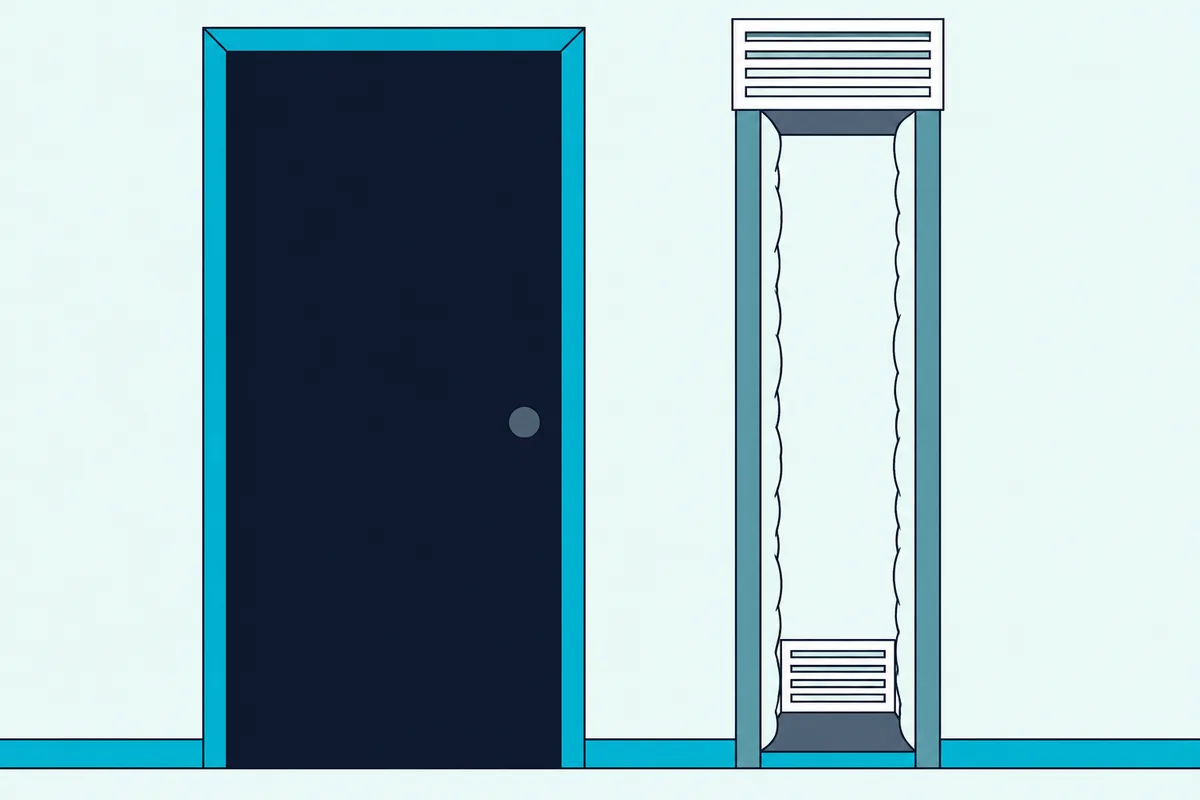
That’s contractor work, because the path still has to deliver the full free area. If your manual lets the door close, seal the head and jambs, then the threshold.
Pemko’s S88 SiliconSeal gasket sticks to the stop in one run, and its 18-foot roll covers the head and both jambs of a 36-by-80-inch door.
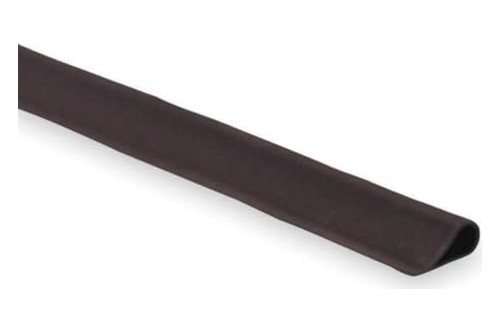
Pemko’s S88 SiliconSeal gasket
Pemko’s 411APKL36 automatic door bottom is the drop closure the Handbook describes. Every pick met Burton Acoustix’s rating, review and stock checks on 6 November 2026.
Pemko’s 411APKL36 automatic door bottom
Do Flexible Duct Connectors and Duct Lining Reduce Furnace Noise?
A door only deals with sound in the closet, and the ducts carry the rest. Yes, and these are the makers’ own fixes: Bosch’s BGH96 manual says flexible connections should go between ductwork and furnace to prevent transmission of vibration, and Nordyne lists damping ducts, flexible vibration isolators and pleated media filters on the return as acoustical treatments.
The Handbook wants canvas or plastic connectors at the blower end of both ducts. It also says a ten-foot length of duct liner, measured from the grille, may reduce loudness by as much as 50%, or 10 dB.
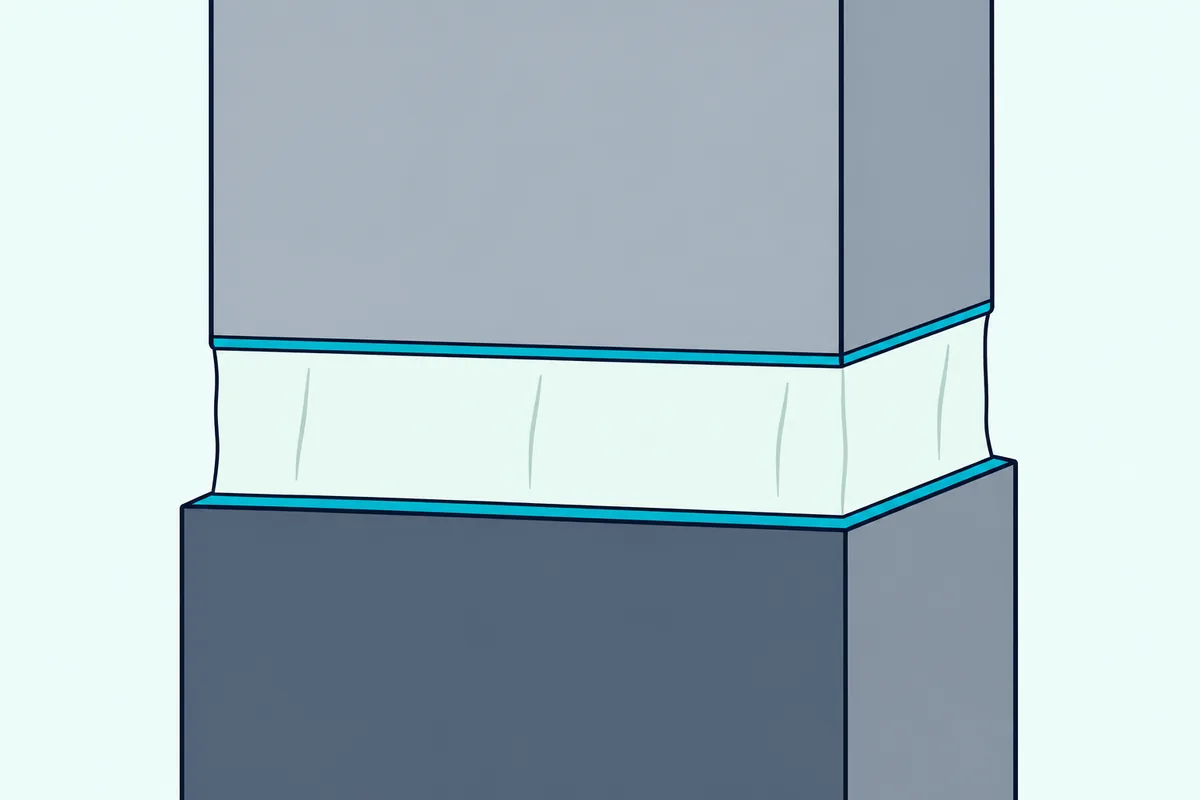
Low tones are the catch. The Handbook says they usually need at least twice the thickness or length of lining, and Knauf’s coefficients show the gap: its 1-inch Performance+ liner absorbs 0.18 at 125 Hz against 0.85 at 1,000 Hz.
Each of these changes airflow, so none is a weekend swap. Nordyne warns they can increase pressure drop, which may mean larger ducts or a slower blower, and its B6 air handler manual asks for UL classified liner.
Are Vibration Pads Safe Under a Furnace?
Connectors break the path through the ducts, which leaves the floor. Only if your manual allows it: NBS Handbook 119 suggests ribbed rubber or neoprene pads, or a plywood base on glass fiber, but Nordyne’s G8SA manual says the furnace must sit level on a solid surface and be secured to the floor.
The manual wins that disagreement, because it describes your unit and the Handbook dates from 1976. Bosch’s BGH96 manual also rules out installing directly on carpeting, tile or any combustible material except wood flooring, so ask the installer before anything goes underneath.
How Do You Block Noise Through the Closet’s Shared Walls?
The wall beside the next room is the part you can usually work on yourself. Add mass and seal every gap, from the room side where you can, because NBS Handbook 119 puts most interior walls at only STC 30 to 35.
National Gypsum lists an empty 2×4 wall at STC 35 with one layer of 5/8-inch board per side and 40 with two. The Handbook’s closet build adds resilient channels, glass fiber blanket and gypsum board, and HUD credits resilient clips with 2 to 5 STC points.
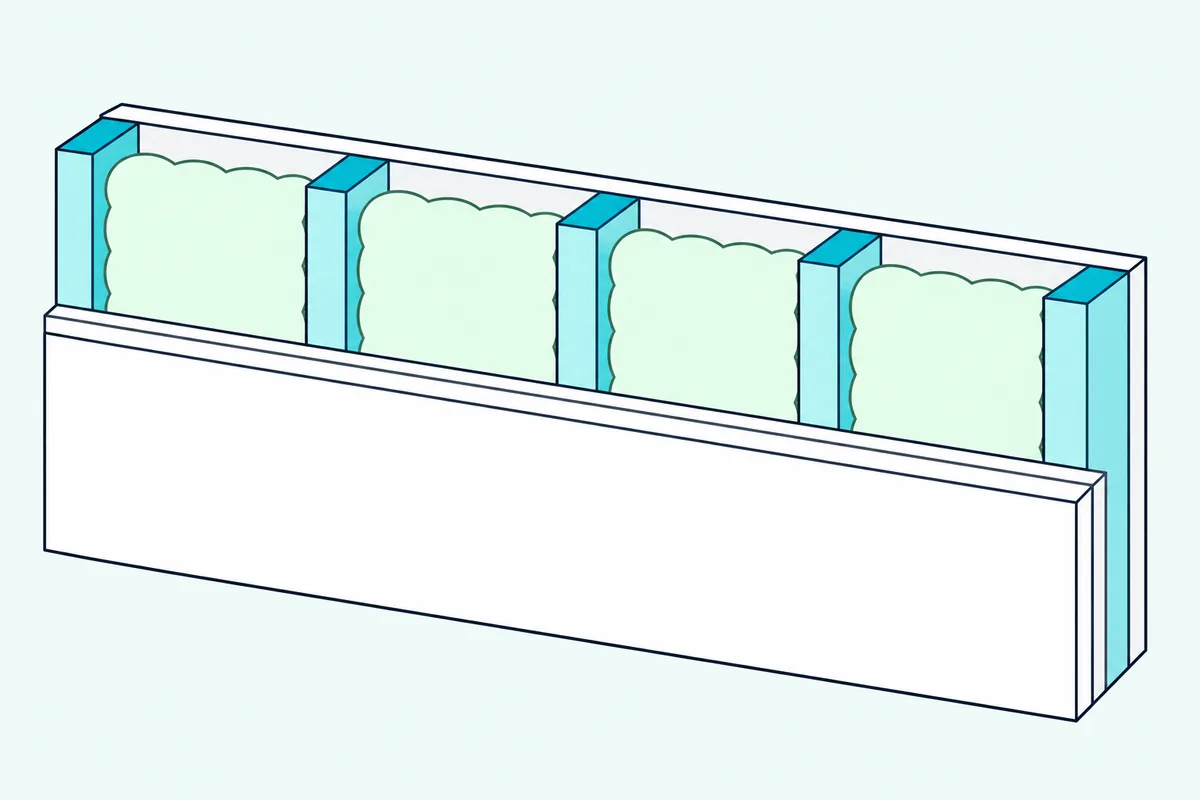
Working from the room side leaves the closet’s clearances and service room untouched, while every inch built inward comes out of them. Then seal the leaks: HUD says a one-inch-square hole or a 1/16-inch crack 16 inches long takes a 50 STC wall down to 40.
The Handbook adds the openings where ducts pass through walls, and Burton Acoustix’s guide to blocking sound between rooms covers the rest.
Can You Line a Furnace Closet With Foam or Blankets?
That sealing stops at the closet’s own air openings, and soft linings stop there too. No, not on the unit, not inside its clearances and not over an opening: Carrier says not to cover the furnace or block its fresh air, and to keep insulation clear of it.
Bosch says the furnace must be kept free and clear of insulating materials, which may be combustible. Auralex’s safety sheet for Studiofoam warns that ignited foam can produce rapid flame spread, intense heat and dense black smoke, and says to keep it away from open flames.
Mass loaded vinyl, moving blankets and sound barrier wrap get the same answer. A lining also wouldn’t stop what leaves through a louver that has to stay open.
When Should You Call an HVAC Contractor?
Anything above that touches air, gas or the cabinet ends with one call. Call one before you change the door, move or resize an opening, add a connector, line a duct or slow the blower, since Nordyne says installation and service belong to a qualified installer or service agency.
Ask:
- Does this unit burn room air or outdoor air?
- How much free area does the closet need for every appliance in it?
- Where does the return air come from, and is it sealed?
- Will the change keep pressure and temperature rise in range?
Some answers need a gauge, not an ear: Nordyne’s M1M manual limits a closed closet to minus 0.05 inch water column with the blower on high. The Handbook says a 25% cut in blower speed may lower noise output by as much as 8 dB, with a professional’s advice first.
How Do You Check the Work and Stay Safe?
Whichever fixes you choose, measure them and keep the safety checks going. Read a sound level meter from the same spot before and after, with the blower on the same setting, and use the Federal Highway Administration’s scale: 3 dB barely perceptible, 5 dB readily perceptible, 10 dB half as loud.
These test steps show how to take those readings properly. Then look over the closet again, since Trane’s owner’s guide says to check that all air openings are unobstructed and the space around the unit isn’t blocked.
Carrier’s manual highly recommends a carbon monoxide alarm wherever a fuel-burning product is used, and says most states require them.
Kidde’s battery-powered COB alarm installs without wiring and keeps working in a power outage, and its listing says it’s tested to UL 2034 and sounds an 85-decibel alert.
Kidde’s battery-powered COB alarm
The Bottom Line
Fix faults first, then learn what your manual keeps open: clearances, combustion air, return air and service room.
Work the ducts through a contractor, build mass on the room side of the wall, change the door only if the manual allows it, and fit a CO alarm.
Frequently Asked Questions
Can you soundproof a furnace room?
Yes, with the same limits. Bosch’s BGH96 manual counts a space as unconfined at 50 cubic feet per 1,000 Btu/h of all appliances, and counts neighboring rooms only through openings without doors. That’s 5,000 cubic feet for a 100,000 Btu/h furnace, so a new door can leave a room short of air.
How do you soundproof an HVAC or AC closet?
Start from the air handler’s manual. Nordyne’s B6 says to count the pressure drop through louvered openings and return plenums. An electric unit burns no fuel, but the door may still be its return path, so ask before closing anything.
How do you soundproof a utility closet with a water heater in it?
Add up both appliances first, because Nordyne sizes the openings on the total input of everything in the space. A utility closet with a washer has its own door vent rules.
Can you insulate a furnace closet?
Inside the wall cavity, yes, behind gypsum board and outside the clearances. Inside the closet, keep it away from the unit: Carrier says to keep insulation clear of the furnace, and Nordyne says some types are combustible.
Why is my furnace so loud in the closet?
The closet may be stopping very little of it, as NBS Handbook 119 says of typical closets. Banging, squealing or grinding is different: Carrier and Bryant treat those as warning signs, so call a technician first.