Acoustic Foam vs Acoustic Panels: Which One Do You Actually Need?
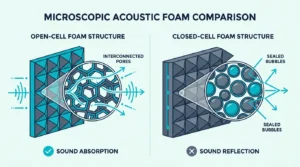
Acoustic foam vs acoustic panels — these are not the same thing, and picking the wrong one wastes money without fixing your room.
Foam is a budget absorption tool for high-frequency reflections, while panels use denser fiberglass or rockwool cores that absorb a much broader range — but neither one soundproofs anything.
The real question is which one matches the problem you’re hearing right now, because a podcaster fighting echo has a completely different fix than a mixing engineer chasing translation issues.
Start with the comparison below, then use the decision checklist at the end to pick the right path for your room and budget.
Acoustic foam absorbs mainly high frequencies (NRC 0.3–0.5) and lasts 3–5 years. Professional acoustic panels absorb the full frequency range (NRC 0.8–1.0) and last 15–20+ years. Choose foam for budget or temporary treatment; choose panels for serious acoustic work.
What Is the Real Difference Between Acoustic Foam and Panels?
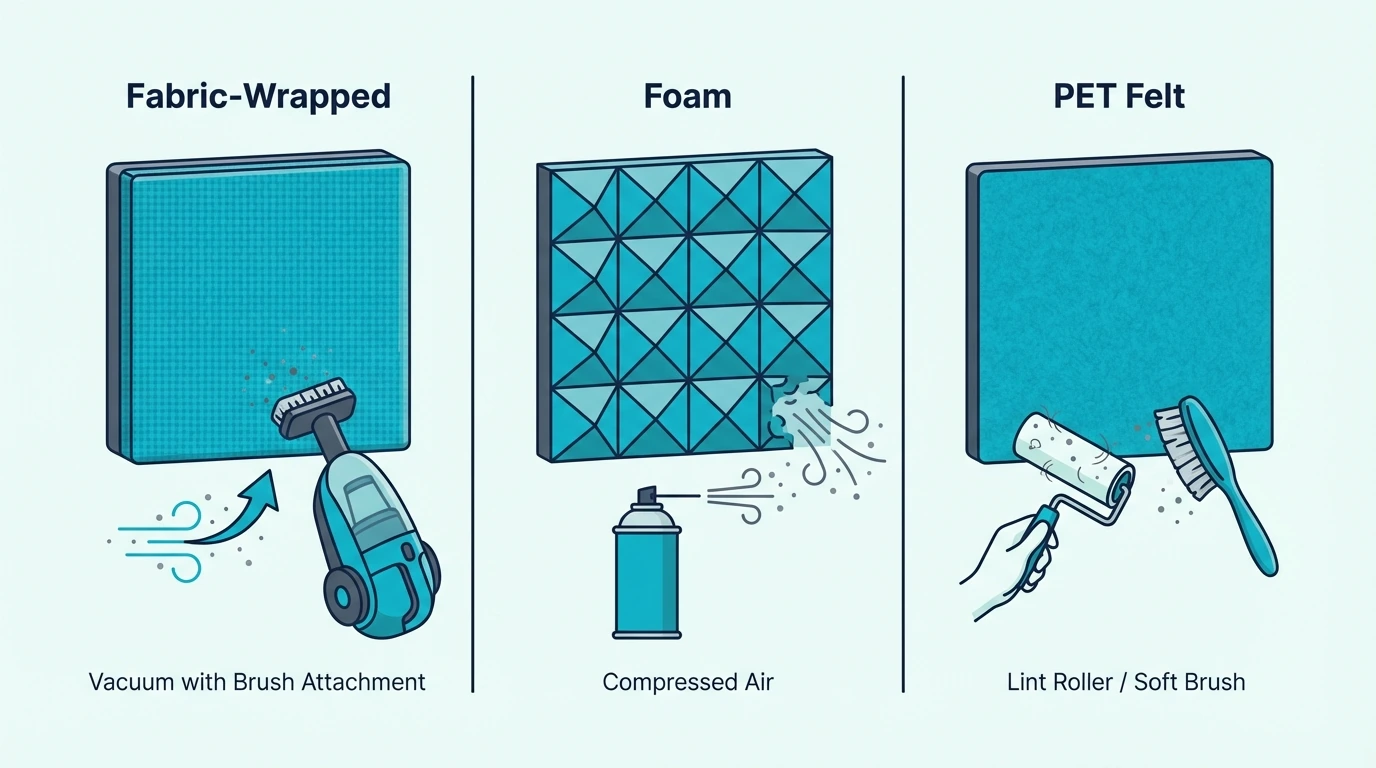
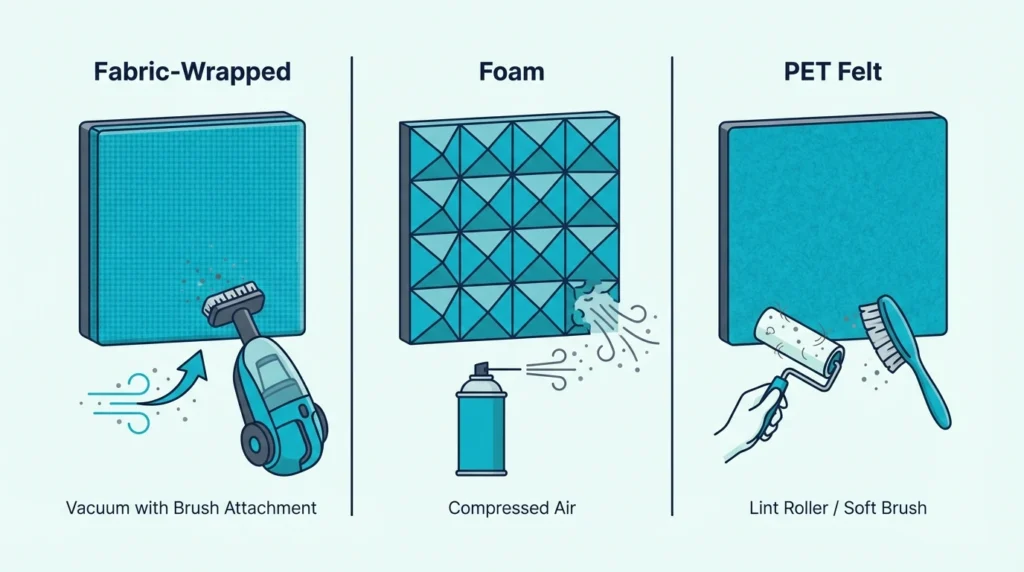
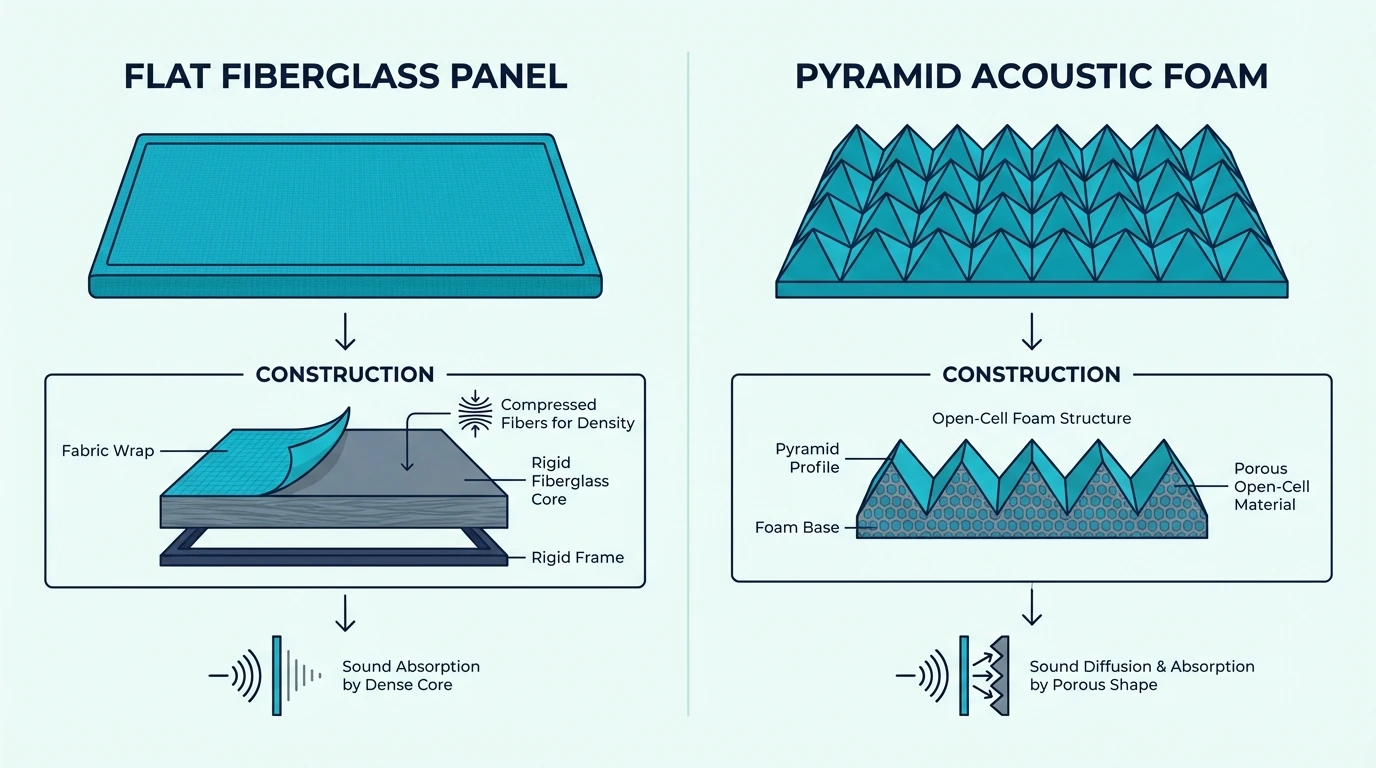
It starts with what’s inside — foam is open-cell polyurethane (the same family as mattress foam), while panels use rigid fiberglass or mineral wool cores wrapped in acoustically transparent fabric.
That single material difference ripples through everything: absorption range, NRC rating, lifespan, how the thing looks on your wall. Once you know which of those specs actually matters for your room, the decision practically makes itself.
How the materials affect absorption
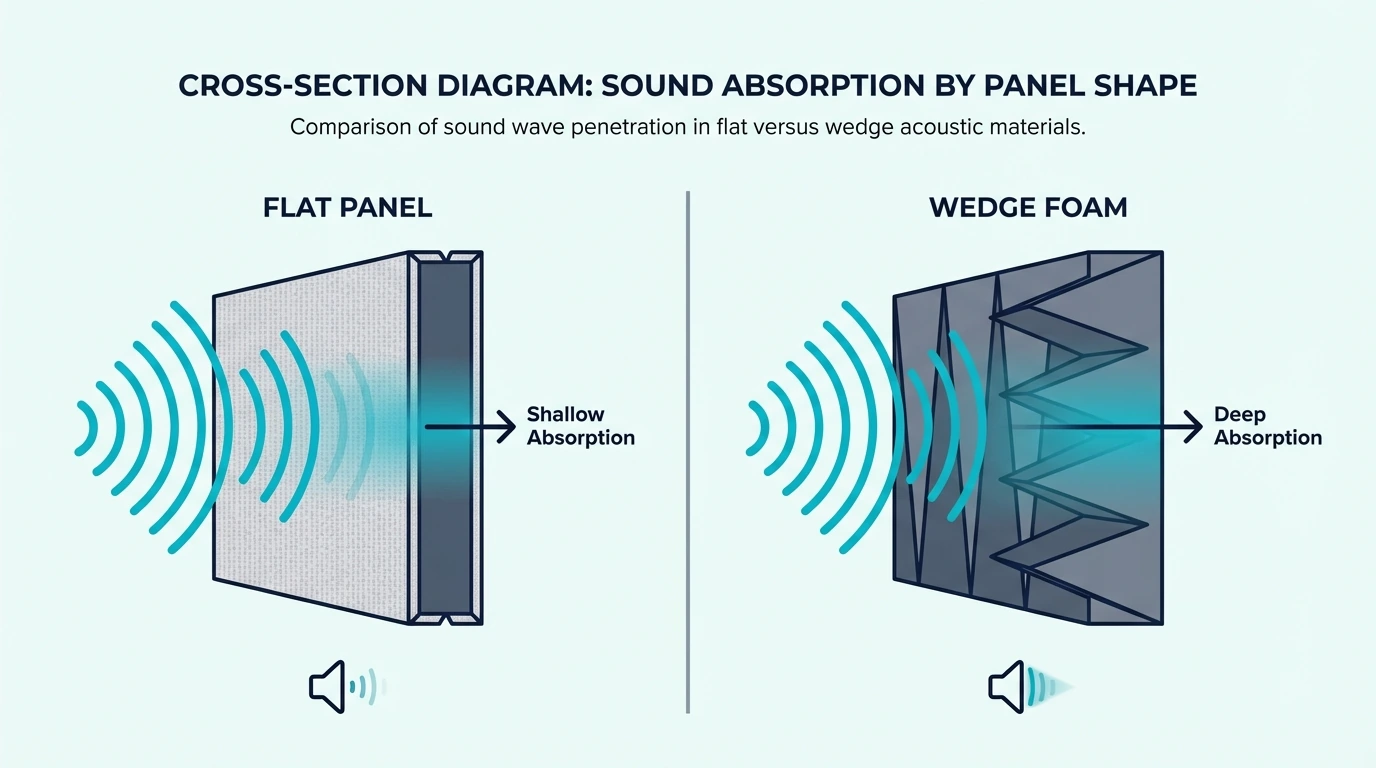
Foam’s open cells are relatively large and soft, so they mainly catch shorter wavelengths — the high frequencies. The denser fiber matrix in panels catches longer wavelengths too, which means more balanced absorption across the full spectrum instead of just the top end.
If you’re choosing between foam profiles, best acoustic foam shape breaks down when shape actually matters and when it doesn’t.
When does each option make sense?
Foam earns its place when budget is the main constraint and you need basic treatment for voice recording, podcasting, or taming obvious echo. It also works for temporary setups where you can’t drill into walls.
Panels are the play when performance is the priority — recording studios, mixing rooms, home theaters, any space where accurate sound reproduction is the goal. The higher upfront cost pays back through better absorption and a lifespan measured in decades, not years.
Performance isn’t the only reason professionals choose panels, though.
How they look in your space
This one matters more than people admit. Foam’s pyramid and wedge textures have become visual shorthand for “studio,” which works when that’s the vibe you want but clashes with living spaces, client-facing rooms, or anywhere decor matters.
Fabric-wrapped panels come in virtually any color and can be customized with printed fabric or brand logos — many offices and restaurants use them as design elements without visitors realizing they serve an acoustic purpose. If anyone besides you sees the room, panels integrate where foam announces itself.
What Is Acoustic Foam?
So what is this stuff, exactly? What foam is made of explains both why it works and where it hits a wall. Let’s start with the basic chemistry.
What is acoustic foam made of?
Acoustic foam is open-cell polyurethane — a petroleum-based plastic formed with a cellular structure. The open cells create air pockets that trap sound waves and convert acoustic energy into small amounts of heat.
The pyramid, wedge, and egg-crate patterns you see on foam tiles increase surface area, but in practice the material’s density and thickness matter more than the shape. Budget foam runs as light as 1 lb per cubic foot while better options reach 1.5–2 lbs, and that density difference shows up directly in how much sound the foam actually absorbs.
Foam fundamentally can’t match the 3–6 lb density of fiberglass or rockwool though, which is why even the best foam has a frequency ceiling that panels don’t. If you’re choosing between patterns, acoustic foam pyramid vs wedge covers when shape actually shifts performance.
What is acoustic foam good for?
Foam excels at the high end — sibilance in speech, cymbal crashes, and the “air” frequencies above 2000 Hz. For voice recording, foam behind a microphone reduces the obvious reflections that make recordings sound roomy.
The lightweight construction also makes installation painless: adhesive strips or mounting tape, no specialized tools, no permanent wall damage. The 24-Pack Pyramid Acoustic Foam Panels is a typical entry point — enough to experiment with placement before committing to a larger setup.
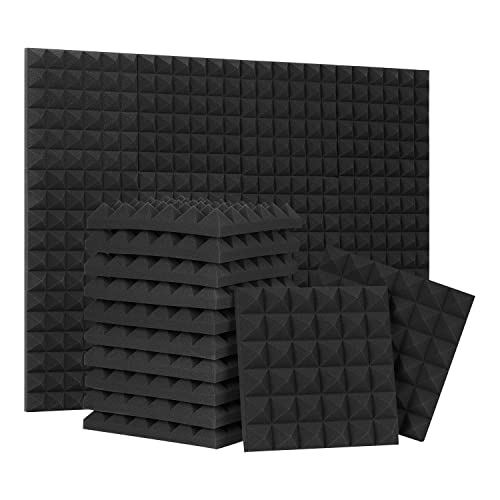
24-Pack Pyramid Acoustic Foam Panels
For an even cheaper trial, the JBER 12-Pack Foam Panels lets you hear what one treated wall sounds like before scaling up. If placement is the question, how to arrange acoustic foam covers reflection points without the guesswork.
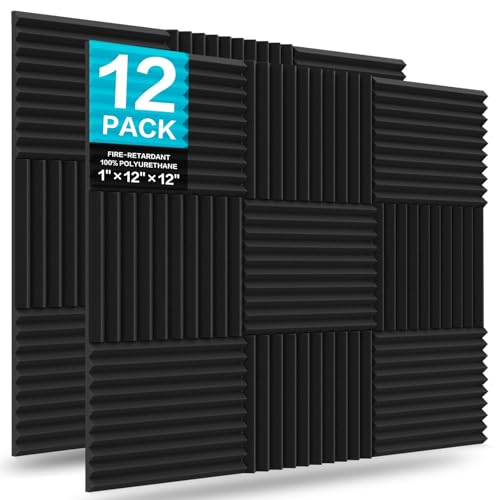
JBER 12-Pack Foam Panels
The same lightweight structure that makes foam easy to install also limits its performance ceiling.
What are acoustic foam’s limitations?
That density ceiling shows up the moment you move past high frequencies. Anything below about 500 Hz passes through foam almost unaffected — voice fundamentals, guitar body, kick drums, and bass all get minimal treatment.
The result is unbalanced absorption: high frequencies disappear while mids and lows keep bouncing, which makes the room sound “dark” or “muddy” despite looking treated. You’ve removed sparkle but left the real problems untouched.
Foam also degrades — UV light, humidity, and air cause polyurethane to break down until it’s brittle, crumbly, and acoustically useless. Most foam lasts 3–5 years before you’re buying it again.
Get Studio Tips Weekly
Join 5,000+ creators getting acoustic treatment advice every week.
No spam. Unsubscribe anytime.What Are Acoustic Panels?
Foam tops out at the high end — panels pick up everything it leaves behind. They cost more, weigh more, and absorb frequencies that foam physically cannot reach. Professional panels use fundamentally different materials to achieve their broader absorption range.
What are panels made of?
Professional acoustic panels use rigid fiberglass (like Owens Corning 703) or mineral wool (like Rockwool) as their core — materials developed specifically for acoustic absorption and thermal insulation.
The fibers pack tightly at 3–6 lbs per cubic foot, creating a dense matrix that absorbs a broad range of frequencies. A wood or metal frame holds the core, and acoustically transparent fabric wraps the whole assembly so no fibers escape into your room.
What are panels good for?
Two-inch panels absorb effectively from about 250 Hz upward, and 4-inch panels extend down to 125 Hz — covering voice fundamentals, most instruments, and the problematic mid frequencies that cause mix translation issues.
That proportional absorption is the whole point — the room sounds controlled rather than artificially dark (which is exactly what happens when foam eats the highs and leaves everything else bouncing around). Every professional studio uses panels for primary treatment because of that balance.
The UMIACOUSTICS 2-Inch 4-Pack shows the construction difference in practice — fiberglass core, fabric wrap, and you can hear why it costs more the second you A/B it against foam.
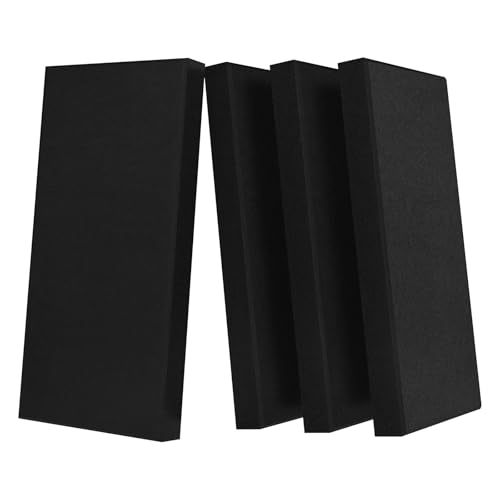
UMIACOUSTICS 2-Inch 4-Pack
Why do panels cost more?
Fiberglass and rockwool cost more than polyurethane, and the construction adds frames, fabric, and assembly on top of that — so the price jump isn’t arbitrary.
But run the cost-per-year math and panels often come out ahead. A panel lasting 15 years costs less annually than foam replaced every 4 years — and sounds better for every one of those years.
How Does Absorption Performance Compare?
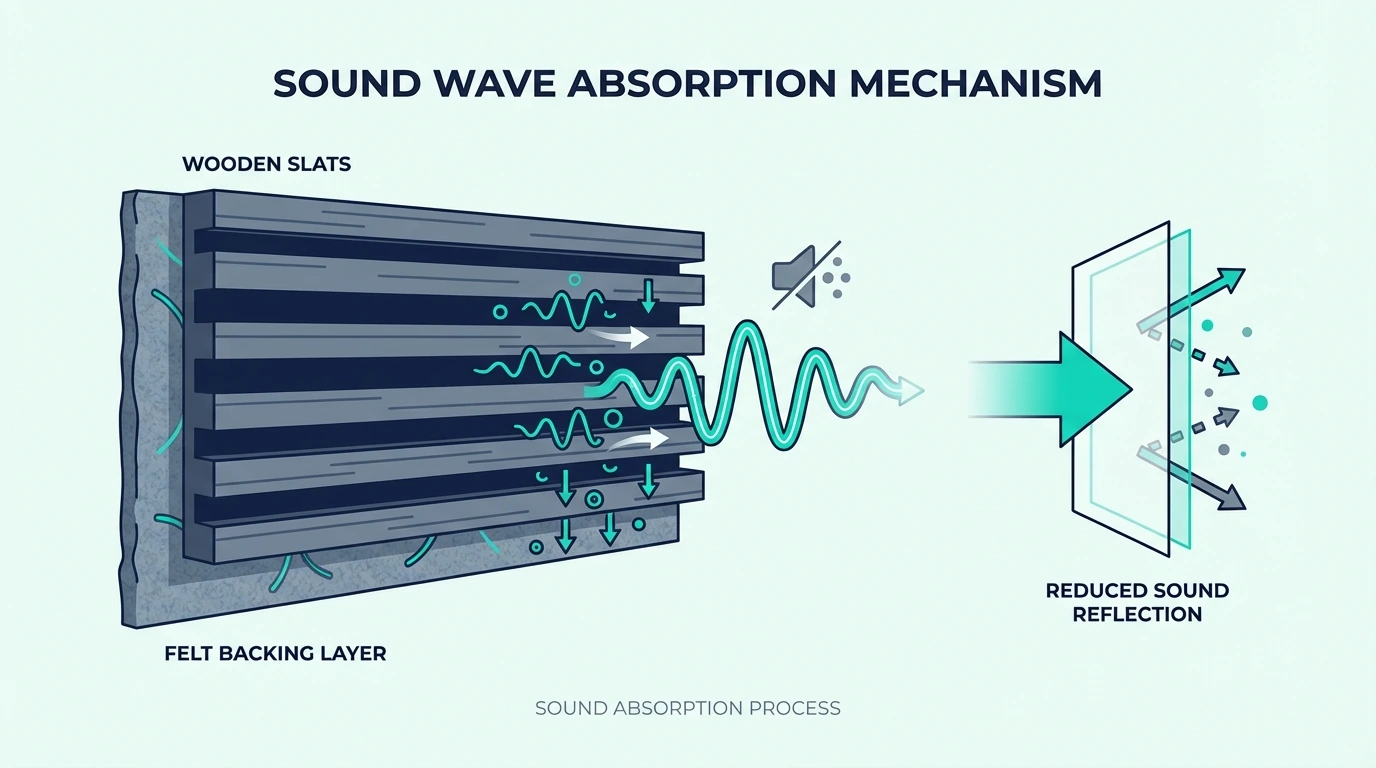
Materials explain why the gap exists. Numbers show how wide it actually is — and it’s wider than most people expect.
How does frequency absorption compare?
Foam absorbs effectively above 500–1000 Hz, with performance dropping off a cliff at lower frequencies. The thin, soft material simply can’t interact with longer wavelengths.
Two-inch fiberglass panels absorb down to about 250 Hz, and 4-inch panels reach 125 Hz. That extra depth and density give lower-frequency waves enough material to lose their energy in.
This gap matters enormously for music — a 100 Hz bass note has a wavelength of 11 feet that foam can’t touch. Even a 250 Hz note (lower male vocals) has a 4.5-foot wavelength that passes through foam largely unaffected.
How do NRC ratings compare?
NRC — Noise Reduction Coefficient — averages absorption across test frequencies. Higher means more absorption, and the spread between foam and panels is not subtle.
| Product Type | Typical NRC | Effective Range |
|---|---|---|
| Budget Acoustic Foam | 0.30–0.40 | 1000Hz+ |
| Quality Acoustic Foam | 0.40–0.55 | 500Hz+ |
| 2” Fiberglass Panels | 0.85–0.95 | 250Hz+ |
| 4” Fiberglass Panels | 0.95–1.0 | 125Hz+ |
A 0.50 NRC means half the sound bounces back; a 0.95 NRC means almost nothing returns. In a reverberant room, that difference hits your ears immediately.
How does lifespan compare?
Foam degrades — polyurethane breaks down through oxidation, UV exposure, and humidity until it’s brittle, crumbly, and acoustically useless. Most foam needs replacing within 3–5 years.
Fiberglass and rockwool are essentially inert — properly installed panels maintain full performance for 15–20+ years. The fabric might need replacing eventually, but the core that does the absorbing doesn’t degrade.
How Does Cost Compare?
Foam wins on sticker price by a wide margin — but the long-term math flips once you factor in those NRC numbers and how often you’re replacing the stuff. Let’s look at the upfront numbers first.
What’s the price per square foot?
Budget foam runs a few dollars per square foot, while quality higher-density foam reaches the mid-single digits. Professional fiberglass panels typically cost three to five times more per square foot for pre-made options, though DIY panels using raw materials close that gap significantly.
For a room needing 50 square feet of treatment, the foam total lands in the low hundreds while panels push toward several hundred or more. You’ll feel that difference at checkout — but you’ll hear the performance difference every time you hit record.
Evaluating the actual cost means looking beyond the initial purchase price.
Which offers better long-term value?
Foam replaced every 4 years doesn’t actually save money over panels that last 15+. The cost-per-year ends up similar, except panels sound noticeably better for every one of those years.
The UMIACOUSTICS Large Panels are a good example — a decade from now you’re still getting full-spectrum absorption from the same set while someone on foam is shopping for their third replacement.
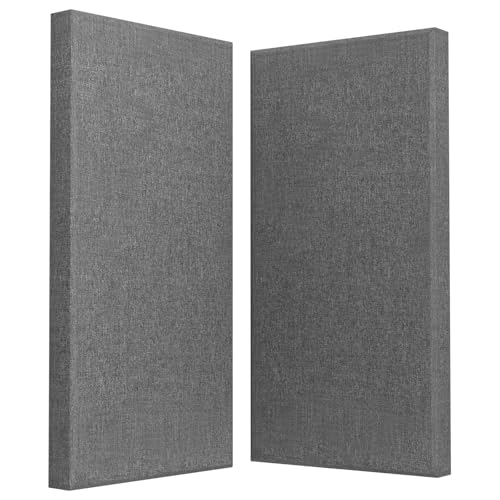
UMIACOUSTICS Large Panels
How Do Acoustic Foam and Panels Compare Overall?
One table, all the key numbers side by side.
| Factor | Acoustic Foam | Acoustic Panels |
|---|---|---|
| Core Material | Polyurethane | Fiberglass/Rockwool |
| Typical NRC | 0.30–0.55 | 0.85–1.0 |
| Frequency Range | 500Hz+ (high only) | 125–250Hz+ (full range) |
| Lifespan | 3–5 years | 15–20+ years |
| Appearance | Industrial/patterned | Professional/decorative |
| Installation | Adhesive/tape | Mounting hardware |
| Fire Rating | Varies (check specs) | Usually Class A rated |
| Best For | Budget, temporary, vocals | Professional, permanent, full-range |
Which Should You Choose?
Specs tell you what each product does — your room and your budget tell you which one to buy.
When should you choose foam?
If budget is the hard constraint, foam still beats bare walls — and for voice recording, the high-frequency reflections it kills are the biggest offenders anyway.
It also works for temporary spaces or rentals where you can’t make permanent modifications — foam’s light weight and adhesive mounting mean zero wall damage. If you’re experimenting before committing to a bigger investment, how to choose acoustic foam helps you get the right thickness and density the first time so you don’t waste the experiment.
When should you choose panels?
Go with panels when audio quality is the priority — recording, mixing, content creation, home theater. That NRC gap from the comparison translates directly into audible quality you’ll notice on the first session.
They’re also the smarter pick for permanent spaces — better performance, longer lifespan, lower cost per year once you stop replacing degraded foam. And if anyone besides you sees the room, panels blend into decor where foam screams “studio.”
If you still want foam options regardless, the best acoustic foam panels roundup is the short list.
When using both makes the most sense
You don’t have to pick one exclusively — use panels at the positions that matter most (first reflection points, behind monitors, corners as bass traps) and fill secondary spots with foam. This puts broadband absorption where it counts while keeping the total closer to a foam-only budget.
A practical split is 30% panels at critical positions and 70% foam for supplemental coverage, which sounds closer to an all-panel room than an all-foam room at a fraction of the cost. If you want the deeper material-level breakdown of what’s inside those panels, acoustic foam vs rockwool covers the physics, real costs, and DIY details.
Conclusion
Foam and panels both absorb sound — but the level of performance, the lifespan, and the long-term cost tell very different stories.
If you’re starting out with voice recording and need quick improvement on a tight budget, foam is a legitimate first step — it will sound better than bare walls on day one. If you’re building a space where sound quality matters for years, panels pay for themselves through broader absorption and zero replacement cycles.
Pick the one that matches the problem you’re solving, not the price tag you prefer, and your room will sound better either way.
Frequently Asked Questions
Can acoustic foam replace panels?
Not for serious applications — they address different parts of the frequency spectrum, and the gap in effectiveness is enormous.
Foam can supplement panels (behind a microphone where high-frequency reflection is the main concern, for example), but foam alone leaves mids and lows completely untreated. If you’re treating a booth specifically, the acoustic foam vocal booth guide covers placement and thickness for that use case.
What do professional studios use?
Professional studios use fiberglass or rockwool panels almost exclusively. You’ll rarely find acoustic foam doing primary treatment in a commercial facility.
The exception is isolation booths or vocal positions where high-frequency treatment is the specific goal — and even there, foam typically supplements panels rather than replacing them. The does acoustic foam work guide covers the realistic expectations.
Can you mix foam and panels together?
Yes, and for many budgets it’s the smartest approach. Put panels at first reflection points where full-frequency absorption matters most, then use foam in secondary positions or behind microphones where high-frequency treatment is enough.
That mix outperforms a foam-only room by a wide margin while costing far less than panels everywhere. The trick is putting the expensive material where your ears will notice it most — the acoustic foam wall install guide covers mounting methods for both types.
Does either one soundproof a room?
Neither one. Foam and panels absorb sound within a room — they reduce echo and reverb, not noise going through walls.
If your goal is blocking sound from neighbors or keeping sound inside, you need mass, sealing, and decoupling. The acoustic foam alternatives guide covers materials that actually work for isolation, and the is acoustic foam worth it breakdown helps you decide if foam fits your situation at all.