Best Corner Acoustic Foam & Bass Traps for Home Studios
Best corner acoustic foam can tighten up a home studio’s low end — but only when you treat corners as a bass problem, not a decoration problem. Foam wedges alone won’t fix deep sub-bass.
Boomy corners smear kick and bass, which makes mixes translate poorly and recordings sound muddy. That happens because low frequencies pile up where walls meet, and flat wall panels barely touch the buildup.
The right corner treatment gives you a more even low end and clearer midrange detail when you record or mix. It also helps you spend money on depth and coverage instead of flashy shapes.
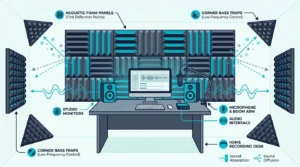
Below, start with the two front corners behind your monitors, then add coverage to the rear corners if the room still sounds uneven — and decide when foam is “good enough” versus when you need thicker fiberglass or rockwool traps.
For a broader look at foam options, start with the acoustic foam hub.
Most corner acoustic foam is a mid-bass tool, not a magic fix for deep sub-bass. Start by treating the two front corners behind your monitors, listen for tighter low end, then expand to all four corners if the room still sounds boomy.
Why Corners Need Special Treatment
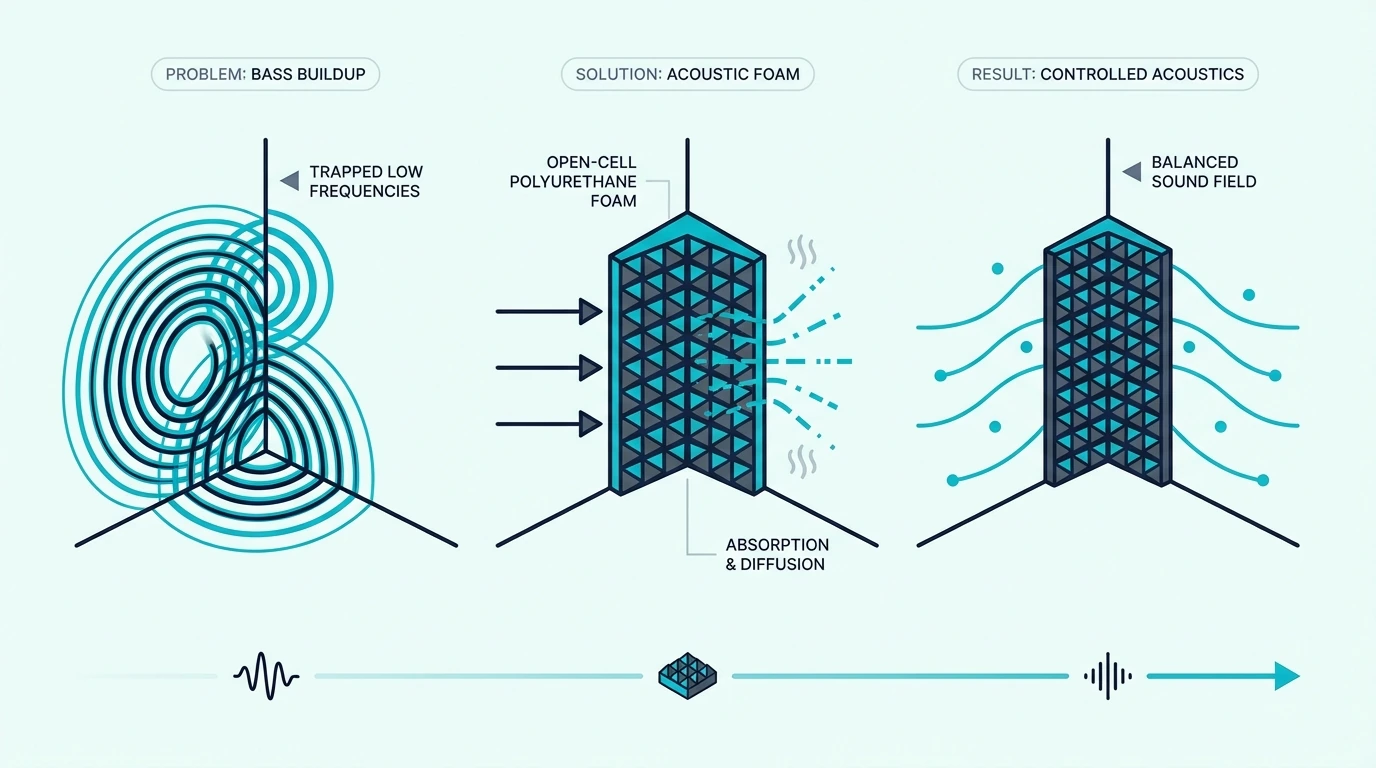
Understanding corner acoustics explains why standard foam panels don’t solve bass problems.
Bass Buildup in Corners
Low-frequency sound waves are large—a 100 Hz wave is over 11 feet long. These waves reflect off walls and accumulate where surfaces meet.
Corners, where three surfaces converge, concentrate the most bass energy. This concentration creates “room modes”—frequencies that resonate based on room dimensions.
At certain frequencies, bass becomes unnaturally loud; at others, it nearly disappears. The result is uneven, unreliable bass response that makes mixing and recording difficult.
If you’re building a studio setup, start with best acoustic foam for recording to match foam type and thickness to your use case.
Why Flat Panels Don’t Work
Standard acoustic foam panels are typically 2-4 inches thick. They absorb frequencies with wavelengths roughly four times their thickness—meaning 2-inch foam works above 500 Hz, and 4-inch foam works above 250 Hz.
Bass frequencies (20-200 Hz) have wavelengths of 5-56 feet. No practical thickness of flat wall foam absorbs these frequencies effectively.
Corner treatment requires different approaches: either very thick absorbers or designs that use corner placement to enhance effectiveness.
For foam selection by thickness and typical performance, see the best budget acoustic foam guide.
Corner Placement Advantage
Placing absorbers in corners provides a physics advantage. Sound pressure is highest at room boundaries, and corners represent the intersection of multiple boundaries.
Absorbers in corners encounter higher sound pressure, which increases their effective absorption. A bass trap in a corner can absorb 2-4 times more low-frequency energy than the same trap placed flat on a wall.
Best Corner Acoustic Foam & Bass Traps
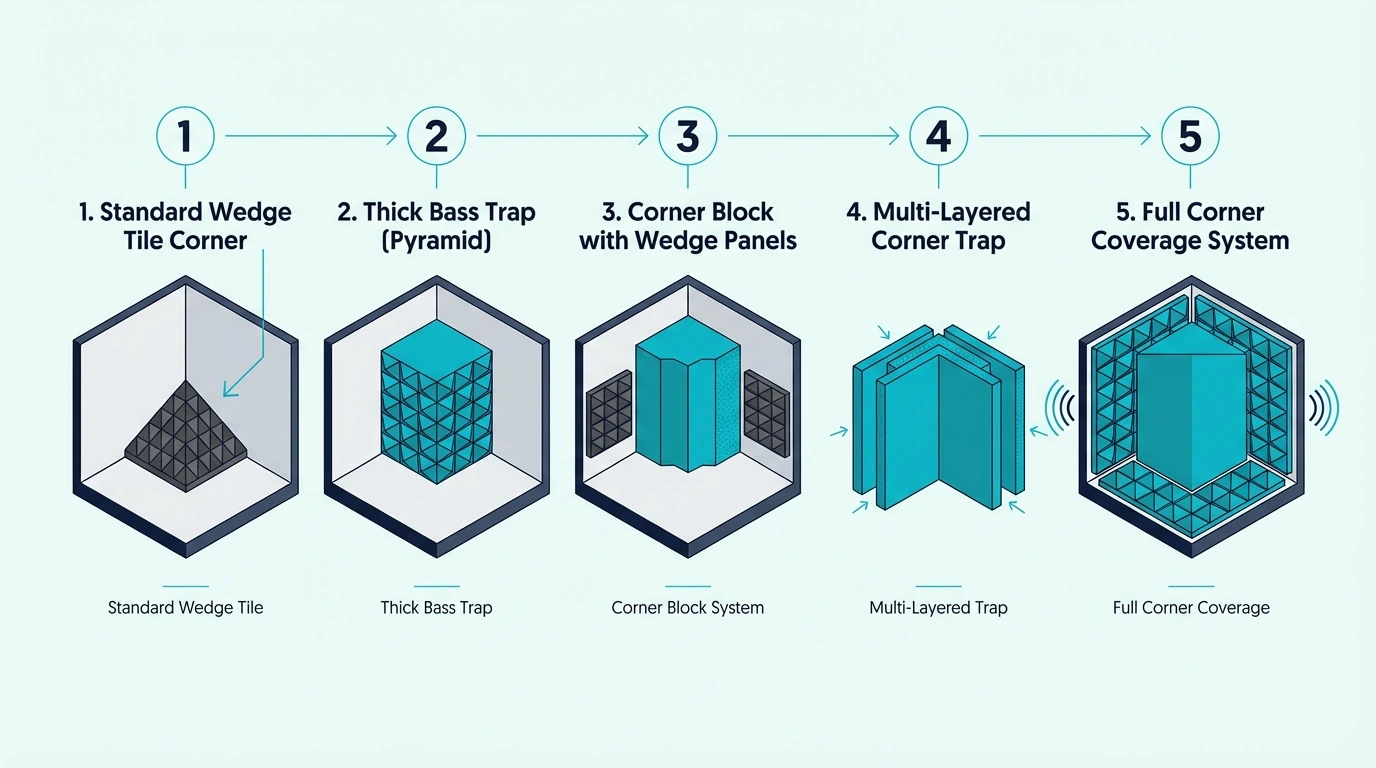
These picks focus on corner-style acoustic foam bass traps you can install quickly.
Foam corner traps primarily help mid-bass, so if you’re chasing truly flat low end, combine corners with a broader foam setup and treat the rest of the room methodically.
Best Overall
8-Pack Corner Bass Trap Foam Blocks is a simple way to start treating corners without overthinking the setup.
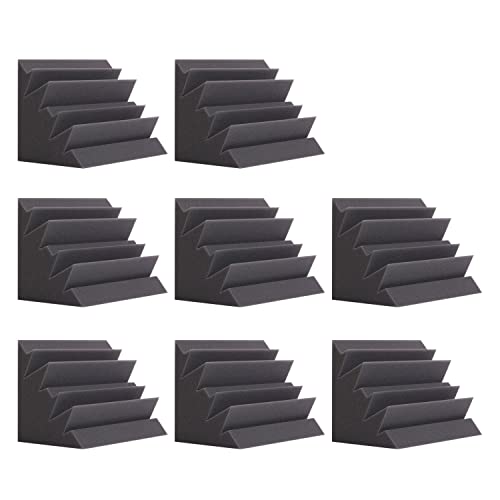
8-Pack Corner Bass Trap Foam Blocks
Use it to cover at least the two front corners first, then expand to the rear corners if the room still sounds uneven.
Best for Low-End Control
2-Pack Delta Corner Bass Traps uses a larger profile that fills more of the corner than small wedges.
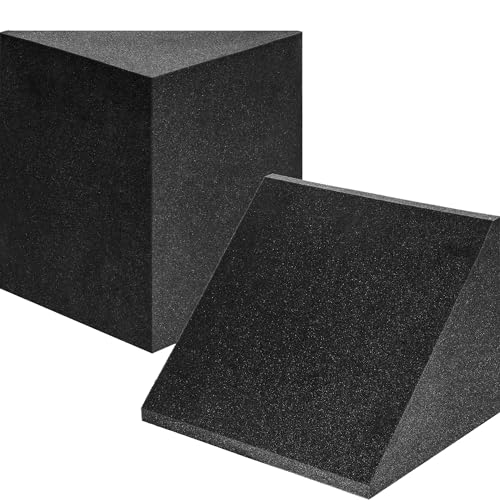
2-Pack Delta Corner Bass Traps
That extra depth is the main lever foam has for reaching a bit lower.
Best Value
12-Pack Corner Bass Trap Foam Set is a good fit when you want enough pieces to treat multiple corners on a tight budget.
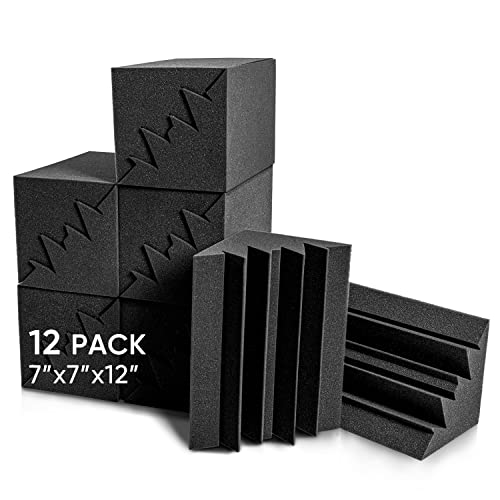
12-Pack Corner Bass Trap Foam Set
Treating more surface area usually beats buying a single “premium” foam piece for one corner.
Best for Small Rooms
4-Pack Corner Bass Trap Wedges works well when you have limited space and just need a practical first pass on corner boom.
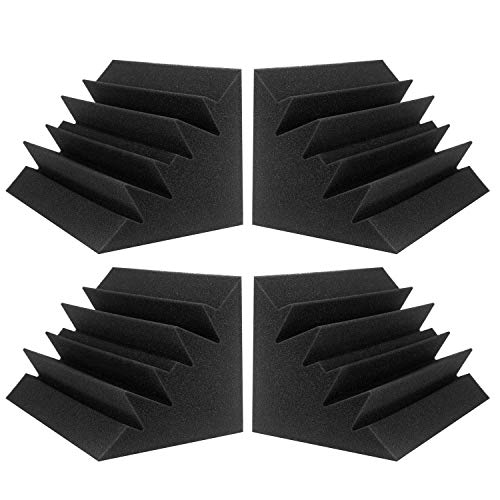
4-Pack Corner Bass Trap Wedges
In a bedroom studio, even a small reduction in mid-bass buildup can make monitoring feel more consistent. The best beginner acoustic foam guide covers starter setups for small rooms.
Best for Ceiling Corners
TroyStudio Bass Trap Strips (12 pcs) is useful for treating wall-ceiling corners where larger corner blocks won’t fit.
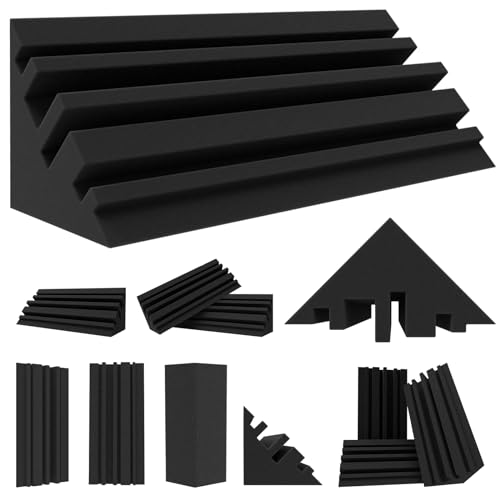
TroyStudio Bass Trap Strips (12 pcs)
These strips are most effective as a complement to thicker corner foam on the vertical corners.
Best for Tight Corners
TroyStudio Bass Trap Strips (12 pcs) (Alternative) is another flexible option when you need multiple pieces to fit around trim, outlets, or awkward corner geometry.
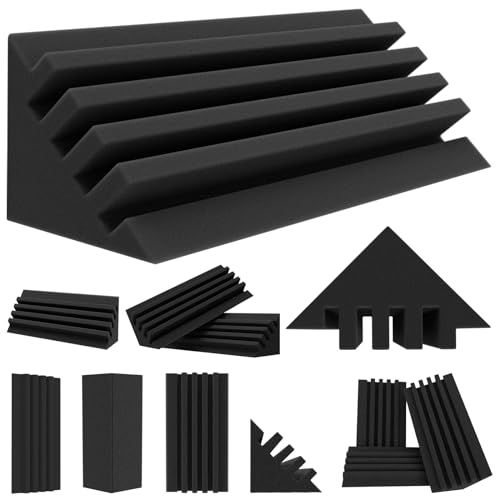
TroyStudio Bass Trap Strips (12 pcs) (Alternative)
If you’re unsure which foam shape is easiest to place in your room, compare options in best acoustic foam shape.
Get Studio Tips Weekly
Join 5,000+ creators getting acoustic treatment advice every week.
No spam. Unsubscribe anytime.Foam vs Fiberglass Corner Traps
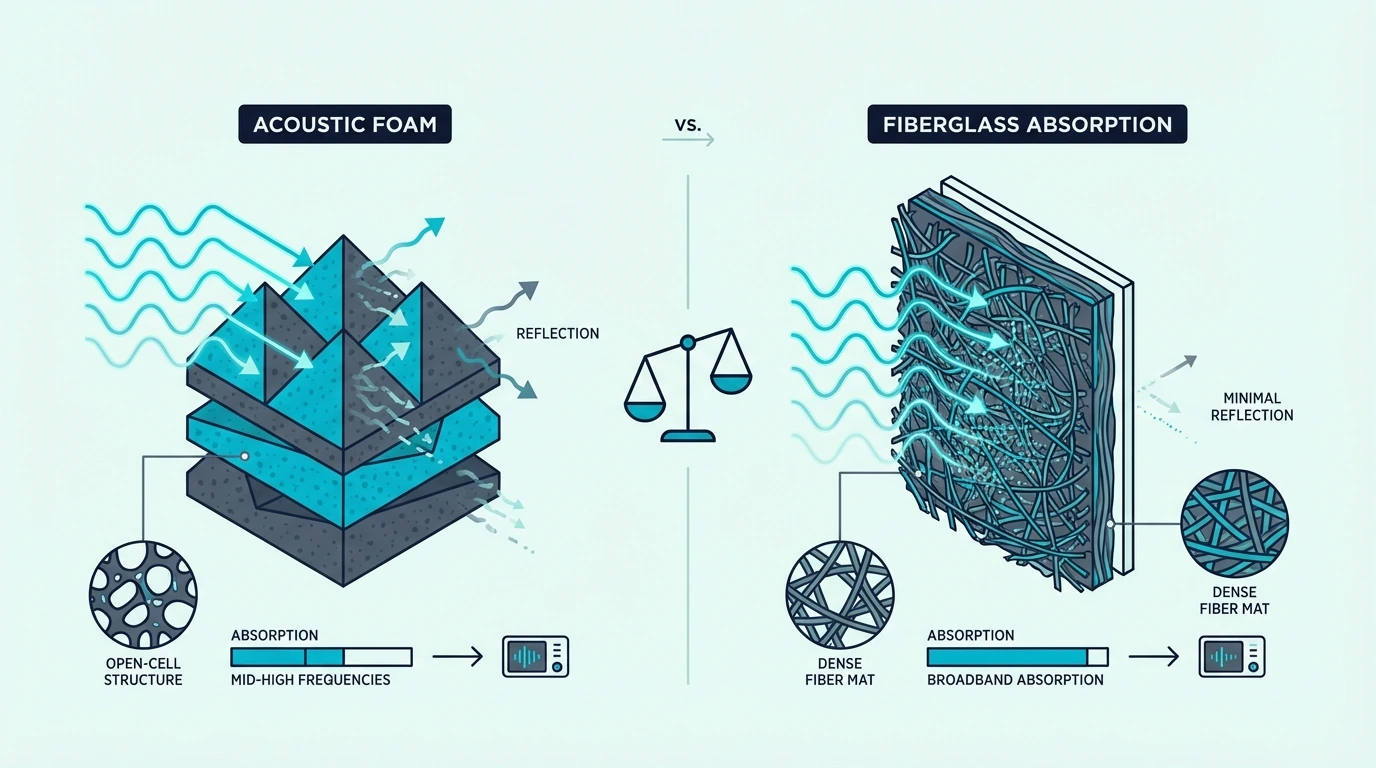
The material inside corner traps has a major effect on performance.
Foam Corner Traps
Advantages: – Lower cost – Lightweight, easy to install – No fiber concerns – Available in colors
Limitations: – Effective primarily above 200 Hz – Limited deep bass absorption – May compress over time – Lower density limits performance
Best applications: Mid-bass control, voice recording, rooms without severe bass problems.
Fiberglass/Rockwool Corner Traps
Advantages: – Effective to 60 Hz and below – True broadband absorption – Maintains performance over time – Professional-grade results
Limitations: – Higher cost (commercial options) – Heavier, more complex installation – Requires fabric wrapping – Fiber handling precautions needed
Best applications: Music production, mixing, mastering, rooms with serious bass problems.
The Verdict
For serious bass control, fiberglass or rockwool bass traps far outperform foam. The physics are clear: denser materials with greater thickness absorb lower frequencies.
Foam corner traps help—they’re better than nothing and address mid-bass effectively. But if bass problems are your primary concern, invest in proper bass traps rather than foam alternatives.
How Many Corner Traps Do You Need?
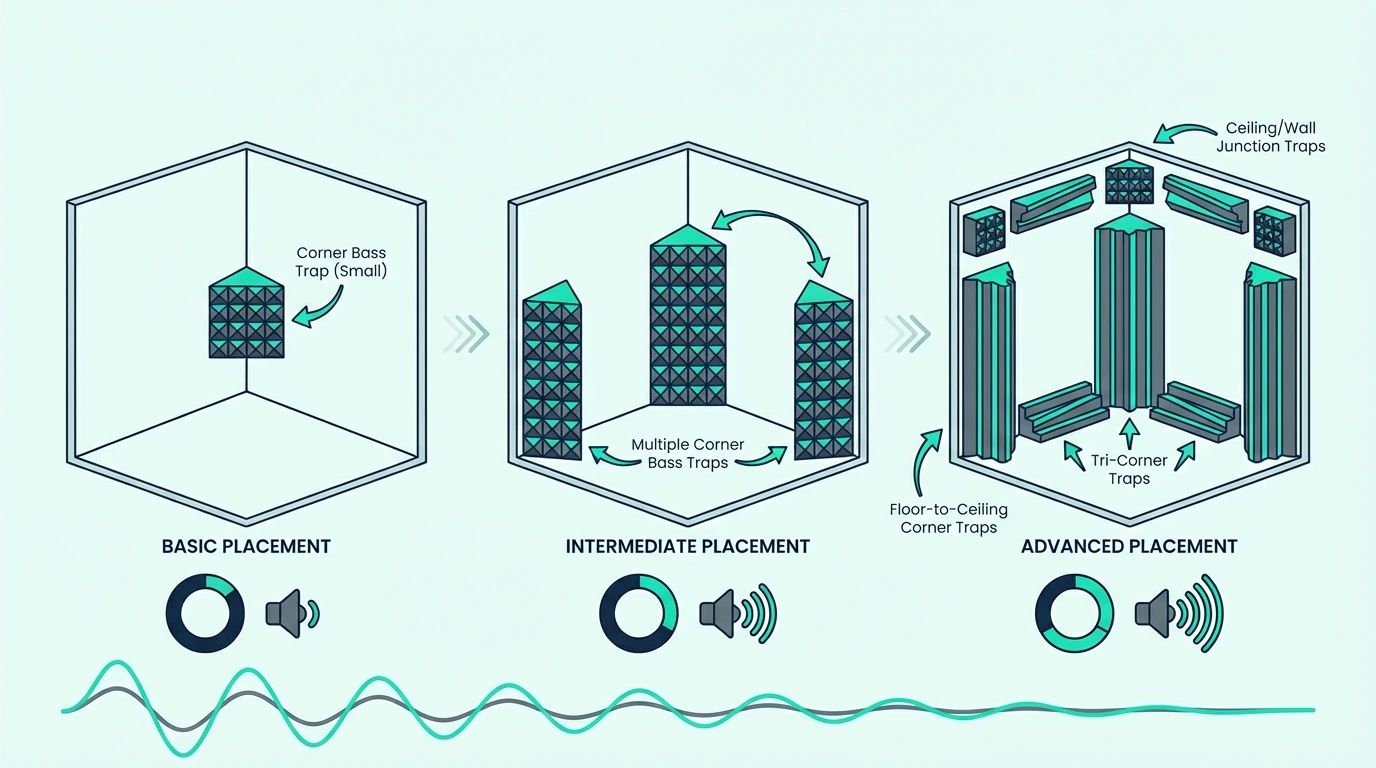
Corner trap quantity depends on room size and problem severity.
Minimum Effective Treatment
2 corner traps: Place in the front corners of your room (behind your monitors). This addresses the most critical bass buildup affecting your listening position.
Even minimal corner treatment improves bass clarity noticeably. Start here if budget is limited.
Recommended Treatment
4 corner traps: All four vertical corners, floor to ceiling or as high as practical. This provides balanced bass control throughout the room.
Four corners treated creates symmetrical absorption, preventing bass from being controlled on one side but not the other.
Full-Room Treatment
8+ corner traps: All vertical corners plus wall-ceiling and wall-floor corners. This level of treatment suits professional mixing and mastering rooms.
Horizontal corners (where walls meet ceiling and floor) also accumulate bass. Treating these provides additional control, though vertical corners remain the priority.
Room Size Considerations
Larger rooms have lower-frequency room modes and may need more treatment. Smaller rooms have higher-frequency modes that foam traps address more effectively.
For small rooms (under 150 sq ft), foam corner traps may provide adequate control. For larger rooms, fiberglass traps become increasingly important.
Installation Guide
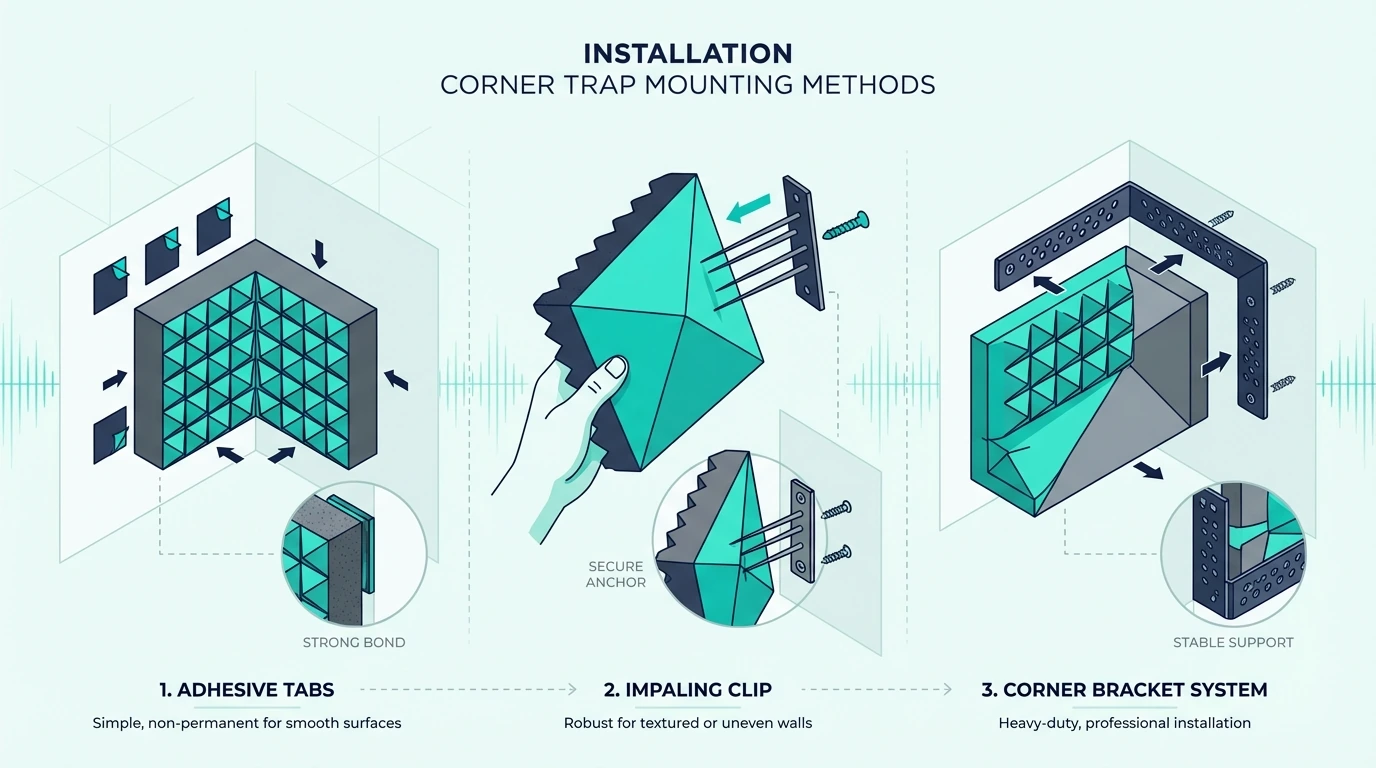
Proper installation ensures corner traps perform as intended.
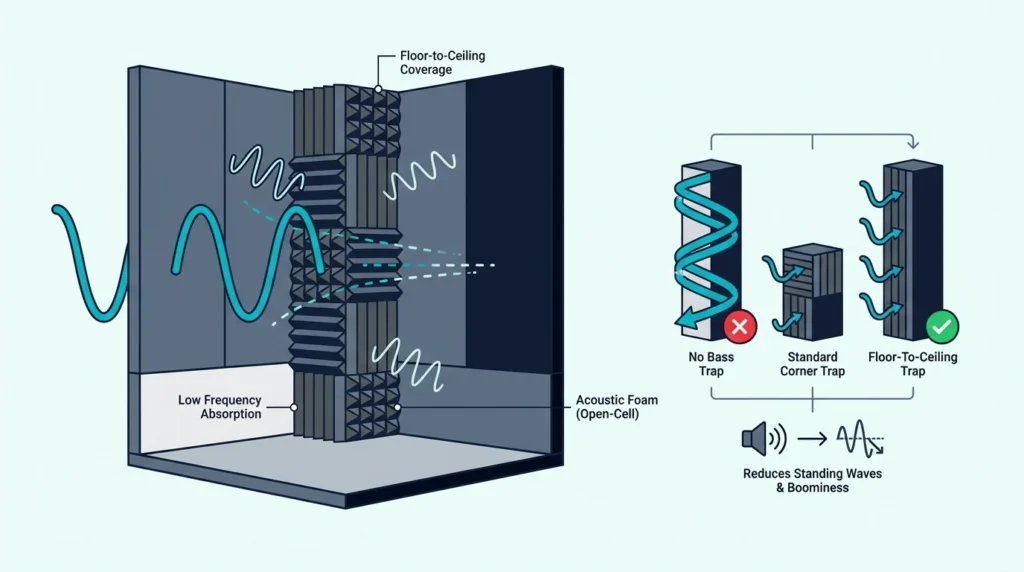
Floor-to-Ceiling Stacking
For maximum effectiveness, stack corner traps from floor to ceiling. Bass energy exists throughout the corner’s height—treating only part leaves problems unsolved.
Most commercial traps are designed for stacking. Secure bottom traps to the floor or wall, then stack additional units on top.
Mounting Methods
Freestanding: Simply place traps in corners. Works for heavy fiberglass traps that won’t tip. Easiest installation, fully removable.
Wall-mounted: Attach mounting hardware to walls, hang traps. Necessary for foam traps that might shift. Use appropriate anchors for your wall type.
Suspended: Hang from ceiling in upper corners. Useful when floor space is limited or for treating ceiling-wall corners.
Air Gap Considerations
Leaving a small air gap (1-4 inches) behind corner traps can extend low-frequency absorption. The gap allows the trap to absorb sound from both front and back surfaces.
This technique works better with fiberglass traps than foam. Experiment with gap size—larger gaps extend absorption to lower frequencies but reduce high-frequency performance.
For adhesive vs removable mounting options, see best budget acoustic foam.
Corner Treatment vs Wall Treatment
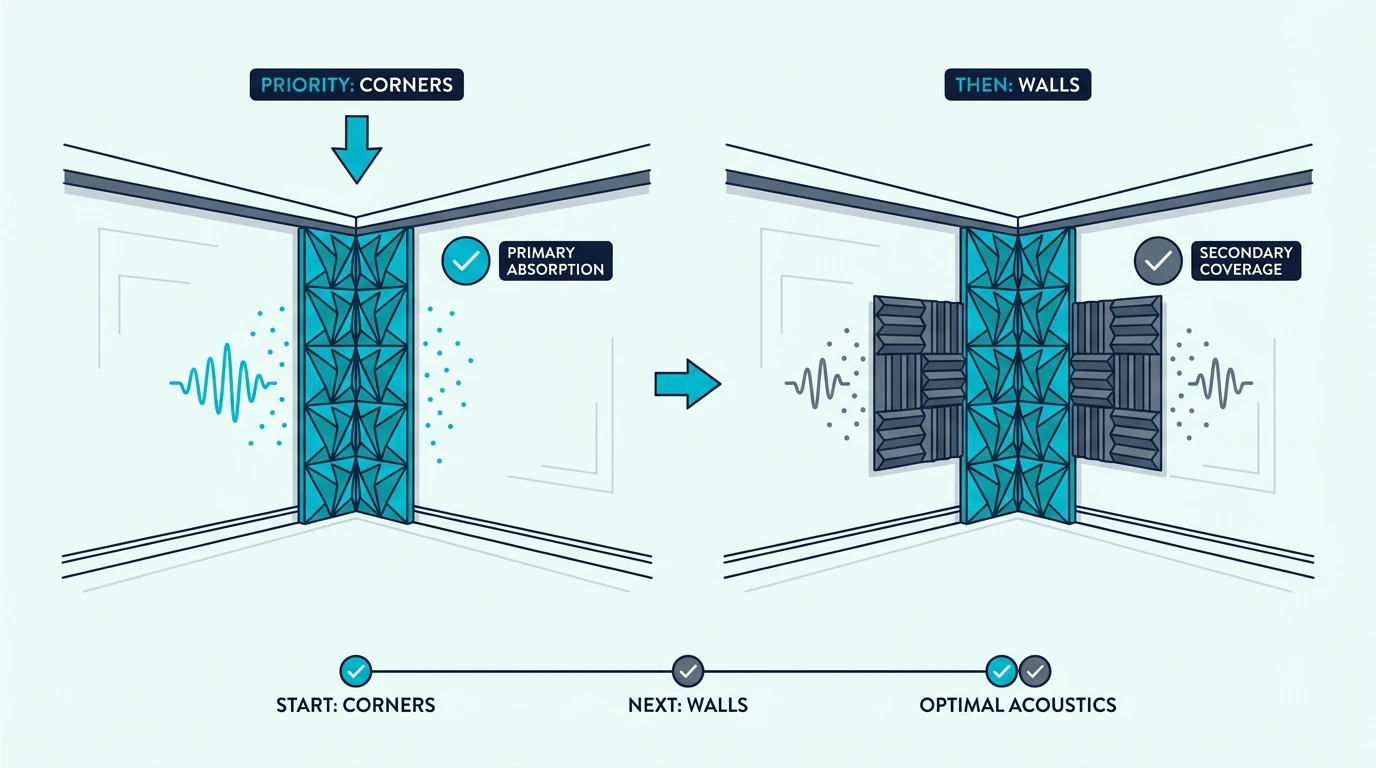
Limited budget? Prioritize corner treatment over wall panels.
Why Corners First
Bass problems affect everything. Boomy, uneven low end masks mid-range detail, makes mixing decisions unreliable, and creates listener fatigue.
Fixing bass first provides the foundation for accurate sound.
Wall panels address reflections and flutter—important, but secondary to bass control. A room with treated corners and bare walls sounds better than a room with treated walls and bare corners.
Balanced Approach
Ideal treatment combines corner traps and wall panels. Corner traps handle bass, while wall panels handle mids and highs.
Together, they create a controlled, accurate listening environment.
If budget requires choosing, start with corner traps. Add wall panels as budget allows. The best acoustic foam panels guide ranks wall treatment options across price tiers.
This progression builds effective treatment systematically.
Be careful not to over-treat once you start adding panels — choose the right amount and thickness for your room before ordering.
For a room-ready set of options (including placement considerations), use best acoustic foam for recording as a reference.
Common Corner Treatment Mistakes
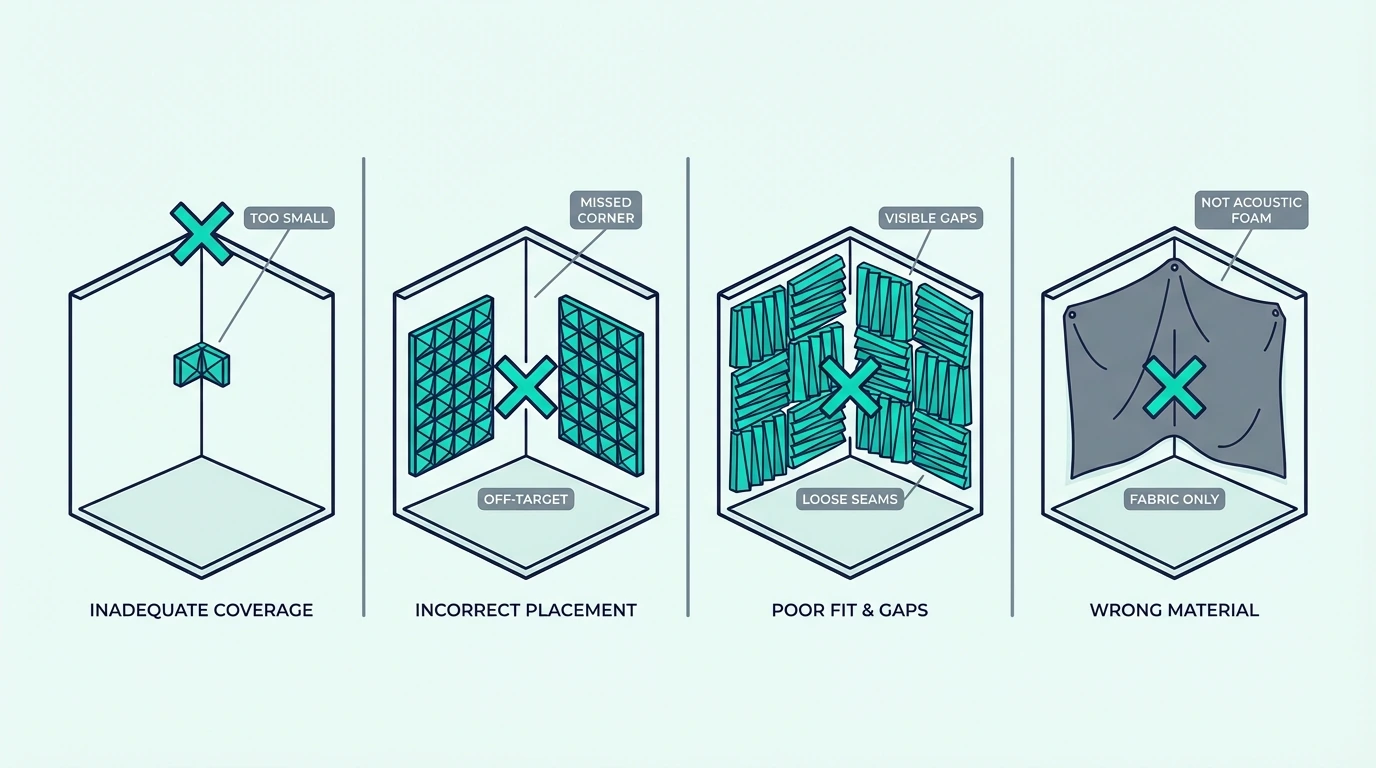
Avoid these errors that waste money and limit effectiveness.
Using Standard Foam Panels in Corners
Placing flat foam panels across corners doesn’t create a bass trap. The foam is still too thin to absorb bass frequencies.
You’ve just moved ineffective treatment to a corner.
True corner traps are either very thick (4+ inches of dense material) or specifically designed to use corner placement physics.
Insufficient Coverage
One small foam wedge in a corner provides minimal benefit. Bass traps need mass and coverage to be effective.
Floor-to-ceiling treatment in multiple corners creates real improvement.
Treating Only Some Corners
Treating front corners but not rear corners creates asymmetrical bass response. Sound that should be absorbed in back corners reflects forward, undermining front corner treatment.
Treat corners symmetrically when possible. If you must prioritize, front corners (near monitors) matter most for mixing.
Expecting Foam to Fix Deep Bass
Foam corner traps help with mid-bass (200-500 Hz) but don’t meaningfully affect deep bass (under 100 Hz). If your room has problems at 60-80 Hz, foam won’t solve them.
Be realistic about foam limitations. For deep bass control, fiberglass or rockwool traps are necessary.
For a practical breakdown of foam shapes and how they perform, see the best acoustic foam shape guide.
Conclusion
Corner treatment is the most impactful acoustic investment for rooms with bass problems. The physics are clear: bass accumulates in corners, and treating corners addresses problems at their source.
If you want a low-commitment starting point, begin with 8-Pack Corner Bass Trap Foam Blocks in the front corners.
If you need more pieces to cover multiple corners, 12-Pack Corner Bass Trap Foam Set is a practical way to expand coverage.
Whatever you choose, prioritize corner treatment over wall panels if budget is limited. Treat corners symmetrically and stack floor-to-ceiling when possible.
Be realistic about what foam can and can’t accomplish. Proper corner treatment transforms room acoustics, while inadequate treatment just decorates corners.
Frequently Asked Questions
Do foam corner bass traps actually work?
Foam corner traps mainly absorb mid-bass frequencies (200-500 Hz), which reduces boominess and improves clarity in that range. They’re much less effective below 200 Hz where many bass problems occur.
For rooms with moderate bass issues, foam traps can help noticeably. Podcast setups with voice-only recording may need less corner treatment — the best acoustic foam for podcasts guide covers that use case. For severe bass problems or frequencies below 100 Hz, fiberglass or rockwool traps perform far better.
How many corner bass traps do I need?
Minimum: 2 traps in front corners (behind monitors). Recommended: 4 traps covering all vertical corners.
Full room: 8+ traps including wall-ceiling corners. Start with front corners and add more as budget allows.
Floor-to-ceiling coverage in each corner usually provides better results than partial coverage spread across more corners.
Where should I put corner bass traps?
Prioritize vertical room corners, starting with the front corners behind your monitors or speakers. These corners most directly affect what you hear at your listening position.
Next, treat rear corners for balanced absorption. Wall-ceiling and wall-floor corners are lower priority but beneficial for full-room treatment.
Are bass traps better than acoustic foam panels?
For bass frequencies, yes — far better. Standard foam panels (2-4 inches) don’t absorb bass effectively regardless of placement.
Bass traps using thick fiberglass or rockwool absorb frequencies that foam can’t touch. For mid and high frequencies, foam panels can still work well.
Ideal treatment combines bass traps in corners with foam panels on walls.
Can I make DIY corner bass traps?
Yes, and DIY traps often outperform commercial foam options at lower cost. Stack mineral wool batts or rigid boards in corners and wrap them with acoustically transparent fabric.
A 4-inch thick DIY mineral wool trap absorbs more bass than commercial foam traps costing twice as much. The tradeoff is construction time and handling mineral wool safely.
What’s the difference between corner bass traps and regular acoustic panels?
Corner bass traps are designed for low-frequency absorption using thick, dense materials and corner placement physics. Regular acoustic panels are thinner and designed for mid/high frequency absorption on flat walls.
They serve different purposes: bass traps control low-end buildup, while panels control reflections and echo. Most rooms benefit from both.