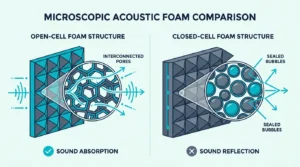
Why Is Acoustic Foam Shaped? Wedges, Pyramids & What Actually Matters
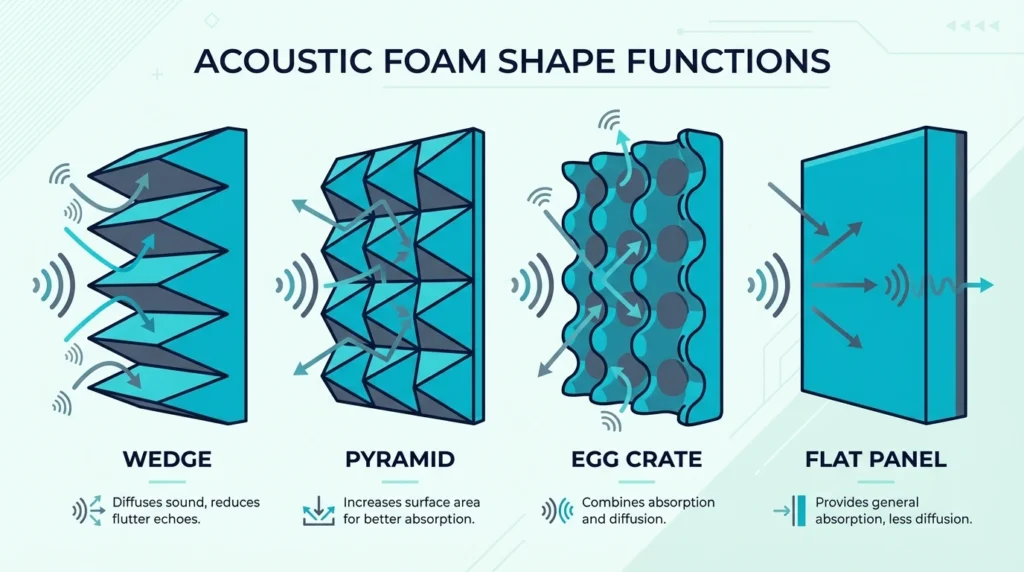
Why is acoustic foam shaped into wedges, pyramids, and “egg crate” bumps? The angles help reduce reflections, but shape alone won’t fix a bad room.
If your room still sounds echoey or harsh after installing foam, the problem usually isn’t the wrong shape — it’s the wrong thickness or density. Shape is only about 10–15% of the equation, yet it’s the first thing most sellers pitch.
Once you understand what shape actually changes, you can stop overpaying for patterns and start treating the wall behind your mic where it counts. Below you’ll find what each shape does, when it matters, and when thickness wins instead.
Shape helps a bit by adding surface area and breaking up the straight “bounce-back” path, but the audible gains are small compared to open-cell structure and thickness. Surface area gives a minor efficiency boost, angles help reduce flutter echo between parallel walls, and tapered tips let high frequencies enter more easily. Pick the shape you like after the specs check out (open-cell + enough thickness for your use). If you’re trying to stop noise through walls, foam isn’t the tool—start with acoustic foam alternatives instead.
Why is acoustic foam shaped (what the shapes actually do)?
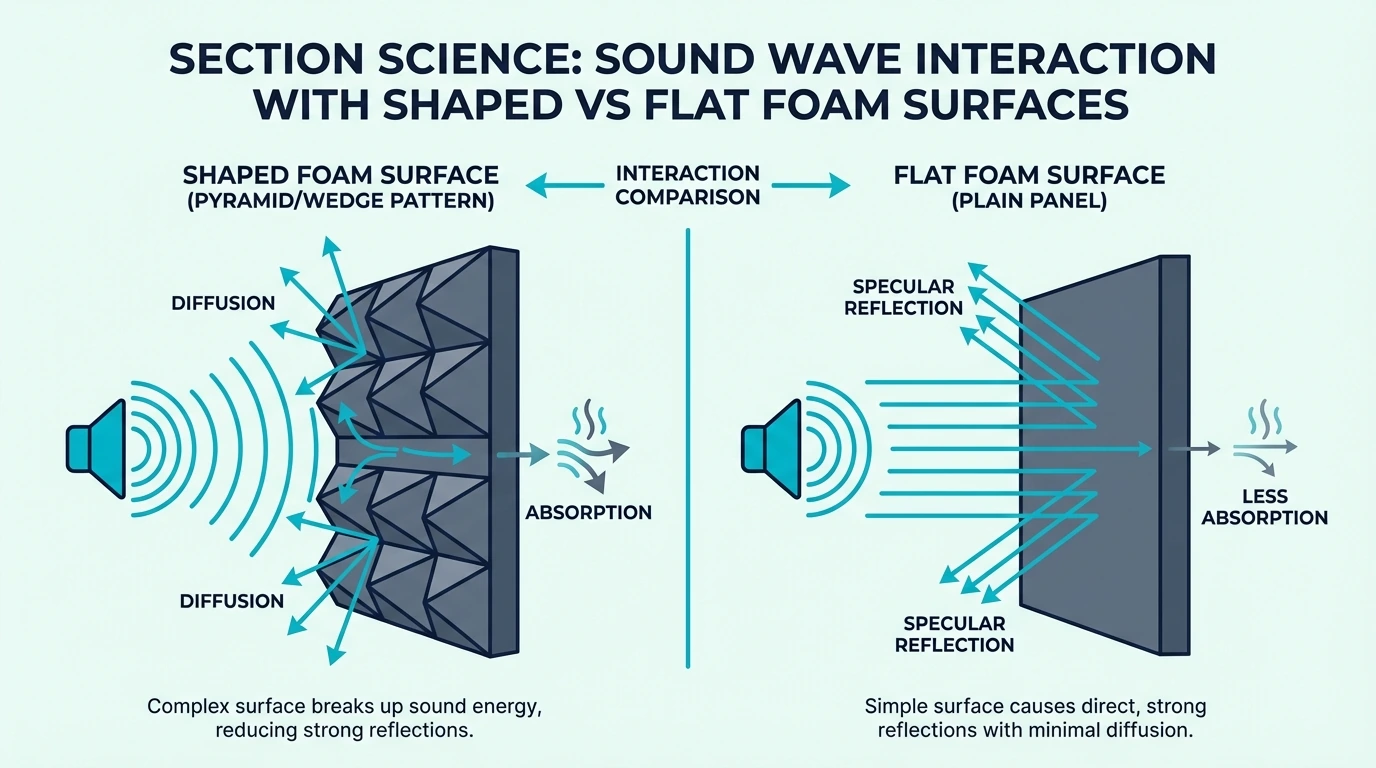
There are three real effects to know, and none of them are magic. Once you understand them, you’ll stop paying extra for a pattern name.
Does shape increase surface area (and does that matter)?
Yes—wedges and pyramids expose more foam surface than a flat tile of the same footprint. That gives sound a little more material to rub against on each pass, so absorption can improve slightly at the top end.
The catch is that surface area can’t compensate for bad foam. A denser flat panel can outperform a flimsy pyramid because the sound has to enter the foam to be absorbed in the first place.
Do wedges and pyramids scatter reflections?
Angles break up the most annoying reflection: the one that shoots straight back from a flat wall into your mic or ears. In rooms with parallel hard walls, that scattering can reduce the “ping” you hear when you clap.
That’s why shaped foam can feel like it helps flutter echo with modest coverage. Placement still matters more than pattern—start with this acoustic foam placement guide and treat the reflection path, not the whole room.
Does the shape help sound enter the foam?
Thin tips (the points of pyramids or the edge of a wedge) are a gentler transition from air to foam than a blunt flat face. That can let a bit more high-frequency energy enter the foam instead of reflecting off the surface.
Don’t overthink the term “impedance matching”—it’s just “less bounce at the surface.” If you want the bigger wins, match thickness to the problem frequencies (start here: acoustic foam frequency absorption).
What are the common acoustic foam shapes (and what should you use each for)?
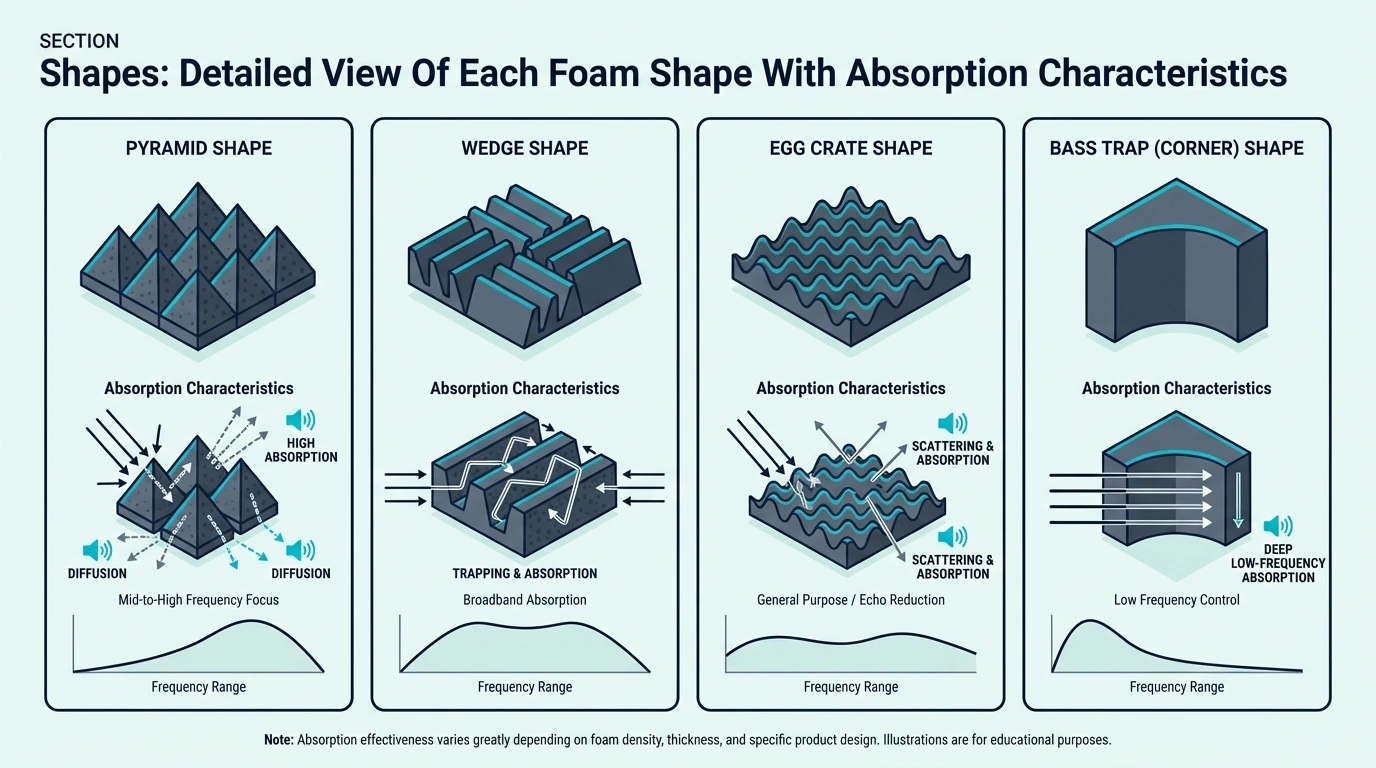
Most shapes are variations on the same idea: change the surface a little, then let the foam do the absorbing. Here’s how each one tends to behave in real rooms.
Wedge foam
Wedge foam is the classic “studio look” for a reason: it’s widely available, affordable, and it breaks up reflections in one dominant direction. It’s a solid choice when you’re treating a wall behind a mic or behind speakers and you want predictable coverage.
If you want to cover a full wall without playing panel Tetris, a big pack like Allxinlog 96-pack wedge foam tiles can be a practical starter. Just measure first—foam works best when you treat the right zone, not when you cover everything randomly.
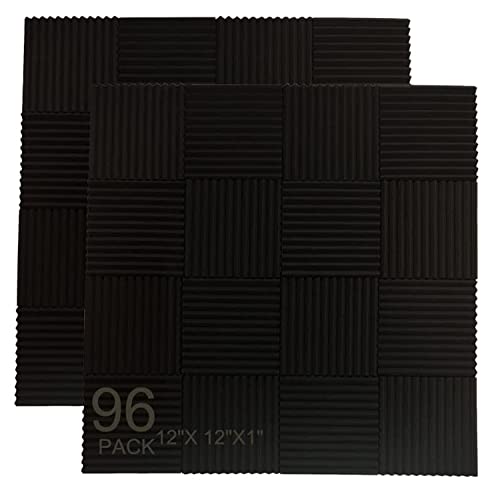
Allxinlog 96-pack wedge foam tiles
Pyramid foam
Pyramids add more surface area and scatter in more directions than wedges, so on paper they can test a bit better. In real rooms, the audible difference is usually subtle unless you’re comparing two panels with identical material and thickness.
If you like the pyramid look, buy it for aesthetics and minor efficiency gains—not because you expect it to “fix” a room on its own.
Egg crate foam
The egg-crate pattern can work, but this category has a quality problem: a lot of “egg crate” foam is low-density junk marketed as soundproofing. If it feels rubbery or closed-cell, it will reflect sound no matter how cool the bumps look.
If you do find open-cell egg-crate foam with real thickness, treat it like any other foam. The material quality matters more than the pattern.
Flat / smooth foam panels
Flat foam doesn’t scatter much, but it can still absorb reflections when the foam is open-cell and thick enough. Flat panels also look cleaner on camera, which matters if you’re building a podcast or YouTube background.
If your room is already echoey, don’t pick flat just for looks—pair it with good placement so it’s doing real work.
Get Studio Tips Weekly
Join 5,000+ creators getting acoustic treatment advice every week.
No spam. Unsubscribe anytime.How much does foam shape actually matter?
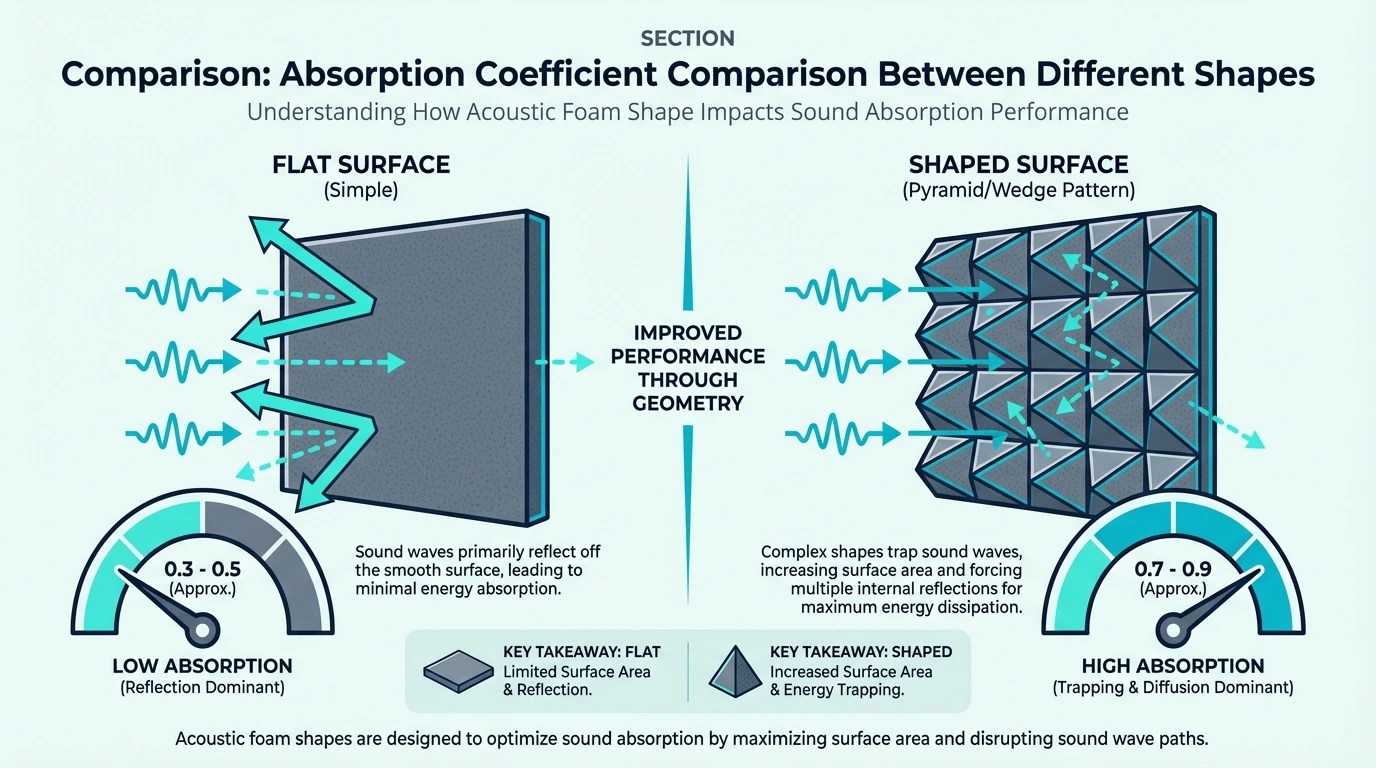
Here’s the honest answer: shape is the last 10–15% of the decision. Material quality and thickness are the first 85–90%.
Does material quality beat shape?
Two-inch open-cell foam usually beats one-inch foam, regardless of wedges vs pyramids, because there’s simply more depth for sound to lose energy inside the material. Density and open-cell structure determine whether sound can enter the foam and get “spent” as heat.
This is why a cheap pyramid tile can disappoint: it looks aggressive, but it doesn’t have the material properties to do the job. If you want a baseline reality check, read the honest guide on whether acoustic foam works.
What do measurements say about shape differences?
When labs compare shapes made from the same foam, pyramids usually test a little better than flat, and wedges land somewhere in between. Think single-digit to low-teens percentage differences, not a night-and-day jump.
That’s real, but it’s not worth paying a premium if you could instead buy thicker foam or treat a larger reflection zone. Coverage and placement scale better than chasing a pattern.
When does shape help (and when doesn’t it)?
Shape helps most when your room is hard and parallel and you’re hearing flutter echo. Shape matters least when you’re already using thick treatment, or when foam quality varies wildly between products.
If you’re on the fence, buy the better foam first and treat the right spots, then decide if you want the pyramid look. You’ll get more predictable results that way.
Is acoustic foam shape mostly marketing?
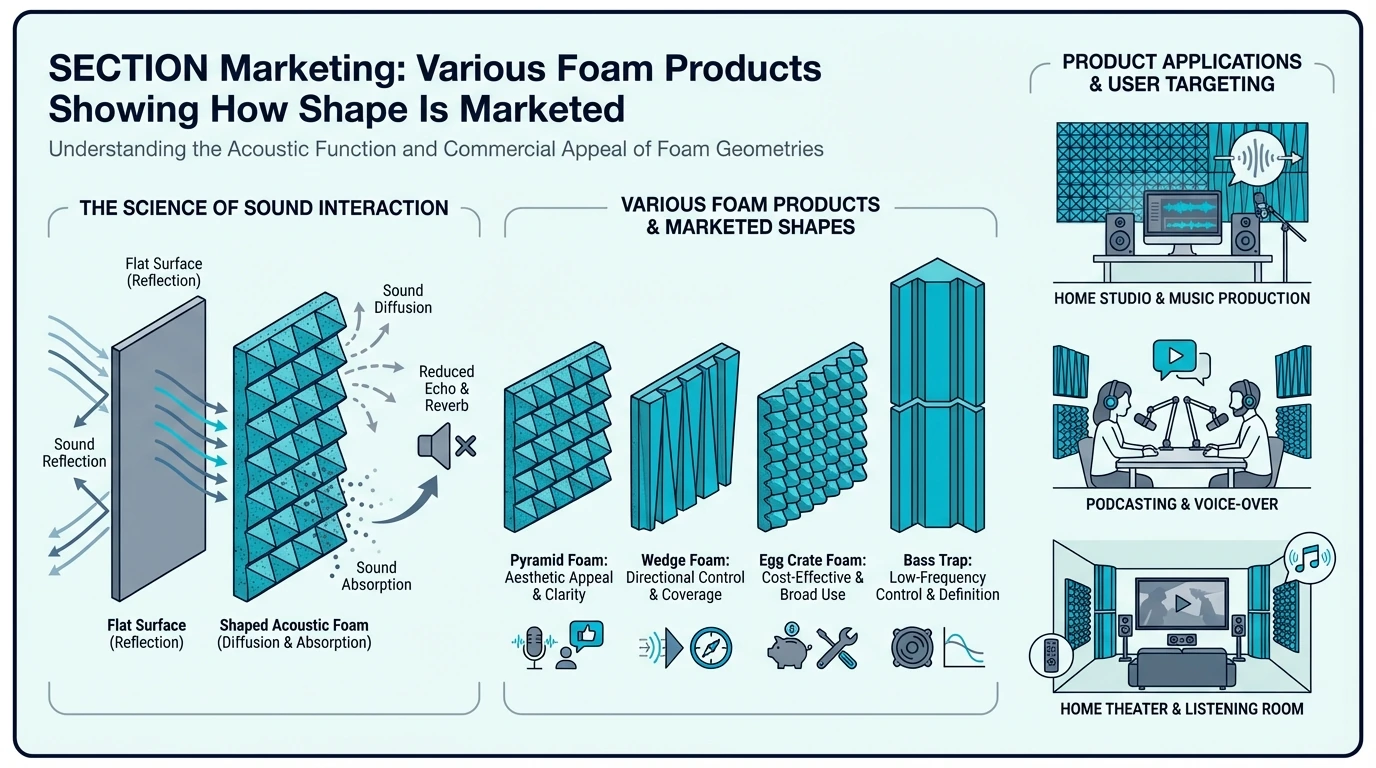
This is where people get burned: the most “professional looking” foam isn’t always the most effective. Shape is easy to sell because you can see it, even when you can’t see density or cell structure.
Why do companies push wedges and pyramids so hard?
Shaped foam signals “studio” at a glance, which is why it shows up in thumbnails and product photos. Flat foam can look like packaging material, even if it performs similarly when thickness and quality are the same.
That “looks like treatment” effect is real marketing value, which is why shapes get emphasized. Your job is to separate the look from the performance.
What specs should you check instead?
If you only check three things, check these: open-cell structure, thickness, and a real absorption rating (NRC) from a reputable brand. Shape comes after that, not before.
If NRC is new to you, start with this foam buying guide and treat it like a sanity filter. It won’t tell you everything, but it prevents the worst “soundproof foam” mistakes.
Does foam shape affect bass, or only high frequencies?
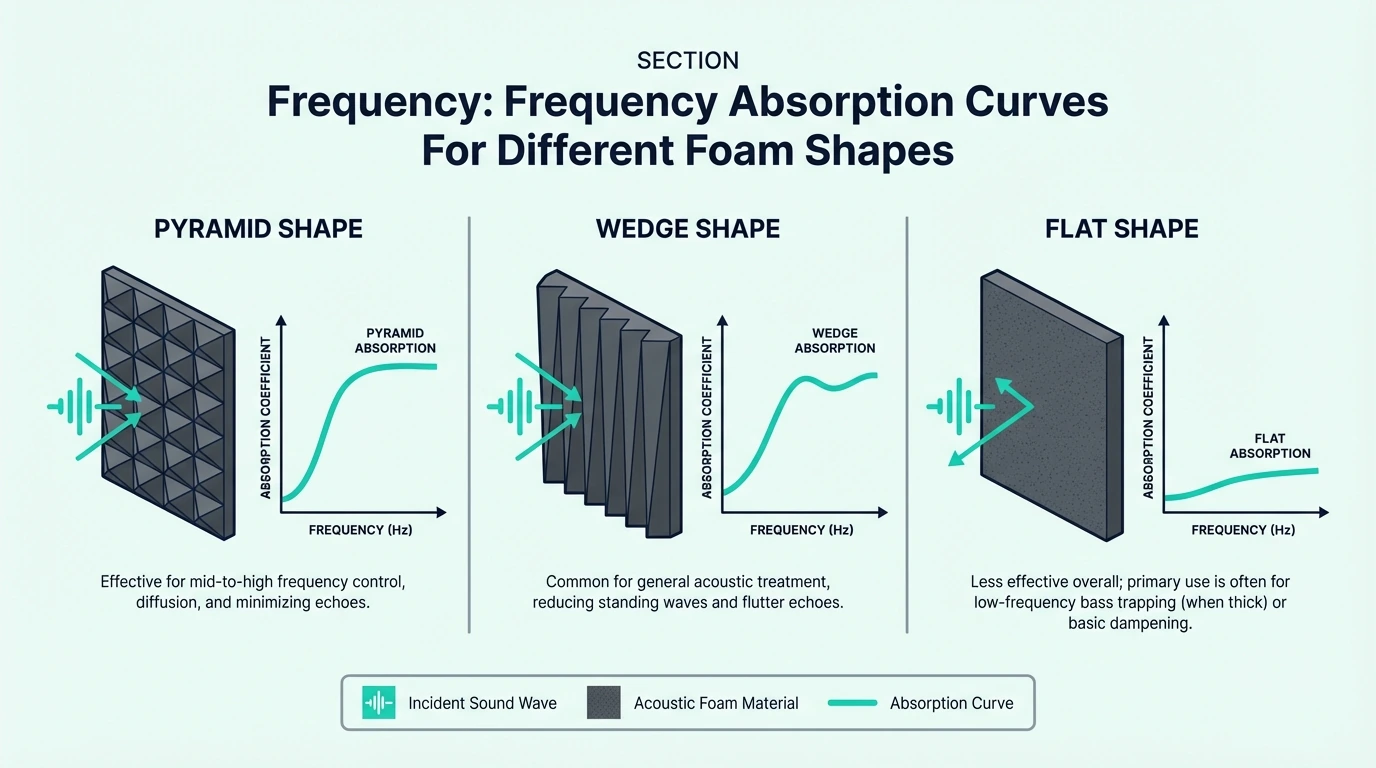
Shape interacts with sound only when the wave is short enough to “notice” the surface contours. That’s why shapes show up mostly in the highs, not the lows.
High frequencies (where rooms sound harsh)
High frequencies have short wavelengths, so angles and extra surface area can change how they bounce and get absorbed. That’s why shaped foam can help with the sharp “ping” in a bare room faster than you’d expect.
If your main complaint is harshness or flutter, this is where wedge and pyramid patterns tend to earn their keep. It’s not magic, but it’s a real improvement when placed correctly.
Mid frequencies (where most voices live)
In the mids, thickness and coverage dominate. A solid 2-inch panel usually does more for vocal clarity than swapping wedge for pyramid.
A 2-inch pack like JBER 24-pack 2-inch foam panels is a good example of the thickness that starts to feel “forgiving” on voice recordings. Don’t buy it for bass—buy it to tame early reflections.
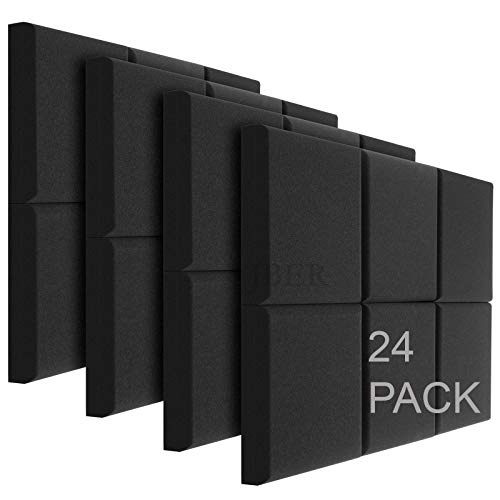
JBER 24-pack 2-inch foam panels
If you want the deeper breakdown, use the acoustic foam frequency absorption guide. It’ll help you match thickness to the problem you’re actually hearing.
Low frequencies (bass)
Bass waves are long—at 100 Hz, the wavelength is around 11 feet—so inch-sized surface patterns don’t change much. To affect bass, you need depth (4 inches+) and corner placement, which is why dedicated traps beat “cooler foam shapes” every time.
That’s also why the 1-inch vs 2-inch question matters, and why foam is not soundproofing. For the full “foam vs real bass control” distinction, read bass traps vs acoustic foam.
Which foam shape should you choose for your room?
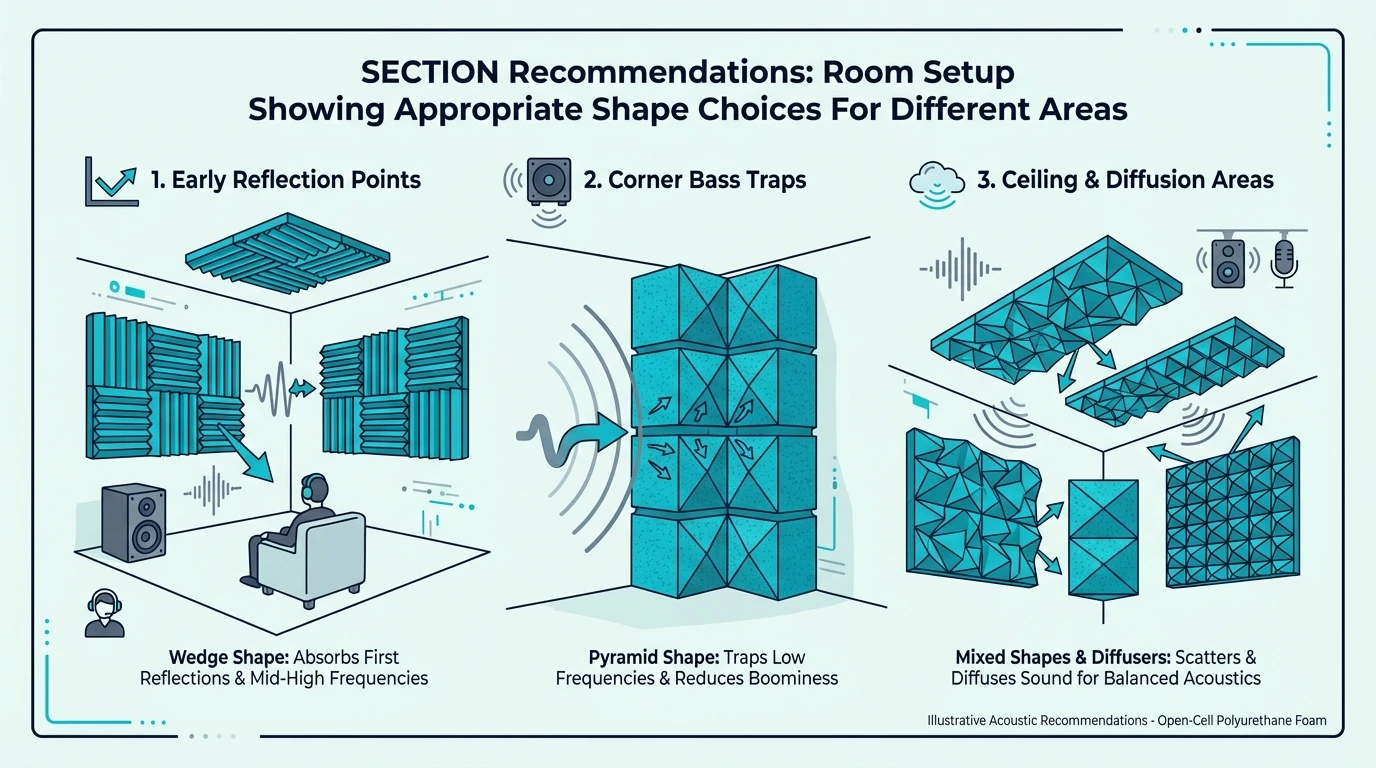
If you’re still stuck, pick based on your room constraint, not the pattern name. These are the choices that tend to work in real setups.
If you’re recording vocals or podcasting
Start with the wall behind the mic (or behind you, depending on the reflection path) and treat first reflection points. Wedge or pyramid foam both work here as long as the foam is open-cell and thick enough.
If you want a practical starting map, follow this placement guide and treat in stages. It keeps you from buying a second box of foam when the real issue is the wrong wall.
If you care about how it looks on camera
Flat panels usually look cleaner and light more evenly, which matters for YouTube and streaming backgrounds. You’ll get similar absorption to shaped foam if thickness and material are comparable.
If the room still sounds harsh, mix in wedge or pyramid foam off-camera at the main reflection points. You can keep the “clean look” and still control the reflections that matter.
If you’re treating corners and edges (but don’t expect miracles)
Corner blocks can help tidy up reflections in awkward spots and smooth out flutter where two walls meet. A set like these wedge corner blocks is a reasonable add-on after you’ve treated the main reflection zones.
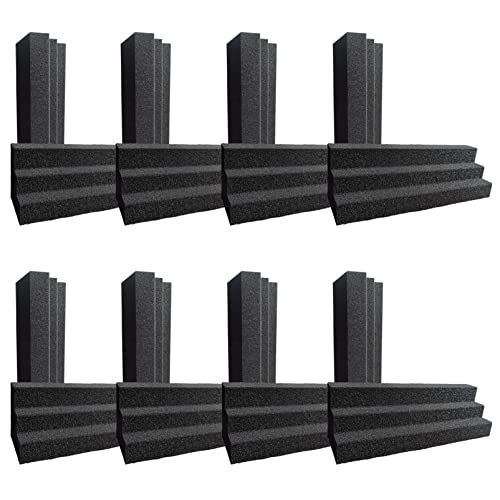
these wedge corner blocks
Just keep expectations realistic: small foam corner pieces aren’t the same as a thick bass trap. If bass is your problem, put your budget into real corner traps, not more shapes.
If you’re on a tight budget
Buy fewer, better panels and place them well before you buy a mountain of cheap foam. Coverage in the right zone beats blanket coverage in the wrong zone.
If you’re new and want a curated starting point, use the beginner foam guide and treat one wall first. You can always add more once you hear what changed.
The Bottom Line
Acoustic foam is shaped because angles add surface area and break up the straight reflection path that makes rooms sound harsh. But shape is not the main performance driver—material quality and thickness are.
Pick the foam that meets the spec basics, then choose the shape you like and place it where reflections actually hit. And if you’re trying to solve bass or neighbor noise, you’ll get more progress from the right kind of treatment than from any surface pattern.
If you want to understand the material side of the equation, read the acoustic foam materials guide. It’s the fastest way to avoid buying foam that looks right but behaves like packaging.
For more guides on foam types, placement, and mounting, start at the acoustic foam hub.
Frequently Asked Questions
Do wedges or pyramids work better?
Pyramids usually test slightly better than wedges when the foam is identical, because they add more surface area and scatter in more directions. In real rooms, the difference is subtle—choose based on looks and price once the material quality is comparable.
Is egg crate foam effective?
It can be, but the pattern has a quality problem: many egg-crate products are low-density foam marketed as “soundproofing.” If the foam is open-cell and thick enough, the pattern can work, but don’t assume bumps equal performance.
Why do some studios use flat panels?
Flat foam can absorb reflections when it’s the same material and thickness as shaped foam. Many studios also use fabric-wrapped fiberglass or mineral wool panels, which outperform foam regardless of shape.
Does shape affect bass absorption?
Not much—bass waves are too long for inch-sized surface contours to matter. Bass control comes from thickness and corner placement, which is why dedicated bass traps beat more foam.
Can I mix different foam shapes in one room?
Yes, and mixing shapes won’t hurt acoustically. Treat reflection points first, then fill in secondary spots if you still hear flutter.
Why is shaped foam more expensive than flat?
Molds and manufacturing are more complex for shaped foam, and the pattern uses a bit more material. The performance gain is usually modest, so only pay extra if you prefer the look or you’re optimizing a small treated area.