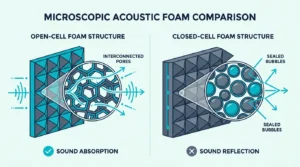
Acoustic Foam vs Mattress Foam: Why They’re Not the Same
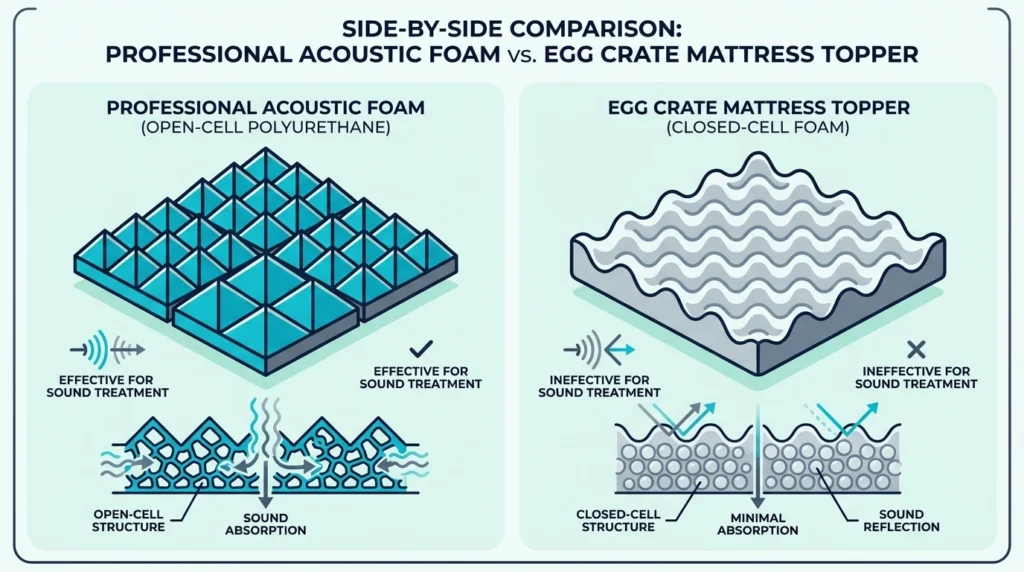
Acoustic foam vs mattress foam seems like an easy budget hack since both have that distinctive egg crate pattern. But trying to save money on bedding foam usually ends in a room that still sounds hollow.
The good news is that understanding cell structure makes it easy to spot materials that actually kill room reflections.
Start with the quick takeaway below to see why mattress foam fails, then each section compares the physics, safety risks, and better budget alternatives that actually work.
Mattress foam provides roughly half the absorption of acoustic foam at best, lacks fire ratings for wall mounting, and degrades faster when hung vertically.
The apparent savings disappear once you factor in the extra coverage needed and shorter lifespan. Budget acoustic foam costs only slightly more and actually does the job.
The Fundamental Differences
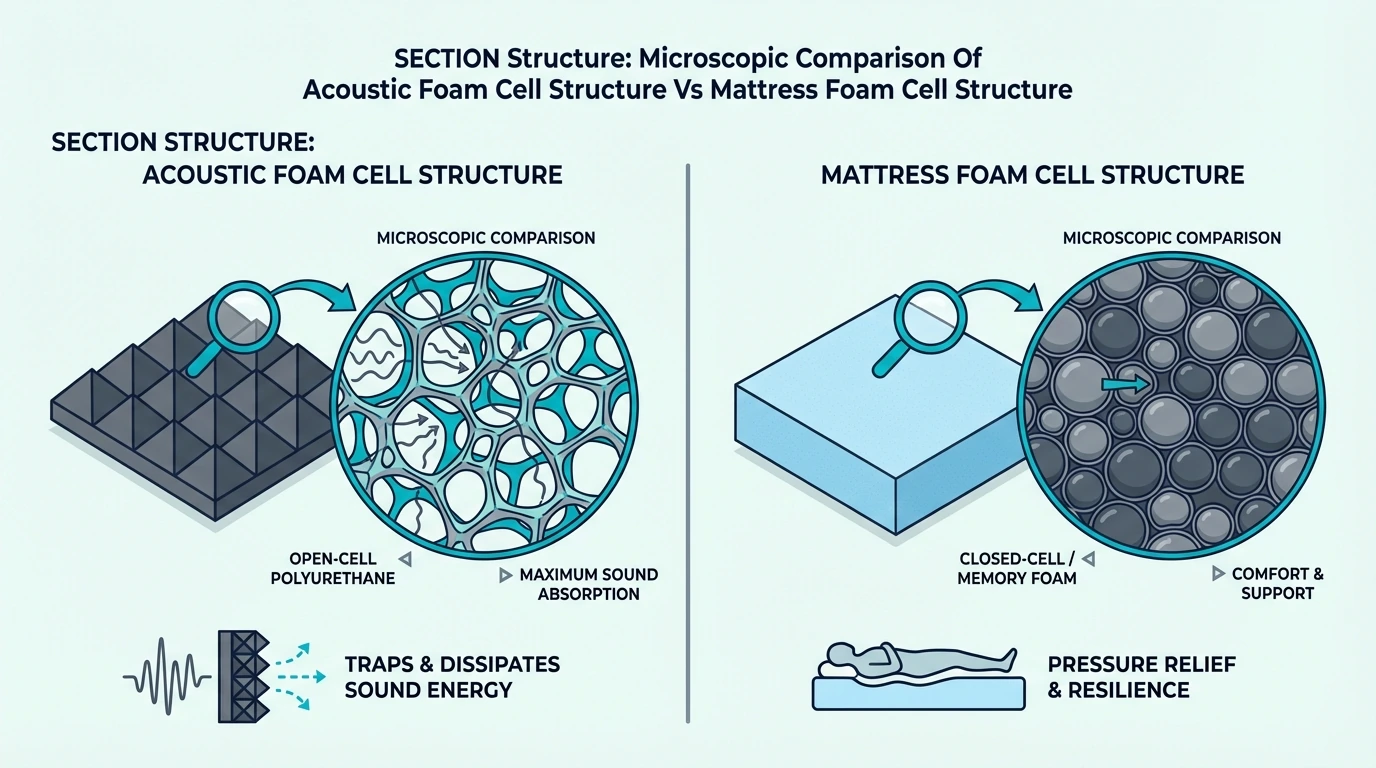
The visual similarity hides real structural differences.
Cell Structure
Acoustic foam uses an open-cell structure engineered for sound absorption. Cells are interconnected, allowing sound waves to penetrate deep into the material.
As sound travels through, friction with cell walls converts acoustic energy to heat.
Mattress foam prioritizes comfort and support. Cell structure varies by type — some are more closed, some more open — but none are optimized for acoustic performance.
You can’t tell by looking whether foam has optimized open-cell structure or comfort-focused closed cells. For more on how foam structure affects absorption, see our guide on what type of foam is acoustic foam.
Density
Cell structure isn’t the only physical difference — how tightly that material is packed matters just as much. Density directly affects absorption capability. Acoustic foam: 1.5-2.5 lb/ft³ Higher density means more material for sound to interact with, improving absorption. Quality acoustic foam feels substantial when you handle it.
Mattress foam: 1.0-1.5 lb/ft³ (typically) Lower density provides the softness desired for sleeping comfort. Mattress foam feels lighter and compresses more easily.
The density difference alone accounts for a large performance gap. Lower-density foam simply can’t absorb as effectively.
Fire Rating
Acoustic foam carries fire ratings (Class A or Class B) indicating it meets flammability standards for wall mounting. Quality acoustic foam is treated with fire retardants or made from inherently fire-resistant materials like melamine.
Mattress foam is designed for bedding, where fire standards differ. It may not be rated for vertical wall mounting.
Mounting unrated foam on walls — especially near electrical outlets, lighting, or heat sources — creates potential fire hazards.
The acoustic foam safety guide covers fire ratings and VOC concerns.
Performance Comparison
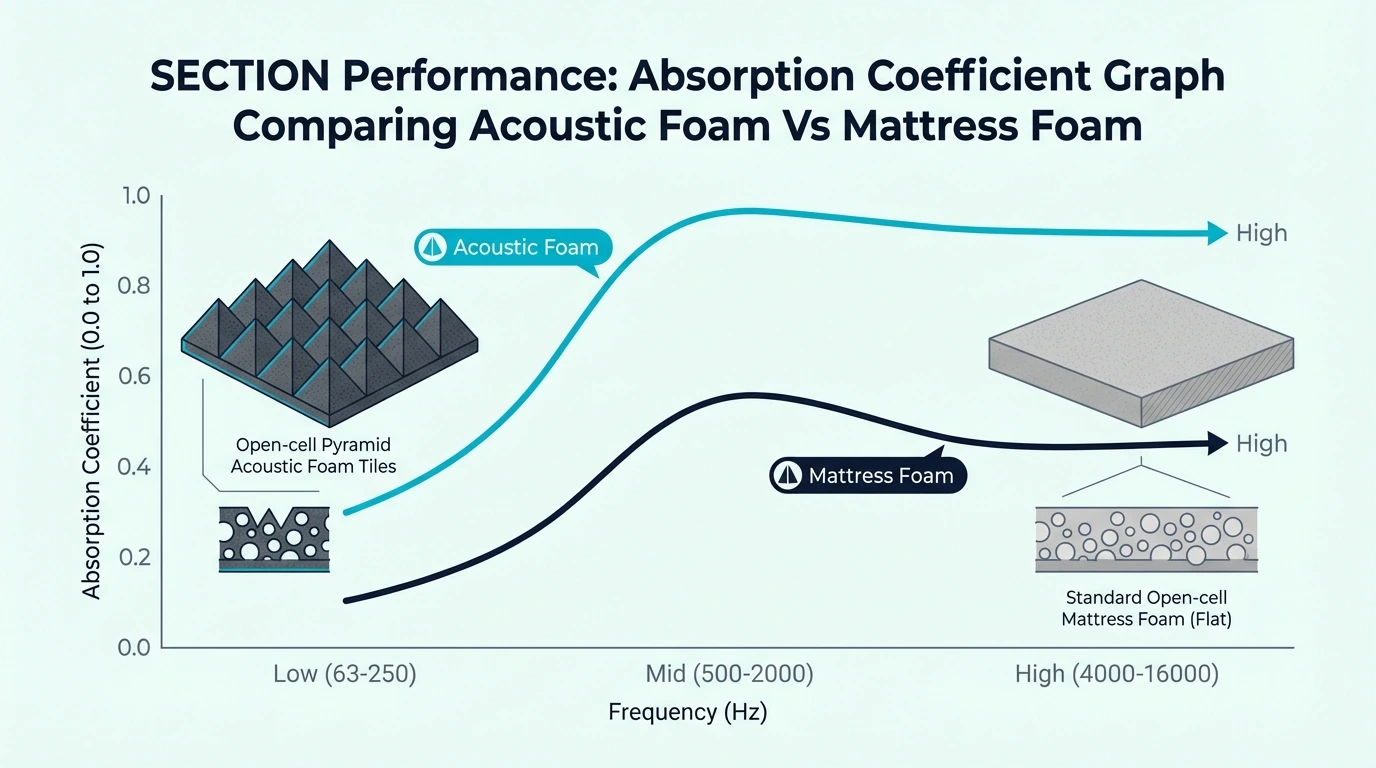
Numbers reveal the real performance gap.
Absorption Coefficients
| Frequency | 2” Acoustic Foam | 2” Mattress Foam |
|---|---|---|
| 250 Hz | 0.30 | 0.15 |
| 500 Hz | 0.60 | 0.30 |
| 1000 Hz | 0.85 | 0.50 |
| 2000 Hz | 0.90 | 0.60 |
| 4000 Hz | 0.85 | 0.55 |
| NRC | 0.65 | 0.35 |
Values are representative estimates; specific products vary.
What This Means Practically
Mattress foam absorbs roughly half as much sound as acoustic foam across most frequencies. To achieve similar absorption, you’d need twice as much mattress foam — eliminating any cost savings while creating a bulkier, less attractive installation.
At critical voice frequencies (500 Hz – 2 kHz), the difference is pronounced. Recordings made in rooms treated with mattress foam still sound noticeably roomy compared to proper acoustic treatment.
Understanding what frequencies acoustic foam absorbs helps explain why material quality matters.
Real-World Testing
People who’ve tried mattress foam for acoustic treatment consistently report: – Noticeable but underwhelming improvement – Still persistent echo and reflection – Need for much more coverage than expected – Disappointment compared to expectations
The foam “does something” but doesn’t solve the problem effectively.
Get Studio Tips Weekly
Join 5,000+ creators getting acoustic treatment advice every week.
No spam. Unsubscribe anytime.Why the Price Difference Exists
Acoustic foam costs more for legitimate reasons.
Material Quality
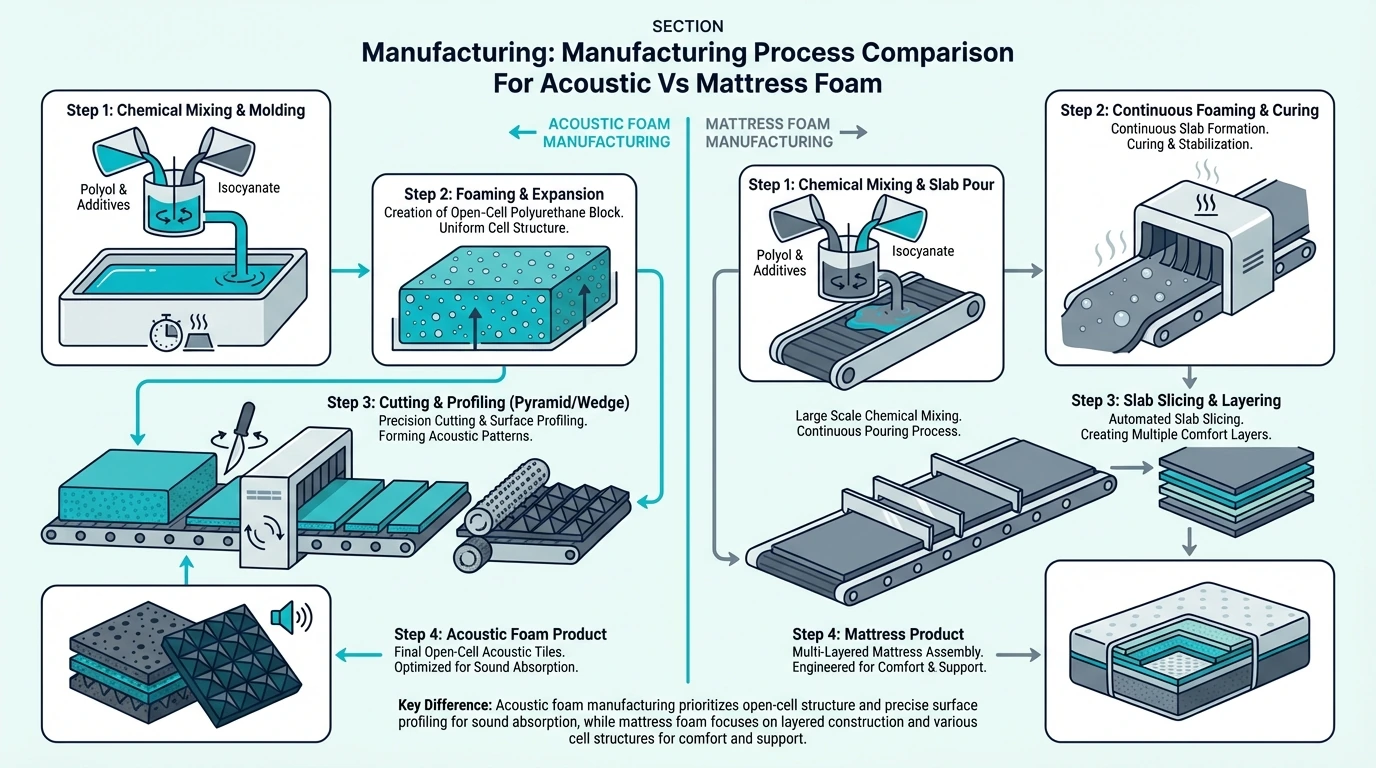
Acoustic foam uses specific polyurethane formulations optimized for sound absorption, with higher density, consistent open-cell structure, and fire retardant treatment. These formulations cost more than standard bedding foam.
The manufacturing process requires tighter quality control to ensure consistent acoustic performance.
Fire Retardant Treatment
Meeting Class A or B fire ratings requires either chemical fire retardant treatment or specific foam formulations. This adds cost but provides necessary safety for wall-mounted applications.
Quality Control
Acoustic foam manufacturers test absorption performance and maintain consistency across batches. Mattress foam manufacturers optimize for comfort metrics, not acoustic measurements.
Ultimately, this comes down to who the product is actually for.
Market Reality
Acoustic foam serves a specialized market willing to pay for performance. Mattress foam serves a mass market prioritizing low cost.
The price difference reflects these different market positions and quality requirements.
The Hidden Costs of Using Mattress Foam
The apparent savings disappear when you consider total costs.
Reduced Effectiveness
If mattress foam provides half the absorption, you need twice the coverage. A room requiring 40 square feet of acoustic foam treatment needs 80+ square feet of mattress foam for similar results.
At that coverage level, cost savings shrink dramatically. A real foam option like the Blue Pyramid Sound Proof Foam Panels (24-Pack) already gets you proper acoustic material, so the bargain hack stops looking cheap once you price out enough mattress foam to cover the same problem areas.
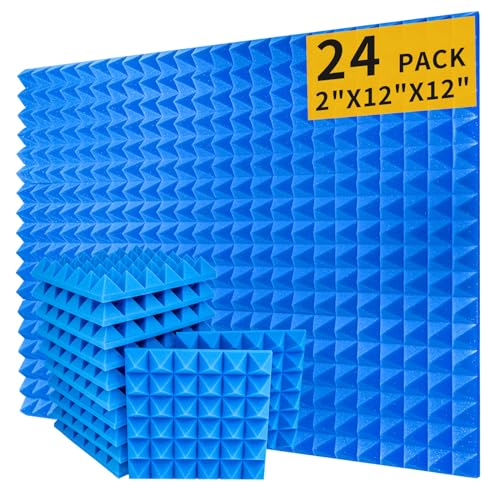
Blue Pyramid Sound Proof Foam Panels (24-Pack)
Faster Degradation
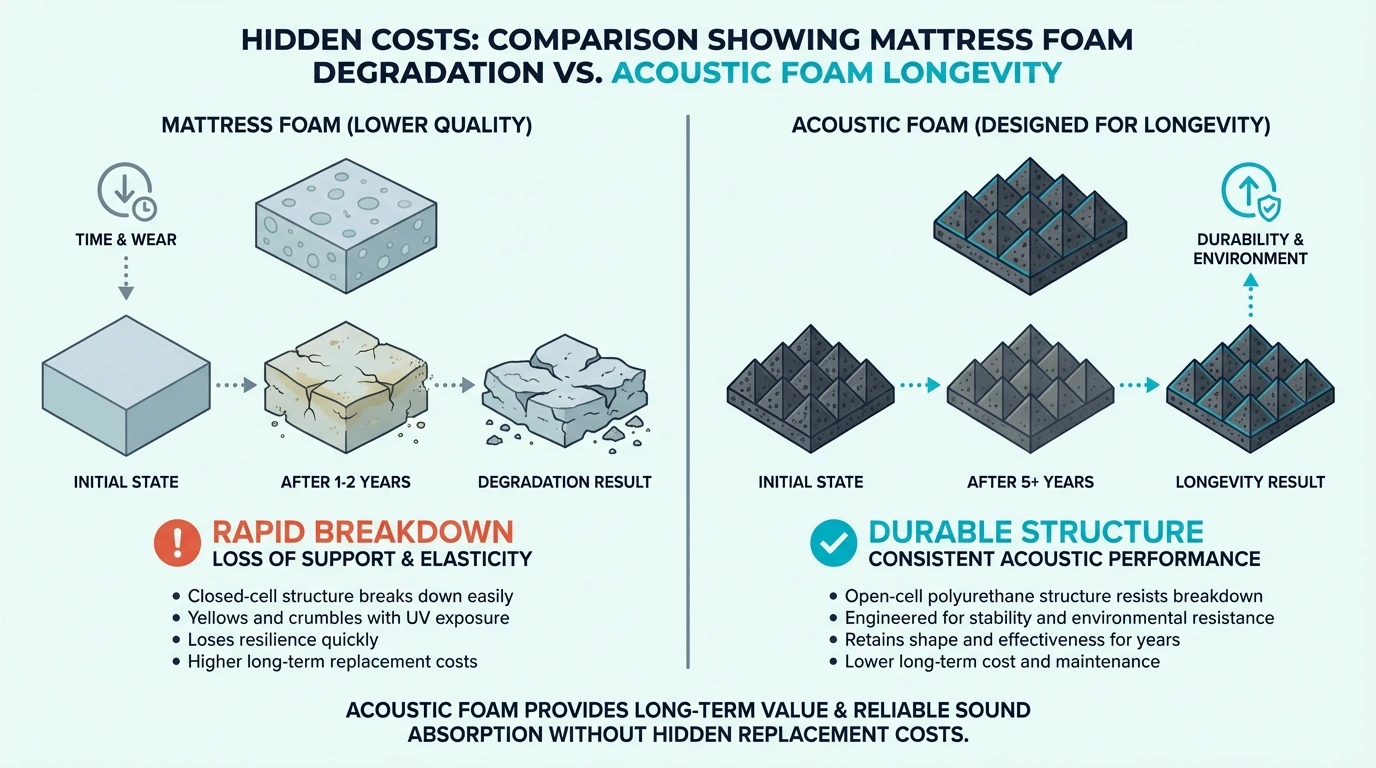
Mattress foam isn’t designed for vertical mounting or long-term wall exposure: – Gravity causes sagging and deformation – UV exposure accelerates breakdown – Lower density means faster compression – No fire retardants may mean faster deterioration
Mattress foam mounted on walls typically shows visible degradation within 1–2 years. Quality acoustic foam lasts 5–10+ years.
Replacement Costs
When mattress foam degrades, you replace it. Over a 5-year period, replacing mattress foam twice costs more than buying acoustic foam once.
Safety Risks
Unrated foam on walls near heat sources or electrical creates fire risk. The potential cost of a fire — even a small one — far exceeds any foam savings.
Professional Perception
If clients, collaborators, or viewers see your space, mattress foam looks amateur. The visual difference is obvious to anyone familiar with studios.
When Mattress Foam Might Be Acceptable
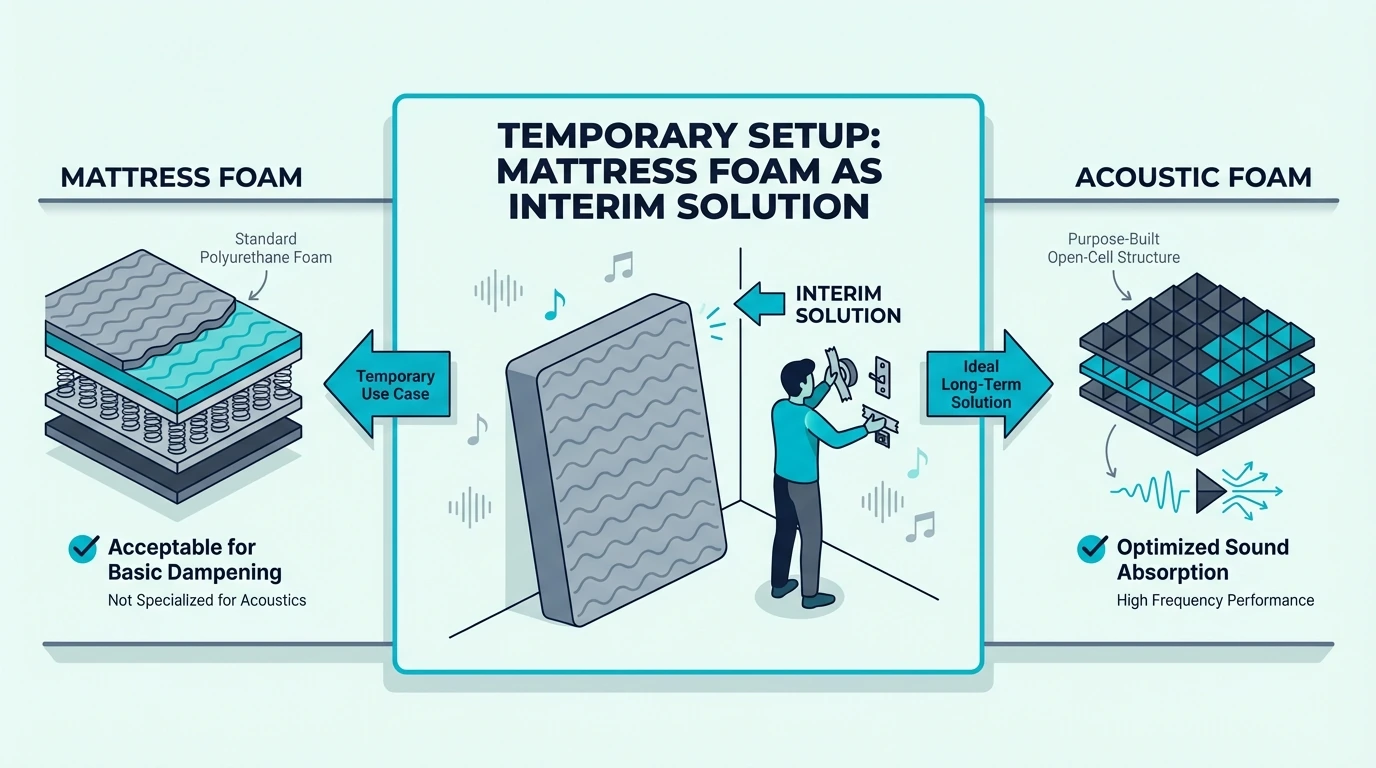
In limited circumstances, mattress foam can serve as a temporary solution.
Temporary Testing
If you’re unsure where to place treatment, mattress foam can help you experiment with positions before investing in proper panels. Use it to find effective locations, then replace with acoustic foam.
Extremely Tight Budgets
If the choice is mattress foam or nothing, some improvement beats bare walls. But even the JBER 12 Pack Acoustic Foam Panels gives you real open-cell treatment to compare against before you settle for bedding foam.
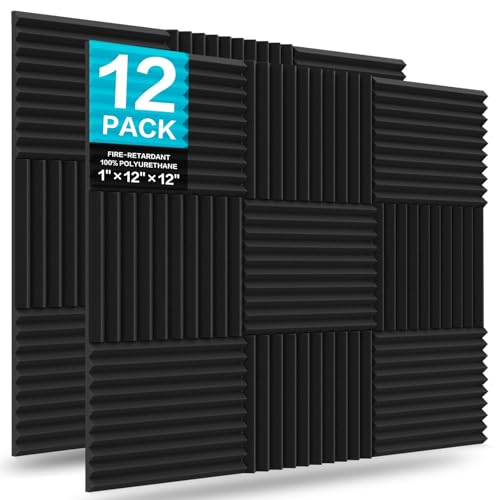
JBER 12 Pack Acoustic Foam Panels
Non-Critical Applications
For casual use—reducing echo in a gaming room, improving voice chat clarity—mattress foam’s limitations may be acceptable. If you’re not recording professionally, “good enough” might be sufficient.
Behind Other Treatment
Mattress foam behind furniture or in non-visible areas can supplement proper treatment. It adds some absorption without the aesthetic or safety concerns of wall mounting.
Conditions for Acceptable Use
If you use mattress foam: – Keep it away from heat sources and electrical – Accept it will need replacement sooner – Use more than you would with acoustic foam – Don’t expect professional results
Better Alternatives
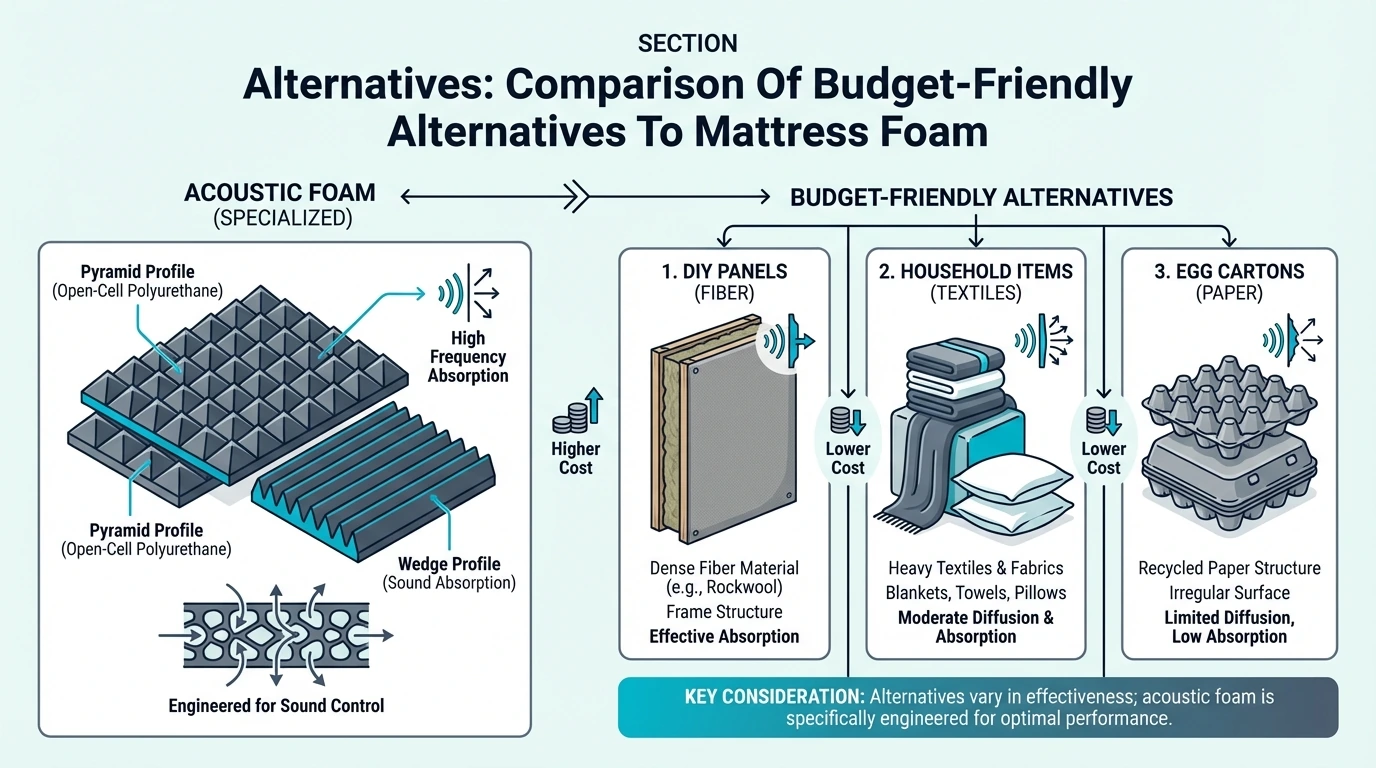
If acoustic foam’s price is the barrier, consider these alternatives that actually work.
Budget Acoustic Foam
Entry-level acoustic foam costs less than premium brands while providing real acoustic performance. Products like TroyStudio Thick Acoustic Foam Panels (36-Pack) deliver legitimate absorption without the premium-brand markup.
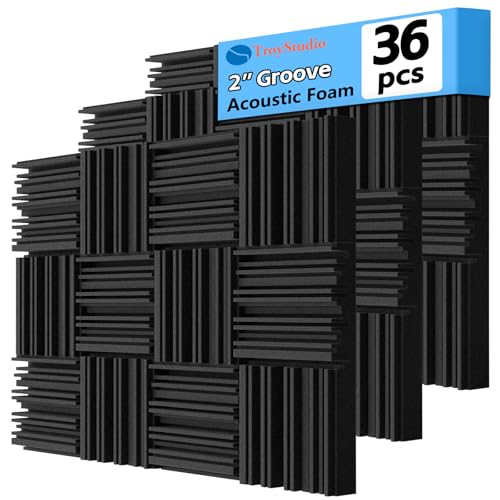
TroyStudio Thick Acoustic Foam Panels (36-Pack)
The best acoustic foam panels roundup compares options at every price point.
DIY Rockwool Panels
Building panels from rockwool insulation and fabric costs less than commercial acoustic panels while outperforming foam. If you have basic DIY skills, this provides the best performance per dollar.
The DIY acoustic panels guide walks through the build step by step.
Moving Blankets
Heavy moving blankets provide decent absorption at very low cost. They’re not pretty, but they work better than mattress foam and can be removed easily.
Household Items
Strategic use of bookshelves, heavy curtains, upholstered furniture, and rugs provides meaningful absorption. These items you may already own contribute to room treatment.
The acoustic foam alternatives guide covers every option by budget.
Making the Right Choice
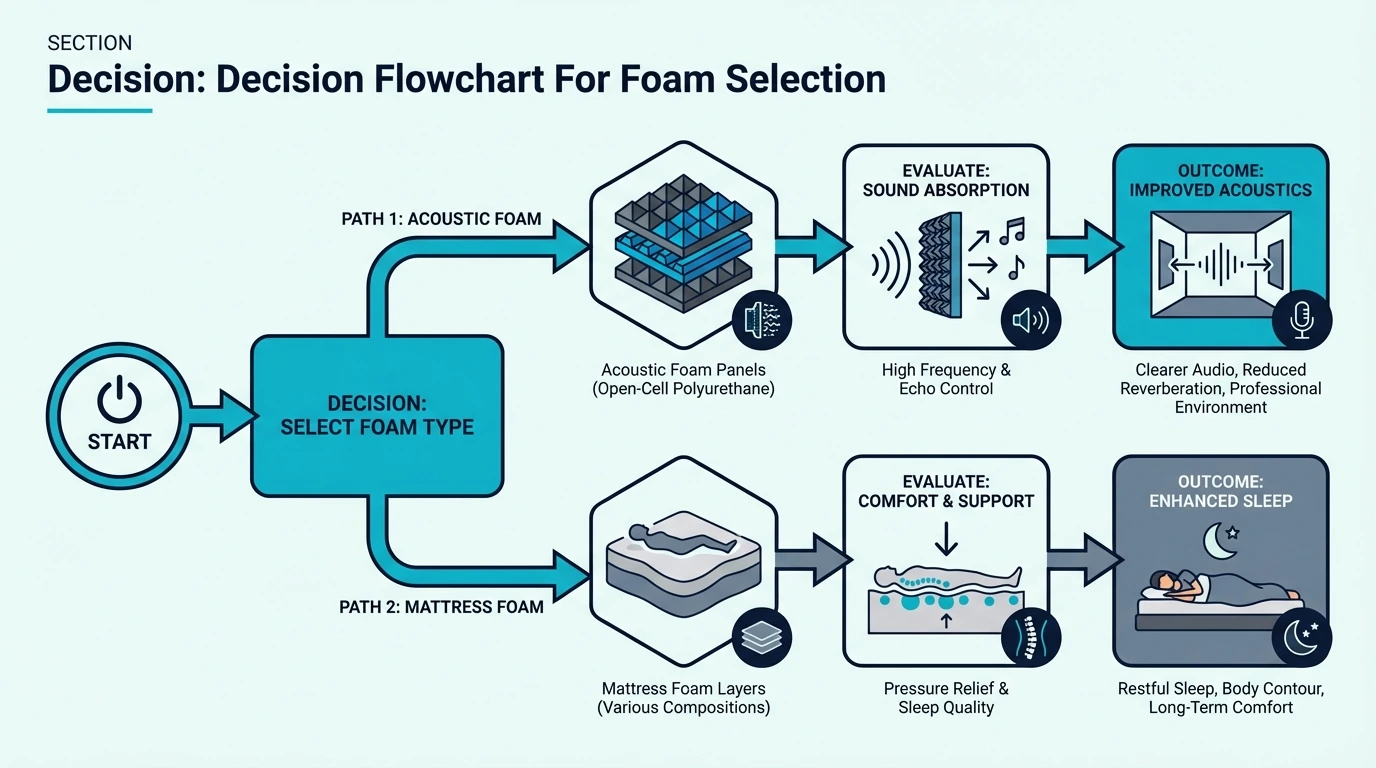
Consider these factors when deciding.
Your Application
Professional recording/mixing: Use proper acoustic foam or panels. The best foam for recording roundup covers top picks.
Serious hobby recording: Budget acoustic foam provides meaningful improvement at reasonable cost. Worth the investment over mattress foam.
Casual use (gaming, video calls): Budget acoustic foam still recommended, but mattress foam’s limitations may be acceptable if budget is extremely tight.
Temporary/experimental: Mattress foam acceptable for testing placement before permanent installation.
Your Budget Reality
Calculate the true cost: – Mattress foam: Lower upfront, more coverage needed, shorter lifespan, replacement costs – Budget acoustic foam: Moderate upfront, less coverage needed, longer lifespan, no replacement
Over 3-5 years, even a bulk option like the Knightsacoustic 96 Pack Sound Proof Foam Panels can cost less than buying too much mattress foam, replacing it early, and redoing the install. The acoustic foam buying guide covers selection criteria in detail.
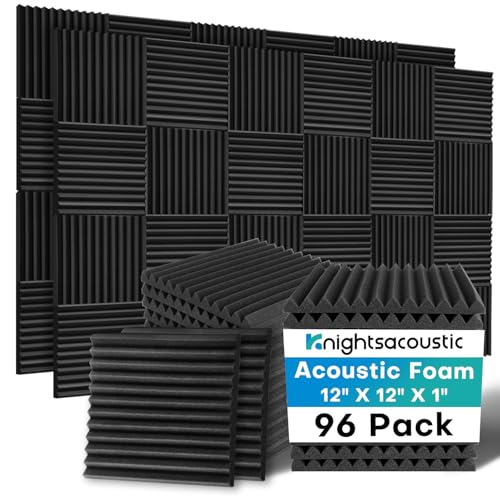
Knightsacoustic 96 Pack Sound Proof Foam Panels
Your Safety Situation
If mounting foam near: – Electrical outlets – Light fixtures – Heat sources – High-traffic areas
Use only fire-rated acoustic foam. The safety risk isn’t worth any savings.
Conclusion
Mattress foam and acoustic foam look similar but perform very differently. Mattress foam’s lower density, non-optimized cell structure, and lack of fire rating make it a poor substitute for proper acoustic treatment.
The apparent cost savings disappear when you account for reduced effectiveness (requiring more coverage), faster degradation (requiring replacement), and safety concerns (requiring careful placement away from heat and electrical).
Budget acoustic foam from reputable brands provides real acoustic performance at accessible prices. DIY rockwool panels offer even better performance per dollar.
Moving blankets work as temporary solutions. All of these outperform mattress foam for acoustic treatment.
If you’re serious about improving your room’s sound, invest in products designed for that purpose. The small additional cost of proper acoustic foam pays dividends in performance, longevity, and safety.
Frequently Asked Questions
Does mattress foam work for soundproofing?
No — and neither does acoustic foam. Both absorb sound within a room but don’t block sound transmission through walls.
Soundproofing requires mass (heavy materials) and sealing (no air gaps). Mattress foam provides even less absorption than acoustic foam, making it doubly ineffective for soundproofing.
Why does acoustic foam cost so much more than mattress foam?
Acoustic foam uses specific formulations optimized for sound absorption, with higher density, consistent open-cell structure, and fire retardant treatment. Mattress foam prioritizes comfort at low cost, with no acoustic optimization.
The price difference reflects genuine material and manufacturing differences.
Can I treat mattress foam to make it work better acoustically?
No practical treatment improves mattress foam’s acoustic performance. The cell structure and density are inherent to the material.
You could add mass or layers, but at that point you’re better off buying proper acoustic foam or building DIY panels from rockwool.
How can I tell acoustic foam from mattress foam?
Weight: Acoustic foam feels heavier for its size due to higher density. Fire rating: Acoustic foam packaging indicates Class A or B fire rating. Price: Acoustic foam costs more per square foot. Source: Acoustic foam comes from audio/studio suppliers; mattress foam comes from bedding suppliers. Feel: Acoustic foam is firmer; mattress foam compresses more easily.
Is egg crate mattress foam the same as egg crate acoustic foam?
No. The egg crate pattern is just a shape — it doesn’t determine acoustic properties.
Egg crate acoustic foam uses materials optimized for absorption with appropriate density and fire rating. Egg crate mattress foam uses materials optimized for sleeping comfort — same shape, very different performance.
What’s the minimum I should spend on acoustic foam?
Budget acoustic foam from brands like Foamily or BXI provides legitimate acoustic performance at entry-level prices. Below this price point, you’re likely getting mattress foam marketed as acoustic foam, or low-quality material that won’t perform adequately.