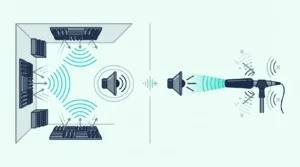
Is Acoustic Treatment Necessary? (Here Is When It Actually Matters)
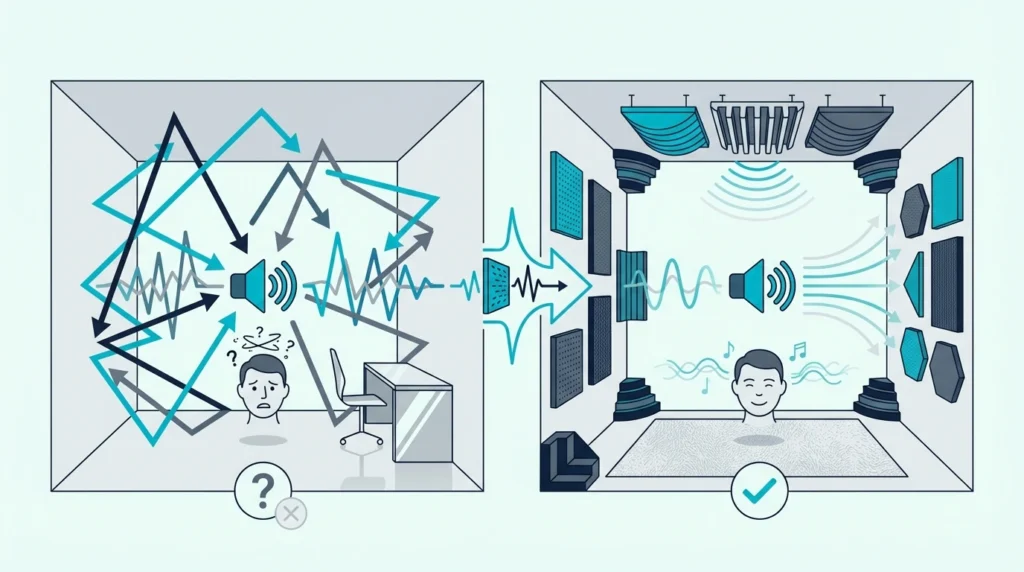
Is acoustic treatment necessary — yes, if you record, mix, or critically listen to audio in any room, but the real answer depends on what you are doing and how much the room is working against you.
You set up your home studio, buy decent monitors, and start mixing — but every track sounds different on your car speakers, your headphones, and your friend’s system.
The problem is not your gear or your ears. The problem is that your untreated room is adding its own reverb, bass buildup, and reflections to everything you hear, and you are mixing to compensate for a room you cannot trust.
The fix is straightforward and cheaper than you think. A few strategically placed panels and bass traps can turn an unreliable room into one where your mixes finally translate to every playback system.
The first step is not buying thousands of dollars worth of panels. It is understanding whether your specific situation actually requires treatment and how much you need.
Below, this guide breaks down exactly who needs acoustic treatment, what happens without it, when you can skip it entirely, and the minimum setup that covers most problems.
Acoustic treatment is necessary for anyone recording with microphones, mixing on monitors, or running meetings where speech clarity matters. It is not necessary for casual listening, headphone-only workflows, or well-furnished rooms. The minimum effective setup — 4 bass traps and 2 first-reflection panels — fixes 80% of room problems for a fraction of a full treatment budget.
Is Acoustic Treatment Necessary — And Who Actually Needs It?
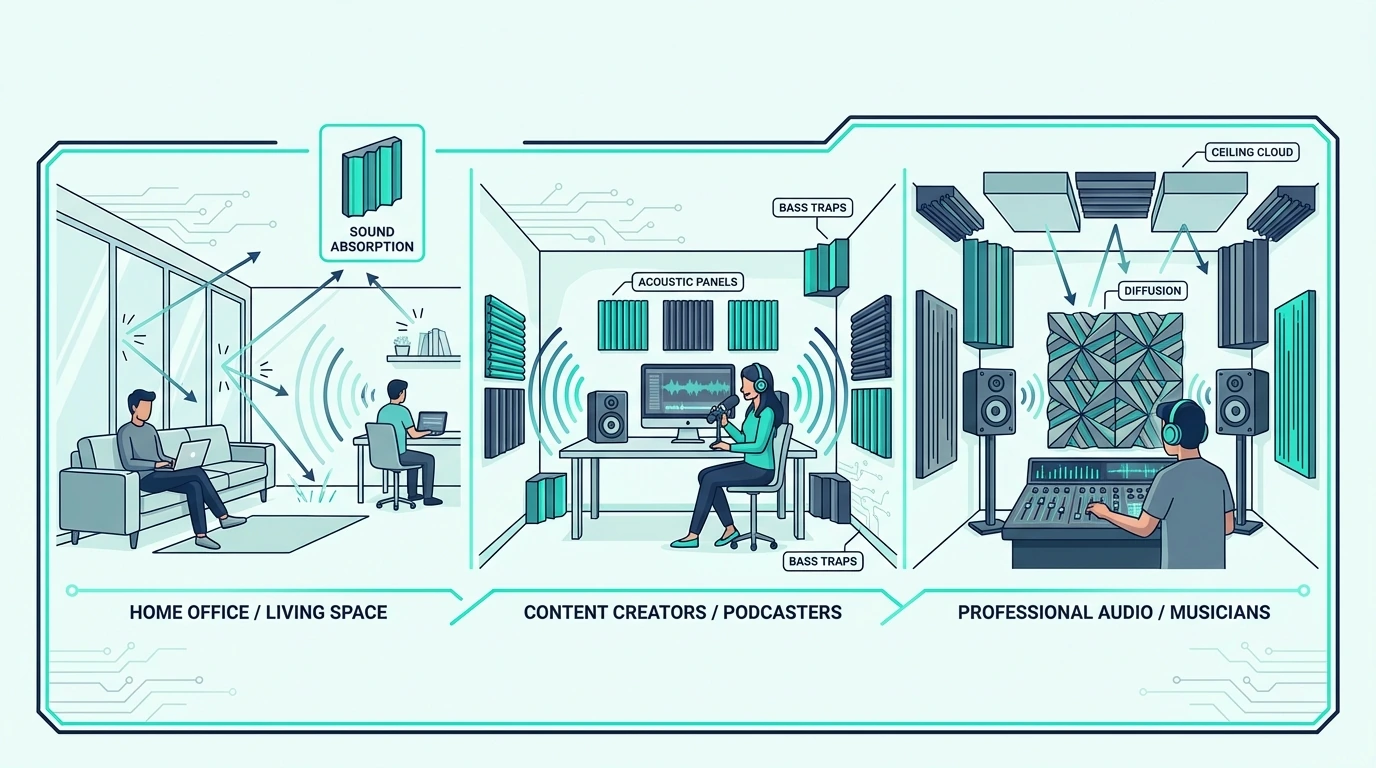
The short answer is that acoustic treatment is necessary for anyone who needs to hear sound accurately in a room. That includes home studio owners, mixing engineers, podcasters, voice-over artists, and anyone running a room where speech intelligibility matters.
If you record vocals or acoustic instruments, the microphone captures everything the room adds — every reflection, every flutter echo, every bass resonance. No plugin removes room sound cleanly once it is baked into a recording.
If you mix music on studio monitors, your room determines what you actually hear. An untreated room can add 15-20 dB of bass boost at certain frequencies while completely canceling others, which means every EQ and level decision you make is a reaction to the room rather than the music.
Home theaters benefit from treatment because surround sound relies on precise speaker-to-ear timing. Offices and conference rooms benefit because speech clarity drops dramatically in reverberant spaces.
For rooms that need to look good while solving acoustic problems, decorative fabric-wrapped panels deliver real absorption in a finish that works in living rooms and offices.
The people who do not need treatment are casual listeners using headphones, anyone working exclusively in headphones for production, and people in rooms that are already well-furnished with soft materials like couches, curtains, and bookshelves. For a deeper dive into the fundamentals, see our guide on what is acoustic treatment.
What Happens In An Untreated Room?
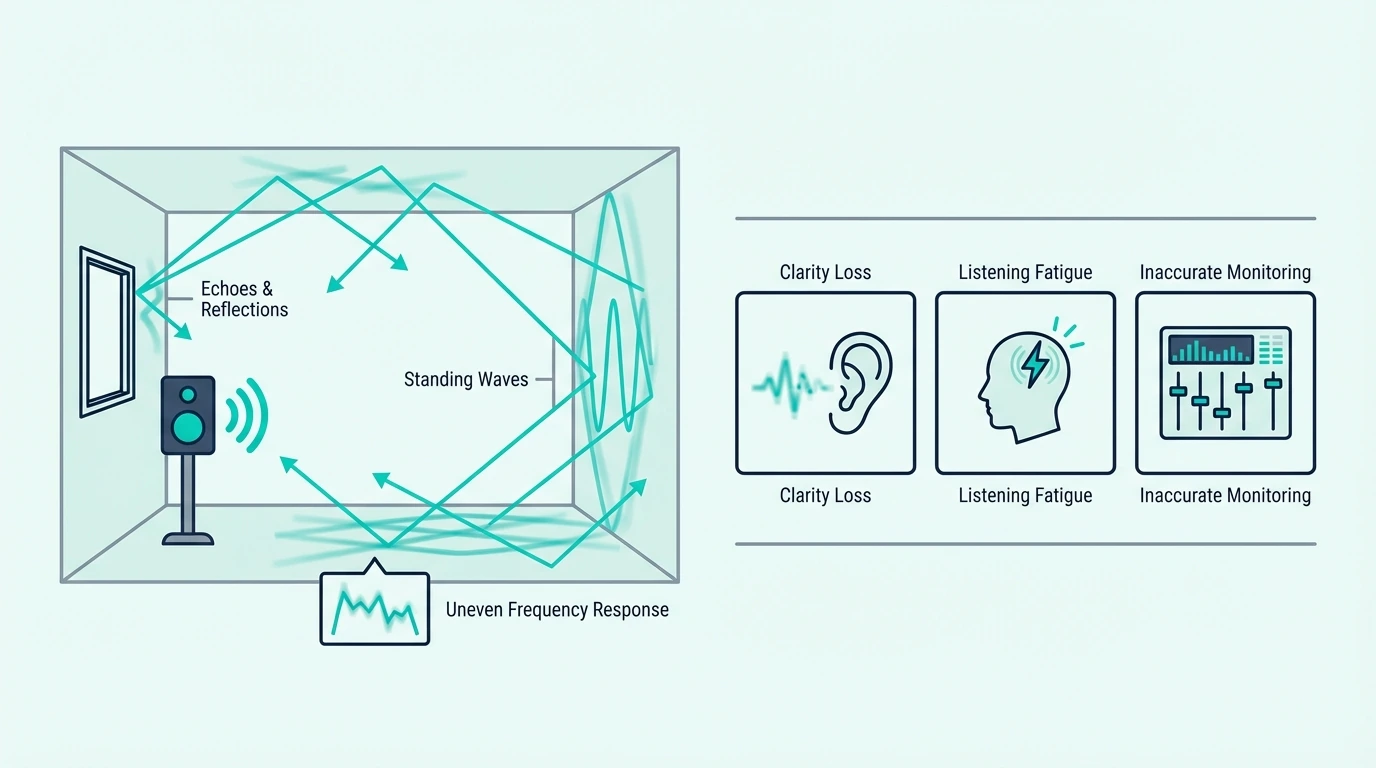
Understanding what actually goes wrong in an untreated room makes the case for treatment far more concrete than any sales pitch. The problems fall into three categories, and each one affects different use cases.
Sound leaves your speakers or instrument and hits the nearest wall. It bounces back with a slight delay — typically 5 to 30 milliseconds in a small room.
That reflected sound combines with the direct sound at your ears, and the result is comb filtering — certain frequencies cancel out while others double in volume. The tonal balance you hear is not what the speakers are actually producing.
How Untreated Rooms Affect Recording
Every microphone in an untreated room captures two signals: the direct sound from the source and the reflected sound from the walls, ceiling, and floor. The closer the microphone is to a wall, the stronger those reflections become.
Vocals recorded in an untreated bedroom typically have a boxy, hollow quality that no amount of EQ can fully fix. The room tone is embedded in the recording at every frequency.
Acoustic instruments are even more sensitive because they project sound in all directions. A guitar recorded three feet from a bare drywall wall picks up a hard reflection that smears the transient detail and makes the recording sound distant and unfocused.
How Untreated Rooms Affect Mixing
Mixing in an untreated room is like editing photos on an uncalibrated monitor — you are making corrections based on inaccurate information. The bass response in a small untreated room is especially unreliable.
Room modes — the resonant frequencies determined by your room dimensions — create peaks and nulls that can swing bass levels by 20 dB or more depending on where you sit. You boost the kick drum because it sounds weak at your position, then play the mix on any other system and the kick is overwhelming.
First-reflection panels solve the mid and high frequency accuracy problem, but you also need corner bass traps to flatten the low end. Without both, your mixes will not translate.
A set of fiberglass panels like the UMIACOUSTICS Fiberglass Acoustic Panels at your first reflection points is the single highest-impact upgrade for mixing accuracy.
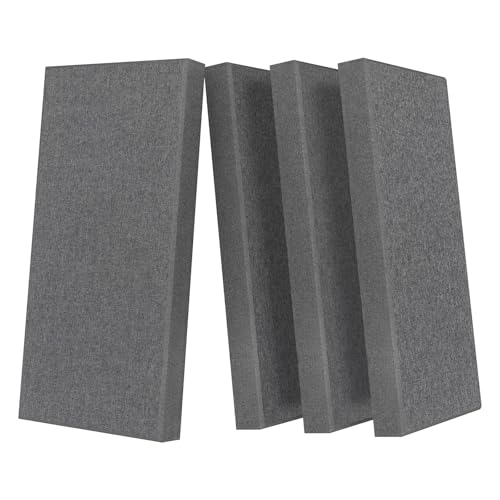
UMIACOUSTICS Fiberglass Acoustic Panels
Get Studio Tips Weekly
Join 5,000+ creators getting acoustic treatment advice every week.
No spam. Unsubscribe anytime.When Is Acoustic Treatment Not Necessary?
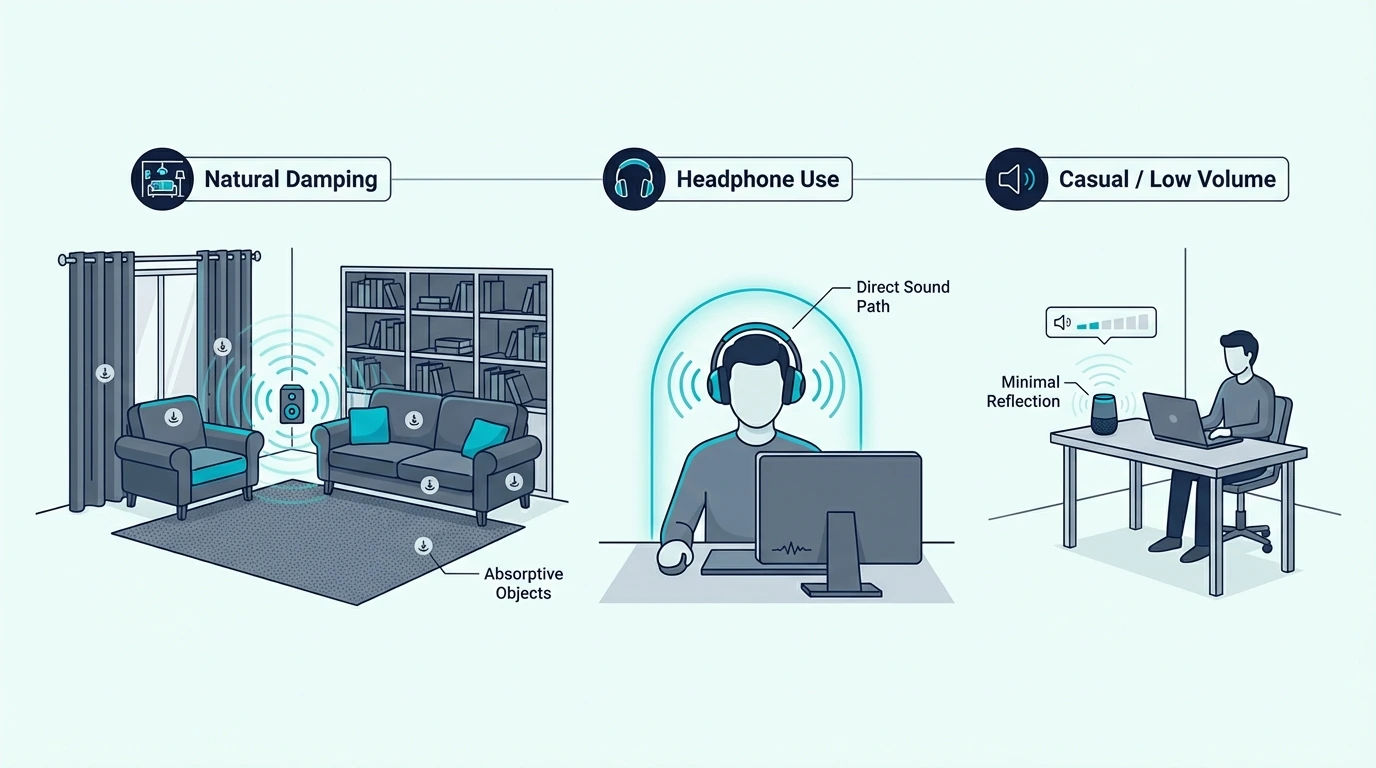
Treatment is not always worth the investment, and knowing when to skip it saves money and effort.
If your entire workflow happens on headphones — from recording through mixing and mastering — the room acoustics do not affect what you hear. Headphone-only producers can skip treatment entirely and spend that budget on better headphones or reference monitors for final checks.
Rooms that are already heavily furnished absorb a surprising amount of mid and high frequency energy on their own. A living room with a couch, thick curtains, a bookshelf full of books, and a rug on a hardwood floor already has significant natural absorption.
Casual music listening does not require treatment either. If you are not making critical decisions about sound — just enjoying music — the room coloration is part of the experience and most listeners never notice it.
Outdoor recording eliminates room reflections entirely, which is why field recording rarely involves acoustic treatment. The tradeoff is wind noise and environmental sound, but those are separate problems.
The gray area is podcasting with dynamic microphones. A good dynamic mic like the SM7B rejects off-axis room sound far better than a condenser, which means you can get clean recordings in a moderately treated or even untreated room if you stay close to the mic.
Our guide on recording without acoustic treatment covers techniques for getting usable results in bare rooms.
How Much Treatment Do You Actually Need?
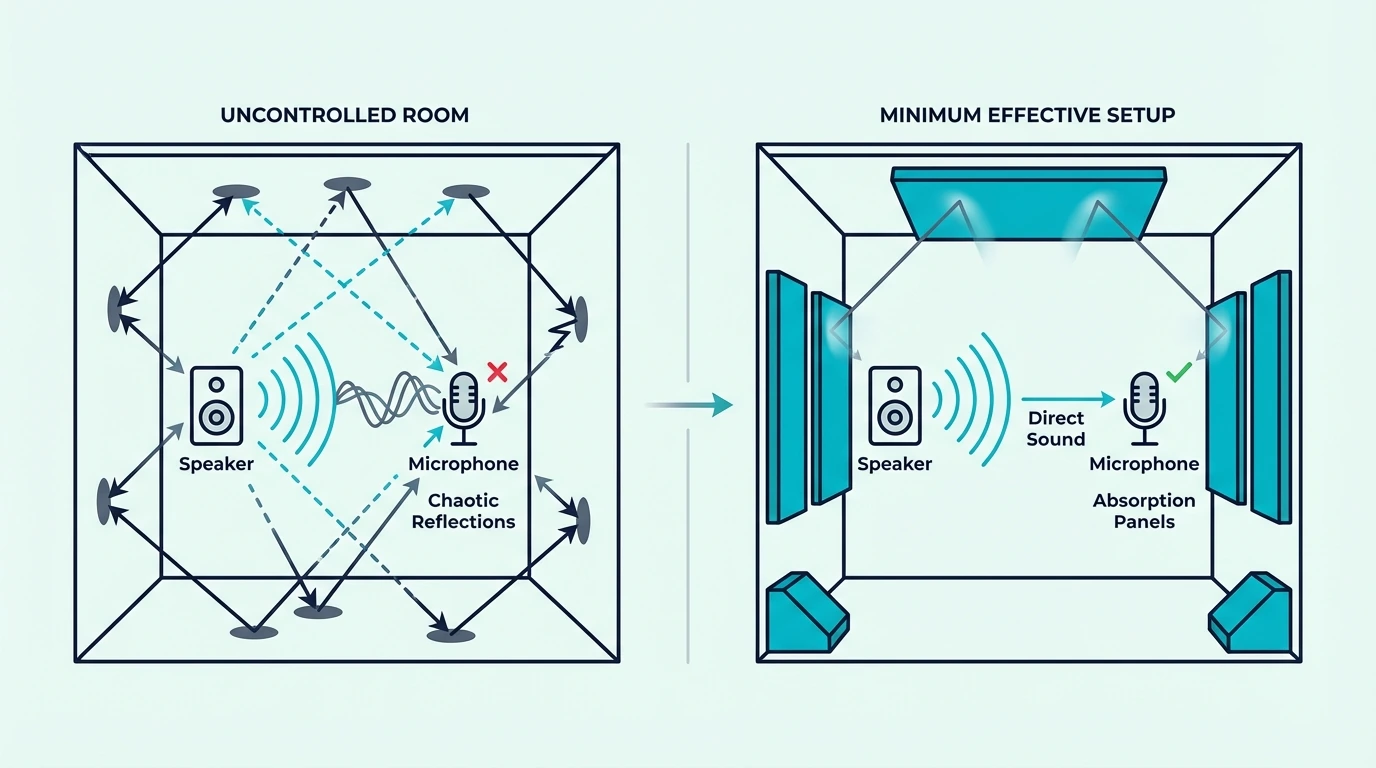
The biggest misconception about acoustic treatment is that you need to cover every wall. You do not.
Strategic placement of a small number of panels handles the majority of problems.
The Minimum Effective Setup
The 80/20 rule applies perfectly to acoustic treatment. Four corner bass traps and two first-reflection panels solve roughly 80% of the acoustic problems in a typical home studio for about 20% of the cost of full room treatment.
Start with bass traps in the front two corners of the room, floor to ceiling if possible. These address the room modes that make your bass response unreliable.
A budget-friendly option like TroyStudio Bass Trap 12-Pack gets you started while you save for thicker fiberglass options.
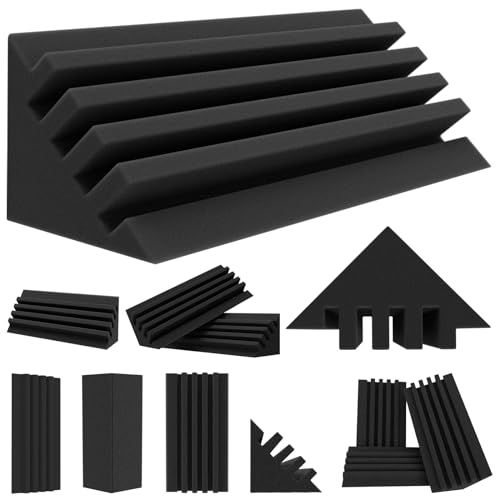
TroyStudio Bass Trap 12-Pack
Next, place two absorption panels at the first reflection points on your side walls. Use the mirror trick: sit at your listening position and have someone slide a mirror along the wall until you see a speaker in the reflection.
That spot gets a panel.
For panels that handle first reflections with genuine fiberglass absorption, a 2-inch fiberglass panel set delivers the absorption depth that foam alternatives cannot match.
That minimum setup — corners plus first reflections — is enough to make your monitoring position dramatically more accurate. For a complete walkthrough, see acoustic treatment for home studios.
When To Add More
If you still hear flutter echo after installing the minimum setup, add absorption to the rear wall. Flutter echo happens between parallel surfaces, so treating one side of each parallel pair eliminates it.
If bass is still uneven after corner traps, add traps to the rear corners and consider ceiling treatment at the first reflection point above your listening position. A ceiling cloud — a panel suspended a few inches below the ceiling — catches the reflection that bounces from your speakers off the ceiling to your ears.
The diminishing returns curve is steep. The jump from zero treatment to the minimum setup is enormous.
The jump from minimum to full treatment is noticeable but far smaller. Spend your first budget on the minimum setup and add incrementally based on what your ears and measurements tell you.
If you want to understand the full cost picture before committing, our acoustic treatment cost guide breaks down pricing by approach and room size.
The Bottom Line
Acoustic treatment is necessary for anyone who needs to trust what they hear in a room. Recording engineers, mixing engineers, podcasters, and anyone running a space where speech clarity matters will all benefit measurably.
It is not necessary for headphone-only workflows, casual listening, or rooms that are already well-furnished with soft, absorptive materials.
Start with four corner bass traps and two first-reflection panels. That minimum setup transforms an unreliable room into one you can actually work in, and it costs less than most audio interfaces.
If you want to explore budget-friendly treatment options, we have a full roundup of the top picks at every price point. And for the complete picture of how treatment works at a physics level, start with how acoustic treatment works.
Frequently Asked Questions
Does acoustic treatment make a difference?
Yes — even a basic setup of four bass traps and two wall panels produces an audible improvement in clarity, bass accuracy, and stereo imaging. Before-and-after measurements typically show a 10-15 dB reduction in the worst room mode peaks.
The difference is most dramatic for mixing, where untreated rooms cause mixes that do not translate to other playback systems.
What are the disadvantages of acoustic foam?
Foam absorbs mid and high frequencies but does almost nothing below 500 Hz, which means it cannot address bass problems — the most common issue in small rooms. Cheap foam also degrades over time, becoming brittle and potentially flammable.
For serious acoustic treatment, fiberglass panels or mineral wool outperform foam at every frequency and last indefinitely. Rockboard 60 mineral wool boards are a popular upgrade path from foam — the rigid boards absorb effectively across the full frequency range including the low-mids that foam misses entirely.
Will acoustic treatment give my vocal more clarity?
Absolutely. Room reflections cause comb filtering that makes vocals sound hollow, boxy, or distant.
Treating the area around your recording position — especially the wall behind the microphone and the first reflection points — removes those reflections and lets the direct vocal signal dominate.
The improvement is audible on the very first take after treatment. You will hear tighter low end, cleaner high frequencies, and a more present, upfront vocal tone.