Sound Deadening Vs Soundproofing (What Actually Changes Noise?)
Sound deadening vs soundproofing confuses people because both sit under the same “noise control” umbrella, but they solve different failures.
That is why the wrong products get bought first. Foam gets bought for neighbour noise, and heavy barrier products get bought for echo, even though both can disappoint when they are solving the wrong problem.
The cleanest way to separate them is to ask one question first: are you trying to calm sound inside a surface or room, or stop sound from crossing into another space?
The sections below turn that one question into a practical filter, so you can match the fix to the noise instead of guessing from product labels.
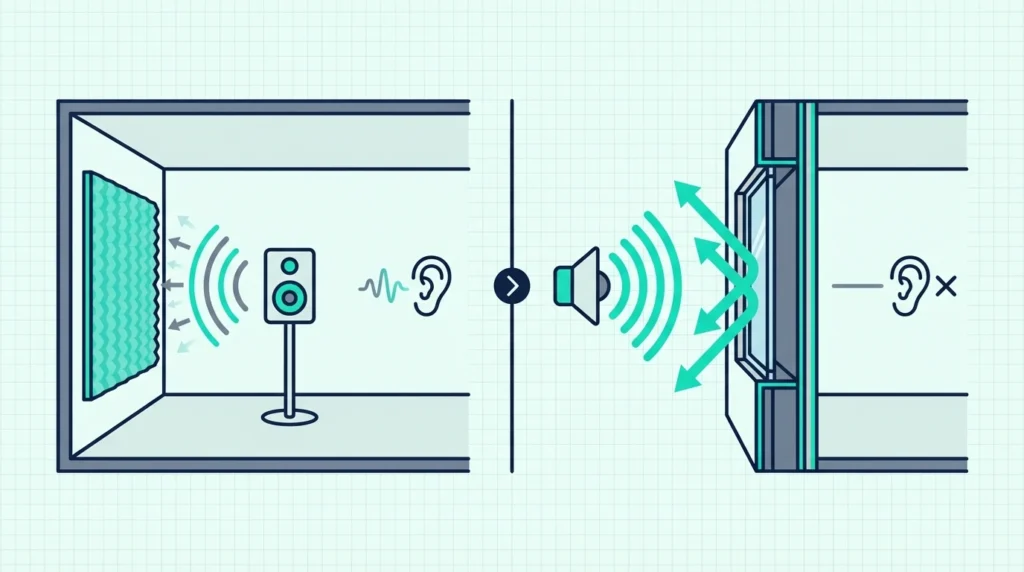
Sound deadening usually means calming vibration, ringing, or harshness in a surface or room, while soundproofing means reducing sound transmission between spaces. Deadening and absorption can make a room feel calmer, but they do not replace mass, sealing, insulation, and structural separation when the goal is blocking neighbor noise, traffic, TV sound, or leakage through a wall, door, window, ceiling, or floor. If your problem is echo, panel buzz, or resonance, think deadening or absorption. If your problem is sound getting through the building shell, think soundproofing.
If you want the fastest answer first, use this table before the deeper explanations.
| If your actual problem is | Usually think | Why | What not to expect |
|---|---|---|---|
| Car door buzz, metal ringing, or a resonant panel | Sound deadening | The surface itself is vibrating too much | It will not soundproof the next room |
| Echoey office, bedroom, or studio | Absorption or deadening-adjacent treatment | The room needs calmer reflections | It will not stop neighbor noise by itself |
| TV voices or neighbors through a wall | Soundproofing | The problem is transmission through the assembly | Foam alone will not solve it |
| Traffic through a door or window gap | Soundproofing | Leakage and weak openings matter more than room treatment | A heavy blanket alone will not rebuild the opening |
| A room that leaks sound and also sounds harsh inside | Both | One problem is transmission, the other is internal acoustics | Fixing one does not automatically fix the other |
The Core Difference
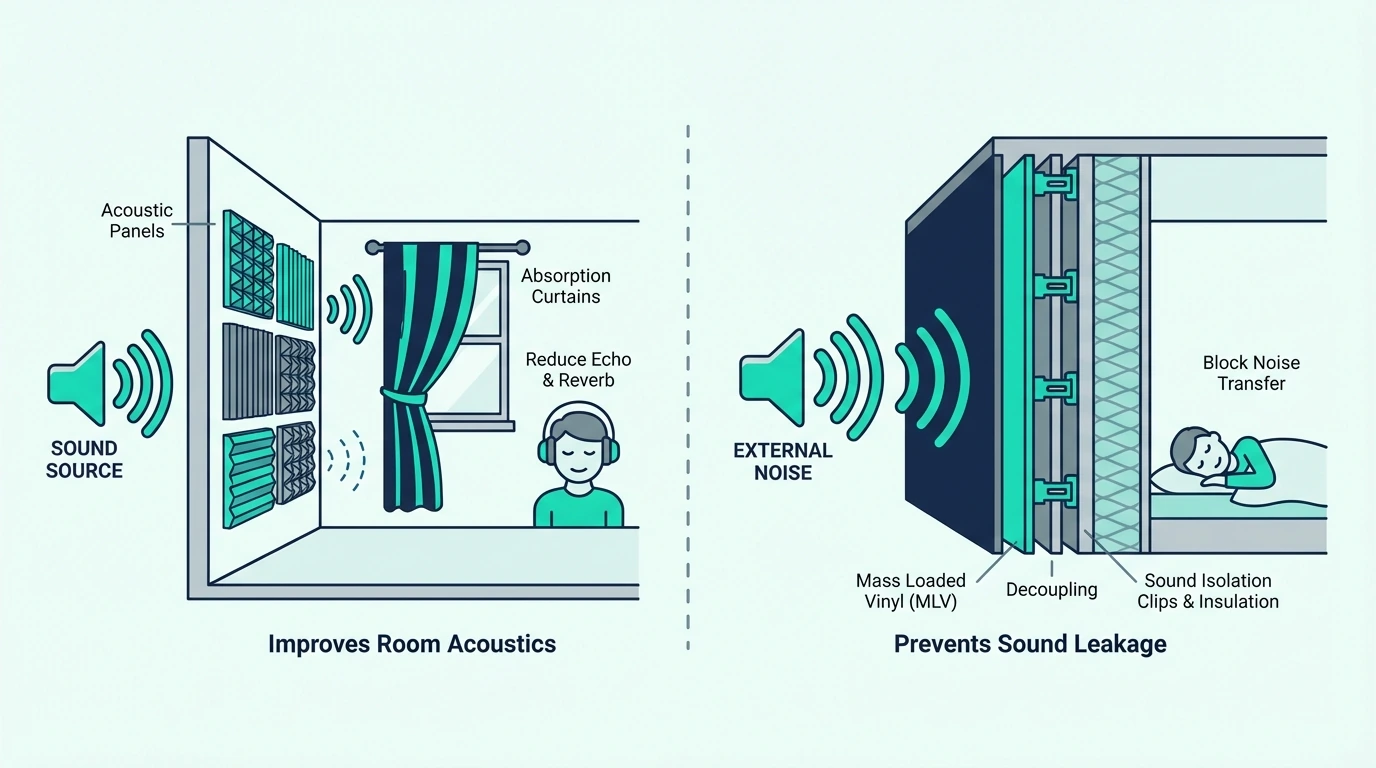
The fastest way to separate the two is by asking where the problem lives. Sound deadening changes how a surface or room behaves, while soundproofing changes how much sound gets through an assembly.
What Sound Deadening Does
Sound deadening mainly reduces ringing and vibration in a surface. That is why you see it in cars, metal panels, resonant boxes, and other places where the surface itself is part of the problem.
In room talk, people also use the phrase more loosely for making a space feel calmer or less harsh. That is where deadening starts overlapping with absorption and acoustic treatment, even though those are not identical ideas.
What Soundproofing Does
Where deadening calms vibration inside a surface, soundproofing attacks transmission. It tries to stop or reduce how much sound crosses a wall, door, window, ceiling, or floor in the first place.
That usually means more mass, better sealing, cavity treatment, and in stronger builds some form of separation or decoupling. That is why shared walls, bedroom windows, noisy doors, ceilings, and floors belong with how to soundproof a room, how to soundproof a wall, and how to soundproof windows rather than with generic deadening advice.
Why The Terms Get Confused So Often
Those two jobs are distinct, but product marketing collapses everything into “soundproofing.” A blanket, foam tile, weather seal, damping mat, and full wall rebuild get sold with similar language even though they do very different jobs.
The safer model is to separate three buckets: deadening for vibration, absorption for echo inside the room, and soundproofing for transmission through the structure. Once you label the problem correctly, the product choices get much easier.
When Sound Deadening Is The Right Fix
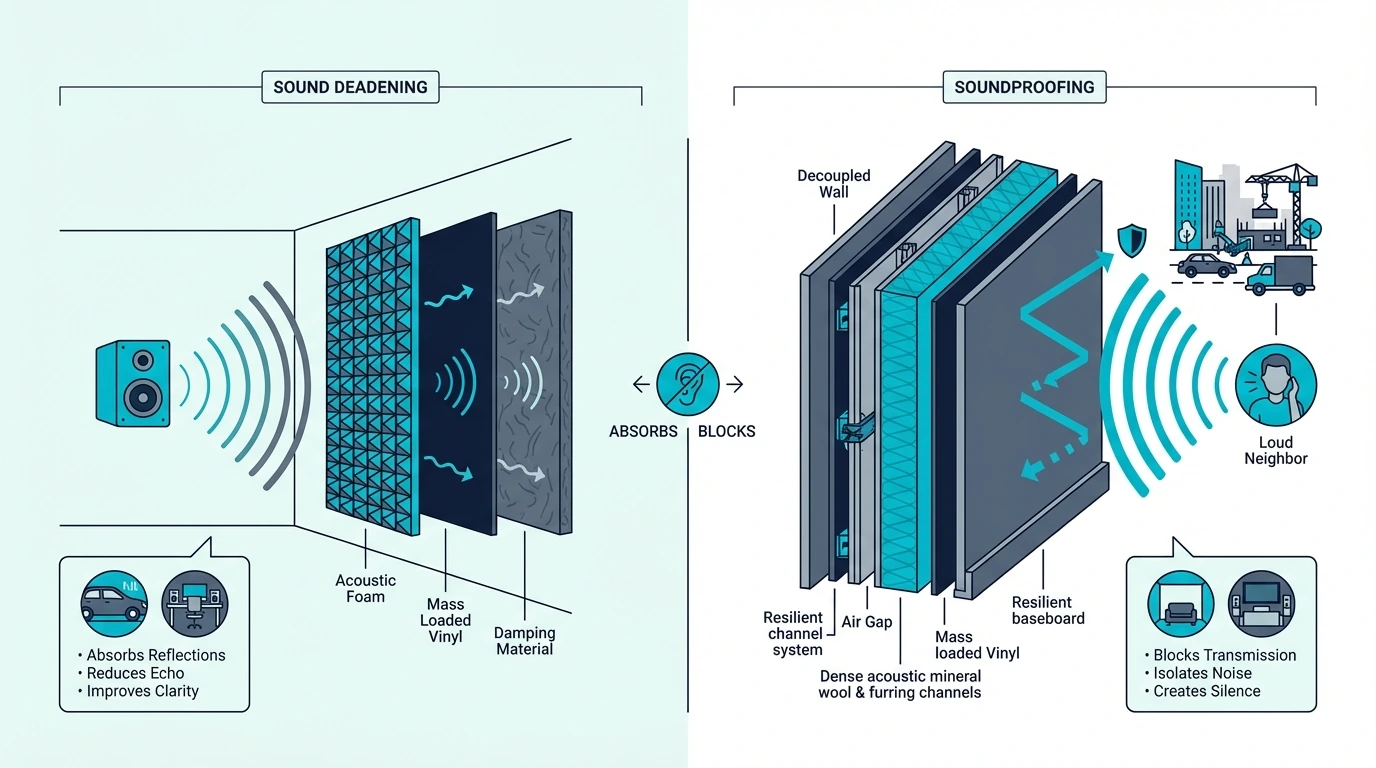
Once the job stays inside the room or inside the surface, deadening starts to make more sense than soundproofing. The best use cases are resonance, ringing, vibration, or a room that feels too sharp, buzzy, or reflective rather than poorly isolated from the next room.
Cars, Panels, And Resonant Surfaces
Thin metal panels, car doors, equipment housings, and lightweight enclosures often need deadening because the surface itself keeps vibrating after the original sound hits it.
In those cases, the goal is not room-to-room isolation. The goal is to calm the panel so the surface adds less noise of its own.
Echo And Room Harshness
Panel vibration is one side of the deadening story, but room echo sits closer to absorption and acoustic treatment. If a room sounds bright, fluttery, or fatiguing, the problem is often reflections inside the room rather than sound transfer through the structure.
That distinction matters because a room can sound calmer to you while still leaking plenty of sound to the next room. If you are deciding between internal treatment and true isolation, compare this page with best soundproofing panels and best soundproofing material.
Deadening Materials
Whether the target is a resonant panel or a harsh room, the materials share one trait: they calm vibration or reduce harshness rather than build a barrier. Think damping mats for resonant panels, softer absorptive layers for room comfort, and temporary heavy soft layers when you need a compromise rather than a rebuilt assembly.
A product like US Cargo Control Sound Dampening Blanket fits that middle ground. It can soften a space or add a temporary layer, but it does not replace a properly upgraded wall, door, or ceiling system.
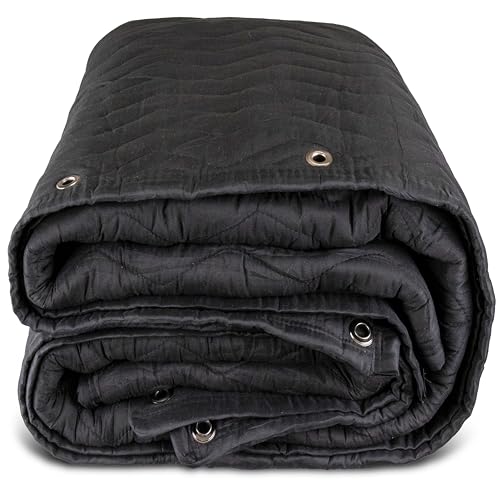
US Cargo Control Sound Dampening Blanket
Get Studio Tips Weekly
Join 5,000+ creators getting acoustic treatment advice every week.
No spam. Unsubscribe anytime.When Soundproofing Is The Right Fix
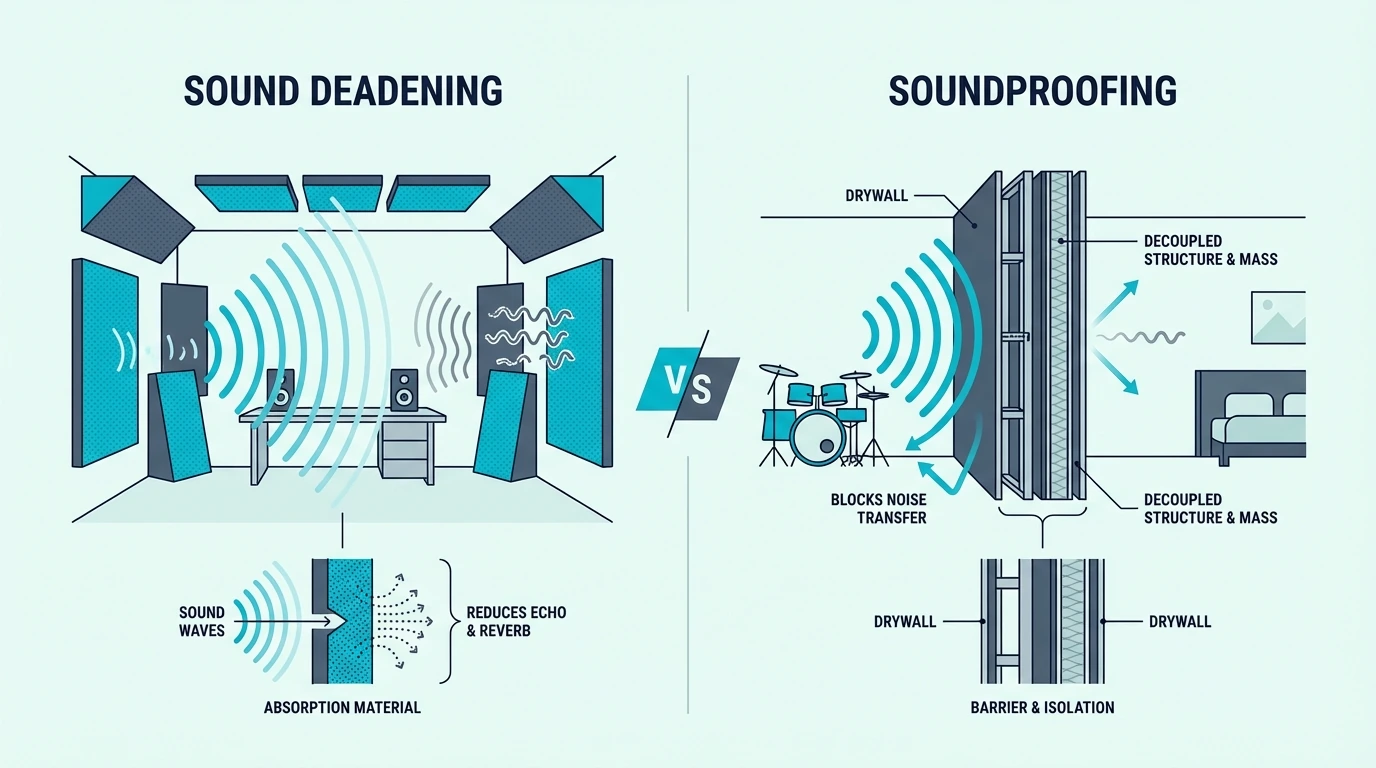
Once the problem crosses from room behavior to building transmission, the answer changes. If voices, TVs, traffic, footsteps, or neighbor noise are getting through the structure, that is a soundproofing problem.
Shared Walls, Windows, Doors, And Ceilings
Shared walls, windows, doors, ceilings, and floors are the classic transmission paths in homes and apartments.
That is why real isolation discussions usually lead to how to soundproof a door, how to soundproof a ceiling, how to soundproof a floor, how to soundproof an apartment, and how to soundproof a wall from noisy neighbours.
Soundproofing Materials
Those transmission paths demand materials chosen for airtightness, mass, cavity performance, or structural separation. That is why light decorative products underperform when the real job is blocking transmission.
A low-cost first step can be 33 Ft Gray Self-Adhesive Soundproofing Weather Stripping or Acoustical Caulk (29 oz) because air leaks can bypass better materials. Those products do not make a weak wall heavy, but they do stop an obvious leakage path from sabotaging the rest of the assembly.
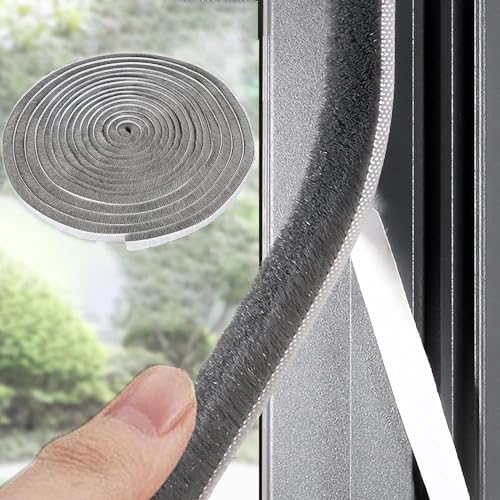
33 Ft Gray Self-Adhesive Soundproofing Weather Stripping
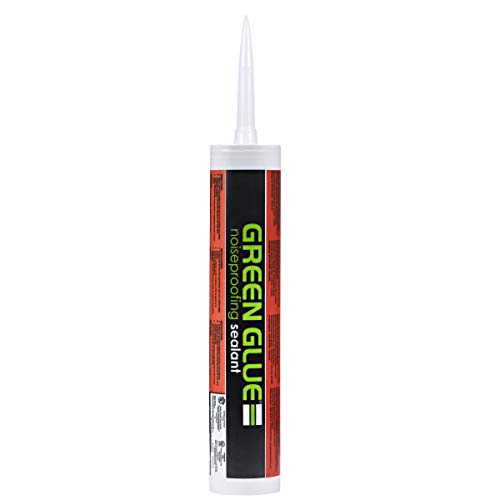
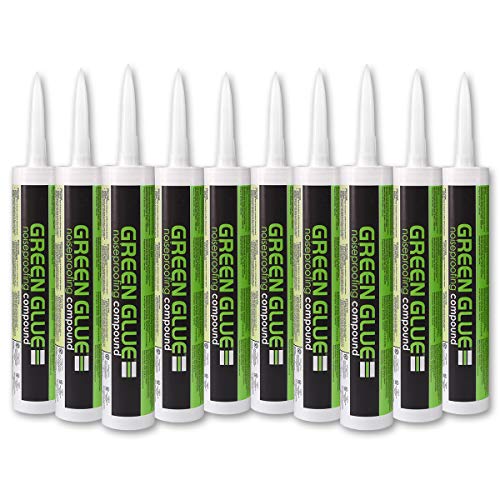
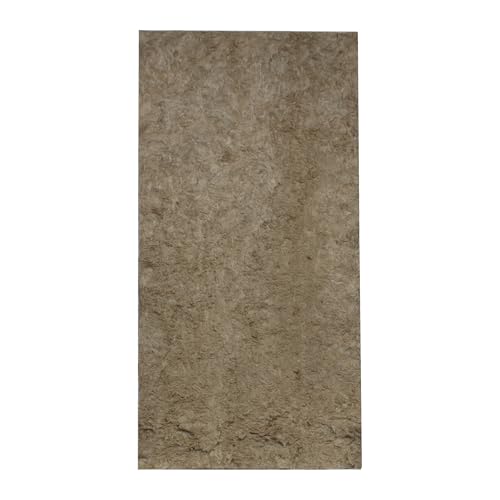
For stronger builds, products like Trademark Soundproofing Mass Loaded Vinyl, Green Glue Noiseproofing Compound, and AFB Mineral Wool Insulation make sense because they support the jobs real soundproofing systems actually need: added mass, damping between rigid layers, and better cavity behavior.
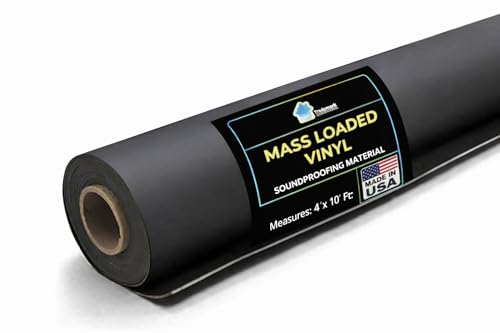
Trademark Soundproofing Mass Loaded Vinyl
Why Soundproofing Costs More
Mass, sealing, and cavity work all point toward construction, which is why soundproofing usually costs more than surface-level deadening. Blocking sound transmission often means changing the assembly itself, not just adding something decorative to the surface.
That is why budget discussions should stay honest. If you are planning stronger isolation, compare this page with how much it costs to soundproof a room and best insulation for soundproofing.
Matching The Fix To Your Problem
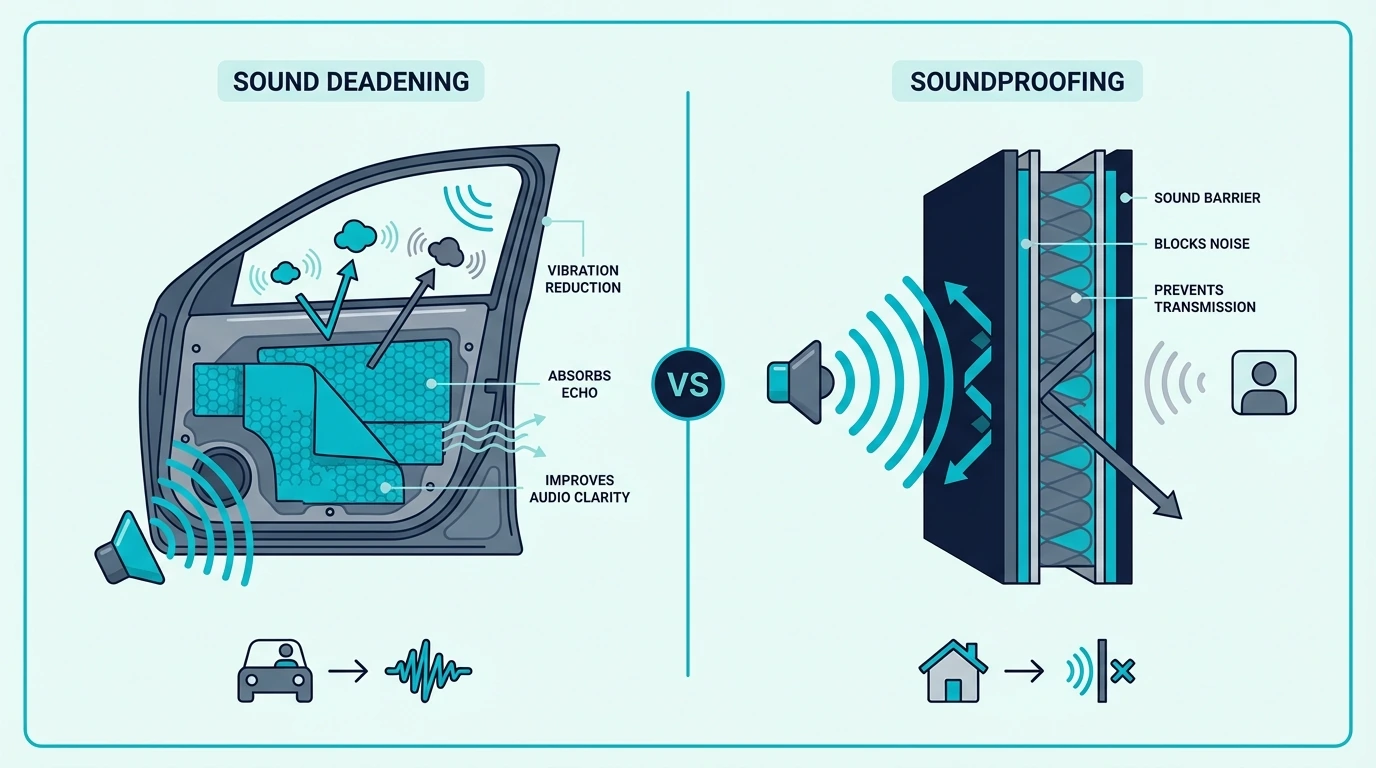
That difference becomes practical only when you turn it into a decision rule. The safest way to choose is to match the symptom to the job instead of matching the product label to the marketing promise.
| If your real problem is | Choose | Why | Typical next step |
|---|---|---|---|
| Car door buzz or a ringing metal surface | Sound deadening | The surface vibration is the problem | Apply damping to the panel itself |
| Echoey bedroom, office, or studio | Absorption or deadening-adjacent treatment | The room needs calmer reflections | Add room treatment, not fake soundproofing claims |
| Neighbor TV through a wall | Soundproofing | The problem is transmission through the assembly | Start with gaps, then upgrade the wall or opening |
| Traffic through a window or door | Soundproofing | The weak opening and leakage path matter most | Improve seals, then strengthen the opening |
| A room that leaks sound and sounds harsh inside | Both | One issue is transmission and one is internal acoustics | Fix the complaint that bothers you most first |
Neighbor Noise
If the problem is neighbor noise, you are almost always in soundproofing territory. Start by finding the weak path, then work through seals, doors, windows, walls, or ceilings in that order instead of buying a soft panel and hoping for isolation.
That is where pages like how to soundproof a room, how to soundproof a wall, and how to soundproof windows become more useful than generic deadening advice.
Echo And Harsh Reflections
Neighbor noise lands squarely in the soundproofing column, but echo, flutter, and a room that sounds sharp inside itself point the other way. You are trying to change how sound behaves inside the space, not how much escapes to the next one.
When You Need Both
Those two categories are not always either-or, because some spaces have two separate problems at once. A rehearsal room, home studio, office, or nursery can leak sound to the next space and still sound harsh inside.
In that case, handle the transmission problem with soundproofing and the internal comfort problem with absorption or deadening. Start with the complaint that matters most, because making a room sound calmer does not guarantee it leaks less sound.
Common Mistakes When The Two Get Mixed Up
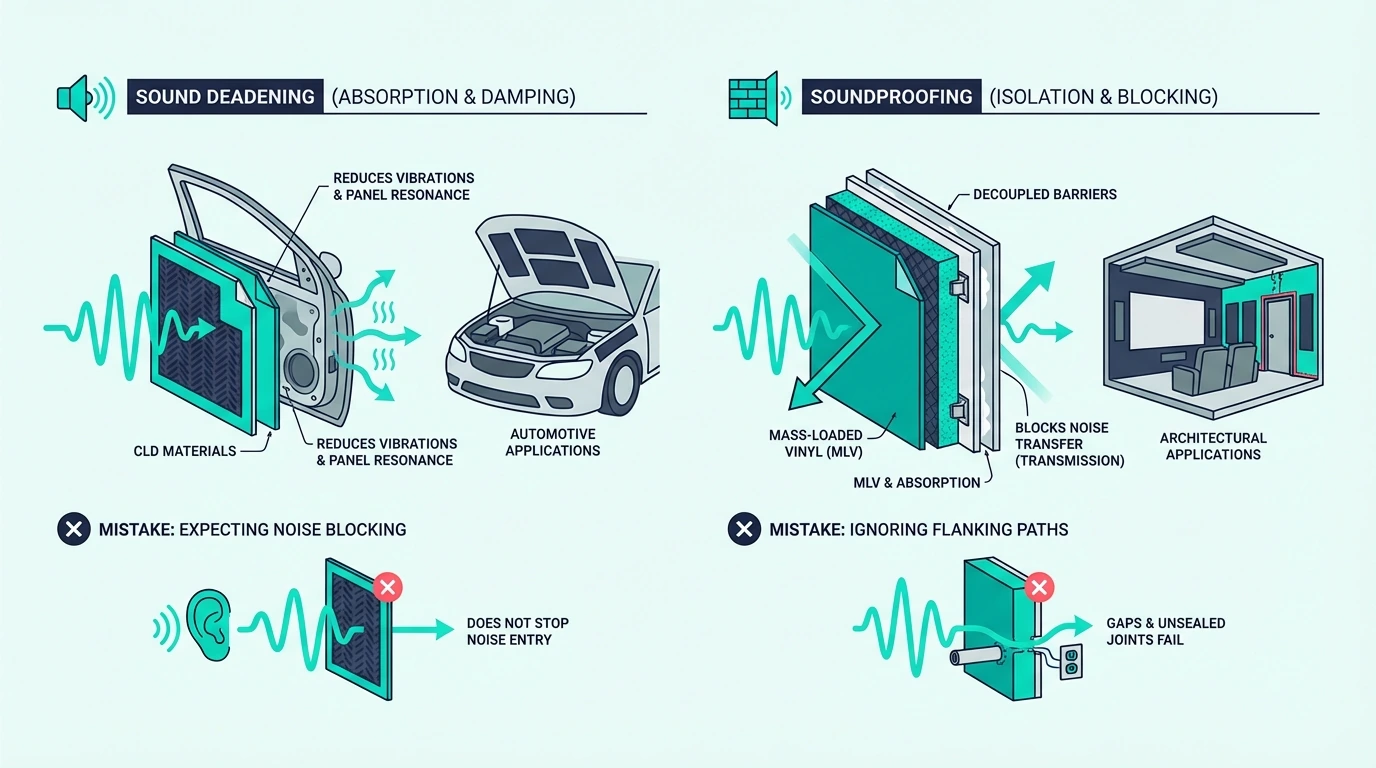
Most wasted noise-control spending starts with diagnosis errors rather than bad installation. People buy a real product for the wrong job, then conclude that all noise control is hype.
Foam On A Wall
Foam does not soundproof a wall because it lacks the mass and structural role needed to meaningfully block transmission. It can absorb some sound inside the room, but it does very little against a serious shared-wall or outside-noise problem.
That is why foam can make a room feel a bit less harsh without changing what the next room hears. Those are two different outcomes, and the article needs to keep them separate.
Heavy Mats And Blankets
Foam fails the mass test, but heavy mats and blankets at least bring weight. They can help for temporary barriers, light damping, or softening a space, yet they still do not automatically seal leaks, strengthen openings, or decouple a wall assembly.
That is why a small leakage fix like Acoustical Caulk (29 oz) or 33 Ft Gray Self-Adhesive Soundproofing Weather Stripping can sometimes do more for an obvious weak path than a random “soundproof” panel can do for the rest of the room.
Choosing The Right Solution First
Both foam and heavy mats disappoint when the diagnosis is wrong, which is why the right question matters more than the right product. Ask three: is the real problem vibration in the surface, harshness inside the room, or sound crossing into or out of the room?
If it is vibration, deadening belongs in the plan. If it is reflections, think absorption.
If it is transmission, move toward soundproofing instead.
That one filter prevents most bad purchases. It also makes product claims much easier to read critically.
The Bottom Line
The most useful difference between sound deadening and soundproofing is that they fix different failure points. Deadening and absorption change the behavior of a surface or room, while soundproofing changes how much sound gets through the building assembly.
Most bad purchases happen when those jobs get blurred. Use the soundproofing hub, wall guide, window guide, and room cost guide once you know which side of the problem you are actually solving.
Frequently Asked Questions
Is sound deadening the same as soundproofing?
No. Sound deadening reduces ringing, vibration, or internal harshness, while soundproofing reduces sound transmission between spaces.
People use the terms loosely in marketing, but the jobs are not interchangeable.
Can sound deadening materials stop neighbor noise?
Not on their own. Deadening materials can calm vibration or make a room feel less echoey, but they do not add the mass, airtightness, or assembly changes needed for serious neighbor-noise control.
If the complaint is what you hear through the wall, door, window, ceiling, or floor, treat it as a soundproofing problem first.
Do you need both sound deadening and soundproofing?
Sometimes, yes. A room can leak sound to the next space and still sound harsh or echoey inside, which means transmission and internal acoustics both need attention.
In that case, soundproofing handles the leakage and deadening or absorption handles the comfort problem inside the room. Start with whichever failure point is causing the bigger daily annoyance.