Best DJ Subwoofer Picks, From Desk Subs to 18-Inch PA Cabinets
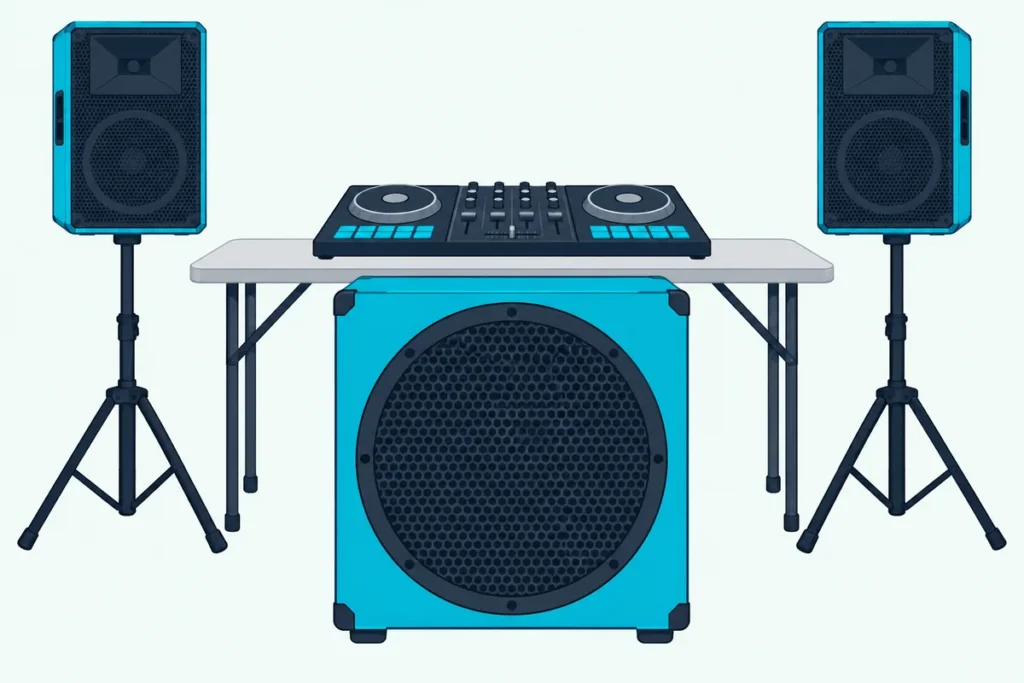
Choosing the best DJ subwoofer starts with the room you play, because an 8-inch desk sub and an 18-inch PA cabinet are built for different jobs.
Buy on peak watts alone and you can bring home a 93-pound box with no RCA jacks for your controller, or one whose Thru outputs pass the full-range signal, bass included, straight on to your speakers.
Match the size, the inputs and the filters to your speakers instead, and the low end gets deeper without turning the mix to mud.
The picks below are compared on what their makers publish: driver size, frequency response, amplifier power, crossover settings and inputs.
The short list comes first, then the size, power, filter and placement questions that decide which one belongs in your car.
What Is the Best DJ Subwoofer?
That depends on the room, but the Alto Professional TS18S is the best DJ subwoofer on paper for most mobile DJs. Alto lists an 18-inch woofer, 2,500 watts peak, 35 Hz to 100 Hz at -3 dB and a 137 dB maximum SPL, with two XLR or 1/4-inch inputs and two XLR Thru outputs for a pair of tops (Alto’s TS series user guide).
Each of the others solves a narrower problem:
| Pick | Type | Driver | Frequency response, per the maker | Amplifier, as rated | Inputs | Best for |
|---|---|---|---|---|---|---|
| Alto Professional TS18S | PA sub | 18 in | 35-100 Hz (-3 dB) | 2,500 W peak | XLR or 1/4 in | Dance floors |
| Alto Professional TS12S | PA sub | 12 in | 44-95 Hz (-3 dB) | 2,500 W peak | XLR or 1/4 in | Smaller gigs and cars |
| QSC KS112 | PA sub, bandpass | 12 in | 41-108 Hz (-6 dB) | 2,000 W peak | XLR or 1/4 in | A sub with a crossover menu |
| Behringer Eurolive B1200D-PRO | PA sub | 12 in | 60-130 Hz (±3 dB) | 500 W maximum | XLR | Tops with no low-cut |
| KRK S10.4 | Studio sub | 10 in | 30-110 Hz | 160 W continuous | XLR, TRS or RCA | A home DJ desk |
| PreSonus Eris Sub 8BT | Studio sub | 8 in | 30-200 Hz | 50 W RMS | TRS, RCA or Bluetooth | Bedroom practice |
The makers rate these figures in different ways, so read the dB marks and the power labels before you compare two rows.
Every pick met Burton Acoustix’s rating, review and stock checks on 27 October 2026. Nothing here was played or measured, and the descriptions come from the makers’ spec sheets and manuals.
If the sub is joining a controller and speakers you already own, our guide to connecting a subwoofer to a DJ controller walks through the cables and the wiring order.
| Product | Size | Link |
|---|---|---|
Best Overall 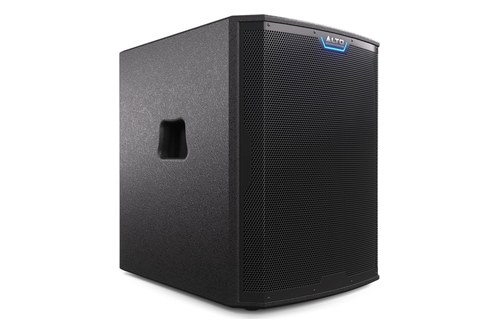 | 18 inch | See ratings |
Best Portable PA Sub 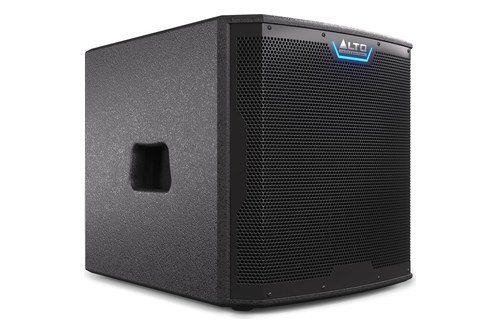 | 12 inch | See ratings |
Best for Crossover Control 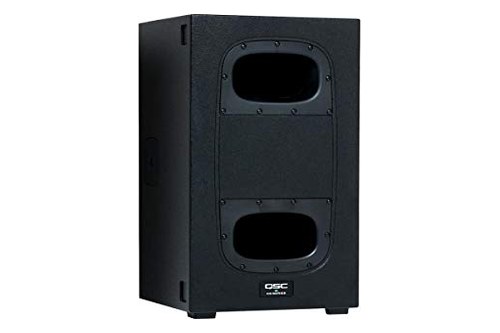 | 12 inch | See ratings |
Best for Tops Without a Low-Cut 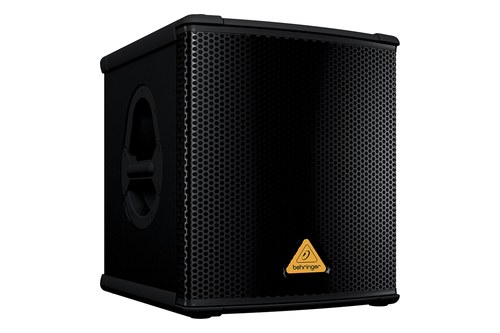 | 12 inch | See ratings |
Best for a Home DJ Desk 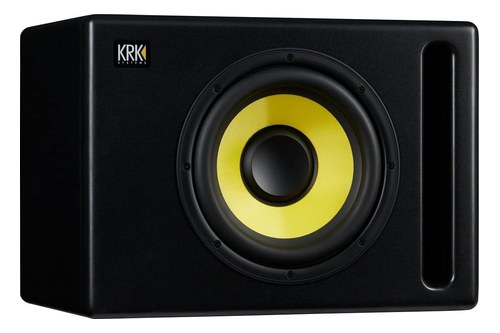 | 10 inch | See ratings |
Best for Bedroom DJs 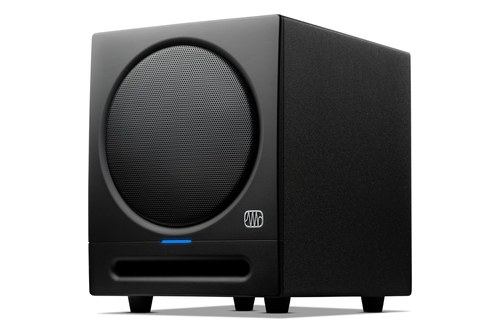 | 8 inch | See ratings |
Which DJ Subwoofer Should You Buy?
The table sorts the picks by job, and the notes below add what each maker’s documents say about weight, filters and connections. Buy by the room and the jacks: an Alto or the QSC for gigs, the Behringer when your tops can’t filter themselves, and the KRK or PreSonus for a desk.
Alto Professional TS18S
For dance floors, weddings and parties, the Alto Professional TS18S is the pick.
the Alto Professional TS18S
Its Speaker Use button selects a Live, DJ or EQ Off voicing, and Alto describes the DJ setting as an enhanced low-frequency bump. A Phase Alignment button shifts the output by 90, 180 or 270 degrees to fight low-frequency cancellation, and the cabinet has inserts for casters you buy separately.
The catch is mass, at 93 pounds (42.2 kg). Alto’s guide also lists no crossover or high-pass control for the Thru outputs, so your tops need a low-cut setting of their own.
Alto Professional TS12S
For a smaller car or a smaller room, the Alto Professional TS12S keeps the TS18S’s controls in a 12-inch cabinet.
the Alto Professional TS12S
Alto rates it at the same 2,500 watts peak, with a 130 dB maximum SPL and 44 Hz to 95 Hz at -3 dB, in a cabinet that weighs 57.1 pounds (25.9 kg). Its Thru outputs work the same way, with Input 1 sent to the left Thru and Input 2 to the right, so one sub can feed a stereo pair of tops.
That smaller woofer gives up some of the TS18S’s deepest notes: 44 Hz against 35 Hz at the same -3 dB mark.
QSC KS112
For a 12-inch sub you can tune from a menu, the QSC KS112 is the pick.
the QSC KS112
QSC builds it around a 12-inch long-excursion driver in a sixth-order bandpass cabinet with a 2,000-watt-peak Class D amplifier, and lists 41 Hz to 108 Hz at -6 dB with a 128 dB peak SPL (QSC). Four casters come with the 62.6-pound (28.4 kg) cabinet, and two M20 pole sockets take a speaker pole whether the sub stands upright or lies on its side.
Its menu sets an 80 Hz or 100 Hz crossover and a delay. One difference matters for the tops: QSC’s KS series manual says the pass-through jacks daisy-chain full-range audio, so speakers without their own high-pass get the bass too.
Behringer Eurolive B1200D-PRO
If your tops have no low-cut switch, the Behringer Eurolive B1200D-PRO filters them for you.
the Behringer Eurolive B1200D-PRO
Behringer’s quick start guide gives it two kinds of output: THRU jacks that send full-range copies of each input, and OUTPUT jacks that pass each signal through a 100 Hz high-pass filter for the tops. A High Cut knob sets the sub’s own upper limit between 70 Hz and 150 Hz, and a Boost switch adds 10 dB at a frequency you pick between 40 Hz and 90 Hz.
At 43.1 pounds (19.5 kg) it’s the lightest PA sub here, but its 500-watt amplifier and 60 Hz to 130 Hz response at ±3 dB put it a step behind the Altos for deep bass (Behringer).
KRK S10.4
For a home DJ desk fed from a controller’s RCA jacks, the KRK S10.4 takes those plugs directly.
the KRK S10.4
KRK fits it with RCA, 1/4-inch TRS and XLR inputs and outputs, a 10-inch glass-aramid woofer and a 160-watt continuous Class D amplifier, and lists 30 Hz to 110 Hz. A four-position crossover sets where the sub takes over, and KRK’s subwoofer manual says the balanced XLR and TRS outputs are high-passed above that setting.
The manual notes that RCA connections are typically used in home audio and some DJ products. Its 117.2 dB maximum peak SPL is a studio figure, well short of the PA subs above, so it suits a bedroom or a practice room rather than a party.
PreSonus Eris Sub 8BT
For a bedroom rig that doubles as a music system, the PreSonus Eris Sub 8BT adds Bluetooth.
the PreSonus Eris Sub 8BT
PreSonus lists an 8-inch driver, a 50-watt RMS Class AB amplifier and 30 Hz to 200 Hz, with TRS and RCA inputs, matching pass-through outputs and a Bluetooth 5.0 input. Its low-pass knob runs from 50 Hz to 130 Hz, and a defeatable 80 Hz high-pass filters the signal sent on to your monitors (PreSonus’s Eris Sub 8BT manual).
What Size Subwoofer Does a DJ Need?
Those two Alto models make a clean size comparison, because one guide rates all three TS subs the same way. The size a DJ needs follows the room: Alto’s 12-inch TS12S reaches 44 Hz at -3 dB and 130 dB, its 15-inch TS15S 36 Hz and 132 dB, and its 18-inch TS18S 35 Hz and 137 dB.
The cost is weight, from 57.1 pounds for the TS12S to 87.1 for the TS15S and 93.0 for the TS18S.
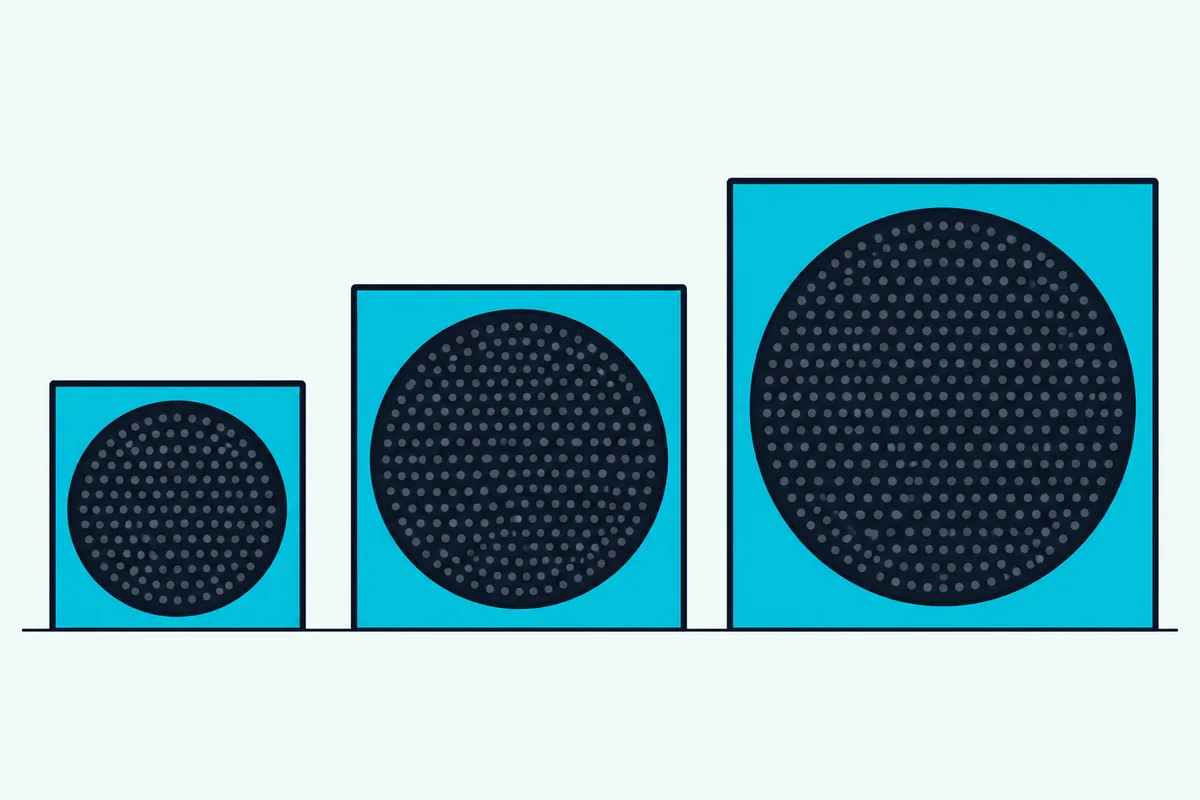
Mackie’s subwoofer setup guide gives the matching rule: a bigger speaker wants a bigger sub, and a smaller speaker a smaller one.
Try this before you choose: measure your car’s load space and the stairs at your regular venue. Alto’s guide suggests a second person for setup unless you’re confident you can handle a TS sub’s weight.
Do Peak Watts Tell You How Loud a Sub Plays?
That 137 dB figure says more than the wattage printed on the box. Peak watts don’t tell you how loud a sub plays, because makers rate power in different ways: Alto and QSC quote peak watts, Behringer a 500-watt maximum, KRK 160 watts continuous and PreSonus 50 watts RMS.
JBL’s EON718S page shows the gap on one amplifier, listing 1,500 watts peak and 750 watts RMS.
Maximum SPL is the closer guide, though the test conditions differ too. QSC measures its 128 dB peak on-axis at 1 meter with pink noise, and Behringer quotes its 122 dB in half space.
Even allowing for that, the Alto TS18S’s 137 dB sits about 20 dB above the KRK S10.4’s 117.2 dB. That gap is the difference between a dance floor sub and a desk sub.
Can You Plug a Subwoofer Straight Into a DJ Controller?
Loudness only matters once the sub is connected, so the jacks come next. You can plug a sub straight into a controller when its inputs match the outputs: AlphaTheta’s DDJ-FLX4 manual lists one pair of unbalanced RCA master outputs, which the KRK S10.4 and PreSonus Eris Sub 8BT take directly.
The Alto and QSC subs take XLR or 1/4-inch plugs and the Behringer takes XLR only, so an RCA-only controller needs RCA-to-XLR or RCA-to-1/4-inch cables for them.
Our rundown of the cords that go to a DJ controller covers those cables. From there, the sub feeds your speakers from its own outputs.
Do Your Speakers Need a High-Pass Filter?
Those sub outputs decide what your speakers hear, and they aren’t all the same. Your speakers need their own high-pass when the sub passes them the full-range signal: Behringer’s OUTPUT jacks cut below 100 Hz, KRK high-passes its balanced outputs above its crossover, and PreSonus adds a switchable 80 Hz high-pass, while QSC’s pass-through jacks carry the full range and Alto’s guide lists no high-pass for its Thru outputs.
PreSonus explains the stakes: bass below 80 Hz left in full-range monitors can cancel or reinforce the sub’s top notes and make the low end muddy.
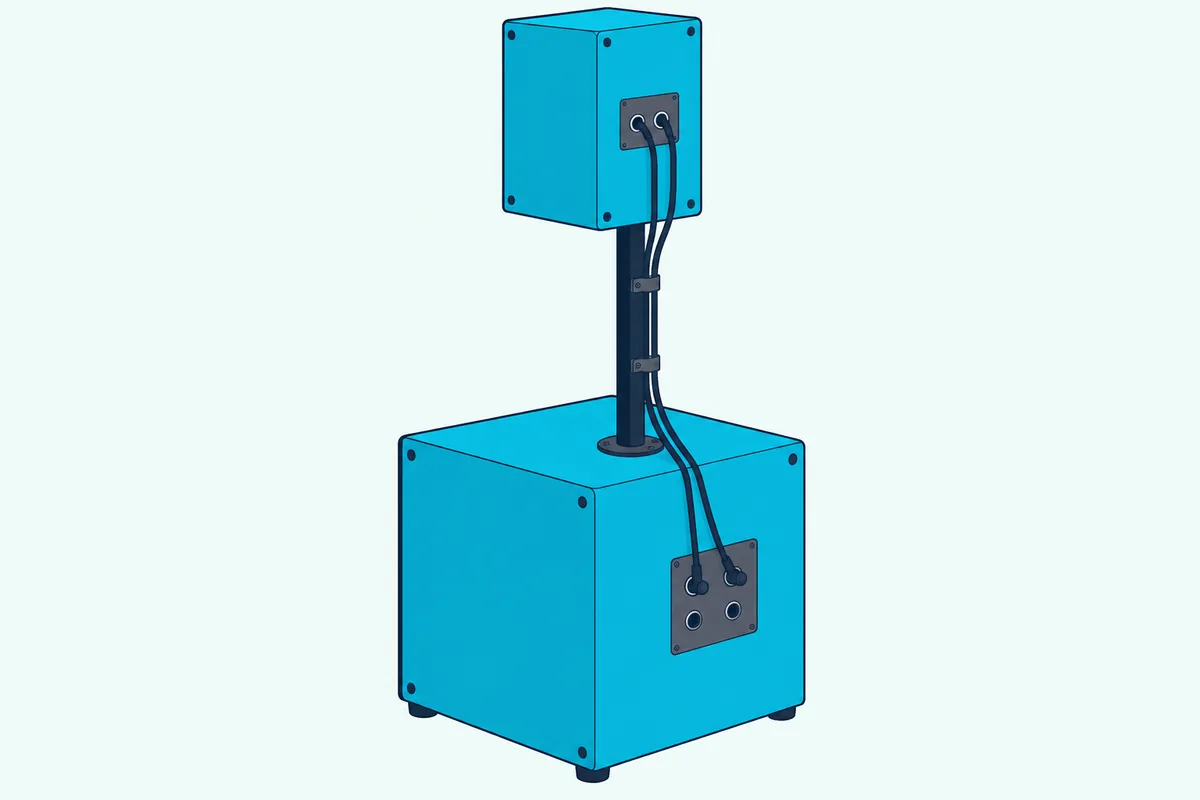
Check your tops first. QSC’s K and KW speakers, for one, have an EXT SUB setting that engages a 100 Hz high-pass (QSC support), so a full-range Thru output suits them.
If your tops have no such setting, the Behringer, the PreSonus and the KRK (through its balanced outputs) filter them from the sub.
Which Crossover Setting Should You Start With?
The tops’ high-pass and the sub’s low-pass meet at the crossover, and each maker starts in a different place. Start where the sub’s maker points: QSC’s KS menu offers 80 Hz or 100 Hz depending on which QSC tops sit above it, PreSonus says to set its low-pass to 80 Hz when its high-pass is on, and KRK says to begin at the highest of its four settings with small monitors.
KRK’s manual adds a rule of thumb: double the lowest frequency your satellite speakers are rated for, and use that as the crossover.
Say your tops are rated down to 50 Hz. KRK’s rule puts the crossover near 100 Hz, the setting QSC’s manual optimizes for its legacy K, KLA and KW speakers.
Mackie’s guide calls the crossover probably the most important control on a sub and says to adjust it and hear what sounds best. KRK’s manual ends the same way, with music you know.
Where Should the Subwoofer Go, and Is One Enough?
Crossover settings only behave when the sub sits in the right spot. One sub typically supports a stereo pair of tops, QSC’s KS manual says, and centering it between them gives the most even coverage where that’s possible; with two, Alto’s guide sends the mixer’s left output to one sub and the right to the other, each feeding one top.
QSC also warns that subs at the left and right of a stage concentrate bass up the middle of the audience, the “Power Alley,” and suggests clustering them in the middle or spreading them across the front.
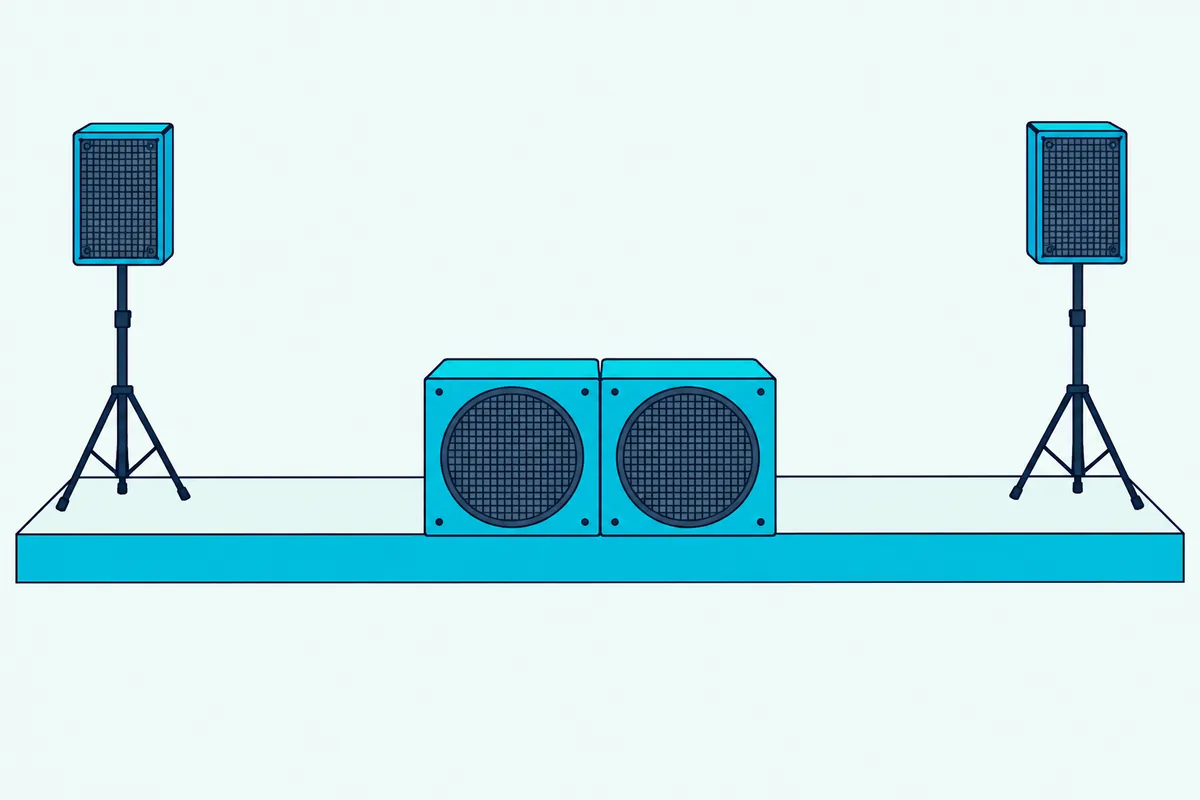
Walls change the sound too. PreSonus says a wall or a corner exaggerates the bass and makes a sub boomy, and Mackie says to keep at least a bit of distance, even just a few feet.
Mackie’s “crawl” finds the spot: put the sub where the dancers will be, crawl around the floor listening, and place the sub wherever the bass sounds best.
The Bottom Line
The Alto TS18S is the strongest all-rounder on paper for dance floors, the TS12S and QSC KS112 carry more easily, and the Behringer B1200D-PRO looks after tops with no low-cut. For a desk, the KRK S10.4 and PreSonus Eris Sub 8BT take a controller’s RCA plugs directly, and Burton Acoustix’s DJ speaker picks cover the speakers that sit beside them.
Frequently Asked Questions
Is a 12-inch subwoofer enough for DJing?
For small rooms and parties it can be, as long as you accept less depth. Alto’s 12-inch TS12S reaches 44 Hz at -3 dB with a 130 dB maximum SPL, while its 18-inch TS18S reaches 35 Hz and 137 dB, so the bigger cabinet adds deeper bass and more headroom for a dance floor.
Can a studio subwoofer work for DJ gigs?
It’s built for a desk rather than a crowd. KRK lists a 117.2 dB maximum peak SPL for the S10.4 and PreSonus 100 dB for the Eris Sub 8BT, against 128 dB to 137 dB for the QSC and Alto PA subs, so keep a studio sub for practice and take a PA sub to gigs.
Do you need a subwoofer for a DJ controller?
No, a controller can play through powered speakers alone, and AlphaTheta pairs the DDJ-FLX4’s master outputs with powered speakers or a power amplifier. A sub adds the bass below what your speakers reach: PreSonus lists 30 Hz for the Eris Sub 8BT, and its 80 Hz high-pass takes the deepest bass off the monitors.
Should you turn the subwoofer on before the speakers?
Yes, after the sources. QSC’s KS manual says to turn the mixer’s faders down, switch on the sources, then the subs, then the tops, and to switch off in the reverse order, while Alto’s guide says to set the Volume knob to -∞ before you power a TS sub on.