How to Connect a Soundbar to a Sharp TV, System by System
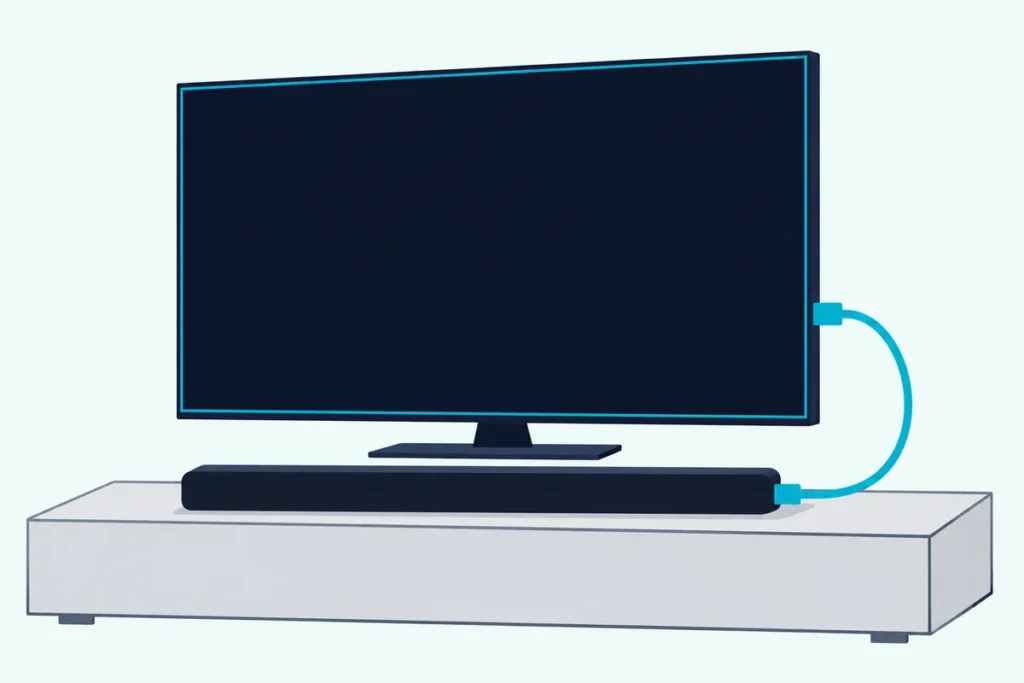
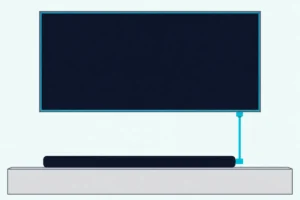
Here’s how to connect a soundbar to a Sharp TV: run one HDMI cable from the TV’s port marked ARC or eARC to the bar’s matching socket, then turn on HDMI-CEC in the TV’s menu.
Sharp doesn’t keep that port in one place: its spec pages put eARC on HDMI 1, 2 or 4 depending on the set, and the menu names change with the TV’s system.
Get the port and the switch right, and the TV’s remote runs the bar’s volume while the TV’s own speakers go quiet.
Below are the ports by model, the menus for Roku TV, Google TV, Android TV, TiVo and older AQUOS sets, and the audio format Sharp suggests for silence.
After that come the optical, audio-cable and Bluetooth routes, the bar’s side for six brands, and the fixes for silence, a dead volume key, lip sync and Atmos.
How to Connect a Soundbar to a Sharp TV
That ARC or eARC port is where Sharp’s own instructions start. Sharp’s Google TV instruction manual calls HDMI the recommended method for an external audio device, and says to link the television’s HDMI input marked “eARC” to the bar’s HDMI socket bearing “ARC” or “eARC.”
Here’s the full order to hook it up, from Sharp’s instructions and its UK soundbar support page:
- With both devices off, connect the TV’s ARC or eARC port to the bar’s ARC socket, because Sharp’s UK support warns that connecting live hardware can cause data corruption.
- Turn on HDMI-CEC, which Sharp’s sets call HDMI control, HDMI CEC or AQUOS LINK, and Roku calls Control other devices (CEC).
- Choose the bar as the output if your TV’s menu asks, using the switch named for your system below.
- Switch both on, select the bar’s ARC or HDMI input, and play something with sound.
Sharp’s Google TV and TiVo guides describe the same result. Volume can be controlled from the television’s remote with CEC on, and the TV’s speakers mute once ARC or eARC is working.
The descriptions on this page come from Sharp’s manuals and support pages and the other makers’ guides. For another maker’s TV, the any-TV soundbar hookup guide lays out each brand’s menu.
Which HDMI Port on a Sharp TV Has ARC or eARC?
Those steps lean on one port, and Sharp’s Android TV manual says outright that its location varies by model. Look for the printed “ARC” or “eARC” on the back panel first, then check your set against this table.
| Sharp TV | System | Port with ARC or eARC | Other audio outs |
|---|---|---|---|
| 55HJ4225E (Europe) | Roku TV | HDMI 1, eARC | Optical, 3.5 mm line-out |
| 65HP6265E (Europe) | Google TV | HDMI 2, eARC | Optical, 3.5 mm line-out |
| 65GR8265E, 75FQ5EG (Europe) | Google TV | HDMI 4, eARC | Optical, 3.5 mm line-out |
| 65FP2EA (Europe) | Android TV | HDMI 1, eARC | Optical, 3.5 mm line-out |
| 55FL1EA (Europe) | Android TV | HDMI 3, ARC | Optical, 3.5 mm line-out |
| 4T-C55FL1X (Asia) | Google TV | HDMI 1, eARC/ARC | Optical S/PDIF |
| LC-UB30U series (US) | Sharp’s own | HDMI 3, ARC | DIGITAL AUDIO OUT |
| LC-LE653U, LE654U series (US) | Sharp’s own | HDMI 1, ARC | DIGITAL AUDIO OUT |
| LE650U, C6500U, LE642U, EQ10U (US) | Sharp’s own | HDMI IN 1, ARC | DIGITAL AUDIO OUT |
| LE657U, UQ, TQ and SQ sets (US) | Sharp’s own | HDMI IN 3, ARC | DIGITAL AUDIO OUT |
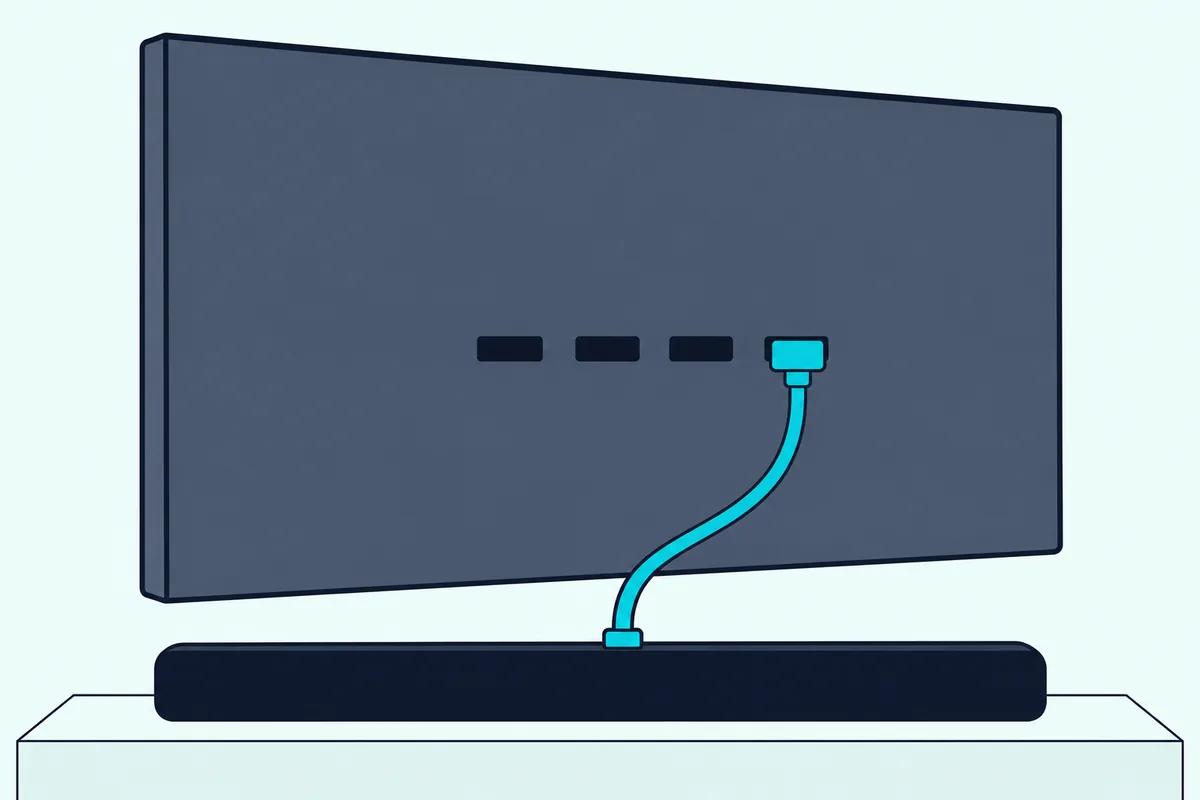
So don’t plug in from memory: a bar moved from a 65FP2EA’s HDMI 1 to a 65GR8265E would land on the wrong socket. For the US 4T-C55GM6540U, Sharp’s E-Manual gives no port number in its text, only the instruction to use the input marked “eARC.”
Which System Does Your Sharp TV Run?
That table splits Sharp’s range by system, and the system decides your menu names. Sharp’s European catalog sorts its sets into Android TV, Google TV, Roku TV, TiVo OS, Titan OS and plain Smart TV, and the US documents add the TiVo-powered 4T-C55GM6540U.
The remote usually gives it away. A Roku TV opens from Home, a TiVo set’s steps start from the TiVo button, Sharp’s Google TV guide leans on the quick settings button, and Android TV uses HOME and then Device Preferences.
An older LC-series AQUOS has its own on-screen menu: Initial Setup on the LC-UB30U, Setup on the 2014 sets, each followed by Advanced. If your set matches none of these, as a Titan OS model won’t, its own manual names the CEC switch and digital output, the two settings to find first.
What Do You Set on a Sharp Roku TV?
That Home button opens menus Roku writes itself, so a Sharp Roku TV follows Roku’s steps. Sharp’s quick start guide for the 43HJ, 50HJ and 55HJ sends you to Roku’s online user guide for setup details.
Roku’s surround sound article gives this order for an ARC or eARC soundbar:
- Press Home on the Roku TV remote, then open Settings > System > Control other devices (CEC).
- Highlight ARC (or eARC) and check the box with OK.
- In the same list, check System audio control, so the Roku remote can set the bar’s volume and mute it.
- Check 1-touch play as well.
Roku’s separate CEC article gives another path for eARC: Settings > Audio > Audio Output, then the eARC option. If one path isn’t on your screen, try the other.
Roku says eARC is on select Roku TV models only, and that the port is often labeled “HDMI ARC” or just “ARC.” A Roku TV Ready soundbar has to go in that port too, and Roku lists a wrong-port message for one that doesn’t. Soundbar control from a Roku remote has the remote’s side of the job.
Where Are the Settings on a Sharp Google TV or Android TV?
Those Roku checkboxes have direct counterparts on Sharp’s Google-based sets, though the paths differ. Both instruction manuals say HDMI CEC must be enabled for the ARC connection to work.
| Setting | Sharp Google TV | Sharp Android TV |
|---|---|---|
| CEC | Settings > Channels & Inputs > Inputs > HDMI control | Settings > Device Preferences > Inputs > HDMI control |
| eARC | Settings > Display & Sound > Sound > eARC, set to Auto | No eARC switch in its HDMI steps |
| Sound to the bar | Follows ARC; on optical, Speakers > Off | MENU > Speakers > External Audio System |
| Audio format | Settings > Display & Sound > Audio output > Digital Output | Settings > Device Preferences > Sound > Digital Output |
Google TV’s input menu also holds HDMI EDID Version, which Sharp suggests changing when the TV gets no picture or sound from a connected HDMI device. Sharp’s Android TV instruction manual asks you to turn the audio system on after picking External Audio System, then adjust its volume.
How Does a Sharp TiVo TV Route Sound to the Bar?
That External Audio System choice has a clearer name on Sharp’s US TiVo set. Sharp USA’s sound menu article for the 4T-C55GM6540U calls it Audio output path, with four options: Internal TV Speaker, Optical, HDMI eARC and Headphones.
The E-Manual’s steps start from the TiVo button:
- Open Settings > Sources, scroll down and activate HDMI CEC.
- Open Settings > Sound > Audio Output Path and make sure HDMI eARC is selected.
- For optical, pick Optical S/PDIF on the same screen, which also turns off the TV’s internal speakers.
Sharp USA adds a useful detail. Connecting an ARC or eARC device switches the output on its own, and you can override that from this menu at any time.
Where Is AQUOS LINK on an Older Sharp AQUOS?
That automatic switch is a newer convenience, because older AQUOS sets split the job across a few menus. Sharp’s name for CEC there is AQUOS LINK, and the LC-UB30U manual puts it under Initial Setup > Advanced > AQUOS LINK Setup, with AQUOS LINK Control and Audio Return Channel inside.
Set Audio Return Channel to Auto. Sharp writes these steps for an “AV amplifier,” and an ARC soundbar takes the same spot on the same terminal.
The 2014 AQUOS manual, covering the LE650U and SQ-series sets among others, uses Setup > Advanced > AQUOS LINK Setup. Its note covers the fallback: if the TV’s audio still won’t come out after all that, connect an optical cable and set Audio Return Channel to Off.
One more switch matters. Output Select offers Fixed or Variable for the AUDIO OUT terminal, the 2014 manual says Variable mutes the TV’s speakers, and Sharp’s no-sound checklist asks whether Variable is selected.
Should the TV Send PCM, Bitstream or Auto?
Those menus all end at the same choice, the audio format, and it’s what Sharp suggests for a connected bar that stays silent. Its Google TV and TiVo guides say the system may not support the required codecs, so try letting the TV decode the sound by choosing PCM.
| Sharp system | Menu name | Choices |
|---|---|---|
| Google TV | Digital Output | Auto, Bypass, PCM, Dolby Digital Plus, Dolby Digital |
| Android TV | Digital Output | PCM if the bar can’t take Dolby Digital or DTS |
| TiVo (4T-C55GM6540U) | Digital audio format | Auto, Bitstream, PCM |
| Roku TV | S/PDIF and ARC | Auto detect, Auto passthrough, specific formats |
| Older AQUOS | Digital Audio Out or Audio Setup | PCM, Bitstream (and Off on the LC-UB30U) |
Think of the setting as who does the decoding. With PCM the TV processes the audio, and with Bitstream or Bypass the bar does, which is why the fix can run in both directions.
Sharp’s UK soundbar FAQ shows both sides. Its row for optical or coaxial inputs says to set the source to PCM, while its general no-sound row says a bar that can’t decode a format appears mute and asks for bitstream, with “RAW” or “Auto” on Sharp’s own TVs.
Other makers lean the same two ways, so your bar’s manual breaks the tie. Vizio’s M51a-H6 manual tries PCM on the digital input, and Samsung’s HW-Q990D manual recommends Dolby Digital over PCM for sound quality when a broadcast is in Dolby Digital.
So test in this order: Auto first, PCM if the bar is silent, then Dolby Digital or Bitstream once sound is working. What each format carries to the bar explains the trade-off.
Do You Need to Buy a Cable?
That format test assumes the right cable is already in, and a new Sharp TV won’t bring one. Sharp’s Google TV, TiVo and Android TV manuals all mark both the HDMI cable and the optical cable as not supplied.
Some bars include theirs and some don’t. Bose’s Smart Soundbar box holds both cables, JBL’s Bar 1000MK2 supplies HDMI only, and Samsung’s HW-Q990D marks its HDMI cable as not supplied.
For eARC, Sharp’s Google TV and TiVo guides ask for a cable labeled “HDMI High Speed with Ethernet” or better, and Roku asks for the same on its eARC models. If you’re buying one, Silkland’s 3.3 ft HDMI ARC/eARC cable is sold for that soundbar job.
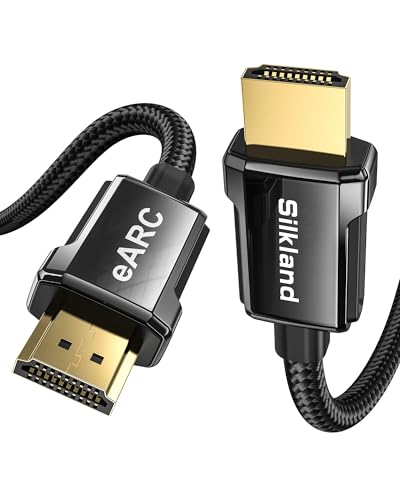
Silkland’s 3.3 ft HDMI ARC/eARC cable
Measure from the TV’s port to the bar’s socket first, since 3.3 ft only suits a bar right under the screen.
For the optical route below, Warrky’s 6 ft braided optical audio cable is sold for soundbars and TVs. Roku’s note applies to any optical cable: pull the protective plastic cap off each end first, or you risk a faulty connection or damage to the port.
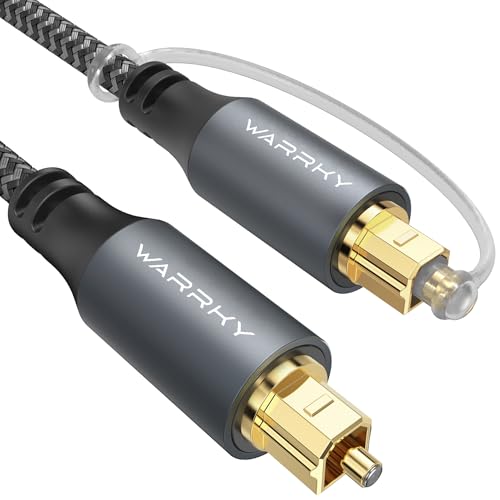
Warrky’s 6 ft braided optical audio cable
What If Your Sharp TV or Soundbar Has No ARC?
That optical cable is Sharp’s own fallback. Connect the TV’s Digital Audio Out to the bar’s digital optical input, as Sharp’s Google TV, TiVo and Android TV guides show, and the LE650U setup guide names it for equipment that isn’t compatible with ARC.
On the TV’s side, you then silence the speakers and pick a format:
| Sharp system | Turn off the TV’s speakers | Format hint |
|---|---|---|
| Google TV | Settings > Display & Sound > Sound > Speakers > Off | Dolby Digital is “recommended when using an optical audio cable” |
| Android TV | MENU > Speakers > External Audio System | PCM if the bar can’t take Dolby Digital or DTS |
| TiVo | Settings > Sound > Audio Output Path > Optical S/PDIF | PCM if the bar stays silent |
| Older AQUOS (LC-UB30U) | Audio Settings > TV Speakers > Off | PCM or Bitstream under Digital Audio Out |
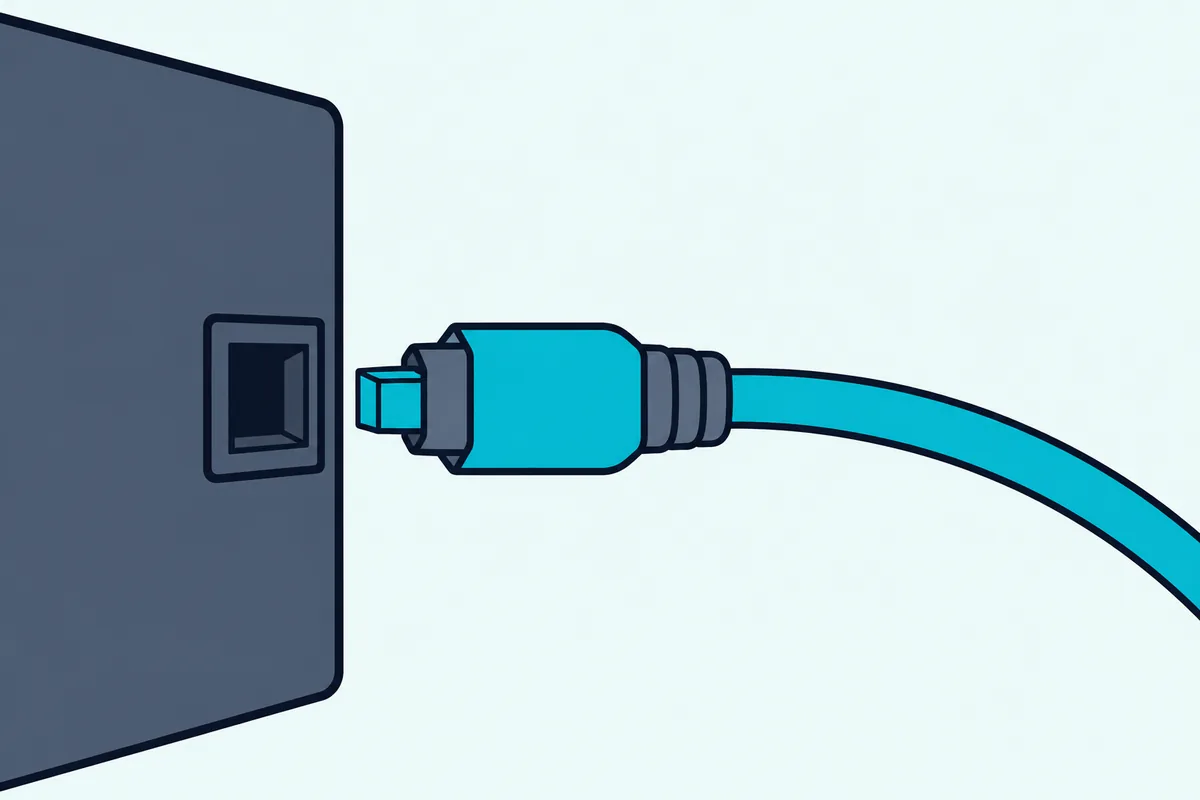
Optical gives up two things HDMI gives you. Roku says S/PDIF is limited to 2 channels of uncompressed PCM or 5.1 compressed sound, and CEC control doesn’t travel down the cable, so you’ll likely need the bar’s own remote or a learned TV remote for volume.
The third cable route is the weakest. Sharp’s guides show an audio cable from the Earphone or 3.5 mm jack to the bar’s audio input, with the output level dependent on the headphone level, so the bar’s volume has to be turned up too.
Sharp’s UK FAQ adds that both volume settings then matter, and that pushing the television’s output too high can bring distortion.
Can a Soundbar Connect to a Sharp TV by Bluetooth?
That leaves the one wireless route, and Sharp’s systems differ on it. Its Android TV manual is the plain yes, listing Bluetooth soundbars among the audio output devices you can pair.
- Put the bar in pairing mode, using its own manual.
- Press HOME, then Settings > Remotes & Accessories > Add Accessory.
- Select the bar from the list and follow the on-screen steps.
Sharp’s TiVo E-Manual is the plain no, saying Bluetooth soundbars and Bluetooth headphones aren’t supported on that set. Its Google TV manual gives the same Remotes & Accessories path, ending in Pair accessory, for Bluetooth headphones without naming soundbars, so a bar is worth trying there.
Roku’s Bluetooth article covers a phone sending audio to Roku, not a TV sending audio to a soundbar, and the 55HJ4225E’s spec table has no Bluetooth row. On those sets, use a cable.
Soundbar Steps for Samsung, LG, Vizio, JBL, Bose and Sonos Bars
Those TV menus are half the job, and each bar brand adds a step or a quirk. If yours isn’t here, its own HDMI ARC instructions are the place to start, since Sharp notes that not every HDMI device supports CEC.
Samsung soundbars. The HW-Q990D manual connects its HDMI TO TV (eARC/ARC) socket with both devices off, then shows “TV ARC” or “TV eARC” on the display. Its ALL-TV REMOTE mode names Sharp among the supported TV brands, set by pushing the WOOFER button up for 5 seconds, but it works with IR remotes only.
LG soundbars. LG’s sound bar guide lists “Sharp Electronics” among the TV brands whose remotes can run volume and mute, with the TV’s audio output set to External Speaker. LG warns that this function may not work well when the unit and TV are joined by HDMI.
Vizio sound bars. The M51a-H6 manual runs the TV’s ARC port to the bar’s HDMI (eARC) port and sets the TV’s digital audio to Dolby Digital or Bitstream, noting that steps differ by TV maker. It also wants the TV’s output on Fixed or Standard, not Variable, which on an older AQUOS means Output Select.
JBL soundbars. The Bar 1000MK2 goes into the TV’s HDMI ARC or eARC input, and JBL says full compatibility with all HDMI-CEC devices isn’t guaranteed. For a TV without HDMI-CEC, the Cinema SB190’s manual offers TV remote learning for an infrared remote.
Bose soundbars. Bose prefers eARC or ARC on its Smart Soundbar, with optical as the fallback, and says your TV may call CEC by another name. On a Sharp, look for AQUOS LINK or HDMI control.
Sonos soundbars. Sonos says the Arc, Arc SL, Arc Ultra and Beam need an HDMI ARC port for CEC control, while the Ray needs a digital optical output. On optical, Sonos has you set up the TV remote by hand in its app.
Why Is There No Sound From the Soundbar?
Those brand quirks aside, a silent bar on a Sharp TV usually traces back to the steps above. Work down this table in order, since the early checks take seconds and the later ones take minutes.
| Check | What to do | Source |
|---|---|---|
| Port | Use the port marked ARC or eARC on both ends | Sharp’s manuals, Roku |
| CEC | HDMI control, HDMI CEC or AQUOS LINK on | Sharp’s manuals, Roku |
| Output | HDMI eARC, External Audio System or the ARC setting | Sharp’s manuals, Roku |
| Format | Switch to PCM, then try Bitstream or Auto | Sharp’s manuals, UK FAQ |
| Mute | Check the bar isn’t muted, with the right source selected | Sharp’s UK FAQ |
| Output Select | On an older AQUOS, check whether Variable is selected | LC-LE653U manual |
| Reset | Cycle the bar through standby, then unplug it and plug it back in | Sharp’s UK FAQ |
| Live connection | If you cabled it with the power on, unplug both from the mains, reconnect, then power up | Sharp’s UK FAQ |
If only the subwoofer is quiet, Sharp’s UK FAQ says to move it closer, within 5 m of the bar, and re-pair it. The wider no-sound fixes for HDMI ARC go further if none of this works.
Why Won’t the Sharp Remote Change the Bar’s Volume?
That table’s CEC row is usually the answer here too. Sharp’s UK FAQ says that with HDMI ARC, the TV’s remote adjusts the bar once CEC is enabled on the television.
Point the remote at the TV, not the bar. Sharp’s LC-UB30U manual says to aim it at the TV rather than at connected HDMI equipment, and warns that LINK may not work properly through an HDMI splitter or AV selector.
On the 2014 AQUOS sets, the remote’s AUDIO button can also take a manufacturer code, and Sharp’s list gives 02 for a Sharp sound bar.
If the link still won’t take, Roku’s routine is worth trying on any set. Unplug the TV and HDMI devices for about a minute, plug in only the TV and turn it on, plug in the HDMI audio device, then add your other HDMI sources.
Sharp notes that not all HDMI devices support CEC, so a bar may never respond. The IR routes from the brand section (Samsung’s ALL-TV REMOTE, LG’s TV remote function, JBL’s learning mode) are the fallback, as long as your Sharp remote sends infrared.
How Do You Fix Lip Sync on a Sharp TV?
That TV remote can’t fix timing, but the TV’s menus sometimes can, depending on the system. Sharp’s Google TV guide lists Digital Output Delay for external speakers on a digital output, and its TiVo set has Audio Delay in the same Sound menu as the output path.
Roku says some TV models have an A/V Sync feature in an audio sub-menu, sometimes called Audio delay, and asks you to try other titles and devices first, since one bad source can be the cause. On the older LE650U sets, Sharp’s setup guide simply says to check the connected surround system’s settings.
Roku also says eARC has built-in lip sync, which was optional under the original ARC, so eARC on both ends is the better link if you have the choice. Soundbar delay fixes by cause covers the bar’s side.
Does Dolby Atmos Reach the Bar Over eARC?
That eARC preference matters most for Atmos. Sharp’s Google TV and TiVo guides say eARC carries uncompressed audio up to 7.1 channels and supports object sound such as Dolby Atmos and DTS:X, while ARC carries compressed audio up to 5.1.
Roku puts it a little differently, saying Atmos is supported on ARC in a compressed format and on eARC in higher quality. So an ARC-only Sharp isn’t automatically a dead end, and the bar’s own display or app is the test.
For the best chance, use the eARC port, set the format to Auto or Bypass, and use a cable rated for eARC. Sonos says its Atmos bars need ARC or eARC to play Atmos, and Bose asks you to check that the TV’s advanced audio settings let Atmos pass through to the bar.
Frequently Asked Questions
Does a Sharp TV have HDMI ARC?
Yes, on every model in the port table above, though the port number changes from set to set. Newer Google TV and Roku TV sets list eARC on one HDMI port, and older AQUOS sets list ARC on HDMI 1 or HDMI 3. If no port on your set carries an ARC label, the optical route is Sharp’s answer.
Does it matter which HDMI port you use for a soundbar?
Yes. Only the port marked ARC or eARC sends the TV’s sound back out to the bar, and Sharp’s instructions tell you to use the input with that text. Plugging the bar into another HDMI port gives you no TV sound through it, and on Sharp’s range the right port can be anywhere from HDMI 1 to HDMI 4.
Why can’t you get a sound bar to connect to a Sharp TV?
Start with the port, CEC and the output. Sharp’s Android TV manual says CEC must be enabled for the HDMI connection to work, and on a TiVo set HDMI eARC has to be selected in Audio Output Path. If the link is up but silent, try PCM under the digital output setting.
How do you connect a Vizio soundbar to a Sharp TV?
Run an HDMI cable from the Sharp’s ARC or eARC port to the bar’s HDMI (eARC) socket, turn on CEC on the TV, and select that input on the bar. Vizio’s M51a-H6 manual sets the TV’s digital audio to Dolby Digital or Bitstream, and tries PCM if the digital input is silent. Its Program Remote setting can also learn your Sharp remote’s volume keys.
How do you connect a Samsung soundbar to a Sharp TV?
Connect the bar’s HDMI TO TV (eARC/ARC) socket to the Sharp’s ARC or eARC port with both off, turn on CEC, and look for “TV ARC” or “TV eARC” on the bar’s display. Samsung’s HW-Q990D manual also names Sharp among the brands supported by its ALL-TV REMOTE mode, which works with IR remotes only.
How do you connect an LG sound bar to a Sharp TV?
Use the same ARC or eARC port, turn on CEC on the Sharp, and set the TV’s output to the external speaker or bar. LG’s sound bar guide lists Sharp Electronics among the brands whose remotes can run its volume and mute, though it warns that this may not work well over HDMI.
Can you connect a soundbar to a Sharp TV without HDMI?
Yes. Use the digital optical output, the 3.5 mm or Earphone jack, or Bluetooth on the sets that support it. Sharp’s guides tell you to turn off the TV’s speakers on optical so you don’t get an echo, and the 3.5 mm route ties the bar’s level to the TV’s headphone level.